 Skip to content
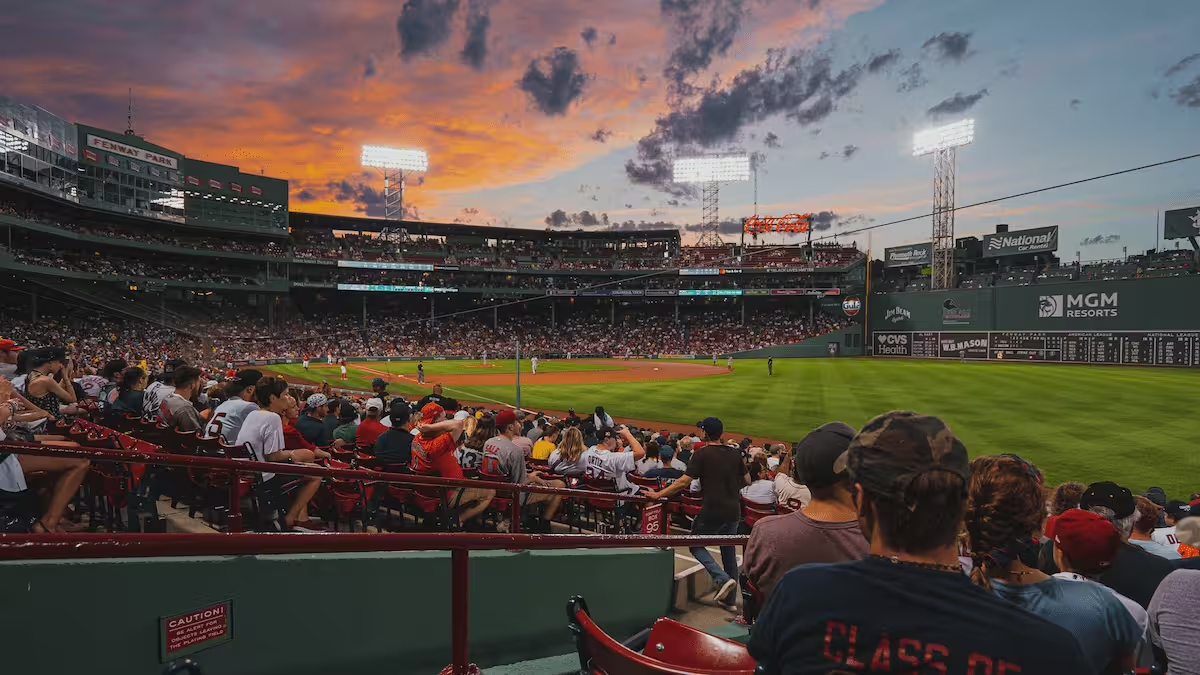
Boston Red Sox tours give visitors access to one of the most historic sports venues in America. Fenway Park still has hand-operated scoreboard panels inside the Green Monster, and standing behind them feels more like stepping into a living museum than a modern stadium. That mix of baseball history and everyday Boston character is exactly why visiting Fenway leaves such a lasting impression, even for people who only loosely follow the sport. After spending a spring morning inside the ballpark ourselves, we came away understanding why people get oddly emotional about this place.
Quick Facts About Visiting Fenway Park
(B, C, D trains)
📍 TABLE OF CONTENTS
- ⚾ Why Fenway Park Is Unlike Any Stadium on Earth
- 👀 What We Loved (And What Surprised Us)
- 🏆 Boston Fenway Park: Guided Ballpark Tour
- ❤️ Boston Strong Tour: Copley Square to Fenway Park
- 🎟️ Boston Fenway Park: Private Guided Ballpark Tour
- 🔥 Boston Red Sox Baseball Game Ticket at Fenway Park
- ❓ FAQ About Fenway Park Tours

Why Fenway Park Is Unlike Any Stadium on Earth
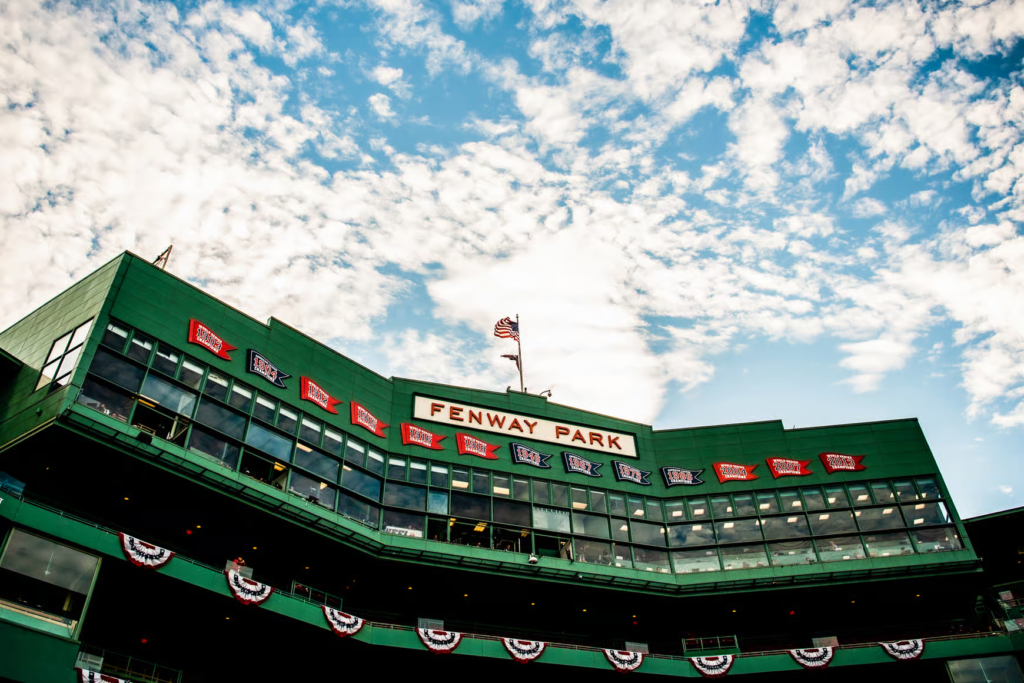
Fenway Park doesn’t really behave like a modern stadium, and that’s the point. Opened in 1912, it’s the oldest Major League Baseball ballpark still in use and has been a National Historic Landmark since 2012. The seats are tighter, the sightlines can be quirky, and the concourses occasionally feel more like old railway tunnels than a sports venue. Yet somehow that only adds to the atmosphere.
This is also a place packed with baseball mythology. The Red Sox have won 9 World Series titles here, but for decades Fenway was tied to the infamous “Curse of the Bambino” after Babe Ruth was sold to the Yankees in 1919. The curse became part of Boston identity until the dramatic 2004 comeback against New York, when the Red Sox overturned a 3–0 playoff deficit and finally won the World Series for the first time in 86 years. Even if you’re not deeply into baseball, those stories are woven into every inch of the park.
What We Loved (And What Surprised Us)
We arrived at Fenway on a crisp Tuesday morning in spring, just as the gates swung open at 9 AM. There’s a specific smell to a ballpark that early—damp grass, cold concrete, and a hint of old wood. We weren’t sure if a one-hour tour would feel rushed, but our guide was a walking encyclopedia who managed to make the empty seats feel like they were vibrating with the ghosts of past games.
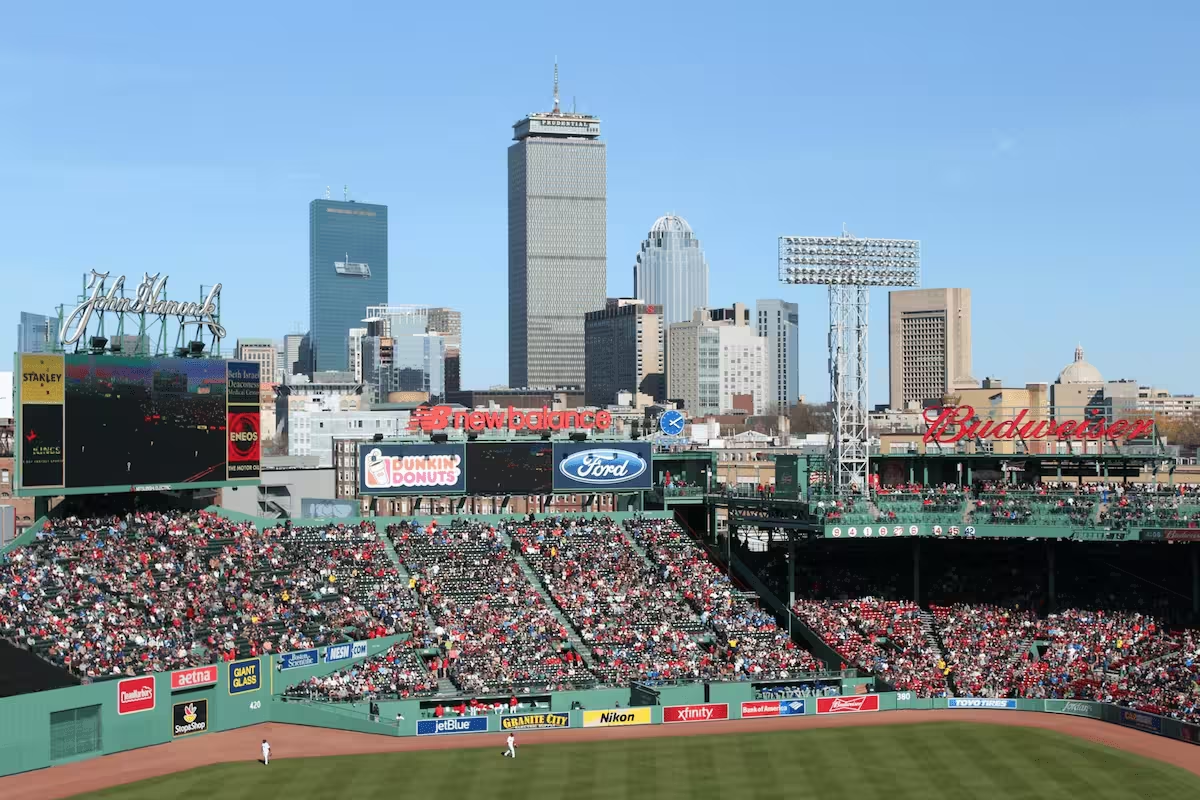
The moment that stayed with us occurred when we climbed the stairs to the Green Monster. We’ve seen it on TV a thousand times, but standing on that narrow ledge and looking down at the manual scoreboard was a genuine reality check. The views across the park from up there stopped us in our tracks; the field looks surprisingly intimate, almost like a neighborhood park that happens to have world-class athletes on it. We spent a good five minutes just leaning against the railing, watching the shadows of the light towers stretch across the infield.
What surprised us most was the “Living Museum” inside the concourse. We expected a few dusty jerseys, but the collection of over 170,000 artifacts is overwhelming in the best way. We found ourselves lingering over a display of vintage leather gloves that looked more like work mitts than sports equipment. It’s those small, tactile details—the peeling paint on a historic seat or the handwritten notes in the archives—that make you realize Fenway is a museum where they just happen to play ball.
Boston Fenway Park: Guided Ballpark Tour
This is the Fenway experience we’d recommend to almost anyone visiting Boston for the first time. The expert guides don’t just recite statistics — they tell stories that connect the stadium to the city itself.
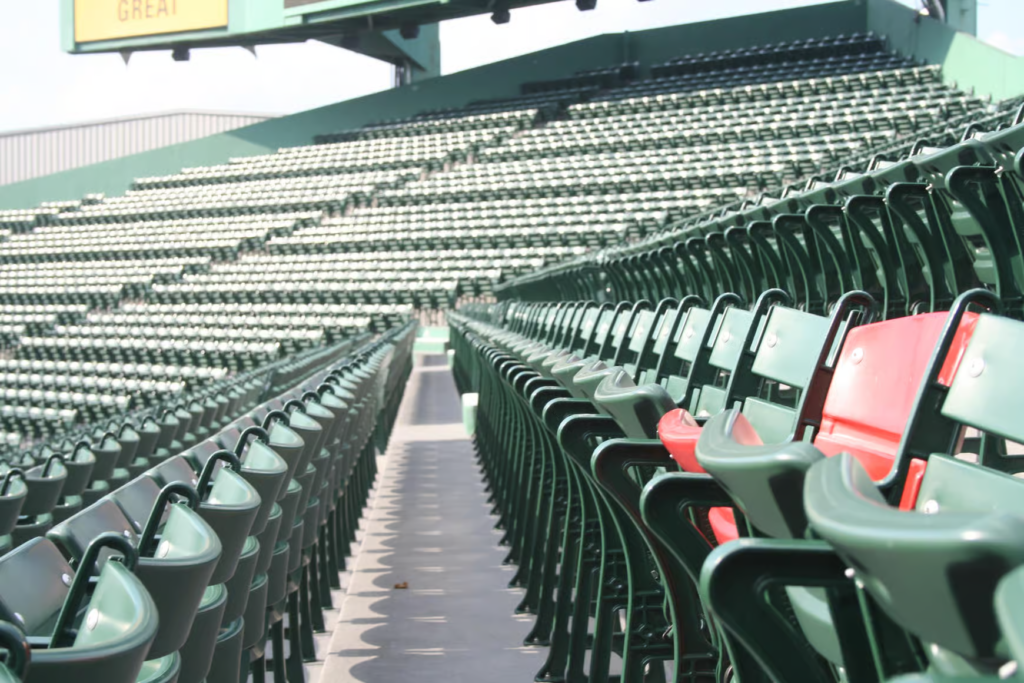
When we stepped onto the Green Monster during our tour, the view across the diamond and the rows of red seats made us completely understand why people return here generation after generation.
Boston Strong Tour: Copley Square to Fenway Park
This walking tour approaches Fenway from a completely different angle. Instead of focusing only on baseball history, it follows the final stretch of the Boston Marathon route from Copley Square to Fenway Park.
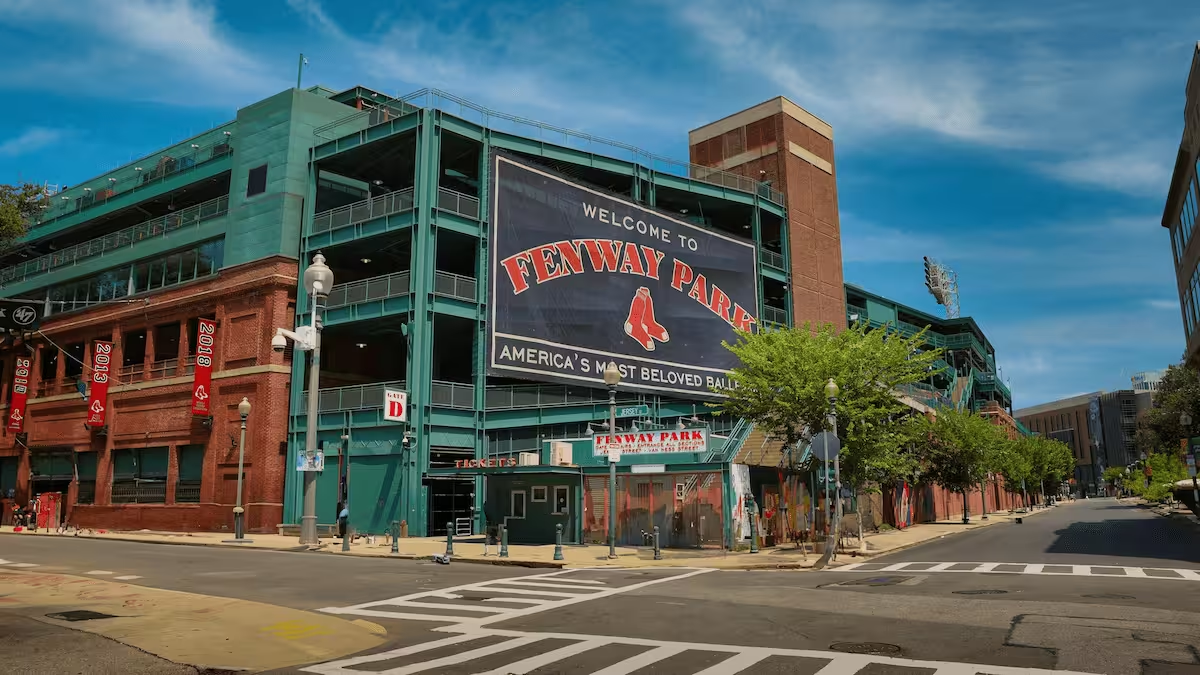
Along the way, it connects the city’s resilience after the 2013 Marathon bombing with the Red Sox and Boston identity. Stops include the Marathon Finish Line, the Boston Strong sign, the Green Monster exterior and the Ted Williams statue.
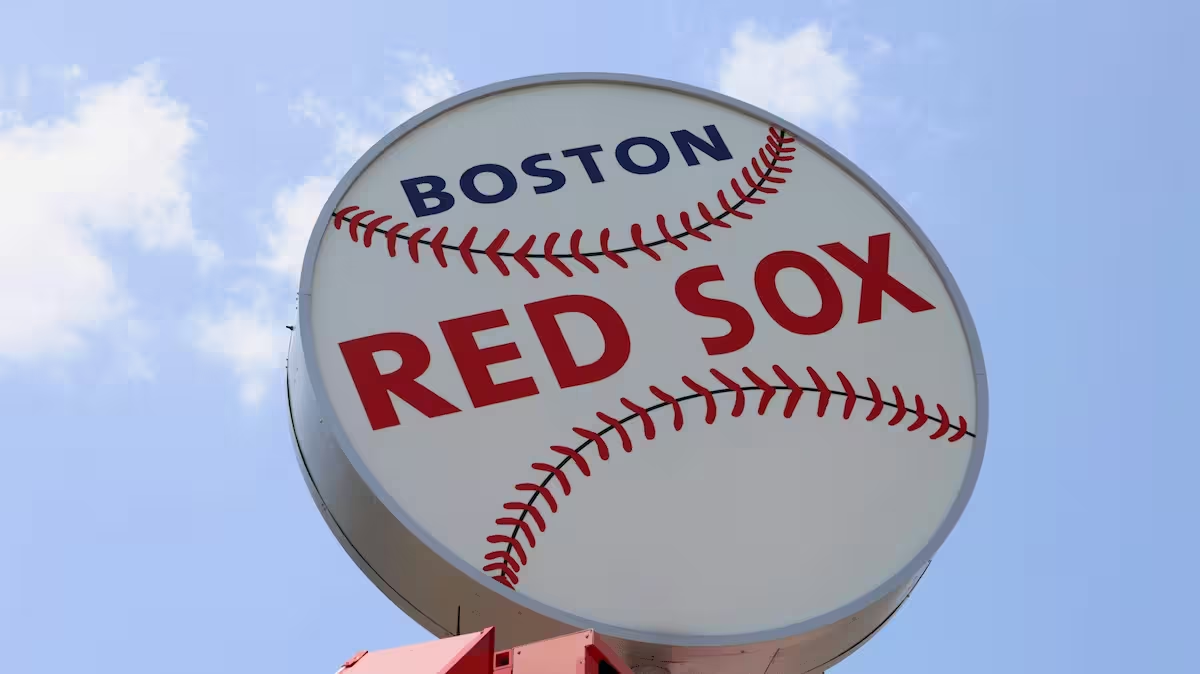
Boston Fenway Park: Private Guided Ballpark Tour
(private upgrade available)
The private version builds on the standard tour but adds behind-the-scenes areas most visitors never get to see. Depending on availability, this can include the Red Seat, Visiting Team Clubhouse, Batting Cage, Warning Track, Green Monster Scoreboard and even the State Street Pavilion Club.
For die-hard baseball fans, that extra access makes a real difference.
What stood out to us comparing the experiences is how much more time private groups tend to get for questions and stories. Fenway is full of little quirks, and the guides often go deeper when they aren’t working with larger groups moving on a fixed schedule.
Boston Red Sox Baseball Game Ticket at Fenway Park
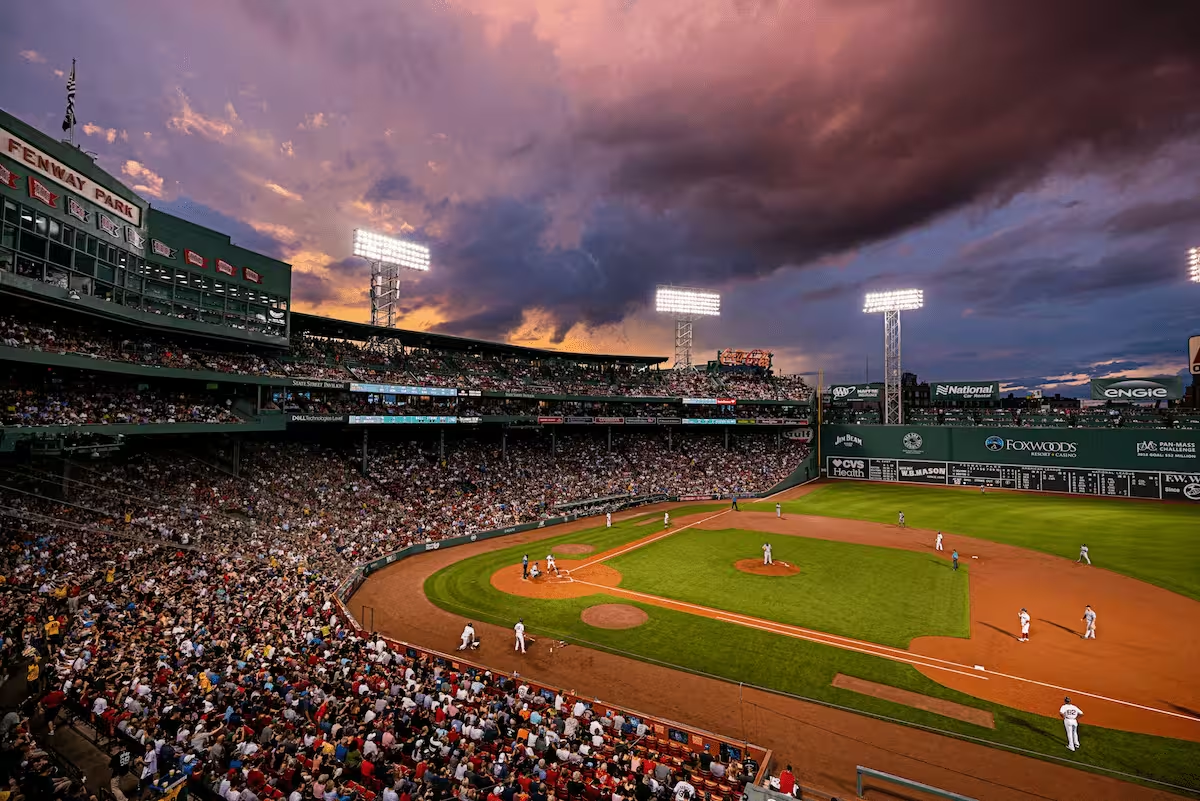
Even people who don’t care much about baseball usually end up loving a night at Fenway. There’s something about hearing the crowd react in unison, watching the sunset behind the Green Monster and hearing “Sweet Caroline” echo through the stadium that turns the game into a full Boston experience rather than just a sporting event.
If you’re flexible with dates, weekday games against teams like the Guardians, Rays or Blue Jays usually offer the best value. Yankees games and weekend matchups are the ones that disappear fastest and prices climb quickly.
FAQ About Fenway Park Tours
Is a Fenway Park tour different from a Red Sox game ticket?
Yes. A tour gives you behind-the-scenes access and historical context, including areas like the Green Monster and Living Museum. A game ticket is for attending a live Red Sox game during baseball season.
What’s the best time to visit Fenway Park?
Weekday mornings are ideal for tours because the stadium is quieter and feels less rushed. For games, evening matchups create the best atmosphere.
Can you visit Fenway Park if you’re not a baseball fan?
Absolutely. Fenway is as much a historical landmark as it is a sports venue. Many visitors come for the architecture, stories and Boston culture rather than baseball itself.
How early should you arrive for a Fenway tour?
Try to arrive at least 15–20 minutes early. We arrived just before the 9 AM opening and it made the whole experience feel calmer and less crowded.
What bags are allowed at Fenway Park?
Small bags are generally permitted, but security checks are strict on game days. Avoid bringing large backpacks if possible and always check current policies before visiting.
Fenway Park ended up being one of those places that felt far more memorable in person than it ever did in photos. Whether you walk onto the Green Monster during a guided tour or experience the atmosphere of a live Red Sox game under the lights, it’s the kind of Boston experience that stays with you long after the trip.
If you’re planning more time in the city, we’ve also put together our guide to the best tours in Boston — from Freedom Trail walks to Duck Boat rides and harbour cruises.

Best Areas to Stay for Exploring Boston
Choosing the right area can make a huge difference to your Boston trip — especially if you want easy access to Fenway Park, the Freedom Trail, public transport, and the city’s best food spots.
👉 Browse Boston hotels for your travel dates directly on the interactive map below.