 Skip to content
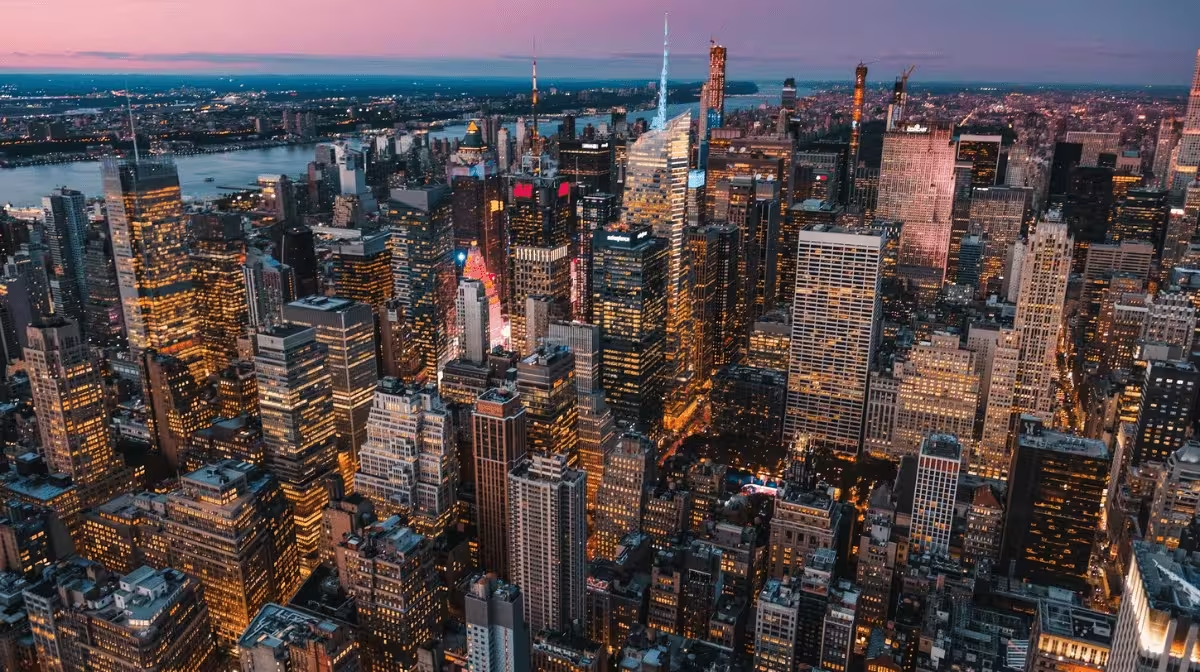
There’s a moment when you first step into New York City that changes something in you. For me, it came late at night, stepping into my Hilton Times Square room high above the street. I opened the door, exhausted from travel, and stopped dead. Framed perfectly in the window was the Empire State Building—lit in all its golden majesty, commanding the skyline like a sentinel. I stood there speechless for a solid two minutes, just staring. Below, the street was alive: hot dogs sizzling on carts, street performers playing saxophone, the honk of yellow cabs, neon signs reflecting off wet pavement. Radio City Music Hall glowed nearby. Majestic skyscrapers stretched into the dark sky.
That’s New York. Not one city—a collection of neighborhoods, each with its own heartbeat. Times Square’s electric energy. SoHo’s artsy charm. Brooklyn’s gritty reinvention. Central Park’s urban oasis. The Lower East Side’s multicultural chaos. And if you know where to look, quiet tree-lined streets in the Upper West Side where you’d never believe you’re in the same city.
This guide is for families, couples, and solo travelers planning 2–5 days in New York. I’ll walk you through neighborhoods, logistics, food culture, and what actually matters when you’re on the ground.
Contents Show
- 01Quick facts at a glance
- 02Why I keep coming back
- 03The neighborhoods: Where to spend time
- 04Getting around New York
- 05Where to stay: By neighborhood
- 06The food: What New York does best
- 07How much time do you need?
- 08New York for families
- 09Nightlife & entertainment
- 10Pro tips for first-time visitors
- 11Questions answered
Quick Facts About New York at a Glance
Population ~8.3 million (NYC proper); ~20 million metro area
Languages English (primary); Spanish, Mandarin, Korean, Bengali, and dozens more
Currency US Dollar (USD)
Best Time to Visit Fall (Sept–Oct) and spring (April–May); mild weather, lower crowds than summer
Getting Around Subway (fastest, $2.90/ride), walking (preferred for neighborhoods), Citibike (bike-share)
Daily Budget Budget: $50–80. Mid-range: $120–200. Splurge: $250+
Walkability Extremely high—Manhattan is walkable; outer boroughs require subway
Subway Pass 7-day unlimited = $33 (cheaper than daily rides)
Safety Very safe for tourists; use common sense like any major city
Why I Keep Coming Back to New York
The first time I visited, I thought Times Square would feel like a theme park. And it does—it’s undeniably touristy, with the crush of humanity, the towering screens, the sensory overload. But here’s what surprised me: amid that chaos, there’s an energy that’s genuinely infectious. Real New Yorkers move through it with purpose. Street performers nail their sets. The pizza is genuinely good. And when you step off the main drag into SoHo or Greenwich Village, you find quiet, tree-lined blocks that feel like a different universe entirely.
The second visit, I came with my wife and 15-year-old son. This time, I wasn’t just absorbing the iconic stuff—I was noticing the neighborhoods, the food neighborhoods, the way locals move through the city. We found Italian restaurants that felt authentically New York. We watched our son’s face light up walking across the Brooklyn Bridge at sunset. We ate coal-fired pizza at John’s Pizzeria, and honestly, it’s as good as the hype.
What keeps me coming back: New York doesn’t repeat itself. Every neighborhood has a different vibe. Every visit reveals something new. The city rewards wandering.
The Neighborhoods: Where to Spend Your Time
New York has five boroughs, but most visitors focus on Manhattan and a bit of Brooklyn. Let me break down what matters.
Manhattan: The Heart
Times Square & Midtown
This is the New York of postcards. The Empire State Building looms overhead. Radio City Music Hall marquees flash. Broadway theaters line the streets. It’s chaotic, crowded, and yes—touristy. But it’s also undeniably iconic.
Why visit: The views are real. The energy is real. Your first-time visitor moments happen here.
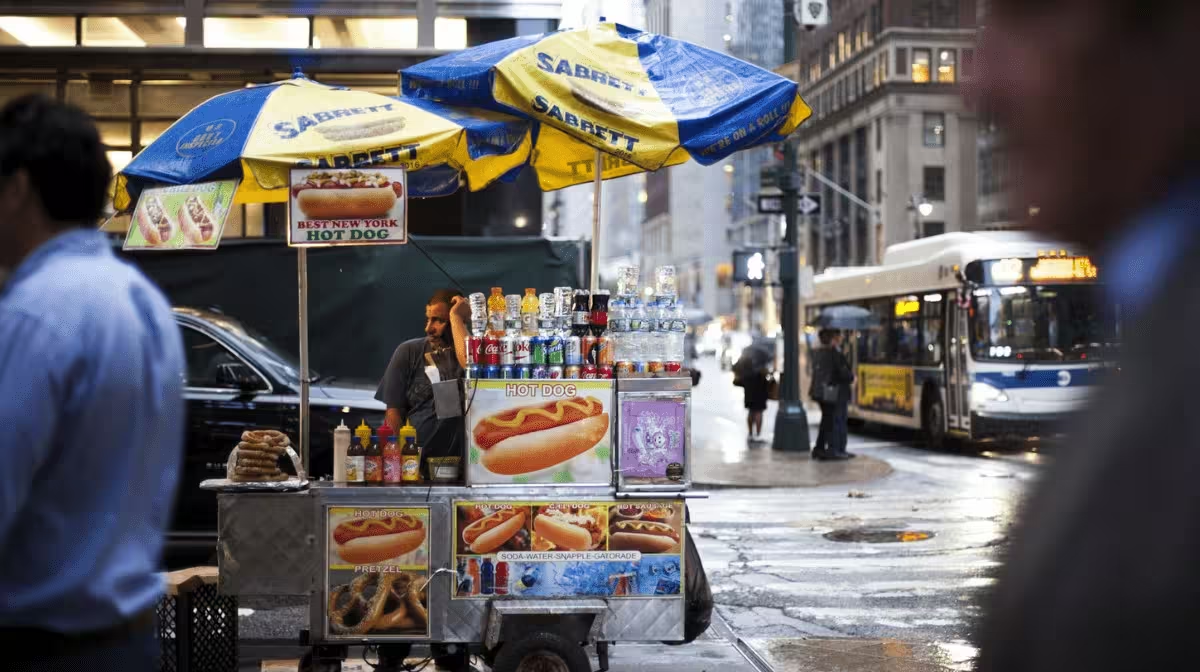
What to do: Walk through Times Square at night (the lights are genuinely stunning). Grab hot dogs from street carts. Take an observation deck photo. Explore the Theater District.
Where to stay: Hilton Times Square is exactly what you’d expect—high-rise, central location, the views are spectacular. Rooms facing south/east frame the Empire State Building perfectly.

SoHo & TriBeCa
South of Houston, north of Canal. Cast-iron buildings, art galleries, high-end boutiques, and restaurants that charge $30 for a sandwich but it’s genuinely good.
Why visit: The architecture is stunning. People-watching is elite-level. It feels like stepping into a design magazine.
What to do: Walk Mercer Street and Spring Street. Browse galleries (most free). Sit in a café and watch the world.
Lower East Side & Chinatown
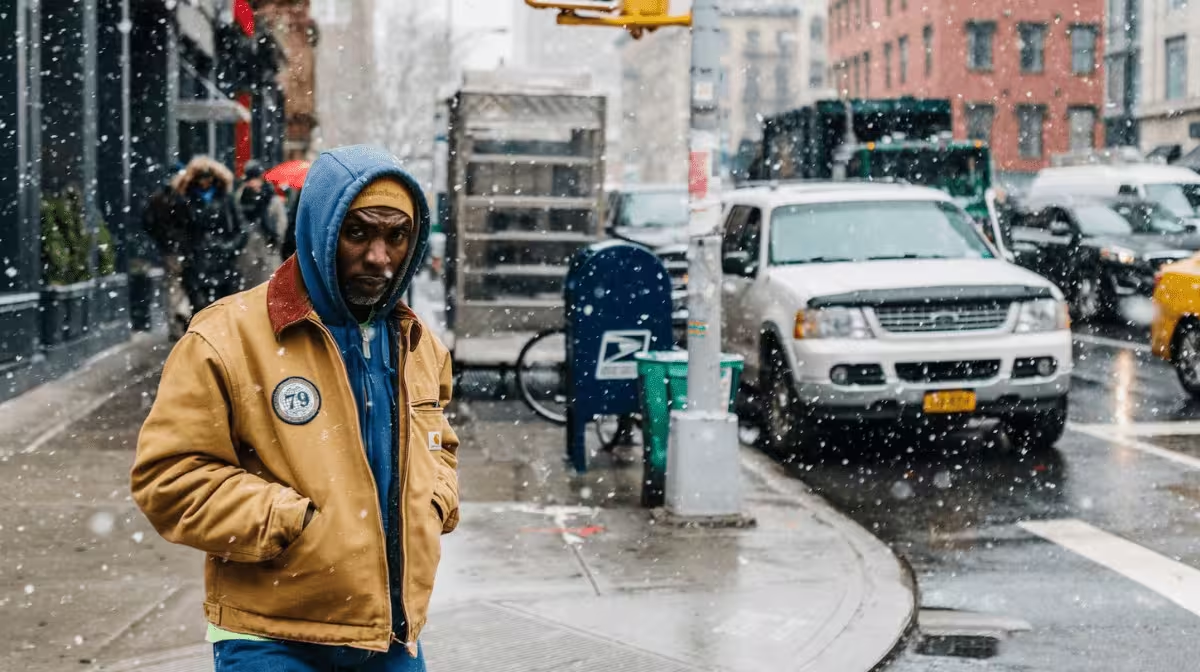
Gritty, diverse, multicultural, authentic. Chinatown bleeds into Little Italy bleeds into Puerto Rican neighborhoods. Street signs in multiple languages. Dim sum houses, Italian delis, vintage shops, and bars with character.
Why visit: This is where you find real New York. The food is incredible and affordable. The street culture is palpable.
What to do: Eat dim sum (go early, bring cash). Walk Orchard Street (vintage shops). Grab a coffee from a hole-in-the-wall. Experience the multilingual, multicultural energy.
Specialty experience: Little Italy and the Lower East Side have deep mob history. A guided true crime tour with a retired NYPD detective walks you through actual crime scenes, mob hideouts, and includes stops at historic Italian restaurants. Book the True Crime Mafia Walk on Viator
Greenwich Village & Washington Square
Tree-lined streets, historic brownstones, street performers, bohemian cafés. This is where the City Lights coffee houses are, where poets write, where musicians busk.
Why visit: It feels like a European village transplanted into Manhattan. Perfect for couples and walkers.
What to do: Sit at Washington Square Park (people-watching is incredible). Walk the tree-lined blocks. Browse independent bookstores. Eat Italian.
Central Park
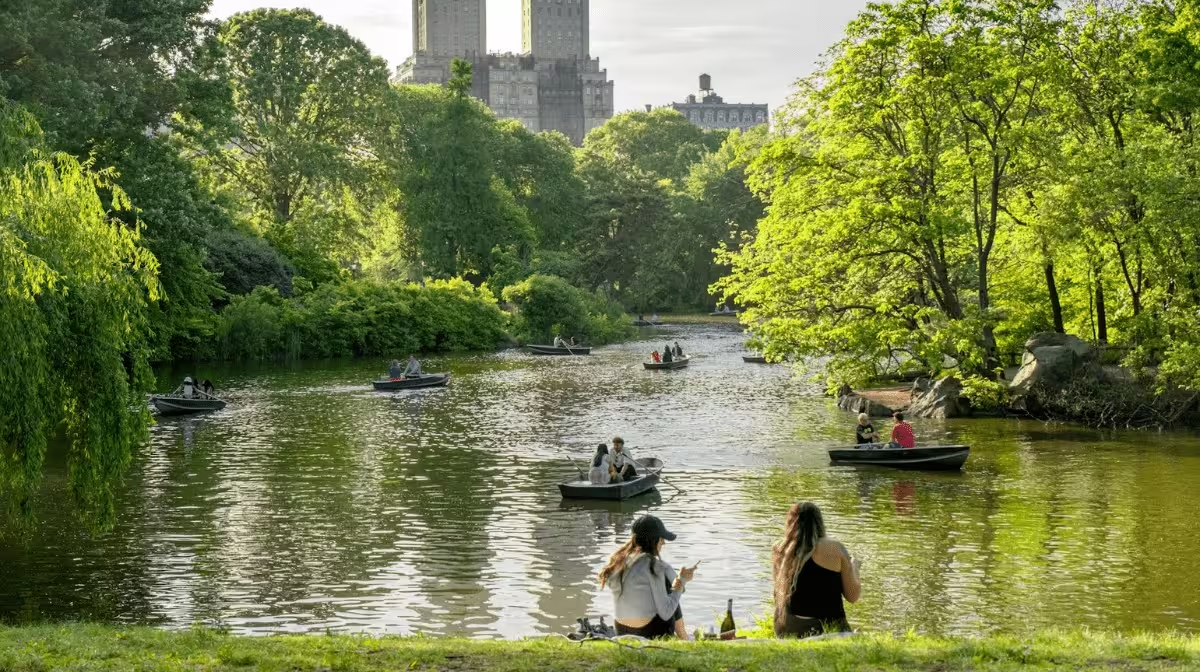
843 acres of trees, paths, water, and grass in the middle of Manhattan. It’s the city’s lungs.
Why visit: You need a break from the concrete. The park is beautiful year-round. It’s genuinely peaceful despite being surrounded by skyscrapers.
What to do: Walk the Reservoir. Visit Bethesda Fountain and Terrace. Rent Citibikes for a loop. Picnic on the grass. Watch the sunset from Bow Bridge.
Brooklyn: The Creative Borough
Williamsburg
Rooftop bars, street art, vintage shops on Bedford Avenue, indie bookstores, craft breweries. It’s gentrified, but the creative energy is still palpable.
Why visit: The views of Manhattan from the rooftops are incredible. The food scene is diverse. It feels less touristy than Manhattan, more “real.”
What to do: Walk Bedford Avenue (shopping, cafés). Visit rooftop bars for sunset + skyline views. Browse galleries. Eat at ethnic restaurants (Korean, Vietnamese, Italian).
Park Slope
Brownstones, Prospect Park access, tree-lined Seventh Avenue, family-friendly vibe.
Why visit: It feels like a neighborhood, not a tourist zone. Good for families. Prospect Park rivals Central Park for beauty.
Getting Around New York
The Subway (MTA)
The fastest way to move through the city. It’s loud, crowded, occasionally smelly, but it works.
Cost: Single ride = $2.90. 7-day unlimited pass = $33 (best value for visitors).
How to use: Buy a card at any station, tap at the turnstile. Download the MTA app for real-time updates.
Pro tip: Avoid rush hours (7–10 AM, 4–7 PM weekdays). Weekday mornings and afternoons are quieter.
Walking
New York is walkable. Most neighborhoods are adjacent. Walking lets you notice details: street art, small cafés, locals’ favorite spots.
Distances: Times Square to SoHo = 20–30 minutes walking or 8 minutes subway.
Citibike
Bike-share system. Rent a bike, ride it, return it to any station.
Cost: $3.50 for 30 minutes or $15/day unlimited 30-minute rides.
Best for: Quick loops (Central Park), moving between adjacent neighborhoods.
Getting from Airports
From LaGuardia (LGA): AirTrain + LIRR to Penn Station (~45 min, $13). Or Uber/Lyft ($25–50 depending on traffic).
From JFK: AirTrain + Jamaica Station + subway (~60 min, $8). Or Uber/Lyft ($30–60).
From Newark (EWR): Train to Penn Station (~30 min, $15). Or Uber/Lyft ($40–80).
Where to Stay: By Neighborhood
Times Square Area
Best for: First-time visitors, centrality, iconic experience.
Vibe: Touristy, busy, loud (but spectacularly so).
Our pick: Hilton Times Square (4-star). High-rise, excellent views, central location, clean and reliable. Rooms facing Empire State are unforgettable. Great value for the location and views.
Price: $180–320/night.
Midtown/Fifth Avenue
Best for: Design-conscious travelers, museum proximity, vibrant neighborhood.
Vibe: Trendy, social, artsy, modern.
Our pick: Pod Hotel Midtown (4-star). Design-forward rooms, rooftop lounge, social atmosphere. Great value without the luxury price tag. Central to everything.
Price: $140–240/night.
Greenwich Village/SoHo
Best for: Couples, design lovers, nightlife enthusiasts.
Vibe: Trendy, artsy, sophisticated nightlife.
Our pick: The Standard (4-star, Meatpacking District edge). Modern design, rooftop bar with Hudson views, excellent restaurants on-site. Walkable to SoHo and Greenwich Village. Instagram-worthy.
Price: $200–350/night.
Lower East Side
Best for: Younger travelers, food lovers, neighborhood explorers.
Vibe: Gritty, authentic, trendy nightlife.
Our pick: The Ludlow Hotel (4-star). Rooftop bar with cityscape views, excellent dining on-site, walkable to all LES action and neighborhoods. Design-conscious, neighborhood-favorite, great value.
Price: $160–280/night.
Williamsburg, Brooklyn
Best for: Those wanting to avoid Manhattan crowds, rooftop bar lovers.
Vibe: Trendy, artsy, Instagram-worthy, less touristy.
Our pick: The William Vale (4-star). Rooftop pool and bar with Manhattan views, excellent restaurants, walkable to Bedford Avenue. Modern design, Brooklyn icon, perfect for couples and creatives.
Price: $180–300/night.
The Food: What New York Does Best
New York’s food culture is defined by three things: diversity, accessibility, and quality. You can eat a world-class meal for $3 (pizza slice) or $300 (fine dining). Both are genuinely good.
Pizza
New York-style thin crust, large slices, $3–5 per slice. The standard.
Classic (can’t miss): John’s Pizzeria in Times Square. Coal-fired oven, perfectly charred crust, simple toppings done right. Go during off-peak hours (3–5 PM) to avoid lines.
Trendy picks: Lombardi’s (oldest pizzeria in America), Prince Street Pizza (lower East Side—legendary square slices), Una Pizza Napoletana (Greenwich Village—high-end wood-fired, reservations recommended).
Bagels & Lox
A New York institution. Soft, boiled-then-baked bagels with cream cheese, smoked salmon, capers, red onion.
Classic: Russ & Daughters (Lower East Side, since 1914). Historic, authentic, worth the pilgrimage.
Trendy picks: Absolute Bagels (Upper West Side), Black Seed Bagels (multiple locations—modern take on traditional bagel-making), Tompkinsville Bagel Shop (Brooklyn—serious bagel craft).
American Diners
Classic booths, extensive menus, comfort food, coffee that never stops flowing.
Iconic: Ellen’s Stardust Diner (Times Square—singing wait staff, chaotic, fun for families).
Trendy picks: Balthazar (SoHo—French brasserie feel, excellent breakfast/brunch), Katz’s Delicatessen (Lower East Side—historic, famous pastrami, iconic), Breakfast at Tiffany’s vibes at a Greenwich Village corner diner.
Italian Food
New York has serious Italian heritage. Pasta is excellent, even in casual spots. Little Italy and Greenwich Village are epicenters.
Iconic spots: Little Italy classics (head to Mulberry Street), Balthazar (French-Italian brasserie, SoHo).
Trendy picks: Carbone (Greenwich Village—upscale Italian, very hot reservation, Instagram-famous), Cote (modern Italian, sophisticated), Pasta flyer spots in Greenwich Village and Lower East Side with locals, not tourists.
International Cuisine
Chinese, Korean, Vietnamese, Thai, Mexican, Indian—all represented at high quality and affordable prices. Each neighborhood has its own culinary focus.
Must-try neighborhoods: Chinatown for dim sum (go early, carts rolling), Koreatown (around 32nd Street) for Korean BBQ, East Village/Tompkins Square area for Vietnamese, Nolita for Spanish/Mexican.
Trendy picks: Chez Ma Tante (Vietnamese, East Village—minimalist vibe), Kimchi Kooks (Korean, Koreatown—trendy ramen and comfort food), Balthazar (French-Italian, SoHo—gold standard for international dining in a gorgeous setting).
For a memorable dining experience, consider the signature dinner cruise on the Hudson River. Three-course meals, live entertainment, and panoramic city views. Book the City Cruises dinner experience on Viator
How Much Time Do You Need in New York?
2 days: Hit the iconic stuff (Times Square, Empire State, Brooklyn Bridge, one museum, one neighborhood). See our detailed 2-day itinerary.
3–4 days: Above + neighborhoods (SoHo, Lower East Side, Greenwich Village, Williamsburg).
5+ days: Deep dives into multiple neighborhoods, food crawls, longer museum visits, day trips.
We came with 4 days total (2 at the start, 2 at the end), and we felt we barely scratched the surface. That said, 2 days can absolutely work if you’re strategic.
New York for Families (Parents + Teenage Kids)
We came with our 15-year-old son, so here’s what worked:
The walking: Kids can handle 10–15 km (6–9 miles) of walking if you break it into neighborhood chunks with café stops.
The energy: Times Square is overwhelming but cool to experience once. Brooklyn Bridge walk is iconic—kids get it.
The food: Let them pick a restaurant (within budget). Our son chose the pizza, nailed the decision.
The subway: Slightly chaotic, but kids understand they’re in a major world city. It’s an experience.
The museums: Don’t force it. Pick one museum, spend 1.5–2 hours, skip it if they’re not feeling it.
The parks: Central Park + Brooklyn Prospect Park are genuine breaks. Kids need these.
The shows: Broadway is possible but expensive. Ice skating at Rockefeller Center is cheaper and memorable.
Pro Tips for First-Time Visitors
1. Wear comfortable shoes. Non-negotiable. You’ll walk 15,000+ steps per day.
2. Get a 7-day subway pass immediately. It pays for itself after 12 rides.
3. Download Google Maps offline. Subway reception is spotty.
4. Carry water and snacks. Tourist attractions have overpriced water ($5 bottles).
5. Tip 18–20% in restaurants. It’s cultural norm.
6. Don’t try to see everything. Pick 3–4 things per day, do them well.
7. Take the subway late at night without hesitation. It’s safe and fast.
8. Talk to locals. New Yorkers are helpful if you ask nicely.
9. Get lost in neighborhoods. Some of the best moments come from wandering.
10. Don’t skip the “touristy” stuff. Times Square, Empire State, Brooklyn Bridge—they’re iconic for a reason. Experience it, then explore deeper.
Nightlife & Entertainment
New York’s nightlife is as diverse as its neighborhoods. Jazz clubs in Greenwich Village are iconic, but Harlem has equally legendary venues with deeper roots in jazz history.
Jazz & Live Music
Blue Note Jazz Club and Village Vanguard in Greenwich Village are world-famous, but Harlem’s jazz scene—where the music originated—offers equally authentic experiences with less tourist density.
Our find: A guided jazz tour of Harlem with a local guide brings you to legendary clubs, shares the history of jazz in NYC, and often includes dinner. The authenticity is unmatched.
Book a jazz Harlem tour on Viator
- What’s the best time to visit New York?
- Fall (September–October) and spring (April–May). The weather is mild, the light is perfect, and crowds are manageable. Summer is hot and crowded. Winter is cold but beautiful, especially around holidays.
- Do I need a car in New York?
- No. Absolutely not. The subway is faster, cheaper, and easier. Parking alone costs $20–50/day.
- Is New York safe?
- Yes. It’s one of the safest major cities in the US. Use standard big-city sense: avoid isolated areas late at night, keep valuables secure. Midtown and major neighborhoods are very safe.
- What’s the average cost of a trip to New York?
- Budget travelers: $50–80/day. Mid-range: $120–200/day. Luxury: $250+/day.
- How much does accommodation cost?
- Budget: $100–150/night. Mid-range: $180–300/night. Luxury: $350+/night. Times Square area is pricier than other neighborhoods.
- Is it expensive to eat in New York?
- It can be, but doesn’t have to be. You can eat incredible food for $5–15 (pizza, bagels, street food, dim sum). Fine dining is $30–100+ per person.
- What are the best neighborhoods for tourists?
- Times Square (iconic, central), SoHo (walking, shopping), Greenwich Village (charming), Lower East Side (food, culture), Williamsburg Brooklyn (less touristy).
- What’s the subway system like?
- Fast, cheap ($2.90/ride), crowded during rush hour, slightly chaotic but entirely navigable. Get a 7-day pass ($33) if you’re visiting more than 2 days.
- Can solo travelers visit New York safely?
- Absolutely. New York is very safe for solo travelers, especially women. Stay in central neighborhoods (Times Square, Midtown, Lower East Side, Brooklyn).
- What should I know about New York weather?
- Spring (April–May) and fall (September–October) are ideal. Summer is hot and humid. Winter is cold (20–40°F) but manageable with proper clothing. December has holiday vibes.
- How many days do I realistically need in New York?
- 2 days = iconic highlights + one neighborhood. 3–4 days = deeper experience, multiple neighborhoods. 5+ days = luxury, day trips, nightlife.
Ready to Plan Your New York Trip?
New York rewards preparation but also embraces spontaneity. Book your accommodation and major activities (Broadway, observation decks) in advance. But leave room for wandering, discovering a neighborhood café, eating at a place locals recommend, getting lost and found again.
The Empire State Building lit up in your hotel window. The pizza slice that shouldn’t be that good. The moment you walk into Central Park and forget you’re in the middle of a city. The energy of Times Square at night. The quiet of Greenwich Village streets. The raw energy of the Lower East Side.
That’s New York.
Ready for a structured itinerary? See our detailed day-by-day plan to maximize your 2 days.
Want more activities and options? Check our New York Attractions & Things to Do guide for museums, landmarks, neighborhoods, and specialty experiences.
Affiliate Disclosure
This article contains affiliate links. When you book through these links, we earn a small commission at no extra cost to you. Thank you for supporting routeandstay.com!