 Skip to content
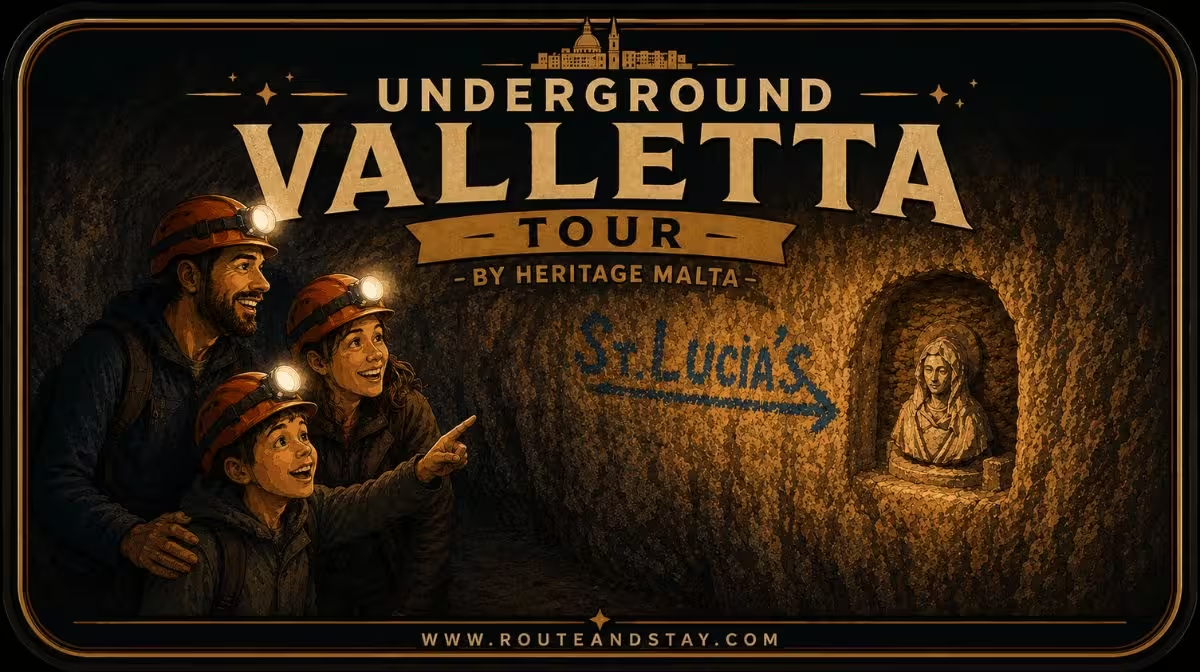
Deep beneath Valletta’s limestone streets lies a parallel city — a network of galleries, cisterns, and bomb shelters carved over centuries. I visited Underground Valletta recently and found it to be one of the most moving historical experiences I’ve had in the Mediterranean. It’s not a polished museum. It’s raw, humid, and genuinely atmospheric. Here’s what you need to know if you’re thinking about going.
Book Your Tour
Tours available Monday, Wednesday, Sunday at 10am, 11am, 12pm, 1pm. Limited to 15 people. Book well ahead — peak season (Apr–Oct) sells out 2–4 weeks in advance.
Reserve on Heritage Malta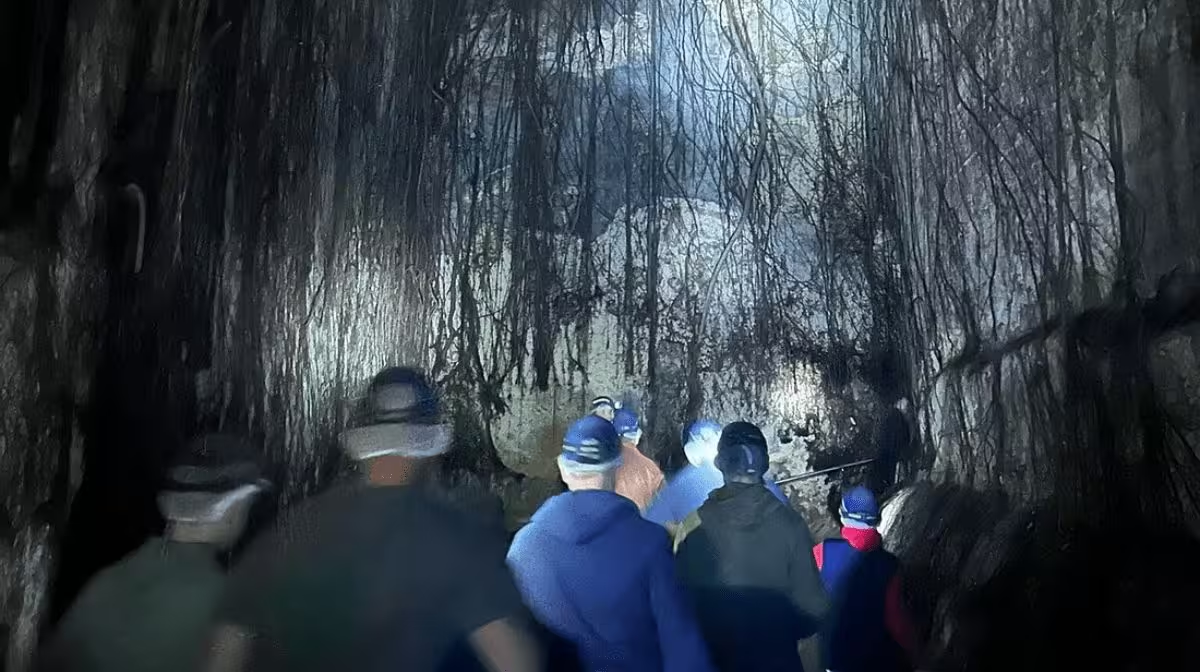
📍 JUMP TO SECTIONS
What Is Underground Valletta?
Underground Valletta is a series of interconnected galleries, water cisterns, and shelters running 36 metres beneath the city. They were carved into soft Globigerina limestone over centuries — first as fresh-water storage (essential when Valletta had no natural springs), later used by the Knights of St. John, and most notably, as bomb shelters during World War II when Malta endured relentless aerial bombardment.
The site is now managed by Heritage Malta and open to the public only via guided tour. Access is strictly controlled — groups are limited to 15 people, and you must book in advance. This isn’t a theme park; it’s a preserved historical site.
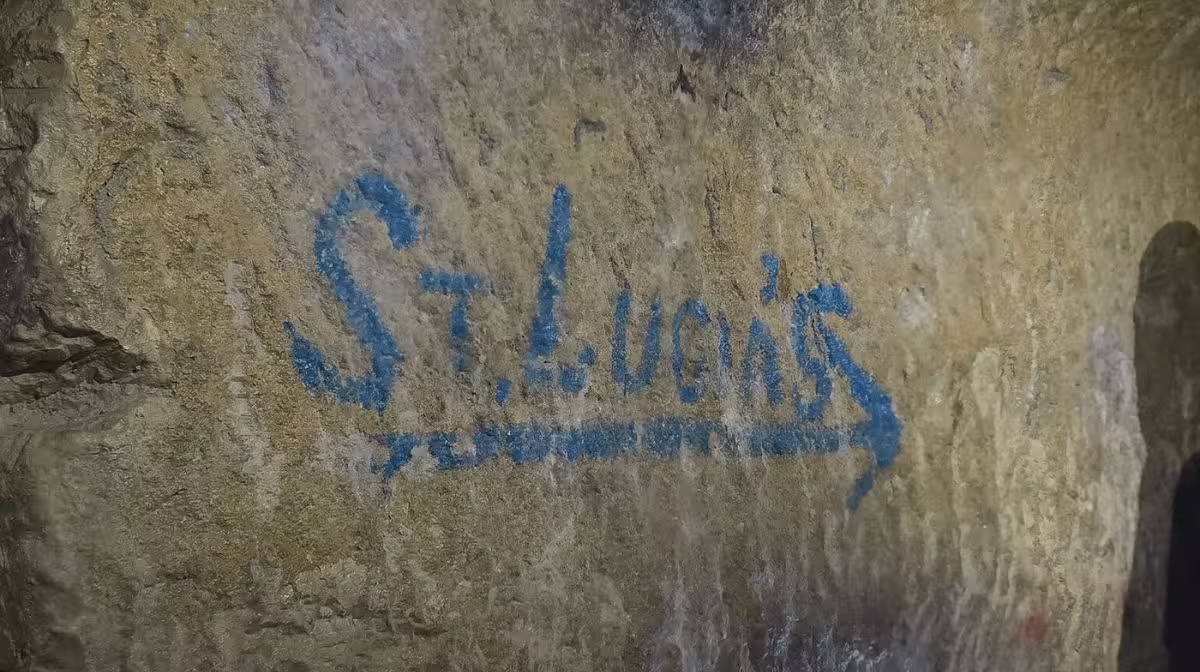
One detail worth noting: During WWII, up to 500 civilians sheltered in these tunnels during air raids. Some families spent entire nights underground. The chalk marks and graffiti on the walls still bear witness to that period — you’re walking through a genuine wartime shelter, not a reconstructed one.
The Tour Experience
What Happens When You Arrive
You must arrive at MUŻA (the National Community Art Museum) on Merchant Street 30 minutes early. No exceptions — tours start strictly on time, and late arrivals are turned away without refund.
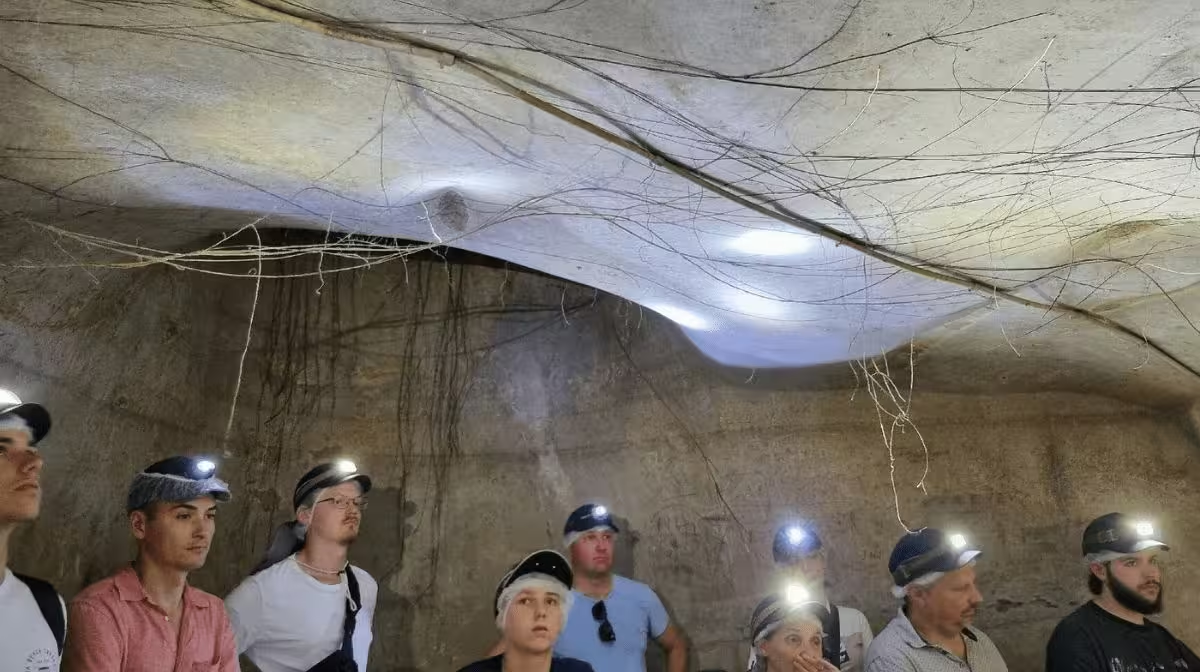
At MUŻA, you meet your guide, receive a safety briefing, and are fitted with a bump cap and head lamp. From there, it’s a 5-minute walk to the underground entrance. The actual tour lasts about one hour.
What It Feels Like
The underground is humid, dark, and confined. Your head lamp becomes your primary light source. Humidity levels are very high year-round — you will sweat, even when the temperature feels cool. The ground is uneven in places. Handrails are installed, but it’s genuinely atmospheric in a way that feels less like a museum and more like stepping into actual history.
Our guide was exceptional. He moved at a measured pace, offered context for each space, and shared stories about families sheltering there and what life was actually like during the bombing. That human element — the knowledge that you’re standing in a space where children waited out air raids — transforms the experience from mere sightseeing into something genuinely moving.
Historical Context: What You’ll Learn
The Medieval & Knights Period (1530s–1798)
Valletta wasn’t founded until 1566, making it one of Europe’s youngest capital cities. It was built by the Knights of St. John (also called the Knights Hospitaller) after they repelled a massive Ottoman siege in 1565. The Knights, a military-religious order that had been displaced from Rhodes, saw Malta as a strategic fortress in the central Mediterranean.
The underground galleries you visit include water cisterns carved during the Knights’ reign. The Knights understood Mediterranean survival: no freshwater meant no city. They invested heavily in cistern engineering. Some of the carved channels and storage chambers visible in the tour date to the 1570s–1600s. The Knights’ fortifications — bastions, walls, gun platforms — are still visible above ground throughout Valletta; the underground cistern network was their invisible infrastructure.
During this period, Valletta became one of the most fortified cities in Europe. The Knights built it as a geometric grid with streets wide enough for cannons to be moved, and positioned the entire city on a peninsula for defensive advantage. The underground spaces were part of this larger strategic plan.
The Water Cistern Era: Engineering & Survival
Valletta sits on a limestone plateau with no natural freshwater springs or rivers. For the city to survive, water had to be captured and stored. The Knights solved this by carving enormous cisterns directly into the rock, sometimes going 40+ metres below street level.
The engineering is genuinely sophisticated. These weren’t simple holes in the ground. They featured:
- Filtration systems: Sand and stone layers designed to purify rainwater captured from the streets and rooftops above
- Channel networks: Hand-carved channels guided water from collection points to cistern entrances
- Vaulted ceilings: Limestone arches reduced evaporation and prevented contamination
- Access points: Narrow shafts allowed workers to descend for maintenance and bucket collection
Some of these cisterns could hold 1,000+ cubic metres of water — enough to supply thousands of people for months. You’ll see several on the tour, and your guide will explain how critical they were to the city’s growth. Without them, Valletta would have been unsustainable. This is why the underground galleries are so extensive — they literally made the city above possible.
During dry seasons or siege conditions, these cisterns kept the population alive. In 1565, during the Great Siege of Malta when Ottoman forces attacked the fortified Knights strongholds, water storage was a life-or-death matter. The cisterns weren’t yet built under Valletta (the city was new), but the concept was already proven — water security was survival.
The Colonial Period (1798–1964)
After the Knights, Malta fell under French control (briefly) and then British rule for 164 years. Valletta remained the capital and continued to be strategically vital. The British expanded the harbour and fortifications, turning Malta into a major naval base.
The cistern system continued to be essential. During the 19th and early 20th centuries, as Valletta’s population grew, the underground galleries were expanded and modified to store more water. Some of the channels and cisterns visible today bear marks from this Victorian-era engineering — the British added pumps, concrete lining in places, and new access systems.
The WWII Period: Malta Under Siege
This is where the cisterns took on an entirely new meaning. During World War II, Malta became one of the most bombed places on Earth. Its strategic position made it invaluable to the British — an airbase and naval base that could strike at Axis shipping in the Mediterranean and protect convoys to Egypt and beyond. For the Axis powers (Italy and Germany), Malta had to be neutralized.
The scale of bombing was staggering: From 1940 to 1943, Malta endured over 3,000 air raids. The cities of Valletta, Sliema, and the Three Cities bore the brunt of it. Entire neighbourhoods were flattened. The civilian death toll reached nearly 1,500. Over 30,000 homes were destroyed or severely damaged — in a population of just 270,000.
The air raids weren’t scattered attacks. Italy, possessing airfields just 100 km away in Sicily, could launch sustained bombing campaigns. Sometimes there were multiple raids a single day. The noise alone — the Stuka dive-bombers with their terrifying sirens — created a climate of constant terror.
This is when the cistern galleries became bomb shelters. The city government converted them into civilian refuges. The underground spaces offered protection that above-ground shelters couldn’t — they were deeper, more solid, protected by metres of limestone. Families would descend into the cool tunnels during air raid alerts and wait for the all-clear.
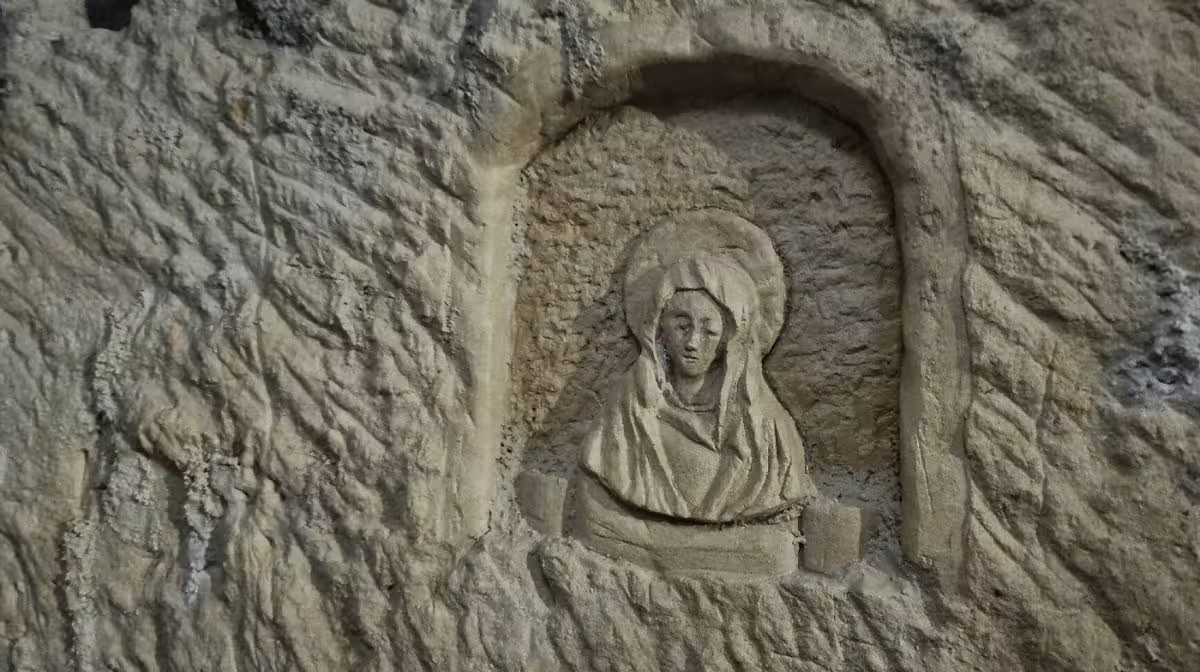
You’ll see the evidence: the original bunk beds (narrow iron frames where families slept), storage alcoves for food and water, ventilation shafts (necessary to make the air breathable for hours at a time), and areas partitioned for different purposes — families separated by gender, storage areas for supplies, even designated spaces for medical care. The walls bear chalk markings — names, dates, drawings made by children waiting out raids.
The personal reality of this: Imagine you’re a child in 1942. The siren goes off. Your family grabs whatever they can carry and walks to the nearest cistern entrance. You descend into darkness lit only by oil lamps or candles. The air gets cooler, damper. You wait. Your parents don’t know if your home will still be standing when you emerge. You might spend 2, 4, 8 hours underground. If you’re claustrophobic or anxious, the experience is genuinely traumatic. Some children grew up spending entire summers in these tunnels — school classes were sometimes held underground.
Malta’s resilience during WWII became legendary. The British awarded the entire nation the George Cross in 1942 — the only time a country has received this military decoration. It still appears on the Maltese flag. The Maltese endured this level of bombardment without surrender or capitulation. That collective trauma and resilience is what makes standing in these shelters today so powerful.
Post-War Abandonment & Modern Restoration
After the war ended in 1945, the tunnels were gradually abandoned. Life returned to above ground. For decades, the cisterns and shelters were largely forgotten — considered relics of a period people wanted to move past.
Malta gained independence in 1964, and gradually, heritage awareness grew. By the 1990s and 2000s, there was renewed interest in preserving wartime sites. The underground galleries were rediscovered, cleaned, stabilized, and eventually opened to the public under Heritage Malta’s management. Some sections contain later additions (1950s–60s shelving and modification marks) which archaeologists left in place — they became part of the story, showing how the spaces evolved after the war.
The decision to preserve the site authentically (rather than reconstruct or over-restore it) was deliberate. The dust, the damp, the uneven ground, the preserved graffiti — these aren’t flaws. They’re historical honesty. You’re experiencing what it actually felt like, not what a curator thinks it should look like.
Practical Information
How to Book
Available at 10am, 11am, 12pm, 1pm on Mondays, Wednesdays, Sundays only. Book at heritagemalta.mt. Tours are limited to 15 people and regularly sell out 2–4 weeks in advance (April–October especially).
Your ticket is valid only for your chosen time slot. Miss it, and you lose your money. No refunds, no exchanges.
What to Wear
- Closed, comfortable shoes with grip: The ground is uneven and slippery. Trainers are ideal. High heels, sandals, flip-flops are prohibited.
- Layers: It’s cool underground but humid. You’ll warm up quickly from exertion. Wear something you can tie around your waist.
- Clothes you don’t mind soiling: Limestone dust is everywhere. Don’t wear your best outfit.
What to Bring
- A microfibre cloth (hands get damp, useful before touching your phone or camera)
- A water bottle (you sweat more than expected)
- A camera with good low-light performance (smartphones with night mode work reasonably well)
- Allergy medication if you’re prone to respiratory sensitivity (dust + humidity can trigger it)
Accessibility & Important Restrictions
Wheelchair access: Not accessible. Stairs, narrow passages, uneven terrain.
Claustrophobia: Heritage Malta’s terms explicitly state you warrant you’re in good health and not subject to panic attacks or claustrophobia. This isn’t gatekeeping — some passages are genuinely tight.
Age restrictions: Children under 6 cannot visit. Children 6–11 must be accompanied by an adult. Children 8+ with decent fitness and historical interest are typically fine; younger children may find the dark and confined spaces frightening.
Pregnancy: Uneven surfaces, narrow passages. Not recommended without medical clearance.
Where to Stay
If you’re basing yourself in Valletta for a night or two, you’ll have easy access to Underground Valletta and all other city attractions.
Iniala Valletta is a contemporary boutique luxury property housed in a restored 16th-century palace. Minimalist interiors, spa facilities, rooftop lounge with panoramic views. The modern aesthetic contrasts beautifully with Valletta’s medieval architecture.
Rosetti Boutique Hotel is a five-star luxury boutique property in a meticulously restored historic building. Sophisticated design, impeccable service, intimate atmosphere. Perfect for travellers seeking refined elegance in the heart of Valletta.
Valletta Boutique Rooms is a budget-friendly guesthouse with characterful rooms in a traditional Valletta townhouse. Great value, authentic neighbourhood feel, family-run.
For a comprehensive guide to luxury and mid-range stays across Valletta, see our full guide to the best luxury boutique hotels in Valletta. You can also browse the complete Malta accommodation guide if you’re planning to split time between multiple islands.
Use the interactive map below to explore accommodation options and compare prices across all booking platforms:
Who Should Visit (and Who Might Skip)
Excellent For
- History enthusiasts: Genuinely unique. There’s nothing quite like this elsewhere in the Mediterranean.
- Families with older children (8+): Physically manageable if they have decent fitness. Fascinating for curious minds.
- WWII history buffs: The unpolished, authentic nature of the site is more impactful than sanitised museum exhibits.
- Photography enthusiasts: Low-light photography is challenging but rewarding. Your head lamp creates interesting effects.
- Couples: Memorable, intimate experience due to small group size.
Might Want to Skip If
- You have claustrophobia or panic disorder.
- You have mobility issues or use mobility aids.
- You’re seeking “fun tourist” experiences rather than educational depth.
- You have respiratory sensitivity to dust and humidity.
- You prefer polished, climate-controlled museums to raw, preserved sites.
What Visitors Say
I reviewed feedback from dozens of visitors across TripAdvisor, travel blogs, and heritage platforms. Here’s the synthesis:
Most Praised
Guide quality: Consistently described as “knowledgeable,” “engaging,” and “passionate.” One visitor: “Our guide was brilliant — he gave us historical overview and added a personal lens. He made it genuinely moving.”
Authenticity: Visitors appreciate that the site hasn’t been over-polished or turned into a theme park. Preserved graffiti, original beds, raw condition — it feels real in a way reconstructed sites don’t.
Uniqueness: Multiple visitors noted this is unlike anything else they’ve experienced. “A truly authentic experience — you don’t see this anywhere else.”
Value: €15–20 is seen as reasonable for a guided historical tour in a European capital.
Common Criticisms
Physical difficulty: Several found it more demanding than expected. “Uneven ground and lots of ups and downs — bring good shoes.” “The humidity was more intense than I expected.”
Booking difficulty: Availability is tight in high season. “All available times were booked out. Had to rearrange our itinerary.”
Limited information in some sections: A few felt some rooms were given brief explanation. However, this was minority feedback.
Photography limitations: The darkness makes photography challenging. Expect atmospheric shots, not professional-grade clarity.
Not wheelchair accessible: Genuine limitation due to stairs and narrow passages.
Overall sentiment: 4.5–5 stars consistently. Negative reviews typically from visitors who didn’t read accessibility restrictions. For visitors who know what they’re getting into, satisfaction is high.
Combining with Other Valletta Attractions
The Morning Loop (Half Day)
9:30am arrive at MUŻA → 10am Underground Valletta → 11:30am–1pm Upper/Lower Barrakka Gardens (free, 15-min walk, spectacular views) → 1pm onwards lunch in Valletta city centre.
The Cultural Deep Dive (Full Day)
10am Underground Valletta → 11:30am–1:30pm St. John’s Co-Cathedral (€10, 10-min walk) → 2–4pm National Museum of Archaeology or Palace Armory → 4:30pm onwards walk the streets, visit Grand Master’s Palace, Auberges, or relax in a café.
The History-Focused Itinerary
Combine Underground Valletta with other significant wartime and historical sites. Visit the Three Cities (Vittoriosa, Senglea, Cospicua) — just a 15-minute ferry ride across the Grand Harbour. These neighbourhoods were heavily bombed during WWII and bear similar scars and resilience. Alternatively, explore Mdina and Rabat, the island’s ancient Silent City with medieval architecture and a contrasting above-ground historical narrative.
If you’re staying longer in Valletta, the Valletta cruise port guide outlines a full day’s itinerary that includes Underground Valletta alongside other major attractions. You can also reference the comprehensive Malta accommodation guide if you’re planning a longer stay across the island.
Valletta is easily walkable. Plan a full day for multiple attractions.
Explore more in Valletta