 Skip to content
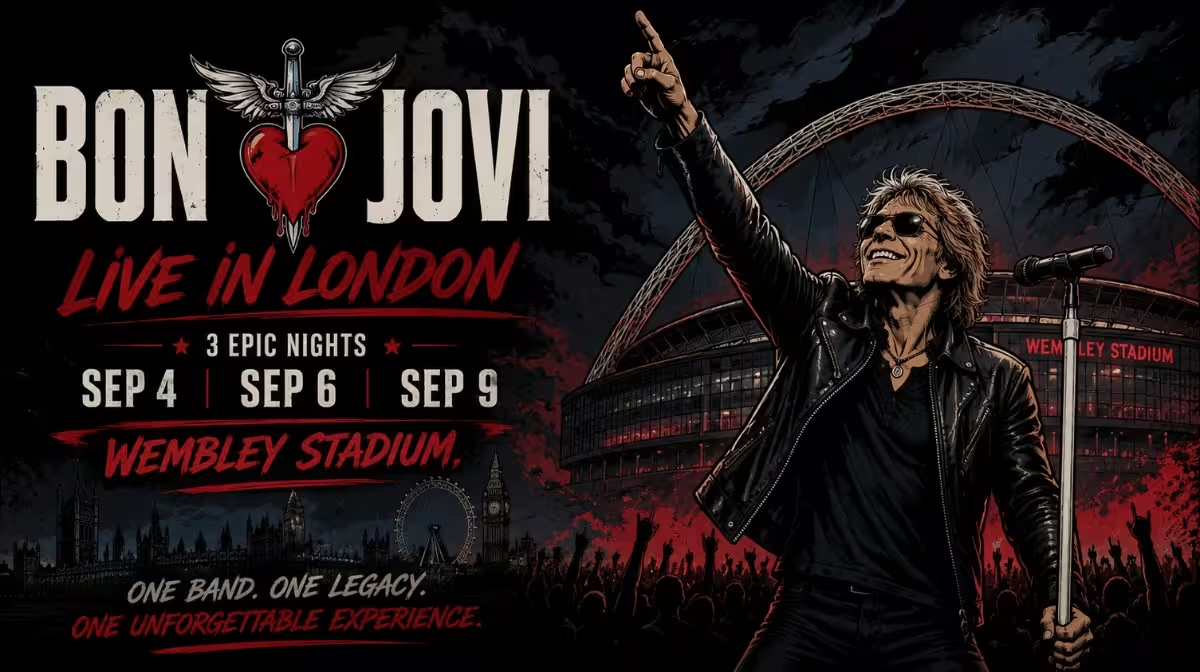
Four decades after a kid from New Jersey decided the world needed bigger choruses, Bon Jovi at Wembley is the kind of night that turns a stadium into a single voice. The Forever Tour rolls into London across several September evenings in 2026, and if you’ve ever shouted “we’re halfway there” at the top of your lungs, you already know why this matters. This guide is built for the whole trip, not just the gig: when to buy, where to sleep, how to get in and out of Wembley without losing your mind, and what to do with the rest of your time in London once the lights come up.
In this guide
Why this tour, why now
Bon Jovi has never been the cool critics’ choice, and the band has never seemed to care. What they built instead was something more durable: a catalogue of songs that strangers sing together. The Forever Tour leans into exactly that. It’s less a victory lap than a reminder that a Bon Jovi show was always about the room rather than the band — thousands of people who arrived on an ordinary evening and left having shared something.
Jon Bon Jovi formed the group in 1983, and by the time Slippery When Wet landed in 1986, they’d cracked the code most bands chase their whole careers: the anthem. “Livin’ on a Prayer” and “You Give Love a Bad Name” weren’t just hits, they were the sound of a decade. What’s kept them on the road since isn’t nostalgia alone — it’s that those songs still do the job. Drop the opening of “Prayer” in a stadium of 65,000 and watch what happens.
For Wembley, expect a generous set. Bon Jovi shows tend to run long, and the band has the rare luxury of a back catalogue so deep that the “deep cuts” are other artists’ biggest songs. Across multiple London nights, the setlist shifts — which is the not-so-secret reason plenty of fans go twice.
The songs you’ll hear, and the ones you’ll hope for
No two nights are identical, but certain songs are effectively non-negotiable — the ones the crowd would riot without. Here’s the spine of a typical Forever Tour set, plus the wildcards worth crossing your fingers for.
The certainties
- Livin’ on a Prayer — the one everyone came for. Usually saved for late, and it lands like a wave.
- You Give Love a Bad Name — that opening snap of “shot through the heart” is pure muscle memory for the crowd.
- It’s My Life — the bridge between the old fans and the ones who found the band in 2000.
- Wanted Dead or Alive — the cowboy ballad that doubles as a singalong; goosebumps guaranteed.
- Bad Medicine — pure swagger, often stretched out with a bit of showmanship.
The ones worth hoping for
- Runaway — the 1984 debut single that started everything.
- Lay Your Hands on Me — a thunderous opener when it makes the cut.
- Blaze of Glory — Jon’s solo Western epic, a storyteller’s showcase.
- Always — the ballad that turns a stadium into a sea of phone lights.
- Keep the Faith — the 1992 comeback anthem, all groove and conviction.
A word of advice: don’t spend the night filming. One clip of “Prayer” for the memory, then put the phone away. These songs were built to be felt in a crowd, not watched back on a small screen.
What a Wembley night actually feels like
Wembley is a proper occasion before a note is played. The walk up Olympic Way from the station — Wembley Way, as everyone calls it — is part of the ritual: a slow river of people, the arch lit up ahead, the buzz building with every step. Get there with time to spare and let it work on you.
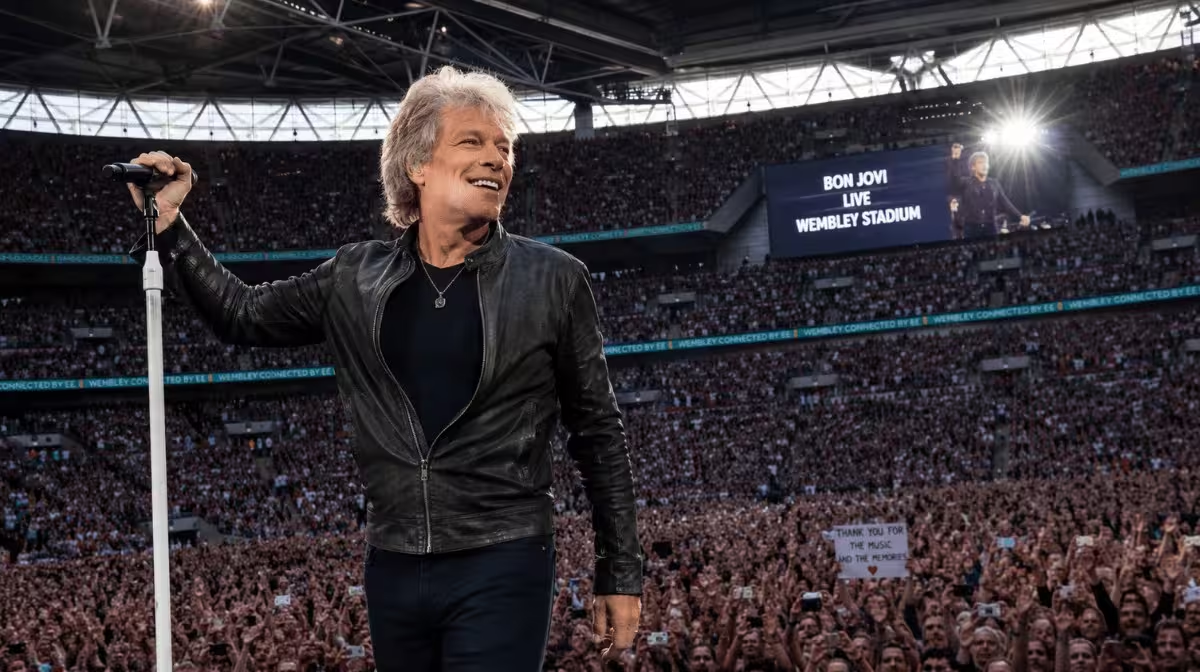
Inside, the current stadium (rebuilt and reopened in 2007) is a genuinely good place to see a band. The bowl is steep enough that sightlines hold up even from the upper tiers, and the sound has come a long way from the muddy stadium gigs of old. If you’re on the pitch, you’ll trade comfort for closeness; in the seats, you’ll trade closeness for the full sweep of the spectacle. Both are valid — it depends whether you want to be in the storm or watching it.
A Bon Jovi crowd skews wide. You’ll have people who bought Slippery When Wet on cassette standing next to teenagers who learned the words from their parents. It’s warm, loud, and unpretentious — exactly the kind of audience these songs were written for.
Tickets and picking your date
With several Wembley dates on the calendar, you’ve got a real choice to make — and it’s worth thinking about more than just which evening you’re free. Prices and availability swing noticeably between nights. As a rule, the midweek shows tend to be a little calmer and a little cheaper, while the Friday and weekend dates draw the bigger, rowdier crowds and sell faster.
At the time of writing, entry-level tickets across the dates start somewhere around the €170 mark and climb from there depending on the night and where you want to stand or sit. Some dates already show far tighter availability than others, so if a specific evening matters to you, don’t sit on it.
You can browse the current dates, prices, and seating through the link below.
Getting to Wembley, and back out again
The getting-in part is easy. The getting-out part is where a little planning pays off.
Three stations serve the stadium. Wembley Park (Jubilee and Metropolitan lines) is the main one — it empties straight onto Wembley Way, a few minutes’ walk from the turnstiles, and it’s your best bet from central London at roughly 20 minutes door to door. Wembley Stadium (national rail from Marylebone) and Wembley Central (Bakerloo line and Overground) are the alternatives, and on a busy night, walking to a slightly further station can save you a long queue.
Tap in with a contactless card or phone rather than buying paper tickets — it’s cheaper and faster, and the daily cap means you won’t overpay for the return trip. Reckon on about £2.80 each way from the centre at peak times.
When the last song ends, tens of thousands of people head for the same trains at once. You have two sensible options: move fast and join the crush, or hang back twenty minutes, grab a drink, and let it clear. The second is far more civilised. The Jubilee line runs late on weekends, and there are night buses if you miss it.
Skip driving altogether. Parking near the stadium is scarce, expensive, and slow to escape on a concert night. If you must use a car, book a space in advance through one of the parking apps rather than chancing it.
Where to base yourself
There are two schools of thought here. Stay near Wembley and you’ll be in bed minutes after the encore. Stay central and you’ll trade a longer journey home for a far better base to enjoy the rest of London. Both work — it comes down to whether the concert is the whole trip or just one night of it.
Use the map below to compare what’s available across the city for your dates. It pulls live prices from the major booking sites in one place.
A few areas worth knowing:
- Wembley Park itself — the modern development right by the stadium has a cluster of reliable hotels. Unbeatable for convenience, and you’ll walk home. Expect roughly £80–£170 a night, more on event dates.
- Marylebone and Baker Street — a direct, short hop to Wembley on the Jubilee or rail line, while still putting you in a genuinely lovely central neighbourhood. A smart compromise. Around £120–£260.
- King’s Cross — well connected, freshly regenerated, and handy if you’re arriving by train from elsewhere. Roughly £75–£180.
- The West End — theatres, restaurants, and the heart of the action on your doorstep, with a manageable journey to the show. The pick if you’re making a proper weekend of it. From about £100 upward.
Book sooner rather than later. A stadium night puts pressure on rooms across the whole area, and the closer ones to Wembley go first.
Some of the booking links here are affiliate links. If you book through them we may earn a small commission, at no extra cost to you — it helps keep these guides going.
Making a weekend of it
It would be a shame to fly in, see the show, and fly home. London rewards even a single extra day. If your time is short, here’s where it’s best spent.
For the classics, build a loose loop from Westminster along the river: the Abbey, the Houses of Parliament, then over the bridge to the South Bank for a walk past the National Theatre and on towards the Tate Modern. It’s free, it’s flat, and it strings together half the postcard views in one stretch. The big museums — the British Museum, the National Gallery, the V&A — cost nothing to enter and are world-class, which makes them perfect for a morning before an evening gig.
If you’d rather eat your way around, point yourself at Borough Market near London Bridge for lunch, or spend an evening in Soho, where the restaurants and bars are packed into a few dense, lively streets. For a pre-show drink with a view, the Sky Garden near the Tower is free to visit if you book ahead.
Want something organised? Here are a few well-rated tours and experiences to slot into your trip.
Questions, answered
How many nights is Bon Jovi at Wembley?
Several across September 2026, spread over a couple of weeks. Availability differs sharply between them, so check the current list before deciding which one to book.
What time should I arrive?
Doors usually open around 90 minutes to two hours before the headline set, and bag checks take time. Aim to be at the stadium when doors open if you want a relaxed entry and a look at the merch stands. The main act typically starts somewhere around 8 to 8:30pm.
Is it worth going to more than one night?
If you’re a serious fan, yes. The setlist changes from night to night, so a second show isn’t a repeat — it’s a different evening with its own surprises. Plenty of people do exactly this when the band plays a multi-night run.
Which station is best for Wembley?
Wembley Park on the Jubilee line is the closest and most direct from central London. On a packed night, though, walking to Wembley Central or Wembley Stadium station can mean a shorter queue for the train home.
Should I stay near Wembley or in central London?
Near Wembley if the concert is the main event and you want the easiest possible night. Central — somewhere like Marylebone or the West End — if you’re spending a few days in London and want a better base for everything else. The journey from the centre is only about 20 minutes either way.
What can’t I bring in?
No professional cameras with detachable lenses, no large bags, no glass, no outside alcohol. Phones and small cameras are fine. Travel light — a small bag clears security far quicker than a big one. Check Wembley’s official site close to the date for the current rules.
How much are food and drinks inside?
Stadium prices, as you’d expect — roughly £5–£8 for a drink and £8–£12 for food. Card and contactless work everywhere. Eating before you arrive will save you both money and queueing time.
Go see it
Some bands you watch. Bon Jovi you join. Pick your night at Wembley while the good dates are still open.
Find TicketsMore live nights worth travelling for
Written by Ben Farr · Updated June 2026
Ben runs routeandstay.com, a travel guide built around the trips worth taking — including the ones planned around a single unforgettable night.