 Skip to content
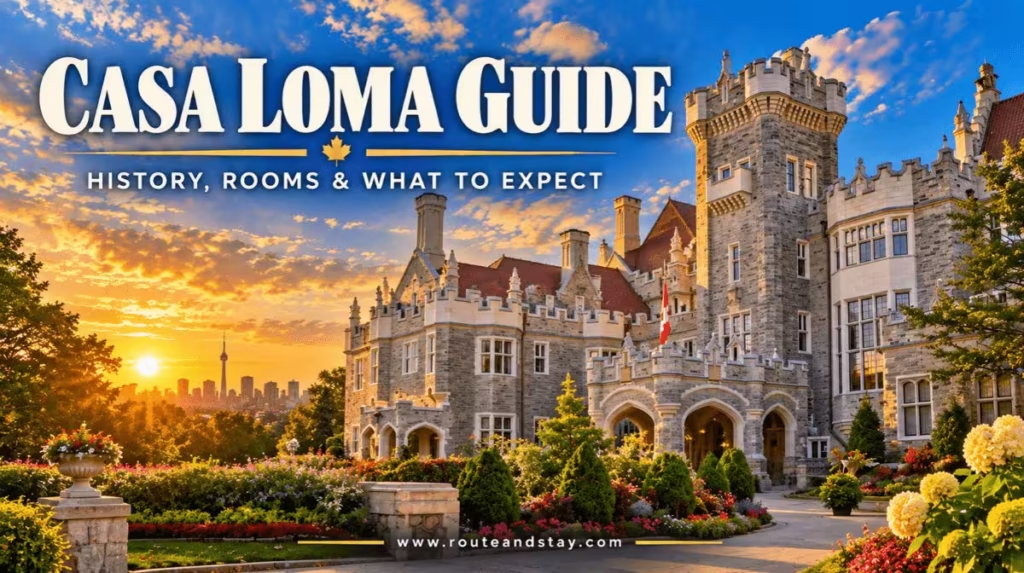
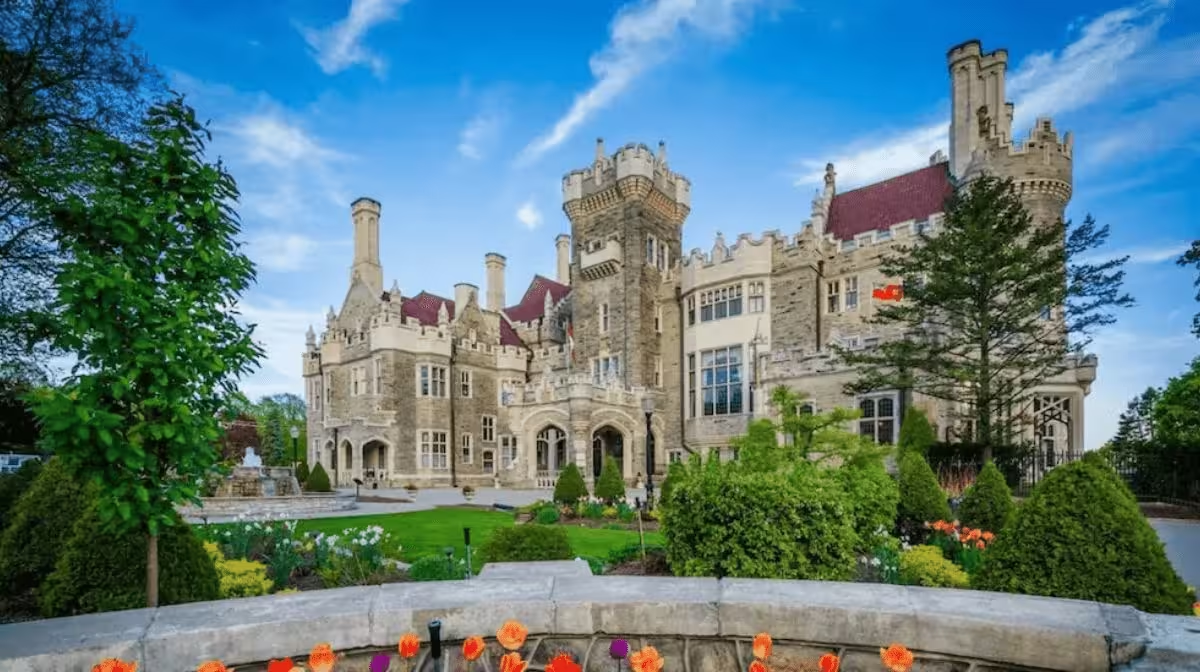
Every city has a strange building or two that doesn’t quite make sense until you know the story behind it. In Toronto, that’s Casa Loma — a genuine Gothic Revival castle sitting on a hill in the middle of a modern midtown neighbourhood, built by a man who wanted to live like European nobility and ended up losing everything trying to pay for it. It’s part fairy tale, part cautionary tale, and one of the more unusual museum visits in North America. This is part of our full Toronto travel guide: here’s the real story, room by room.
Jump to a section
Sir Henry Pellatt’s Vision
Casa Loma exists because one man had both an enormous fortune and a very specific fantasy. Sir Henry Mill Pellatt was a Toronto financier who made his money electrifying the city — his Toronto Electric Light Company held the lighting contract for Toronto’s streets, and he later built one of Canada’s first major hydroelectric plants at Niagara Falls, supplying power back into the city he’d already lit up. He was knighted in 1905, partly for his decades of volunteer service with the Queen’s Own Rifles of Canada, the country’s oldest continuously serving infantry regiment.
Pellatt had toured the castles of Europe as a young man and never quite let go of the idea of owning one himself. By 1911, with his fortune near its peak, he had both the money and a hilltop plot overlooking the city to finally build it. The name he chose, Casa Loma, is a rough Spanish-Latin construction meaning “Hill House” — a fittingly grand name for a fittingly grand location.
Building the Castle
Pellatt hired architect E.J. Lennox — already well known in Toronto for designing the city’s Old City Hall — and reportedly gave him more of a wish list than a blueprint. The result, built between 1911 and 1914 by roughly 300 workers, is a genuine Gothic Revival mansion: turrets, battlements, secret passages, and 98 rooms across just under 200,000 square feet, making it the largest private residence in Canada at the time. The final cost ran to roughly $3.5 million in 1911 dollars — several hundred million in today’s terms.
Worth knowing: the castle has 30 bathrooms and 25 fireplaces, and even by the standards of Edwardian excess, it was never actually finished — the First World War arrived in 1914, construction stopped, and it never fully resumed.
The Extravagances
Pellatt’s wish list ran well past what a normal house needs. The kitchen included an oven large enough to roast a full ox. Two vertical shafts were built into the structure purely to house pipe organs, including a Wurlitzer in the Great Hall. An 800-foot tunnel runs underground from the house to the stables, so Pellatt’s horses — whose names were etched above their stalls in 18-carat gold — never had to be led outside in the rain. His personal study has two secret doors hidden behind mahogany panelling on either side of the fireplace, and his upstairs suite has a hidden storage compartment beside its own fireplace, reportedly used to store confidential documents.
Some of the ambition never got finished at all: the basement has the shell of a swimming pool that was never completed, along with what would have been three indoor bowling alleys and a private rifle range — 1911 plans that outran even Pellatt’s fortune.
The Fall
The war that stopped construction also, indirectly, ended Pellatt’s fortune. Wartime and post-war tax changes, combined with the province’s move to take direct control of hydroelectric power — the exact business Pellatt had built his wealth on — left him unable to sustain the estate. He abandoned Casa Loma in 1923, and by the early 1930s the City of Toronto, having seized the property for unpaid taxes, was seriously weighing whether to demolish it entirely.
Instead, in 1937, a local Kiwanis Club stepped in and leased the property to run as a tourist attraction — the same volunteer organization, the Kiwanis Club of Casa Loma, still operates it today, using the proceeds to fund community and youth programs across the city.
A Secret Wartime Role
Between Pellatt’s departure and the Kiwanis Club’s arrival, Casa Loma had one more chapter most visitors never hear about. During the Second World War, the estate’s stables secretly housed the development and assembly of ASDIC — early sonar equipment used to detect German U-boats — hidden from public view behind hand-painted “Under Repairs” signs. A private residence built for parties and horses spent part of the 1940s quietly contributing to the Allied war effort instead.
Rooms Worth Seeing
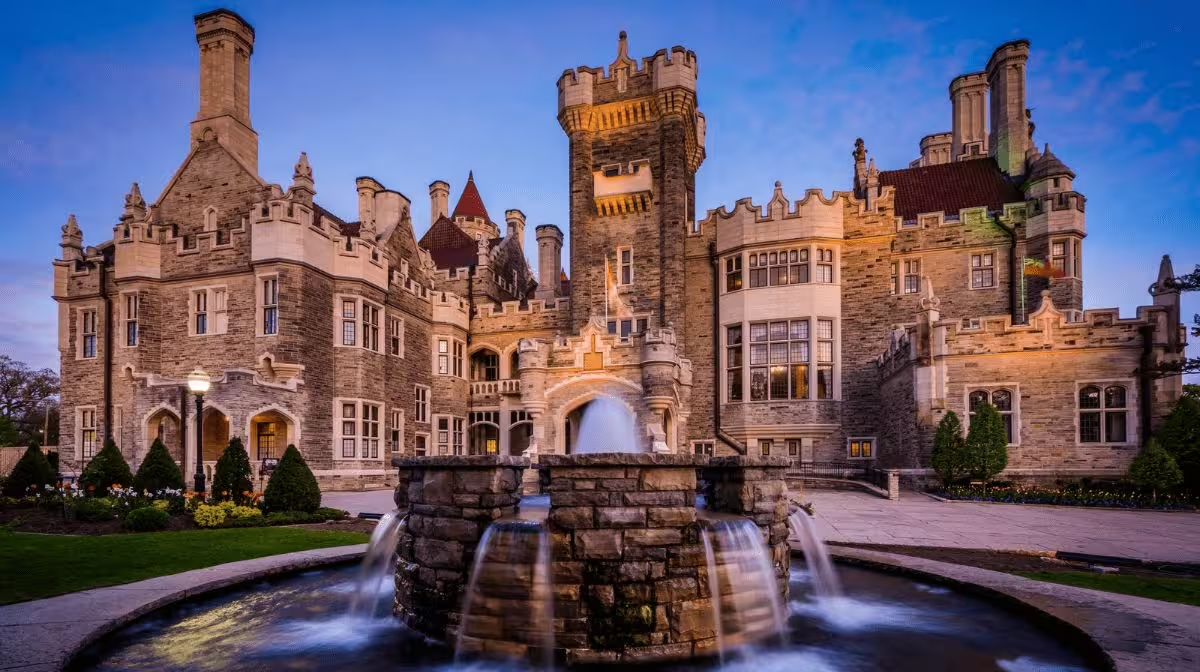
Casa Loma is self-guided — there’s no included tour guide walking you through, so it’s worth knowing what to look for before you go in.
The Great Hall
A 60-foot ceiling, sculpted figures on the pillars, and the Wurlitzer organ built into one of Pellatt’s two dedicated organ shafts.
The Library
Shelving for around 10,000 books, a herringbone oak floor, and Pellatt’s own coat of arms worked into the ceiling.
The Conservatory
Italian marble flooring, a stained-glass dome, and steam pipes once used to keep the flower beds warm through Toronto winters. Now home to Don Alfonso 1890, a fine-dining restaurant from Michelin-starred chefs.
Sir Henry’s Study
Mahogany panelling conceals a secret door on either side of the fireplace — genuinely easy to miss if you don’t know to look.
Sir Pellatt’s Suite
His private bedroom, finished in mahogany and walnut, with a hidden storage compartment beside the fireplace once used for confidential documents.
Lady Pellatt’s Suite
Painted throughout in Wedgwood blue, reportedly her favourite colour.
The Towers
Narrow staircases lead up from the third floor to genuine turret views over the city — worth the climb on a clear day.
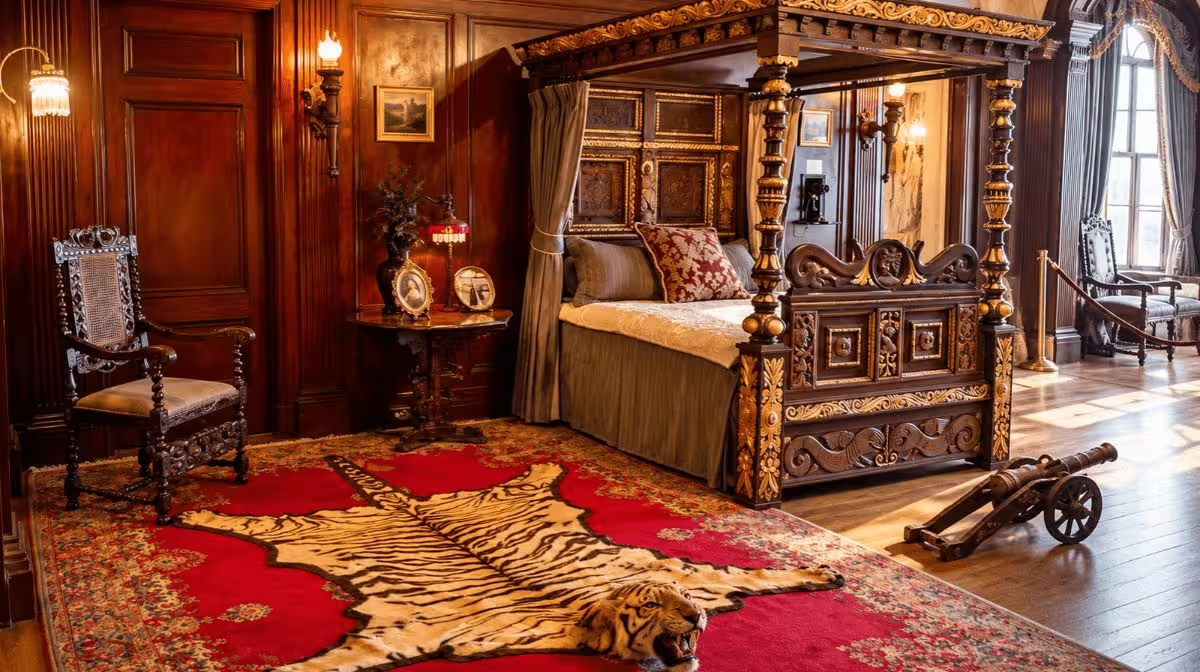
The third floor also holds the Queen’s Own Rifles of Canada Regimental Museum, a nod to the regiment Pellatt served with for decades, and the 800-foot tunnel to the stables is open to walk through as part of the visit.
The Grounds
Casa Loma sits on five acres, restored and maintained by the Garden Club of Toronto, with formal perennial borders, fountains, and sculpture scattered through the estate gardens below the castle terrace. In summer, a Glass Pavilion goes up on the grounds for events and Symphony in the Gardens concerts; in October, the entire property leans into its Gothic bones for a seasonal haunted-house event.
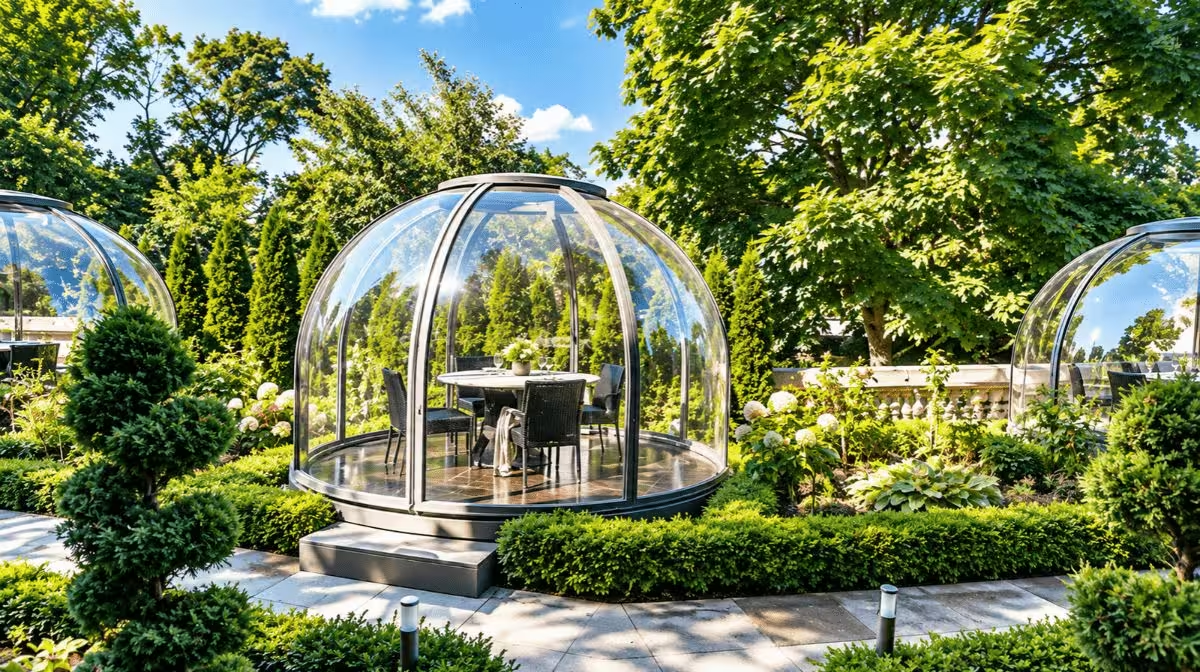
The gardens double as a genuine restaurant in the warmer months — The Gardens at Casa Loma, run by the same group behind the castle’s other on-site dining, seats guests on a patio among the roses and lilacs with the castle towers as a backdrop, and tented pods on hand for rainy evenings. It’s a reservation, not a walk-up, and access to the gardens for dinner doesn’t include a ticket to tour the castle itself.
Casa Loma Today
Casa Loma now draws upwards of half a million visitors a year, and its dramatic, ready-made-castle look has made it a regular filming location for movies and television — you’ve likely seen it on screen without realizing it was a real house in midtown Toronto. It’s a 20-minute subway ride from downtown, and worth budgeting an hour and a half at a relaxed pace — longer if the gardens are open (May through September) and you want to see them properly. See our Best Toronto Tours guide for how it fits alongside the CN Tower and the Distillery District, or our Toronto Weekend Itinerary for exactly when to slot it in.
Tickets and Practical Info
Casa Loma is at 1 Austin Terrace, a short walk from Dupont subway station. It’s self-guided, so there’s no need to time your visit around a tour start — just budget enough time to actually explore once you’re in.
| Ticket | Includes |
|---|---|
| General Admission | Full castle, tunnel, and grounds access (gardens seasonal, May–Sept) |
| Toronto CityPASS | Casa Loma plus three more attractions (choose from the Royal Ontario Museum, CN Tower, City Cruises Toronto, and the Toronto Zoo) |
Casa Loma General Admission
Skip-the-line entry to the castle, tunnel, and grounds.
Check Availability on Expedia
Toronto CityPASS (Includes Casa Loma)
Bundle Casa Loma with three more of Toronto’s top attractions at a combined saving over paying separately.
Check Availability on ExpediaWhere to Stay
Casa Loma is midtown, a 20-minute subway ride from downtown. Staying downtown or on the Harbourfront keeps you close to the rest of the city’s essentials — full neighbourhood breakdown in the Best Hotels in Toronto guide.
Frequently Asked Questions
Is Casa Loma worth visiting?
Yes — it’s a genuinely unusual visit, less a polished museum and more a house whose owner’s ambition outran his budget, with the secret passages and unfinished rooms to prove it.
How long does a Casa Loma visit take?
Budget an hour and a half at a relaxed pace, longer if the gardens are open (May through September).
Is Casa Loma a guided tour?
No — it’s self-guided, so you explore at your own pace with signage in each room.
Is Casa Loma good for kids?
Yes — the secret passages, tunnel, and towers tend to be the highlight for younger visitors specifically.
Can you eat at Casa Loma?
Yes — Don Alfonso 1890, a fine-dining restaurant from Michelin-starred chefs, operates inside the historic conservatory year-round, and The Gardens at Casa Loma runs seasonal patio dining outside among the estate gardens.
Route & Stay is reader-supported. Some of the links on this page are affiliate links, and we may earn a small commission if you book through them, at no extra cost to you. Ticket details and prices were accurate at the time of writing but can change — always confirm current availability before booking.