 Skip to content
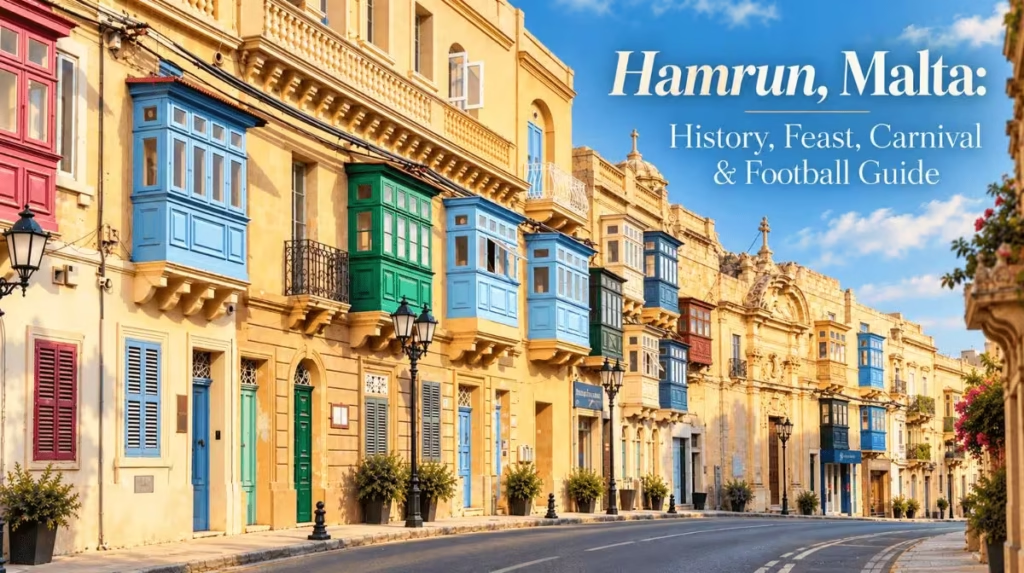
Walk down St Joseph High Road on an ordinary afternoon and Hamrun looks like any other busy Maltese town — furniture shops, buses queuing at the lights, laundry strung between gallariji balconies. Come back on the first Sunday after 7 August and the same street turns into one of the loudest, most fiercely contested feasts in the country. This is Hamrun: a working town just southwest of Valletta with a long memory, a century-old parish rivalry, and — as of the 2025/26 season — a football club that just made history for the whole island. It’s part of our wider Malta travel guide, alongside village profiles on Mdina & Rabat and Marsaxlokk.
Jump to a section
The History of Hamrun
Hamrun didn’t start out as its own town. In the mid-19th century the area was known as Casale San Giuseppe — St Joseph’s Village — a farming settlement southwest of Valletta. Its main road is still called St Joseph High Road today, and that name is really the key to understanding how Hamrun grew: it developed as a corridor town, strung out along the route connecting Valletta to the rest of the island.
A new church dedicated to San Gaetan opened its doors in 1875, and in 1881 the area was formally raised to parish status — the point at which Hamrun effectively became a village in its own right, separate from the surrounding countryside. The government adopted its popular Maltese name, Ħamrun, as the official one not long after.
Worth knowing: Hamrun’s residents are traditionally nicknamed “Tas-Sikkina” — one theory traces it to the many Hamrunizi who worked as stevedores on the nearby docks and carried a knife as a tool of the trade.
By the early-to-mid 20th century, Hamrun had become one of the largest and busiest towns in Malta, absorbing families displaced from the harbour area during the Second World War and building a reputation as a commercial hub — particularly for furniture, a trade still visible in shops along St Joseph High Road today. It’s also, quietly, produced an outsized number of notable Maltese figures: two former presidents (Anton Buttigieg and Guido de Marco), a former prime minister (Karmenu Mifsud Bonnici), and the actor and lyrical singer Oreste Kirkop, among others. Dun Ġorġ Preca, founder of the Society of Christian Doctrine, lived most of his life in Hamrun and is buried in a chapel there.
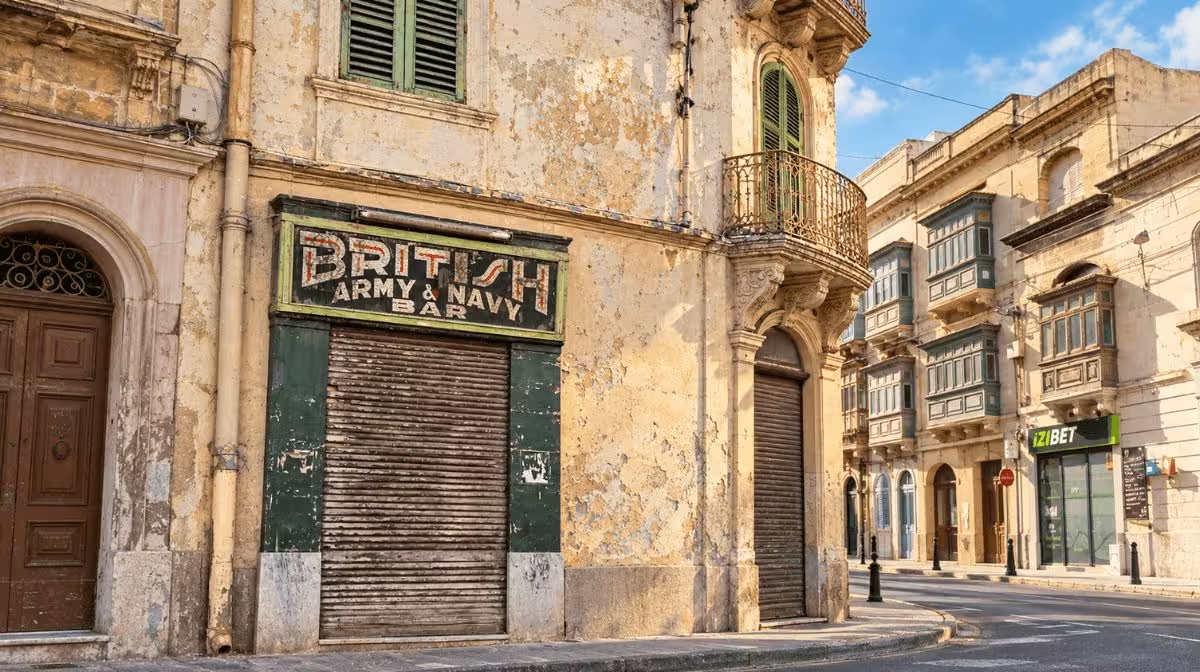
Traces of that era still turn up around town, including the old British Army and Navy Bar — long since closed, but still standing as a reminder of the years when British servicemen were a regular presence in Hamrun’s streets and social life.
San Gaetan Parish Church
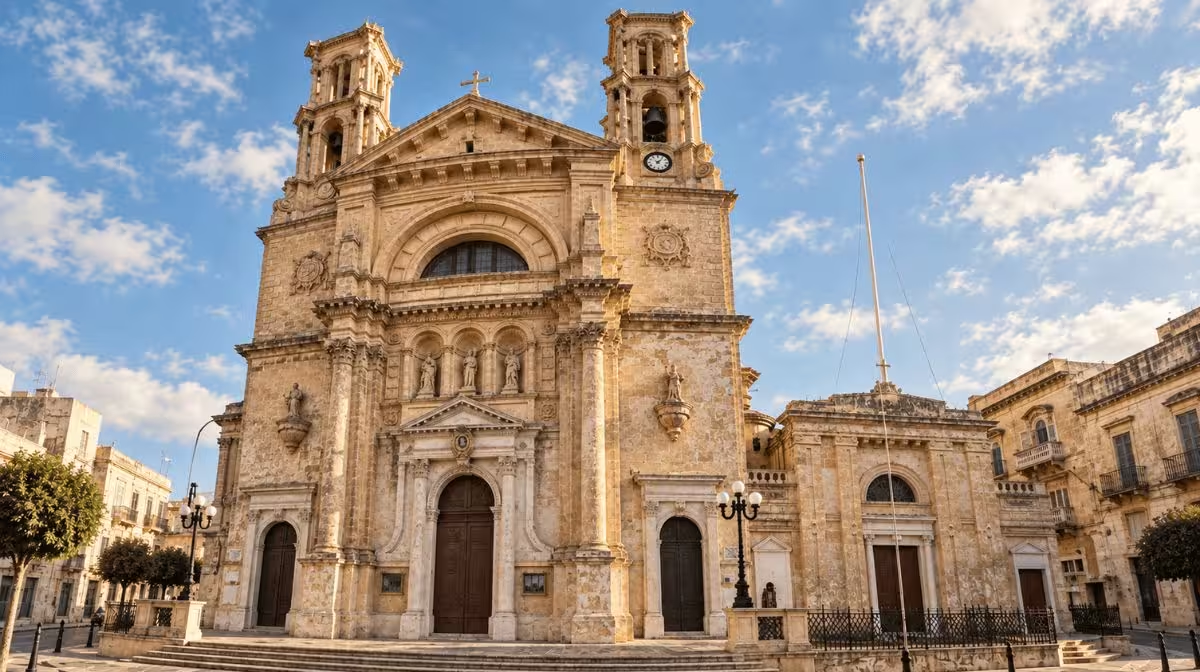
The parish church anchoring Hamrun’s main street is dedicated to San Gaetan (San Gejtanu in Maltese), designed by George Schinas and completed in 1875. Its titular painting was produced in Rome by Pietro Gagliardi, and the statue of San Gaetan carried in procession each August is the work of the Maltese sculptor Carlo Darmanin, completed in 1885.
Hamrun’s parish actually has three patron saints under its roof: San Gaetan, the Immaculate Conception, and St Joseph — a reflection of the town’s layered religious history, and part of why its feast season carries more weight, and more rivalry, than most.
The Feast of San Gejtanu
If you only know one thing about Hamrun, it should probably be this: the town’s feast, held on the first Sunday after 7 August, is consistently ranked among the noisiest and most fiercely contested in Malta — and the contest isn’t really about the saint. It’s about two band clubs.
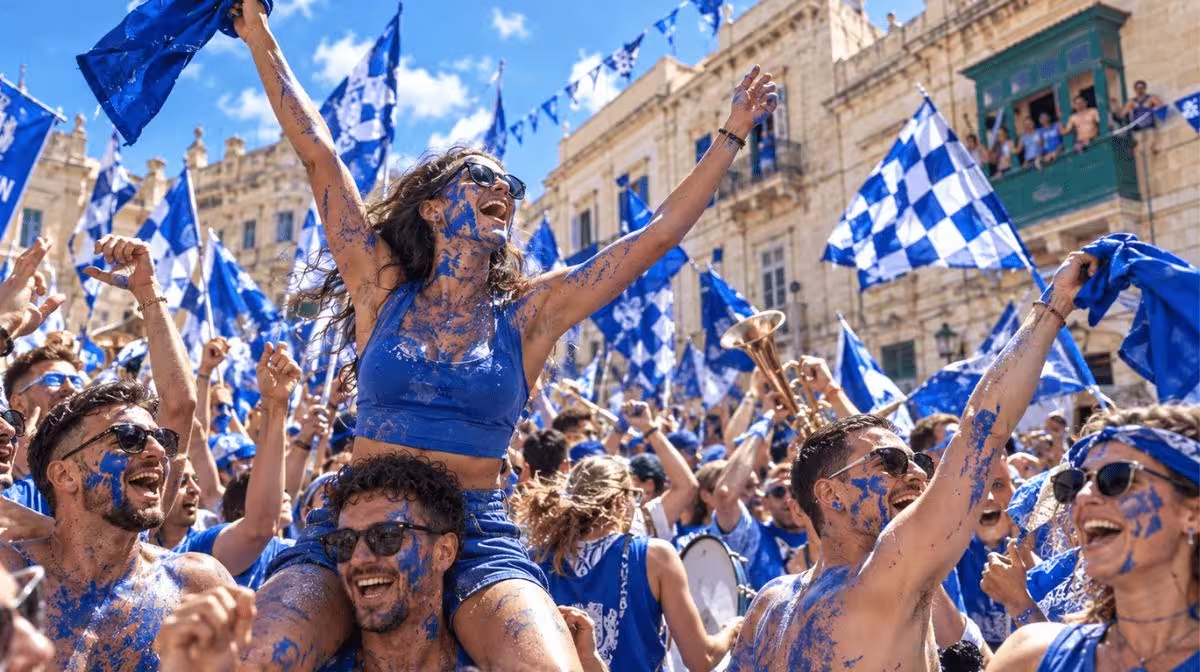
St Joseph’s Band Club, founded in 1889, was Hamrun’s original band. In 1906, after an internal dispute over a missed performance booking in Floriana, a group of its musicians split away and formed a rival club — the San Gaetan Band Club. Both are now well over a century old, and both have their own nickname, born out of old neighbourhood taunts.
| Band Club | Nickname | Colour | Founded |
|---|---|---|---|
| St Joseph’s Band Club | “Tal-Miskina” | Blue | 1889 |
| San Gaetan Band Club | “Tat-Tamal” | Red | 1906 |
The signature event is the “Marċ tal-Brijju” — a marathon band march that runs from early morning into the afternoon, with each club’s supporters in full colour, throwing confetti and streamers from balconies until the street is carpeted in paper. The rivalry has occasionally boiled over — most famously in 1987, when a clash between supporters saw the clubs’ processional angel statues reportedly sent flying across the street — but today it’s generally remembered as a fierce, good-natured contest that draws crowds well beyond Hamrun itself. The celebrations close on Sunday night with a procession of the titular statue through the streets and a fireworks display.
The Hamrun Carnival
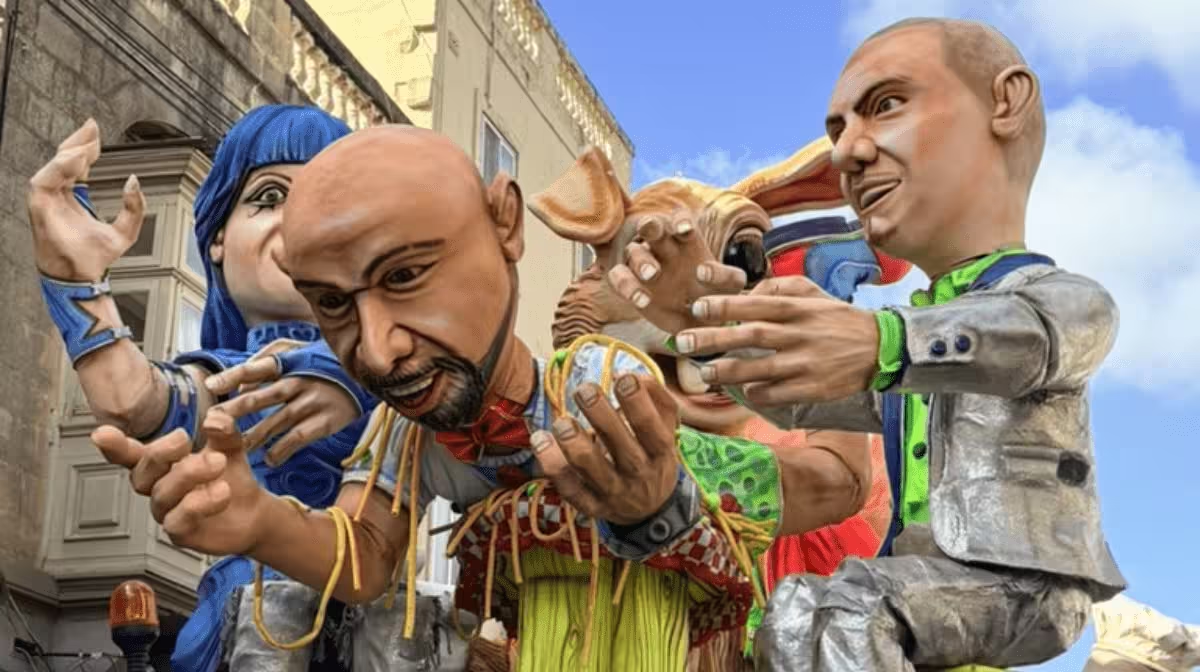
Every February, Hamrun gets the first word in Malta’s Carnival season. The Hamrun Carnival — a parade of floats, marching bands, dance companies and grotesque masks along St Joseph High Road — is organised by the Hamrun Local Council together with Festivals Malta, and it’s traditionally the event that officially opens the island’s Carnival calendar, days before the main festivities take over Valletta and Floriana.
It’s grown noticeably in scale in recent years: floats have gotten bigger and more elaborate, one recent edition included a hydraulically operated float that broke Malta’s national record for its category, and the crowds lining St Joseph High Road each year keep growing with it. It’s become enough of a fixture that a “Carnival by Night” version has been added too, with the floats lit up and paraded again after dark. For visitors timing a trip around Malta’s Carnival season, Hamrun is increasingly worth catching before the crowds shift to the capital.
Hamrun Spartans FC
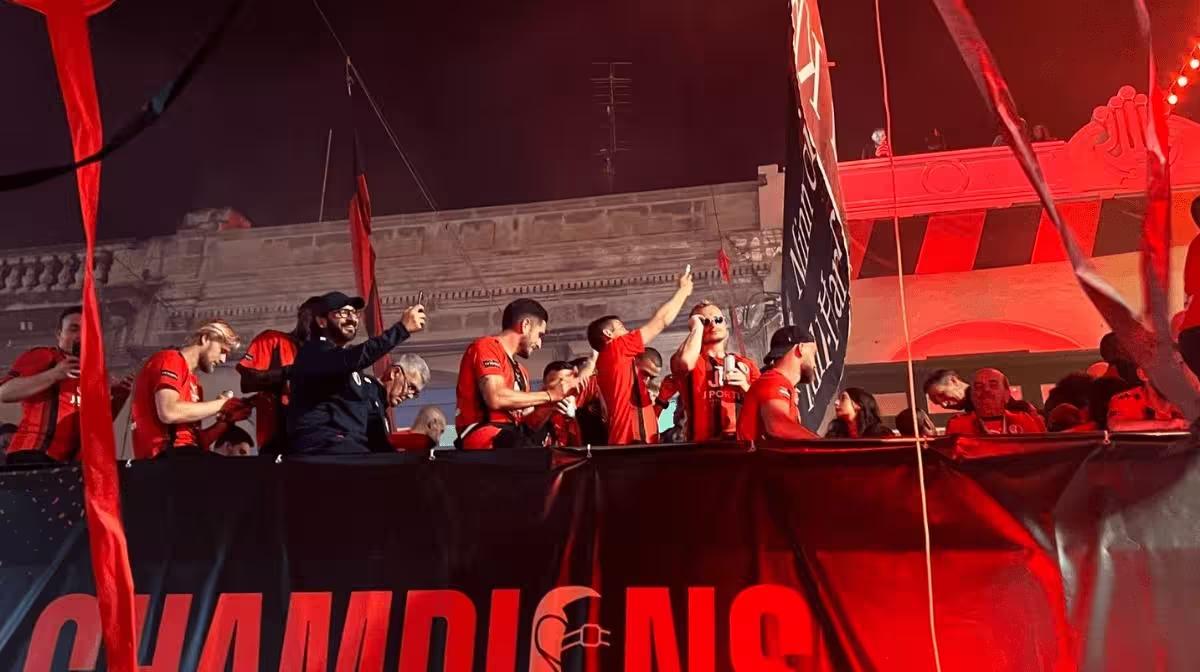
Founded in 1907, Ħamrun Spartans is one of Malta’s oldest and most decorated football clubs — and in the 2025/26 season, it made history for the entire country. After eliminating Latvia’s FK RFS in the UEFA Conference League play-off round, Spartans became the first Maltese club ever to reach the league phase of a UEFA club competition, ending a decades-long wait for the national game.
Worth knowing: a few match days into that same league phase, Spartans beat Gibraltar’s Lincoln Red Imps 3-1 — becoming the first Maltese side ever to win a match at that stage of a European competition.
It capped a run that had been building for years — Spartans reached the play-off round of the Conference League back in 2022/23 too, falling to Serbian side Partizan after a spirited 3-3 second-leg draw in Malta. Home matches in Europe are played at the National Stadium in Ta’ Qali rather than in Hamrun itself, but the town’s identity is still thoroughly wrapped up in the club, and 2025/26 gave Hamrunizi a genuinely historic season to follow.
Where to Stay
Hamrun has never been a traditional base for visitors to Malta — it’s a residential, working town rather than a resort area, and most travellers still gravitate toward Valletta, Sliema, or St Julian’s for their stay (see our full Where to Stay in Malta guide for those areas). That’s started to shift. In the last couple of years, a small but growing number of Hamrun’s old townhouses — the same gallariji-fronted buildings along streets like St Joseph High Road — have been carefully restored and converted into short-let apartments, and they’re increasingly showing up on Airbnb and similar platforms.
The appeal is straightforward: Hamrun sits just 10–15 minutes from Valletta by bus or car, prices tend to run noticeably lower than the harbour-front hotspots, and the restorations happening in some of these townhouses are a world away from a budget stopover — high ceilings, original stonework, and interiors curated to a genuinely high standard. It won’t suit everyone; this is still a working town, not a resort strip. But for travellers who want an authentic, non-touristy base within easy reach of the capital, Hamrun is quietly becoming a legitimate option.
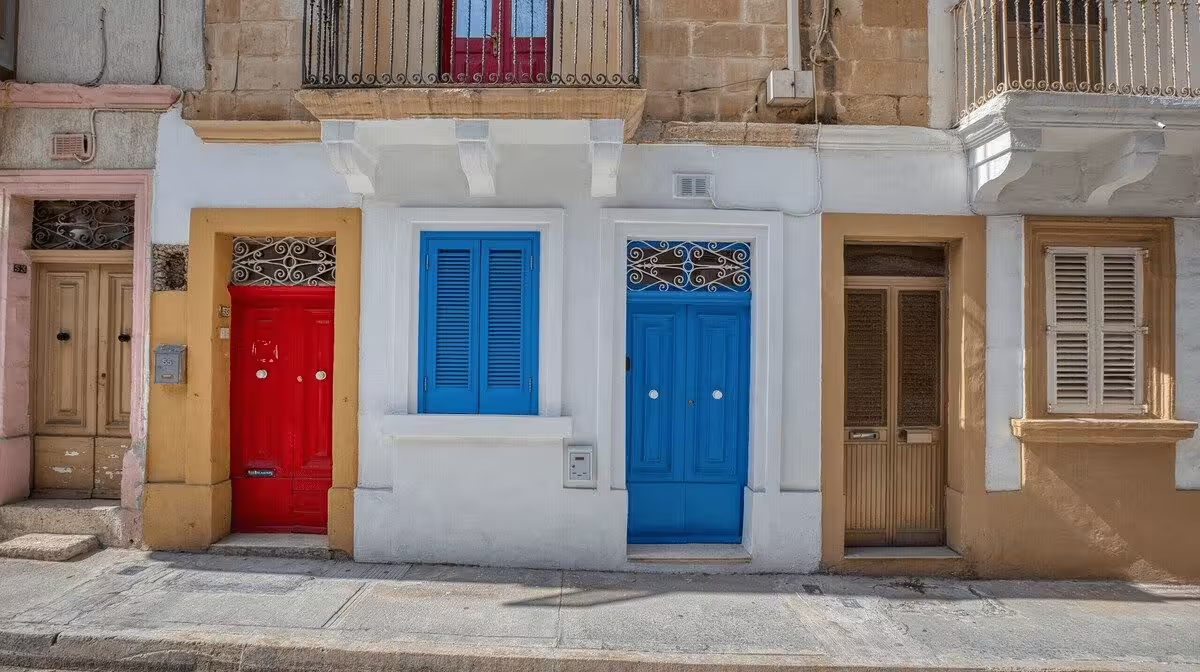
Hamrun Townhouse Stay
A restored Hamrun townhouse apartment, an easy bus or car ride from Valletta.
Check Availability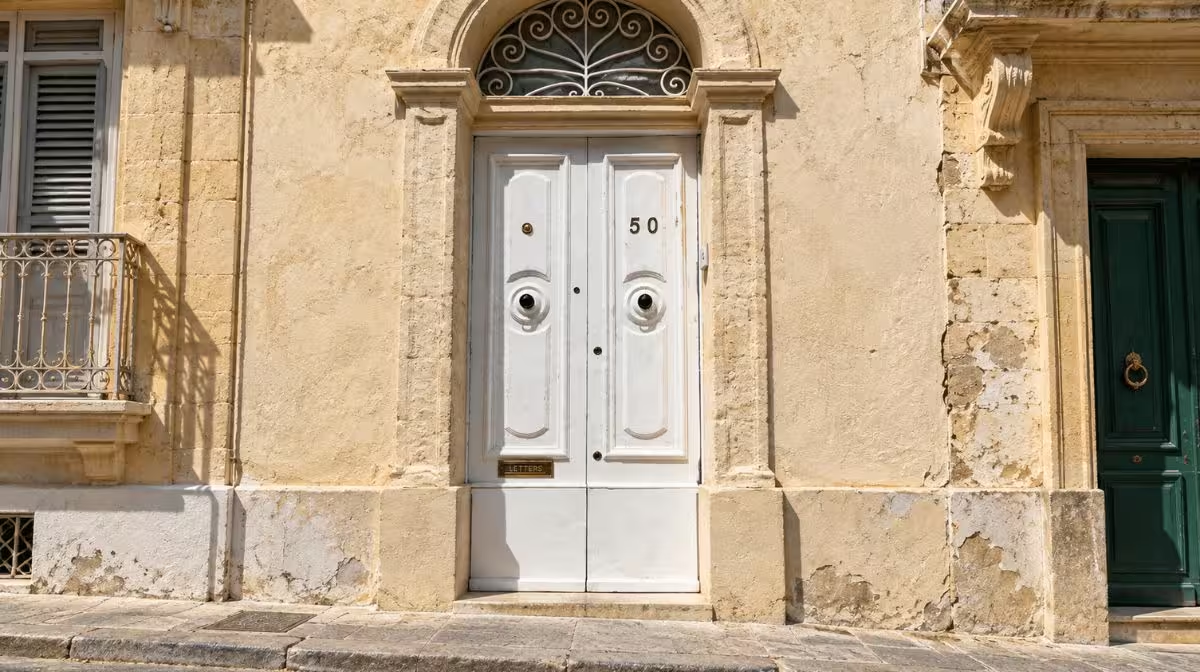
Cozy Hamrun
A compact, comfortable base in the heart of Hamrun, close to St Joseph High Road.
Check Availability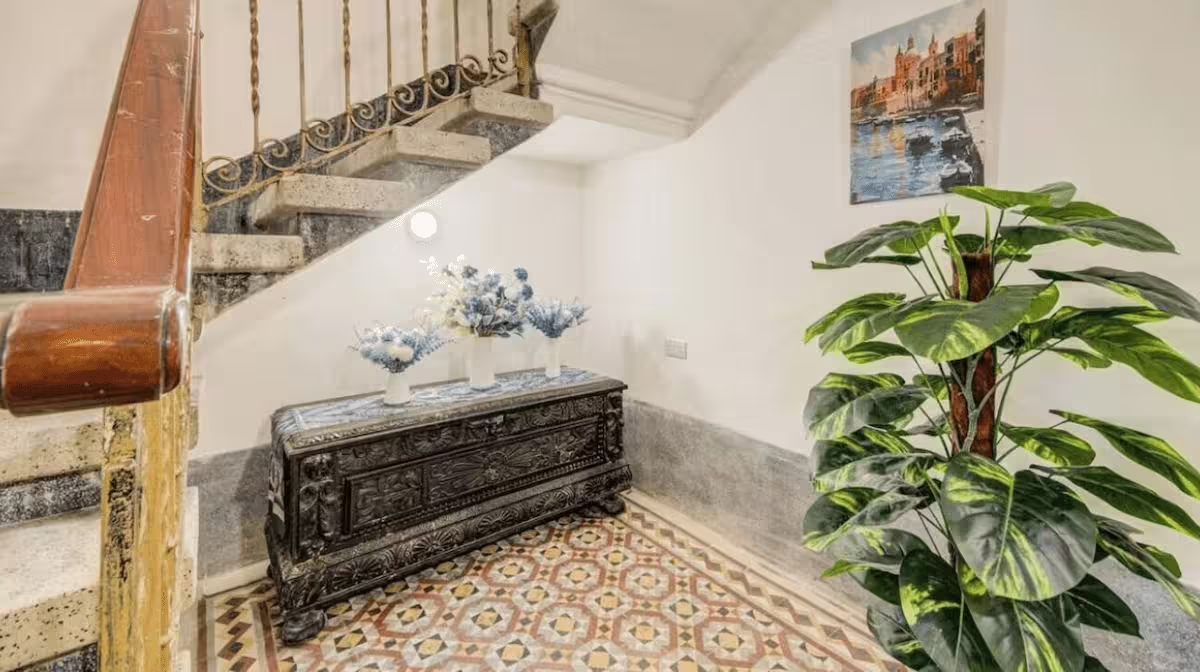
Modern Oasis
A contemporary, well-appointed apartment offering a modern take on a Hamrun stay.
Check AvailabilityFrequently Asked Questions
What is Hamrun known for?
Hamrun is known for its fiercely contested Feast of San Gejtanu, one of the most colourful and noisiest feasts in Malta, for the Hamrun Carnival that traditionally opens Malta’s Carnival season each February, and for Ħamrun Spartans FC, which became the first Maltese club to reach the league phase of a UEFA club competition in 2025/26. Historically it’s also been one of Malta’s main commercial towns, particularly for furniture.
When is the Hamrun feast?
The Feast of San Gejtanu (San Gaetan) is held on the first Sunday after 7 August each year, with celebrations building across the preceding week.
When is the Hamrun Carnival?
The Hamrun Carnival is held in February, in the days before Malta’s main Carnival festivities in Valletta and Floriana — it’s traditionally the event that opens the island’s Carnival season.
How far is Hamrun from Valletta?
Hamrun sits about 10–15 minutes from Valletta by bus or car, making it one of the more convenient inner-harbour towns for a Valletta-based stay.
Is Hamrun a good place to stay in Malta?
It’s an increasingly popular option for travellers who want to be close to Valletta without paying Valletta or Sliema prices. A growing number of restored townhouses now offer short-let apartments, though it remains a residential, working town rather than a resort area.
Route & Stay is reader-supported. Some of the links on this page are affiliate links, and we may earn a small commission if you book through them, at no extra cost to you.