 Skip to content

The drive from Toronto to Niagara Falls is short enough that most visitors treat it as an afterthought — get in the car, follow the signs, arrive 90 minutes later. But the road itself has a story, and there are two genuinely different ways to make the trip depending on whether you’re chasing time or scenery. This Toronto to Niagara Falls drive guide covers both routes, the history of the highway that connects them, and where the detour is worth it. This is part of our full Toronto travel guide; if you haven’t settled on what to do once you arrive, see our Niagara Falls day trip guide first.
Jump to a section
Your Toronto to Niagara Falls Drive, Planned
There are really two decisions to make before you go: which route, and whether to drive at all. Everything below is built around those two questions, with the road’s own history first, since it explains why the direct route and the scenic route feel so different once you’re on them.
The Road Itself: A Short History of the QEW
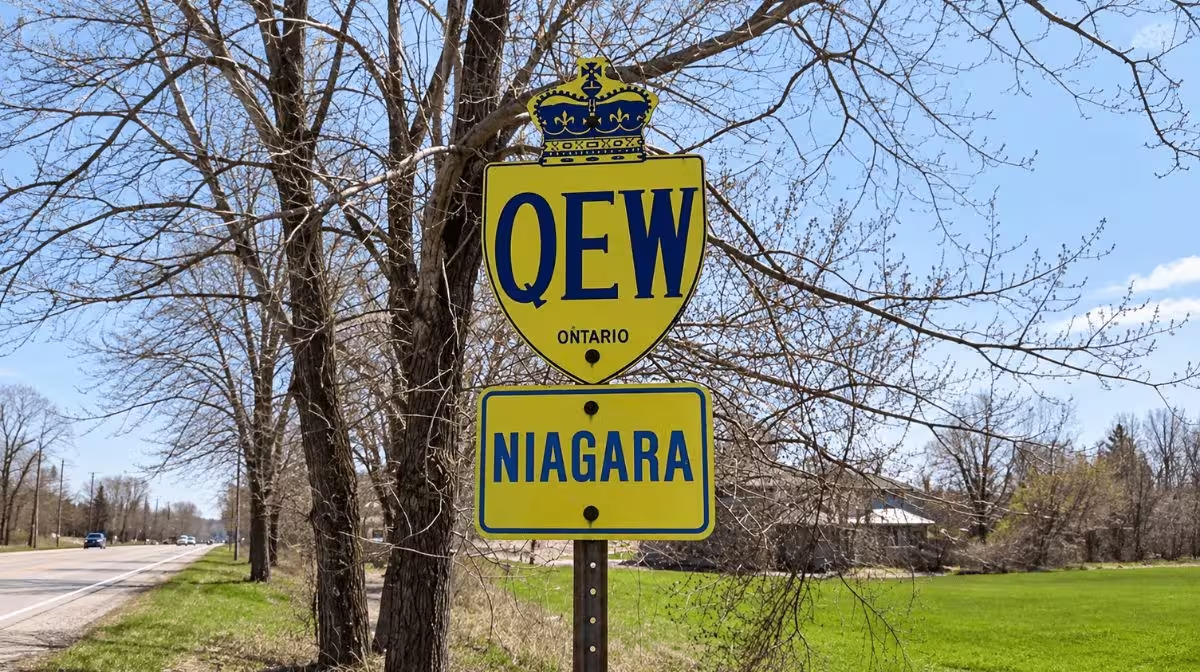
The road most people take from Toronto to Niagara Falls is the Queen Elizabeth Way — the QEW — and it’s a genuinely historic piece of infrastructure, not just a number on a sign. Construction began in 1931 as the Middle Road, a divided highway between Toronto and Hamilton built partly as a Depression-era public works project. By 1937 it had been extended toward Niagara Falls and renamed the New Niagara Falls Highway. The two projects were combined and formally dedicated in June 1939 as the Queen Elizabeth Way, near the Henley Bridge in St. Catharines, with Queen Elizabeth — the Queen Mother — in attendance on a royal tour of Canada. It was the first intercity divided highway in North America, complete with landscaped medians and illuminated interchanges, and it wasn’t even fully paved along its length until 1956.
Today the QEW carries roughly 250,000 vehicles a day on its busiest sections through the Golden Horseshoe, running 139 kilometres from the Peace Bridge at Fort Erie to the Gardiner Expressway in Toronto. It’s still the fastest way to get from the city to the falls — it’s just no longer the only way, and depending on when you’re driving, not always the most pleasant one.
Worth knowing: the QEW predates the term “freeway” as most North Americans understand it today. It was designed and promoted as a scenic parkway as much as a functional highway, with the original landscaping intended to make the drive itself part of the experience — a design philosophy that’s mostly been paved over by six decades of widening and interchange construction since.
The Direct Route
Taking the QEW the whole way is straightforward: from downtown Toronto, it’s about 130 kilometres and roughly 90 minutes under normal traffic, though that figure is optimistic on a summer Friday afternoon or a long-weekend Sunday evening, when the corridor through Burlington and St. Catharines slows to a crawl. If timing is flexible, an early-morning departure avoids the worst of it in both directions. There’s no toll on the QEW itself, which makes it the cheaper option as well as the faster one — the only real cost is traffic.
The Scenic Route: Niagara Parkway
For the final stretch into Niagara Falls, there’s a genuinely better option than staying on the highway. The Niagara Parkway runs roughly 53 kilometres along the Niagara River from Fort Erie to Niagara-on-the-Lake, tracing the water the entire way — past the whirlpool, the Niagara Gorge, orchards, and vineyards, with the falls themselves appearing gradually rather than all at once from a parking garage. It’s slower than the QEW by design, with a lower speed limit and no interchanges to speed through, but it turns the last leg of the drive into something worth doing for its own sake rather than just enduring.
The practical approach most visitors settle on is a hybrid: take the QEW for the bulk of the distance, then exit onto the Parkway for the final approach into town. It adds perhaps twenty minutes over the fully direct route and trades almost none of the time savings for a noticeably better arrival.
Worth a Stop: Niagara-on-the-Lake
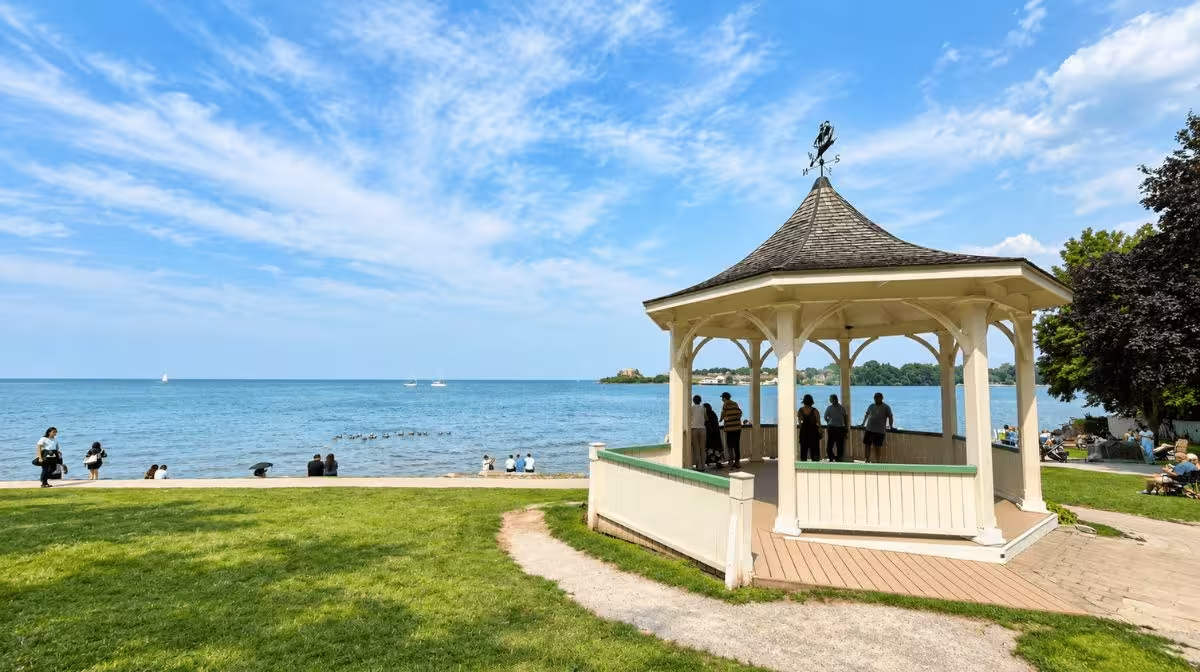
If there’s one detour worth building extra time for, it’s Niagara-on-the-Lake — a heritage town at the mouth of the Niagara River, about 20 minutes north of the falls along the Parkway. It’s the centre of Ontario’s Niagara wine region, with more than two dozen wineries within a short drive, many offering tastings and patio lunches with views over the vineyards toward Lake Ontario. The town itself has a well-preserved 19th-century main street, and it’s home to the Shaw Festival, a major repertory theatre running from April through December. It’s a natural stop on the way out to the falls or the way back, and reason enough on its own for wine-minded travellers to build in a half-day.
Driving vs. the Alternatives
Self-driving gives the most flexibility, particularly if Niagara-on-the-Lake or a slower Parkway route is part of the plan, but it isn’t the only way to make the trip. The seasonal GO Train runs from Toronto’s Union Station to Niagara Falls with a connecting local shuttle, and a guided day tour handles the whole round trip — driving, parking, and often a boat tour and time behind the falls included. Our Niagara Falls day trip guide covers what there is to see once you arrive and breaks down all three options in more depth.
Niagara Falls Day Tour from Toronto + Boat & Behind Falls Entry
Skip the driving entirely — a full-day guided tour from Toronto covering the falls, a boat ride to the base of Horseshoe Falls, and entry to Journey Behind the Falls.
Where to Stay
Most visitors base themselves in Toronto and drive out for the day rather than staying overnight near the falls, which keeps your Toronto to Niagara Falls drive a there-and-back trip rather than a full relocation — see our Toronto travel guide for where to stay in the city. If Niagara-on-the-Lake has pulled you in for longer, the town itself has a good spread of inns and small hotels worth booking ahead for wine-season weekends.
Frequently Asked Questions
How long does the drive from Toronto to Niagara Falls take?
About 90 minutes under normal traffic via the QEW, covering roughly 130 kilometres. Allow extra time on summer weekends and long-weekend evenings.
Is the Niagara Parkway faster than the QEW?
No — it’s slower by design, with a lower speed limit and no interchanges. Most drivers take the QEW for the bulk of the trip and switch to the Parkway only for the final approach into town.
Are there tolls between Toronto and Niagara Falls?
No, the QEW is toll-free along this route.
Is Niagara-on-the-Lake worth the detour?
Yes, especially for wine-minded travellers — it’s about 20 minutes north of the falls via the Parkway, with more than two dozen wineries, a well-preserved heritage main street, and the Shaw Festival theatre.
What’s the best time of day to drive to Niagara Falls?
An early-morning departure avoids the worst of the traffic in both directions, particularly on Fridays, Sundays, and long weekends through the summer.
Route & Stay is reader-supported. Some of the links on this page are affiliate links, and we may earn a small commission if you book through them, at no extra cost to you. Tour details and prices were accurate at the time of writing but can change — always confirm current availability before booking.