 Skip to content
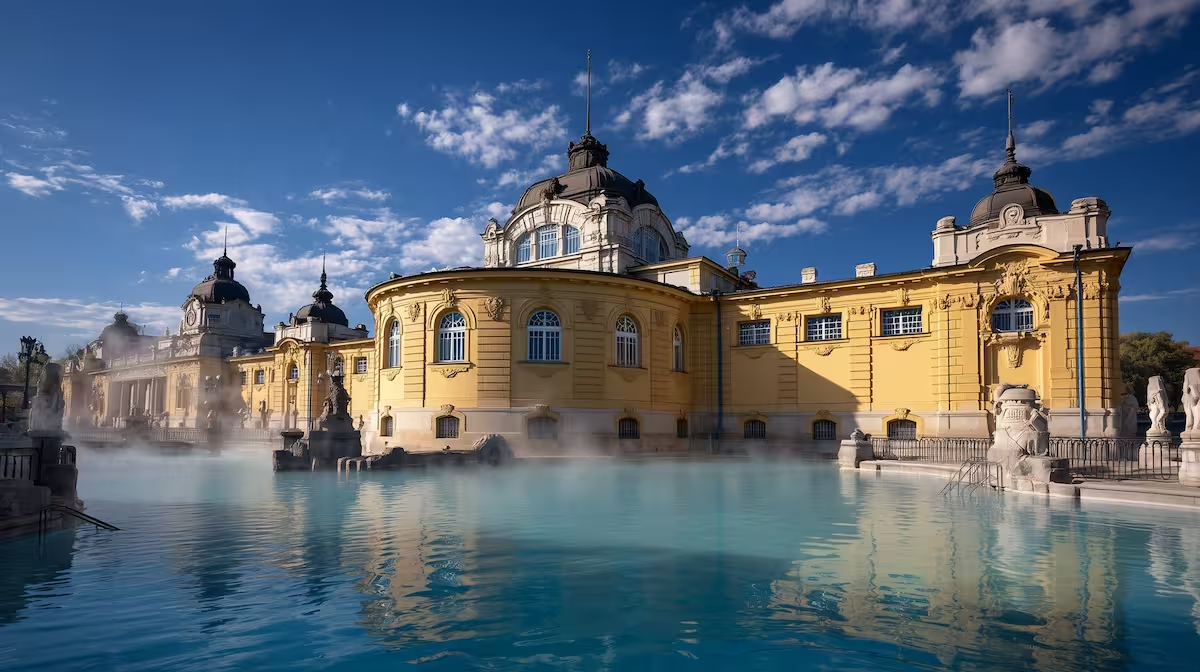
We were two weeks out from our Budapest trip when I noticed a single line on a forum thread that nobody else seemed to be talking about: “Just so people know — under-14s aren’t allowed in Széchenyi Baths Budapest anymore, full stop, no exceptions.” Our son is fifteen and would be fine, but my stomach still dropped reading it. The baths were the one thing he’d been genuinely excited about. If he’d been thirteen we’d have been planning an evening that wasn’t going to happen.
Most travel blogs writing about Széchenyi Baths still don’t mention the age rule clearly. Some don’t mention it at all. The Budapest baths landscape has shifted significantly in the last twelve months — Gellért is closed for renovation until 2028, Király is undergoing restoration, and Széchenyi has tightened its policies — and a lot of the content you’ll find on Google was written for a Budapest that no longer exists.
This post is the version I wish I’d read before we went. The age rule, the ticket-type maze, the fast-track trap that catches people out, the best time of day to actually visit, what we made of it as a family, and which upgrade is worth it. Honest, current, and built around what changes after October 2025.
If you’re planning a Budapest trip and Széchenyi is on the list, here’s what to know.
Table of Contents
Show / Hide
- 01 The 14-and-older rule (and why it matters more than you think)
- 02 Széchenyi Baths at a glance: what you’re actually booking
- 03 The Budapest baths situation in 2026 (Gellért, Király, Rudas)
- 04 Who Széchenyi Baths is actually for
- 05 Which ticket should you actually book?
- 06 The fast-track trap (and the 6 PM check-in deadline)
- 07 Best time of day to visit (the early-morning rule)
- 08 Indoor vs outdoor pools: which actually matter
- 09 What to bring (and what they sell if you forget)
- 10 What our 15-year-old actually thought
- 11 Should you upgrade to Sparty, Beer Spa, or massage?
- 12 10 things we wish we’d known before going
- 13 Final thoughts: would we go again?
- 14 FAQ
The 14-and-older rule (and why it matters more than you think)
This is the single biggest thing nobody warns you about when planning Széchenyi.
Since August 2025, the minimum age for entry to Széchenyi Baths is 14 years old. No exceptions for younger children. Not toddlers, not infants, not “we’ll just keep them quiet at the side.” If your child is under 14, they cannot enter the bath complex, regardless of which ticket you’ve bought. Staff at the entrance can ask for photo ID if there’s any doubt about age, and there’s no refund if you’ve booked tickets and your kid is turned away at the door.
The rule isn’t arbitrary. The thermal waters at Széchenyi run between 30–40°C, with some pools at the higher end of that range. Hot mineral water at those temperatures puts significant cardiovascular stress on younger bodies that are still developing, which is why the operators tightened the rule. It’s a medical-grounded policy, not a crowd-control one — which is also why no amount of “but he’s a very mature 12-year-old” will get you in.
For families with children under 14, this changes the trip plan completely. The good news is Budapest has genuine alternatives:
- Palatinus Bath on Margaret Island (open in summer) — outdoor lido with thermal pools, regular pools, slides, and children’s areas. Genuinely family-friendly.
- Dagály Bath near Árpád Bridge (open in summer) — similar profile, less central, often less crowded.
- AquaWorld — full water theme park about an hour north of the city centre. Better for younger kids who’d find Széchenyi too quiet.
If your child is over 14, they can enter and use the three outdoor pools under adult supervision. Children aged 14–17 are not technically restricted from indoor pools either, but the saunas and steam rooms remain adults-only by policy in most signage.
For us, with our 15-year-old, this all worked out — but I spent a real ten minutes on the morning of our visit double-checking everything because the rule felt new enough that I didn’t fully trust the booking confirmation. If you’re travelling with anyone on the borderline, take a photo of their passport on your phone so you can resolve any doubt at the entrance quickly.
Széchenyi Baths Budapest at a glance: what you’re actually booking
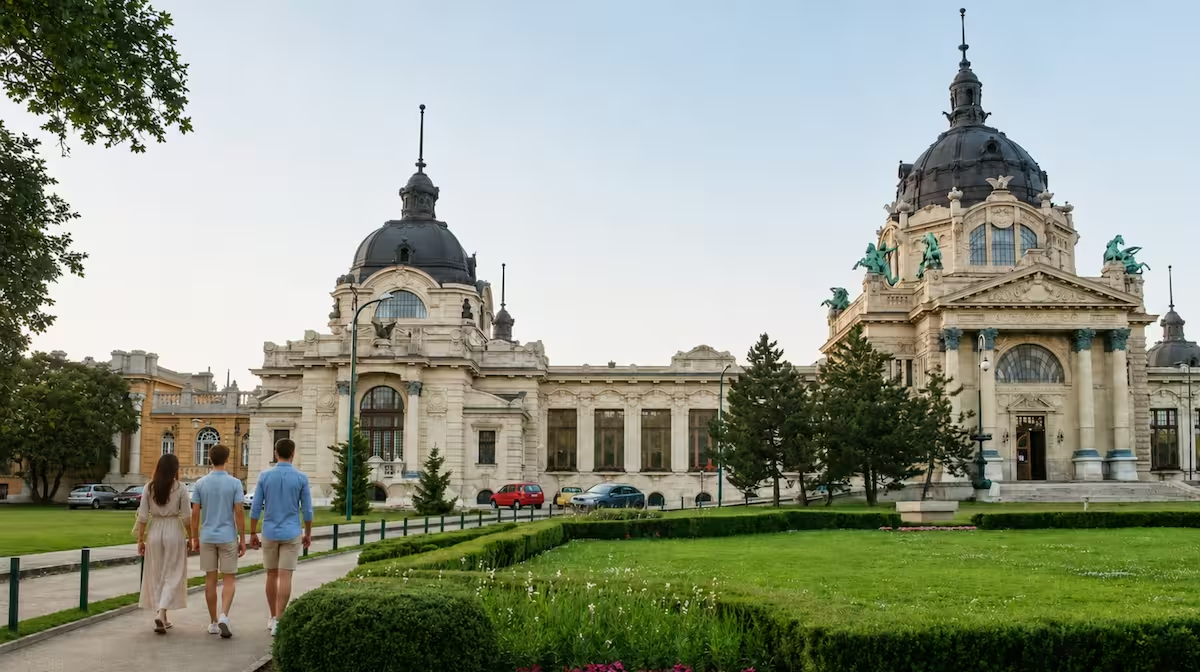
Before we get into the ticket-type decision and the fast-track logic, the facts:
Quick-Reference Info: Széchenyi Thermal Baths
Weekend: from ~€35 online
Fast-track: ~€40–47
No exceptions; ID may be checked
Sat–Sun: 8 AM – 8 PM
Outdoor pools: until 10 PM
Online check-in by 6 PM
3 outdoor • 15 indoor • plus saunas & steam rooms
District XIV, Budapest
M1 yellow line → Széchenyi fürdő stop
May 2026
A note on the pricing: Széchenyi tickets are dynamically priced and weekend rates run about 15–20% higher than weekdays. Online booking is consistently cheaper than walk-up at the cashier (the on-site rate is closer to €35 weekday / €42 weekend) and avoids the cashier queue, which can be 20–40 minutes at peak times. The free 24-hour cancellation through GetYourGuide is also genuinely useful — Budapest weather can shift, and visiting Széchenyi in driving rain when you’d planned to enjoy the outdoor pools is a different experience.
The Budapest baths situation in 2026 (Gellért, Király, Rudas)
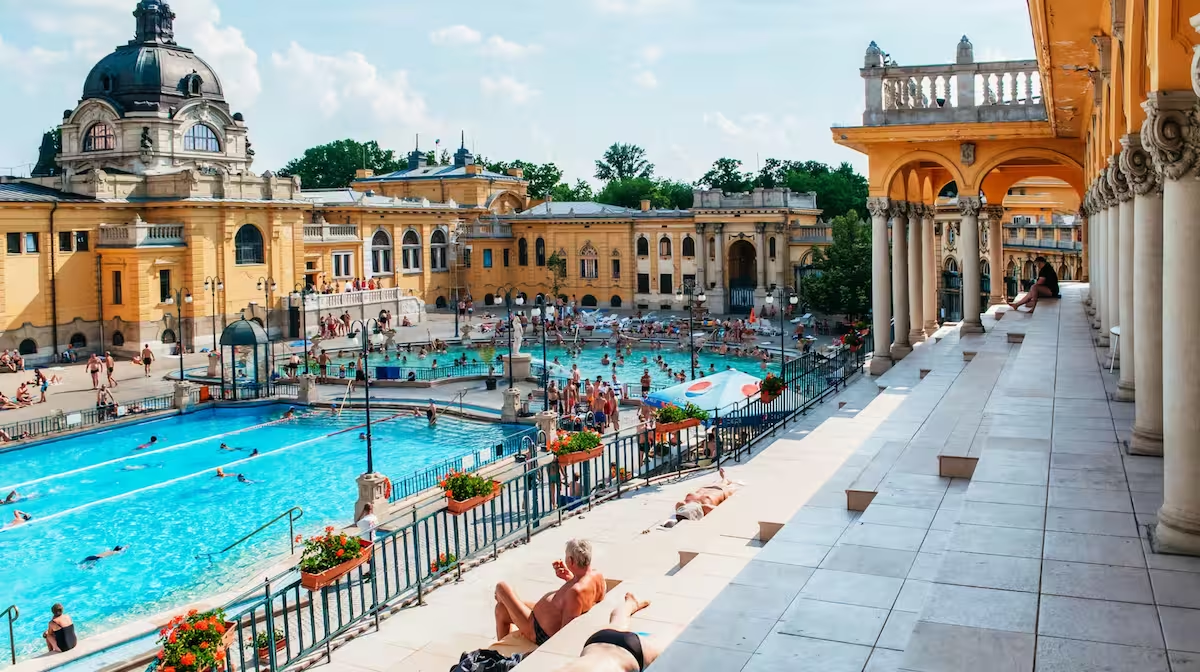
A lot of the older guides ranking on Google still recommend Gellért Baths or Király. Both of those recommendations are out of date.
Gellért Baths closed on October 1, 2025 for a major renovation with reopening planned for 2028. This is a long, full closure — not a temporary one — and any blog suggesting you “have to” visit Gellért for the Art Nouveau interior is currently impossible to follow. The interior is genuinely beautiful and worth visiting when it reopens, but for now it’s not an option.
Király Baths is also closed for restoration, with no firm reopening date (some sources suggest 2026, but as of writing this it remains unavailable to visitors). Király was always a quieter, more local-favourite spot than Széchenyi, but it’s currently off the list.
Rudas Baths is open, smaller and more atmospheric than Széchenyi, with a famous 16th-century Ottoman-era octagonal pool under a dome. It has separate single-sex bathing days during the week and mixed bathing at weekends and evenings, which catches some travellers out. Worth visiting if you want a different feel — but if you only have time for one Budapest bath, Széchenyi remains the headline experience.
Veli Bej Baths (also Ottoman-era, much less touristed) is open and lovely, but it’s more of a wellness centre than a sightseeing-worthy bath complex.
The practical reality of Budapest baths in 2026 is: Széchenyi is now effectively the main option, with Rudas as a secondary “if you want something different” choice. The competitor landscape narrowed sharply over 2025, which has concentrated demand on Széchenyi and is one reason advance online booking is now more important than it used to be.
Who Széchenyi Baths Budapest is actually for
Honest segmentation, because Széchenyi isn’t right for everyone:
Solo travellers and couples — strong fit. The neo-Baroque setting is genuinely cinematic, the pools are large enough that you can find quiet corners even on busy days, and the wellness offering (saunas, steam rooms, optional massage upgrades) suits an unhurried half-day.
Families with teens (14+) — strong fit, with caveats. Older teens generally enjoy the novelty of an outdoor thermal pool surrounded by neo-Baroque architecture, but younger teens with no interest in spa culture can find it boring after 45 minutes. Plan for 90–120 minutes total, not three hours.
Families with kids under 14 — not a fit. The age rule is firm. Take the family to Palatinus, Dagály, or AquaWorld instead.
Wellness seekers / spa enthusiasts — strong fit. The variety of pool temperatures (from 18°C cold plunge to 38°C thermal), the dedicated saunas and steam rooms, and the optional massage upgrades genuinely work for a relaxation-focused half-day. Best on weekday mornings when it’s quietest.
Anyone uncomfortable in crowded swim environments — possible struggle. At peak times (Saturday afternoons in particular) the outdoor pools can be shoulder-to-shoulder. Early mornings or late evenings dramatically improve the experience, but if you’d find a busy public pool stressful in your home country, Széchenyi at 2 PM on a Saturday will feel the same.
Anyone with cardiovascular conditions or pregnancy — check with your doctor first. The thermal waters at the higher temperatures aren’t medically recommended for everyone, and pregnant visitors are generally advised to limit time in the hottest pools to 10 minutes.
Party/social travellers (18+) — there’s a specific product for you: the Saturday-night Sparty (more on that in the upgrades section).
The biggest mistake we noticed visitors making was treating Széchenyi like a quick stop. People would buy a ticket, spend 45 minutes inside, feel underwhelmed, and leave. Széchenyi rewards unhurried time. Bring a book, plan to do nothing for two hours, alternate between pool temperatures, sit in a steam room. It’s a wellness experience, not a sightseeing tick.
Which ticket should you actually book?
There are four main ticket types worth considering. The naming on the booking platforms can be confusing because operators bundle slightly different combinations, but the underlying choices are:
Which Széchenyi Ticket Should You Book?
Fast-Track Entry with Locker
- You’re visiting on a weekend, holiday, or any peak summer afternoon
- You want to enter quickly and not waste any of your visit standing in line
- You’re fine with a shared locker (rather than a private cabin)
- You’re checking in before 6 PM (the online ticket cut-off)
Standard Online Ticket
- You’re visiting on a weekday morning (when queues are short anyway)
- You’re saving budget for other Budapest experiences
- You don’t mind a 10–20 minute wait at peak times
Fast-Track + Massage
- You’re treating Széchenyi as a proper wellness day, not just a tick on the list
- You’d be booking a massage in a Budapest hotel anyway
- You’re celebrating an occasion (anniversary, milestone trip)
Beer Spa + Széchenyi Combo
- You’re a couple or friends group looking for a quirky Budapest experience
- You like the idea of soaking in hops-infused water with unlimited draft beer
- You want to make Széchenyi part of a longer wellness afternoon, not the whole day
The general principle is the same as the cruise decision: the standard ticket is the experience, the upgrades are the occasion. For most travellers, fast-track is the genuine sweet spot — it’s only €8–10 more than standard and meaningfully changes the start of your visit. The massage and beer spa combos suit specific moods rather than being default upgrades.
The fast-track trap (and the 6 PM check-in deadline)
Here’s a nuance that catches almost everyone out and that most blogs don’t explain clearly.
Your “fast-track” ticket only skips the cashier queue (where walk-up visitors are buying tickets). It doesn’t skip the entry queue (where ticketed visitors are checking in and being processed). At peak times, the entry queue can still be 10–15 minutes long even with a fast-track ticket.
The fast-track is genuinely worth it because the cashier queue at peak times can be 30–45 minutes, and the differential price (€8–10) is small. But don’t go in expecting to walk straight into the changing rooms. You’re saving the longer queue, not eliminating queueing altogether.
The second trap is more serious: online tickets require you to check in by 6 PM. If you’ve booked online (which you should — it’s cheaper and more flexible than walk-up) and you arrive at 6:30 PM, your ticket may not be honoured at the entrance. You’d then need to buy a separate walk-up ticket at the cashier, paying the higher walk-up rate, while still being inside the building.
Walk-up tickets are available until 9 PM (an hour before the outdoor pools close at 10 PM), so a late-evening visit is possible — but only with a walk-up ticket, not an online one.
If you’re planning an evening visit, either book online and check in before 6 PM, or plan to buy at the cashier on arrival. Don’t book online for a 7 PM arrival.
Best time of day to visit (the early-morning rule)
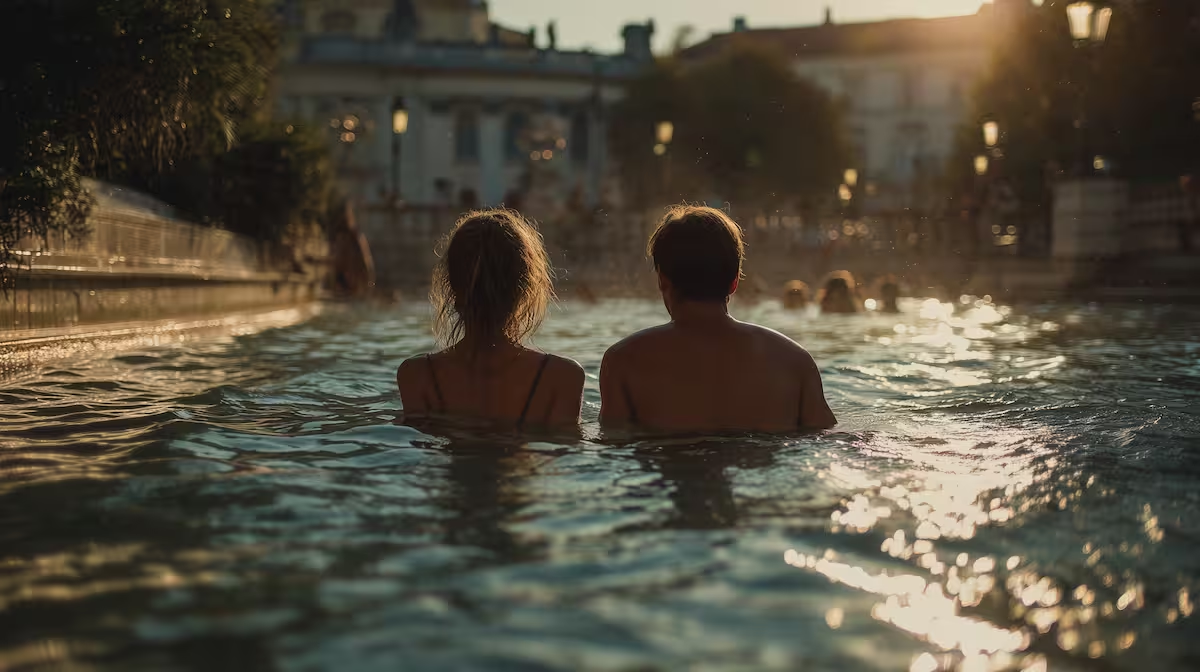
The single biggest variable in your Széchenyi experience isn’t which ticket you buy — it’s what time you visit.
Before 9 AM: the sweet spot. Tourists are still at breakfast, the indoor pools are nearly empty, and the outdoor pools have a slightly steamy, atmospheric quality in the cool morning air. The building opens at 7 AM (Mon–Fri) and 8 AM (Sat–Sun), and arriving close to opening time is genuinely a different experience from the one you’ll have at 2 PM. Locals know this; tourists generally don’t.
9 AM – 11 AM: still good. Volumes pick up but it’s manageable. The outdoor pools are pleasant.
11 AM – 3 PM: peak crowd window. This is when most tour groups, day-trippers, and walk-up visitors arrive. Saturdays in particular can feel shoulder-to-shoulder in the outdoor pools. Indoor pools are calmer but still busy.
3 PM – 6 PM: gradually easing. The peak crowd thins out, and the late-afternoon light through the building’s neo-Baroque windows is beautiful. A good window if you can’t manage early morning.
6 PM – 10 PM: a different experience. The outdoor pools at night, particularly in cooler months, are genuinely special — steam rising, the building floodlit, fewer crowds. But remember: only walk-up tickets work after 6 PM, the saunas and steam rooms close 20 minutes before main closing, and many travellers find a 90-minute soak more than enough at this hour after a full day of walking.
If you’re a morning person at all, arrive at opening. If you’re not, aim for the 3:30–5 PM window. Avoid the noon-to-3 trap unless your schedule gives you no other option.
Indoor vs outdoor pools: which actually matter
Széchenyi has 18 pools total — 3 outdoor and 15 indoor — and the experience of the two is quite different. Knowing which matter most helps you plan how long to spend and where to focus.
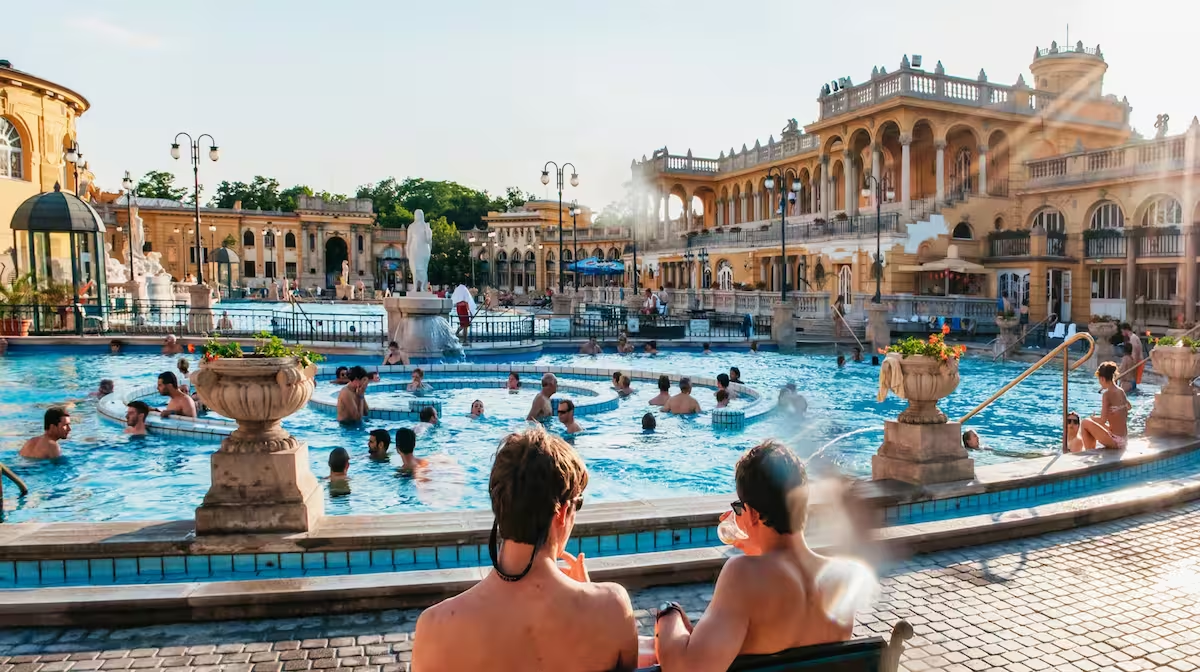
The three outdoor pools are what every photo you’ve seen of Széchenyi shows: the famous neo-Baroque courtyard with steam rising from warm water, the chess players (yes, real chess on floating boards, mostly in the morning), the architectural facade surrounding you on all sides. This is the Instagram experience. One pool is a thermal (~38°C), one is a swimming pool (~30°C for laps), and one is a whirlpool-style activity pool with currents and bubbles. The thermal one is the magic; the swimming one is functional; the activity one is fun for 10 minutes.
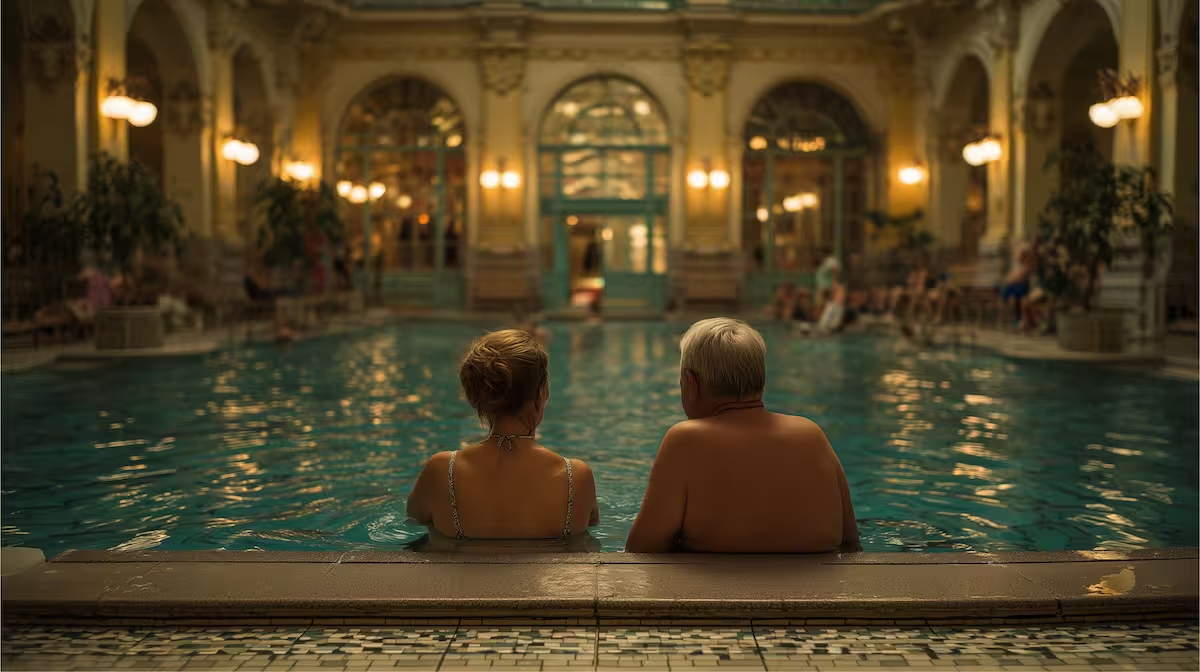
The fifteen indoor pools are what most travellers underuse. They range across a wide temperature spread — from 18°C ice-cold plunge to 38°C deep thermal — and the layout of the interior galleries is genuinely beautiful in a way photos don’t quite capture. The proper Széchenyi experience involves rotating between several temperatures: a hot soak, a cold plunge, sauna, steam room, repeat. Most first-time visitors do one outdoor pool, take photos, and leave — and miss the actual wellness benefit the indoor circuit offers.
If you have 60 minutes total: outdoor only. If you have 90–120 minutes: outdoor first, then a slow indoor circuit. If you have a full half-day: do everything, including saunas and steam rooms (which close 20 minutes before the main facility closing — typically 7:40 PM weekdays, 7:40 PM weekends).
What to bring (and what they sell if you forget)
You can rent or buy most things on-site, but bringing your own is dramatically cheaper and avoids the queues at the rental desk.
What to bring from your hotel:
- Swimwear (required — no nude bathing allowed)
- Two towels (one for drying, one to sit on)
- Flip-flops or pool shoes (the floor tiles are slippery)
- A small dry bag or plastic bag for wet swimwear at the end
- Water bottle (the warm pools dehydrate you faster than you’d expect)
- A book or e-reader if you’re staying long enough to want to lounge
- A small lock or padlock if you want extra security in the locker rooms (the lockers have wristband electronic locks, but if you’re nervous about valuables, your own padlock adds reassurance)
What they sell or rent on-site (but at marked-up prices):
- Towels (rental ~€5, hire deposit required)
- Flip-flops (purchase ~€15)
- Swim caps (purchase ~€5 — required if you want to swim laps in the dedicated swimming pool)
- Bottled water and snacks from a small café area
What you don’t need:
- A hair dryer (provided in changing rooms)
- Hair products (also generally available)
- A specific “spa robe” — the rental options are basic and most visitors don’t bother
The single most common forgotten item is a second towel. The provided/rented towels are functional but small, and having a dedicated dry towel for drying versus a wet one for sitting makes a real difference. Most hotels in Budapest will lend you towels if you ask at reception — no need to use your room towels.
What our 15-year-old actually thought
He ranked Széchenyi higher than the Danube cruise on the trip. That surprised me at the time. He’s not a wellness-spa kid, and I’d expected him to find it boring after thirty minutes — the way an adult expects a teenager to find a thermal bath boring. But he didn’t. The novelty of an outdoor pool surrounded by neo-Baroque architecture, in steam, in a foreign city, was apparently the right kind of unusual.
What I remember most is that he kept moving between pools — outdoor hot, indoor cold, back outside, into a steam room briefly, back to the outdoor hot — in a way that suggested he was genuinely engaged with the variety rather than checking boxes. He didn’t ask to leave early. He didn’t get on his phone the way he had on the cruise. By the end of two hours he was the one suggesting one more pool before we went.
The piece of advice I’d give parents of teenagers based on that: don’t pre-decide whether your teen will like it. Spa culture sounds like an adult thing, but the actual experience — warm outdoor water in cold air, architecture you can’t see anywhere else, multiple pool temperatures to play with — has more in common with a novel experience than with a wellness chore. Give them the option and let them surprise you.
For comparison: our Budapest Danube river cruise post covers the other major experience we did with him on that trip. Both worked for a teenager; the baths worked slightly better.
Should you upgrade to Sparty, Beer Spa, or massage?
Three optional add-ons worth understanding:
The Sparty (Saturday night bath party) — Széchenyi opens late on Saturday nights for a pool party with DJs, light shows, and adult-only access (18+). From around €65 (locker) to €81 (premium with four drinks). It runs February through December most weekends — check exact dates when you book. This is a completely different experience from a daytime visit; the architecture’s there, the pools are there, but the vibe is club rather than spa. Brilliant if that’s what you want, alienating if you came for serenity. Solo and couple travellers in their 20s–30s tend to love it. Skip if you’re treating Széchenyi as a wellness day.
Beer Spa Combo — soak in a hops-infused tub (private, just for your group) with unlimited draft beer flowing from a tap next to the bath, then go to Széchenyi afterwards. Around €110 per person for the combo. Genuinely quirky, popular with couples and small friend groups, and the kind of experience you’ll talk about more than another standard spa visit. Not a wellness experience — closer to a Budapest novelty. Suits visitors who want a story.
Massage upgrade — adding a 20-minute spa massage to your Széchenyi ticket costs around €35–45 on top of the fast-track price. Quality is decent but not premium-hotel standard; treat it as a relaxing add-on rather than a destination treatment. Genuinely worth it if you’re treating the visit as a wellness day and would book a Budapest hotel massage anyway. Skip if you’re price-sensitive.
The honest principle: upgrades work when they match your reason for visiting. Sparty if you want a night out. Beer Spa if you want a story. Massage if you want a full wellness day. Don’t upgrade by default — the standard fast-track ticket is genuinely enough for most travellers.
10 things we wish we’d known before going to Széchenyi Baths Budapest
The compact list, the way I’d brief a friend over a coffee:
- Book online, check in before 6 PM. Walk-up tickets exist but they’re more expensive and the cashier queue at peak times is brutal.
- Arrive at opening or after 3 PM. Avoid 11 AM – 3 PM unless you have no choice.
- Bring two towels. One to dry with, one to sit on. The provided towels are small.
- The 14+ rule is firm. Don’t try to talk your way past it with a younger child. Have alternatives ready.
- Take the M1 metro. The yellow line stops at “Széchenyi fürdő” right at the entrance. Don’t take a taxi from the centre — you’ll be stuck in traffic for what would be a 15-minute metro ride.
- Use the lockers, not the cabins. The €5–10 cabin upgrade is rarely worth it. Lockers are secure, fast, and you can re-enter them throughout the visit.
- The saunas and steam rooms close 20 minutes before the main complex. Don’t leave them for the end if you want to use them.
- Outdoor lap pool is closed April 20 – May 22, 2026. Doesn’t ruin the visit, but worth knowing.
- Photos in the changing areas are not allowed. Take your photos in the outdoor courtyard, fully dressed if you’re coming back another day, or in the indoor public areas only.
- Eat before you go in. The on-site café is fine but limited. A proper meal before or after gives you more time in the water and avoids the café queue.
Final thoughts: would we go again?
Yes — and I’d recommend Széchenyi to almost any Budapest visitor over 14.
The 2026 baths landscape in Budapest narrowed sharply with the Gellért closure, but Széchenyi remains genuinely worth a visit on its own merits. Europe’s largest thermal spa, in a neo-Baroque palace, with 18 pools ranging across temperatures, surrounded by City Park, accessible on a single metro line, open from 7 AM to 8 PM most days — there’s really no comparable experience available in the city right now.
The honest framing is this: Széchenyi is a half-day in itself, not a quick stop. People who treat it as an item to tick off in 45 minutes tend to come away underwhelmed. People who arrive at opening, spend two hours moving between hot pools and cold plunges, get a coffee in the café, and treat it as a wellness morning come away genuinely glad they went. Same building, different experience.
If you’re planning a Budapest trip and Széchenyi is on the list, book the fast-track online, arrive close to opening or after 3 PM, bring two towels, plan for two hours minimum, and don’t underuse the indoor pools. Everything else takes care of itself.
You can book your Széchenyi Baths ticket here: Book on GetYourGuide.
If you’re combining this with the Danube river cruise (which we’d also recommend), here’s our honest review of the 1-hour evening Budapest river cruise — same trip, different evening, both worth doing.
FAQ – Széchenyi Baths Budapest
Can children visit Széchenyi Baths? No. Since August 2025, the minimum age is 14 years old, with no exceptions for younger children. Staff at the entrance can ask for photo ID if in doubt. For families with younger kids, Palatinus Bath, Dagály Bath, or AquaWorld are family-friendly alternatives.
How much does a Széchenyi ticket cost in 2026? Standard tickets online start at around €30 weekday and €35 weekend. Fast-track entry runs €40–47. Walk-up cashier prices are about 15% higher. Massage and Beer Spa combo packages cost more.
What’s the best time of day to visit? Either at opening (7 AM weekdays, 8 AM weekends) or after 3 PM. Avoid the 11 AM – 3 PM peak window when tour groups and walk-ups arrive.
Should I book online or at the door? Book online. It’s cheaper, the cashier queue at peak times can be 30+ minutes, and free 24-hour cancellation gives you flexibility if the weather changes. The only catch: online tickets require check-in by 6 PM.
Is the fast-track ticket worth it? For most travellers, yes. It’s only €8–10 more than standard and skips the cashier queue, which is the longer of the two queues. Don’t expect it to skip the check-in queue, which still applies to all ticket holders.
How long should I plan to spend at Széchenyi? At minimum 90 minutes; ideally 2–3 hours. People who try to do Széchenyi in under an hour tend to leave underwhelmed. The full experience involves rotating between pool temperatures, saunas, and steam rooms.
Can I bring my own towel and swimwear? Yes — bring both. Swimwear is required (no nude bathing). Towels are rentable on-site but small; bringing your own two towels is dramatically more comfortable.
What’s the difference between indoor and outdoor pools? Three outdoor pools (one thermal, one swimming, one activity) in the neo-Baroque courtyard — these are the famous “Instagram” pools. Fifteen indoor pools across a wide temperature range, plus saunas and steam rooms. Most visitors underuse the indoor circuit; it’s where the real wellness experience lives.
Is Gellért Baths still open? No. Gellért Baths closed October 1, 2025 for a major renovation, with reopening planned for 2028. Király Baths is also currently closed for restoration. Széchenyi and Rudas are the main open thermal baths in Budapest in 2026.
Are the Saturday night Sparty bath parties worth it? Depends entirely on what you want from Széchenyi. Sparty (18+, around €65–81) is a club-style pool party with DJs and light shows — brilliant if that’s the experience you want, completely different from a daytime visit. If you’re treating Széchenyi as a wellness experience, skip it.
Pingback: Budapest Trip Guide 2025: Plan Your Perfect Visit - Next View Tours