 Skip to content
We almost booked the dinner cruise. I’m glad we didn’t.
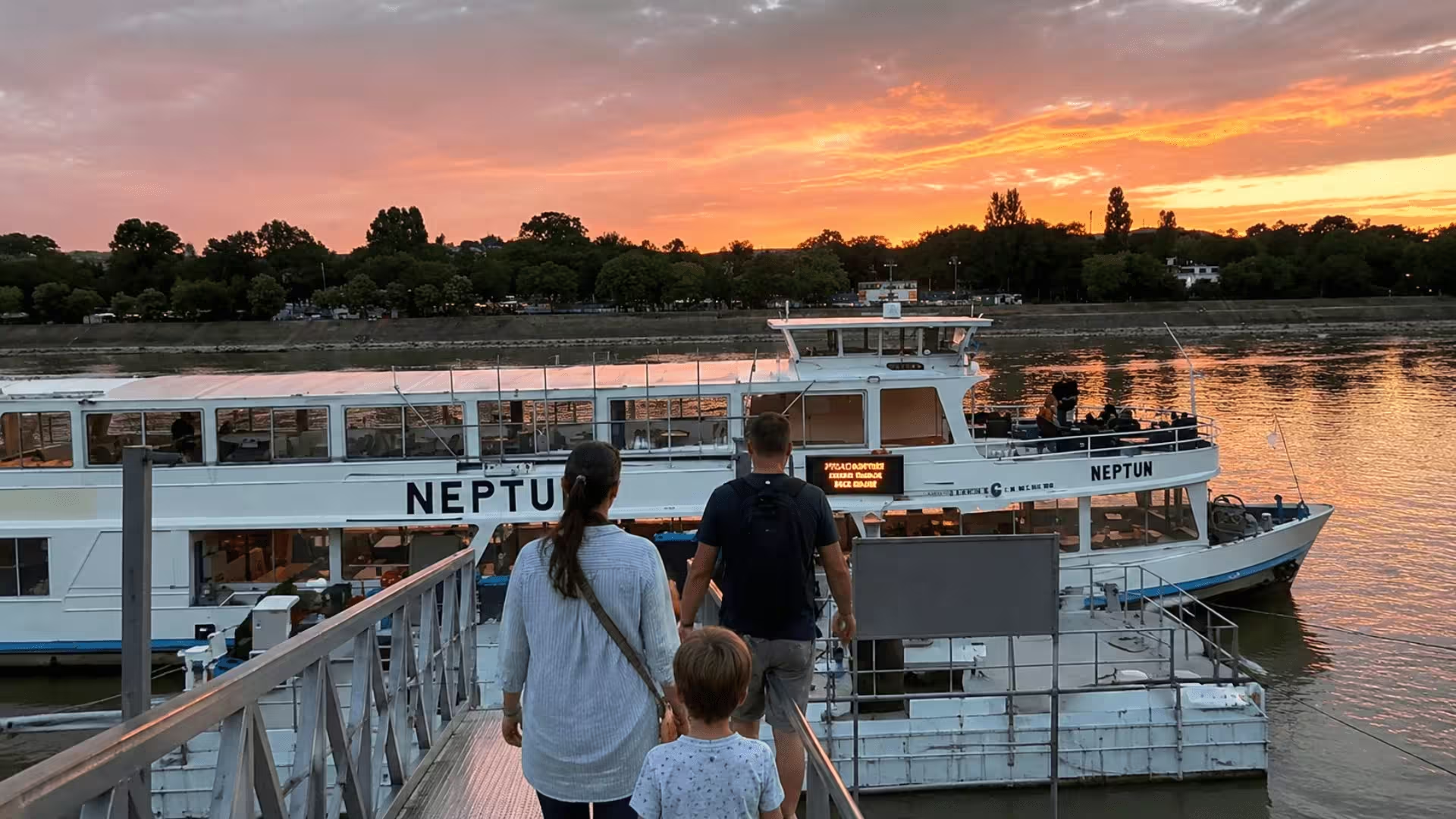
It was just after sunset when we found Dock 42 — slightly later than we’d planned, slightly more rushed than we’d hoped. My teen was a few steps ahead, asking for the third time whether we were even at the right pier. My spouse was second-guessing the booking out loud: was an hour on the water actually long enough? I was holding the GetYourGuide voucher in one hand and trying to look like I knew what I was doing.
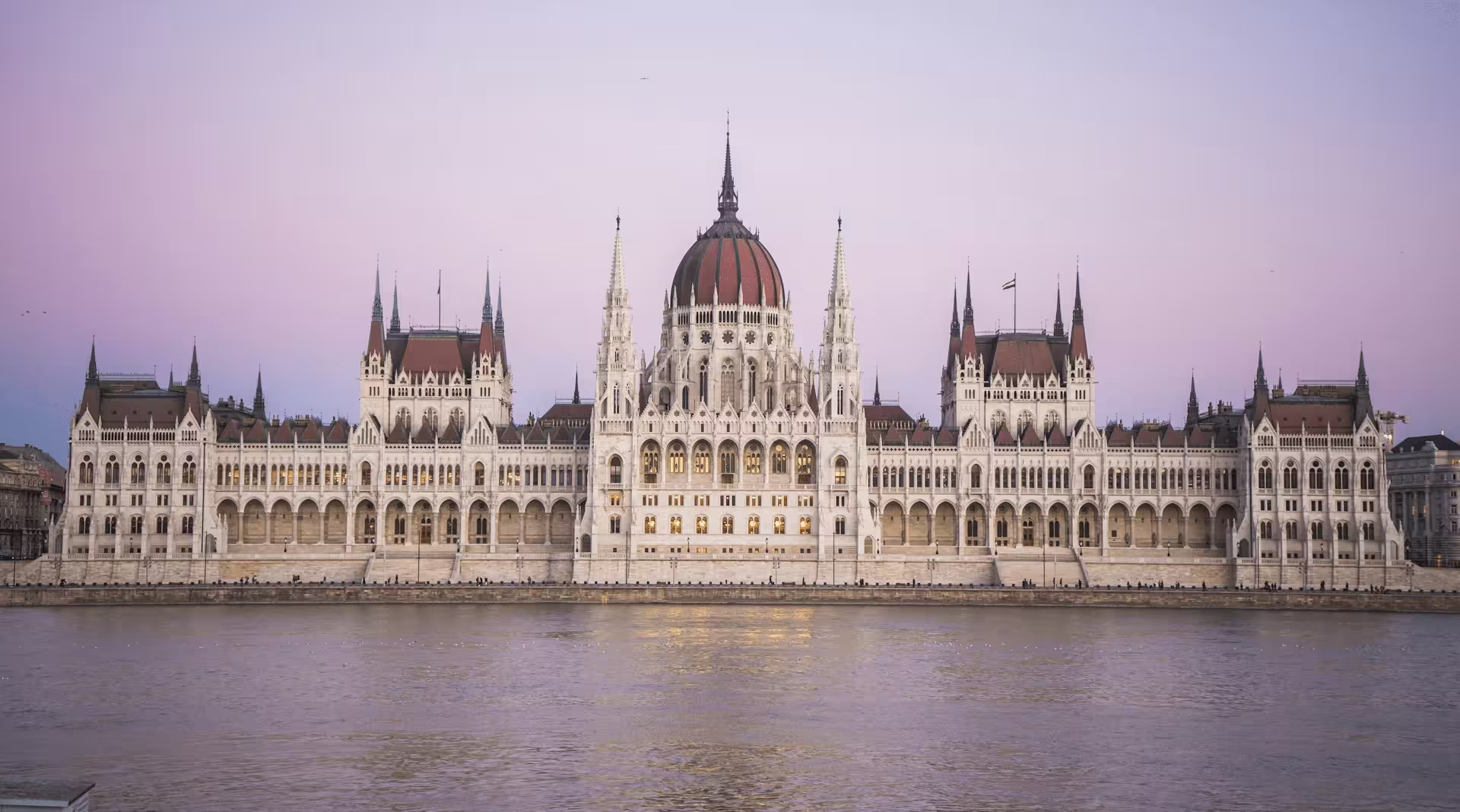
We boarded with about three minutes to spare. A few minutes later, we were holding welcome drinks, the boat was pulling away from the embankment, and the Pest waterfront was starting to do its thing. By the time we’d cleared Margaret Bridge and the Parliament building rose into view — gold-lit, impossibly large, mirrored on the water — all three of us had gone quiet at the same time. My teen put his phone down. That almost never happens.
This is the post I wish I’d read before our trip. Honest, specific, family-tested. If you’re trying to decide which Budapest Danube river cruise to book, what time slot to pick, which dock to actually turn up at, and whether the 1-hour standard cruise is worth it over the dinner or prosecco upgrades — that’s what we’ll cover.
Table of Contents
Show / Hide
- 01 Budapest Danube River Cruise at a Glance: What You’re Actually Booking
- 02 Finding Dock 42 (the location confusion nobody warns you about)
- 03 Picking the right time slot: the lighting trick that changes everything
- 04 The welcome drink, the seats, and the inside-or-outside question
- 05 The first turn: Parliament from the water
- 06 The genius of how the boat sails (no fighting for sides)
- 07 The Buda side: under the Chain Bridge and home
- 08 What our teen actually thought
- 09 Which Budapest Danube River Cruise Should You Book?
- 10 10 things we wish we’d known before boarding
- 11 Final thoughts: would we book it again?
- 12 FAQ
Budapest Danube River Cruise at a Glance: What You’re Actually Booking
Before we get into the experience itself, the facts. This is the tour we took and the one this entire review refers to:
Quick-Reference Info: Budapest Danube Cruise
Walk-up: ~€18 at the dock
M/S Neptun, M/S Merian,
or M/S de Sluizer (assigned on the day)
Multiple daily departures, year-round
Carl Lutz rakpart
Szent István Park, District XIII (800m N of Margaret Bridge)
Averaging 4.6 / 5 on GetYourGuide
May 2026
For context: 40,000 reviews at 4.6 stars makes this the single most-reviewed paid experience in Budapest. That’s not why we booked it — that’s just useful credibility when you’re trying to filter out the dozens of nearly identical cruise operators competing on the same stretch of river.
One reason worth flagging now rather than burying later: booking through GetYourGuide gives you free cancellation up to 24 hours before, and in Budapest that matters. We had a clear evening; the family at the next table at breakfast had been weathered out on a different operator the day before and couldn’t get their money back. Same price, better flexibility.
Finding Dock 42 (the location confusion nobody warns you about)
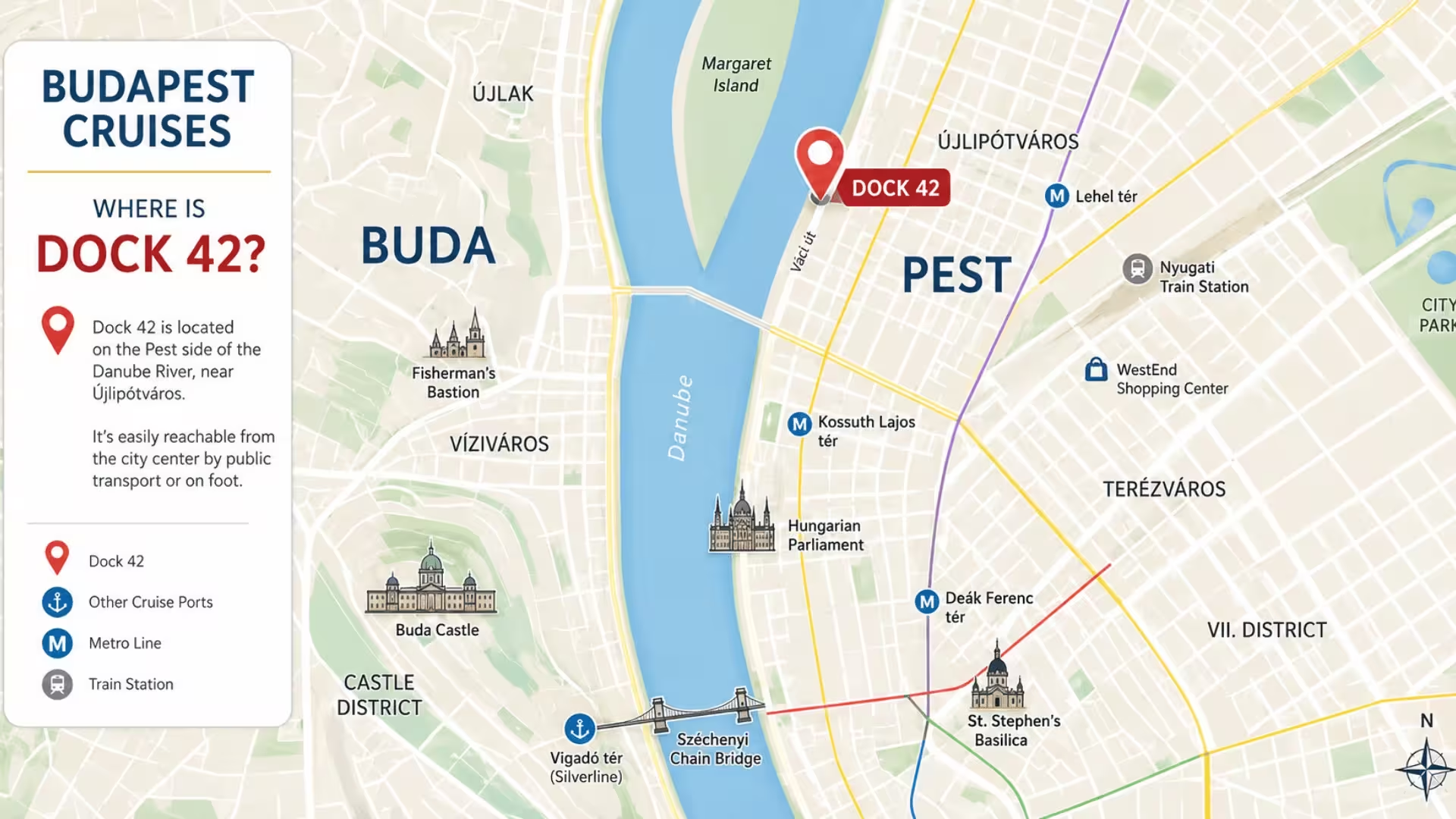
This is the single most important practical tip in this post, and almost no other Budapest cruise review mentions it.
When you picture “Danube cruise dock in Budapest,” your mental image is probably the central tourist stretch of embankment between Chain Bridge and Elizabeth Bridge — the one with the Hungarian Parliament looming over it, the steady stream of cruise companies all clustered together touting for business. That is not where Dock 42 is.
Portum Lines departs from Dock 42 on Carl Lutz rakpart, roughly 800 metres north of Margaret Bridge, in the quieter District XIII part of the embankment near Szent István Park. To put that in walking terms: if you’re staying near the centre of Pest, you’re looking at a 20–25 minute walk from Vörösmarty Square, and you’ll pass right under Margaret Bridge on the way. It’s not difficult to get to — but it’s much further north than you’d expect, and it is easy to walk to the wrong cluster of docks and realise your mistake too late.
A few things I’d strongly recommend:
Give yourself an extra 15–20 minutes beyond what Google Maps says. The Danube riverfront is lined with dozens of nearly identical cruise docks and pontoons, and several of them have very similar names. Even with GPS, we wandered past at least two wrong piers before we spotted the illuminated Dock 42 sign. The operator asks you to arrive at least 15 minutes before departure; if you cut that fine, you genuinely risk missing the boat.
Save the dock location in your phone before you leave the hotel. Search Google Maps for “Portum Lines” rather than “Dock 42” — the company name is more uniquely indexed. Drop a pin and screenshot it for offline backup.
Use Bolt, not a taxi. This is the operator’s own recommendation, and it’s a sound one. Taxi scams targeting tourists are a known issue in Budapest, and Bolt fares from central Pest to Dock 42 typically run €4–6. Just tell the driver “Dock 42, Portum Lines” or show them the pin.
Eat or drink something nearby before boarding, not after. There isn’t much immediately at the dock itself — Szent István Park is pleasant but residential. If you’re hungry, sort it before you walk down.
This is one of those things where five minutes of preparation saves a stressful 20 minutes of “are we even in the right place?” In our case, the rush wasn’t the dock’s fault — it was ours, for underestimating the walk. Don’t make the same mistake.
Picking the right time slot: the lighting trick that changes everything
Here is the single biggest decision you’ll make about this cruise, and almost everyone gets it wrong: what time should you actually board?
The cruise runs throughout the day, but the entire point of the experience is seeing the city’s monuments lit up against a dark sky. Parliament floodlit at midnight is breathtaking. Parliament at 2 PM on a sunny afternoon is just a building you can also see for free from the embankment.
The sweet spot is to board about 30 minutes before sunset so the cruise begins in golden light, passes through the blue hour (that 20–30 minute window after sunset when the sky goes a deep electric navy), and ends in full dark with every landmark fully illuminated. You get three completely different visual moods in 60 minutes. It is genuinely the best lighting trick the city offers.
Sunset in Budapest varies wildly by month, so here’s a rough month-by-month guide for boarding time:
When to Board, by Season
If I were booking again, I’d build the rest of the day around that slot — early dinner before, drinks somewhere with a view after. Trying to squeeze the cruise in as an afterthought is the most common way to ruin it.
The welcome drink, the seats, and the inside-or-outside question
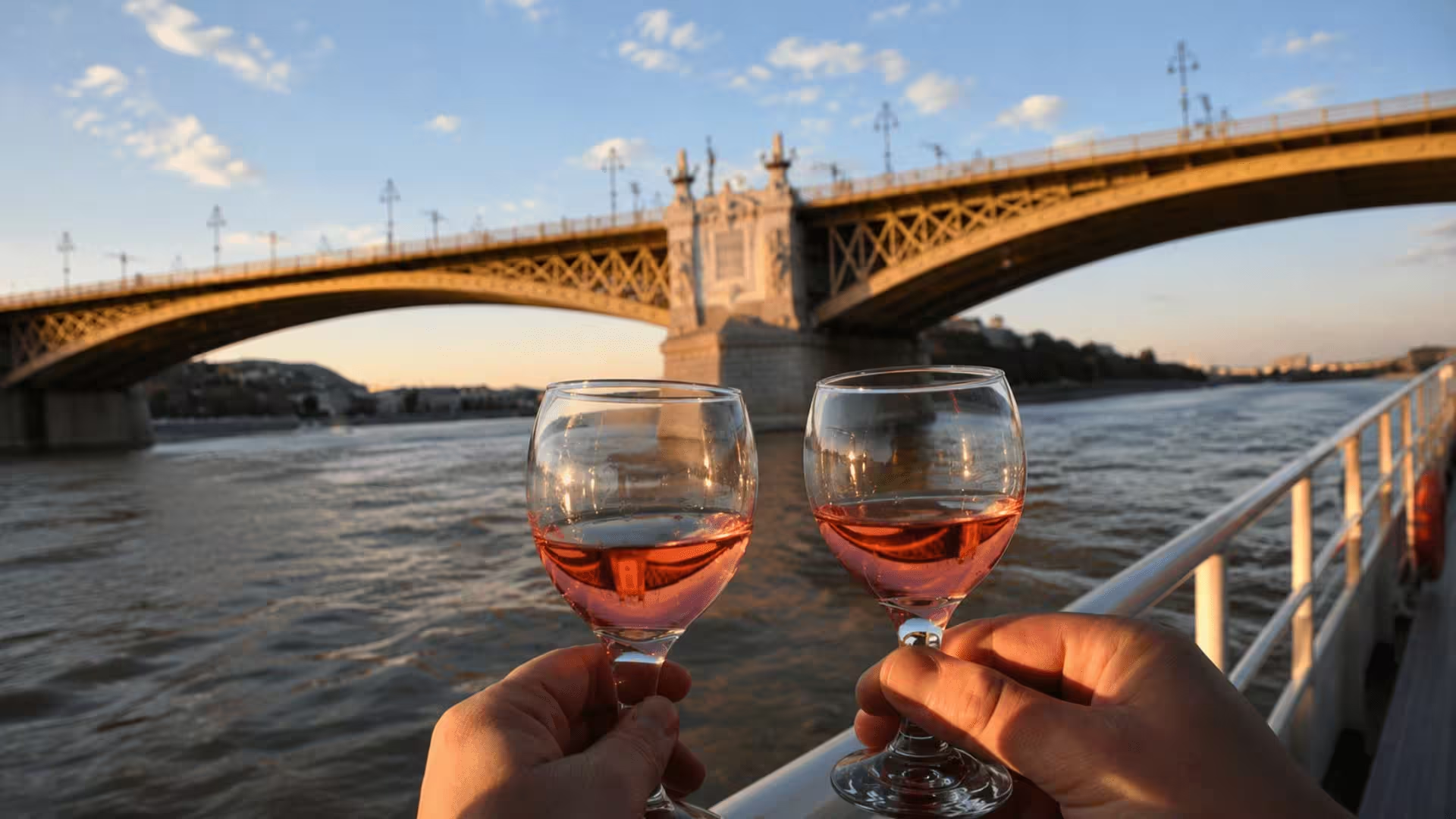
You hand your phone voucher to the crew member at the gangway, they tick you off the list, and the moment your foot lands on the deck someone offers you a drink.
The welcome drink is included in the ticket and you can choose either alcoholic or non-alcoholic. The alcoholic option is typically a glass of Hungarian sparkling wine or wine; the non-alcoholic is usually a soft drink, water, or a juice. We took wine for the two of us and water for the teen — entirely sensible, no quibble from the bar staff. If you want anything beyond your one welcome drink, there’s an onboard bar with reasonable prices.
Seating is first-come-first-served, which is the one piece of booking advice I’d take seriously. There are no reserved seats. There’s an open upper deck with the best photo angles, and an enclosed lower cabin with heaters, larger windows, and tables. If you want the open deck on a busy night, you need to arrive at the front of the boarding queue, which means turning up 20+ minutes early rather than the recommended 15.
Here’s the practical truth about inside versus outside: we started outside and moved inside about 15 minutes in. It was breezier on the river than we’d expected, and once we’d taken our Parliament photos and seen the bridges from the open deck, the heated cabin became dramatically more comfortable. The cabin windows are large and clear; you don’t lose much of the view by moving inside.
My honest recommendation: plan to do both. Stake out a spot on the open deck for the dramatic first half — Parliament, the bridges, the Castle coming into view — then move inside for the slower second leg as the boat turns around. The crew don’t restrict movement; you can switch freely. Bring a layer even in summer. The river is cooler than the street, and the open deck is breezy once the sun is fully down.
The first turn: Parliament from the water
This is the moment the cruise sells itself on, and it absolutely earns its reputation.
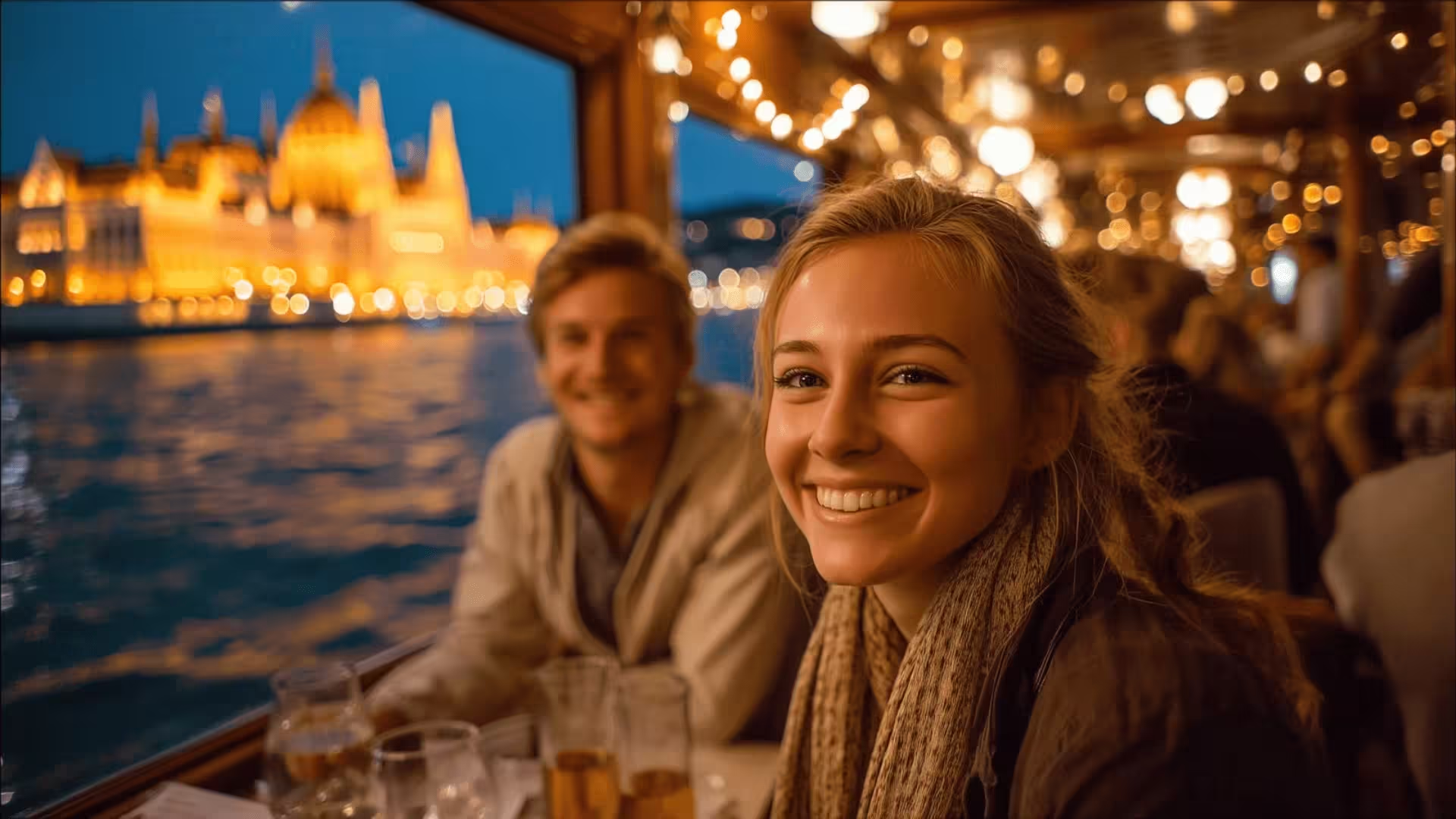
You leave Dock 42 heading south, and for the first few minutes you’re cruising past relatively quiet stretches of embankment — pleasant, but not why anyone books this tour. Then the boat clears the southern end of Margaret Island, and the Hungarian Parliament building appears around the curve.
It is enormous. It is the largest building in Hungary, 268 metres long, neo-Gothic, lit from below in warm gold so that every spire and turret throws a sharp shadow upward. From the water it doesn’t read like a building so much as a vision — the way a teenager sees a castle in a film they haven’t admitted they like. The river is dark; the building is gold; the reflection runs all the way to the boat. You will take 40 photos and the one you keep will be the one where you forgot to take a photo and just looked.
Our teen, who had spent the previous 20 minutes pretending the cruise was beneath him, said the word “okay” in the specific tone teenagers reserve for admitting something is impressive without actually saying so. I’ll take it.
The audio guide picks up around this point with brief commentary in your selected language — useful context if you want it, easy to tune out if you don’t. The boat doesn’t rush past; it slows, holds the angle, and gives you the time to actually look.
The genius of how the boat sails (no fighting for sides)
Here’s something that surprised me and that I haven’t seen mentioned in any other review.
On a lot of city sightseeing cruises — anywhere in the world — there’s a quiet, slightly unpleasant scramble between passengers for the “good side” of the boat. Whichever side faces the landmarks gets the views. The other side gets a wall of moving water. People migrate, jostle, lean over strangers’ shoulders, apologise.
The Portum Lines route doesn’t work that way. The boat sails up the river along one bank, turns, and sails back down along the other bank, which means both sides of the boat get a turn at every major landmark. Parliament is on your left for one leg and on your right for the other. Same with Buda Castle, the Chain Bridge, the Liberty Bridge, the Gellért Hill. You don’t need to fight for a side. You don’t need to move. If you’ve found a comfortable seat, you can stay in it and let the view come to you.
This was, weirdly, my spouse’s favourite thing about the whole experience. He’s not someone who scrambles for photos, and the relaxed pace of it — the sense that you were going to see everything regardless of where you sat — felt different from any other tourist boat we’d been on. It turns what could be a stressful “did we get the good seats?” lottery into a genuinely calm hour on the water.
If you’re travelling with someone who finds tourist crowds wearing, this is the structural detail that makes the cruise work for them. It’s also what makes it good for kids — they don’t have to be wrangled around the deck to “come and see this!” because this will swing back around in ten minutes.
The Buda side: under the Chain Bridge and home
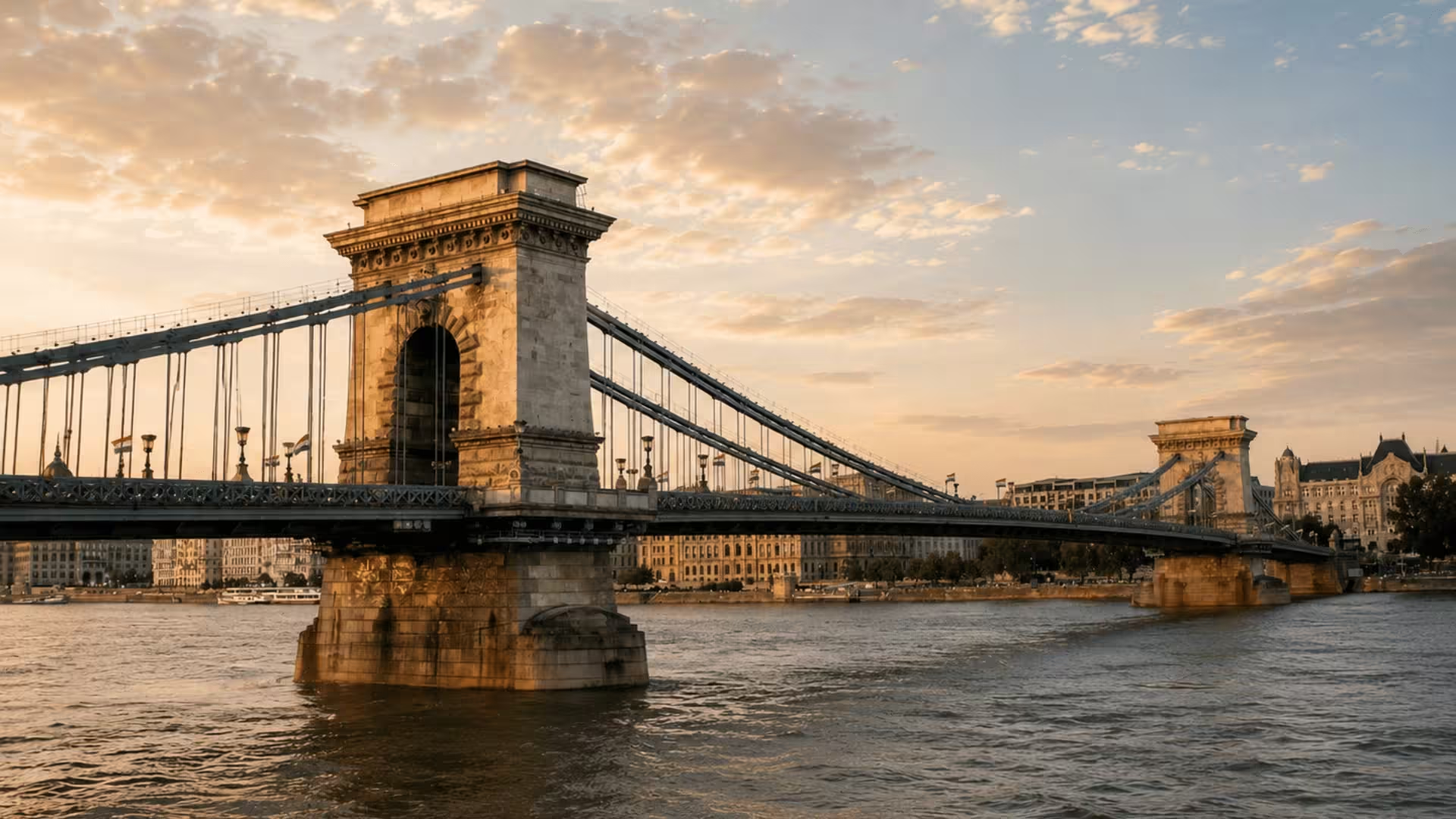
The boat turns just below the Liberty Bridge, the green iron one with the mythological birds on its towers, and from this point the cruise stops being a sequence of “look at that” moments and starts being a single sustained one. The Buda side of the river opens up on your right as you head back north, and it is genuinely the half of the cruise nobody warns you is the best.
Buda Castle sits floodlit on Castle Hill above you — the green dome of the Royal Palace, the long stone façade, the whole thing massive and warm-lit against the black sky. Below it, almost hidden in daylight, the restored terraces of the Várkert Bazár glow softly along the water. You don’t need the audio guide to tell you what you’re looking at. The lighting does the work. (If you’re researching Budapest more widely, one quick note worth mentioning here: the Gellért Baths on this side of the river are currently closed for renovation until 2028, so if any older guide tells you to combine them with your cruise day, that’s out of date — Széchenyi remains the main alternative.)
Then, slowly, the Chain Bridge.
It is impossible to over-prepare yourself for the moment a cruise boat passes underneath the Széchenyi Lánchíd at night. The lions on the bridge piers are caught in the warm uplight; the chain garlands strung between the towers blaze yellow against the dark; for a few seconds you are inside the bridge, looking up at the underside as the silhouettes of pedestrians cross high above you. The whole boat goes quiet. Phones come up, then come down. This is the second emotional peak of the cruise, and depending on the person, it may be the one they remember more than Parliament.
A few minutes later, as the boat tracks back toward Dock 42, the Liberty Statue appears one last time — high on Gellért Hill across the water, a bronze figure holding a palm leaf, lit white against the navy sky. It’s the cruise’s closing image, and a good one. By the time we eased back to the dock, we’d been on the water for almost exactly an hour. None of us had checked the time.
What our teen actually thought
Let me be honest, because the post-and-everyone-loved-it framing always feels suspicious.
The first ten minutes he was bored. We boarded, got our drinks, sat down, and the early stretch of river before the boat reaches the showpiece buildings isn’t visually arresting. He got his phone out. I noticed and chose not to say anything. My spouse noticed and shot me a “we paid for this” look.
Then Parliament appeared and everything shifted. The phone went down for the long middle stretch — bridges, Castle, the lit hill — and stayed down. He asked a couple of questions about the buildings, which is roughly the teenage equivalent of leaping up in excitement.
Was it his favourite thing we did in Budapest? Probably not. The thermal baths and the chimney cake from a street stall ranked higher. But he came off the boat happy, said the Parliament view was “actually really cool,” and didn’t complain about the walk back. By teenage metrics that is essentially a five-star review.
If you’re travelling with a teen who’s hard to impress, the cruise works because it’s short. An hour is enough to see the city’s icons; it’s also short enough that even a reluctant traveller can give it their attention without getting fidgety. The dinner cruise — two-plus hours of sitting at a table — would have been a much harder sell.
Which Budapest Danube River Cruise Should You Book?
Now that you know what the standard 1-hour cruise is actually like, here’s the honest decision framework if you’re weighing the upgrades. There are roughly four kinds of Danube cruise sold in Budapest, and they each market themselves as the “best” option:
- The standard 1-hour sightseeing cruise with welcome drink (€15–18)
- The unlimited prosecco or cocktail cruise (75–90 minutes, around €30)
- The dinner cruise with full meal and often live music (2–2.5 hours, €80–130)
- The Danube Bend day cruise out to Szentendre or Visegrád (half or full day — a completely different product)
We talked ourselves around all four before booking. Here’s how the decision actually shook out for a family of three with a teenager.
The day cruise was off the table immediately — beautiful scenery, but it eats half a day, and we only had a long weekend. The prosecco cruise was tempting on price but skews younger and louder; with a teenager in tow it felt mismatched. The dinner cruise was the one we kept circling back to: it looked romantic, the menu was decent, and the boat sailed at a slower pace. But the more reviews I read, the more I noticed a pattern — people raved about the cruise and were lukewarm about the food. €128 for two adults felt like a lot of money for “the food was fine.”
Which Budapest Cruise Should You Book?
Standard 1-Hour Sightseeing Cruise
- It’s your first time in Budapest and you want to see the icons without a big time commitment
- You’re travelling with kids or teens
- You’re on a tight budget or saving spend for other experiences (thermal baths, a proper Hungarian dinner ashore)
- You want flexibility about when to eat dinner
Prosecco / Cocktail Cruise
- You’re a couple or group of friends without kids
- You’re treating the cruise as the evening’s main social event rather than a sightseeing add-on
- You’re happy to swap the audio guide for atmosphere
Dinner Cruise with Live Music
- You’re celebrating something specific (anniversary, honeymoon, milestone birthday)
- You’d genuinely enjoy a 2-hour seated dinner on the water
- The food quality matters less to you than the occasion
Danube Bend Day Cruise
- You have at least a full day to spare and have already seen central Budapest
- You’re more interested in countryside, riverside villages, and Hungarian history than night-time skyline photography
- You’d rather one big half- or full-day trip than a one-hour evening experience
The general principle: the standard cruise is the experience. The upgrades are the occasion. If you’re booking the experience, you don’t need to upgrade. If you’re booking the occasion, you do.
One more piece of math worth doing: the standard cruise is so well-priced that you can do it and have a proper Hungarian dinner ashore afterwards for less than the cost of the dinner cruise alone. We had pörkölt and a bottle of Hungarian red at a restaurant in the District V backstreets after we disembarked, and it was one of the meals we still talk about. The dinner cruise would have been a compromise on both fronts.
10 things we wish we’d known before boarding
The compact list, the way I’d brief a friend over a coffee:
- Save “Portum Lines” in Google Maps before you leave the hotel. Searching “Dock 42” pulls up multiple options across the riverfront; the company name is unique.
- Add 15–20 minutes to whatever walking time your map app suggests. The riverside path looks straightforward and isn’t.
- Use Bolt rather than a taxi. Taxi overcharging targeting tourists is a known Budapest issue. Bolt rides to Dock 42 from central Pest are usually €4–6.
- Arrive at least 20 minutes early if you want first pick of seats. “Fifteen minutes before departure” is the operator’s minimum, not the optimum.
- Don’t bring outside food or drink. It’s not allowed onboard. There’s a bar.
- Bring a layer even in summer. The river is cooler than the street, and the open deck is breezy.
- Plan to do both deck and cabin. Open deck for Parliament and the bridges, heated cabin for the calmer return leg.
- Charge your phone before you go. You’ll take more photos than you expect.
- Watch the cancellation window. Free cancellation up to 24 hours before, but inside that window you’re committed. Check the weather forecast the day before, not the day of.
- Pay in card, not cash. Hungary uses the forint and most onboard bars and surrounding restaurants accept card without issue. You don’t need to draw cash specifically for the cruise.
Final thoughts: would we book it again?
Yes — and I’d recommend it without hedging.
There are very few experiences in any city that combine “iconic,” “affordable,” and “actually good with kids” the way the Budapest Danube river cruise does. The standard 1-hour Portum Lines sightseeing cruise has over 40,000 reviews and a 4.6-star average not because it’s a polished luxury experience — it isn’t — but because it nails the one thing it’s trying to do. You see Budapest from the angle the city was designed to be seen from. The river is the spine of the city, the bridges are the joints, and an hour on the water rearranges your sense of the place in a way that walking the embankments can’t.
If you’re planning a Budapest trip and you do one paid experience on the water, make it this one. Book the right time slot — about 30 minutes before sunset — give yourself extra time to find the dock, take wine and water for the welcome drinks, and don’t worry about which side of the boat you sit on. The cruise takes care of the rest.
If you have a second day, pair it with Széchenyi Baths — our son ranked that even higher.
You can book the Budapest City Highlights Sightseeing Cruise here: Book on GetYourGuide.
FAQ
How long is the Budapest City Highlights Cruise? The cruise lasts approximately one hour from departure to return at Dock 42. Allow another 20–30 minutes either side for arrival, boarding, and disembarkation, so plan on 90 minutes door-to-door.
Where does the Portum Lines cruise depart from? Dock 42 on Carl Lutz rakpart (the embankment) at Szent István Park in District XIII, about 800 metres north of Margaret Bridge. It is not in the main cluster of cruise docks between Chain Bridge and Elizabeth Bridge — make sure you walk to the correct location.
What’s included in the welcome drink? One complimentary drink per passenger: either alcoholic (typically Hungarian sparkling wine or wine) or non-alcoholic (soft drink, water, or juice). Additional drinks and snacks are available from the onboard bar.
What’s the best time of day to book a Danube cruise in Budapest? About 30 minutes before sunset. This lets you sail through golden hour, blue hour, and into full dark — three different lighting moods in 60 minutes. Sunset in Budapest ranges from around 4:00 PM in December to 8:45 PM in June, so check the exact time for your travel dates and book accordingly.
Is the cruise suitable for kids and teens? Yes. The 1-hour duration is well-judged for shorter attention spans, the welcome drink can be a soft drink or juice, and the boat is easy to move around. Kids generally engage well once the boat reaches Parliament.
Is it better to sit inside or on the open deck? Both, ideally. Start on the open deck for the first half — Parliament, the bridges, the Castle coming into view — then move into the heated cabin for the calmer return leg. Cabin windows are large and clear, so you don’t lose much by being inside. On windy or cold evenings, plan to spend more of the cruise indoors.
Should I book in advance or just turn up? Book in advance. The cruise sells out frequently in peak season, walk-up tickets are more expensive than online prices, and booking through GetYourGuide gives you free cancellation up to 24 hours before — useful insurance against weather changes.
How much does the cruise cost? From around €15.50 per person when booked online through GetYourGuide. Walk-up prices at the dock are higher (around €18). Premium options (dinner cruises, prosecco cruises) cost considerably more.
What’s the difference between the standard sightseeing cruise and the dinner or prosecco versions? The standard 1-hour cruise focuses purely on sightseeing with a single welcome drink. The prosecco cruise (75–90 minutes) includes unlimited sparkling wine and skews more social. The dinner cruise (2–2.5 hours) adds a multi-course meal and usually live music, at three to eight times the price. Most first-time visitors are best served by the standard cruise; the upgrades suit specific occasions.
Are the cruises still worth it on rainy or cold evenings? Yes — the enclosed cabin is heated and offers a near-uninterrupted view through large windows, so the cruise still works in poor weather. If the weather is genuinely severe, the operator may cancel and offer a refund or reschedule. Booking with free cancellation gives you flexibility if conditions look unfavourable.