 Skip to content
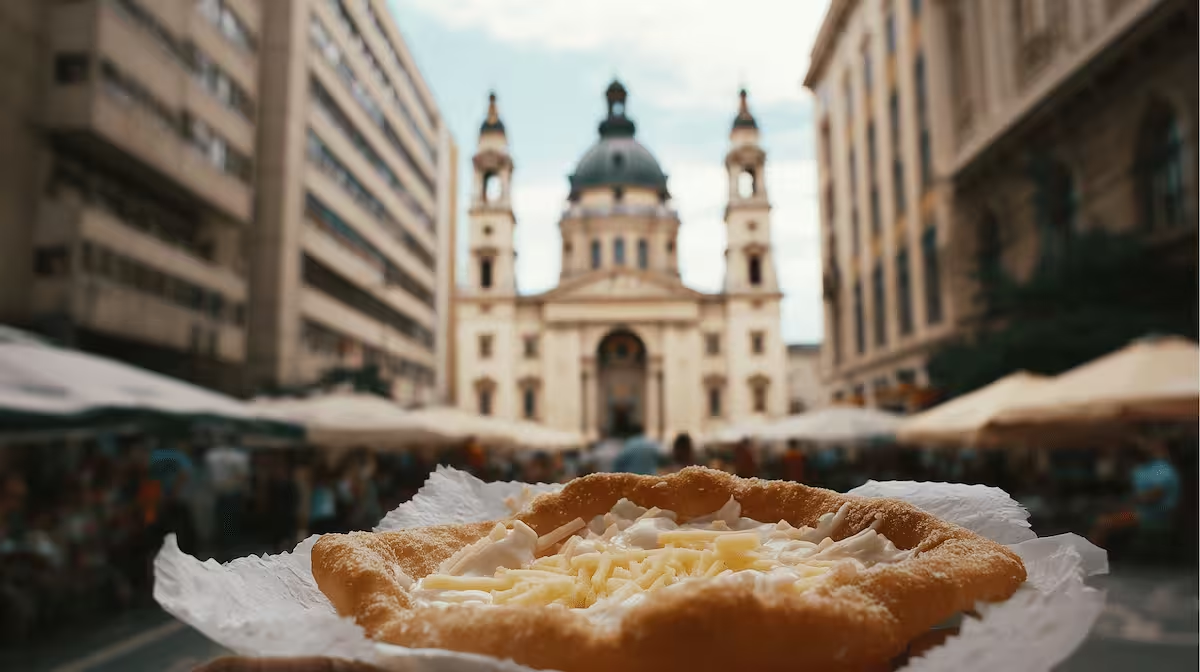
Our son got through what felt like twenty napkins.
We were standing outside St. Stephen’s Basilica, mid-afternoon, each holding a lángos the size of a small pizza — a disc of deep-fried dough slathered in garlic water, piled with sour cream and a mountain of shredded cheese. It was warm, it was messy, it was completely impossible to eat with any dignity, and the three of us were laughing in the way you only laugh when you’re somewhere genuinely new, eating something genuinely good, and none of you can quite believe this is what a Wednesday afternoon looks like.
That moment, more than any restaurant meal we’d planned or any guidebook recommendation we’d followed, is what I think of when I think of eating in Budapest. We found it on a food tour we’d nearly talked ourselves out of booking.
This is the honest review of the Budapest food tour I wish I’d read beforehand. What actually happens stop by stop, why our guide made the difference between a pleasant afternoon and a genuinely memorable one, and whether a three-hour walking tour with food is worth it for a family with a teenager who wasn’t sure he wanted to be there.
The short answer: yes. Convincingly.
Table of Contents
Show / Hide
- 01 The Budapest food tour at a glance: what you’re booking
- 02 Why we booked a food tour (and why we nearly didn’t)
- 03 The meeting point: Hungarian State Opera House
- 04 Stop 1: the strudel bakery (and the paper-thin dough)
- 05 Stop 2: lángos at St. Stephen’s Basilica
- 06 Stop 3: the wood-panelled tavern (an honest take)
- 07 Stop 4: the secret final stop (and why it’s the best one)
- 08 What the guide actually adds (and why DIY doesn’t replace it)
- 09 Is this tour right for families with kids?
- 10 Practical tips before you book
- 11 Final thoughts: was it worth it?
- 12 FAQ
The Budapest food tour at a glance: what you’re booking
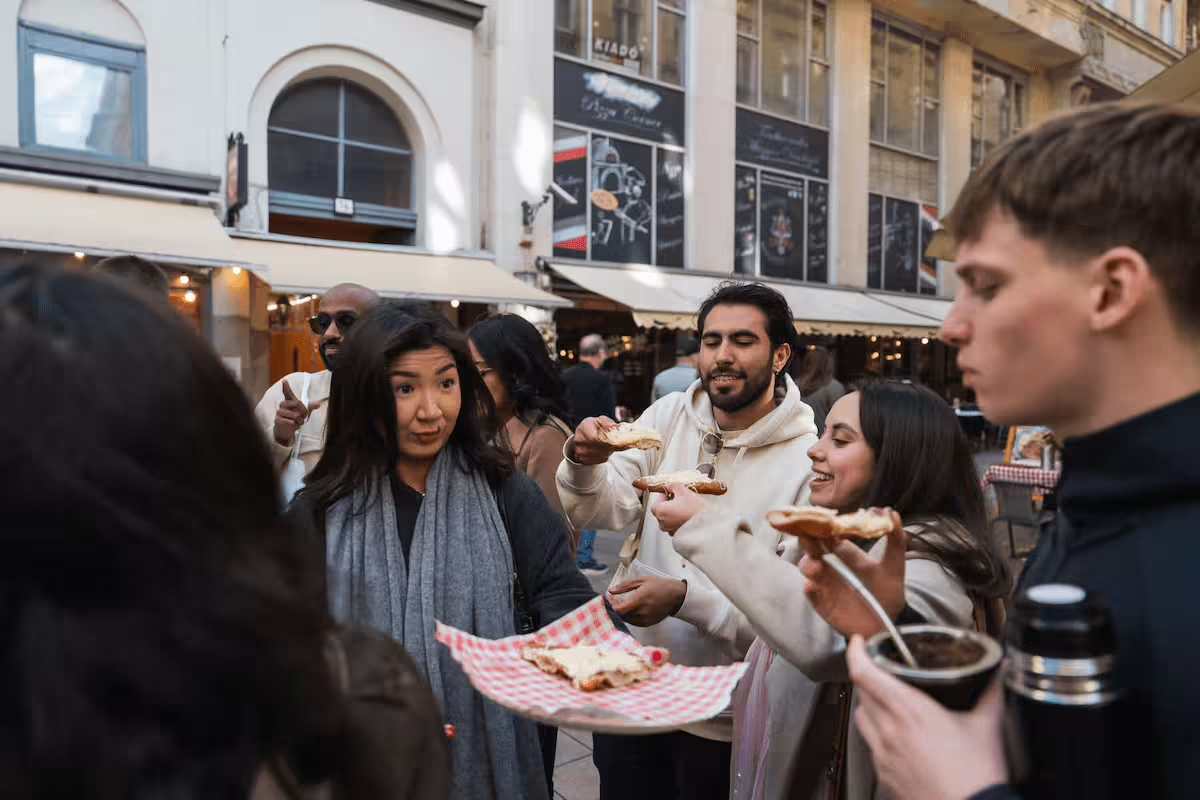
Before we get into the experience stop by stop, the facts:
Quick-Reference Info: Budapest Centre Food Tour
Gratuities included. Free 24h cancellation.
Badge of Excellence winner
Max 12 people per group
4 food stops • Small group walking tour
Andrássy út 22, District VI
M1 yellow line → Opera station
Averaging 4.9 / 5 on Viator
Booked avg. 49 days in advance
May 2026
One thing worth flagging upfront: Viator’s data shows this tour is booked an average of 49 days in advance. That’s not a marketing line — it’s a genuine booking pattern that reflects how quickly the small-group slots fill. If Budapest is on your calendar in the next two months, checking availability now rather than the week before is worth doing.
Why we booked a food tour (and why we nearly didn’t)
We’d been going back and forth on it for two weeks.
The case against: we’re reasonably adventurous eaters, we can read a menu, and Budapest’s restaurant scene isn’t exactly hard to navigate on your own. A food tour felt like paying someone to do something we could do ourselves with a bit of research and a willingness to walk into places that looked local rather than touristy.
The case for: we had three days in Budapest, a list of things we wanted to see, and exactly zero useful knowledge of Hungarian food beyond “goulash is a thing.” We didn’t know what rétes was, couldn’t have told you the difference between gulyás and pörkölt, and had no idea where Budapestians actually ate versus where tourists ate. The same problem we’d have in any city we didn’t know well.
What tipped it was a practical realisation: even if we found good restaurants on our own, we’d almost certainly still end up eating tourist-adjacent food in tourist-adjacent places, because that’s what TripAdvisor optimises for. A local guide optimises for something different.
We booked the afternoon slot. It was one of the better decisions we made in Budapest.
The meeting point: Hungarian State Opera House
The M1 yellow metro line — Budapest’s oldest, the second-oldest underground railway in continental Europe — deposits you directly at Opera station on Andrássy Avenue. You emerge onto a boulevard of plane trees and 19th-century buildings, and directly across the road is the Hungarian State Opera House: a neo-Renaissance wedding cake of a building that looks like it was designed to make people feel underdressed.
Our guide was waiting outside with a warmth that immediately resolved the mild anxiety that comes with joining a group of strangers for an afternoon. Within five minutes of introductions, the twelve of us felt less like a tour group and more like a small gathering of people who happened to be going in the same direction. That tone — unhurried, genuinely local, conversational — held for the entire three hours.
If you’re coming by metro, get off at Opera on the M1 (yellow) line. If you’re coming on foot from Deák Ferenc tér, it’s a straight 10-minute walk up Andrássy. Don’t be late — the group moves at a comfortable pace but it does move, and the guide won’t hold the start for one person.
Stop 1: the strudel bakery (and the paper-thin dough)
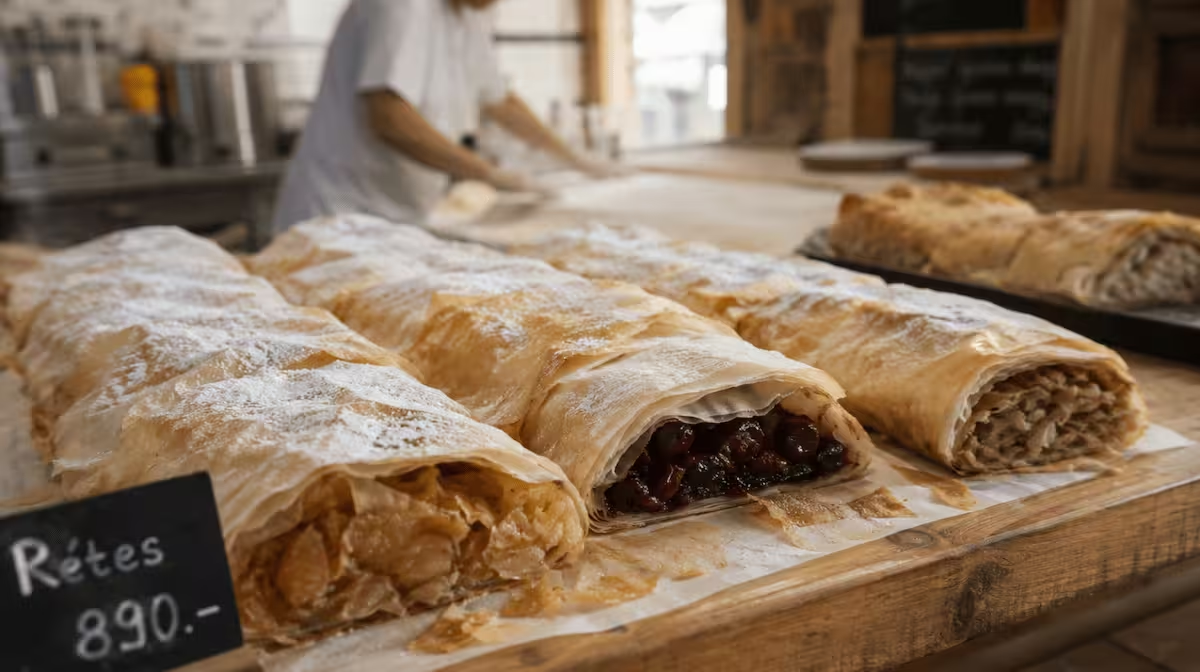
Our first stop was a local bakery — not the kind with a sign outside and a laminated menu — the kind you’d walk past entirely without a guide pointing you toward it.
The centrepiece was rétes: Hungarian strudel, and specifically the process of making it. A baker was stretching dough at a table, pulling it by hand until it was almost transparent. Not thin the way pastry is thin. Thin the way a handkerchief is thin — you could have read through it. Our guide explained that the skill is in working fast enough that the dough doesn’t tear, and in knowing when it’s exactly right. It’s one of those things that looks deceptively effortless when someone who knows what they’re doing does it.
The tasting split beautifully along preference lines. My spouse and I chose the savoury option — a cabbage-stuffed rétes, dense and earthy, paired with a rich dark espresso that felt exactly right at that hour. Our son went straight for the sweet version: túros rétes, filled with sweetened cheese curd, which he pronounced immediately as the best thing he’d eaten in Budapest. He was not yet aware that the lángos was coming.
The guide used this stop to give us context for the whole afternoon — a brief, non-lecturing introduction to Magyar food traditions, why Hungarian cuisine developed the way it did, and what to expect from the stops ahead. It was the low-pressure opening the tour needed: something delicious, something visually interesting to watch, and enough cultural scaffolding that the rest of the afternoon would land with meaning rather than just flavour.
Stop 2: lángos at St. Stephen’s Basilica
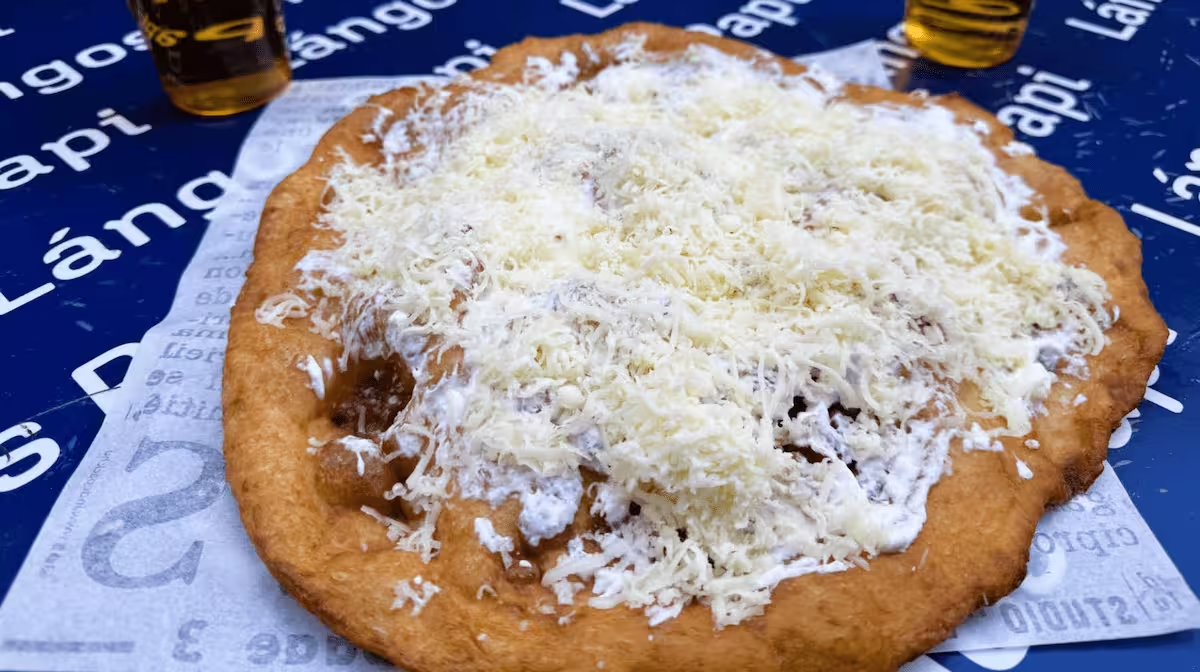
If there is a single piece of Hungarian street food that warrants its own section of a travel blog, it is lángos.
Lángos (pronounced roughly: lahng-osh) is a disc of deep-fried yeasted dough, cooked until it puffs golden and crisp at the edges and stays soft and airy in the middle. It is then rubbed with garlic water — not drizzled, rubbed, directly onto the hot surface so the garlic blooms in the heat — then loaded with tejföl (sour cream) and piled with shredded cheese. The result is something between a flatbread, a pizza, and a dream you’d be embarrassed to describe out loud.
We ate ours standing up, outside, in the shadow of the dome of St. Stephen’s Basilica, Hungary’s largest church. This is not a subtle setting. The Basilica is enormous, classical, built to inspire the feeling that you are very small and the things around you are very old. Eating something this messy in this setting is a specific kind of Budapest joy.
Our son — who had been composed and dignified throughout the strudel stop — did not survive the lángos with his dignity intact. The sour cream situation was immediate and comprehensive. He used what felt like twenty napkins. We have a photo of this. He has asked us never to show it to anyone. We are seriously considering his request.
The lángos is the tour’s crowd moment — the one that gets the whole group laughing, comparing hand positions, admitting defeat. Our guide watched all of us with the patient amusement of someone who has seen this happen many times and still finds it genuinely funny. This was the moment the twelve strangers became a group.
Stop 3: the wood-panelled tavern (an honest take)
Let me be straight about this one, because the post-and-everyone-loved-every-stop framing is exactly what makes food tour reviews untrustworthy.
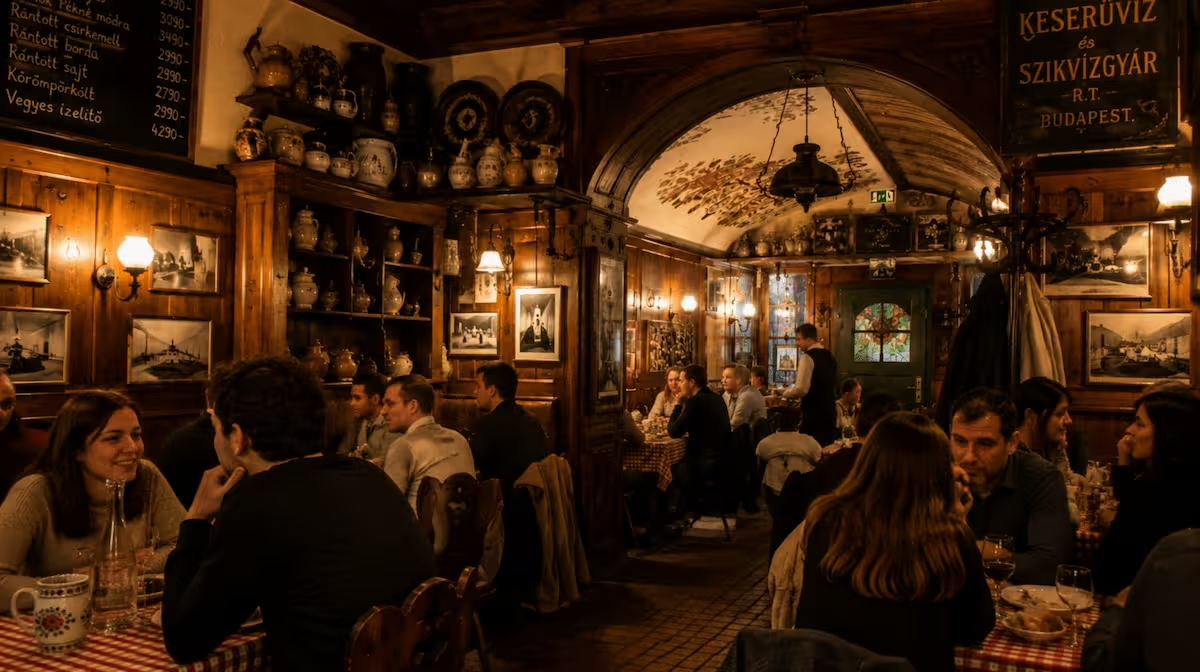
Our third stop was a traditional Hungarian tavern — the kind with dark wood panelling, low ceilings, the smell of a kitchen that has been making the same things well for a very long time. It was a sit-down break, and my spouse and son needed it. Three hours of walking sounds manageable until you’re actually doing it on a full afternoon with cobblestone streets and an early lángos in your stomach, and the chance to sit down, rest your legs, and let a proper meal come to you is — for most travellers — the right thing at exactly the right time.
The food was traditional Hungarian comfort food: the kind of gulyás and hearty, paprika-rich dishes that have been keeping people warm through Central European winters for centuries. My spouse loved it. The other members of our group loved it. The reviews of this tour consistently rate this stop highly, and from everything I could observe, that rating is deserved.
Personally, the rich, deeply savoury flavour profile wasn’t quite my taste. I ate it, I appreciated what it was doing, and I understood intellectually why it’s exactly right — this is what Hungarian home cooking tastes like, this is the flavour of the country — but I’d be misleading you if I said it was my favourite stop.
That’s not a criticism of the tour. A tour that only takes you to things that suit one set of taste preferences isn’t a Budapest food tour; it’s a curated version of Budapest for people who think the way you do. The tavern stop is there because this is what Hungarian food is, and any honest account of eating in Budapest should include it. The fact that it’s not universally the favourite stop is part of what makes the tour honest.
The sit-down break, regardless of the food, is structurally the right call. By the time we left, we were ready for the final stop.
Stop 4: the secret final stop (and why it’s the best one)

The tour ends at a private venue — not a restaurant, not a café, something closer to a hidden artisan’s space that feels entirely removed from the tourist Budapest you’ve been navigating all trip. Other reviewers have called it a speakeasy; some have called it a private club. What I’d call it is: the kind of place you’d never find unless someone who knew it existed took you there specifically.
This was my personal favourite stop of the afternoon, and it’s not close.
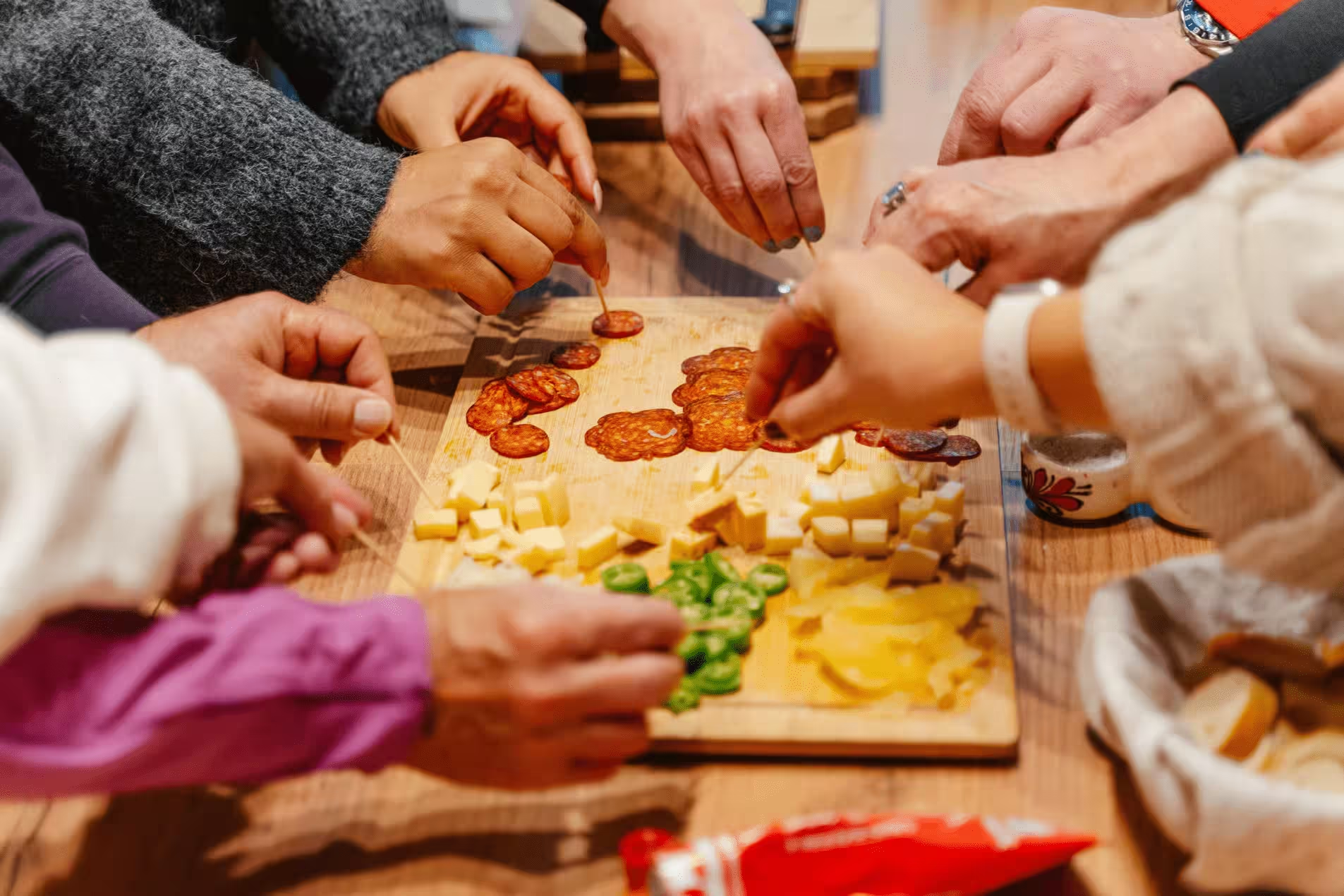
The focus was on local organic Hungarian sausages — produced by someone who clearly makes them the way sausages were made before mass production made the process invisible. The variety, the quality, the specificity of flavour between cuts and cures — this was the stop where I understood that Hungarian charcuterie is genuinely worth knowing about, not as a tourist novelty but as a food tradition with real depth.
There’s also pálinka: Hungary’s fruit brandy, clear and fiercely alcoholic and the kind of thing that divides rooms between people who immediately want another and people who immediately want water. Our guide poured small measures and explained what we were tasting — the fruit base, the regional style, the difference between a commercial pálinka and one made by someone who treats the process as a craft. Even if spirits aren’t your thing, the context makes it interesting.
The intimacy of this final stop is what makes it the right ending. You’ve been walking and eating and getting to know twelve strangers for nearly three hours, and this private room with its artisan food and its small pours feels like the tour earning the trust it’s been building. You leave feeling like you’ve been shown something real.
What the guide actually adds (and why DIY doesn’t replace it)
This is the question every food tour sceptic asks, and it’s the right question.
The honest answer is that a good guide doesn’t just take you to places you couldn’t find on your own — though they do that. They provide the context that turns eating into understanding. The strudel bakery stop wasn’t just strudel; it was a five-minute explanation of why pastry technique developed differently in this part of Europe, who was influenced by whom, and what the dough tells you about the culture that made it. The lángos stop wasn’t just fried dough; it was the story of how a peasant bread became a street food institution. The tavern wasn’t just gulyás; it was the difference between the tourist version of the dish and what Hungarian families actually make at home.
Without that context, you could eat all four of those things and leave having tasted Budapest. With it, you leave having understood something about it.
There’s also the practical reality: our guide knew which bakery had the freshest rétes that afternoon, which vendor’s lángos was worth the queue, which tavern had been serving the neighbourhood since before the tourist economy existed. That knowledge isn’t something you build on a three-day visit. It’s the kind of thing a local accumulates over years.
After the tour, our guide sent a follow-up email with restaurant recommendations and recipes for the dishes we’d tried. It’s a small thing, but it extended the value of the afternoon well beyond the three hours on the street.
Is this tour right for families with kids?
Based on our experience with a 15-year-old: yes, with one important caveat.
The caveat first: your child needs to be a reasonably willing participant in trying unfamiliar food. Not adventurous, necessarily — our son’s default position on new food is polite scepticism — but willing to try things rather than resistant to them. A child who flatly refuses to try gulyás or strudel will have a long three hours.
If they’re open to trying things (or at least pretending to be for the sake of family harmony), the tour works for a few specific reasons:
The small group of 12 means there’s no crowd pressure and no being lost in a big group. Our son could ask questions without feeling like he was holding thirty people up.
The sit-down breaks matter more for kids than adults. By stop 3, legs were tired and the chance to sit made the difference between a happy teenager and a flagging one.
The lángos stop is universally a hit with teenagers. Something about the combination of fried dough, maximum messiness, and eating standing up outside a cathedral apparently speaks across age groups.
The portions are enormous. This bears repeating: do not eat a full meal before this tour. A light breakfast is fine. A full lunch is a mistake. Our son, who generally has the appetite of someone twice his size, was full by the end of stop 2 and only managed the sausages at the final stop because the quality was too good to decline.
One logistical note: the tour involves a fair amount of walking on uneven Budapest streets. It’s not strenuous, but comfortable shoes and a willingness to spend three hours on your feet are genuine requirements. The sit-down breaks are built into the structure rather than offered on request.
Practical tips before you book
The things I’d tell a friend before they went:
- Don’t eat breakfast. Or eat very lightly. You will be fed from the moment the tour starts, portions are generous at every stop, and arriving with a full stomach means you either miss out on food or feel genuinely unwell by stop 3. The tour is the meal.
- Book at least 4–6 weeks in advance. Viator’s data shows this tour books an average of 49 days ahead. That’s not aspirational marketing — it reflects how quickly 12-person slots fill on a popular product. Check availability early.
- Wear comfortable shoes. Three hours on Budapest’s cobblestones in shoes that aren’t broken in is a specific kind of unpleasant that will overshadow even the best lángos.
- Dietary requirements: contact the operator in advance. The tour can accommodate some dietary needs but needs to know ahead of time. The Viator listing notes this specifically.
- The sweet-before-savoury issue. One reviewer noted they’d have liked to know the order of sweet and savoury stops in advance. The tour starts with sweet (strudel) and moves to savoury — if that ordering matters to you, it’s worth knowing.
- The tour is not wheelchair accessible. The route includes cobblestone streets and uneven surfaces.
- The post-tour email is worth looking out for. Your guide will send restaurant recommendations and recipes after the tour. Save it — it’s a genuinely useful resource for the rest of your Budapest trip.
- Take the M1 yellow metro to Opera station. Don’t get a taxi — traffic on Andrássy can be slow and you risk being late.
Final thoughts: was it worth it?
Yes — one of the best things we did on the whole Budapest trip.
I want to be honest about what this tour is and isn’t. It isn’t cheap: at around $116 per person with gratuities included, it’s a meaningful spend for a family of three. It isn’t a restaurant meal — you’re eating on your feet, at four different stops, in the middle of the afternoon. And it isn’t a sightseeing tour, even though you pass some genuinely beautiful landmarks along the way.
What it is: three hours of eating real Hungarian food in places tourists don’t normally find, guided by someone who genuinely knows what they’re talking about, in a small enough group that it feels personal rather than processed. We bypassed every tourist trap, ate where locals eat, and came away full — of food, and of a much better understanding of what Budapest actually tastes like.
The lángos outside St. Stephen’s Basilica, our son with sour cream on his face and twenty used napkins on the table, all three of us laughing — that’s the memory that stayed. Not the goulash restaurant we planned the night before, not the nice dinner we’d read about on TripAdvisor. The thing we almost didn’t book.
Book it before Budapest. Go hungry.
Book the Budapest Centre Food Tour on Viator →
If you’re combining this with the other experiences we did on this trip, here’s our honest review of the Budapest Danube river cruise and our guide to Széchenyi Baths — both worth doing, and both link back to this post for the full Budapest picture.
FAQ
What is included in the Budapest Centre Food Tour? The tour includes 10+ food and drink tastings across four stops: strudel (rétes), lángos, traditional Hungarian tavern food, and a private final stop featuring local organic sausages, pálinka, and artisan products. Hungarian wine and water are included throughout, as are gratuities and a post-tour email from your guide with restaurant recommendations and recipes.
How long is the Secret Food Tours Budapest experience? Approximately three hours. The tour meets at the Hungarian State Opera House on Andrássy Avenue and ends near Nyugati (West) Station, covering the central Pest district on foot with four sit-down or standing food stops along the way.
How much does the Budapest food tour cost? From around $116 per person when booked through Viator, with gratuities included. Free cancellation is available up to 24 hours before the tour. Check current pricing and availability on the Viator listing as prices vary by date.
How far in advance should I book? As early as possible — Viator’s booking data shows this tour is reserved an average of 49 days in advance. With a maximum of 12 people per group, slots fill quickly, particularly in peak season (May–September).
Is the Budapest food tour suitable for children and teenagers? Yes, for teenagers (14+) who are willing to try unfamiliar food. The small group size, sit-down breaks, and enormous lángos stop make it work well for families. Come hungry — do not eat a full meal beforehand. The tour itself functions as a filling afternoon meal.
What should I wear or bring? Comfortable walking shoes are essential — three hours on cobblestone streets in uncomfortable shoes is genuinely unpleasant. No other specific equipment needed. The tour is not wheelchair accessible.
Where exactly does the tour meet? Outside the Hungarian State Opera House at Andrássy út 22, District VI. Take the M1 yellow metro line to Opera station — it deposits you directly outside. The tour ends near Nyugati (West) Station.
Is the food tour worth the price? In our experience, yes. The $116 per person price includes gratuities, 10+ tastings with drinks, a small-group maximum of 12, and access to venues a solo traveller would not typically find. The value is strongest for first-time Budapest visitors who want to understand Hungarian food culture in context rather than just finding a restaurant to eat in.