 Skip to content
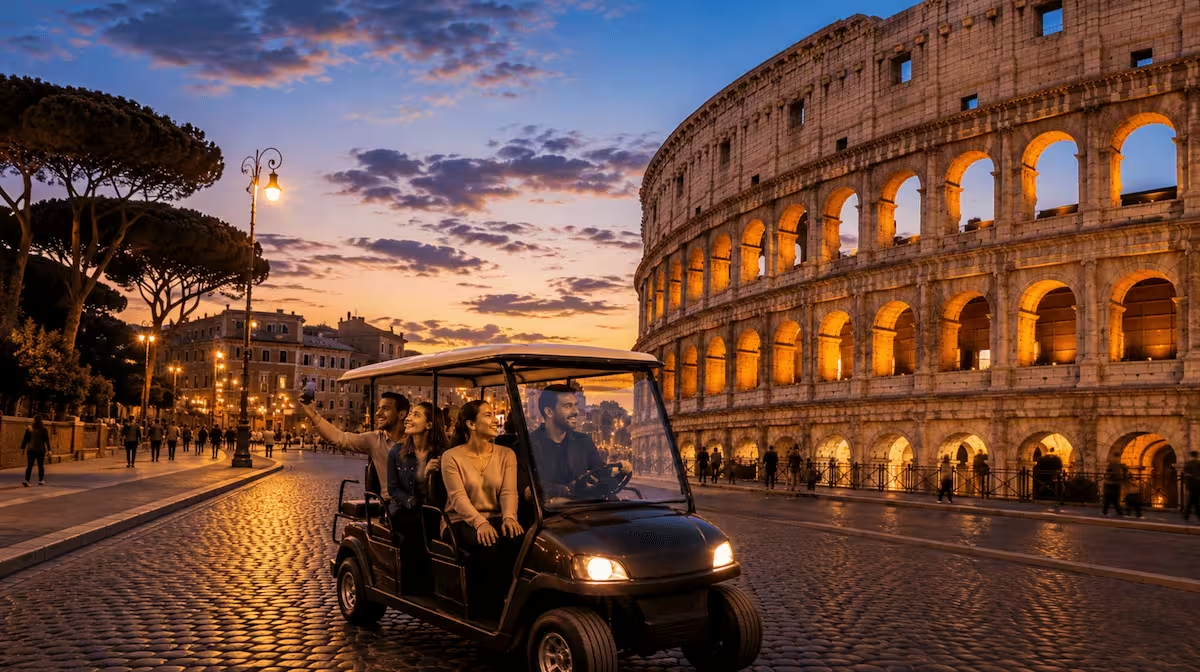
There’s a particular stretch of road near the Pantheon — Via della Rotonda, maybe thirty seconds’ walk from the portico — where the street narrows to the width of a generous hallway. Cobblestones. Walls close on both sides. A drainpipe taking up whatever space the walls don’t.
I was standing at the end of it, watching a small electric golf cart thread through with two tourists aboard and a guide pointing at something above the roofline, when I understood why people choose this over every other way of seeing Rome.
A tour bus cannot go there. A taxi won’t try. Your feet can, but by the time you’ve walked from the Colosseum, the thought of navigating another cobblestone alley feels less like adventure and more like punishment.
The golf cart just went through. Nobody waited. Nobody hiked from a distant parking lot. The guide talked, the tourists looked up, and the Pantheon appeared at the end of the street like it had been placed there specifically for them.
I didn’t take that tour that day — I’d already committed to the hop-on hop-off bus, the AS Roma match was that evening, and I needed something I could end on my own schedule. The golf cart is a private tour with a set duration, and I wasn’t ready to lock in the time or the price point without more thought.
But I’ve seen these carts operate on several visits to Rome now. I’ve done the research. And this post is my honest case for why the golf cart is the right call for a specific kind of Rome day — and an equally honest account of its one real drawback that nobody puts in the marketing copy.
(This post contains affiliate links. If you book through them I may earn a small commission at no extra cost to you.)
Rome by Golf Cart — At a Glance
Private tour — book in advance, morning slots go first.
Check Availability →Why the golf cart exists — and why Rome specifically needs it
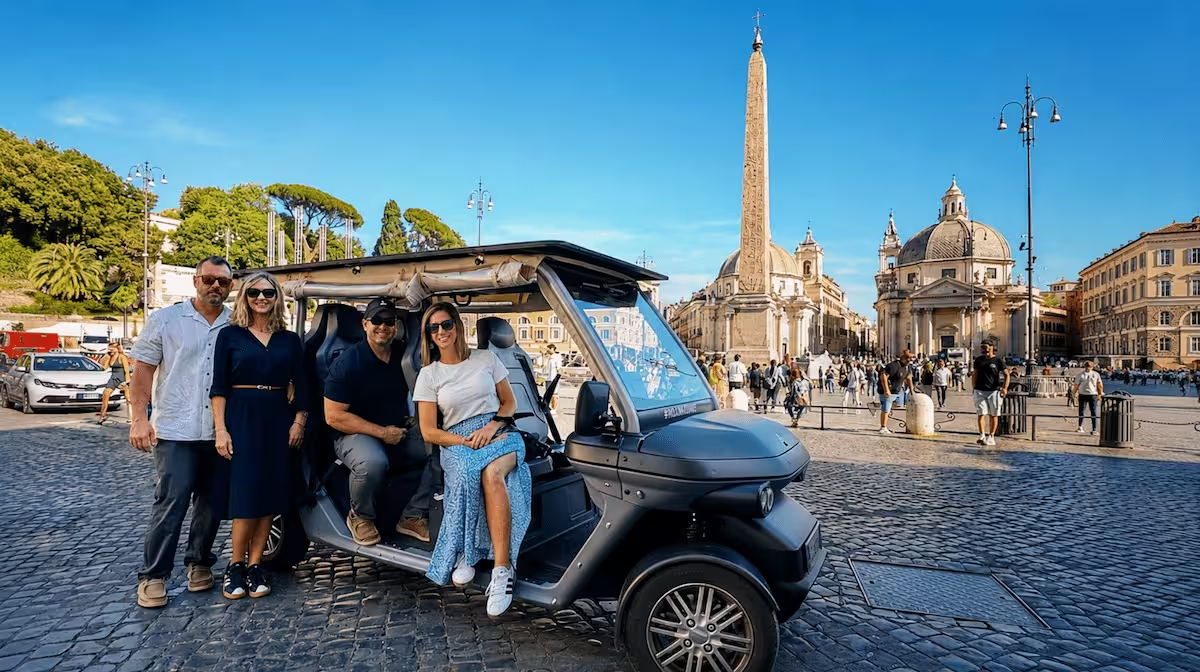
Rome’s historic centre is threaded with ZTL zones — Zona a Traffico Limitato — restricted traffic areas where private cars, taxis, and most commercial vehicles are barred outright. Cameras enforce the boundaries. The fines are steep. Drivers who don’t know the city learn this lesson expensively.
Inside these zones sit some of Rome’s most visited monuments. The streets leading to them are often so narrow that two pedestrians walking abreast take up most of the width. This is the fabric of the old city — and it’s precisely the fabric that standard sightseeing formats can’t penetrate.
A hop-on bus drops you at a designated stop, which is often several minutes’ walk from the actual entrance to whatever you came to see. The Colosseum stop, for instance, is a 15-minute walk from the Colosseum itself. Walking tours move at the group’s pace, which is rarely your pace. Taxis circle the periphery.
The golf cart is electric, compact, and — crucially — permitted in ZTL zones with a licensed guide. That combination puts you not near the monuments, but at them. Steps away. Through the alley. Past the camera. At a point in the old city where the only other people are those on foot who’ve walked to get there.
That’s not a small thing in Rome. That’s the whole thing.
What the tour actually gives you
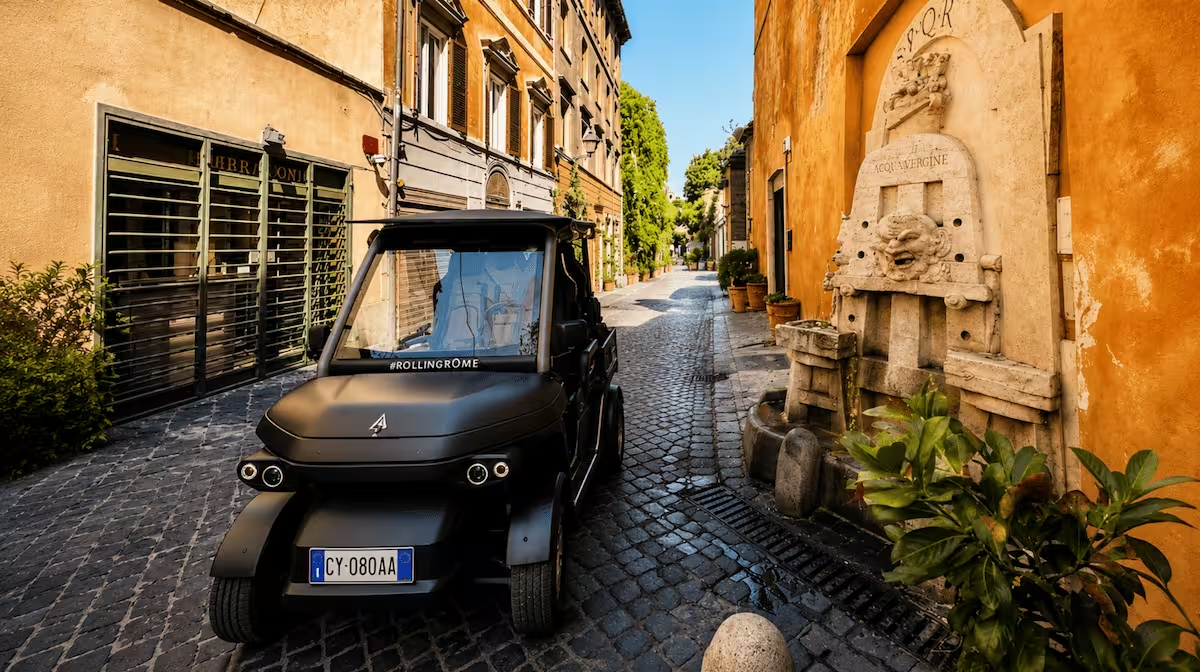
This is a private tour — meaning the cart, the guide, and the itinerary belong to your group for the duration. No strangers. No waiting for the slowest walker in a group of twenty. No guide with a raised umbrella you have to follow.
The guide is the part that matters most. Good golf cart guides in Rome tend to be genuinely knowledgeable — they’ve been doing this through streets most tourists never see, and the intimacy of a small cart with a small group creates a conversation, not a lecture. You’ll hear things about the buildings you’re passing that don’t appear in any audio guide.
What you won’t get is the flexibility of a hop-on format. You board at a set time, the tour runs for approximately three hours, and the route — while customisable beforehand — doesn’t bend mid-journey the way a self-directed day does. If you have a match to get back for, or a dinner reservation, or a child who needs a nap, plan around that before you board.
The route — and why you help design it
This is where the private format earns its price. Before the tour departs, the guide works with your group to understand what matters to you. Travelling with someone who has always wanted to stand in front of the Pantheon? That’s a longer stop. More interested in the lesser-known corners between the monuments — the courtyards, the fountains, the streets that don’t appear on the tourist maps? The guide adjusts.
The standard route covers most of the headline sites: the Colosseum and the Forum, the Pantheon, Trevi Fountain, Piazza Navona, Spanish Steps, and the Vatican area. What varies is the time spent at each, the connecting streets chosen between them, and what the guide chooses to stop and explain along the way.
The ZTL access changes the connecting routes entirely. Where a walking tour walks you along the main streets — the same pavements shared with hundreds of others — the cart takes the narrow version. Via della Rosetta. Vicolo della Pace. Streets that appear on maps as thin lines and feel, in person, like cuts between buildings rather than roads. These are the Rome that sits behind the postcard version, and you see them from a moving vehicle rather than on foot.
One note on the Colosseum stop specifically: the cart gets you significantly closer than a bus would, but entry tickets to the Colosseum are not included in the tour and need to be booked separately. Book them well in advance — the queues without a pre-booked ticket are long regardless of how you arrived.
The one real drawback — and it’s not in the brochure
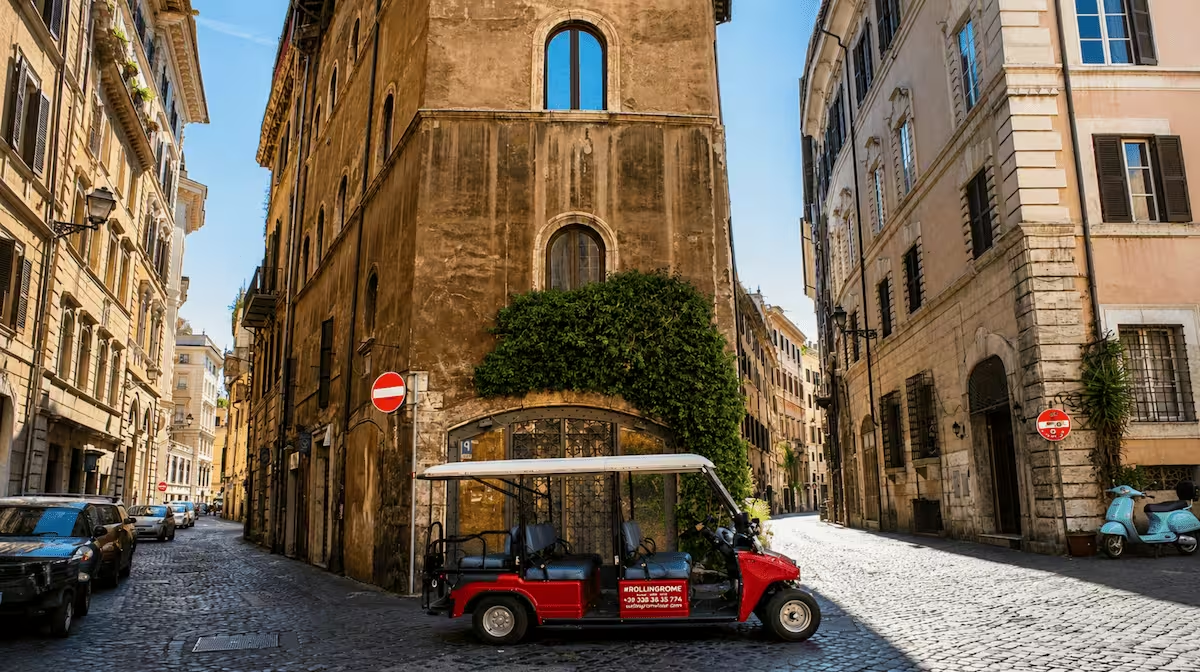
Rome’s sampietrini are the small black basalt cobblestones that pave most of the historic centre. They’re beautiful. They’re also, for anything without serious suspension, genuinely brutal.
A golf cart is a lightweight electric vehicle with minimal shock absorption. On the smooth stretches near the river or on the wider roads, the ride is pleasant — quiet motor, good sightlines, no fumes. On the sampietrini — and there are a lot of sampietrini — the cart vibrates and bumps in a way that accumulates over three hours.
This isn’t a dealbreaker for most people. But if you have back problems, existing joint issues, or a tendency toward motion sickness, it’s worth knowing before you book rather than discovering mid-tour. The marketing photos are always taken on the smooth bits.
The practical mitigation: mention it to the guide at the start. Good guides will choose smoother connecting roads where the route allows, and will slow down on the worst stretches. It’s worth asking.
Children generally love it. Adults with solid backs enjoy it without issue. It’s the edge cases — a parent with a bad lower back, a traveller prone to nausea on uneven surfaces — who should think carefully before committing.
Is this the right tour for you?
The golf cart tour is the right call when several things are true at once: you want genuine access to the historic centre rather than proximity to it, you’re travelling as a couple, family, or small group rather than solo, you have a few hours with no hard deadline attached, and you’re willing to pay a premium for a private experience over a shared one.
It’s the wrong call if your day has fixed commitments around it, if you need to stop and start on your own schedule, or if anyone in your group has the back or motion-sickness concern flagged above.
My own situation that April day — the match, the time constraint, the price point at short notice — put me on the hop-on bus instead. That was the right decision for that specific day. On a different Rome visit with a clearer afternoon and more planning lead time, the golf cart is what I’m booking.
Rome by Golf Cart — Private Sightseeing Tour
A private electric golf cart tour through Rome’s historic centre — through ZTL restricted zones and narrow cobblestone alleys that buses, taxis, and walking tour crowds can’t access. Your guide customises the stops around what matters to your group. Covers the major monuments with the connecting streets between them being the part you won’t see any other way. Book morning slots early — they go first.
ZTL Access Included: The cart is permitted in Rome’s restricted traffic zones — which puts you steps from monuments rather than a walk away from them.
Customise Before You Go: Tell the guide your priorities before departure. The route bends around what matters to your group — not a fixed script.
Back or Motion Concerns: Mention it at the start. Good guides choose smoother roads where the route allows. Don’t discover this mid-tour.
Disclosure: The link above is an affiliate link. If you book through it I earn a small commission at no extra cost to you. I have not personally taken this tour — this post is based on research and direct observation of the tour operating in Rome over multiple visits.
Rome Golf Cart Tour FAQ
Is the Rome golf cart tour worth the price?
For a small group, yes — the per-person cost splits reasonably across two, three, or four people, and the access you get through ZTL zones and narrow alleys is genuinely different to any other format. For a solo traveller, the price point is harder to justify. The honest answer is that it depends entirely on whether the private, customisable format matches what you want from the day.
How many people fit in the golf cart?
Up to six passengers per cart. For larger groups, multiple carts travel together with the guides coordinating the route.
Does the golf cart tour include entry to the monuments?
No — the tour covers transport and guiding between monuments, not entry tickets. Book Colosseum tickets and Vatican Museums entry separately and in advance. Queuing on the day at either site loses significant time.
Is the Rome golf cart tour suitable for children?
Generally yes — children tend to enjoy the cart format. The cobblestone vibration is more of a concern for adults with back issues than for kids. It’s worth considering the age and temperament of very young children, but for school-age children the tour works well.
What happens if it rains?
Most carts have a retractable canopy or shade cover. Light rain is manageable. Heavy rain makes the cobblestones slippery and the open cart uncomfortable — worth checking the weather and confirming the operator’s cancellation policy before booking.
Is the golf cart tour better than the hop-on hop-off bus?
They’re different formats for different days. The hop-on bus gives you flexibility and independence — you board and disembark at will, no fixed schedule, lower price point. The golf cart gives you access and intimacy — ZTL zones, narrow streets, a private guide, customised stops. The hop-on works better for a day when your schedule has other elements around it. The golf cart works better for a dedicated sightseeing half-day with nothing competing for your time.
Where does the tour start?
Meeting points vary by operator and booking — check your confirmation for the exact address. Most central Rome golf cart tours start near the historic centre, close to the main monuments.
Planning the rest of your Rome visit? Our Rome Travel Guide covers everything from Colosseum tickets and Vatican entry to where to stay by neighbourhood. If you’re deciding between this and the hop-on bus, our full Rome hop-on hop-off guide covers all three operators in detail.