 Skip to content
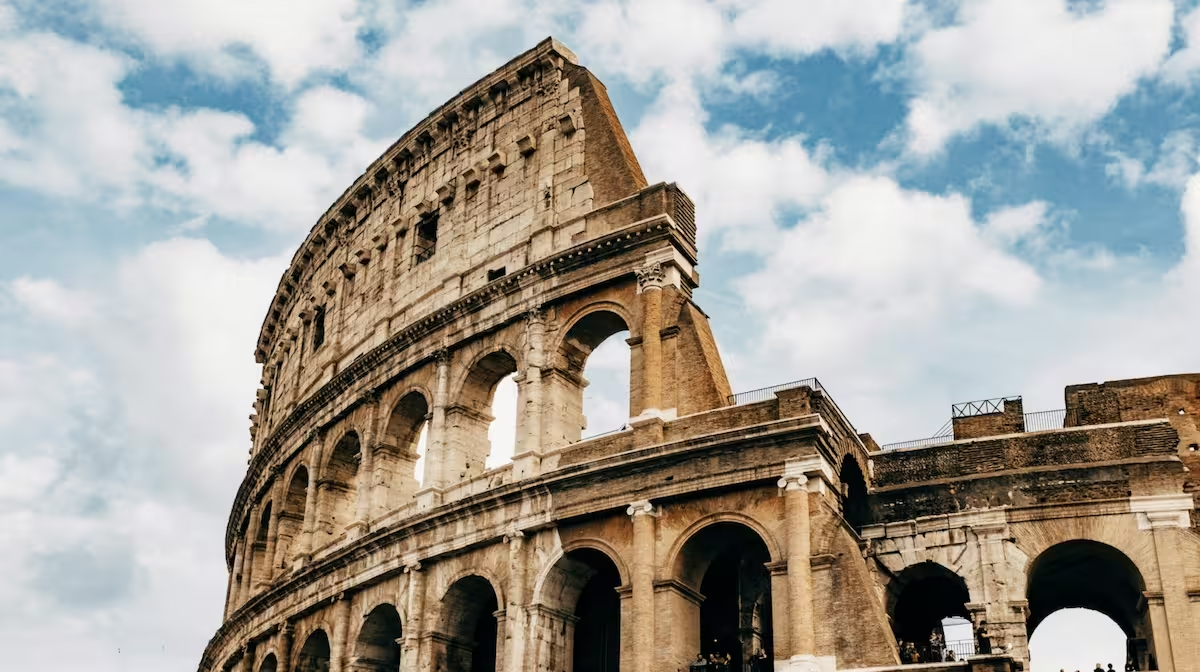
I’ve been to Rome more times than I can count — mainly for football, as an AS Roma supporter. I’ve eaten my weight in carbonara within a stone’s throw of the Colosseum. But here’s my embarrassing confession: for the longest time, I never actually went inside. The queues I’d seen in summer — two to three hours in the heat — were enough to keep me walking. This year, I finally changed that. I booked a skip-the-line ticket through GetYourGuide and spent a full morning inside one of the most extraordinary buildings on earth. If you’re trying to figure out which Colosseum tickets to buy, this is what I wish I’d had before I went.
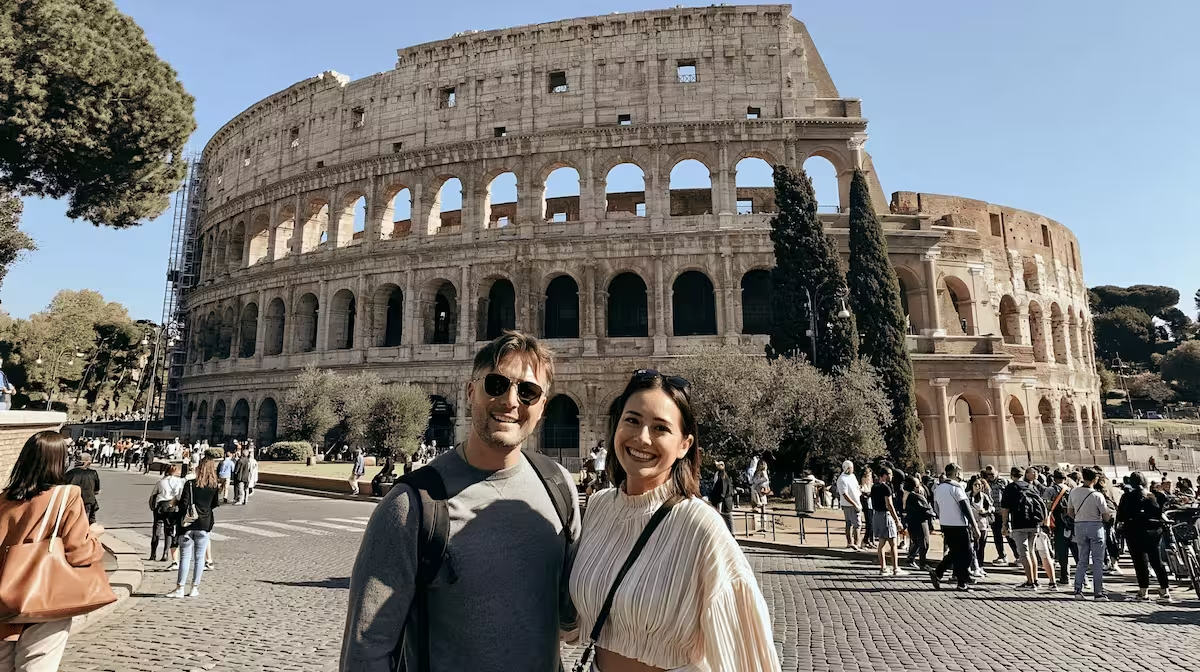
Our 3 Top Colosseum Options for 2026
Quick Facts: Colosseum 2026
(Last entry at 6:15 PM)
Guided: ~€29 – €110
(Underground sells out first)
Must match booking name
Bus 75, 85, 87
May 2026
In This Guide
Why Colosseum Tickets Confuse Almost Everyone
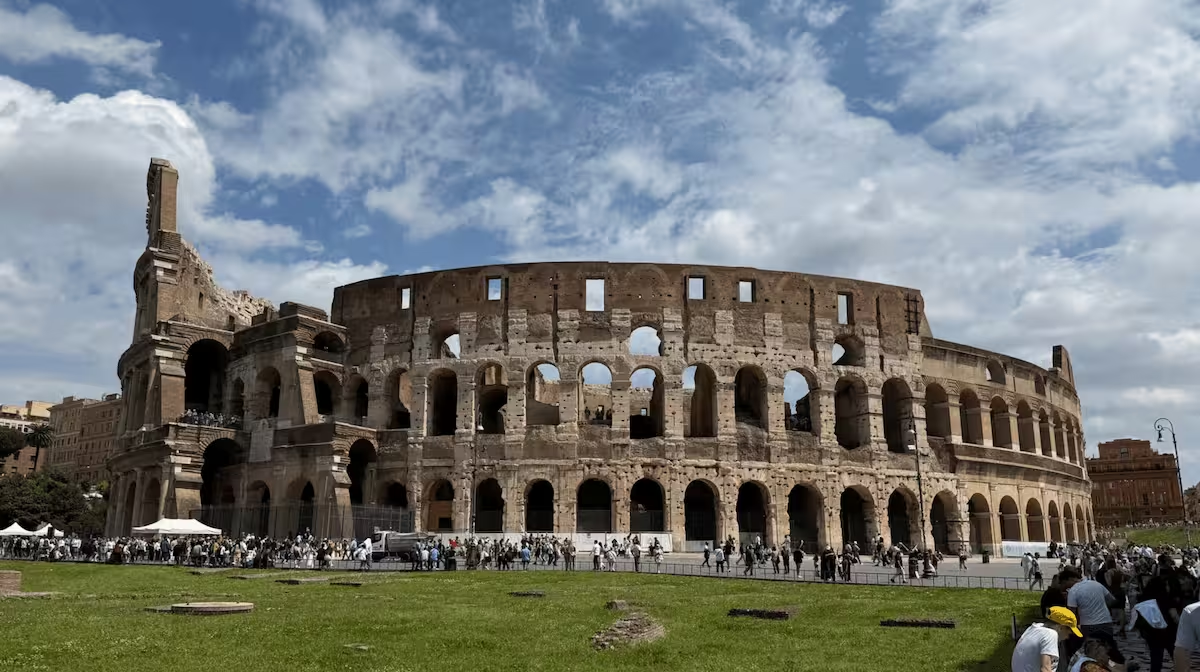
The queues that always put me off weren’t actually ticket queues — or not entirely. Some of those lines are for people who haven’t pre-booked anything and are turning up to buy on the day. Others are the security lines that everyone has to go through regardless. The moment I understood this distinction, booking made a lot more sense.
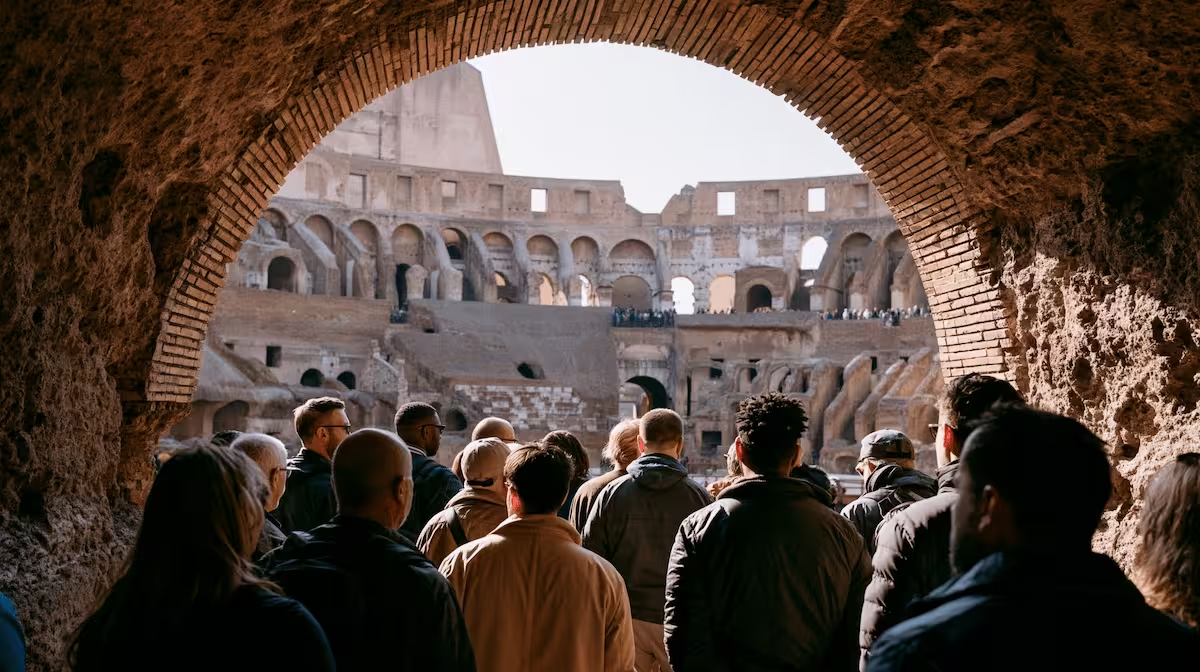
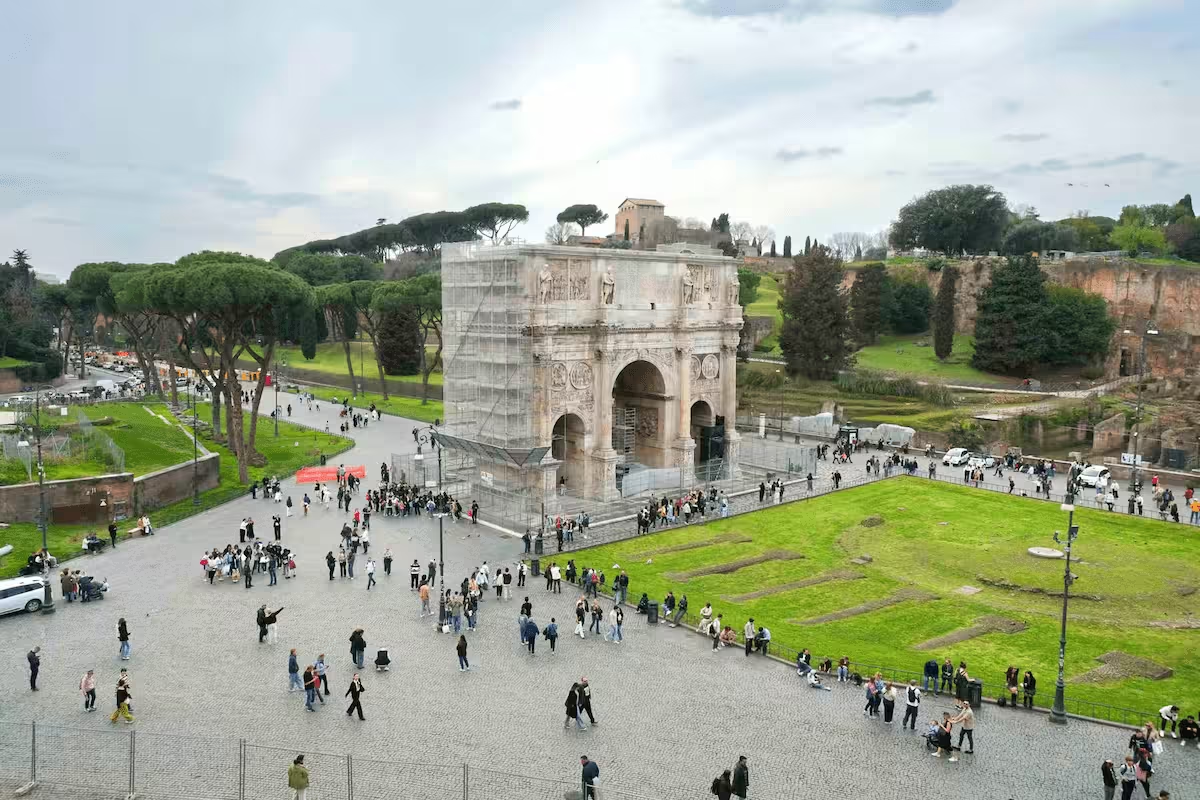
“Skip-the-line” is a slightly misleading term. You’re skipping the ticket purchase queue — the one that in peak summer can stretch for two hours. You still go through airport-style security: bag scans, metal detectors, the works. But I was through in about 15 minutes. The meeting point near the Arch of Constantine was easy to find, staff scanned my QR code, and I was in. No fuss, no confusion.
What genuinely confuses most visitors is that not all Colosseum tickets give you the same access. The standard entry covers the main interior levels of the Colosseum plus the Roman Forum and Palatine Hill. The arena floor — the wooden surface where gladiators actually fought — requires a specific ticket or tour. The underground hypogeum, the network of tunnels beneath the arena where gladiators and wild animals were held before being hoisted up through trapdoors, is restricted entirely and only accessible on specialist guided tours. If you show up with a basic ticket expecting to stand on the arena floor or walk through the underground, you’ll be disappointed. Check what’s included before you book.
One other thing worth knowing: your entry time to the Colosseum may be up to 90 minutes after your meeting time on busy days. The time on your ticket is when you meet your guide or check in at the meeting point — not necessarily when you walk through the door. Build that into your morning.
What We Found When We Visited
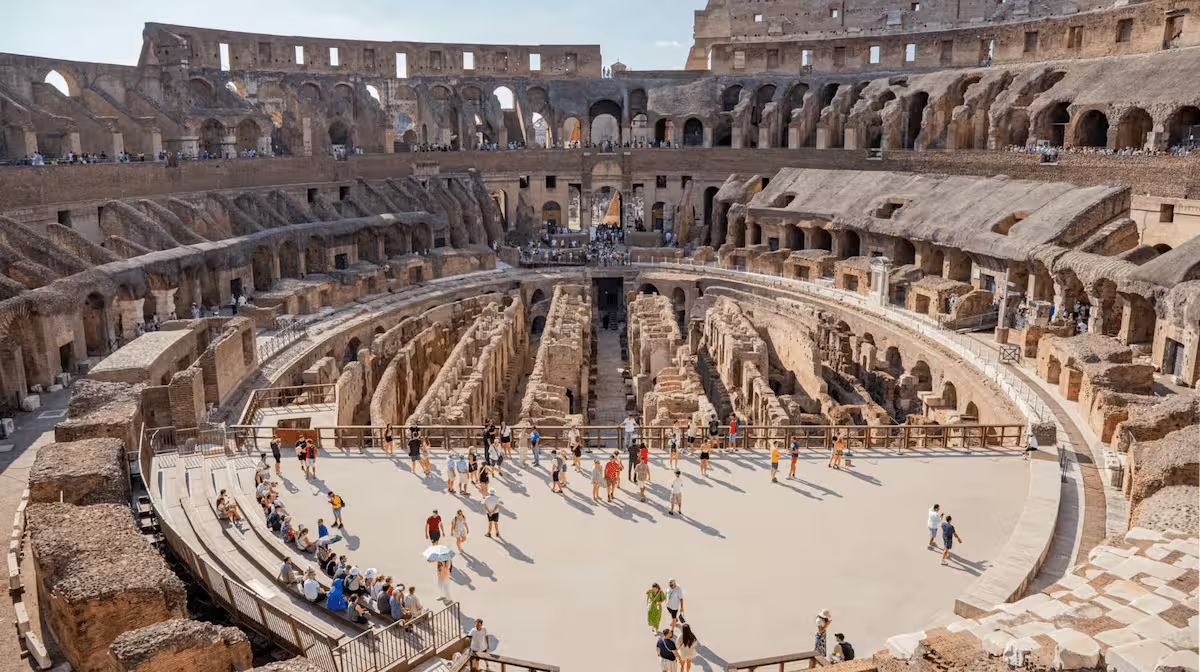
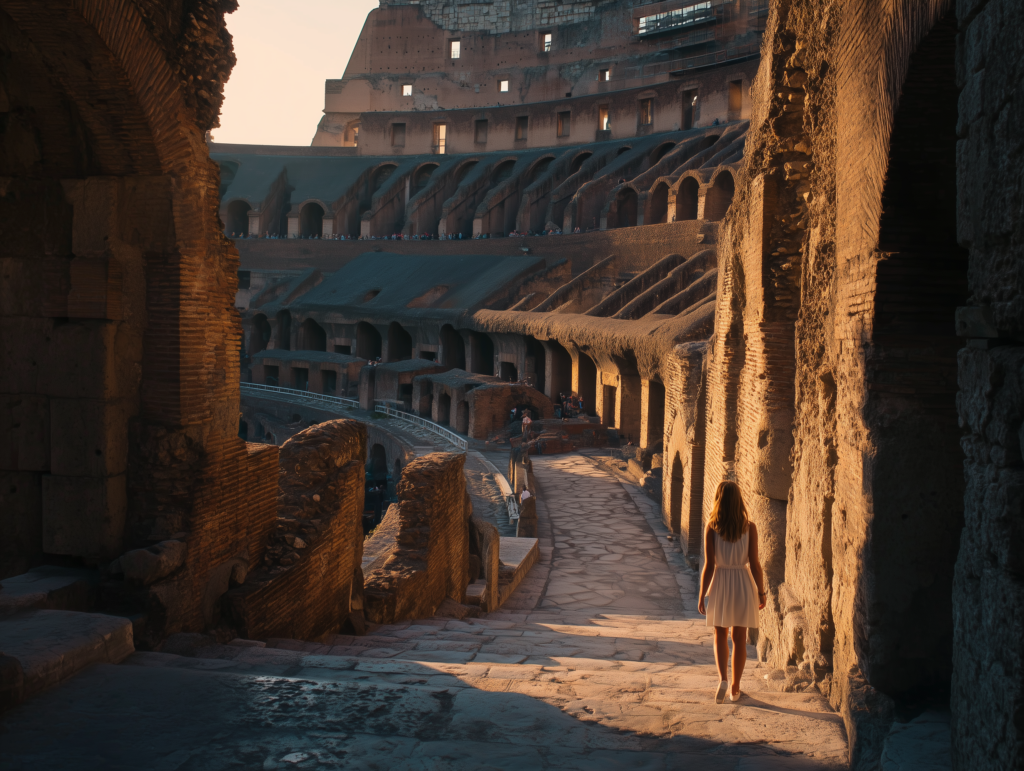
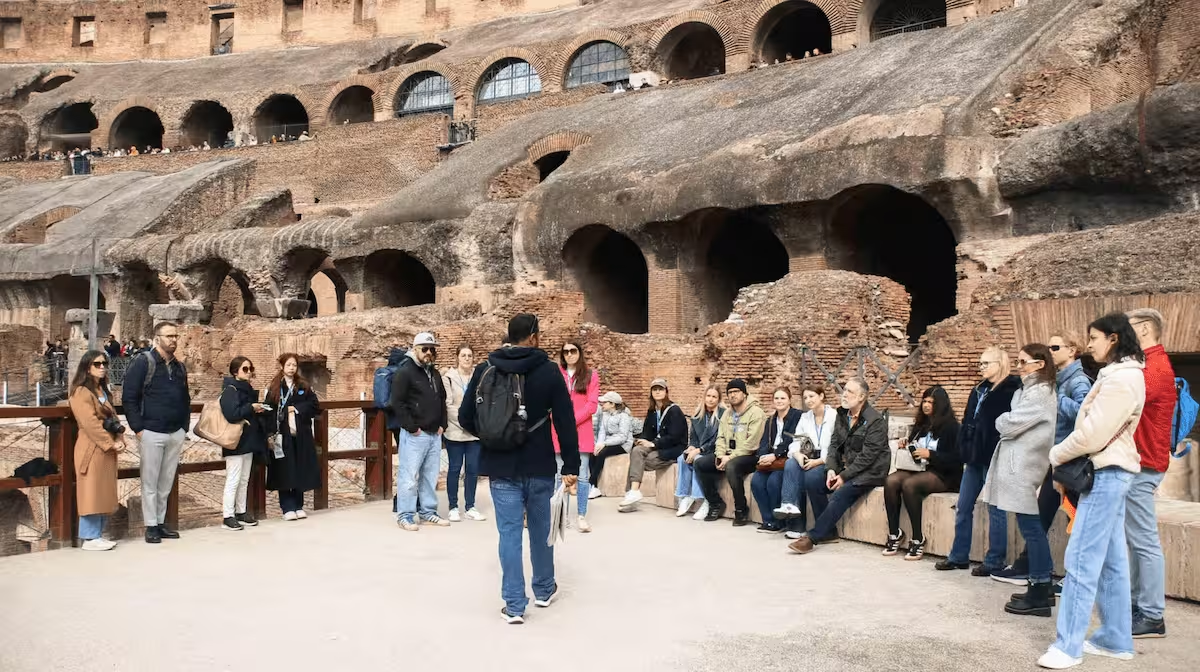
Nothing prepares you for the moment you step inside and look up. I’ve seen the Colosseum a hundred times from the outside — it’s impossible to miss when you’re walking from Termini to Trastevere, or heading to the Olimpico on a match day. But the scale of it, experienced from within, is completely different. The audio guide explained how the seating was arranged by social class: senators at the bottom, closest to the action; slaves and women relegated to wooden benches at the very top. Even the seating plan was political. Classic Rome.
From the first level I could look down into the exposed hypogeum — the incredible maze of tunnels and chambers beneath where the wooden arena floor used to be. The audio guide explained how gladiators, wild animals, and even elaborate stage sets were hoisted up through trapdoors using pulleys and counterweights. People who didn’t have electricity were running what was essentially a massive theatrical production with live special effects. I stood there for a while just staring at it. I didn’t have underground access on the self-guided tour — which is exactly why the guided underground tour is on my list for next time.
The second floor is where the views really open up: across the full interior, but also outward to the Forum, Palatine Hill, and the Arch of Constantine. There’s a small museum section with reconstructions including the velarium, the retractable awning that shielded spectators from the sun. That context helped me picture what the spectacle actually looked like in use — 80,000 people, a retractable roof, trapdoors, and wild animals. The Romans were doing things that wouldn’t be replicated for another 1,900 years.
Self-Guided Audio Tour — Colosseum & Forum with App
This is the tour I took, and for independent travellers, it covers a lot of ground well. Your skip-the-line timed entry gets you into the Colosseum, Roman Forum, and Palatine Hill. Once through security, you download the POP Guide app via a QR code — it provides solid, well-researched commentary as you wander.
The benefit here is total freedom. You can stop for photos or sit on a ledge for ten minutes without a group moving you along. Just keep in mind that the audio flow can feel a bit disjointed compared to a live guide, and you’ll need to hunt for the next stop manually.
Critical Note: Download the app the night before on hotel Wi-Fi. Also, your booking name must match your ID exactly; I saw people turned away for name mismatches with no exceptions.
Colosseum Underground & Arena Floor Guided Tour
Staring at the tunnels from the upper levels is one thing, but standing inside them is something else entirely. On this tour, you enter the exclusive underground hypogeum — the chambers where gladiators paced before being hoisted through trapdoors into the roar of the crowd.
If you’re a history enthusiast rather than a casual sightseer, this is the deepest possible experience. You get a live expert guide, the arena floor, and headsets to ensure you don’t miss a word. It’s the perfect choice for anyone wanting to see the parts of the Colosseum most visitors never get to touch.
Meeting Tip: Head to the Colosseo Metro Station exit and look for the yellow Touriks sign or the blue City Wonders polo shirts.
Rome: Colosseum by Night Tour with Underground
When the crowds have gone and the floodlights come on, the Colosseum becomes something almost otherworldly. This after-hours experience trades selfie sticks and tour group chatter for a 2,000-year-old ruin lit from below. It is a completely different atmosphere than the daytime hustle.
The tour includes access to the underground hypogeum and upper levels, making it perfect for summer visitors looking to avoid the midday heat or photographers after dramatic low-light material. Just be aware: because the Forum and Palatine Hill are closed at night, you’ll only see their exteriors from the walkway.
Pro Tip: This is the ultimate “repeat visitor” tour. If you’ve already done the standard daytime visit and want to see the arena in a new light, this is the one to book.

What Most Visitors Miss: The Forum and Palatine Hill
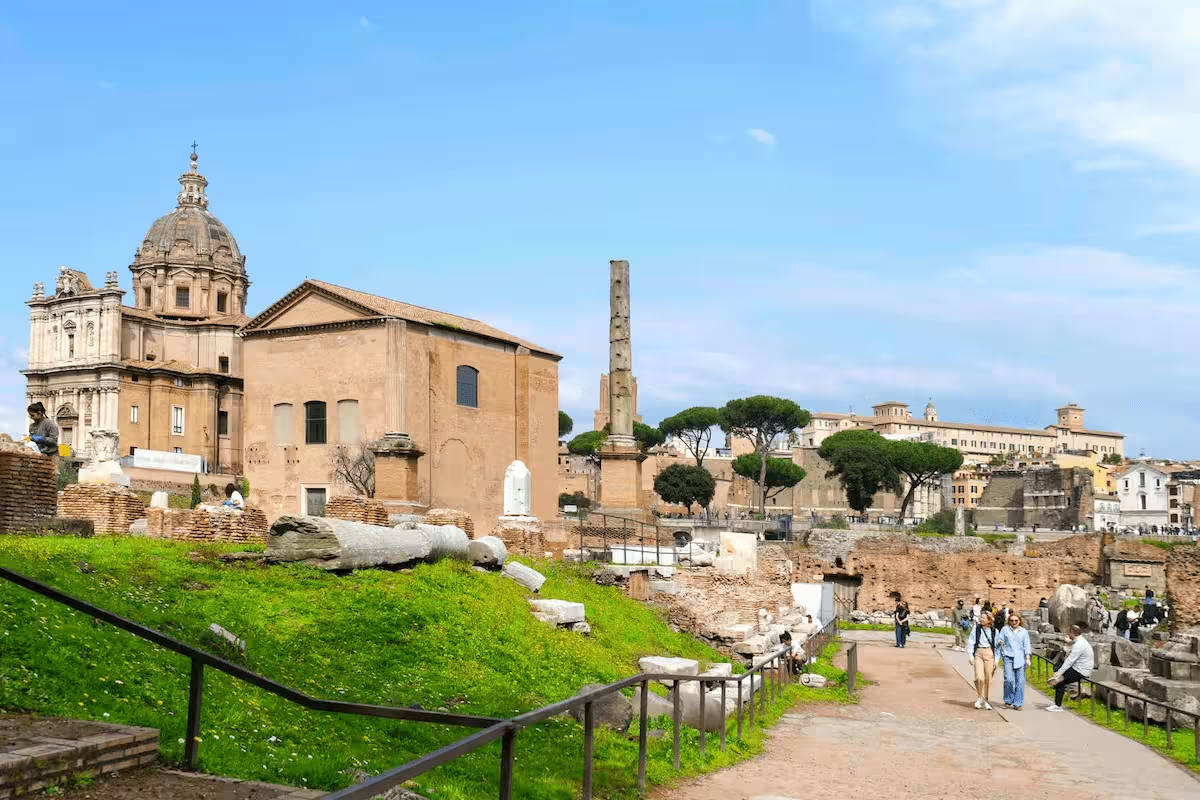
A staff member at the Colosseum mentioned that I could use my combo pass to visit the Forum the next day instead of cramming everything into one afternoon. I wish I’d known that when I was planning — I’d built in time for dinner near Campo de’ Fiori and ended up rushing through both sites. Don’t make that mistake.
The Roman Forum is bigger than most people expect. The Temple of Saturn, the Arch of Septimius Severus, the Curia Julia where the Senate met — you’re walking through the actual centre of what was once the most powerful city in the world. Budget at least 45–60 minutes and go in with some context, because without it the Forum can feel like a pile of very old stones. The audio guide from Tour 1 covers it reasonably well.
If the Colosseum is the main event and the Forum is the history lesson, Palatine Hill is the unexpected gem. The House of Augustus and House of Livia — with original frescoes still visible after 2,000 years — sit up here, along with the Stadium of Domitian and a full 360° view: Colosseum, Forum, Circus Maximus in the distance. I spent 20 minutes up there just taking photos and trying to process where I was standing. Don’t skip it. Most visitors do, and they regret it.
Time Slots and the Sold-Out Problem
The first slot of the day — 8:30 AM — is consistently the best. Crowds are lighter, temperatures are lower in summer, and the light through the interior arches is exceptional for photography. By 11 AM the site is significantly busier. By midday in July or August, the combination of heat and crowds makes the experience noticeably harder work.
The underground sells out first. If underground access is what you want, book as early as possible — ideally 4–8 weeks in advance during April through October. The standard timed entry holds up a little longer, but it will also sell out during peak season if you leave it too late.
If the official site shows everything sold out, don’t give up. Guided tours — particularly through Viator and GetYourGuide — operate on separate ticket allocations from the official pool. It’s common for the official site to show no availability while multiple guided options remain open. This isn’t a loophole; it’s how the ticketing is structured. The third-party platforms work with authorised tour operators who hold their own allocation. So if you’re hitting a wall on the official site, check the tour options above before you accept defeat.
One final note: re-entry to the Colosseum itself is not permitted once you leave. The Roman Forum and Palatine Hill are a different matter — your combo pass allows you to split your visit across two consecutive days if you prefer, which is worth knowing if you’re short on time on arrival day.
FAQ
Can I buy Colosseum tickets on the day?
Technically yes, but we wouldn’t risk it during peak season (April–October). The on-site ticket office sells a limited number of same-day tickets and queues can exceed two hours. For anything other than an off-peak weekday visit, book in advance.
What does skip-the-line really mean?
It means you skip the ticket purchase queue — often the longest line at the Colosseum. You still go through security, which is airport-style (bag scans, metal detectors). During peak times, allow 20–30 minutes for that. But you won’t be standing in a queue for two hours trying to buy a ticket.
Are guided tours worth it?
For most people, yes — particularly if it’s your first visit and you want context. The Colosseum is extraordinary, but without some understanding of how it actually worked, it can feel like a beautiful shell. A live guide, especially for the underground, makes a significant difference. The self-guided audio option is a reasonable middle ground for people who prefer flexibility.
What if everything is sold out?
Try guided tours on GetYourGuide and Viator before you give up — they operate on separate allocations and are often available when the official site is not. This is the most reliable workaround, and it works more often than you’d think.
Do kids need tickets?
Children under 18 from EU countries enter free. Children under 6 enter free regardless of nationality. All other children need a ticket. Ages 6–17 (non-EU) qualify for a reduced rate.
Is the arena floor worth it?
If you’re already interested in the history, yes. Standing on the actual floor where the events took place — even in a reconstructed form — adds a physical dimension that the viewing galleries don’t give you. It’s available as an upgrade on Tour 1 or included in Tour 2.
How far in advance should I book?
For peak season (April–October), aim for 4–8 weeks ahead. Underground access in particular sells out fast. For November through March, a week or two is usually fine, though booking ahead still saves you the on-day risk.
Can I re-enter the Colosseum?
No. Once you exit the Colosseum, you cannot re-enter on the same ticket. Your combo pass does include the Roman Forum and Palatine Hill, and those can be split across two consecutive days — useful if you’re pushed for time on the day of your Colosseum visit.
What’s the difference between the underground tour and the night tour?
Both include hypogeum access — that’s the underground tunnel network beneath the arena. The key differences are timing, atmosphere, and what else is included. The underground guided tour (Tour 2, daytime) also includes the Roman Forum and Palatine Hill with a live guide. The night tour (Tour 3) is after hours, floodlit, crowd-free, and atmospheric — but it does not include Forum or Palatine Hill entry, only exterior views. If it’s your first visit, Tour 2 gives you more. If you’ve done it before and want something completely different, Tour 3 is the one.
Where to Stay in Rome
For the Colosseum, location matters more than most people realise. Staying in the Monti or Celio neighbourhoods puts you within walking distance of the site and keeps you away from the tourist-trap pricing around Termini. The map below shows options across all budgets — filter by what works for you.
More from our Rome Series: