 Skip to content
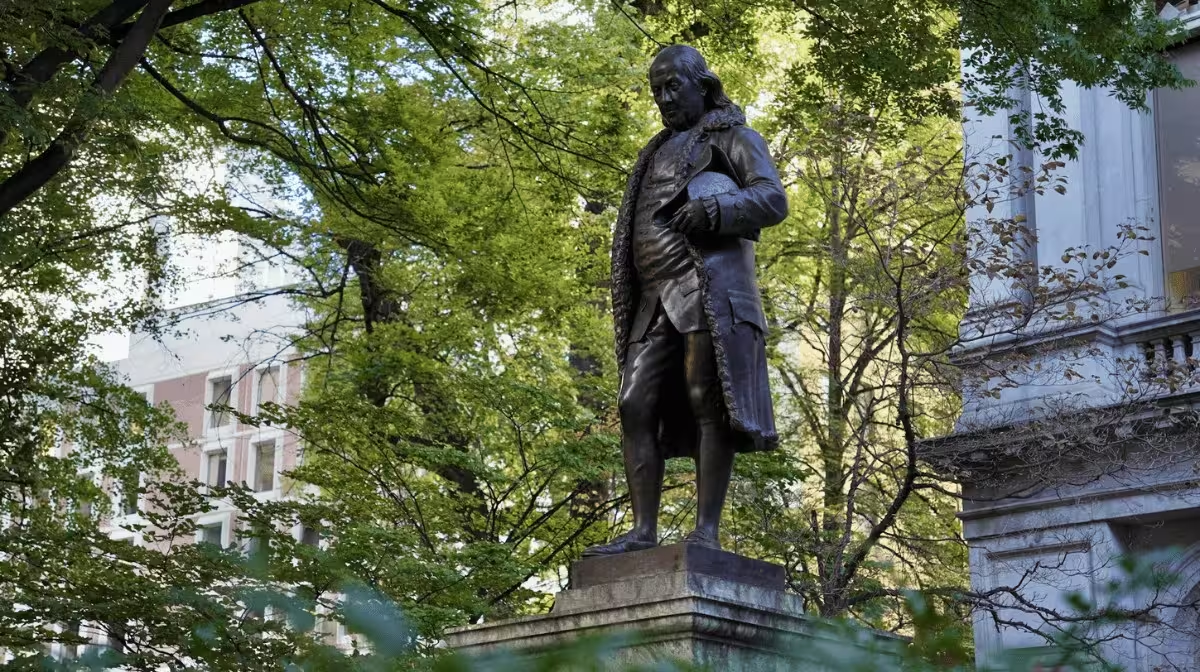
One of the most memorable experiences during my time in Boston was taking The Official Freedom Trail Tour Boston. What I thought would be a straightforward walk through historic Boston turned into something far more meaningful—a chance to actually understand the people, decisions, and conflicts that shaped American history.
The Freedom Trail itself is simple: a red line painted on Boston’s sidewalks connecting 16 historical sites from the Boston Commons to the USS Constitution in Charlestown. But walk that trail with the right guide, and it becomes something entirely different. You stop being a tourist checking off sights and start being a witness to history. This is what made the tour special.
At a Glance
Tour Name
Official Freedom Trail
90-minute guided walking tour
Distance
2.7 Miles
16 historic sites across Boston
Price
$25–45
Per person; kids discounts available
Departure
10:00 AM
Morning departure recommended
What is the Freedom Trail?
The Freedom Trail is a 2.7-mile walking path through downtown Boston and into Charlestown, marked by a red brick or painted line on the sidewalk. It connects 16 historically significant sites—churches, burial grounds, meeting houses, and landmarks—that played crucial roles in American independence and early American history.
The trail begins at Boston Commons (where British soldiers camped during the occupation) and winds through colonial Boston’s most important locations: the Old State House (where the Boston Massacre happened), King’s Chapel (one of the oldest churches in America), Paul Revere’s house, USS Constitution (the world’s oldest commissioned naval ship), and many others.
You can walk the trail on your own using a map or guidebook, following the red line painted on the pavement. But taking a guided tour is an entirely different experience. The guide brings context, stories, and depth that transform a simple walking tour into an education in American history.
Our Experience on the Trail
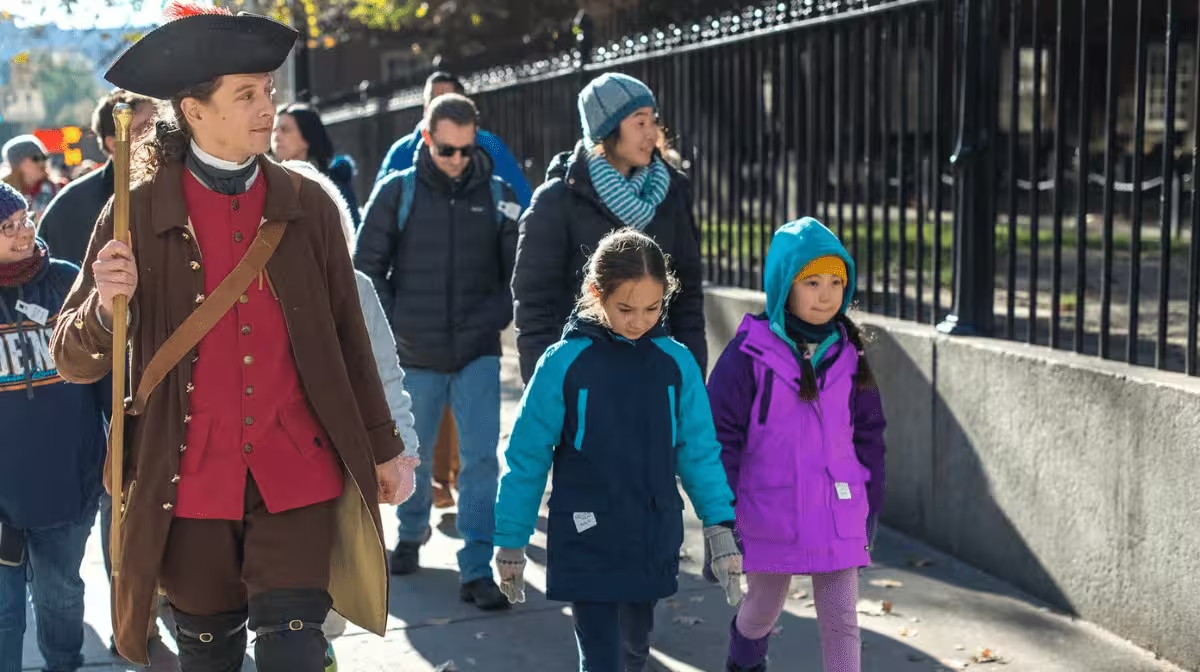
We booked a morning tour through Getyourguide and met our guide at the Boston Commons at 10:00 AM. There were about 15 of us in the group—small enough to move together but large enough that there was good energy. Our guide was a Boston native with a background in American history, and he didn’t just recite facts. He told stories.
Standing at the Old State House
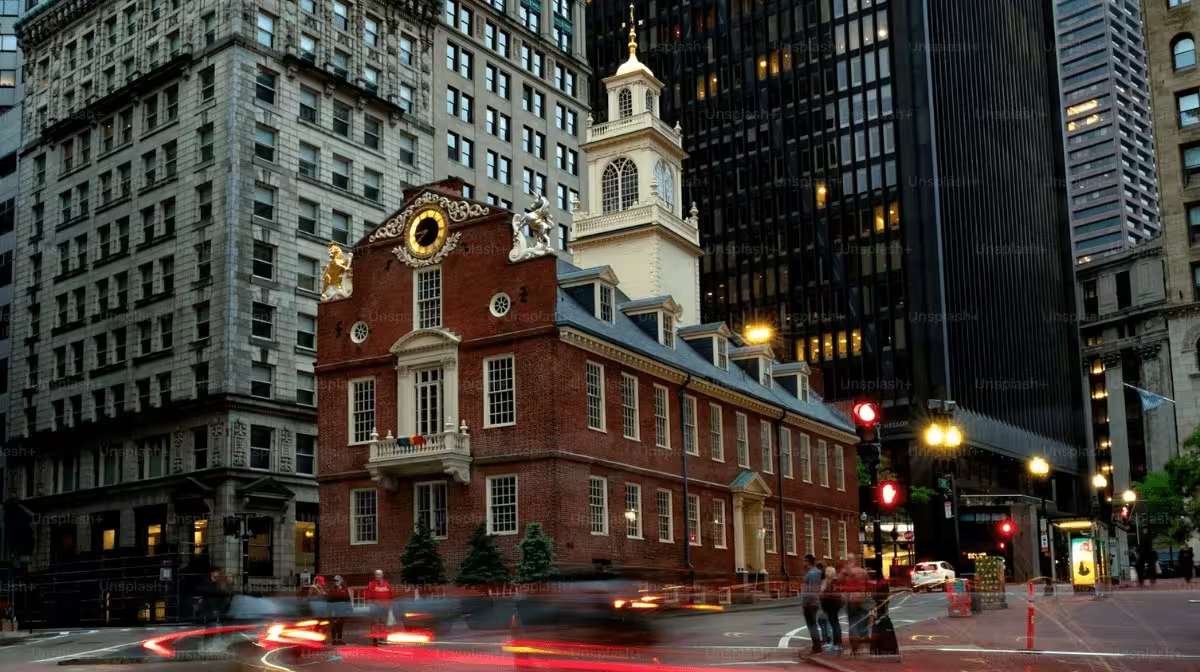
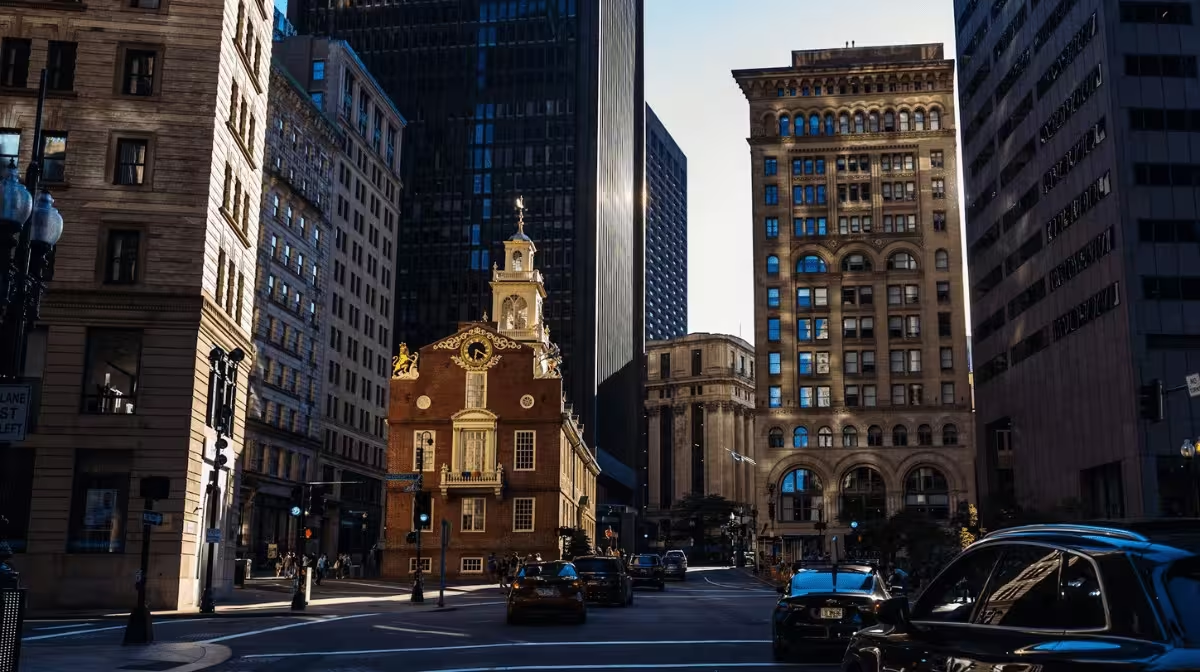
The moment that stuck with me was standing outside the Old State House on State Street. Our guide explained that in 1770, British soldiers fired into a crowd of colonists right where we were standing—the Boston Massacre. Five people died. The incident inflamed tensions between Boston and Britain and became a rallying point for independence.
When you read that in a textbook, it’s a historical fact. When you’re standing at the exact spot, hearing about the soldiers, the crowd, the shots fired, the bodies—it becomes real. You understand why Bostonians were furious. You feel the weight of that moment.
The Rhythm of the Walk
The tour was well-paced. We’d walk for a few minutes, stop at a site, hear the story for 5–10 minutes, and move on. No rushing, no standing around bored. The guide moved us from the Commons toward Charlestown, stopping at each major location. By the end, we’d visited the burial grounds where Paul Revere was buried, the Old North Church (where the “one if by land, two if by sea” signal came from), and the USS Constitution in Charlestown.
The Physical Reality
Here’s the honest part: there’s a lot of walking and standing. 2.7 miles doesn’t sound like much until you’re doing it on city sidewalks with frequent stops. My feet were tired by the end. On warm days, it can be uncomfortable. Larger groups can make it hard to hear the guide clearly, especially on busy streets. This wasn’t our experience (our group was manageable), but I saw how it could be a drawback for others.
Key Stops & Their Stories
Boston Commons & Boston Public Garden
The tour starts here. These spaces were the heart of colonial Boston. The Commons was where British soldiers camped, where public hangings took place, and where Bostonians gathered. It’s central to understanding how Boston was a occupied city under British rule—and how that felt.
Old State House
This building was the seat of the colonial Massachusetts government. The Boston Massacre happened outside, making this one of the most significant locations on the trail for understanding the tensions that led to revolution.
King’s Chapel
One of the oldest and most beautiful churches in America, built in 1688. The contrast between the solemnity of the building and the chaos of the era around it creates an interesting perspective on life in colonial Boston.
Paul Revere’s House
The oldest building in downtown Boston (built 1680), this is where Paul Revere lived before his midnight ride. Seeing where he actually lived—a modest wooden house squeezed between modern buildings—makes him feel less like a legend and more like a real person.
Old North Church
The famous “one if by land, two if by sea” signal came from the steeple of this church. It’s a small, elegant building with a remarkable history. The guide’s explanation of why that signal mattered and how it was used was fascinating.
USS Constitution
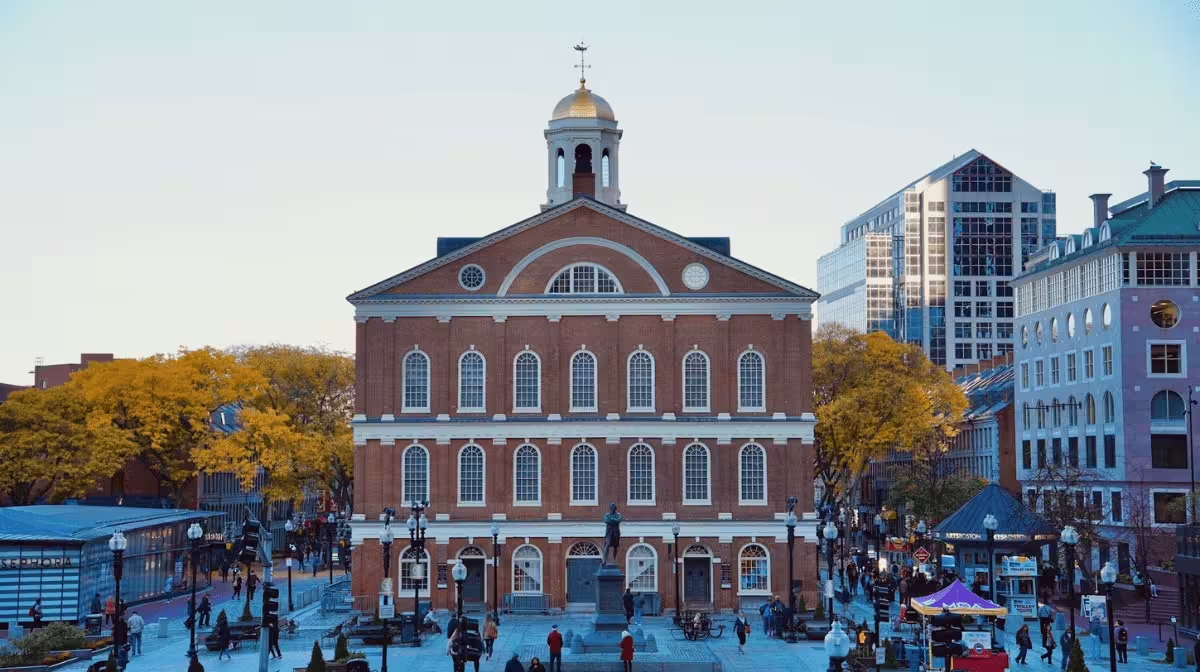
The tour ends in Charlestown at this historic ship, the oldest commissioned naval vessel still in service. It’s a different kind of history—naval history rather than revolutionary—but it’s impressive to see in person.
What to Expect & How to Prepare
The Walking
2.7 miles is the total distance, but it’s not continuous. You walk, stop, walk, stop. The total time is usually 90 minutes to 2 hours. Still, wear comfortable shoes. Your feet matter on a walking tour.
Weather Considerations
In summer, the tour can be hot and exposed. There’s limited shade along the route. Bring sunscreen, a hat, and water. Winter tours are cold, especially in Charlestown on the waterfront near the USS Constitution. Dress in layers.
Group Size
Tours vary in size. Smaller groups (10–15 people) are better for hearing the guide. Larger groups (30+ people) can be harder to manage and hear. Ask about group size when booking.
Duration & Energy
Budget 2–2.5 hours for the full tour. If you have mobility issues or are easily tired, consider that before booking. There are benches at some stops, but you’re mostly standing and walking. The pace is gentle and not rushed, but it’s continuous movement.
What to Bring
- Comfortable walking shoes — Non-negotiable for 2.7 miles
- Water bottle — Especially in warm weather
- Sunscreen & hat — Summer tours are exposed
- Layers or jacket — Weather changes, especially in Charlestown
- Phone or camera — For photos (but be present, not constantly filming)
- Cash or card — For tipping the guide (typically 15–20%)
Insider Tips for the Best Experience
Book a Morning Tour
Morning departures (especially the 10:00 AM start) are ideal. We booked 10:00 AM and it was perfect—warm enough to be comfortable but still early enough to avoid the afternoon heat. By 2:00 PM tours, the trail is busier and the heat is intense. Morning tours also give you the rest of the day to explore sites in more detail if you want to.
Take It Early in Your Boston Visit
Do the Freedom Trail tour on day 1 or day 2 of your Boston trip. Why? Because the tour gives you a mental map of the city and introduces you to neighborhoods and landmarks. Once you know where things are and what they mean historically, you can explore them in more depth later. It’s an orientation tour that makes the rest of your visit more meaningful.
Listen More Than You Photograph
People spend a lot of time filming or taking photos. I understand the impulse, but you’ll get more out of the tour if you actually listen. The sites are photogenic, but the stories are where the real value is. Take a few photos, then put the phone away and be present.
Ask Questions
Good guides love questions. If something interests you, ask. Our guide expanded on topics based on what people were curious about. The tour isn’t rigidly scripted—it can adapt to the group’s interests.
Plan for USS Constitution Entry
The USS Constitution is at the end of the trail and you can board it (it’s free). But there are sometimes closing times or restrictions. Check before your tour. If you want to spend time exploring the ship, budget extra time after the tour ends.
Tip Your Guide
These guides are knowledgeable professionals. 15–20% tips are standard for guided tours. Most people tip $5–10 per person, depending on the tour length and quality.
Is It Worth Your Time?
Our verdict: Absolutely yes, especially on your first visit to Boston.
At $25–45 per person, the Freedom Trail tour is affordable. What you get is a knowledgeable guide, access to 16 historic sites (some you wouldn’t find on your own), and context that transforms old buildings into stories about real people making world-changing decisions.
The tour is most valuable if:
- You’re visiting Boston for the first time
- You’re interested in American history or Boston’s role in independence
- You prefer guided tours with context over self-guided exploration
- You can book a morning departure (cooler, less crowded, better experience)
- You can walk 2.7 miles without physical strain
It’s less valuable if:
- You have limited mobility or can’t handle extended walking
- You’re not interested in history or prefer to explore at your own pace
- You visit Boston multiple times and want deeper dives into specific sites
- You can only do an afternoon tour on a hot day
The biggest payoff is the perspective shift. Walking that trail with a guide who explains not just what happened, but why it mattered, changes how you see Boston and understand American independence. The sites become less like tourist checkpoints and more like windows into moments that changed history. That’s worth the walking.
Ready to Walk the Freedom Trail?
The Official Freedom Trail tour is best booked 1–2 days in advance, especially for morning departures. Morning tours fill up fast, and you’ll want to choose a time that works with your schedule and energy level.
Book the Freedom Trail TourMore Boston Tours & Experiences
- Best Boston Tours — Complete guide to top-rated tours and experiences
- Boston Food Tours — Culinary explorations through historic neighborhoods
- Boston Whale Watching Cruise — See humpback whales at Stellwagen Bank
- Sail Boston 2026 — 60+ tall ships maritime spectacle (July 11–16)