 Skip to content
History & Origins
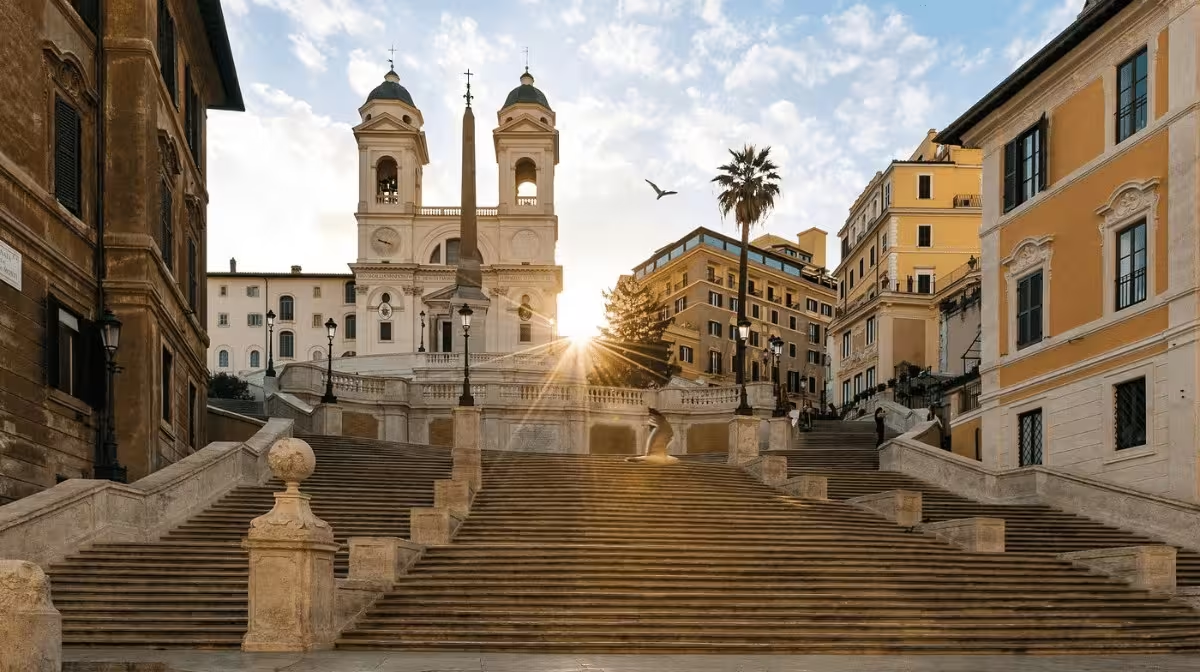
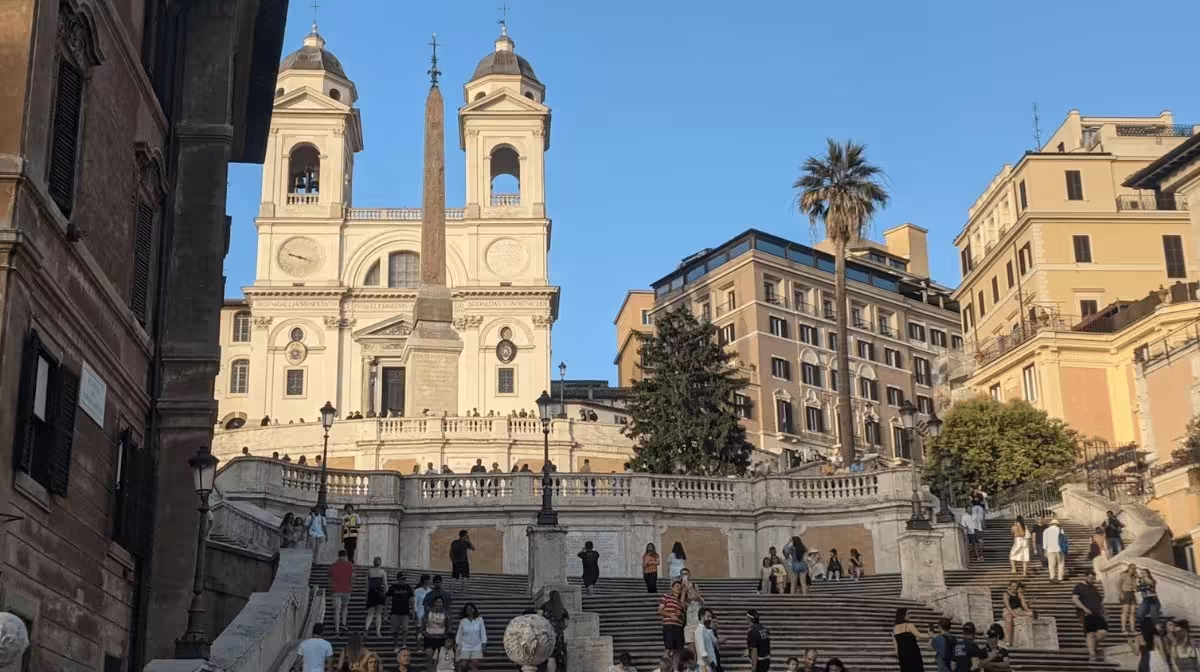
The Spanish Steps weren’t built overnight—they emerged from nearly 150 years of political negotiation, architectural vision, and urban ambition. The story begins in the early 18th century when the Piazza di Spagna, lying at the base of the Pincian Hill, became one of Rome’s most fashionable districts. Wealthy foreign diplomats, artists, and merchants congregated here, and the Spanish Embassy occupied the palazzo that still gives the piazza its name.
The problem was simple: a steep slope separated the piazza from the Church of Trinità dei Monti at the top, making access difficult for residents and pilgrims alike. By 1717, Pope Clement XI approved a plan to bridge this gap with a grand staircase. But French and Italian interests clashed over who would fund and design it. The French preferred their own monument; the Italians wanted to assert control over this cosmopolitan quarter.
It wasn’t until 1723 that French diplomat Étienne Gueffier provided 13,000 scudi in his will to fund the project. The competition to design it attracted Rome’s best architects. Francesco de Sanctis won the commission, and construction began in 1723. By 1726, this monumental staircase—with its double ramps, landings, and carefully orchestrated perspective—was complete.
Ironically, despite their central location and French funding, the steps became known as the “Spanish Steps” because of the Spanish Embassy at the base. Rome loves a good historical irony. Like many of Rome’s landmarks, the Spanish Steps are part of a rich tapestry of baroque and classical attractions—from the iconic Colosseum to the architectural treasures scattered throughout the city.
Architecture & Design
Francesco de Sanctis created more than a functional staircase; he engineered a piece of urban theater. The 135 steps are divided into three major sections, each with its own rhythm and scale:
The Lower Flight
Wider and more gradually inclined, this section accommodates crowds and encourages a leisurely approach. The geometry widens as you ascend, creating an optical illusion of both invitation and protection.
The Middle Landing
A crucial breathing point, this landing acts as a visual and physical pivot. Here, the staircase transitions from a broad, gentle approach to a more dramatic, sculptural finale.
The Upper Flight
Narrower and steeper, these steps intensify the climax. The Church of Trinità dei Monti looms larger with each step upward. Decorative urns positioned along the railings frame the approach, while the changing perspectives of Rome’s rooftops unfold behind you.
The entire composition uses convex and concave curves to guide the eye and body. No straight lines dominate—only flowing, organic geometry that feels both ancient and modern. This is baroque urbanism at its finest: sculptural, theatrical, emotionally resonant.
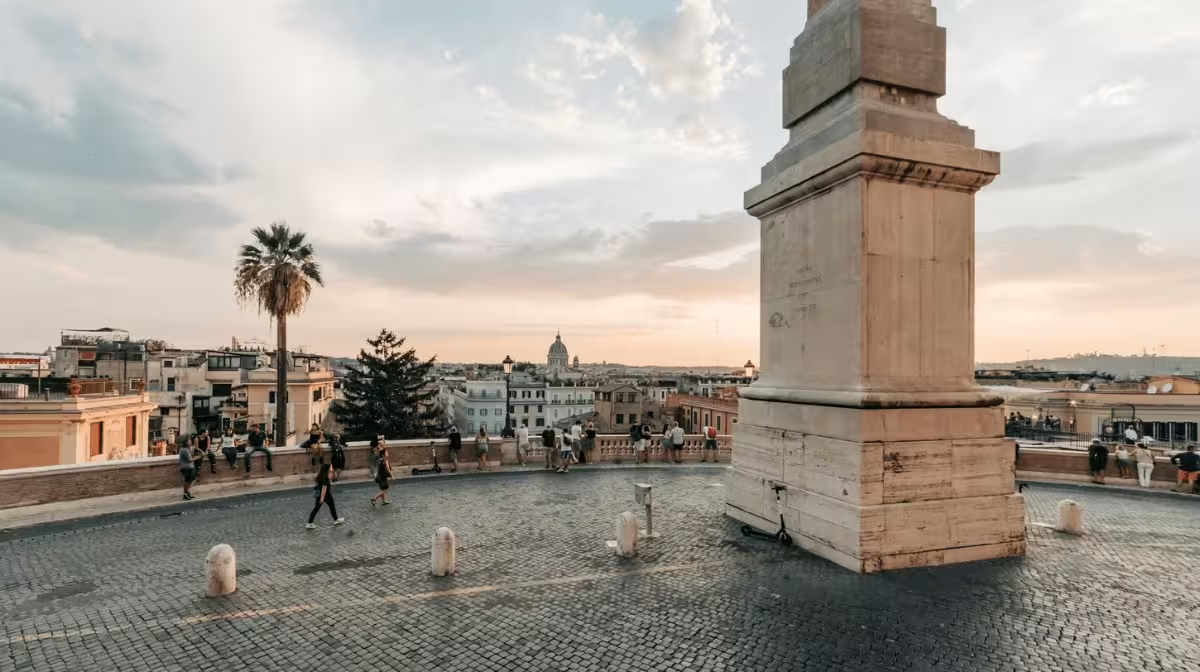
The steps are clad in travertine and pepperino stone, both materials sourced from Rome’s surrounding countryside. Over three centuries, foot traffic has polished the stone to a subtle gleam.
Key Facts & Figures
Cultural Significance
A Meeting Place for Centuries
Throughout the 18th and 19th centuries, the Spanish Steps became a social hub where artists, models, and tourists converged. By the Romantic era, it was the epicenter of Rome’s artistic quarter—painters, sculptors, and poets gathered here to debate aesthetics and politics. English writer William Hazlitt described the steps as the “rendezvous of the elegant and disreputable alike.”
In Literature & Film
The steps appear in Audrey Hepburn’s Roman Holiday (1953), the scene that cemented their place in modern romance. Countless novels set in Rome feature the steps as a metaphor for love, loss, and the passage of time. More recently, they’ve featured in films ranging from Angels & Demons to contemporary dramas. If you’re interested in exploring more of Rome’s cinematic locations and iconic sites, our guide to the Vatican covers another pillar of Rome’s cultural heritage.
Fashion & Contemporary Culture
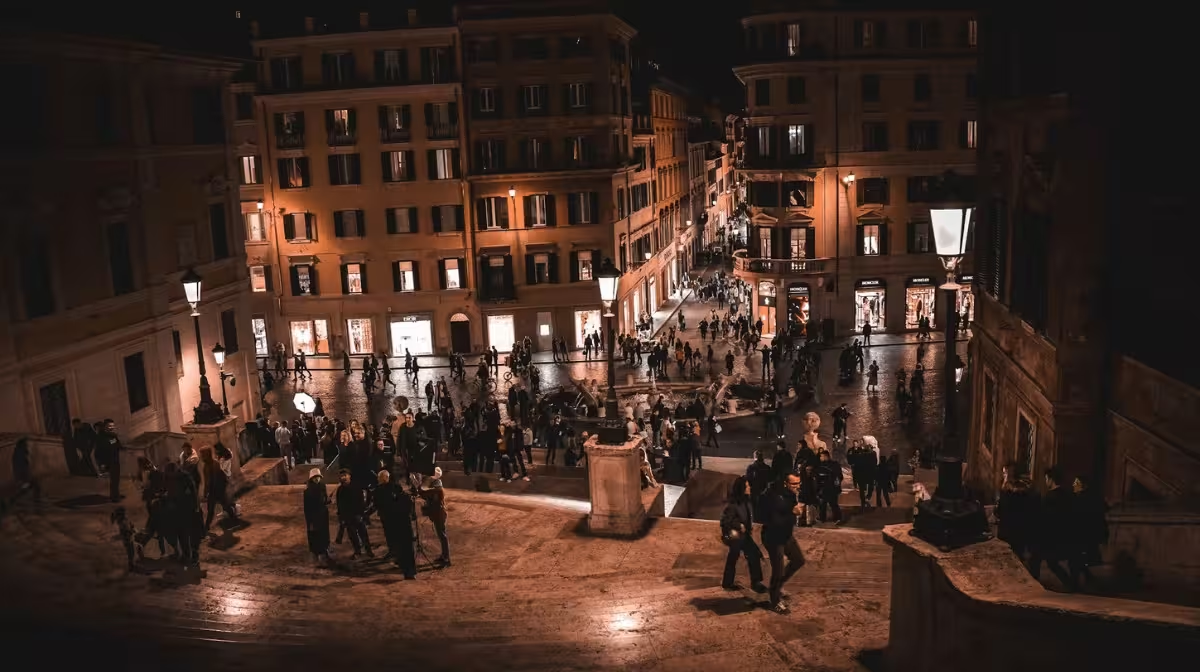
Today, the steps remain a meeting place—though fashion boutiques, jewelry shops, and a high-end McDonald’s now frame the piazza. During fashion weeks, the steps become an impromptu catwalk. Street musicians, artists, and tourists from every nation transform the steps into a living, breathing stage.
A Protected Monument
In 1995, UNESCO recognized Rome as a World Heritage Site, with the Spanish Steps explicitly cited as a cornerstone of the city’s baroque heritage. Italian law now protects every stone, curve, and aspect of the structure. Climbing the steps, you’re walking on protected cultural property.
The Hotel at the Top: Hotel Hassler
At the summit of the Spanish Steps stands one of Rome’s most legendary hotels—Hotel Hassler Roma. Perched directly atop the steps with the Church of Trinità dei Monti as its neighbor, the Hassler is far more than a place to stay. It’s an institution, a landmark, and a time capsule of Roman glamour.
Hotel Hassler Roma: A Brief Overview
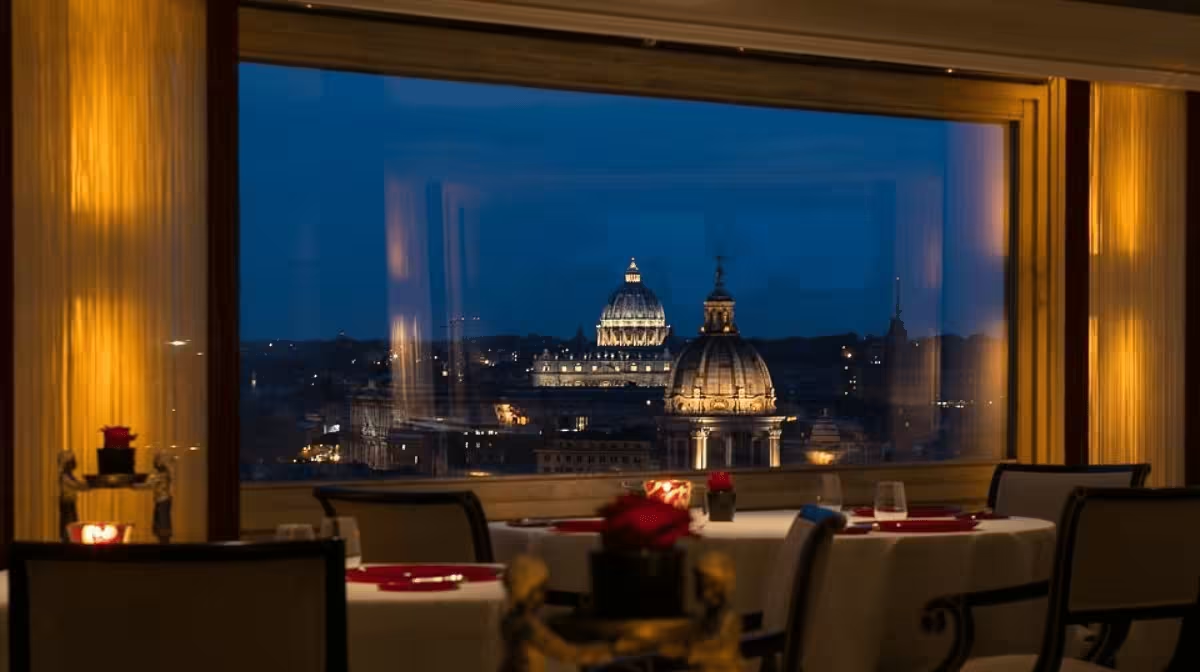
History: Established in 1885 by Swiss hotelier Fridolin Hassler, the hotel has welcomed everyone from Elizabeth Taylor to celebrities of every era. The current structure (rebuilt after WWII damage) opened in 1947 and remains a symbol of Roman elegance.
Location: Piazza Trinità dei Monti 6 — the very top of the steps, overlooking the entire city. Your morning coffee comes with a view of St. Peter’s Basilica and the Roman skyline.
Why the Hassler Matters (Beyond the Price Tag)
- Unmatched Location: Literally at the junction of Rome’s most famous monument and its most exclusive neighborhood
- The Rooftop Restaurant (Imago): One of Rome’s best—Michelin-starred, with 360-degree city views and forward-thinking Italian cuisine
- Personal Service: Concierge staff trained to navigate Rome’s secret corners and reserve impossible-to-get tables
- Historical Continuity: Sleep in the same rooms where Audrey Hepburn, Ingrid Bergman, and countless cultural icons stayed
- The Sunset Moment: Standing on your terrace as the Roman sky turns gold is, genuinely, unforgettable
Price Reality: The Hassler doesn’t come cheap. Rooms start around €500–600 per night in low season and climb to €800–1200+ in peak season. The suites are considerably more. It’s a splurge, but for many travelers, a once-in-a-lifetime one.
Who Should Consider It: Anniversary travelers, lovers of hotel history, those who want to experience Roman luxury at its most authentic, or anyone wanting to relive the golden age of European travel.
Check Hassler AvailabilityIf the Hassler is beyond budget, staying near the steps still places you in Rome’s most refined quarter—steps away from world-class restaurants, designer boutiques, and the energy of one of the world’s most beautiful squares.
Where to Stay in the Spanish Steps Area
The neighborhood surrounding the Spanish Steps—bounded by Via Sistina, Via del Corso, and the Pincian Hill—offers a range of accommodation from ultra-luxury to charming mid-range hotels and apartments. Staying here means waking to baroque fountains and falling asleep to the murmur of one of Rome’s most animated plazas.
| Hotel/Option | Type | Character | Approx. Price/Night |
|---|---|---|---|
| Hotel Hassler Roma | 5-star Luxury | Iconic, rooftop dining, historic | €500–1200+ |
| Hotel Gregna | 4-star | Charming, family-run, steps-adjacent | €200–400 |
| Portrait Suites Roma | Luxury Suites | Art-focused, intimate, steps-facing | €300–700 |
| Casa Howard Guesthouse | 3-star Boutique | Minimalist design, excellent value | €150–300 |
| Via Sistina Apartment Rentals | Self-catering | Local feel, kitchen, longer stay discounts | €120–250 |
Finding Your Stay
Use Stay22 above to compare prices across all major booking platforms. The Spanish Steps area has limited inventory, so book well in advance, especially April–May and September–October. For a broader overview of Rome neighborhoods and accommodation styles, check out our comprehensive guide to where to stay in Rome.
Pro Tip: If the piazza itself feels crowded (it often does by mid-morning), nearby hotels on Via Sistina or Via della Croce offer all the same neighborhood charm with quieter mornings. You’re still 90 seconds from the steps on foot.
Frequently Asked Questions
Ben Farr is a travel writer and Mediterranean specialist who has explored Rome’s neighborhoods from the Colosseum to lesser-known trattorias. He writes for Route & Stay about European cities, cruises, and the people and places that make travel memorable. Read more from Ben →