 Skip to content
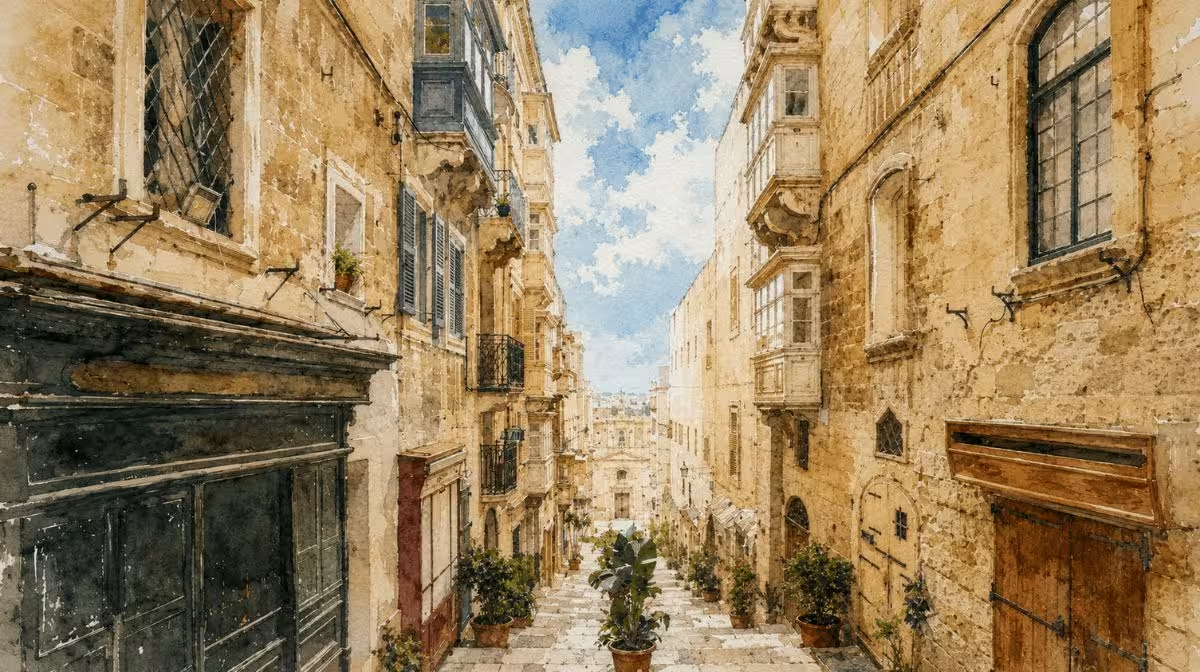
Valletta is a city you’re meant to explore on foot and take slowly. Barely half a square mile, Malta’s honey-coloured capital was built from scratch by the Knights of St. John in 1566, and it has been packing Baroque churches, grand palaces, hidden gardens and jaw-dropping harbour views into its grid of stepped streets ever since. UNESCO calls it one of the most concentrated historic areas in the world—and once you’re inside the city gates, it’s easy to see why.
The catch is that there’s far more to do than most day-trippers realise, and the highlights range from a Caravaggio masterpiece to a boat ride around one of the Mediterranean’s great natural harbours. This guide ranks the best things to do in Valletta—from the single unmissable sight to the experiences worth building a day around—so you can spend less time deciding and more time wandering. If you only do one thing, skip to Our Top Pick at the end.
▼ Table of Contents
The Best Things to Do in Valletta at a Glance
Valletta rewards a mix of the grand and the hidden. The headline sight is St. John’s Co-Cathedral, home to the only painting Caravaggio ever signed. But the city’s real magic is how much sits within a few streets of it: a working Baroque capital where you can tour a knight’s palace, drop into a 400-year-old cloistered convent, watch cannons fire over the Grand Harbour, and eat your way through Maltese street food, all in an afternoon. Below, we rank the experiences worth prioritising, then point you to the ones worth a longer look.
Browse the ranked list, check live availability and prices through the booking widgets, and skip to Our Top Pick if you just want the one-line answer.
The Top Things to Do in Valletta, Ranked
1St. John’s Co-Cathedral & Its Caravaggio
Behind a famously plain stone façade hides one of Europe’s most overwhelming Baroque interiors—every surface gilded, the floor a carpet of inlaid-marble tombstones marking the graves of the Knights of St. John. The showpiece sits in the Oratory: Caravaggio’s The Beheading of Saint John the Baptist (1608), the largest canvas he ever painted and the only work he ever signed—famously in the blood spilling from the saint’s throat. A second Caravaggio, Saint Jerome Writing, hangs nearby. A guided cathedral-and-city walking tour is the best way to understand what you’re looking at; go early to beat the cruise crowds.
Best for: The one unmissable sight in Valletta and a masterclass in Baroque art. Duration: 1–2 hours. Note: modest dress (shoulders and knees covered) required.
2Cruise the Grand Harbour from Sliema
Valletta’s story was written on the water, and the best way to feel its scale is from a boat. This roughly 90-minute scenic cruise sets off from nearby Sliema and glides through both of the city’s great harbours—Marsamxett and the vast Grand Harbour—past the imposing bastions, forts and creeks of Valletta and the Three Cities of Birgu (Vittoriosa), Senglea (Isla) and Cospicua (Bormla). Live commentary fills in the drama of the Great Sieges of 1565 and 1942, and there’s a bar onboard. It’s the single best way to understand why the Knights chose this spot.
Best for: The definitive harbour view and Valletta’s maritime history. Duration: ~1.5 hours.
3Eat Your Way Through a Maltese Street-Food Tour
Maltese food is its own reason to visit, and a guided street-food walk is the fastest way in. Over two to three hours you’ll wind through Valletta’s piazzas, Baroque avenues and hidden side streets sampling the classics: flaky pastizzi straight from a beloved local bakery, ftira (the fermented Maltese bread now recognised by UNESCO), rabbit—the national dish—plus sweet imqaret, the local soft drink Kinnie and an ice-cold Cisk lager. A local guide threads the tastings together with the stories behind each dish.
Best for: Foodies and first-timers who want to eat like a local. Duration: 2–3 hours.
4Step Inside the Monastery & Secret Garden
One of Valletta’s most extraordinary new openings: the Monastery of St. Catherine, founded in 1575 and home to Augustinian cloistered nuns, has opened doors that stayed shut to the public for more than 400 years. Through a small doorway you’ll find peaceful cloisters, a self-sustaining secret garden with wells and fruit trees, original kitchens and cells, and an underground complex—once the quarry that built the convent above—leading down to the crypt. It’s an intimate, atmospheric counterpoint to the city’s grander sights (and you may be greeted by Mimi, the resident cat).
Best for: A hidden, off-the-beaten-path experience most visitors miss. Duration: ~1 hour.
5Watch the Cannons Fire at Upper Barrakka Gardens
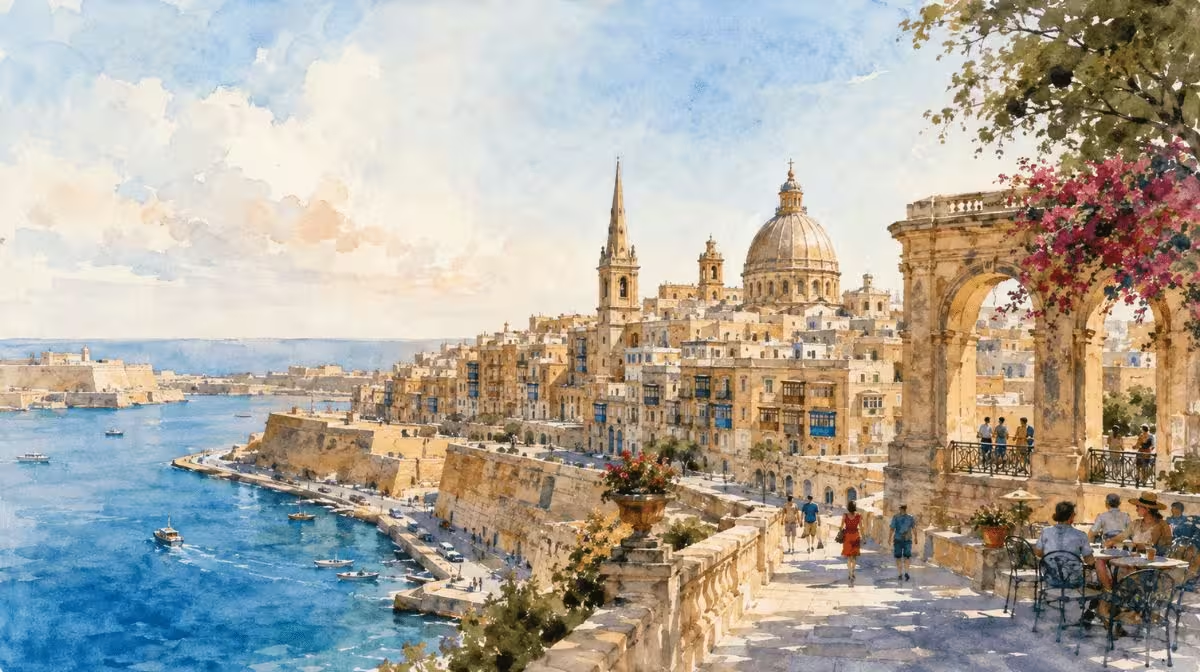
The Upper Barrakka Gardens are the city’s finest free viewpoint—a shaded arcade of arches looking straight down over the Grand Harbour and the Three Cities. Below the terrace sits the Saluting Battery, where historic cannons are fired daily at noon and 4pm (a tradition dating back centuries). Time your visit for one of the firings, then drop down to harbour level on the Barrakka Lift for just €1. It’s also the prettiest spot in Valletta at sunset.
Best for: Panoramic harbour views, the daily cannon salute, and free sightseeing. Duration: 30–60 minutes.
6Tour the Grandmaster’s Palace & Armoury
For over two centuries this was the seat of the Grand Masters of the Order of St. John, and today it’s one of Heritage Malta’s flagship sites on St. George’s Square. The combined ticket takes you through the ornate State Rooms—tapestried halls, painted friezes and the seat of Malta’s parliament for decades—and the Palace Armoury, one of the world’s great collections of knightly arms and armour. Note that the State Rooms occasionally close for official functions, so it’s worth checking access before you go.
Best for: History buffs and anyone drawn to the Knights of Malta. Duration: 1–2 hours. Combined State Rooms + Armoury ticket around €12.
7Explore Fort St. Elmo & the National War Museum
Guarding the tip of the peninsula, the star-shaped Fort St. Elmo held out heroically during the Great Siege of 1565 and again through the Second World War. Inside, the National War Museum traces Malta’s military history from the Bronze Age to the George Cross awarded to the entire island for its WWII bravery—including the battered “Faith,” one of the Gladiator biplanes that defended Malta. Give yourself time to walk the ramparts for more harbour views.
Best for: Military history and dramatic fortress architecture. Duration: 1.5–2.5 hours.
Also Worth Doing
If you have more time—or you’re basing yourself in Valletta for a few days—these round out the city beautifully:
Casa Rocca Piccola — A lived-in 16th-century noble palace still owned by the same family, complete with private WWII bomb shelters in the cellars. A rare glimpse of aristocratic Maltese life.
Lascaris War Rooms — The secret underground command centre from which the defence of Malta and the 1943 invasion of Sicily were directed. Atmospheric and genuinely gripping.
Stroll Republic & Merchant Streets — Valletta’s main pedestrian arteries, lined with cafés, limestone façades and the city’s signature enclosed timber balconies. Free, and the best way to soak up the atmosphere.
Strait Street — Once the notorious haunt of sailors on shore leave, now a revived strip of wine bars, jazz and late-night buzz.
Casa Rocca and beyond by day trip — Valletta pairs easily with the silent walled city of Mdina, or a ferry across to Gozo and the Blue Lagoon, if you have a spare day.
Go Beyond Valletta: Harbour & Day Trips
Valletta is small enough to see in a day, but Malta rewards those who venture out. The Grand Harbour cruise above is the natural first step onto the water; from there, the classic add-ons are a boat trip to Comino’s electric-blue Blue Lagoon, a ferry to sister-island Gozo with its dramatic cliffs and temples, and the silent medieval streets of Mdina, a short hop inland. Any of these turns a Valletta city break into a proper Malta trip.
Compare the Top Experiences
| Experience | Type | Time needed | Best for |
|---|---|---|---|
| St. John’s Co-Cathedral | Art & history | 1–2 hrs | The one unmissable sight & the Caravaggio |
| Grand Harbour Cruise | Boat tour (from Sliema) | ~1.5 hrs | Best harbour views & maritime history |
| Street-Food Tour | Guided food walk | 2–3 hrs | Foodies & eating like a local |
| Monastery & Secret Garden | Hidden gem | ~1 hr | Off-the-beaten-path atmosphere |
| Upper Barrakka & Saluting Battery | Viewpoint (free) | 30–60 min | Panoramas & the daily cannon salute |
| Grandmaster’s Palace | Palace & armoury | 1–2 hrs | Knights of Malta history |
| Fort St. Elmo | Fortress & museum | 1.5–2.5 hrs | Military history & ramparts |
Our Top Pick
🏆 St. John’s Co-Cathedral
If you only do one thing in Valletta, make it St. John’s Co-Cathedral. Nothing else in the city delivers the same jaw-drop: a plain stone exterior that opens into a gilded Baroque wonder, a floor paved with the tombs of the knights, and—in the Oratory—Caravaggio’s largest and only signed painting, a genuine bucket-list masterpiece you can stand a few feet from. The Grand Harbour cruise is the better view, the food tour is the most fun, and the Monastery is the most surprising—but for the single most important sight in Valletta, this is the one we’d book first. Go early, dress modestly, and take a guided walk to get the full story.
That said, the right pick depends on your day: choose the Grand Harbour cruise for the best views, the street-food tour for the tastiest afternoon, the Monastery & Secret Garden for something hidden, and the Grandmaster’s Palace or Fort St. Elmo if the Knights of Malta are what brought you here. Because Valletta is so compact, most visitors comfortably combine three or four of these in a single day.
Where to Stay in Valletta
Staying inside Valletta itself puts every sight in this guide within a walk, and swaps the daytime cruise-crowd bustle for gorgeously quiet golden-hour and evening streets. Boutique hotels and restored townhouses fill the old city, while nearby Sliema and St. Julian’s—a short ferry or bus away—offer seafront hotels, more nightlife and the departure point for the Grand Harbour cruise. For a full breakdown of every base, see our guide to where to stay in Malta.
Use the interactive map below to explore hotels and apartments in and around Valletta and compare prices across neighbourhoods:
Getting There & Around
Valletta is wonderfully walkable once you’re inside the gates—but it’s also steep, with streets that turn into staircases, so comfortable shoes matter. Cars are largely kept out of the old city, and most visitors arrive on foot from the bus terminus at City Gate, by ferry from Sliema or the Three Cities, or up from the Grand Harbour on the Barrakka Lift (€1). Cruise passengers dock right below the bastions, a 10–15 minute walk or a quick lift ride from the centre—see our full Valletta Cruise Port Guide for routes and timings.
Where a transfer really earns its keep is the airport run—especially arriving with luggage or heading out early. For stress-free, personalised transport designed for travellers, we use Welcome Pickups: a friendly local driver meets you, tracks your flight, and takes you door-to-door without the taxi-rank haggle.
Book a Welcome Pickups Transfer →
Visiting Tips & Timing
When to Go
Spring (April–June) and autumn (September–October) bring warm weather and thinner crowds; high summer is hot and busy, and winter is mild but sees more site closures. Whatever the season, mornings are quietest—cruise groups tend to flood St. John’s and the Grandmaster’s Palace from mid-morning onward. Sunday and religious feast days see many museums and churches close, so check ahead.
Booking
The guided experiences—the walking tour, the harbour cruise, the food tour and the Monastery—fill up fast in peak season, and booking online locks in your slot for the same price or less than paying on the day. Check the live availability widgets throughout this guide for current times and pricing.
What to Bring
- Comfortable, flat shoes: Valletta is hilly and many streets are stepped—leave the heels at the hotel.
- Modest cover-up: Shoulders and knees must be covered to enter St. John’s Co-Cathedral and other churches.
- Sun protection & water: The limestone streets throw back a lot of heat in summer, and shade is limited.
- The tallinja card: Malta Public Transport’s card saves money if you’re hopping on buses to Sliema, Mdina or the ferries.
Frequently Asked Questions
Explore More of Malta
Planning the rest of your trip? These guides cover more of the islands’ must-see destinations:
Where to Stay in Malta — A full neighbourhood-by-neighbourhood guide to choosing your base, from Valletta to Sliema, St. Julian’s and beyond.
Valletta Cruise Port Guide — Everything cruise passengers need: the Barrakka Lift, walking routes, and how to make the most of a day in port.
The Three Cities Guide — Birgu, Senglea and Cospicua across the Grand Harbour—the fortified towns you’ll see from the cruise.
Mdina & Rabat Guide — The silent walled “old capital” and its neighbour Rabat, an easy half-day trip from Valletta.
By Ben Farr