 Skip to content

Ottawa to Toronto is the last leg of the Canada road trip route this site covers — Boston to Quebec City to Montreal to Ottawa to Toronto. It’s about a 4-5 hour drive west along Highway 416 and Highway 401, through eastern Ontario’s most underrated stretch of stops, including Kingston and the Thousand Islands. Here’s the route, the stops worth making, and how it compares to the train.
📋 Quick Navigation — Jump to a Section
Ottawa to Toronto — Quick Facts
Distance: ~450 km (280 miles)
Drive time: 4–5 hours, non-stop
Route: Highway 416 South to Highway 401 West
Toll option: Highway 407 ETR bypasses Toronto traffic (tolled, transponder or plate billing)
Best season: Late spring through fall; winter drives need extra buffer time for weather
Train alternative: VIA Rail, ~4h40m average, about 8 departures a day
The Route
From downtown Ottawa, the drive starts on Highway 416 South, a quiet four-lane highway that cuts through farmland for about 40 minutes before merging onto Highway 401 West at Johnstown, near Prescott. From there it’s a straight shot along the 401 for roughly three hours, passing Kingston, Belleville, Cobourg, and Oshawa before reaching the Greater Toronto Area.
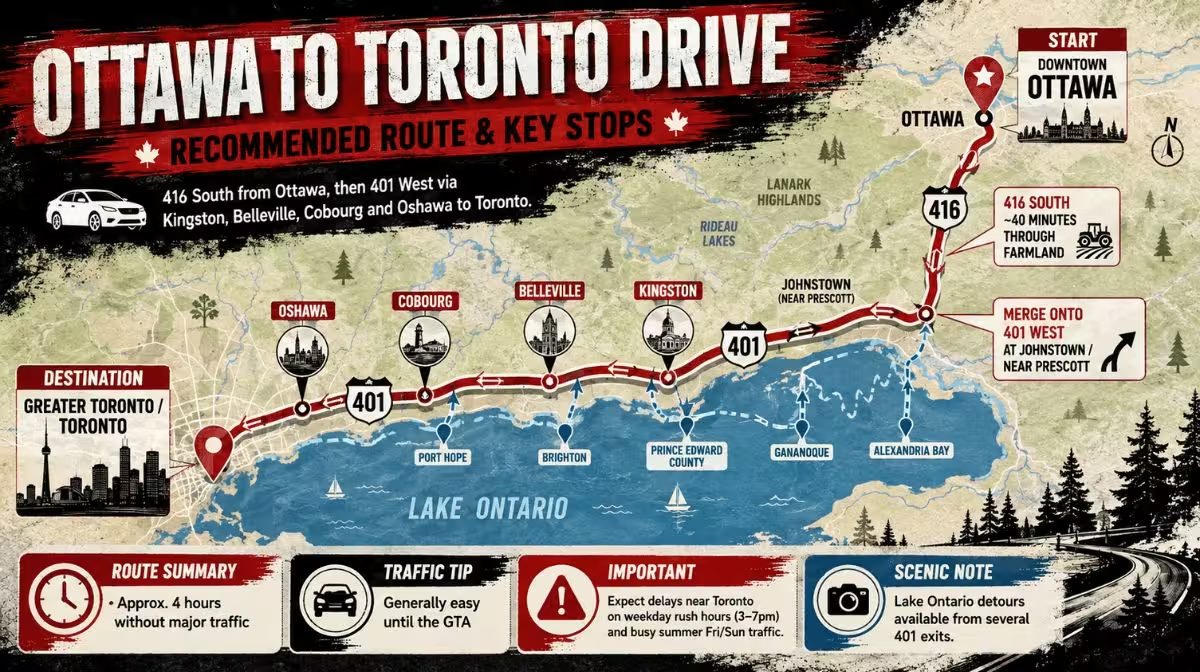
The 401 through this stretch runs close to the north shore of Lake Ontario, and while the highway itself doesn’t hug the water, several exits lead down to lakefront towns worth a short detour. Traffic is generally light until you approach the GTA, where the 401 can back up during weekday rush hours (roughly 3–7pm) and on Friday/Sunday cottage-country traffic in summer.
Best Stops Between Ottawa and Toronto
The 401 corridor between Ottawa and Toronto has a reputation for being a monotonous drive, but a couple of well-timed stops break it up — especially if you’re not in a hurry.
🏰 Kingston & the Thousand Islands
About 2 hours from Ottawa, Kingston is the natural halfway point and the best reason to slow down on this drive. Its limestone downtown, waterfront, and Fort Henry are worth an hour or two, and it’s the jumping-off point for the Thousand Islands Parkway — a scenic alternate to the 401 that runs along the St. Lawrence River past island cottages and lookout points, rejoining the highway about 30 minutes later at a small time cost.
🏖️ Cobourg
Around 90 minutes from Toronto, Cobourg has one of the nicer sand beaches on this stretch of Lake Ontario and a walkable Victorian-era main street. It’s a good stretch-your-legs stop if you left Ottawa in the afternoon and want to break up the last leg.
🍇 Prince Edward County (short detour)
If you have an extra half-day, Prince Edward County — Ontario’s wine country — sits about 20 minutes south of the 401 near Belleville. It’s a worthwhile detour rather than a quick stop, so it works best if Toronto isn’t a same-day arrival.
Fast Route vs Scenic Route
There are effectively two ways to do this drive: straight down the 401, or with the Thousand Islands Parkway detour through the Kingston area.
🛣️ Fastest: Stay on the 401
Staying on Highway 401 the whole way is the quickest option at around 4–4.5 hours, traffic depending. Drivers who want to shave time off the Toronto-area portion can pick up Highway 407 ETR, a tolled highway that runs north of the city and avoids the worst of the 401’s GTA congestion — useful if you’re heading to Toronto’s northern suburbs, less useful if your destination is downtown.
🌊 Scenic: Thousand Islands Parkway
Exiting the 401 for the Thousand Islands Parkway near Gananoque adds about 20–30 minutes but trades highway monotony for river views, small marina towns, and access to Thousand Islands National Park. It rejoins the 401 further west, so you don’t lose the route — just some time.
Getting Out of Ottawa
From downtown or the ByWard Market area, the quickest way onto Highway 416 South is via Bronson Avenue or the Airport Parkway to Hunt Club Road, then following signs for the 416. If you’re coming from the west end or Kanata, you can pick up the 416 directly. Give yourself extra time leaving during weekday morning rush hour (7:30–9am), when Ottawa’s south-end routes to the 416 can be slow.
Getting Into Toronto
The 401 runs along the northern edge of Toronto, not through downtown, so your last stretch depends on where you’re headed. For downtown, exit south onto the Don Valley Parkway (DVP) — expect it to be slow at almost any hour. For the airport, exit onto Highway 427 South. If your destination is in the northern suburbs (Markham, Richmond Hill, Vaughan), the 407 ETR toll route can save real time versus fighting 401 traffic through the city.
Ottawa to Toronto by Train
VIA Rail runs frequent direct service between Ottawa and Toronto, with roughly 8 departures a day and an average travel time of about 4 hours 40 minutes (trains range from around 4h13m to just over 5 hours depending on stops). Ottawa’s station is a short drive or taxi ride from downtown; Toronto trains arrive at Union Station, right in the heart of downtown.
The train is worth considering if your trip is downtown-to-downtown — you skip parking in both cities and can work or sleep for the ride instead of watching the 401 go by. Driving still wins if you want the flexibility to stop in Kingston, need a car once you’re in Toronto, or are traveling as a group, where splitting gas is cheaper than several train tickets.
Before You Drive
A few practical things worth checking before you leave: if you’ll use the 407 ETR, decide in advance whether you’re set up for plate-based billing or need a transponder — rental cars often bill tolls separately, so check your rental agreement. Fuel up before leaving Ottawa or Toronto proper; while there are stations along the 401, prices are typically better in the cities than at highway-exit gas stations.
In winter, check Ontario 511 (the province’s road conditions site) before you go — lake-effect snow squalls can appear suddenly along the Lake Ontario shoreline sections of the 401, even when Ottawa and Toronto themselves are clear.
Where to Stay
Heading into Ottawa first? See our guide to the best neighbourhoods and hotels in Ottawa before you go. Toronto hotel recommendations are on the way as we build out our Toronto coverage.
Leaving from Ottawa? The map below shows live hotel availability and pricing there for your dates.