 Skip to content
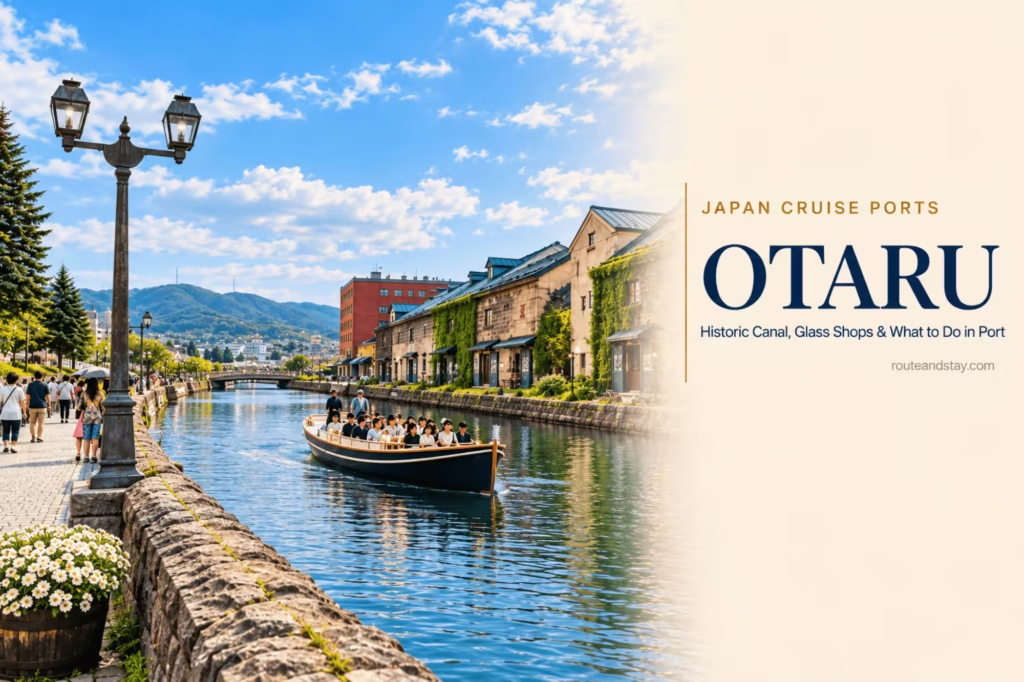
Otaru is the port on this cruise where nobody was in a hurry — us included. After the scale of Tokyo and Nagoya, our ship docked at a small, flat, endlessly walkable harbor town, and we split up on purpose: my wife and son wanted a slow morning, so I went off alone uphill toward the station for a view of our own ship from above, before we all met back down at the canal for the rest of the day.
ContentsHide
Funami-zaka Slope: The Quiet Hill Walk
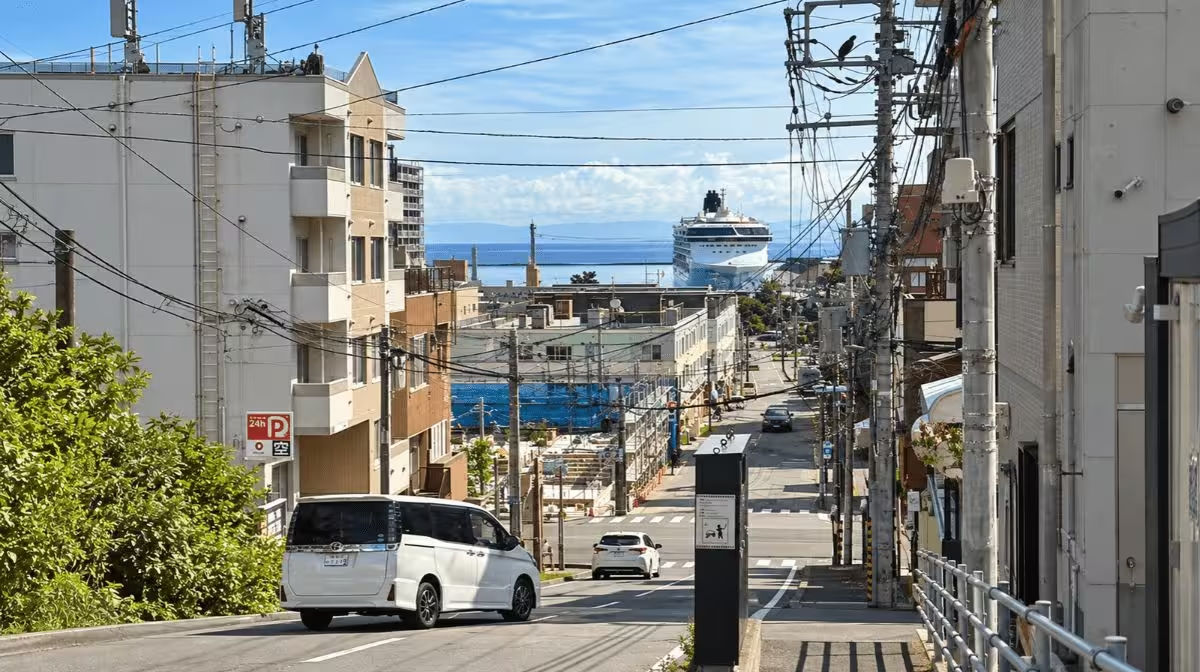
While my wife and son took the morning slow, I walked up from the harbor toward JR Otaru Station on my own — and the short climb up Funami-zaka Slope turned out to be the find of the day. It’s a steep, ordinary residential street, originally cut as a firebreak after a fire tore through the city in 1904, and it does something almost no official “attraction” does: it just quietly frames the harbor below. From partway up, I could look straight back down at our own ship at anchor, small in the frame, with Otaru’s rooftops and the sea beyond. No crowds, no ticket booth — just a Tuesday-morning street with laundry on balconies and a view worth the climb.
It’s the kind of five minutes that makes a big cruise itinerary feel human-scale again — ordinary Japanese life rather than the more staged, camera-ready version of Tokyo.
The Otaru Canal
We met back up as a family at the Otaru Canal, and it’s easy to see why this one waterway carries the whole city’s postcard identity. It was completed in 1923 as a working cargo canal — small boats used to ferry goods in from larger ships anchored offshore — and today the original stone warehouses that lined it have been turned into cafés, restaurants and shops rather than torn down. Sixty-three gas lamps still run along the water, and even at midday, with the warehouses reflected in the canal, it doesn’t feel like a recreation of the past so much as a place that simply kept its old bones.
We walked the whole thing at an easy pace — it’s flat, well-paved, and impossible to get lost on — but a lot of visitors take a 35–40 minute boat ride along the North Canal instead, which gets you a captain’s commentary and a water-level view of the warehouses you can’t get from the path.
Want the boat ride plus a keepsake you make yourself?
Book the Otaru Canal Cruise & Hanko-Making Experience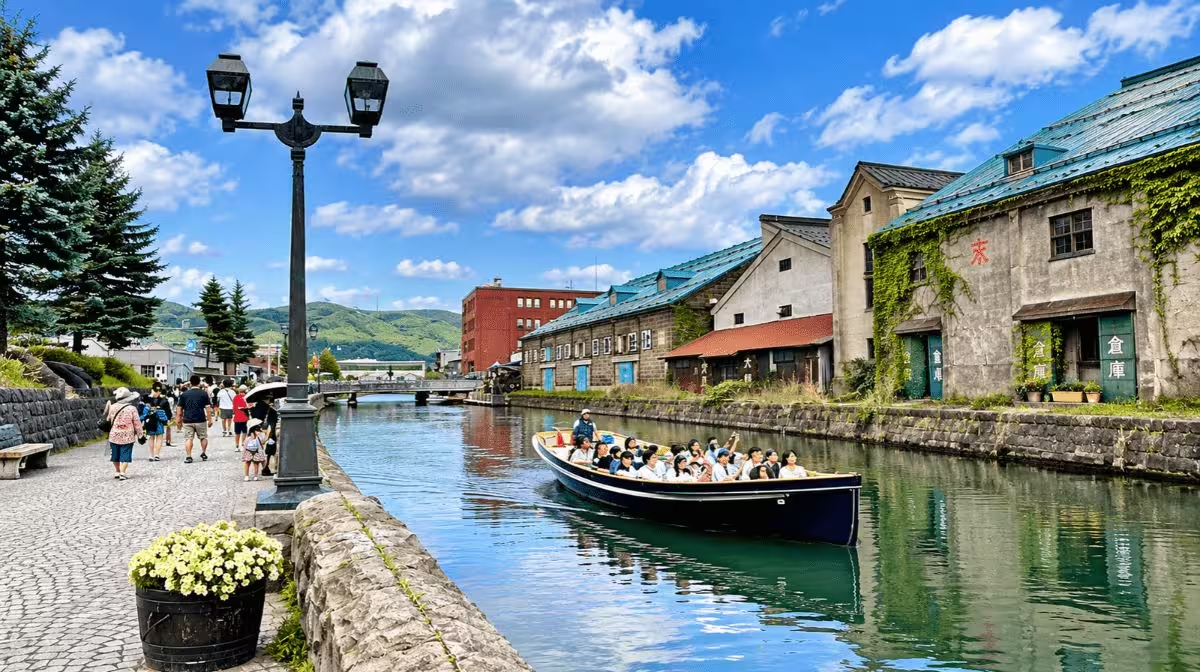
Sakaimachi Street & Kitaichi Glass
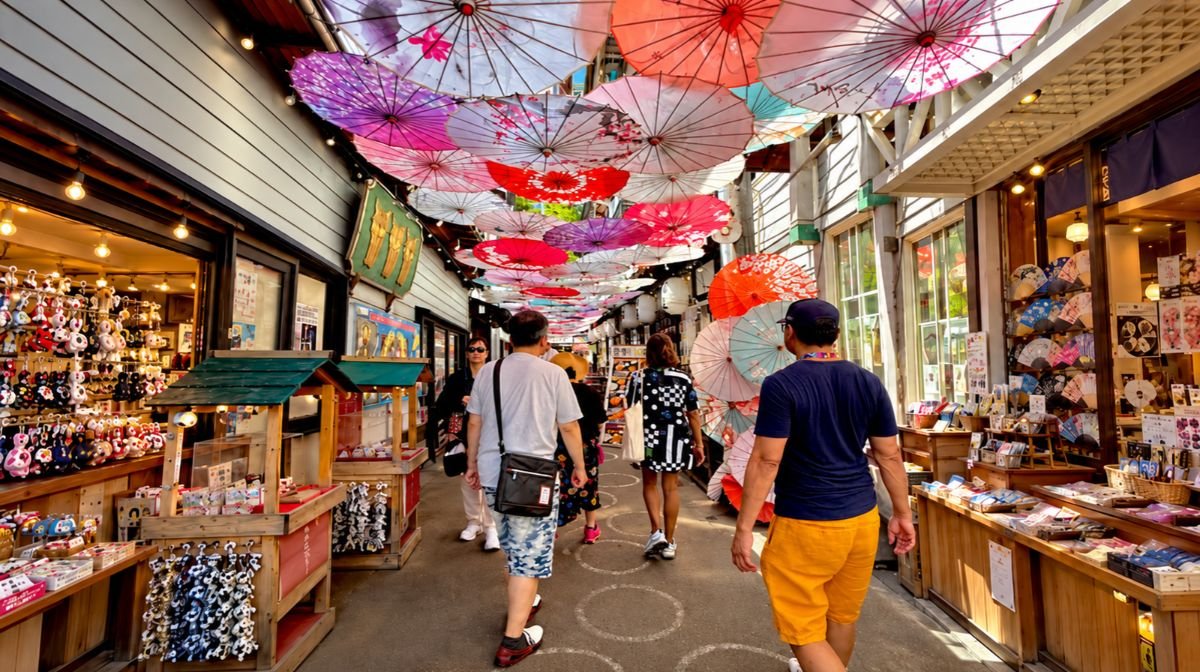
A few minutes from the canal, Sakaimachi Street is Otaru’s old merchant row — trading companies built these Western-style brick and stone buildings during Hokkaido’s boom years in the late 1800s and early 1900s, and they’ve aged into today’s run of cafés, boutiques and glass shops rather than being replaced. This is where we spent the most unplanned time of the day.
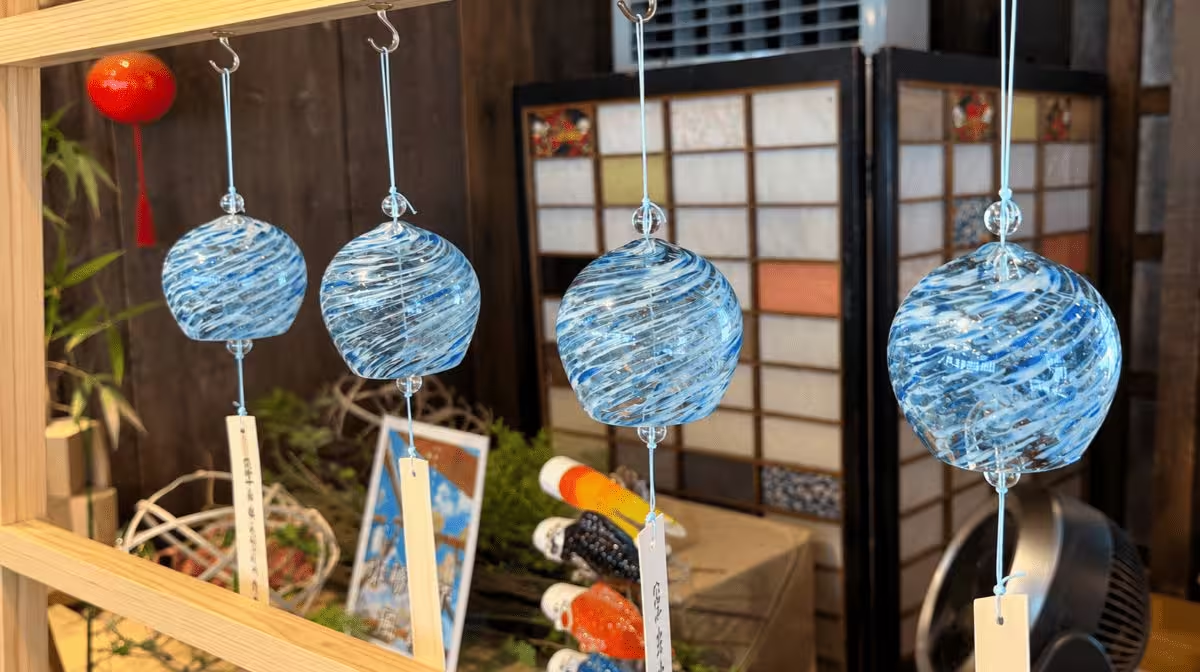
Otaru’s glass industry has real roots: Kitaichi Glass started in 1901 making kerosene lamps, then moved into the glass floats fishermen used on their nets as the local herring industry boomed. That heritage is why the city is still full of working glassware shops today. We wandered into one and came out with a set of glass wind chimes for our summer house — the kind of thing that’s genuinely hard to resist in person, with sunlight catching a wall of hand-blown color.
Otaru Music Box Museum & the Steam Clock
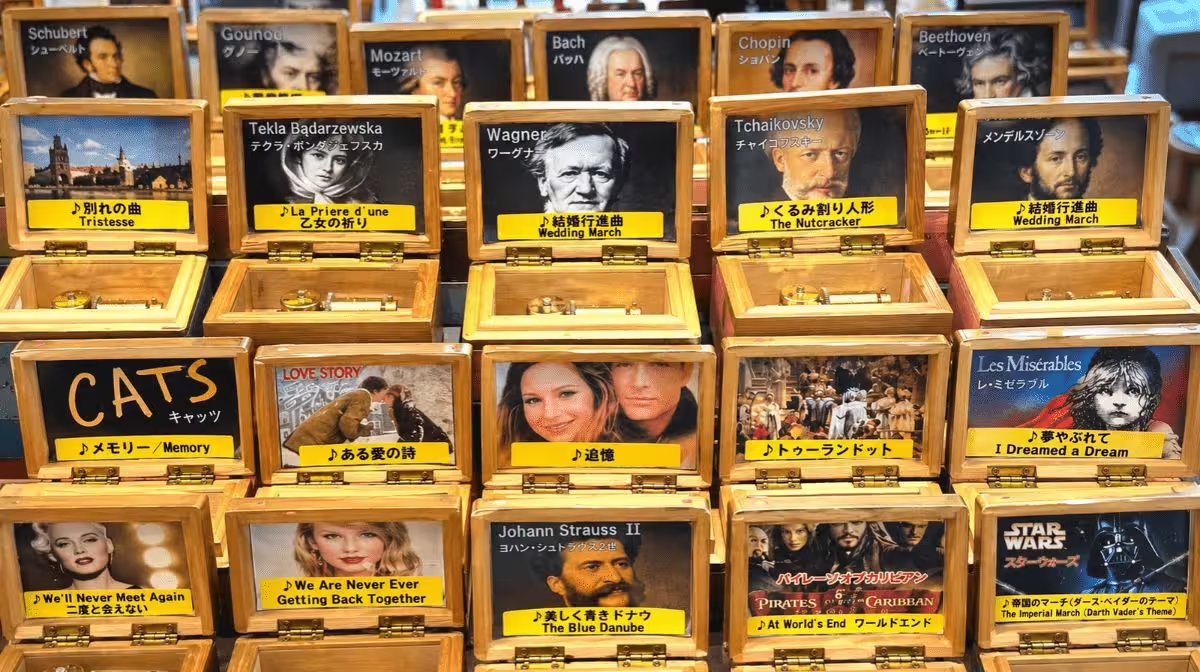
Our last stop was the Otaru Music Box Museum, housed in a striking 1915 building right in the historic district. My father-in-law is genuinely passionate about music, so a hand-picked music box from one of the world’s largest collections of them felt like the right souvenir to bring home — better than anything we could have found in an airport gift shop.
Right outside, the Otaru Steam Clock is worth timing your visit around: a 5.5-metre bronze steam-powered clock gifted by the city of Vancouver in 1994, a sibling to the one in Vancouver’s own Gastown. It whistles on the steam every 15 minutes, and locals point to around 3pm for the fullest chime-and-steam display.
Also Worth Doing: Mount Tengu & Beyond
If your ship gives you more time than a standard port day, or you’d rather trade the hillside stroll for a proper mountain-top panorama, the Mount Tengu Ropeway climbs to a 532-metre summit with views over Ishikari Bay and, on a clear day, as far as the Shakotan Peninsula — it’s rated one of Hokkaido’s three best night views, though the ropeway itself only runs while there’s daylight or early evening left to use it, so check the season before planning around sunset.
Skip the ticket line at the base station:
Book the Mount Tengu Ropeway TicketAnd if you’re spending extra nights in Sapporo before or after the cruise rather than just a single port day, Otaru also shows up as one stop on longer day tours out of Sapporo that add Cape Kamui’s cliff trails and a Blue Cave boat cruise along the coast (note: the cruise no longer enters the cave itself following rockfalls, but does tour the exterior).
Have a full day and a Sapporo base rather than a single port call?
See the Cape Kamui & Otaru Day Trip From SapporoGetting Around From the Port
Otaru is one of the easiest ports on this whole cruise for getting around on foot. Ships dock directly at Otaru Port — a single working harbor pier, no shuttle bus needed — and the canal district is within about five minutes’ walk of the pier. Downtown shops and Sakaimachi Street are five to fifteen minutes further, and the whole route is flat and wheelchair-friendly, without the aggressive taxi-touting some cruise ports have. If you’d rather not walk, taxis queue at the pier for roughly $8–15 a ride.
FAQ About the Otaru Cruise Port
Planning the Rest of Your Japan Cruise?
See every port on our Tokyo-to-Seoul cruise series, plus how to plan your trip.
See the Full Cruise Port Series