 Skip to content
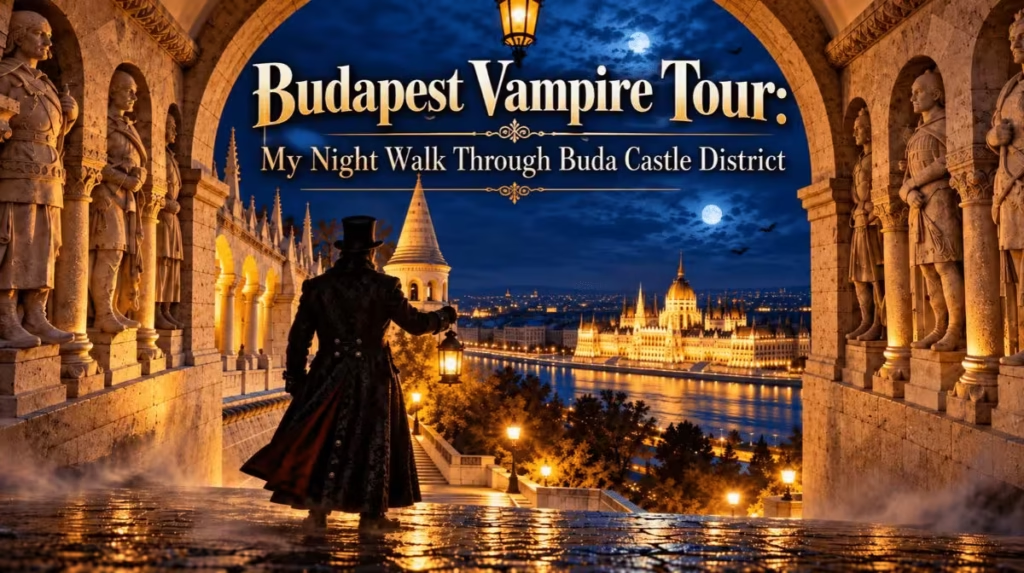
Budapest is beautiful after dark, but it can also be wonderfully eerie. The Budapest Vampire Tour, officially the Buda Castle District Vampires and Myths Night Tour, is a two-hour evening walk through Castle Hill led by a costumed storyteller, mixing medieval history, Vlad the Impaler, Elizabeth Báthory and local folklore. It is atmospheric rather than scary, and it turned out to be one of the most unusual things I did in the city. This guide is part of our full Budapest travel guide; if you are still planning your days, start with our best things to do in Budapest, then pair this walk with the Budapest food tour or an evening Danube river cruise.
Jump to a section
The Tour at a Glance
| Detail | What to expect |
|---|---|
| Duration | Around two hours |
| Meeting area | Buda side of the Danube, near Clark Ádám Square and the Zero Kilometre Stone (confirm the exact point on your voucher) |
| Route | On foot, uphill through Castle Hill to Fisherman’s Bastion |
| Style | Costumed storytelling: history, folklore and dark humour, no jump scares |
| Best for | History fans, first-timers who have already seen Castle Hill by day, anyone who prefers atmosphere over crowds |
| Effort | Moderate: a steady climb, cobbles and steps, all outdoors |
Meeting Beneath Castle Hill
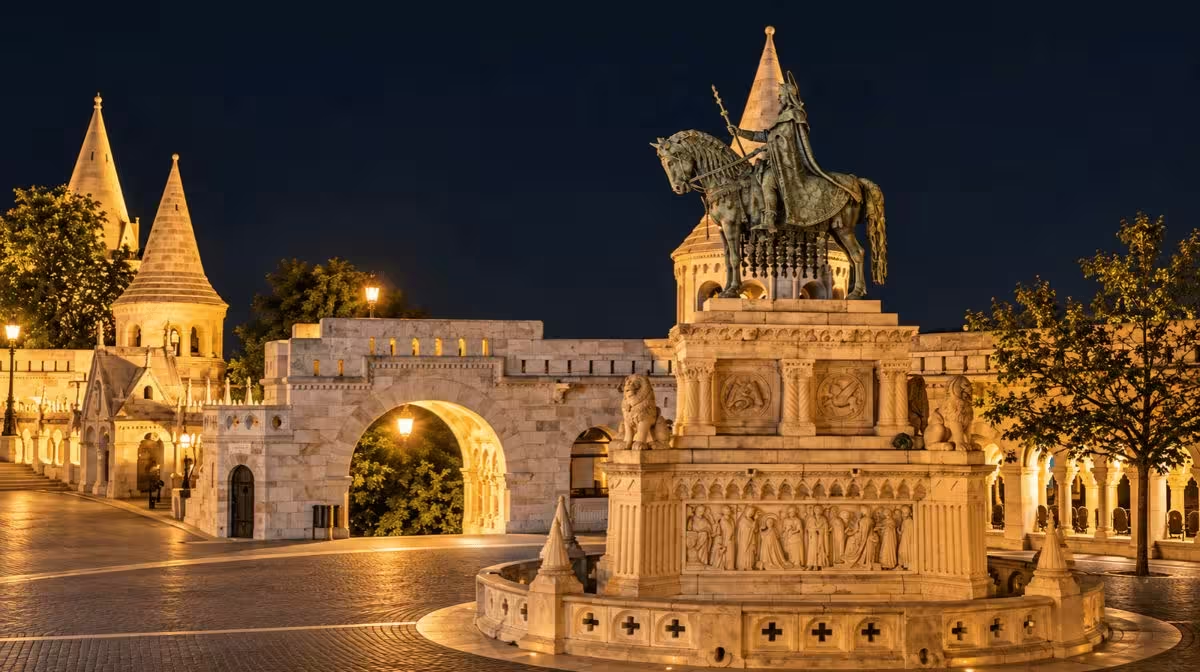
The tour starts on the Buda bank of the Danube, close to Clark Ádám Square and the Zero Kilometre Stone, the point from which distances to Budapest are traditionally measured. By evening the city already feels different. Across the river the Hungarian Parliament Building is illuminated, the Chain Bridge stretches out below the castle, and the daytime crowds on Castle Hill have thinned to almost nothing.
Our guide arrived in full period costume and, within a couple of minutes, made it clear this was not going to be a conventional history lecture. He gathered the group, set the tone for the darker side of Budapest, and then we started to climb.
The Climb to Buda Castle
One thing worth knowing before you book: you walk up Castle Hill. The funicular is the easy way to the top, but climbing on foot is part of the experience. As we left the traffic by the river behind, the stories began, first medieval Hungary, with its battles, invading armies and executions, and eventually the vampires.
Written down it sounds theatrical, and it is. But standing beneath the castle walls in the dark, with the city glowing behind us, it worked far better than I expected. The higher we climbed, the quieter Budapest became.
I had already visited Buda Castle by day, and this felt like a different place. Grand buildings were lit, but many of the side streets were empty. Narrow lanes disappeared between old stone walls, archways threw long shadows across the cobbles, and every so often a turn in the road opened onto a sudden view across the Danube. You do not need special effects when the setting does the work for you.
Vlad Dracula: History vs. Legend
No vampire tour is complete without Dracula, but this was not a retelling of Bram Stoker’s novel. Our guide focused on Vlad III, known as Vlad the Impaler, the fifteenth-century ruler of Wallachia whose reputation later fed into the Dracula legend. The real history is considerably darker than capes and Transylvanian castles.
Worth knowing: Stoker’s Dracula was published in 1897, more than four centuries after Vlad’s death, and borrowed little beyond the name. The tour’s strength is that it keeps the documented history and the folklore visibly separate, moving between the two without losing the thread.
That mix was one of my favourite parts. One minute you are hearing about genuine historical conflicts; a few minutes later you are inside a legend about supernatural creatures, and the guide is honest about which is which.
Elizabeth Báthory, the Blood Countess
If the Dracula stories were dark, the tales around Elizabeth Báthory were more disturbing still. Known as the Blood Countess, she is one of the most notorious figures in Hungarian history and European vampire folklore, accused in the early seventeenth century of the torture and murder of young women.
Our guide told the stories that have grown up around her over the centuries, and was careful to point out that parts of her case are still debated by historians, with fact and legend tangled together. Hearing it on Castle Hill at night was gripping. The guide tells these stories almost as a performance, and you find yourself listening far more closely than you would on a standard walking tour.
Fisherman’s Bastion at Night
Between stories we moved deeper into the Castle District. There was no constant stream of landmarks to tick off; instead we would walk for a while, stop somewhere atmospheric, and gather round for the next tale. The guide shifted tone as needed, adding humour before steering back to something much darker.
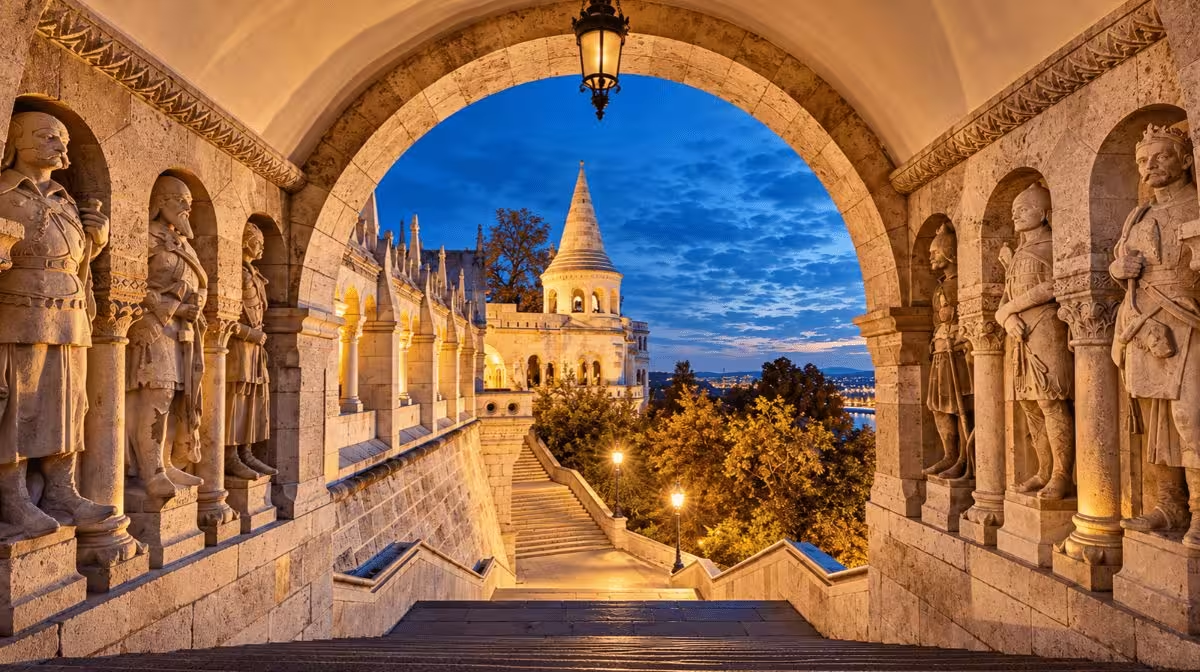
The finale is Fisherman’s Bastion, one of Budapest’s best-known landmarks. Built in the late nineteenth century as a neo-Romanesque lookout terrace, it is often packed by day. At night the pale stone towers are lit, and through the arches the lights of Pest stretch along the far bank. The Parliament Building glows across the river, and after an evening of medieval battles and gruesome legends, the contrast is striking. It was my favourite moment of the tour, and even without a single vampire story the view alone would justify the walk.
Is It Actually Scary?
Not really, and it is not meant to be. I would call it atmospheric rather than frightening. Nobody jumps out from behind a wall and there are no haunted-house effects. The darker mood comes from the stories, the night-time setting and the guide’s delivery, and there are some genuinely funny moments along the way. If you want two hours of being terrified, this is not that. If you enjoy history, folklore or ghost stories, it strikes a very good balance.
The one thing I did not expect was the walking. It is not a hard tour, but the opening climb is noticeable, and Castle Hill means cobbles, steps and uneven surfaces. You are outside throughout, so the weather matters. On a cool evening, the cold actually helps: Castle Hill feels far more suitably Gothic in a coat than on a hot July afternoon.
My Verdict
Would I do it again? Yes, especially with someone who had never seen Buda Castle at night. Just do not book it expecting a horror attraction. Think of it as a dark-history walking tour with a strong theatrical twist: you get the vampire legends and grim stories, plus one of Budapest’s most beautiful districts at its most atmospheric hour. Budapest has plenty of excellent daytime walking tours, but following a costumed storyteller through quiet courtyards after dark is a side of the city I was not expecting, and one of the most entertaining ways I spent an evening there.
Budapest: Buda Castle District Vampires and Myths Night Tour
A costumed-guide evening walk through Castle Hill covering Vlad Dracula, Elizabeth Báthory and Hungarian folklore, ending at Fisherman’s Bastion. Check live availability and times below.
Before You Go
- Wear comfortable shoes. Expect cobblestones, steps and uphill walking.
- Dress for the weather. The whole tour is outdoors, and Castle Hill can be windy and cold in the evening.
- Manage expectations. It is storytelling and atmosphere, not jump scares.
- Bring your phone or camera. The night views from Castle Hill and Fisherman’s Bastion are among the best in Budapest.
- Expect history and folklore to overlap. That blend is central to the experience.
- Allow about two hours. It works well after dinner, and afterwards you can head back into Pest.
If you have already covered Budapest’s headline sights by day, this is an easy way to return to Buda Castle and see it in a completely different light. After a night of Castle Hill stories, a soak at the Széchenyi thermal baths the next morning is a good way to recover from all those cobbles.
Where to Stay
For an evening tour that starts on the Buda side of the river, staying in central Buda or on the Pest riverfront keeps the journey there and back short and easy. See our Budapest travel guide for more on planning your stay, and use the map below to compare hotels and apartments near Castle Hill.
Frequently Asked Questions
How long is the Budapest Vampire Tour?
The tour runs for around two hours, all on foot and all outdoors.
Where does the Buda Castle vampire tour start?
It starts on the Buda side of the Danube, near Clark Ádám Square and the Zero Kilometre Stone. Always confirm the exact meeting point on your booking confirmation.
Is the Budapest Vampire Tour scary?
No. It is atmospheric rather than frightening, with a costumed storyteller, dark history and some humour, but no actors jumping out and no haunted-house effects.
Do you have to walk up Castle Hill?
Yes, the tour begins with a walk uphill from the riverside. It is not extreme, but wear comfortable shoes as there are cobbles, steps and uneven ground throughout.
Is the tour based on real history?
Partly. It draws on documented history, including Vlad III and Elizabeth Báthory, alongside folklore and legend. The guide distinguishes between the two, and some aspects of the Báthory story are still debated by historians.
Is the Budapest Vampire Tour worth it?
If you enjoy history, folklore or unusual evening activities, yes. Even setting the stories aside, seeing Castle Hill and Fisherman’s Bastion lit up at night is a highlight.
Route & Stay is reader-supported. Some of the links on this page are affiliate links, and we may earn a small commission if you book through them, at no extra cost to you. Tour details and prices were accurate at the time of writing but can change, so always confirm current availability before booking.