 Skip to content
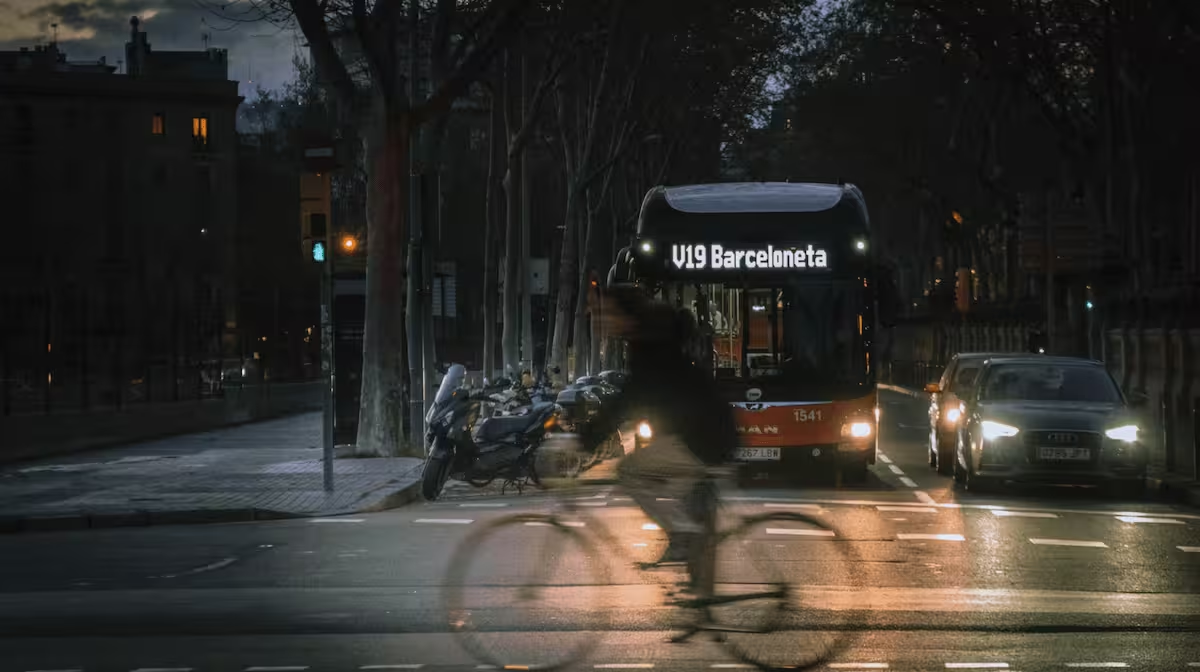
Barcelona transport is straightforward once you know the system. The metro covers most of the city, taxis and Uber fill in gaps, and the hop-on hop-off bus is perfect for orientation and skipping crowds. You won’t need a car unless you’re renting for day trips, and you probably don’t even need that. This guide covers every option, with costs, practical tips, and honest assessments of what actually works.
Table of Contents Show / Hide
The Metro System: Your Primary Transport
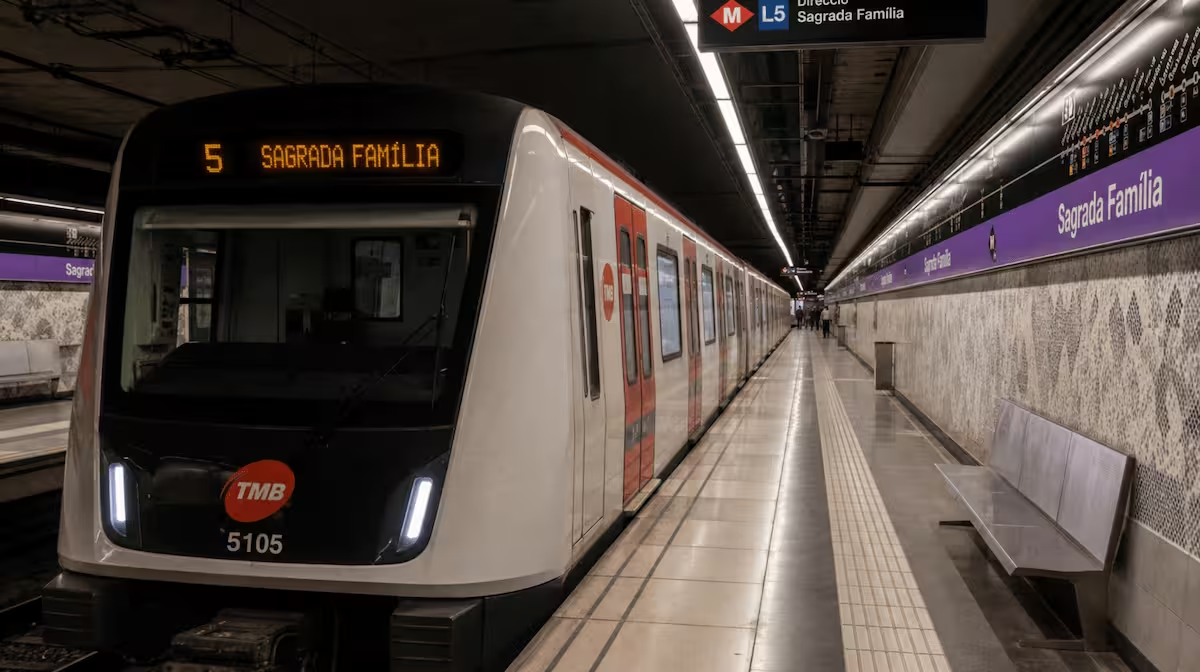
Barcelona’s metro is clean, fast, and covers most of the city. This is how you move around Barcelona. Eleven lines color-coded and numbered. Trains run 5 AM–midnight daily (until 2 AM Friday and Saturday). Real talk: the metro works. Use it.
How It Works
Download the TMB app (Transports Metropolitans de Barcelona) or buy tickets at station machines. Single journey ticket: €2.45. But don’t buy single tickets — get a T-Casual pass (10 journeys, €11.35, or €12.15 for airport zones). You tap the card on the reader entering and leaving. Lines are color-coded; navigation is intuitive. Most useful lines for tourists: L3 (red — Gothic Quarter, Eixample), L2 (purple — Sagrada, Park Güell), L4 (yellow — Montjuïc, museums).
Stations & Navigation
Major interchange stations: Plaça de Catalunya (hub for L1, L3), Sants Estació (L5, L2, Renfe trains), Estació de França (L4, L5, Renfe). Signs in Catalan and Spanish (English sometimes). Station names are announced in Catalan and Spanish — listen for your stop. Download Google Maps offline — it works better than TMB app for micro-navigation.
Safety
Metro is safe during the day and evening. Night journeys (after midnight) use Line 1 and 2 (extended Friday/Saturday). Keep your backpack in front. Pickpocketing is possible on crowded lines (L3 especially), but it’s not common. Don’t engage with aggressive panhandlers — ignore and move away.
Buses: Coverage Over Speed
Buses cover neighborhoods the metro misses. Same T-Casual pass works. Slower than metro but more scenic. Use for: reaching specific neighborhoods (Gràcia line is popular), getting to beaches, longer city routes. Most tourists use metro + hop-on hop-off bus and skip regular buses.
How to Use
Tap your T-Casual card at the reader when boarding. Real-time info: TMB app or at stops. Night buses (lines starting with N) run 10 PM–5 AM if you’re out late. Bus stops are clearly marked with route maps and real-time arrival boards.
Taxis & Uber: When You Need Direct Routes
Use taxis and Uber for: airport arrivals/departures, late nights (after midnight), when carrying luggage, or when you’re tired and the metro feels overwhelming. Both are legitimate options in Barcelona.
Official Taxis (Yellow Cars)
Cost: €2.55 base + €1.35/km (day), €2.55 base + €1.50/km (night). Airport to city center: roughly €25–35. Hailing: Find taxi ranks at major locations (Plaça de Catalunya, near stations) or call +34 933 223 141. All taxis have meters. Real talk: Reliable, metered, safe. Drivers speak limited English. Have your destination written down in Catalan/Spanish or use your phone to show your location.
Uber
Cost: Comparable to taxis (roughly €20–35 airport to city). Hailing: Use the Uber app. Drivers are rated. Language can be a barrier depending on driver. Real talk: Convenient if you have the app. Some taxi drivers prefer you use official taxis. Generally works well in Barcelona.
When to Use
Arriving at the airport tired and luggage-heavy? Uber or taxi. Late night (after midnight when metro stops)? Taxi or Uber. After a long day and your feet hurt? Either option. It’s a reasonable €25–30 expense for convenience.
Hop-On Hop-Off Bus: Tourist Orientation Done Right
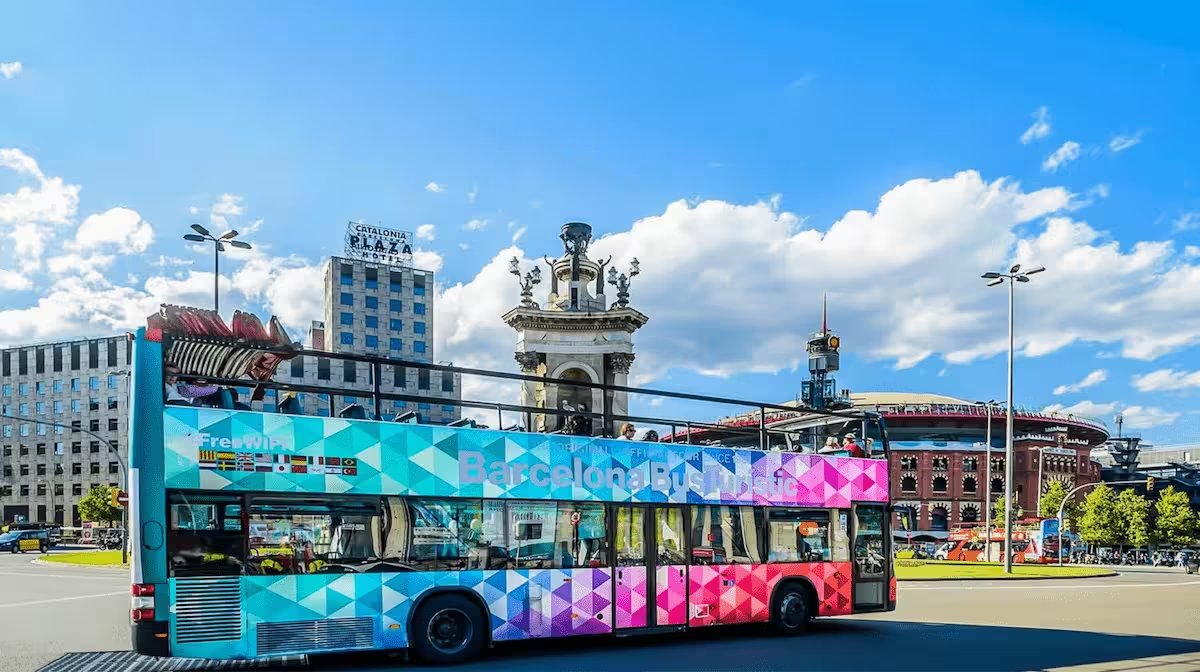
The hop-on hop-off bus is a legitimate Barcelona transport tool, not just a tourist trap. Two routes (red and blue) cover the city. Real experience: We used it for orientation on arrival — you see the major sights in order, get your bearings, then hop off to explore on foot or metro. Worth the cost for first-day navigation.
Routes & Stops
Red Route: 22 stops covering Sagrada Família, Park Güell, Camp Nou, Montjuïc, etc. Duration: 1 hour 20 minutes non-stop. Blue Route: 20 stops covering Gothic Quarter, waterfront, Eixample. Duration: 1 hour non-stop. Frequency: every 15–20 minutes. Hours: 9 AM–8 PM daily (varies seasonally).
Cost & Value
1-day pass: €30–35 (both routes included). 2-day pass: €45–50. Includes hop-on hop-off unlimited rides, audio guide in multiple languages, some discounts at attractions. Real talk: Worth it for day one or two if you want structured orientation. After that, use metro and walking. The audio guide is decent — tells you about each stop — but it’s tourist-level information (things you’ll read in our guides anyway).
Airport Transfers: Getting From BCN to City Center
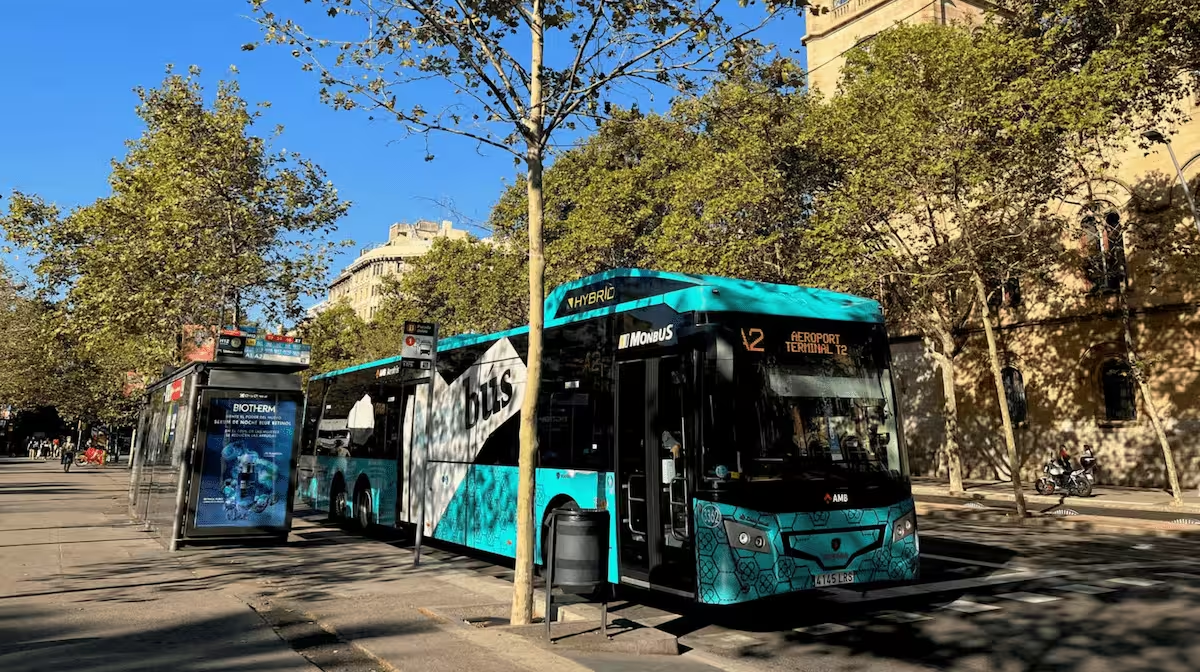
Barcelona-El Prat Airport (BCN) is 12 km southwest of the city. Three main options to city center (15–30 minutes depending on traffic):
| Option | Cost | Time | Best For |
|---|---|---|---|
| Aerobus (airport shuttle) | €6.15 one-way | 25–35 min | Budget travelers, no luggage |
| Renfe Train (R2 line) | €4.60 | 25 min to Sants | Budget, luggage OK, direct to major station |
| Taxi / Uber | €25–35 | 20–30 min | Luggage, tired, direct to hotel |
| Private transfer / hotel shuttle | €40–80+ | Variable | Convenience, specific pickup location |
Details on Each Option
Aerobus: Runs 5:30 AM–1 AM, every 5 minutes. Stops at Plaça de Catalunya and Sants station. No luggage cost. Download the TMB app to buy tickets or get them at terminal. Renfe Train: Same T-Casual pass works (with airport zones). Runs 5:42 AM–11:38 PM, every 20 minutes. Arrives at Sants Estació (metro hub). Gets you to metro system directly. Taxi/Uber: Flat rate roughly €25–35. Direct to your hotel. Luggage loaded. Best if arriving tired.
Walking & Neighborhoods: The Best Transport
Barcelona is best explored on foot. Most neighborhoods are walkable: Gothic Quarter (2–3 km), Eixample (large but grid-based), Gràcia (2 km core), Barceloneta (1–2 km). See our neighborhood guide for walking routes and distances. Walking reveals the city in ways transport can’t — café culture, small plazas, street art, real Barcelona.
Safety: Barcelona is generally safe for walking during the day and evening. Avoid walking alone very late (after midnight). Stay in well-lit, populated areas. Gothic Quarter at 3 AM is different from Gothic Quarter at 3 PM.
Bike Rentals: Option But Not Essential
Barcelona has Bicing (bike-share system), but it’s designed for residents (requires Spanish ID). Tourist bike rentals exist throughout the city (€15–25/day). Real talk: Unless you love cycling, skip it. The metro + walking covers everything you need. If you do rent, stick to flat areas (Barceloneta, Gothic Quarter) — hills in Eixample and Montjuïc are steep.
Passes & Tickets: What to Buy
| Pass | Cost | Coverage | Best For |
|---|---|---|---|
| T-Casual (10 journeys) | €11.35 (city) | Metro + buses, 1 journey = 1 entry | Most tourists, flexible, shareable |
| T-Casual (airport zones) | €12.15 | Includes airport access via Renfe/metro | Airport transfers via metro/train |
| T-Dia (unlimited 1 day) | €8.75 | Metro + buses all day | Heavy transport day, night buses |
| T-Semana (unlimited 7 days) | €54.60 | Metro + buses all week | Week-long stays, daily commuters |
| Single ticket | €2.45 | One metro journey only | Never — always buy T-Casual instead |
What We Recommend
Buy a T-Casual (10 journeys, €11.35) on arrival. This covers most of your metro + bus needs and is shareable with travel companions (one person per journey). If you’re at the airport, buy T-Casual with airport zones (€12.15) so you can use Renfe/metro from the airport directly. No need for unlimited day passes unless you’re taking 5+ journeys in a single day (unlikely).
More Transport & Activities
Looking for tours or transport-based experiences?
Frequently Asked Questions
- What’s the best transport for arriving at the airport?
- Tired with luggage? Uber or taxi (€25–35, direct to hotel). Budget and energized? Aerobus (€6.15) or Renfe train (€4.60) to city center, then metro.
- Do I need a car in Barcelona?
- No. Metro, taxis, and walking cover everything. Only get a car if doing day trips to Costa Brava or Andorra, which is less common.
- Is the metro safe?
- Yes. Keep your backpack in front during crowded times. Avoid very late-night solo travel (after midnight). Day and evening journeys are completely safe.
- How often do metro trains run?
- Every 3–5 minutes peak hours, every 5–10 minutes off-peak, every 10–15 minutes late evening. Frequent enough that you don’t need to check schedules.
- What’s the difference between T-Casual and T-Dia?
- T-Casual (€11.35) = 10 individual journeys, use them over days/weeks. T-Dia (€8.75) = unlimited rides one day only. Use T-Casual for 3–4 day trips; use T-Dia only if taking 5+ journeys in one day.
- Can I use the same T-Casual card with multiple people?
- Yes, but only one person per journey. You tap, pass, another person taps. Not simultaneous. Good for families or groups.
- Is hop-on hop-off bus worth it?
- Yes, for day one to get oriented and see the city layout. After that, use metro. It’s not primary transport, it’s orientation tool.
- What apps do I need?
- TMB (for metro/bus tickets and real-time info) and Google Maps (offline navigation). That’s all.
Transport Strategy: Keep It Simple
Buy a T-Casual (10 journeys, €11.35) on arrival. Use metro for most movement. Walk neighborhoods. Take hop-on hop-off for one day of orientation. Use Uber/taxi when tired or luggage-heavy. Don’t overthink it. Barcelona’s transport is designed for tourists and works well.
For day-by-day itineraries that build in transport logistics, see our 3-day guide or 5-day guide. For neighborhood-specific walking routes, see our neighborhoods guide.