 Skip to content
Catalan food is Mediterranean, shaped by 2,000 years of history, a specific geography, and a philosophy that says: let the ingredient speak. It’s not Spanish food. It’s not French. It’s something with its own identity, and understanding the foundations transforms how you taste it.
The Foundations: What Makes Catalan Food Catalan
Catalan cuisine developed on a specific coast, with access to specific ingredients, and shaped by the people who lived there. It’s not unified like French cuisine, and it’s not defined by a single technique. Instead, it’s a food philosophy built on respect for the ingredient and simplicity in preparation.
Geography as Foundation
Catalonia touches three food worlds: the Mediterranean Sea (seafood), the Pyrenees mountains (cured meats, wild game, dairy), and the inland plains (vegetables, grain, wine). Catalan food pulls from all three. The coast gives seafood and the philosophy of simplicity. The mountains give preservation techniques (jamón, sausages, aged cheeses). The plains give vegetables and bread.
The Philosophy
Catalan cooking asks: what does this ingredient want to be? A good jamón needs only salt and time. A fresh boquerone needs only vinegar. Pa amb tomàquet needs bread, tomato, olive oil, and salt — nothing else. The cook isn’t trying to transform the ingredient; they’re trying to honor it.
Key Ingredients: The Building Blocks
These five ingredients appear in nearly everything. Understanding each one changes how you taste Catalan food.
Olive Oil (Oli)
The foundation. Catalan olive oil comes from specific olive varieties, harvested and pressed in specific ways. It’s not a neutral cooking fat — it has flavor. It’s fruity or peppery or buttery depending on the harvest time and variety. A good Catalan oil costs EUR 8–15 per liter. The oil carries the taste of the land it came from. When you taste jamón with pa amb tomàquet, you’re tasting three things working together: the ham, the bread, and the oil. None overshadows the others.
Jamón Ibérico (Black Iberian Ham)
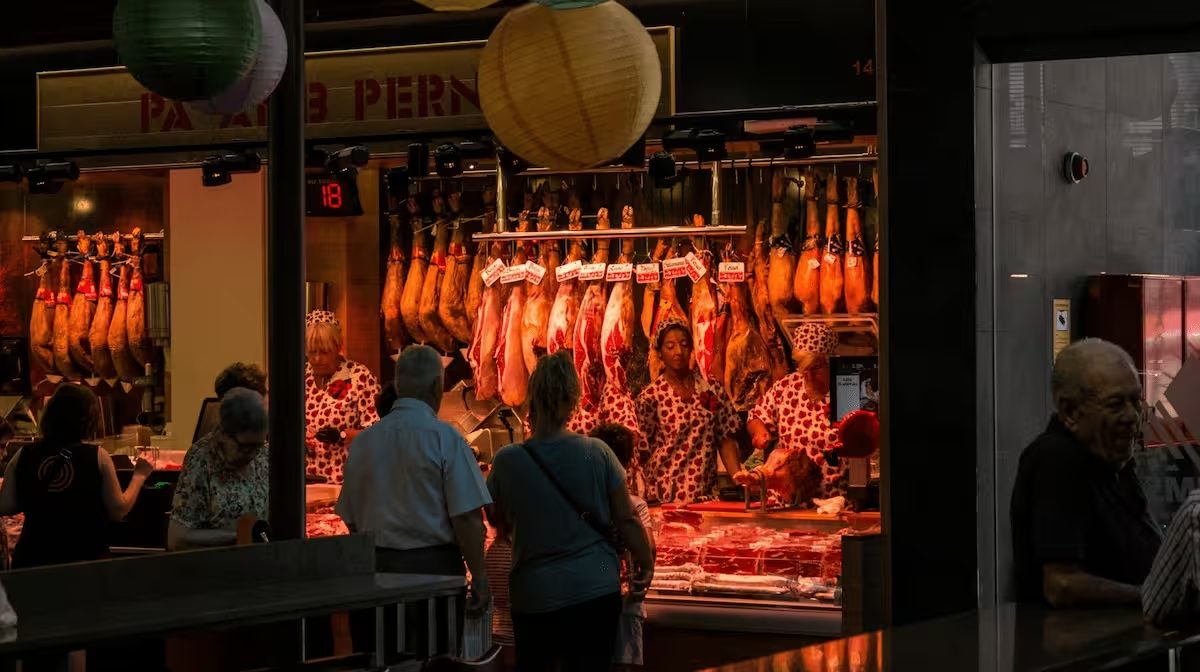
The ingredient that changed everything. Jamón Ibérico comes from black Iberian pigs, raised on acorns in the western Spanish plains. The meat is aged 18 months to several years, developing complexity that white-pig ham (jamón Serrano) never reaches. The fat in Ibérico melts at mouth temperature, releasing flavors: salty, sweet, nutty, mineral. It’s not just food — it’s proof that time and quality of life matter. The pig’s diet (acorns), the altitude where it lived, the drying climate where the ham ages — all of it shows up in the taste.
Seafood (Fresh & Preserved)
From the Mediterranean. Barcelona’s coast gives anchovies, mussels, squid, octopus, and fish. Some are eaten fresh (grilled, fried, minimal seasoning). Others are preserved: boquerones en vinagre (marinated anchovies) are delicate and bright, nothing like the fishy anchovies you might know. Salted cod (bacalao) is dried and rehydrated, used in dishes where its distinct flavor is a feature, not a bug. The preservation techniques developed because refrigeration didn’t exist — now they’re central to the food culture.
Pa (Bread)
More than a carb. Catalan bread is rustic, with an open crumb and a serious crust. Pa amb tomàquet (bread rubbed with tomato and oil) is built on good bread — weak bread falls apart. The bread needs structure to hold the tomato, the oil, and whatever you’re putting on top (jamón, cheese, etc.). A slice of good Catalan bread with just tomato and oil is a complete food, not a side dish.
Salt & Preservation
The technique that built the culture. Before refrigeration, salt was how food survived. Jamón, bacalao, boquerones — they’re all salt preservation. The salt concentrated flavor, transformed texture, created foods that could travel. Now these preserved foods are at the heart of Catalan cuisine not because people have to preserve food, but because the preserved versions are better than the fresh ones.
Cooking Techniques & Philosophy
Frying (Fregit)
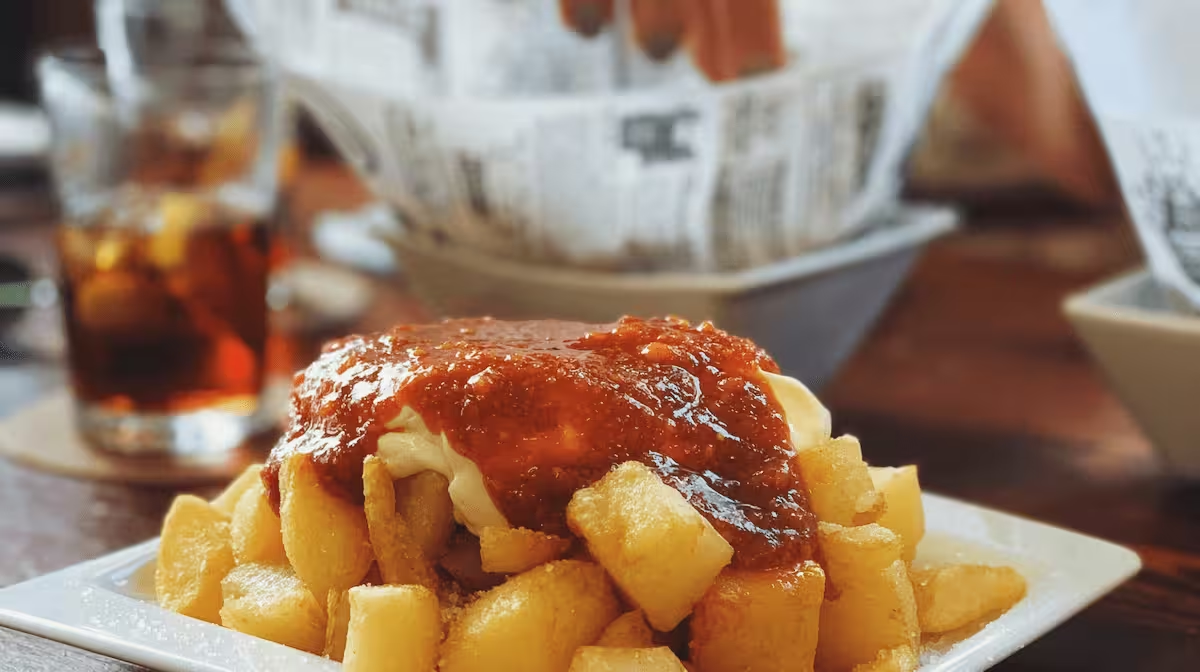
Catalan frying is not American frying. The oil temperature, the coating (if any), the timing — all precise. Patatas bravas are fried in olive oil, not vegetable oil. The potatoes are cut a specific size. The spicy aioli (alioli bravas) is prepared separately and applied carefully. It’s not the fried potato that makes it good — it’s the potato plus the technique plus the sauce. Each element does one thing well.
Raw with Oil (Cru)
Many Catalan dishes are raw or barely cooked. Boquerones are marinated but not cooked. Pa amb tomàquet is raw. Queso de cabra served with quince paste is raw. The philosophy: if the ingredient is good enough, cook it minimally. Let it speak.
Slow Cooking (Estofat)
When slow cooking is used, it’s deliberate. Meat stews (estofats) are braised low and slow, developing deep flavor. The technique is old, developed before modern stoves — cooks would build fires and let the pot sit. Now it’s a choice, used when it serves the ingredient.
Grilling (A la Brasa)
Seafood and meat grilled over open flame, often with just salt and olive oil. The fire creates crust, the interior stays tender. It’s simple technique with high-quality ingredients.
Food History & Cultural Identity
Catalan food isn’t just meals — it’s a marker of identity. For centuries, Catalonia was a separate kingdom, with its own language, laws, and food traditions. Spanish rule suppressed the language but couldn’t suppress the food.
Medieval Roots
Catalan cooking developed in the 1300s–1400s, documented in early recipe books. Dishes like escudella (a rich broth) and calcots (grilled spring onions) date back centuries. The food preserved Catalan identity even when the political/language identity was under threat.
Mediterranean Trade
Barcelona was a major Mediterranean port. Spice trade, olive oil imports, wine from different regions — the port brought ingredients and techniques. Catalan food absorbed Mediterranean influences while maintaining its own character.
Recent Revival
In the 1980s–2000s, chefs like Ferran Adrià (El Bulli) elevated Catalan cuisine to world importance. He didn’t abandon tradition — he asked: what is the essence of this food? Molecular gastronomy was the technique, but the philosophy stayed rooted in Catalan food values.
Dining Customs & Meal Timing
Breakfast (Esmorzar)
Light. Café and a pastry (croissant, sweet bread). Maybe a piece of toast. 7–9 AM. Not a substantial meal.
Mid-Morning (A Mitja Matinada)
Around 11 AM. Workers stop for a café and maybe a tapa. It’s not official but it’s a real eating time.
Lunch (Dinar)
1–3 PM. The main meal of the day. Traditionally, this is when families would gather. Three courses: first course (soup or salad), main course (meat or fish with vegetables), dessert (fruit or something sweet). At work, menu del día offers a fixed price (EUR 10–15) for three courses. Lunch is where serious eating happens.
Afternoon Snack (Berenar)
Around 5–6 PM. Another café, maybe a sandwich or pastry. Modern life has compressed this.
Dinner (Sopar)
9 PM or later. Lighter than lunch. Soup, a light fish or vegetable dish, maybe bread. Dinner is social more than substantial. It’s when people gather, eat slowly, drink wine or vermouth.
Regional Variations Within Catalonia
La Costa (The Coast)
Seafood-focused. Paella, grilled fish, boquerones, mussels. Dishes reflect immediate Mediterranean access.
L’Interior (Inland)
Mountainous. Cured meats, game, dairy products, vegetables from higher altitude. Escudella (a rich stew) is typical — it uses mountain ingredients and slow cooking.
L’Horta (The Plains)
Vegetables, rice, grain. Pan i tomaca (bread and tomato) comes from here. Simple, seasonal vegetables.
Penedès & Priorat (Wine Regions)
Food built around wine. Hearty, rich foods paired with specific wines. The wine isn’t something you add — it’s central to the cuisine.
How to Taste & Appreciate Catalan Food
Slow Down
Catalan food rewards attention. A single slice of jamón Ibérico deserves 30 seconds of your focus. Taste the salt. Taste how the fat melts. Taste the complexity that comes from aging.
Notice the Oil
The olive oil isn’t invisible — it’s an ingredient. Close your eyes and taste a piece of bread with good oil. Notice if it’s fruity, peppery, buttery. This is intentional.
Understand the Ratio
Pa amb tomàquet isn’t bread with tomato on top — it’s bread, tomato, and oil in specific proportions working together. One element shouldn’t dominate. If the bread is too sweet, it throws off the balance. If the oil is too heavy, it overwhelms the tomato.
Ask Questions
When you eat something good, ask where it came from. Which village? Which producer? How long was it aged? The story adds flavor.
Taste Multiple Times
Try the same dish at different places, at different times of year. The variation teaches you what’s intentional and what’s universal about the food.
Food Experiences & Learning
Looking to deepen your food knowledge with classes, tastings, or experiences?
Frequently Asked Questions
- What’s the difference between Catalan and Spanish food?
- Catalan food is Mediterranean, built on olive oil and seafood. Spanish food varies by region — it’s not one thing. Catalan cuisine has its own history, ingredients, and philosophy distinct from the Spanish mainland.
- Is jamón Ibérico worth the cost?
- If you want to understand the ingredient, yes. The quality of life the pig had, the acorns it ate, the aging process — all show up in the taste. Try it once. You’ll taste the difference.
- Why is pa amb tomàquet so simple?
- Simplicity is the philosophy. If each ingredient is excellent, the combination of three excellent ingredients is better than a complicated dish with mediocre execution. It’s confidence in quality.
- What’s the difference between Catalan oil and other olive oils?
- Catalan oils come from specific varietals grown on specific soils. The flavor profile is distinctly fruity or peppery or buttery depending on harvest time. It’s not neutral — it’s a featured ingredient.
- Is boquerones the same as anchovies?
- Boquerones are fresh anchovies, marinated in vinegar and salt. They’re delicate and bright, not fishy. Canned anchovies (often from other regions) are processed differently and have a stronger, fishier taste.
- Why do Catalan meals happen at specific times?
- It’s historical rhythm, now cultural. Lunch at 1–3 PM was when workers took a break. Dinner at 9 PM was when the day’s work ended. The timing is social — it’s when people gather. It’s not about hunger, it’s about ritual.
- Can I learn to cook Catalan food at home?
- Yes, but it depends on accessing good ingredients. Good olive oil, good jamón, good bread — these are different from supermarket versions. Focus on simple dishes (pa amb tomàquet, basic pasta with tomato and oil) before attempting complex ones.
- What should I eat if I want to understand Catalan food?
- Start with jamón Ibérico and pa amb tomàquet. Then try boquerones en vinagre. Then patatas bravas. These four foods show you the foundations: preserved meat, bread/oil, fresh seafood, and technique. Everything else builds from here.
Understanding Barcelona Through Food
Catalan food isn’t something you taste passively. It rewards curiosity — asking why things are made the way they are, tasting slowly, understanding the history behind the ingredients. The jamón you eat in Barcelona carries 18 months of aging. The oil carries the character of a specific terroir. The bread carries the baker’s technique.
When you understand the foundations, every meal becomes more meaningful.
Ready to eat? See our neighborhoods guide for where to eat in each area, or our cruise port eating guide for quick options on a port day.
Pingback: Signature Dishes in Barcelona: A Food Lover's Guide