 Skip to content
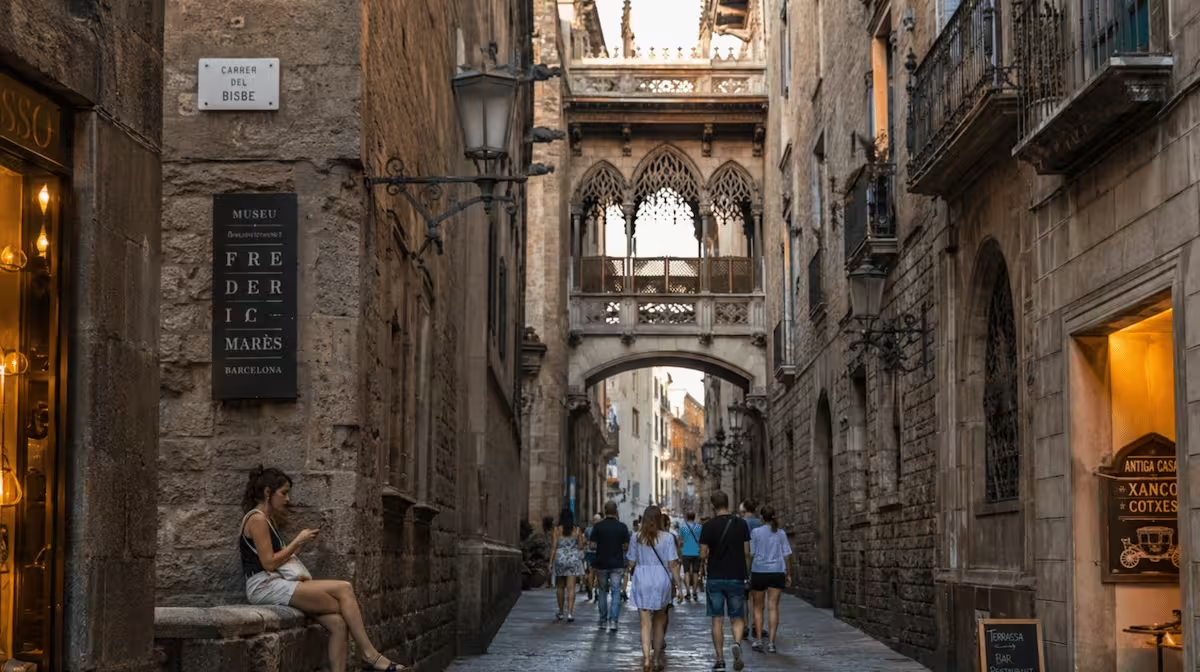
The Gothic Quarter is where Barcelona actually lives — not the cruise-ship version, but the neighbourhood locals navigate every day. Narrow medieval streets, hidden plazas, tapas bars that haven’t changed in decades, and a Cathedral that’s genuinely stunning without feeling like a tourist checkpoint. A self-guided gothic quarter walking loop lets you explore Barcelona’s medieval streets, hidden plazas, and neighbourhood food on your own pace, for free.
But it’s not frictionless. The streets are narrow enough that you get turned around, the pickpockets know the routes you’ll take, and if you don’t know where you’re going you’ll end up at the same plaza three times. So this guide maps the actual loop, tells you what you’re trading for going solo, and shows you where the food and neighbourhood magic live — not just the Cathedral steps.
Is the Gothic Quarter self-guided loop right for you?
Why do it self-guided
- Free. No tour cost.
- You set the pace.
- Wandering reveals side streets guides skip.
- Works for any port duration.
- Feels like a local’s morning.
What you’re trading
- You’ll get turned around in narrow streets.
- No one explaining the history.
- Pickpockets actively work these routes.
- Cathedral queue can be substantial.
- On a tight port day, getting lost eats time.
Verdict: If you’ve got 2+ hours and enjoy finding your own way, this is worth doing solo. If your port is short, a guided food tour might be smarter.
Not sure which way to go? A guided walking tour is the middle ground — a local guide handles navigation and explains the history, you still get the neighbourhood feeling and don’t have to worry about getting lost or timing.
See Gothic Quarter walking tours →The walking loop (start to finish)
This loop starts at the Cathedral and spirals through the quarters around it — roughly 2–2.5 hours if you’re not stopping much. The route hits all highlights and ends back where you started.
Key stops and what you’ll see
The geographic anchor. The plaza is beautiful, especially morning light. Cathedral entry costs about EUR 5 (skip on short stops — the outside is the real structure). Pros: you know where you are. Cons: queues, cruise traffic.
The iconic narrow street with the connecting bridge overhead. Medieval, atmospheric, exactly what tourists imagine. Pros: genuinely stunning. Cons: narrow enough to step aside for bikes, it’s a queue itself mid-morning.
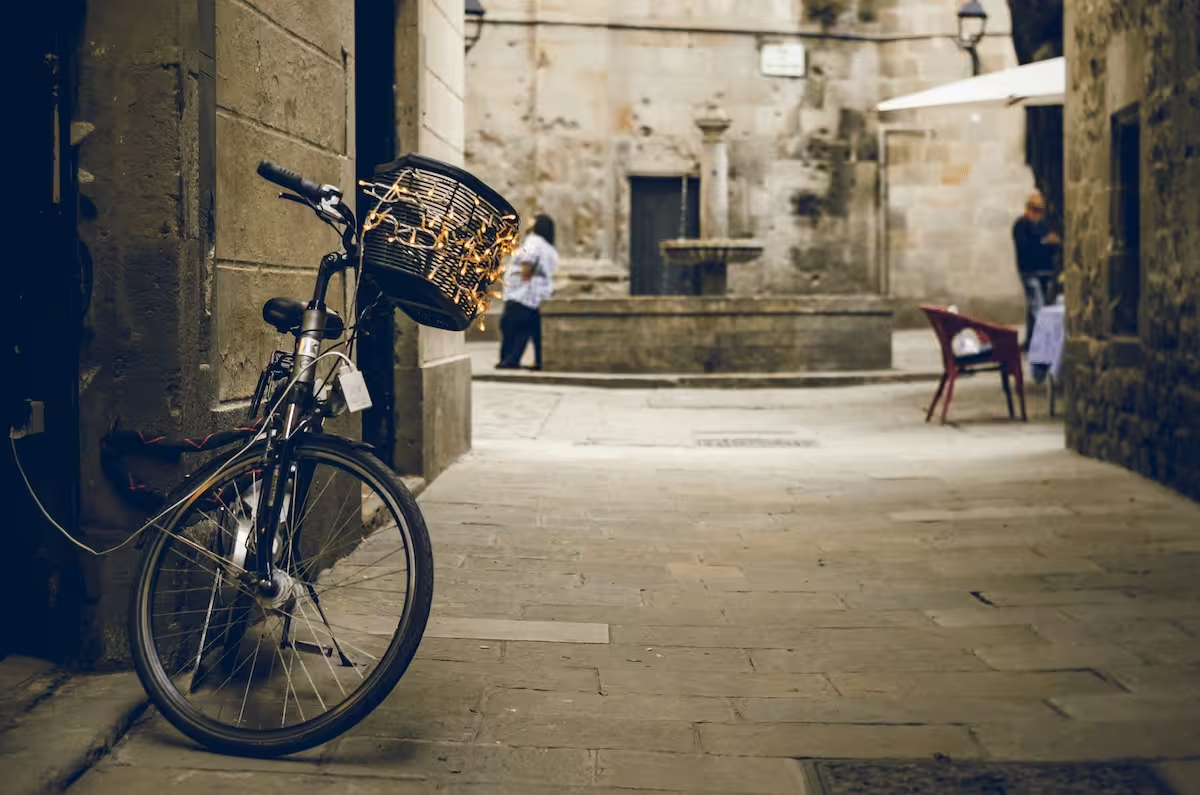
This arcaded plaza opens up after tight streets. It’s a real neighbourhood square where locals actually sit. Pros: pleasant. Cons: restaurants are tourist-priced; pick a cafe on a side street.
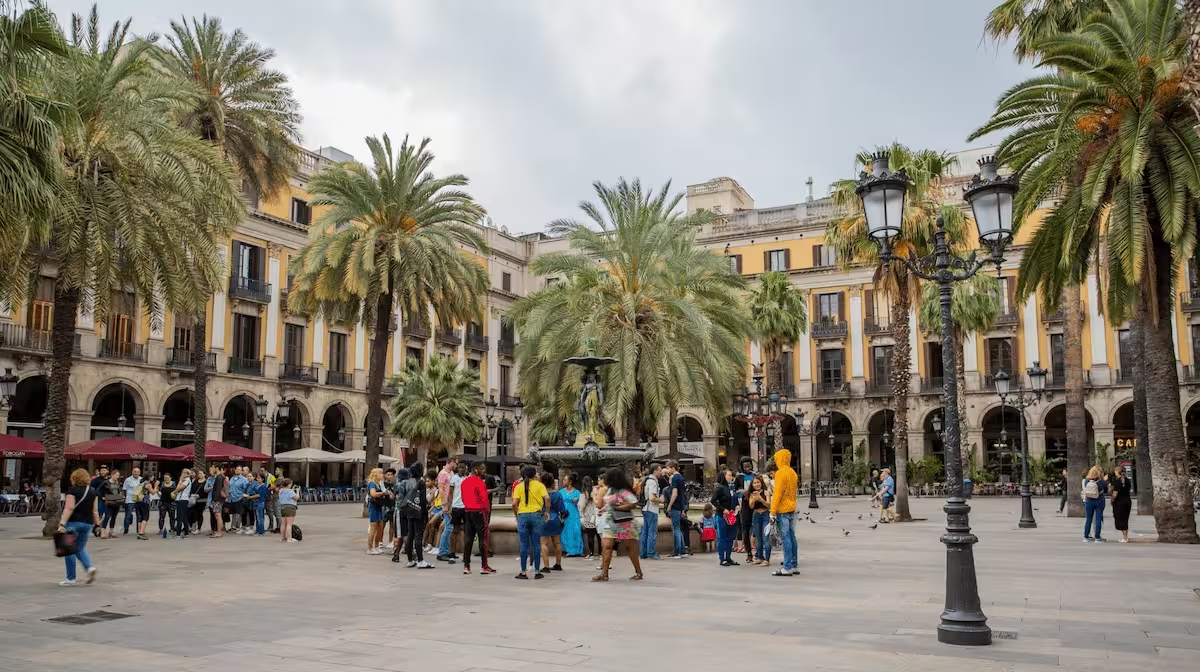
The famous boulevard is crowded and full of street performers and pickpockets. Pros: if you’ve never seen it. Cons: cruise-tour territory. I’d skip and loop through side streets instead.
Carrer de la Dagueria, Carrer de Santa Lucia, lanes around the Cathedral — this is where you get lost and find tiny shops and locals having coffee. Pros: genuinely Barcelona. Cons: you will get turned around.
Where to eat (and the food tour option)
Food is the whole point. Tapas bars, vermouth spots, markets. The street version: stop at a bar, order a tapa and a drink for EUR 3–5, move on. The structured version: a guided food tour with local explanations and market access.
Self-guided: Pick a narrow street, walk into a bar that looks busy with locals, order a tapa and vermouth. Pro: cheaper, authentic. Con: you’re picking all choices.
Guided tour: You get a local, skip queues, try quality spots, timed return. It’s the middle ground — more structure than free-wandering.

Real tips for not getting lost
Staying aware in crowded spaces
Millions of tourists walk the Gothic Quarter daily and have a genuinely good time. The neighbourhood is lively because of the crowds, the narrow streets, and the energy — that’s also why pickpockets show up, like they do in any major European city. It’s manageable and honestly part of the city experience.
The reality: locals know to be aware in crowded tourist spots, the same way you’d be alert on a busy London street or in the Paris Metro. It’s not paranoia, it’s just paying attention. A moment of switched-on awareness is all it takes, and you’ll actually enjoy the neighbourhood *more* because you’re present instead of distracted.
If something does happen, police are around the Cathedral and the main squares. Report to your cruise line’s guest services for insurance purposes, but realistically most thefts are small-scale phone or wallet losses, not recoverable. The bigger point: awareness + intention means the Gothic Quarter gives you exactly what you came for — the narrow streets, the food, the neighbourhood feeling — and you leave with your stuff and your experience intact.
More Barcelona from your cruise
FAQ
- How long does the loop take?
- 2–2.5 hours if moving steadily. Add time if eating, visiting the Cathedral, or lingering in plazas. On short notice, 45 minutes (Cathedral + Carrer del Bisbe + one side street) still works.
- Is it safe?
- Safe for violent crime, but pickpockets work crowds. Keep bag on front, phone hidden, don’t carry valuables you don’t need. Awareness is your best protection.
- Do you need a guide?
- No. The area is small, you can’t get truly lost. A guide adds context and confidence, but the self-guided version is how locals experience it.
- Tight port schedule?
- Yes — skip the Cathedral queue, just do the streets. 45 minutes gives the essence. If under 2 hours, pair with something else nearby.
- Is a food tour worth it?
- Depends on comfort with navigation. Self-guided is free and authentic. A tour adds structure, skips queues, and explains what you’re eating.
- Where is it relative to the cruise port?
- 10-minute walk from the Columbus Monument (where T3 Blue Bus drops you). Reachable by metro, taxi, or foot down Las Ramblas.