 Skip to content
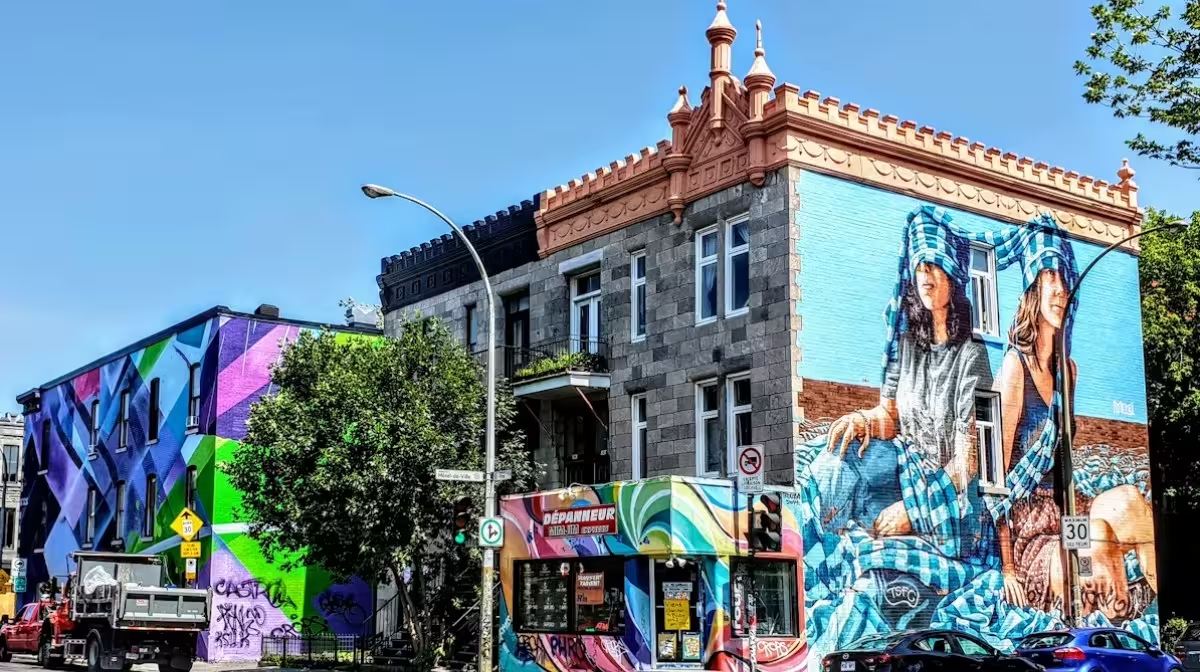
A complete Montreal travel guide to Canada’s most European city—bilingual, creative, historically layered, with a food scene that punches above its weight and neighborhoods that each have distinct character. Montreal doesn’t feel like a typical North American city, and that’s exactly why it’s worth exploring.
Overview: What Makes Montreal Unique
Montreal doesn’t feel like a typical North American city. Walk through Old Montreal and you’re in 18th-century cobblestone streets. Walk through the Plateau and you’re in a neighborhood of independent bookstores, vintage shops, and creative energy. The city layers its history and culture visibly—you can literally walk through different eras and communities block by block.
The dominant European influence is French, but Montreal’s character comes from its complex history: French colonial heritage, English commercial influence, massive immigration waves (Italian, Jewish, Greek, Portuguese, Vietnamese). Each wave left its neighborhood and food culture intact. You can eat poutine, bagels, pasta, and Vietnamese food within a 10-minute walk of each other.
Montreal also feels more political and cultural than most North American cities. Street art is everywhere. Independent theaters show experimental films. Bookstores are taken seriously. The city invests in culture. This creates an atmosphere that’s thoughtful and creative, not just commercial.
The core experience: Wandering neighborhoods, eating really well, experiencing a distinct culture that’s neither fully American nor fully European, but its own thing.
Neighborhoods: Where to Explore
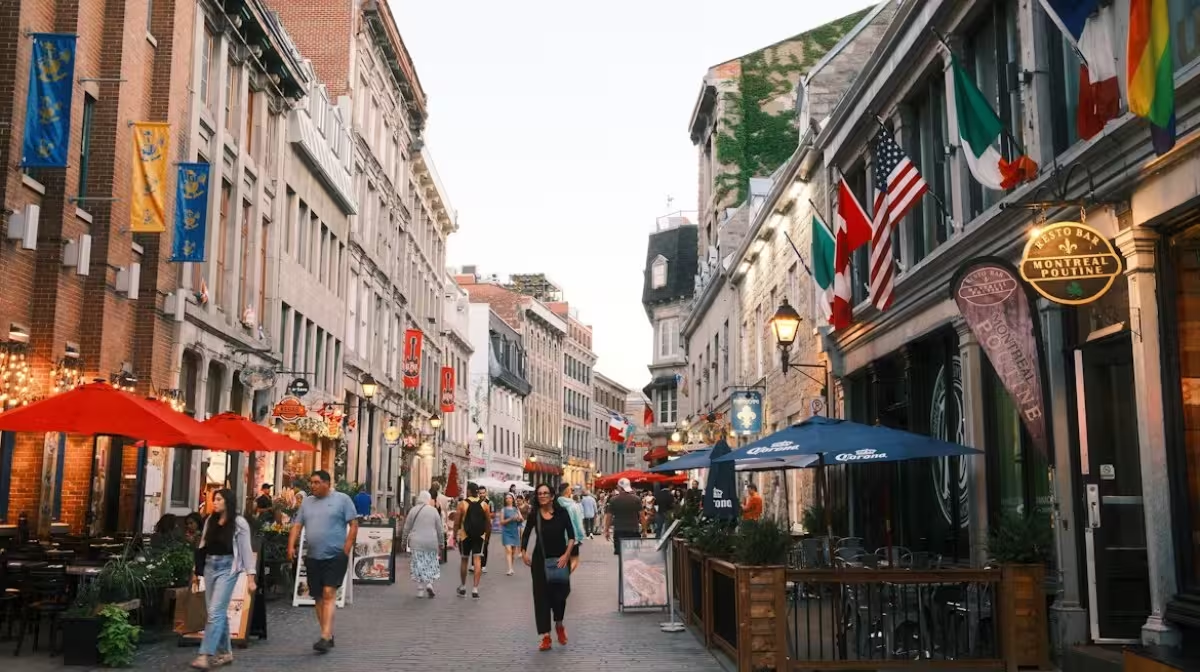
Old Montreal (Vieux-Montréal)
Cobblestone streets, historic buildings, tourist energy, but genuine history underneath. The architecture is genuinely beautiful—18th and 19th century buildings along the St. Lawrence River. Boutiques, galleries, restaurants catering to tourists but some gems mixed in. Basilica-Cathédrale Marie-Reine-du-Monde is stunning architecture. Start here if you’re visiting for the first time, but don’t spend all day—it’s a 2-3 hour neighborhood.
Downtown (Centre-Ville)
Modern Montreal. Skyscrapers, shopping, restaurants, hotels. Less character than other neighborhoods but efficient for logistics. Museums are here (Musée des Beaux-Arts, McCord Museum). The underground city (RÉSO—underground network connecting buildings) is uniquely Montreal. In winter, you can shop and move around without going outside. Less atmospheric but practical.
Plateau Mont-Royal (The Plateau)
This is the Montreal that creative people love. Tree-lined residential streets with Victorian and art deco buildings. Independent bookstores (Librairie des Demi-Civilisations, Librairie Drawn & Quarterly), vintage shops, craft breweries, live music venues. Cafés where people sit for hours. Graffiti and street art integrated into the neighborhood character. The neighborhood has genuine local energy, not tourist energy. Boulevard Saint-Laurent (Main Street of Montreal) runs through it—the dividing line between French and English Montreal historically, now a creative corridor.
Mile End / Little Italy
North of the Plateau. Even more bohemian, artsy, less touristy. Bagel shops (St-Viateur Bagel, Fairmount Bagel—Montreal’s answer to New York bagels, slightly different style). Italian restaurants and shops mixed with young artists. The neighborhood has an intellectual, DIY energy. Great for slow wandering and discovering unexpected places.
Griffintown (Southwest Montreal)
Gentrifying neighborhood with industrial heritage—converted warehouses, new restaurants, galleries, street art. Less established than the Plateau but more authentic right now (less curated for tourists). Growing food scene. Good for experiencing Montreal’s evolution.
Outremont (Upper Westmount)
Upscale residential, fewer tourists, tree-lined streets, good restaurants and cafés. Less Instagram-worthy than the Plateau but more authentically Montreal. Good neighborhood for living like a local.
Food Culture & Dining Scene
Montreal has real food culture, not just good restaurants. There are specific Montreal foods with history: poutine (fries, gravy, cheese curds), bagels (Montreal-style—boiled in honey water, slightly sweeter than NY), tourtière (meat pie), smoked meat (pastrami-adjacent but Montreal’s own thing), steamies (hot dogs). These aren’t trendy—they’re genuine local food.
The restaurant scene reflects immigration waves. You have excellent French restaurants (fine dining level), Italian in Little Italy, Portuguese in Little Portugal, Vietnamese, Greek, Indian, Chinese. The food scene is democratic—casual and upscale exist side by side. You can eat world-class food or street food, all authentic.
Key food experiences:
Things to Do & Attractions
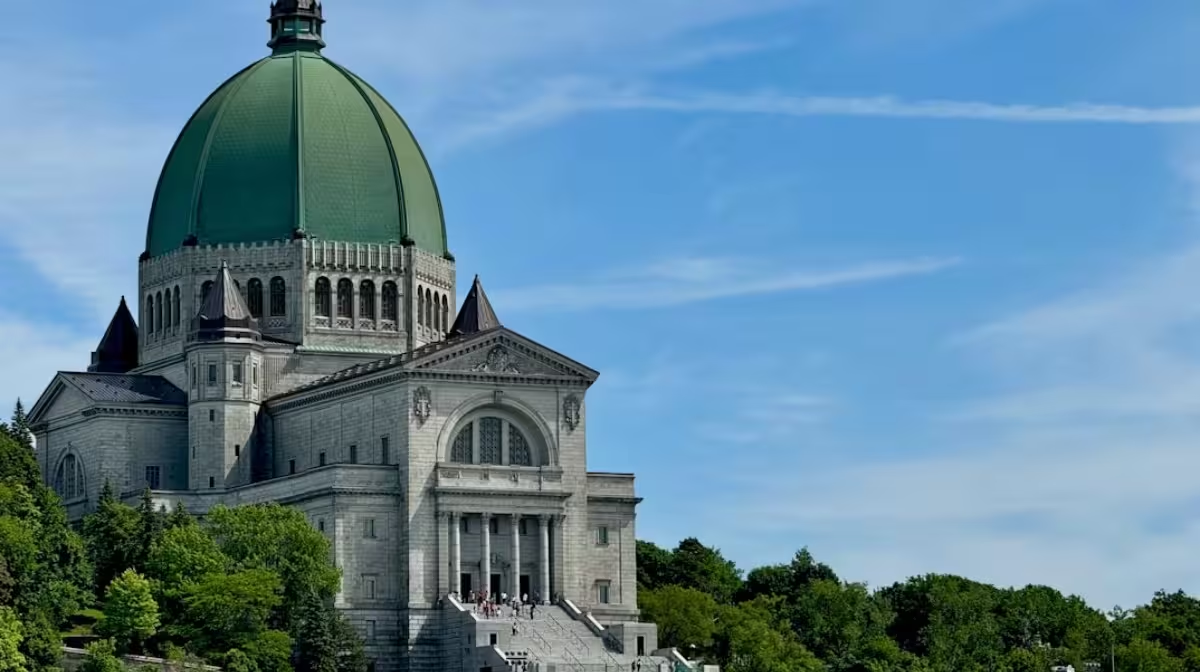
Basilica-Cathédrale Marie-Reine-du-Monde
The cathedral is stunning—architecture and interior detail. Free entry (donation suggested). Go early morning or late afternoon to avoid crowds. Takes 30–45 minutes to walk through and absorb.
Saint-Jean-Baptiste Church (Église Saint-Jean-Baptiste)
Smaller and less touristy than the Basilica but genuinely beautiful. Very Quebec cultural significance. Free. Neighborhood feel.
Musée des Beaux-Arts (Museum of Fine Arts)
Large museum with strong contemporary and historical collections. The building itself spans multiple city blocks and feels integrated into the neighborhood. Plan 2–3 hours depending on what you want to see.
McCord Museum
Canadian history and photography focused. Smaller than the Beaux-Arts but feels more curated. Good for understanding Quebec and Canada’s story. 1–2 hours.
Mount Royal (Parc du Mont-Royal)
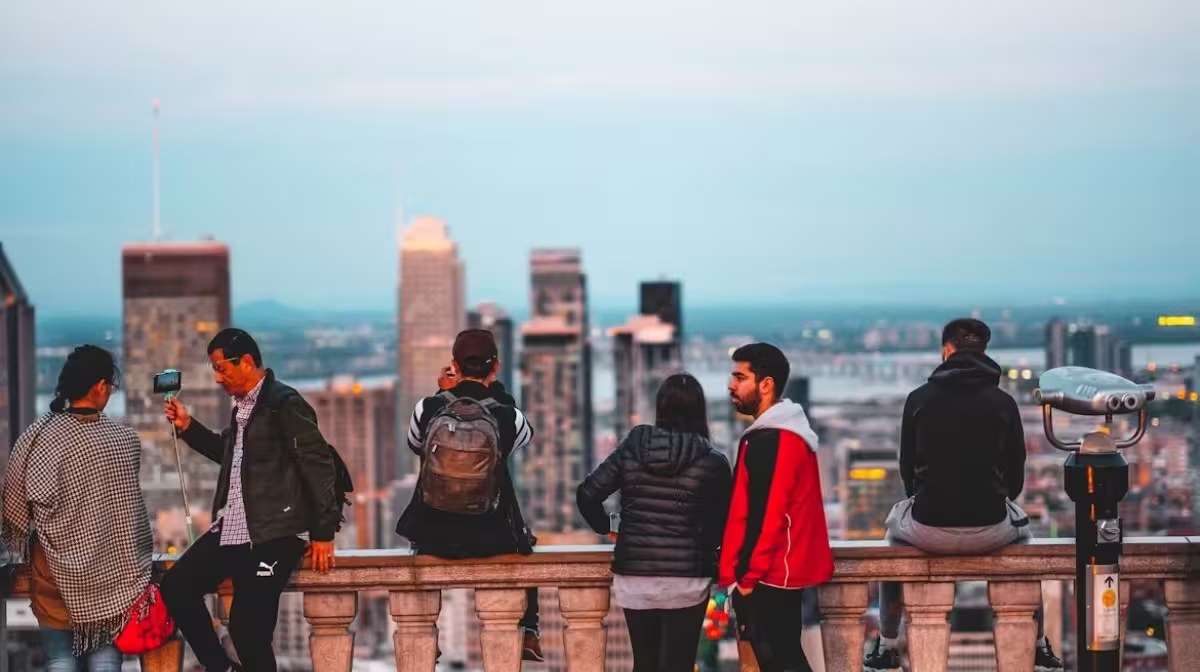
Central park, similar concept to Central Park in NYC but smaller and different vibe. You can climb to the top for city views. Walking trails. Very popular with locals. Free entry. The lookout point has the city spread below—good photo spot and perspective point.
St. Lawrence Street & Neighborhood Walks
Not an attraction per se, but the best thing to do in Montreal is walk neighborhoods. Boulevard Saint-Laurent, the Plateau side streets, Mile End—just wander. Look at architecture. Stop at cafés. Let yourself get lost. This is how you experience Montreal.
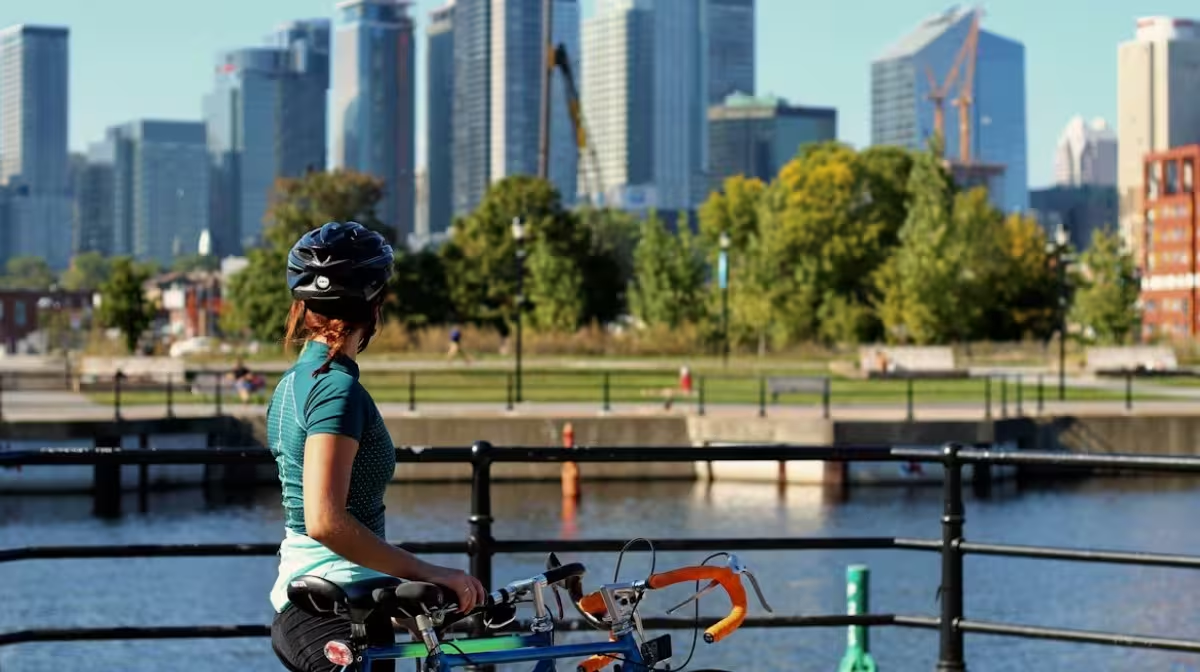
Getting Around: Transportation
Montreal has an excellent public transit system (STM—Société de transport de Montréal). The Metro is fast, efficient, and clean. Buses fill in gaps. You don’t need a car downtown.
Where to Stay
Honest recommendation: Stay in The Plateau. It’s the heart of Montreal’s creative culture. The neighborhood has character, walkable streets, restaurants, cafés, bookstores. You’ll experience the city as people actually live in it, not as a tourist. Old Montreal is touristy but if you want historic architecture and central location, it works.
Recommended Hotels by Neighborhood
The Plateau (Best Neighborhood Value): Browse boutique hotels & mid-range options in The Plateau — tree-lined streets, independent cafés, bookstores, local restaurants. Stay where Montrealers actually live.
Old Montreal (Historic & Central): Find hotels in Old Montreal — cobblestone streets, historic architecture, touristy but genuine. Good if you want central location and visual atmosphere.
Mile End (Artistic & Local): Search Mile End accommodations — bohemian neighborhood, bagel shops, art galleries, DIY energy. More authentic than Plateau, less touristy than Old Montreal.
Downtown (Practical & Commercial): Browse Downtown Montreal hotels — efficient for logistics, major hotels, business district. Less character but practical if you need a specific hotel chain.
When to Visit: Seasons
Summer (June–August)
Warm, sunny, perfect weather for walking neighborhoods. Street festivals constantly. Crowded with tourists. Hotels pricier. Best time for outdoor activities.
Fall (September–October)
Beautiful weather, less crowded than summer, clear days. The city is returning to normal after summer tourism. Great for visiting.
Winter (November–February)
Cold and snowy. Many things indoors (museums, galleries, restaurants). But Montreal’s winter festival season is excellent (Igloofest, Winter Festival). The city has winter infrastructure (indoor networks, heated buildings). Fewer tourists. Lower prices. Atmospheric in a different way.
Spring (March–May)
Unpredictable weather (can be cold or warm). City awakening after winter. Parks and streets reopening. Less crowded than summer.
Practical Information
The Bottom Line
Montreal rewards slow exploration. It’s not as iconic as New York or as predictable as many North American cities. It has its own rhythm, language, food culture, and artistic energy. The best parts of Montreal aren’t attractions you check off—they’re neighborhoods you wander, cafés where you sit for an hour, conversations with locals, and food that tastes like nowhere else.
Come for the history and architecture. Stay for the people, the food, and the feeling that you’ve found a place that’s genuinely different from everywhere else in North America.