 Skip to content
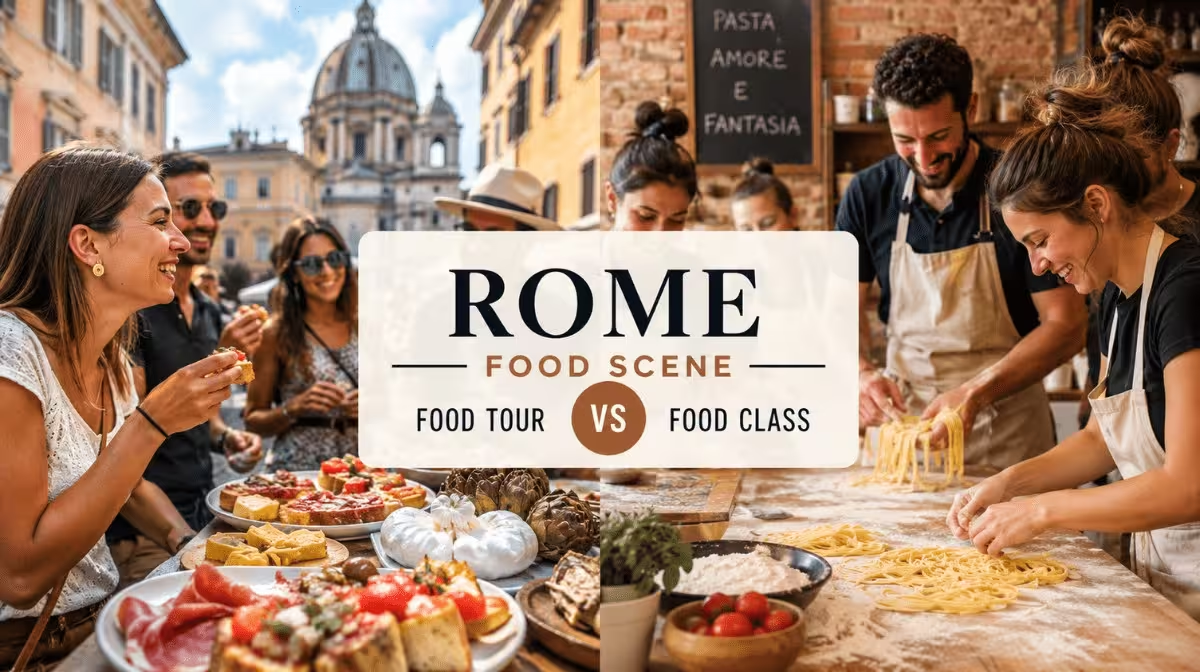
Rome food tours come in two genuinely different formats, and the choice between them matters more than most people realise when they are booking. The street food walking tour takes you through the city’s oldest neighbourhoods — Trastevere, Campo de’ Fiori — stopping at market stalls, hole-in-the-wall trattorie, and the kind of places that do not show up on any list. The cooking class teaches you to make pasta and tiramisu from scratch in a professional kitchen, with wine, and you leave knowing how to recreate Roman food at home. Both are worth doing. Neither is a substitute for the other. This guide covers both, explains who each suits, and gives you everything you need to book the right one — or both — for your time in Rome.
Affiliate disclosure: This post contains affiliate links. We may earn a small commission if you book through our links, at no extra cost to you.
Contents
Rome Food Tours — Quick Comparison
| Tour | Duration | Format | Best For | Price | Book |
|---|---|---|---|---|---|
| Trastevere Street Food Walk | 3 hours | Walking tour + tastings | Neighbourhood immersion, variety | ~€75 | GetYourGuide |
| Pasta & Tiramisu Class | 3 hours | Hands-on cooking class | Skills, wine, something to take home | ~€85 | GetYourGuide |
Which One Should You Book?
The question on that Facebook group — street food tour vs restaurant-focused tour — is actually slightly the wrong framing. The real question is: do you want to experience Rome’s food in its natural context, moving through the city, eating what the city eats? Or do you want to understand how Roman food is made, slow down, and leave with a skill?
The walking tour is about the city as much as the food. You move through Trastevere and Campo de’ Fiori — two of the most distinctive and historically layered neighbourhoods in Rome — stopping at places your guide knows and you would not find without them. The food is the vehicle; the neighbourhood is the destination.
The cooking class is about the food itself. You are in a kitchen near the Vatican, making fresh pasta from scratch with an instructor who takes the technique seriously, drinking good wine, eating what you have made. At the end you know how to make cacio e pepe at home. The city is outside; the experience is in the room.
Trastevere Street Food Walk
- You want to explore a neighbourhood, not just eat
- You prefer variety — multiple stops, multiple dishes
- You are visiting Rome for the first time
- You want to know where the locals actually eat
- You are travelling with a mixed group
Pasta & Tiramisu Class
- You want to learn a skill, not just eat
- You are a couple looking for an experience together
- You want wine included and a relaxed pace
- You are returning to Rome and have seen the neighbourhoods
- You want something to recreate at home
Trastevere and Campo de’ Fiori Street Food Walking Tour
Trastevere is the neighbourhood that Rome keeps for itself. It sits across the Tiber from the historic centre — trastevere literally means “across the Tiber” — and has been working-class, creative, and stubbornly local for most of its history. The medieval lanes are narrow, the buildings are genuinely old rather than restored to look old, and the food scene is rooted in the Roman tradition rather than adapted for tourists. Campo de’ Fiori, the open-air market square a short walk across the river, is where Romans have been buying produce since the 16th century. The square is also where Giordano Bruno was burned at the stake in 1600, which gives a certain weight to the daily fruit and vegetable stalls.
The tour threads through both neighbourhoods stopping at street food vendors, bakeries, and small producers that the guide knows personally. Tastings typically include supplì (deep-fried rice balls stuffed with tomato sauce and mozzarella), pizza al taglio (Rome’s signature square-cut pizza by the slice), artisanal gelato from a producer who makes it properly rather than from a mix, local cured meats and cheese, and at least one wine stop. The guide covers the neighbourhood history at each stop — you leave knowing both what the food is and why it exists here rather than elsewhere.
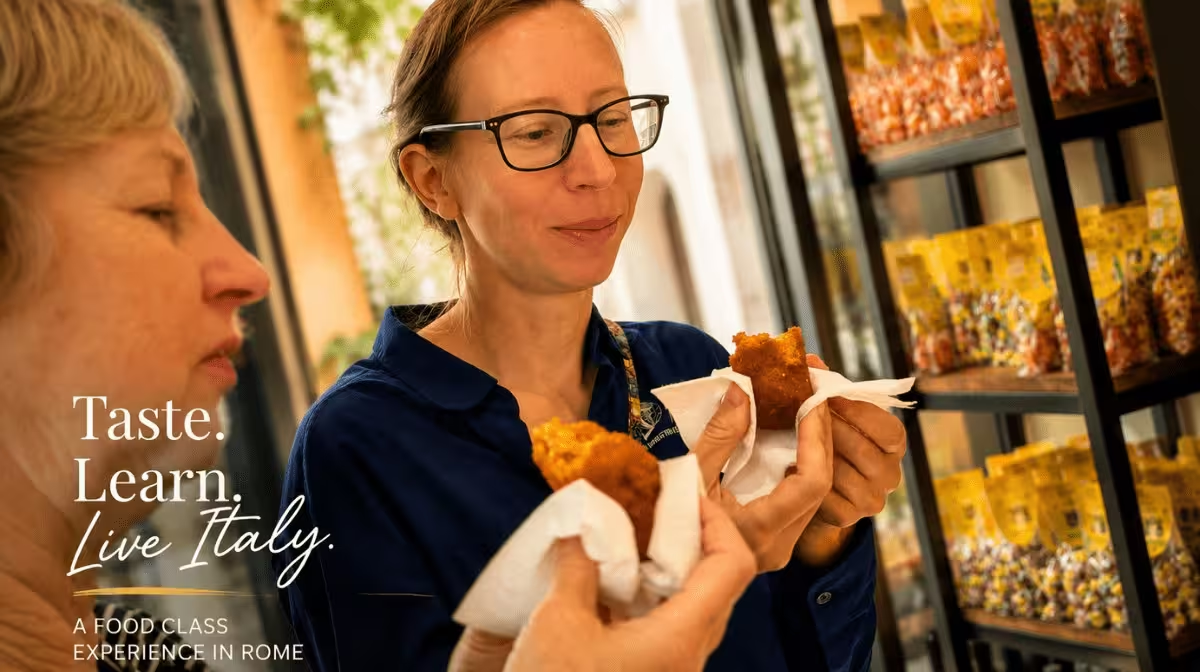
Supplì fresh from the fryer on Trastevere’s cobblestones — the defining stop on the walking tour.
The small group format — typically eight to twelve people — means the guide can make introductions at each stop and take the conversation wherever the group’s interests run. Reviews consistently highlight the quality of the guide and the authenticity of the stops over the food quantity, which is the right emphasis. This is not a tasting circuit; it is a neighbourhood walk that happens to involve a lot of eating.
Rome: Pasta and Tiramisu Class with Fine Wine near the Vatican
The cooking class near the Vatican takes a completely different approach to Roman food — instead of moving through the city eating, you stay in a professional kitchen and make it. The session covers fresh pasta (typically tonnarelli or rigatoni, depending on the day and the instructor) from mixing the dough through to the finished sauce, followed by tiramisu — the dessert that Rome claims as its own, though Veneto would argue the point. Throughout, the instructor explains not just the technique but the reasoning behind it: why the egg ratio matters for pasta, why the mascarpone temperature affects the tiramisu, how the same dish varies by quarter across Rome.
Fine wine is included throughout, which changes the pace considerably from a daytime cooking course. This is an evening experience — you cook together, eat what you made, drink wine, and leave knowing something you did not know before. The Vatican setting is convenient for visitors staying in the Prati neighbourhood or finishing a Vatican visit earlier in the day.
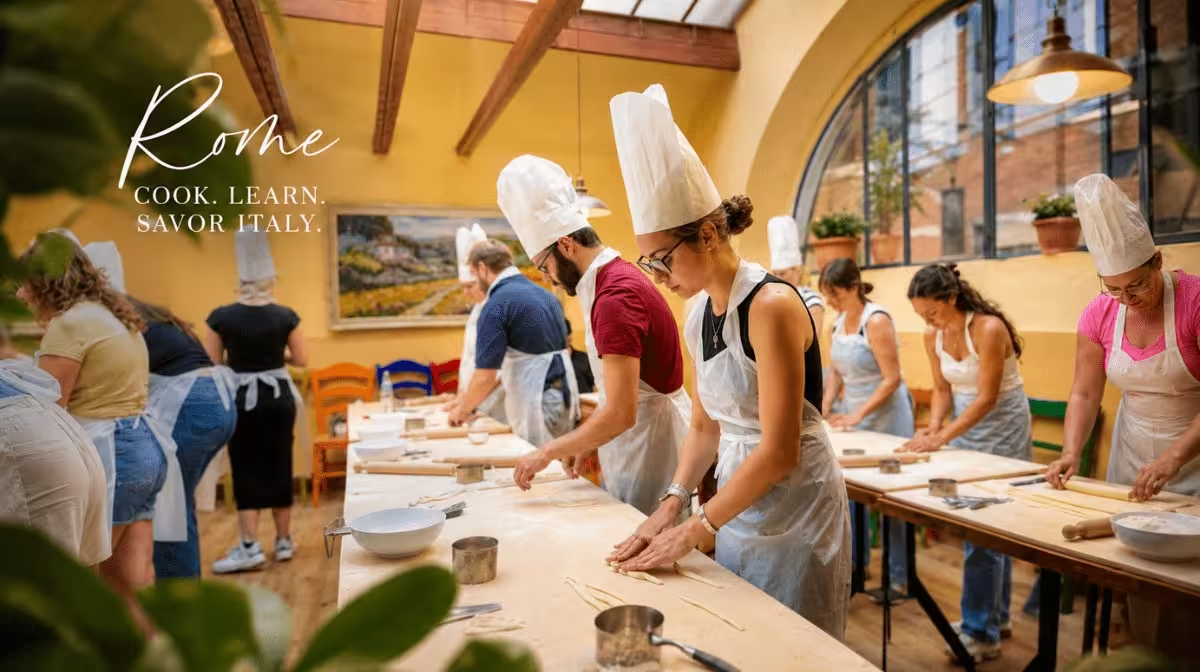
The pasta and tiramisu class near the Vatican — three hours, wine included, and something to recreate at home.
The class accommodates all skill levels — the instructions are clear enough for complete beginners and the instructor calibrates the pace to the group. Particularly good for couples: making pasta together with wine in a Roman kitchen is the kind of evening that does not need a restaurant recommendation to compete with. The small group size (typically eight to ten) means you get actual attention from the instructor rather than watching someone demonstrate from a distance.
Rome’s Food Culture
Roman food is not Italian food in the generic sense. It is specifically, stubbornly Roman — a kitchen shaped by poverty, geography, and 2,000 years of habit. The cucina povera tradition — literally “poor cooking” — took the cheapest cuts, the leftover ingredients, the offal that wealthier kitchens discarded, and turned them into a cuisine that is now considered one of the finest in the world. Coda alla vaccinara (oxtail in tomato sauce), trippa alla romana (tripe), and rigatoni con la pajata (pasta with veal intestines) are not dishes that survived because they were fashionable — they survived because they were honest about what they were.
The four canonical Roman pasta dishes — cacio e pepe, carbonara, amatriciana, and gricia — are built on this same economy. Few ingredients, extreme technique, no shortcuts. The quality of the pecorino romano, the freshness of the guanciale, the precision of the pasta water — every detail is load-bearing. A good Roman trattoria makes carbonara the same way it was made in 1950. A bad one adds cream and calls it authentic.
Understanding this context — which the walking tour gives you through the streets and the cooking class gives you through the technique — is what separates a memorable food experience in Rome from a series of meals that could have happened anywhere.
The EssentialsWhat to Eat in Rome Beyond the Tours
The Four Pastas
Cacio e pepe is the most technically demanding — just pecorino romano, black pepper, and pasta water, emulsified into a sauce that can break if the temperature is wrong. Carbonara uses guanciale (cured pork cheek), egg yolk, and pecorino — never cream, despite what every tourist menu in the city will try to tell you. Amatriciana adds tomato and chilli to the guanciale and pecorino base. Gricia is amatriciana without the tomato — the oldest of the four and the one most Romans eat most often.
Street Food
Supplì are the defining Roman street food — deep-fried risotto balls stuffed with tomato sauce and a stretchy core of mozzarella that pulls when you bite through. They are sold at forno (bakeries) and dedicated friggitorie (frying shops) throughout the city. Pizza al taglio — sold by weight, cut with scissors, eaten standing up — is the working lunch of Rome and enormously variable in quality. The best versions have a long-fermented dough that is light despite its thickness. Gelato consumed with a brioche rather than a cone is the Roman way; the brioche acts as a vessel and gets progressively soggier and better as you eat it.
Aperitivo
The Roman aperitivo hour — roughly 6pm to 8pm — is less structured than the Milanese version but more embedded in daily life. A spritz or a Negroni, a plate of olives and cured meats, standing at a bar or sitting on a cobblestone terrace. Trastevere and the Pigneto neighbourhood do this best. It is not a meal; it is the pause between the afternoon and the evening that makes the evening make sense.
Before You BookBooking Tips for Rome Food Tours
What is the best food tour in Rome?
It depends on what you want from the experience. The Trastevere Street Food Walking Tour is the better choice for neighbourhood immersion, variety, and understanding Rome’s food in its natural context. The Pasta and Tiramisu Cooking Class is the better choice for learning technique, a more intimate experience with wine, and something you can recreate at home. Both are excellent and cover different ground — doing both on the same trip is the ideal.
Is the Trastevere food tour worth it?
Yes — Trastevere is one of the best neighbourhoods in Rome for food and the guided format takes you to places you would not find independently. The value is as much in the neighbourhood knowledge as the food itself: by the end of the tour you know the quarter well enough to return independently and know where to go.
Are Rome cooking classes worth it?
Yes, particularly if you have any interest in cooking. A good Roman pasta class gives you a technique that you will use — making fresh pasta at home is genuinely easy once someone has shown you the right egg-to-flour ratio and the right kneading method. The wine and the social dynamic of cooking with a small group in Rome elevate it well beyond a simple cooking lesson.
What is the difference between a street food tour and a cooking class in Rome?
A street food tour moves through the city, stopping at vendors and small producers in authentic neighbourhoods — you experience Rome’s food culture in its natural environment. A cooking class takes you into a kitchen where you learn to make Roman dishes from scratch — you understand how the food is made rather than simply where to find it. Both are valuable; neither substitutes for the other.
What food is Rome famous for?
The four canonical Roman pastas — cacio e pepe, carbonara, amatriciana, and gricia. Supplì (deep-fried rice balls). Pizza al taglio (pizza by the slice, sold by weight). Artichokes alla romana and alla giudia (from the Jewish Ghetto tradition). Tiramisu, which Rome claims as its own. The cucina povera tradition — oxtail, tripe, offal dishes — that is the honest backbone of the Roman kitchen.
How far in advance should I book a Rome food tour?
At least one week in advance between April and October. The best guides run small groups and the morning and early afternoon walking tour slots fill fastest. For the cooking class, evening slots on weekends fill up two weeks ahead in peak season. Both offer free cancellation up to 24 hours before — always book the refundable option.
Are Rome food tours suitable for vegetarians?
Both tours can accommodate vegetarians with advance notice when booking. Roman food is heavily meat and cheese-based, so the guide and kitchen will substitute where possible. For the cooking class, the pasta-making component is vegetarian by nature; the sauces can be adapted. Flag your requirements at booking rather than on the day.
Can I do a food tour and a cooking class on the same Rome trip?
Yes — and it is the recommended combination. The walking tour gives you the neighbourhood context and the breadth of Roman food culture; the cooking class gives you the depth and the technique. They cover different aspects of the same food culture and complement each other well. Book the walking tour earlier in your trip so you arrive at the cooking class with a better understanding of what makes Roman food distinct.
More Rome Experiences
While you are planning your Rome food tours, here are other top-rated experiences worth adding to your trip.