 Skip to content
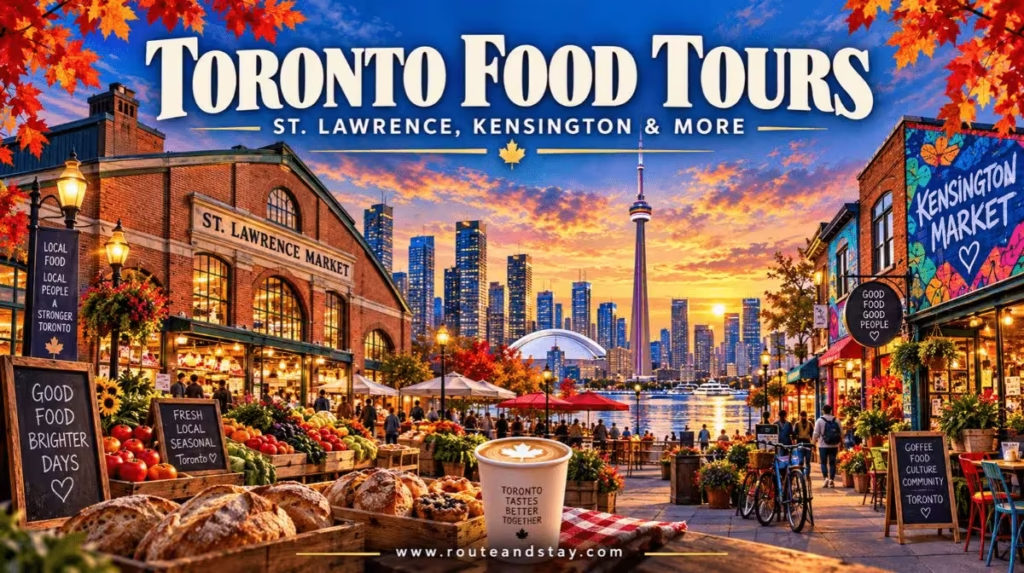
Toronto’s food scene doesn’t have one signature dish so much as a signature habit: everyone eats everyone else’s food. A 200-year-old market that once served as the city’s town hall sits a short streetcar ride from a neighbourhood that was built, in turn, by Jewish, Portuguese, Caribbean, and Latin American immigrants, which itself borders a Chinatown that only exists where it does because the original one was bulldozed for a new city hall in the 1950s. None of that is incidental to the food — it’s the reason the food is what it is. This is part of our full Toronto travel guide: below are the three places to eat your way through it, real tours to book if you’d rather have a guide do the ordering, and — travelling with a genuinely picky 15-year-old narrows things fast — the three spots that actually worked for our own family.
Jump to a section
Compare the Top Food Tours
| Tour | Duration | Price From | Best For |
|---|---|---|---|
| St. Lawrence & Distillery Food Tour (6 Tastings) | 3 hours | ~$87 USD | Classic Canadian food, small groups |
| Kensington Market International Food Tour | 2.5 hours | ~$94 USD | Global flavours in one neighbourhood |
| Kensington Market & Chinatown Walking Tour | 2–2.5 hours | Check availability | Combining both neighbourhoods in one afternoon |
Prices are approximate starting rates and change seasonally — check current pricing before booking.
St. Lawrence Market
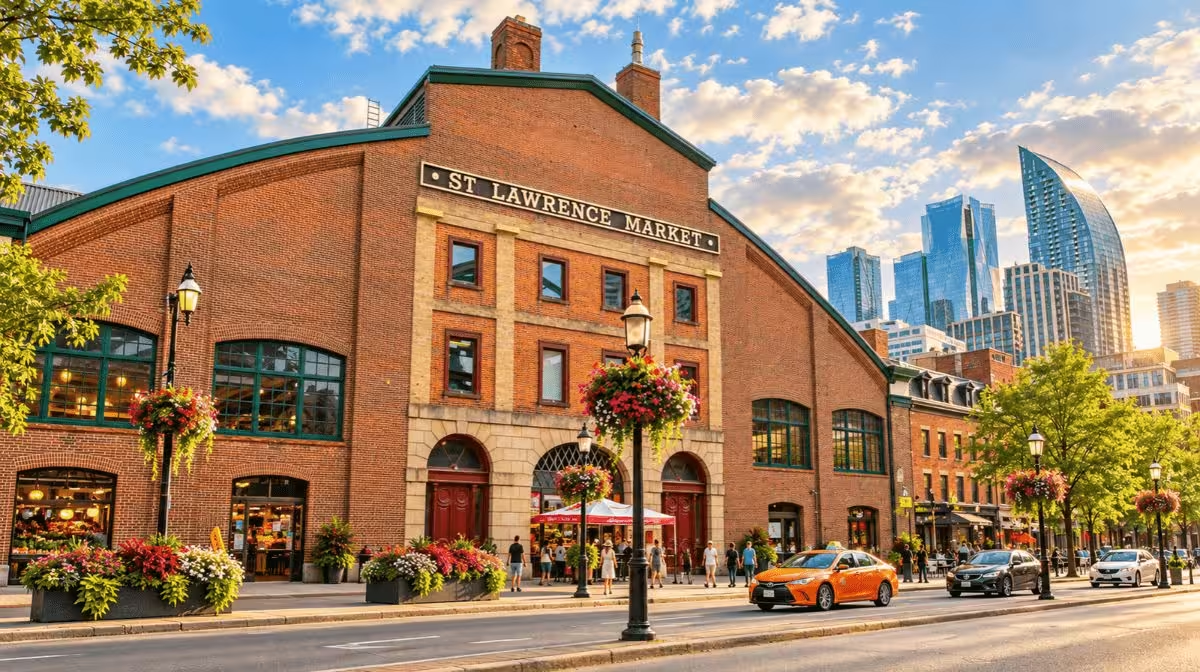
St. Lawrence Market has been feeding Toronto since 1803, which makes it older than Canada itself as a country. For a stretch beginning in the 1830s it doubled as the city’s actual town hall — city council met upstairs while butchers and farmers worked below, an arrangement that’s hard to imagine surviving a modern zoning board. The current South Market building dates to the 1850s, built over the foundations of that original city hall, and the North Market still runs a Saturday farmers’ market that traces its lineage back to 1803 without a real interruption.
In 2012, National Geographic named it the best food market in the world, ahead of Borough Market in London and Union Square Greenmarket in New York — a genuinely surprising result for a market most of the world had never heard of, and one Toronto has not stopped mentioning since. The signature dish, a peameal bacon sandwich, has been eaten on camera by everyone from Anthony Bourdain to Emeril Lagasse; the “peameal” itself is a Toronto-specific cut, brined pork loin rolled in cornmeal, that doesn’t quite exist anywhere else under that name.
Worth knowing: the North Market’s antique market runs Sundays, a tradition separate from — and just as old as — the Saturday farmers’ market next door. The market pairs naturally with a Distillery District stop — see our Best Toronto Tours guide for the combined tour and the CN Tower and Casa Loma bookings alongside it.
Kensington Market
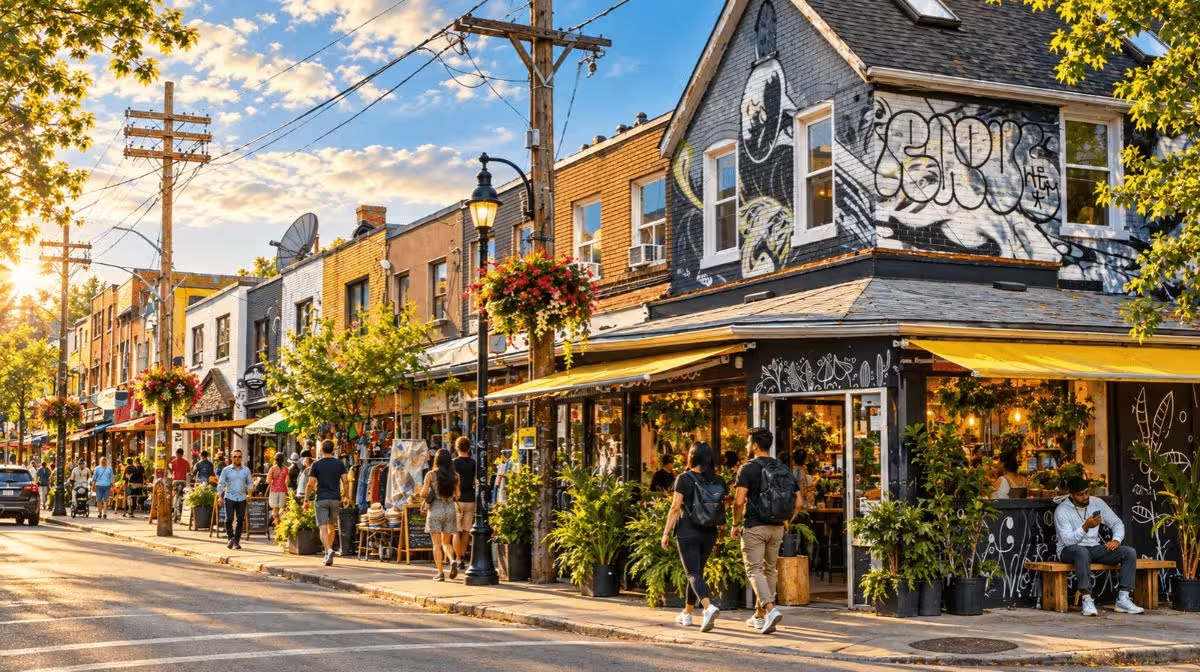
Kensington Market started, essentially, as an act of exclusion. In the early 1900s, Jewish immigrants arriving in Toronto were shut out of the city’s Anglo-Saxon-dominated business community, so they began selling goods from handcarts pushed through the neighbourhood’s residential streets, then from stalls set up on their own front lawns. By the 1930s, roughly 80 percent of Toronto’s Jewish population — tens of thousands of people — lived in and around the Market, and it was known simply as “the Jewish Market,” home to more than 30 synagogues.
What happened next set the pattern for the next century: as the Jewish community moved to more affluent neighbourhoods after the war, Portuguese, Italian, Ukrainian, and Hungarian immigrants moved in. In the 1960s, Caribbean, Chinese, and South Asian newcomers followed, many continuing the same tradition of turning a home’s ground floor into a shop. The market has never stopped reinventing itself along these lines, which is exactly why a single afternoon here can move from Jamaican patties to Tibetan momos to Mexican tacos without crossing a single official border.
Worth knowing: Kensington Market was designated a National Historic Site of Canada in 2006, one of the few times a still-functioning, still-changing commercial neighbourhood — rather than a preserved relic — has received the designation.
Chinatown
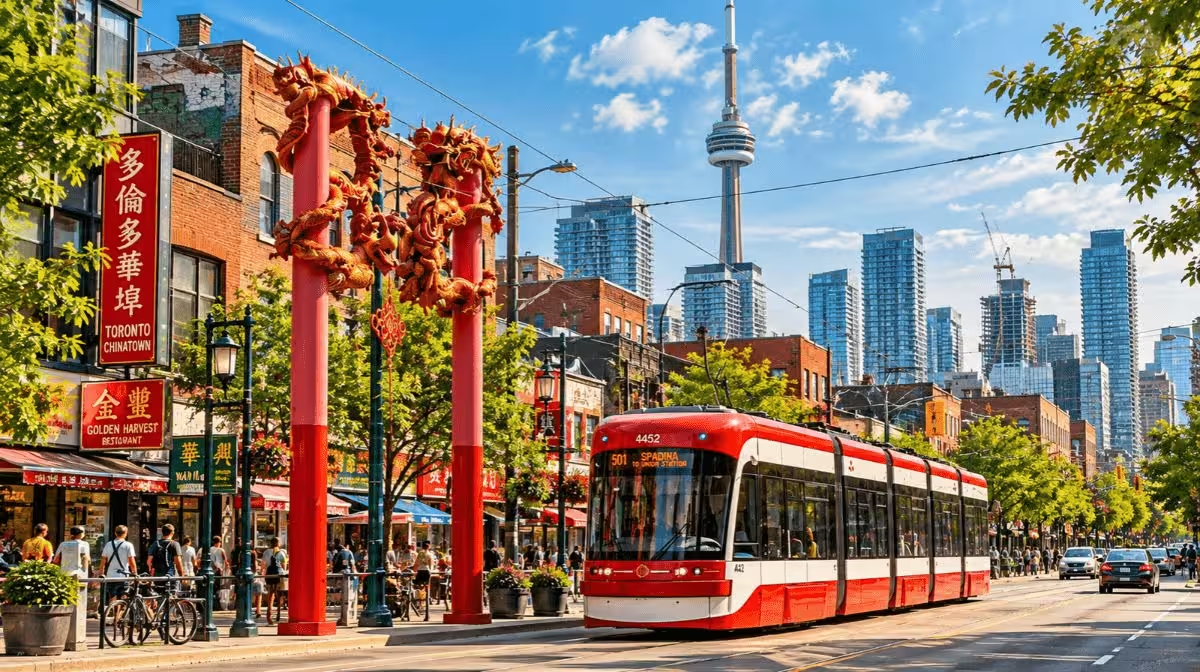
Toronto’s Chinatown exists where it does today because its original location doesn’t exist anymore. Chinese immigrants first arrived in the city in the 1870s, many via California after anti-Chinese violence pushed them north, and by the early 1900s a Chinatown had taken root near what’s now City Hall. In the 1950s, the City of Toronto expropriated most of that neighbourhood — over community objections and without meaningful consultation — to build the new City Hall and Nathan Phillips Square. Demolition finished in 1955, and the displaced businesses and families moved west along Dundas Street to Spadina Avenue, which became, and remains, the heart of Toronto’s Chinatown.
It’s since grown into one of the largest Chinatowns in North America, close enough to Kensington Market that the two neighbourhoods are usually explored together — walking tours routinely cover both in a single afternoon, since Chinatown’s northern edge and Kensington’s eastern edge are only a couple of blocks apart.
Worth knowing: a second, smaller Chinatown — East Chinatown, on Gerrard Street East — developed independently and still operates today, distinct from the Spadina Avenue neighbourhood most visitors mean when they say “Chinatown.”
Where We Actually Ate
We travelled with a picky 15-year-old, which narrows the field more than any guidebook does. These three were the ones that worked for all of us — and in one case, the one our son asked to go back to every single morning. All three sit inside the same downtown stretch covered in our Toronto Weekend Itinerary, if you’re mapping out a full day around them.
Egg Club, tucked into the food area at Union Station, a short walk from where we were staying. It’s a small chain built around one idea done well: thick, fluffy egg sandwiches on shokupan, Japan’s pillow-soft milk bread, with a hash brown folded in if you want it. Fast, cheap, and exactly the kind of place a teenager will actually get out of bed for — ours asked to go back every morning we were there.
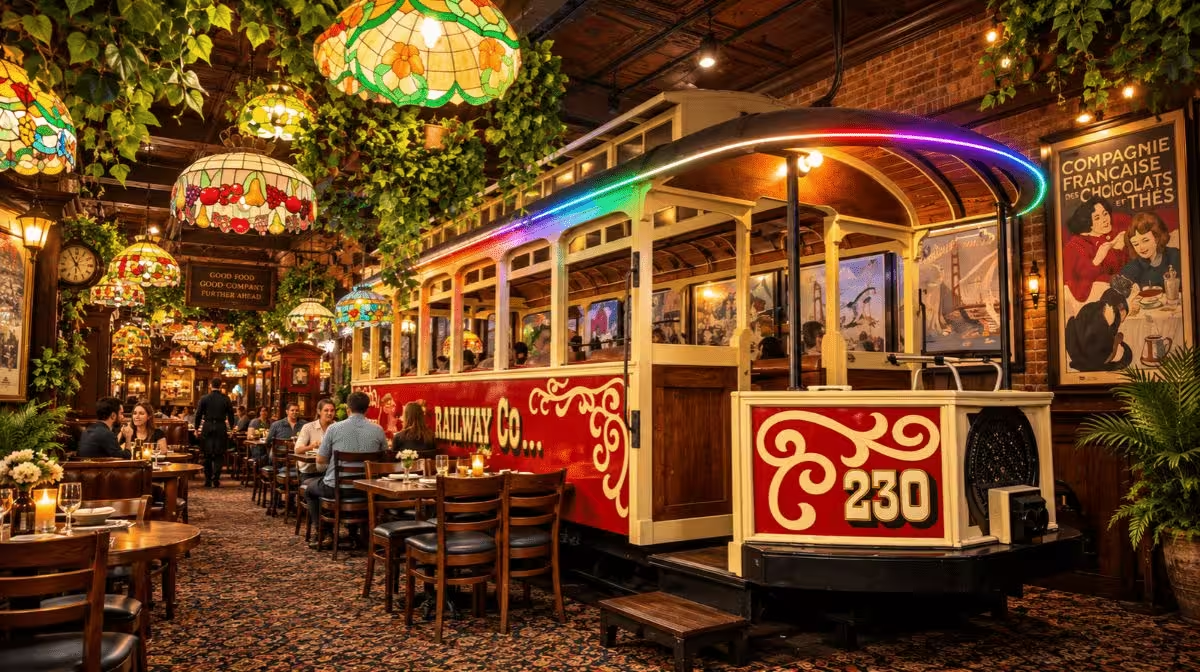
The Old Spaghetti Factory on The Esplanade, a few minutes from Union Station. It’s been run by the same family since 1971 in a converted 1898 blacksmith’s warehouse, and the inside is genuinely something to see — stained glass, antiques, a restored 1921 trolley car you can eat in. It was busy on a weeknight, but the food is exactly what you’d expect from the name, and the atmosphere carries the meal more than any single dish does.
The Loose Moose Tap & Grill, right by our hotel and about as close to Rogers Centre as a bar can get without being inside it. We ended up there after the Blue Jays game, and so, it seemed, had half the stadium — it’s been a Toronto fixture since 1989, with 65-plus beers on tap and big screens for whichever game is on. Loud, busy, and exactly the kind of place you want after a win.
Beyond These Three
St. Lawrence Market, Kensington Market, and Chinatown cover a lot of ground, but they’re not the whole story. Toronto also has its own Greektown along the Danforth, a Little Italy on College Street, and a Little India near Gerrard Street East — each with the same immigrant-built texture as the neighbourhoods above, just less famous outside the city. The Distillery District, a short walk from St. Lawrence Market, is worth a stop for Mill Street Brewery alone, one of Toronto’s most decorated microbreweries, pouring flights in the same Victorian-era buildings the whiskey used to come from. And if you’re walking between any of these, don’t be surprised to run into a food truck or two — dumplings, ice cream, and barbecue all have a real presence on Toronto’s streets, not just in its markets.
Where to Stay
Downtown puts you within walking distance of St. Lawrence Market and a short streetcar ride from Kensington Market and Chinatown. Full neighbourhood breakdown in the Best Hotels in Toronto guide.
Frequently Asked Questions
Which food tour should I book if I only have time for one?
St. Lawrence Market if you want classic Canadian food in a historic setting; Kensington Market if you want the widest range of global cuisines in a single walk.
Is St. Lawrence Market open every day?
No — it’s closed Sundays and Mondays. Saturday is the busiest day, thanks to the North Market farmers’ market, so arrive early if you want to avoid the crowds.
Are Kensington Market and Chinatown walkable from each other?
Yes — they’re adjacent, only a couple of blocks apart, which is why most walking tours cover both in one outing.
Do I need to book a tour, or can I just wander these markets myself?
All three are entirely walkable without a guide. A tour mainly buys you skip-the-line access at specific vendors and the stories behind what you’re eating, which self-guided wandering won’t give you.
What’s the signature dish to try at St. Lawrence Market?
The peameal bacon sandwich — brined pork loin rolled in cornmeal, on a bun. It’s considered the market’s, and arguably Toronto’s, official food.
Is Toronto’s food scene good for picky eaters or kids?
Yes — the city’s chain and quick-service options (like egg sandwich shops and classic Italian spots) sit right alongside the more adventurous market food, so there’s always a fallback that doesn’t involve negotiation.
Route & Stay is reader-supported. Some of the links on this page are affiliate links, and we may earn a small commission if you book through them, at no extra cost to you. Tour details and prices were accurate at the time of writing but can change — always confirm current availability before booking.