 Skip to content

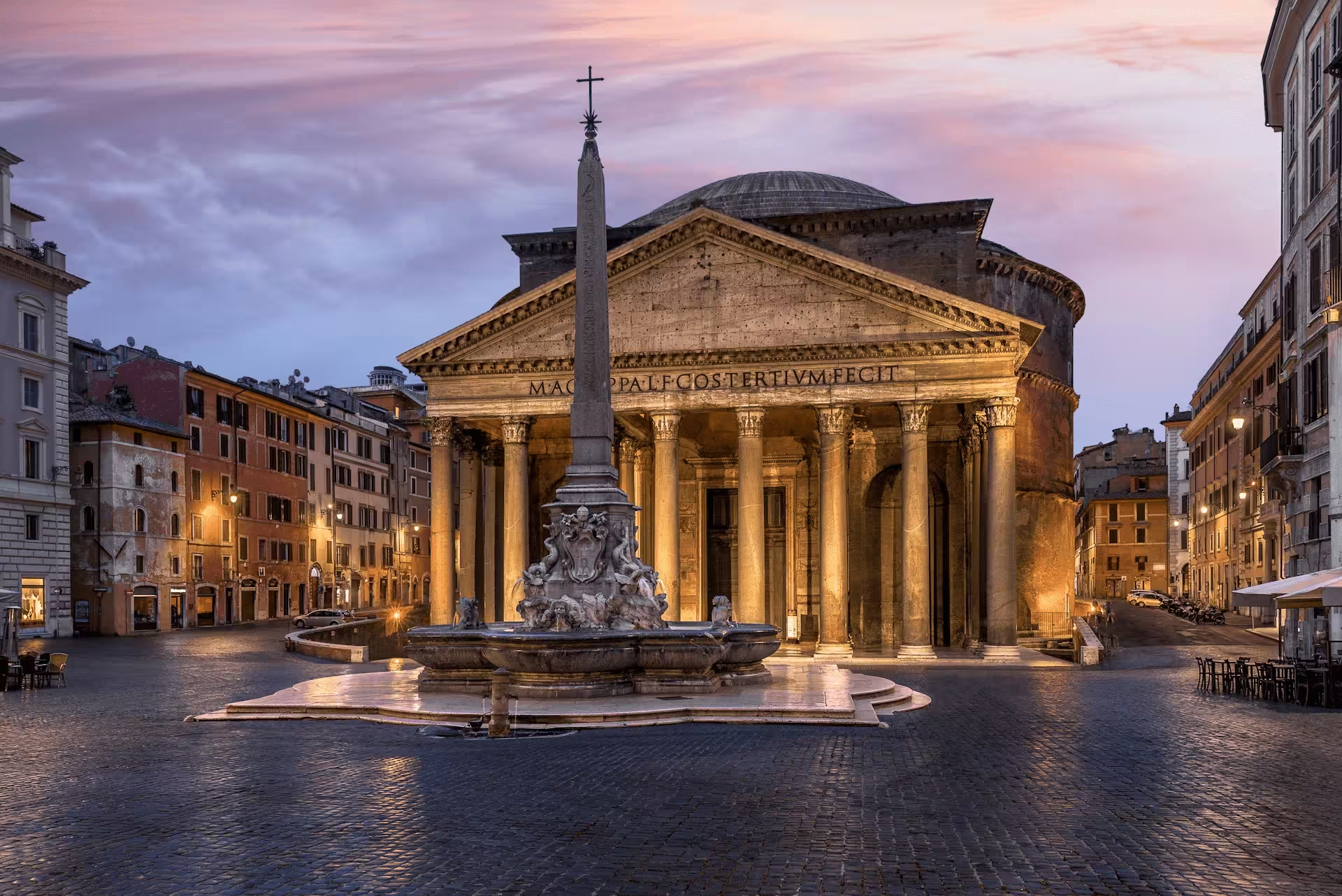
The Pantheon is the best-preserved monument of Ancient Rome, a 2,000-year-old architectural marvel that has survived fires, invasions and centuries of change. Securing Pantheon Rome tickets in 2026 isn’t as simple as walking through the bronze doors, though. Since entry fees were introduced, a little planning helps you avoid the heat and the long standby lines.
Planning a bigger trip? Check my ultimate 2-day Rome itinerary to see how the Pantheon fits in alongside the city’s other heavy hitters.
In this guide
Pantheon at a glance
Last entry 6:30pm. Closed 1 Jan and 25 Dec.
Often sold out weeks ahead on the government portal.
It is an active church (Basilica of St. Mary and the Martyrs). No exceptions.
The sun streams through the Oculus, creating a dramatic beam inside.
Quick links: book your Pantheon visit
Short on time? Jump straight to booking. Pre-booked tickets skip the ticket-purchase line, and the guide below explains how each option works.
Pantheon entry tickets (GetYourGuide) Pantheon guided tour (GetYourGuide) Entry tickets (Viator) Elite guided tour (Viator)History of the Pantheon: from ancient temple to modern landmark
The Pantheon is one of the best-preserved monuments of Ancient Rome and a must-visit for anyone exploring the Eternal City. With a history spanning nearly 2,000 years, it stands as a symbol of Roman engineering, religion and architectural brilliance.
Origins: built by Agrippa
The story begins in 27 BC, when Marcus Agrippa, a trusted general and son-in-law of Emperor Augustus, commissioned the original temple. It was dedicated to the Roman gods, reflecting the polytheistic beliefs of ancient Rome, and was later destroyed by fire along with much of the surrounding area.
Reconstruction under Emperor Hadrian
The Pantheon we see today was rebuilt between 118 and 125 AD under Emperor Hadrian. Instead of claiming credit, Hadrian chose to honour the original builder by keeping Agrippa’s inscription on the front of the building:
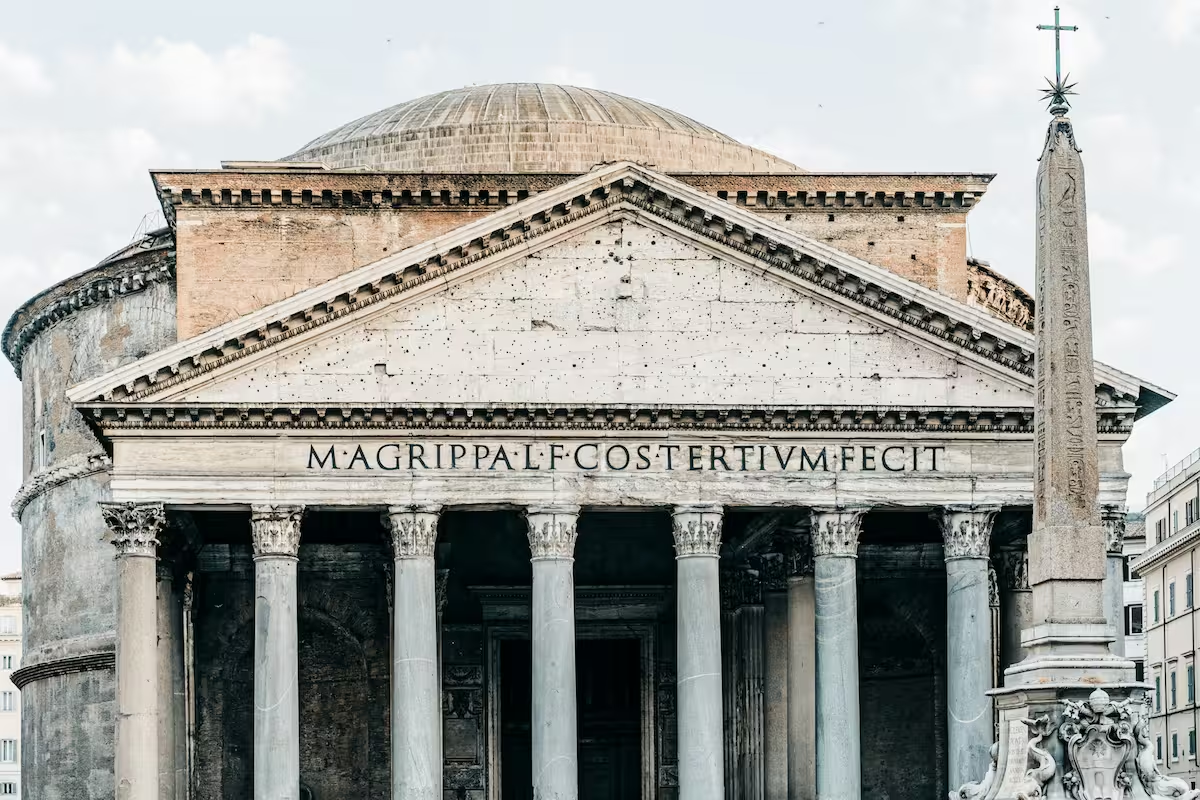
“M·AGRIPPA·L·F·COS·TERTIVM·FECIT”
(“Marcus Agrippa, son of Lucius, built this during his third consulship”)
This decision has contributed to centuries of confusion about the Pantheon’s true origins.
Why was the Pantheon built?
The temple was dedicated to all the gods of ancient Rome, and its name comes from the Greek words pan (all) and theos (gods). Unlike most Roman temples, which were designed to be admired from the outside, the Pantheon was built as an interior space for worship and ceremonies.
Engineering marvel: the dome and oculus
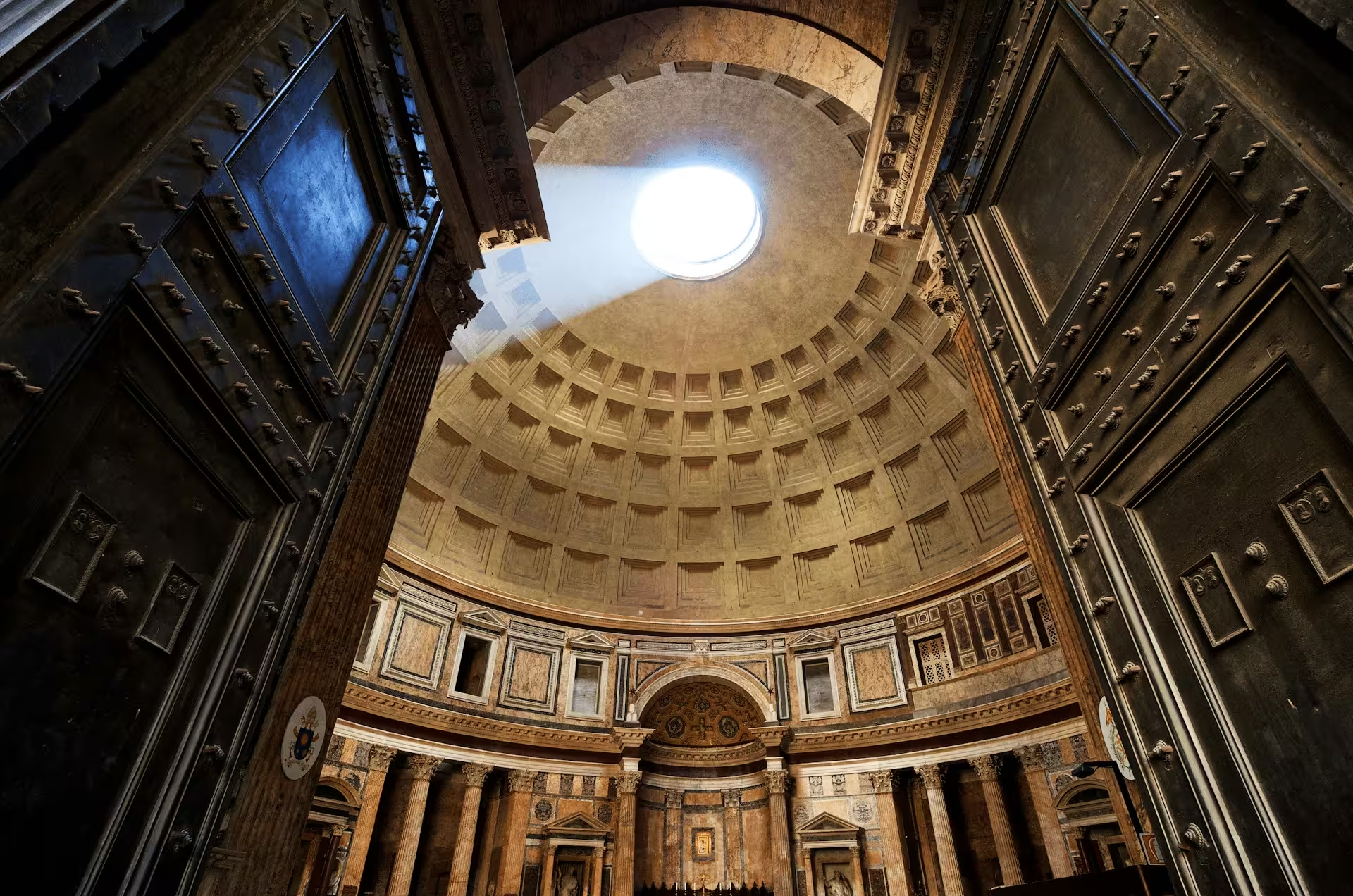
One of the main reasons the Pantheon attracts millions of visitors each year is its architecture. It has the largest unreinforced concrete dome in the world, a feat that still amazes engineers today.
At the centre of the dome is the famous oculus, a circular opening that lets sunlight stream into the interior, creating a moving beam of light throughout the day. It also connects the temple symbolically to the heavens.
Conversion into a church: the key to its preservation
In 609 AD the Pantheon became a Christian church, the Basilica of St. Mary and the Martyrs. This played a crucial role in preserving the structure, as many other ancient Roman buildings were abandoned, looted or destroyed. Because it stayed in continuous use, it survived almost entirely intact.
The Pantheon today: a living piece of history
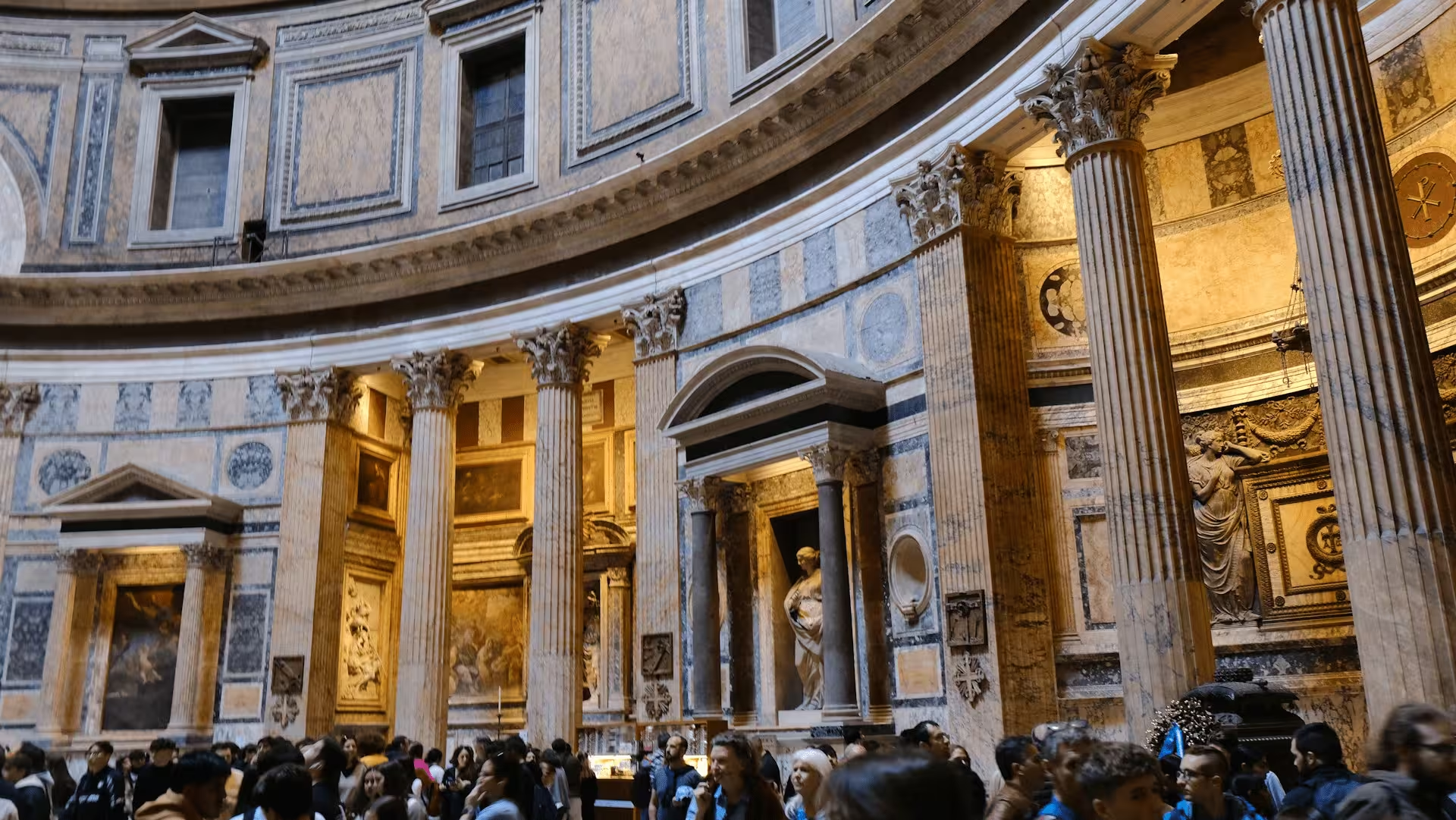
Today the Pantheon is both a major tourist attraction and an active church. It houses the tombs of important figures, including the Renaissance artist Raphael and Italy’s first king, Victor Emmanuel II. Stepping inside means entering an ancient Roman building that has been in continuous use for nearly two millennia.
5 facts to impress your travel partners
The 9-metre hole in the roof has no glass. When it rains in Rome, it rains inside the Pantheon, and the slightly slanted floor drains the water away through 22 hidden holes.
Romans used lighter volcanic rock such as pumice as the dome rose higher, which helped the 2,000-year-old structure stay standing.
The Renaissance master is buried here. His tomb carries a famous inscription saying that while he lived, Mother Nature feared he would outshine her.
In the 1600s, Pope Urban VIII had bronze stripped from the portico. Tradition says much of it went into the canopy (Baldacchino) of St. Peter’s Basilica.
On 21 April, Rome’s birthday, the midday sun lines up with the grille above the door, flooding the entrance with theatrical light.
How to visit the Pantheon in 2026
Entry now requires a paid ticket. There are three ways to get in.
1. The official portal (budget option)
You can try to book through the Musei Italiani website. It is the cheapest route at €5, but the site can crash, registration is fiddly, and weekend time slots disappear almost instantly.
2. Fast-track digital ticket (recommended)
This is the most popular option for travellers. It includes a digital audio guide and lets you skip the ticket-purchase queue. If the official site is down or sold out, a pre-booked digital ticket is your most reliable way to secure a time slot.

Pre-booked entry to the Pantheon so you can secure a time slot and skip the ticket-purchase line.
Check Availability on Viator3. Professional guided tour (the best experience)
If you want to bypass the logistics and actually understand what you’re looking at, a guided tour is the way to go. These groups usually have a dedicated entry window and provide headsets so you can hear the guide over the echoes of the crowd. A 45-minute tour is a great way to appreciate the engineering of the Oculus and the tombs of Italy’s kings.
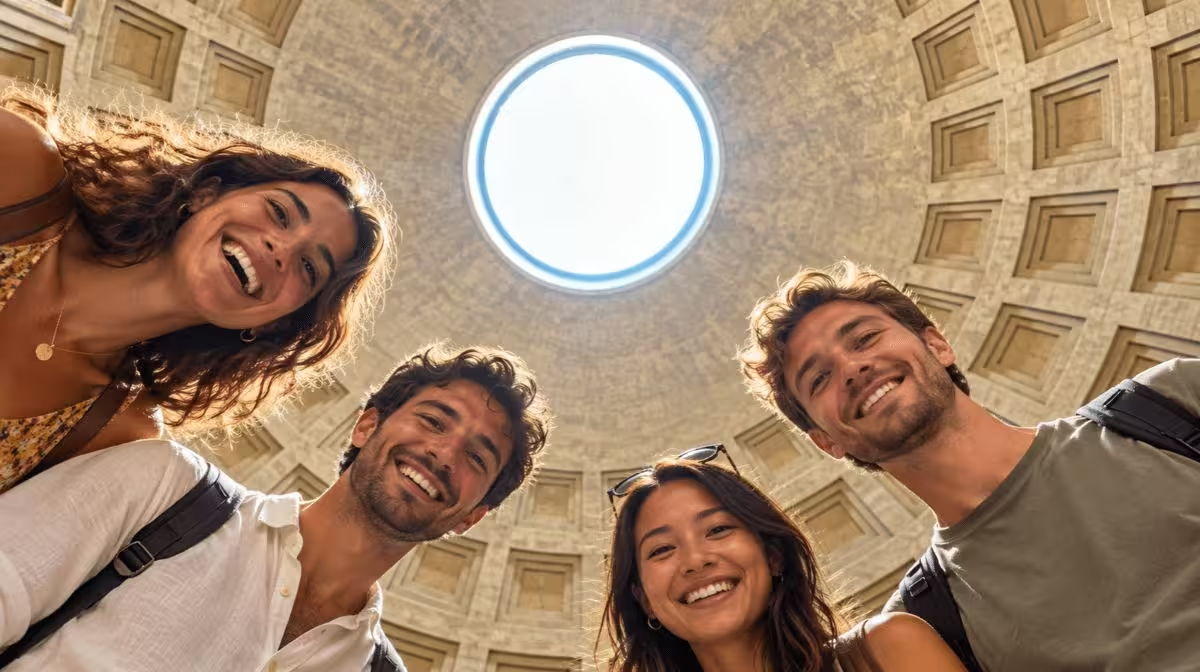
A guided visit led by an expert, covering the dome, the Oculus and the tombs inside the Pantheon.
Check Availability on ViatorWhere to stay
The Pantheon sits in the historic centre, and most of Rome’s big sights are within a walk, bus or short taxi ride from there. If you want a comfortable base with the Colosseum and Roman Forum on your doorstep, the Monti neighbourhood is a good choice, with plenty of restaurants and cafes nearby. Book early for peak season and choose a flexible rate if you can.
Suggested hotel: DoubleTree by Hilton Rome Monti
The DoubleTree by Hilton Rome Monti is our pick for a stay in this part of the city. It puts you in Monti, on the Colosseum side of the centre, so the Pantheon is a short trip away rather than a doorstep visit. Check the live rates and room options below.

A Hilton-brand hotel in the Monti district, a good base for the Colosseum, the Forum and the historic centre.
Check AvailabilityPlan the rest of your Rome trip: the “Big Three”
The Pantheon sits right in the centre, so it is easy to combine with Rome’s other icons. Don’t leave your other bookings to chance:
- The Colosseum: tickets are harder than ever to snag. Read my guide to Colosseum time slots and best booking options.
- The Vatican: to see the Sistine Chapel without a long wait, check my breakdown of Vatican Museums tickets and entry tips.
- The full route: see how to fit it all into 48 hours with my perfect 2-day Rome itinerary.
FAQ
Can I visit during Mass?
Tourists are generally not allowed to wander during religious services, usually Saturday evenings and Sunday mornings. Check the local schedule before you arrive.
Is there a “skip the line” ticket?
No ticket completely bypasses the security check. “Skip the line” generally means skipping the ticket-purchase line, which can save you over an hour of waiting.
How much time do I need inside?
30 to 45 minutes is usually enough to see the whole interior and the tombs.
How much do Pantheon tickets cost?
The official ticket is €5 through the Musei Italiani portal. Pre-booked options with an audio guide or guided tour cost more but include extras and a reliable time slot.
What should I wear?
The Pantheon is an active church, so shoulders and knees must be covered.
Disclosure: Route & Stay may earn a commission if you book or buy through links on this page, at no extra cost to you. Opening hours, prices and availability can change, so check official sources before you travel.