 Skip to content

Spain Travel Guide
Gaudí architecture, world-class football, ancient city quarters, and a food culture that makes everywhere else feel like it’s trying too hard.
Our Spain travel guide brings together the cities, football, food and coastlines worth planning a trip around. Spain doesn’t do anything by halves: the cities are dramatic, the food is serious, and every region feels like its own country.
From Barcelona’s cruise port and Gothic Quarter to Madrid’s Bernabéu and Bilbao’s Guggenheim, these are honest, practical guides that cut through the noise so you see the best of it without wasting a day. More Spanish cities are being added regularly.
Spain at a Glance
- Capital
- Madrid
- Population
- About 49 million
- Area
- About 506,000 km²
- Location
- Southwestern Europe, on the Iberian Peninsula
- Neighbours
- Portugal, France, Andorra, plus Gibraltar and Morocco (Ceuta and Melilla)
- Languages
- Spanish; Catalan, Basque and Galician are co-official in their regions
- Regions
- 17 autonomous communities
- Currency
- Euro (EUR)
- Highest point
- Teide, 3,715 m (Tenerife)
- EU status
- EU member and Schengen
Spain occupies most of the Iberian Peninsula and also includes the Balearic and Canary Islands. It is one of the largest countries in Europe, with a long Mediterranean and Atlantic coastline and a high central plateau around Madrid.
The country is organised into 17 autonomous communities, and regional identity is strong. Barcelona is in Catalonia, Bilbao in the Basque Country, and Seville in Andalusia, each with its own culture and often its own language alongside Spanish.
Spain is in the European Union and the Schengen Area and uses the euro.
Spain City Guides
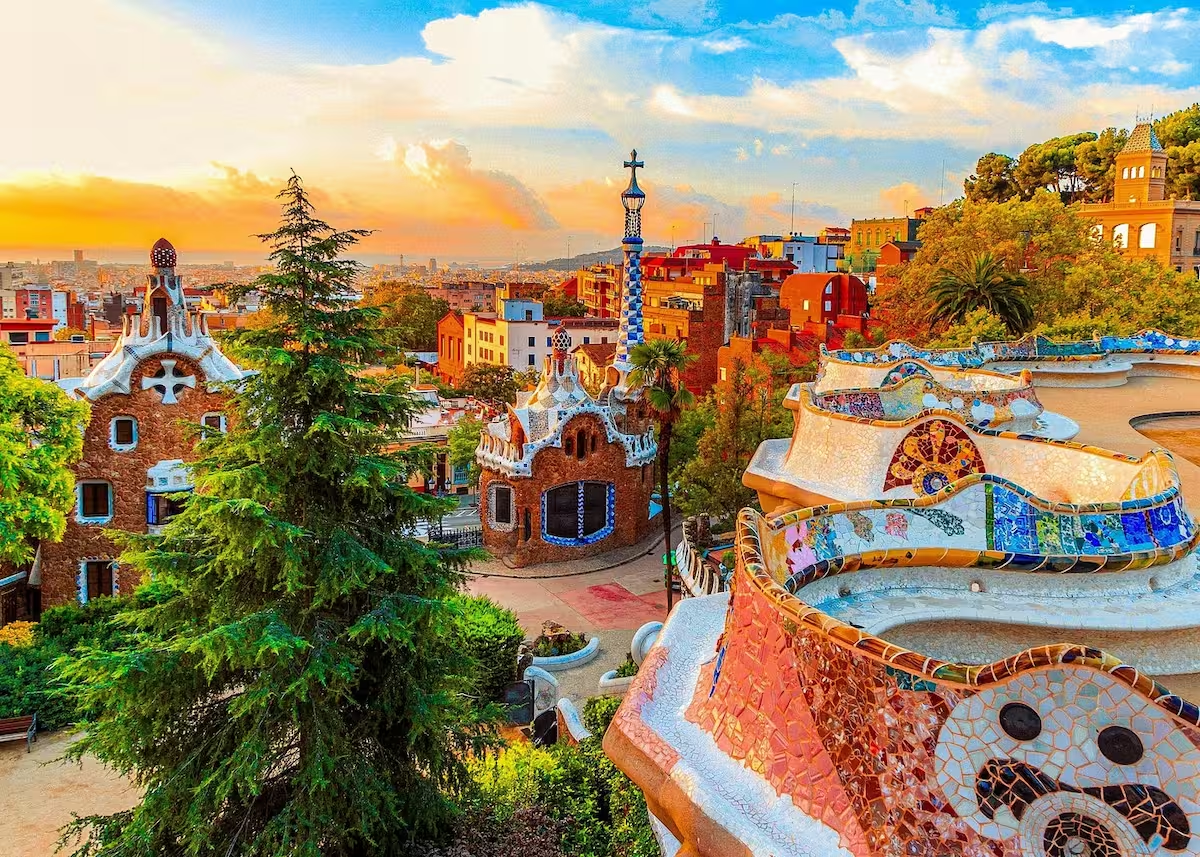
Barcelona
Cruise port guides, Gothic Quarter walks, Sagrada Família tickets and the city’s best food stops.
Explore Barcelona
Madrid
Tour Bernabéu, Parque Warner, and a city that comes alive after midnight.
Explore Madrid
Bilbao
The Guggenheim, Casco Viejo, pintxo crawls and day trips to the wild Basque coast.
Explore BilbaoFootball, Formula 1 and Live Events in Spain
Spain is as much a sporting destination as a cultural one. Match-day atmospheres at La Liga grounds are among the best in Europe, and Formula 1 has returned to Madrid with the Spanish Grand Prix at the new MADRING circuit, currently scheduled for 10 to 12 September in 2027. Our event guides pair tickets with the practical side of the trip: where to stay, how to get to the venue and what else to do nearby.
La Liga Tickets
Match-day guides and tickets for La Liga fixtures, starting with Real Madrid.
StadiumsFootball Tickets and Match Day Guides
Stadium guides, transport tips and ticket advice across Europe’s top leagues.
MotorsportMotorsport Travel Guides
Grand Prix weekends and race-day travel planning, including Formula 1 in Spain.
ConcertsConcert Travel Guides
Tour dates, venues and where to stay for the biggest shows, including Madrid.
Planning Your Trip to Spain
Best time to visit Spain
Spring (April to June) and autumn (September to October) are the most comfortable seasons for city breaks, with warm days and manageable crowds. July and August are very hot in Madrid and the south, while the north, including the Basque Country, is cooler and greener but wetter. Winter is cool in Madrid and the north and milder along the Mediterranean coast.
Getting around Spain
Spain’s high-speed AVE trains link Madrid with Barcelona, which takes roughly two and a half hours, as well as Seville, Valencia and other major cities, and are often quicker than flying once airport time is counted. Coaches cover routes the trains don’t, such as Bilbao to San Sebastián in about an hour and a quarter to an hour and a half. Domestic flights make sense for the islands and the longest distances.
How long to spend
Three to four days is enough for a single city such as Barcelona, Madrid or Bilbao. A week fits Madrid and Barcelona comfortably by high-speed train, with time for a day trip from each.
Eating and timing
Spain eats late. Lunch is usually between 2 and 4 pm and dinner rarely starts before 9 pm, although tapas and pintxo bars serve through the afternoon and into the evening. Plan sightseeing around a long lunch rather than fighting it.
Spain Travel FAQ
What is the best time to visit Spain?
Spring (April to June) and autumn (September to October) are the best seasons for most city breaks. Summer is very hot in Madrid and the south, while the north stays cooler.
How many days do you need in Spain?
Three to four days is enough for one city. A week works well for two cities linked by high-speed train, such as Madrid and Barcelona.
Which Spanish city should I visit first?
Barcelona suits architecture, beaches and cruise stopovers. Madrid is best for museums, football and nightlife. Bilbao is the pick for the Guggenheim, pintxos and the Basque coast.
What is the best way to travel between Spanish cities?
High-speed AVE trains are the most convenient option between major cities such as Madrid and Barcelona. Coaches cover shorter or cross-country routes cheaply, and flights suit the islands and the longest journeys.
Can I see a football match in Spain as a visitor?
Yes. Tickets for the biggest La Liga fixtures sell out quickly, so book early through official club channels or trusted resale marketplaces. See our La Liga tickets guide for fixtures and travel tips.
Seville, Málaga, Granada, and beyond — guides being added as we go deeper into the country.
Exploring beyond Spain?
Curated guides for Rome, Paris, Malta, Cyprus and more — same no-fluff approach, every destination.