 Skip to content

Bilbao Travel Guide
Titanium, pintxos and a river that used to build ships. The Basque Country’s biggest city is far more than one famous museum.
This Bilbao travel guide covers an industrial port city that reinvented itself without losing its character. The Guggenheim gets the headlines, but the real draw is the whole package: a medieval old town, one of Spain’s great food cultures, a football club with a fiercely local identity, and wild Atlantic coastline within an hour.
This guide covers what’s worth your time, how to get around cheaply, the best day trips, and where to stay. Bilbao works as a two-day city break or as the base for a longer Basque Country trip.
Detailed Bilbao Guides
Our in-depth guides to the biggest things to do around Bilbao. Each one goes further than the overview below.

Gaztelugatxe from Bilbao
Tickets, the 241-step climb, parking, buses and tours for the Game of Thrones islet.
Read the guide →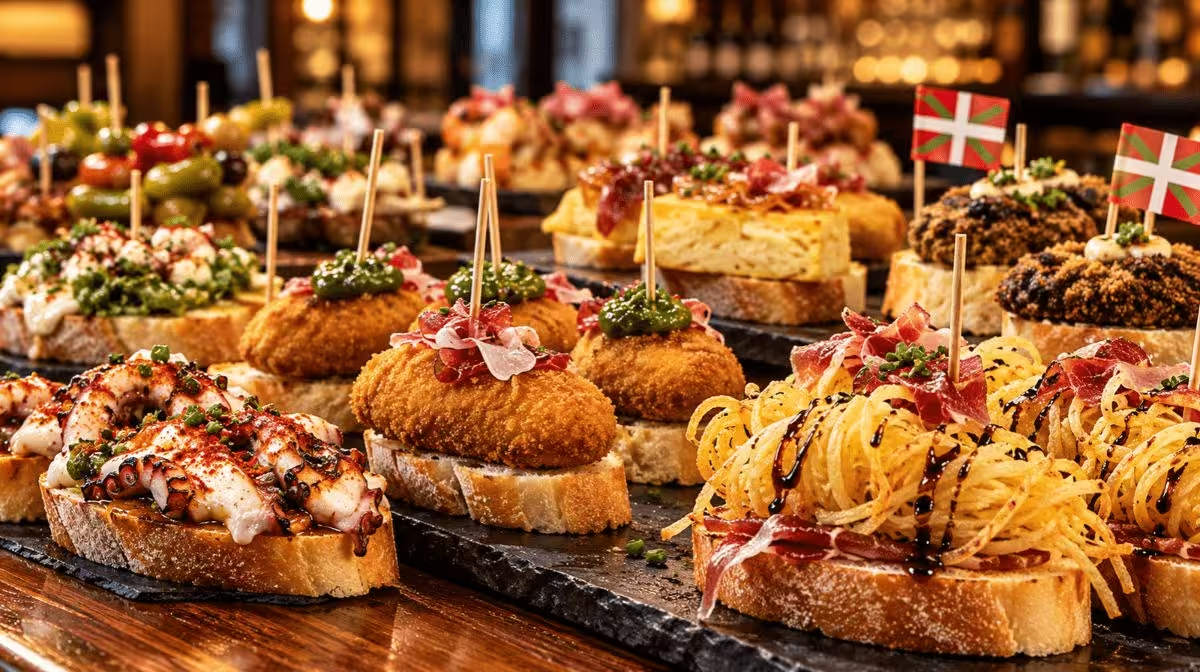
Pintxos in Bilbao
The best streets and bars, what to order, how to pay and what a pintxo crawl costs.
Read the guide →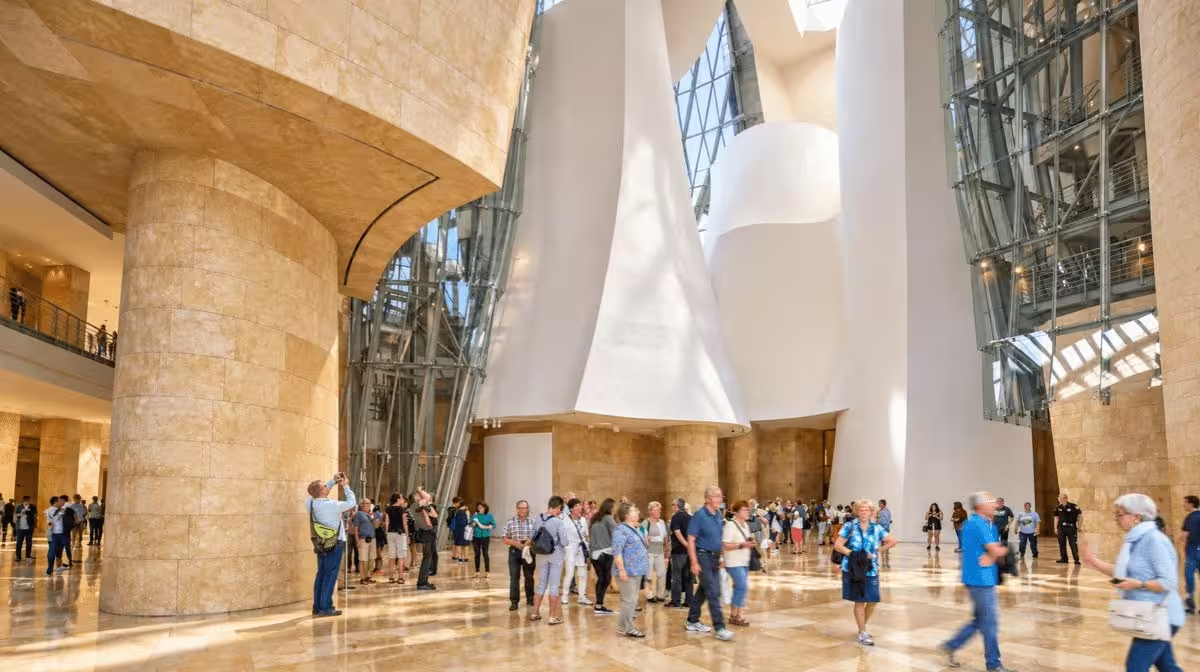
Guggenheim Bilbao Tickets
How to buy tickets, prices, opening hours, the best time to go and what is on in 2026.
Read the guide →Bilbao at a Glance
| Attraction | Time needed | Cost | Book ahead? |
|---|---|---|---|
| Guggenheim Museum | 2 to 3 hours | About €15 (€18 in peak summer) | Yes, timed slots |
| Casco Viejo (Old Town) | Half a day | Free | No |
| Vizcaya Bridge | 2 to 3 hours | Low-cost crossing | No |
| Artxanda Funicular | 1 to 2 hours | Low-cost fare | No |
| San Mamés tour | 1.5 to 2 hours | Set at booking | Yes |
| Gaztelugatxe | 2 hours on site | Free entry | Yes, on busy dates |
Best Things to Do in Bilbao
Guggenheim Museum Bilbao
Frank Gehry’s titanium-clad museum opened in 1997 and became the textbook case of culture-led urban regeneration, so much so that cities still talk about the “Guggenheim effect”. The building is the main exhibit: curves of metal, glass and limestone that change colour with the light off the Nervión.
Outside, look for Jeff Koons’s flower-covered Puppy and Louise Bourgeois’s giant spider, Maman. Inside, Richard Serra’s steel sculptures in the huge ground-floor gallery are the part most visitors remember.
Open Tuesday to Sunday, 10:00 to 19:00 (later in summer). Prices change with the exhibitions, under-18s are free and the audio guide is included. Buy on the museum’s official ticket site to avoid markups, and check hours and prices before you go.
Read our Guggenheim tickets guide →
Casco Viejo and the Seven Streets
Bilbao was founded in 1300, and the Siete Calles (Seven Streets) are its medieval core, laid out beside the river. Today they are a tangle of narrow lanes, small shops, bars and the Gothic Santiago Cathedral.
Start at the Arriaga Theatre by the river, wander the streets, and finish at the Plaza Nueva, a neoclassical square lined with pintxo bars. The nearby Mercado de la Ribera, one of Europe’s largest covered markets, is worth a look even if you are not buying.
Free to explore. Metro stop: Zazpikaleak/Casco Viejo. Tram stop: Arriaga.
Vizcaya Bridge (Puente Colgante)
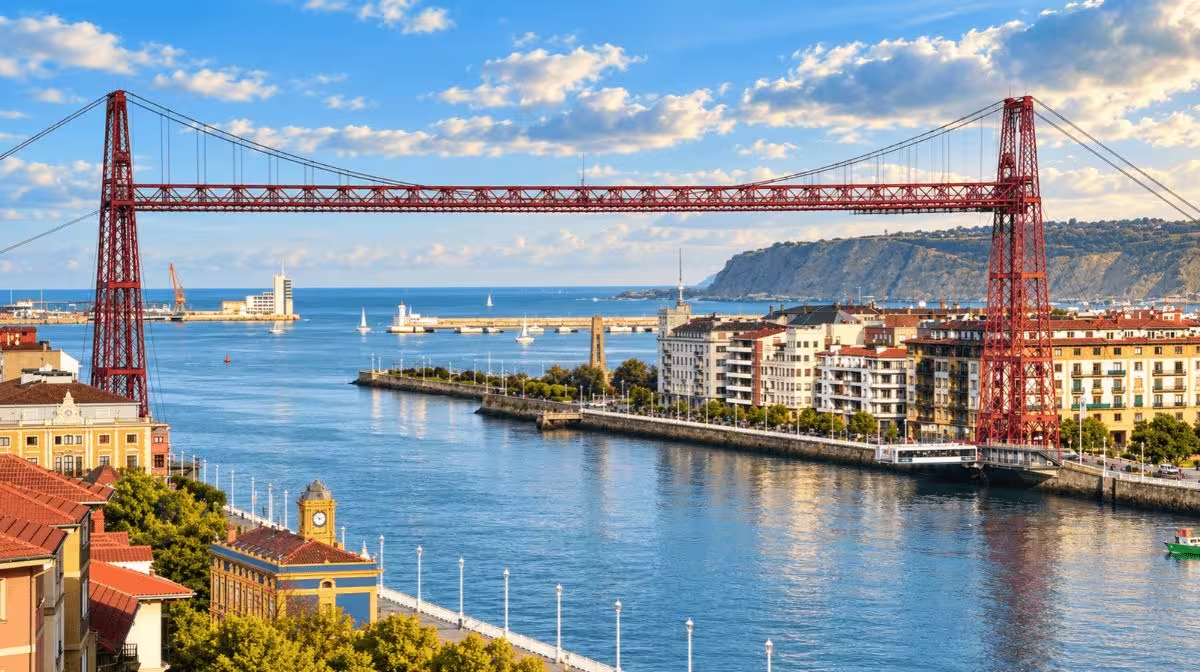
Opened in 1893 between Portugalete and Getxo, the Vizcaya Bridge is a transporter bridge: instead of a deck, a suspended gondola carries pedestrians and cars across the river mouth. It still works as ordinary public transport, and it is a UNESCO World Heritage Site.
The metro runs to both sides, so it is an easy half-day trip. Cross by gondola, then walk the seafront promenade in Getxo for views of the old mansions and the coast.
Take Metro Line 1 to Areeta (Getxo side) or Portugalete. Allow 2 to 3 hours including the walk.
Artxanda Funicular
A funicular that has climbed the hill above the city since 1915. The summit gives the best panorama of Bilbao, the river and the Guggenheim, and the ride is covered by the Barik card.
Azkuna Zentroa
A former wine warehouse reinvented by designer Philippe Starck as a cultural centre, with a rooftop swimming pool seen through a glass ceiling and a forest of differently designed columns.
The Nervión Riverside Walk
A flat, free walk from the Old Town past Calatrava’s white Zubizuri footbridge to the Guggenheim, taking in the city’s transformation from shipyards to promenades.
Book Guided Experiences in Bilbao
Skip-the-line tours and food walks, with free cancellation on many options. Availability is live.
Eating and Drinking: Pintxos
How to do a pintxo crawl
Pintxos (pinchos elsewhere in Spain) are small bites, often served on bread and held together with a cocktail stick. In Bilbao they sit on the bar counter or come hot from the kitchen. The local way to eat is to move: one or two pintxos and a drink in each bar, then on to the next.
The classic order is a txakoli, the crisp, lightly sparkling Basque white poured from a height, with a Gilda: an olive, anchovy and pickled pepper on a stick. Cod, tortilla, croquetas and grilled prawns are everywhere. Ask for the hot pintxos from the board; they are made fresh.
Some bars run a pintxo-pote deal, traditionally on Thursday evenings, with a drink and a pintxo sold together at a low fixed price. Casco Viejo and the Plaza Nueva are the easiest places to start; the streets around Ledesma and Diputación in the new town are the other main hub.
Counting your cocktail sticks is how many bars calculate the bill. Keep them on your plate until you pay.
Read our full pintxos guide →Join a Basque Food Tour
A guided pintxo walk is the easiest way to learn what to order and where.
Day Trips from Bilbao
San Juan de Gaztelugatxe
A tiny hermitage on a rocky islet joined to the mainland by a stone causeway, reached by a staircase of 241 steps. It has been a place of pilgrimage for centuries, and it became famous worldwide as Dragonstone in Game of Thrones.
About 45 minutes from Bilbao by car, it is free to enter, but visits are managed. On designated busy dates, a free timed reservation is required, and a booking not used within an hour of its slot can be cancelled. Plan roughly two hours on site and wear shoes with grip.
Check the current access rules on the official booking site, tiketa.eus, before travelling. Without a car, a small-group tour from Bilbao is the simplest option, such as this small-group tour covering Gaztelugatxe, Mundaka and Guernica with lunch included. For tickets, steps, parking and transport, read our full Gaztelugatxe from Bilbao guide.
Read the full Gaztelugatxe guide →San Sebastián (Donostia)
Spain’s most elegant seaside city, with the crescent of La Concha beach and the densest pintxo scene in the country. Direct Alsa buses from Bilbao take roughly 1 hour 15 minutes to 1 hour 30 minutes, and tours often combine it with Gaztelugatxe in a long day.
Gernika and Bermeo
Gernika (Guernica) is the Basque spiritual capital, home to the Assembly House and the oak tree tied to Basque self-government, and the town bombed in 1937. Bermeo, a fishing port on the coast, makes a good pairing. Bizkaibus runs to Gernika in around 45 minutes.
Rioja Alavesa
The Basque side of the Rioja wine region lies roughly an hour south, with striking modern wineries and walled hill villages. Best done on a guided tour so nobody has to drive after tastings.
Day Trips and Tours from Bilbao
Small-group trips to the coast, San Sebastián and wine country.
Athletic Club and San Mamés
Athletic Club is one of the most distinctive clubs in world football. Its long-standing policy is to field players who came through Basque football, and it has remained in Spain’s top division for most of its history. The result is a club with a deeply local identity and a stadium that feels like the city’s living room.
San Mamés, the modern home ground, sits close to the centre and the main bus station, and is reachable by metro. If a home match lines up with your trip, it is one of the best matchday atmospheres in Spain. If not, a stadium tour is the next best thing.
Getting There and Around
From Bilbao Airport
There is no metro at the airport. The Bizkaibus A3247 runs to the city centre and the main coach station near San Mamés in around 30 to 40 minutes at a low single fare, and the metro connects from there. A taxi takes roughly 15 to 20 minutes for a metered fare of about €20 to €25.
By road and rail
Direct coaches link Bilbao with San Sebastián, Madrid and the rest of northern Spain from the Termibus station by San Mamés. There is no fast rail link to San Sebastián, so the bus is the usual choice.
Around the city
The compact centre is walkable. For everything else, buy a Barik card (a €3 rechargeable card, sold from machines in metro and train stations and some kiosks). It works on the metro, which was designed by Norman Foster and is recognisable by its curved glass entrances, as well as the tram, city buses, Bizkaibus and the Artxanda funicular, and per-journey fares are much lower than paper tickets.
The Bilbao Bizkaia Card bundles unlimited transport with museum perks. It only pays off if you will use a lot of transport and attractions in a short time, so compare current prices at the tourist office before buying.
When to Visit
Bilbao has a green Atlantic climate: mild, with rain possible in any month, which is why the hills are so lush. Spring and early autumn are the sweet spot for walking, day trips and outdoor pintxo crawls. Summer is warm and busy with extended museum hours, and mid-to-late August brings Aste Nagusia, the city’s big festival week of concerts, fireworks and street life. Pack a light waterproof whatever the season.
Two-Day Itinerary
Art, old town, pintxos
Morning at the Guggenheim at opening time, then the riverside walk to the Old Town. Lunch at the Mercado de la Ribera, an afternoon in the Seven Streets, a sunset ride up the Artxanda funicular, and an evening pintxo crawl around the Plaza Nueva.
Bridge and coast
Metro to the Vizcaya Bridge, cross by gondola, and walk Getxo’s seafront. Afternoon at Azkuna Zentroa or a San Mamés tour, then a final dinner in the new town. With a third day, add Gaztelugatxe or San Sebastián.
Where to Stay
For a first visit, the best bases are Casco Viejo (atmosphere, bars, walkable but lively at night), the Abando and Indautxu area of the new town (quieter, close to the Guggenheim, metro and shops), and the streets near San Mamés if football is the focus. Book early for August, major concerts and match weekends.
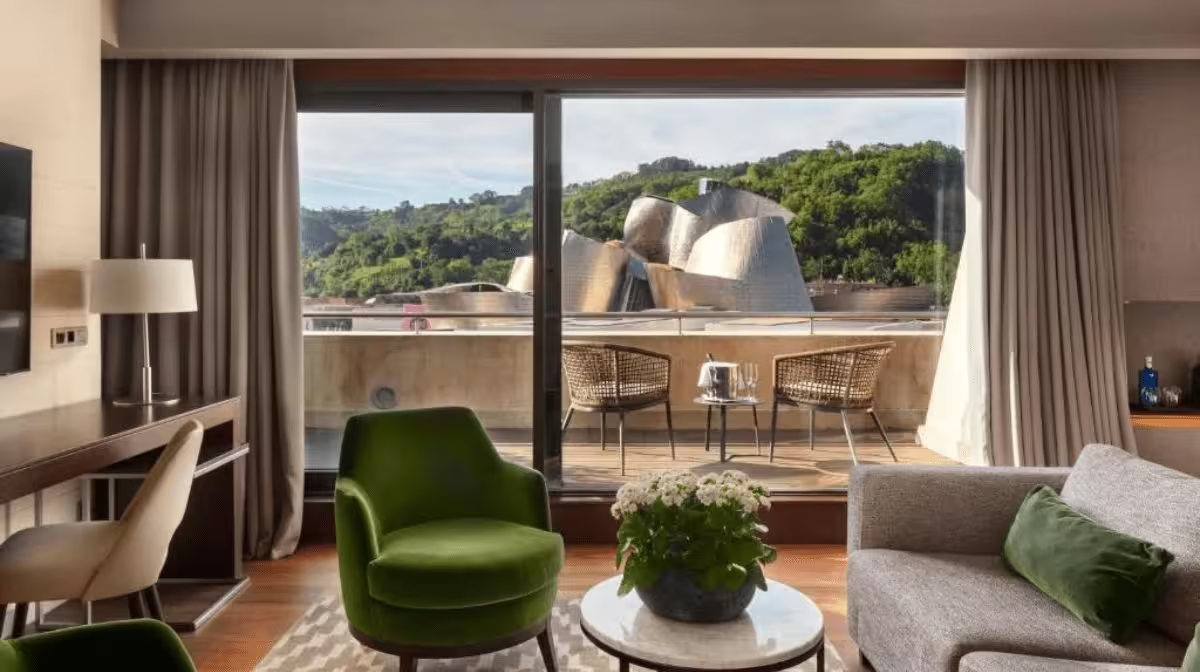
The Artist Grand Hotel of Art
Directly opposite the Guggenheim, with a rooftop breakfast terrace, a spa with sauna and Turkish bath, and a short walk to the Old Town’s pintxo bars. Only some rooms face the museum, so choose a Guggenheim-view room when you book.
Check availabilityBilbao FAQ
How many days do you need in Bilbao?
Two days covers the Guggenheim, Old Town, pintxos and one outlying sight such as the Vizcaya Bridge. Add a day or two for Gaztelugatxe and San Sebastián.
Is the Guggenheim worth it?
Yes, even for people who are not into modern art. The building alone justifies a visit, and the Serra sculptures and outdoor works are memorable. Book a timed slot and arrive early.
How do I get from Bilbao Airport to the city?
Take Bizkaibus A3247 to the centre and San Mamés in about 30 to 40 minutes, or a taxi for around €20 to €25. There is no metro at the airport.
Do I need a reservation for Gaztelugatxe?
Entry is free, but on designated busy dates a free timed reservation is required. Check the current rules and book on the official site, tiketa.eus, before you go.
Is Bilbao or San Sebastián better?
They suit different trips. Bilbao is bigger, with major architecture and more everyday local life. San Sebastián is smaller and beach-focused. They are about 1 hour 15 minutes apart by bus, so many visitors do both.
What is the best way to get around Bilbao?
On foot in the centre, with a Barik card for the metro, tram, buses and funicular.
More of Spain
Barcelona, Madrid and more Spanish cities, with the same practical approach.
Back to the Spain Guide