 Skip to content
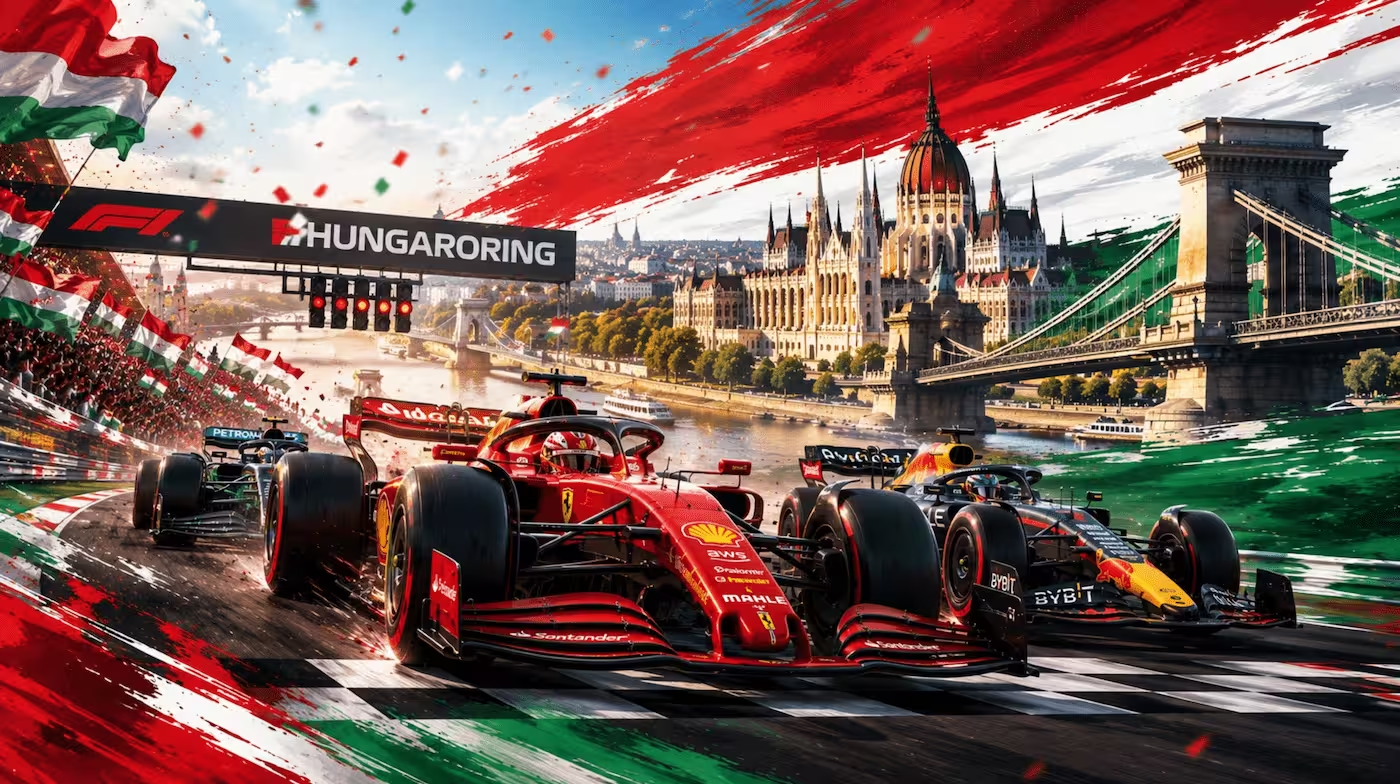
The Hungaroring sits just outside Budapest, a city that lives backwards from most of Europe — dinner happens at 10 PM, the thermal baths are hotter in summer, and the Formula 1 race arrives in late July when the Danube heat peaks and the terraces are packed. From 24 to 26 July 2026, the Hungarian Grand Prix returns to a circuit that’s been on the calendar since 1986, and it’s one of the most technical, unpredictable races of the season.
Unlike the debut circuits, this is a known quantity — the Hungaroring has a 40-year track record of producing wild finishes and strategic complexity. But Budapest itself is the draw that separates this race from others. Thermal culture, ruin bars, Danube-side dining, world-class food — the racing is intense, but the weekend is unhurried. This guide covers how to get tickets, where to sit at a circuit that rewards tactical positioning, where to stay, and how to build a proper Budapest escape around the race.
In This Guide
- 01 Why the Hungarian GP Is Different
- 02 The Hungaroring: A Technical Masterclass
- 03 The Race Weekend: Schedule and What to Expect
- 04 Getting Tickets for the Hungarian Grand Prix
- 05 Where to Sit: Grandstands and Viewing Spots
- 06 Getting There: Access from Budapest
- 07 Where to Stay in Budapest
- 08 Beyond the Race: A Budapest Weekend in July
Formula 1 Hungarian Grand Prix · Hungaroring
24–26 July 2026 · Near Budapest
One of the season’s most technical races — tight corners, unpredictable strategy, and a circuit that rewards smart positioning. Verified resale seats with a full buyer guarantee:
Get Hungarian GP Tickets Now →Tickets guaranteed valid or fully refunded · Prices shown upfront
Why the Hungarian GP Is Different
The Hungarian Grand Prix has been part of the F1 calendar since 1986, making it the second-oldest race still held in the same country (behind only Monaco and Italy). But what makes Budapest special isn’t just the racing pedigree — it’s the convergence of two worlds. The Hungaroring sits in the hills northeast of the city, technically separate from Budapest proper. But the race weekend itself is inseparable from the city: thermal baths, ruin bars, the Danube, street food, and late-night culture that doesn’t start until the sun goes down.
Race day is Sunday 26 July, Round 13 of the season, when the championship fight is tightening and every point matters. The Hungaroring’s technical nature means strategy and tire management often trump raw pace — overtaking is difficult, so qualifying, pit stops, and caution periods decide the race.
The Hungaroring: A Technical Masterclass
The Hungaroring is nicknamed “Monaco without walls” because it demands high downforce, constant directional changes, and precision that rivals the principality. At 4.381 kilometres, it’s relatively short, but the 14 corners and hairpins mean the driver rarely finds a rhythm. There’s just one proper straight, which severely limits overtaking opportunities — races here are often decided by strategy rather than speed.
The circuit sits on a hillside, which means good viewing from higher stands if you pick the right section. Unlike some flat circuits, elevation changes give grandstand visitors decent sightlines across multiple corners.
The Race Weekend: Schedule and What to Expect
It’s the standard three-day Grand Prix format: practice on Friday 24 July, qualifying on Saturday the 25th, and the race on Sunday the 26th. Formula 2 and Formula 3 run as support series, so there’s racing on track most of each day. The Hungarian Grand Prix typically draws 290,000–300,000 spectators across the weekend, making it one of the busier races on the calendar, so transport to and from the circuit can be crowded in the hours after each session ends.
July in Budapest is hot — expect 28–32°C (82–90°F) during the day and little shade at an outdoor hillside circuit. Bring serious sun protection, hydration, and lighter clothing. The upside is that evening temperatures are perfect for the terraces and ruin bars that define Budapest nightlife.
Getting Tickets for the Hungarian Grand Prix
The Hungaroring has hosted F1 for decades, so the ticket infrastructure is well-established. Official sales through the circuit typically open a few months ahead, but for a mid-July race just 4 weeks away, the resale market is where most availability lives. Tickets bought by season-pass holders, locals, or early planners whose plans changed cycle through daily.
We use Ticombo for event resale: listings show exact grandstand sections before you commit, pricing is transparent, and purchases are covered by a buyer guarantee. If a ticket isn’t delivered or is invalid, you’re refunded. For a race with strong local demand, that guarantee is essential.
Three rules for buying Hungarian GP resale sensibly:
- Sunday is premium, Friday is budget. Race day tickets carry the highest price. Practice sessions on Friday are dramatically cheaper and offer a great introduction to the circuit if you’re a first-timer.
- Choose by corner, not just price. Different grandstands see different corners and have different atmospheres. Mid-field overtaking spots carry more on-track action; main straight seats are about the spectacle.
- Book earlier rather than later. For established races, resale prices hold relatively steady until the final week, when late buyers sometimes push premiums up. Don’t wait for a last-minute bargain.
Check Hungarian GP Ticket Availability on Ticombo
Where to Sit: Grandstands and Viewing Spots
The Hungaroring’s hillside location gives most grandstands decent views, but the narrow, twisty layout means some corners are better for action than others. A rough hierarchy:
- Main straight and pit lane: the start line, pit strategies, and podium finish line. Most expensive, best for camera-friendly moments, covered seating in most areas.
- First-corner area (Turn 1): historically where overtaking attempts happen early in the race, exciting angle, typically mid-tier pricing.
- Mid-circuit corners (Turns 4–8): the technical heart of the circuit, tyre-management zones where strategy decisions play out. Good views if the stand is on the hill.
- Final corners (Turns 12–14): the run to the finish, often a site of late-race moves, slightly less crowded than main straight stands.
- General admission: budget option with roaming freedom. July heat makes standing for 2+ hours tough, so bring shade or pick a spot under trees if possible.
Getting There: Access from Budapest
The Hungaroring is about 25 km northeast of central Budapest, roughly a 40-minute drive or a longer bus/train journey. The circuit runs dedicated shuttle buses from Budapest city centre on race days, which is the most straightforward option for visitors without rental cars. Alternatively, a taxi or rideshare from the city centre costs 20–35 euros and saves time if you’re not in a group.
There is parking at the circuit if you drive, but it fills quickly on race day and the exit queues after the race are notorious. If you’re comfortable with public options, the shuttle buses and taxis are faster than sitting in the parking lot.
Where to Stay in Budapest
Stay in the city centre — Budapest in July is one of Europe’s great escapes, and being near the thermal baths, the Danube, and the ruin bar scene is exactly where you want to be when the sun goes down. The race itself is 25 km out and takes 45 minutes to an hour to reach from the city, so you’re not trading convenience for the privilege of staying central. Hotels near the Hungaroring exist but are business-focused and lifeless.
Popular neighborhoods for visitors: District V (around the Parliament Building) for grandeur, District VII (the Jewish Quarter) for ruin bars and nightlife, District VI (around Terézváros) for a mix of everything. Booking well ahead is smart — July is peak season, and the race weekend + summer tourism means prices climb.
Beyond the Race: A Budapest Weekend in July
A race ticket is two hours (roughly); Budapest deserves the rest of your weekend. The Széchenyi thermal baths are an institution — open-air pools in July are quintessential Budapest vibes, and they’re free for hotel guests with a bath card. The Danube river cruises run evening tours that are perfect post-race wind-downs. And if you’re a food traveller, a food tour through the Jewish Quarter or the Central Market Hall will teach you why Budapest’s food culture punches above its weight.
The Short Version
The Hungarian Grand Prix is a technical masterclass on a circuit that’s been producing tight finishes for 40 years, set in a city that defines European summer escape. Buy resale tickets from a guaranteed marketplace, pick a grandstand by corner strategy, take the shuttle or a taxi from central Budapest, and give the rest of the weekend to the thermal baths, the Danube, and the ruin bars. The race is the headline; Budapest is why you came.
Hungarian Grand Prix 2026: Your Questions Answered
When is the Hungarian Grand Prix 2026?
24–26 July 2026 at the Hungaroring near Budapest. The race is on Sunday 26 July, Round 13 of the 2026 season.
Where is the Hungaroring?
About 25 km northeast of central Budapest, in Mogyoród. Shuttle buses and taxis connect the city centre to the circuit in 40–50 minutes.
What makes the Hungaroring special?
It’s nicknamed “Monaco without walls” because of its 14 tight corners, constant directional changes, and difficulty for overtaking. Strategy and tire management often decide the race, making it one of the most unpredictable weekends of the season.
Are tickets still available for the Hungarian GP?
Yes. Official sales may be limited, but resale marketplaces with buyer guarantees, such as Ticombo, have availability that updates daily. Prices vary by grandstand and day.
Which grandstand is best at the Hungaroring?
It depends on your priority. Main straight seats are for spectacle and podium finishes; Turn 1 is for overtaking; mid-circuit corners see strategy play out; final corners catch late-race drama. The hillside location gives most stands decent views.
What’s the weather like at the Hungarian GP in July?
Hot and sunny — expect 28–32°C (82–90°F) during the day with little shade at the circuit. Bring strong sun protection, hydration, and light clothing. Evenings cool down significantly, perfect for Budapest’s outdoor dining and nightlife.
Is Budapest worth visiting for more than just the race?
Absolutely. Thermal baths, the Danube, ruin bars, world-class food, and a city culture that comes alive after dark. Stay in the centre and use the race as an anchor for a proper Budapest weekend.
Should I rent a car or use public transport?
Public transport or taxis are simpler. The circuit runs dedicated shuttle buses from the city centre on race days, and taxis are cheap and reliable. Parking at the circuit fills quickly and exit queues are notorious.