 Skip to content
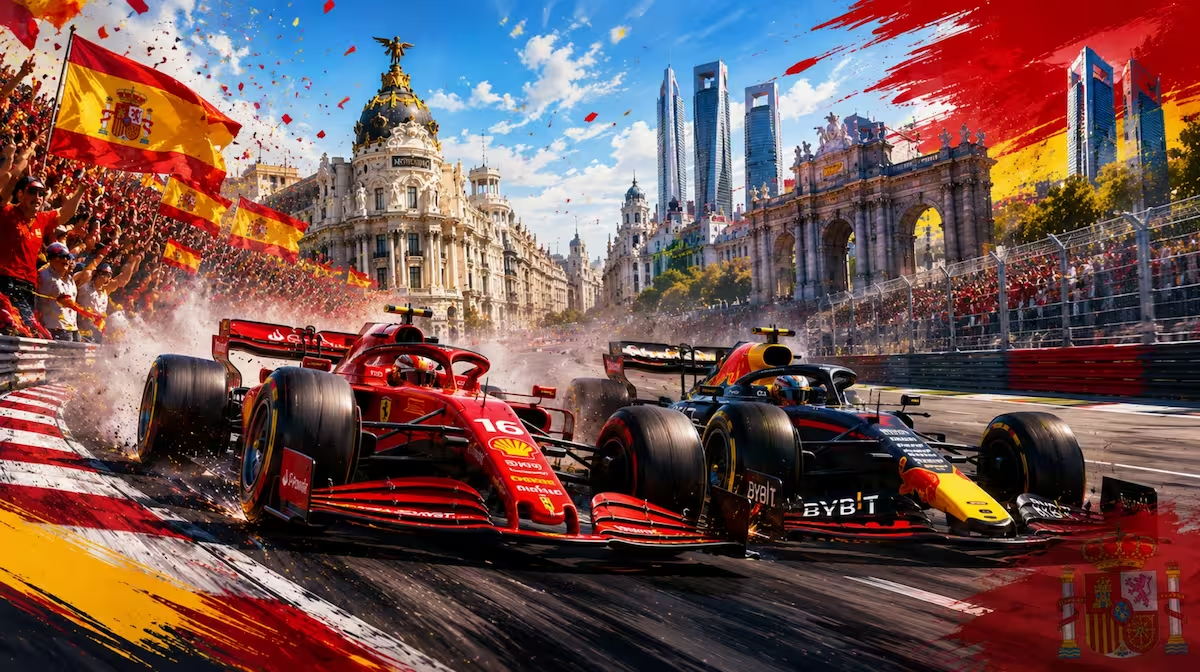
The last time a Formula 1 car raced in Madrid, the championship leader was driving a Brabham and the year was 1981. Forty-five years later, F1 is back in the Spanish capital — and not quietly. From 11 to 13 September 2026, the brand-new Madring circuit around the IFEMA exhibition centre hosts the Spanish Grand Prix, the first new venue on the calendar since Las Vegas and the start of a ten-year contract that makes Madrid one of the sport’s anchor races until 2035.
A debut race at a debut circuit, in a major capital, with two Spanish drivers on the grid — demand for this one is unlike anything Spain has seen in motorsport. This guide covers how tickets work, where to sit at a track nobody has sat at yet, how to get there, and how to build a proper Madrid weekend around the race.
In This Guide
- 01 F1 Returns to Madrid: Why This Race Is Different
- 02 The Madring: What Kind of Circuit Is It?
- 03 The Race Weekend: Schedule and What Your Ticket Includes
- 04 Getting Tickets for the Madrid Grand Prix
- 05 Where to Sit: Grandstands and General Admission
- 06 Getting There: The Most Accessible Circuit in F1
- 07 Where to Stay for the Race
- 08 Beyond the Race: A Madrid Weekend in September
Formula 1 Spanish Grand Prix · Madrid
11–13 September 2026 · The Madring, IFEMA
Debut race — official grandstand allocations are largely sold out. Verified resale seats with a full buyer guarantee:
Get Madrid F1 Tickets Now →Tickets guaranteed valid or fully refunded · Prices shown upfront
F1 Returns to Madrid: Why This Race Is Different
Spain actually hosts two Grands Prix in 2026 — Barcelona kept its June date at the Circuit de Barcelona-Catalunya — but Madrid takes over the “Spanish Grand Prix” name, and with it the long-term future of F1 in Spain. The Madring deal runs from 2026 through 2035, race day for the debut edition is Sunday 13 September, and it slots in as Round 16 of the season, right as the championship fight tightens.
Add the local storylines — Madrid-born Carlos Sainz is the circuit’s official ambassador, and Fernando Alonso gives Spain a second home hero — and you have the most anticipated debut race in years. That anticipation shows in ticket demand, which is exactly why it pays to understand your options before buying.
The Madring: What Kind of Circuit Is It?
The Madring is a hybrid: part purpose-built track, part existing roads, wrapped around the IFEMA exhibition centre and the Valdebebas district in the city’s northeast, a few minutes from Barajas airport. The layout runs 5.47 kilometres through 22 corners, and its signature is La Monumental — a steep, banked, flat-out curve flanked by an enormous grandstand, the kind of corner F1 hasn’t had since Zandvoort revived banking.
Because it’s a debut circuit, nobody — including the teams — knows exactly how it will race. That’s part of the appeal of being there for year one: you’re watching drivers learn a track in real time, at a venue whose asphalt was only finished months before the lights go out.
The Race Weekend: Schedule and What Your Ticket Includes
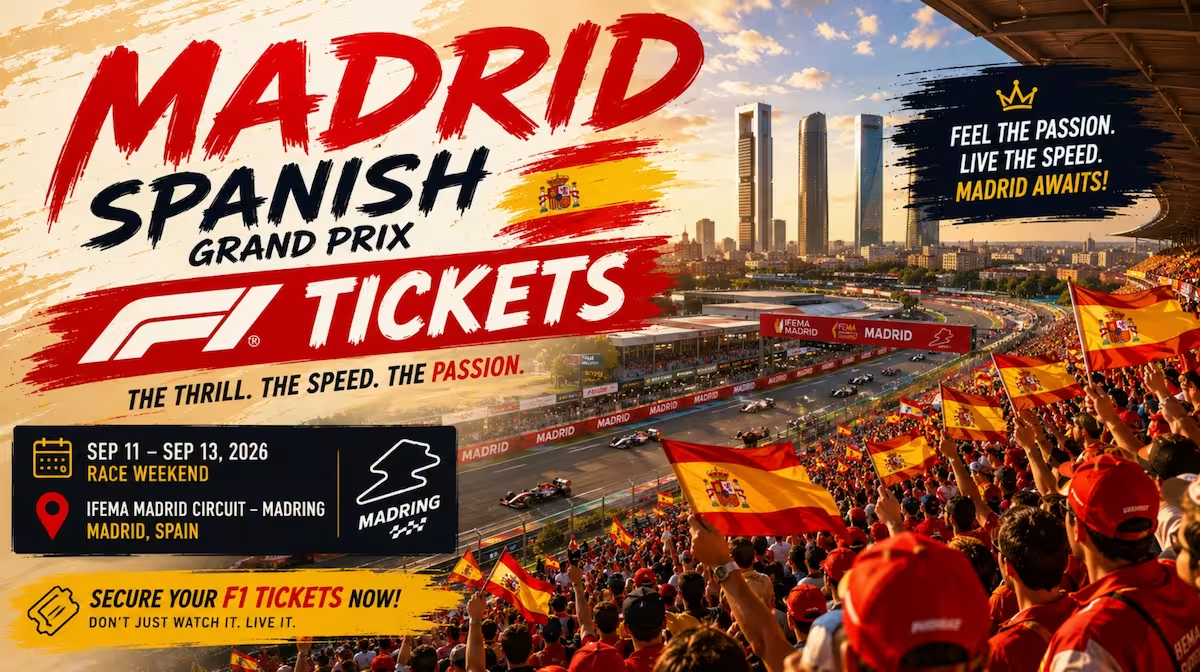
It’s a standard three-day Grand Prix format: practice on Friday 11 September, qualifying on Saturday the 12th, and the race on Sunday the 13th. Formula 2 and Formula 3 run as support series across the weekend, so there’s racing on track for most of each day — organisers are promising more than eight hours of activity daily, plus concerts, fan zones, and family areas around the venue.
Two practical points worth knowing before you commit to a ticket type: entry includes access to your assigned area and the Fan Zone with food and entertainment, but re-entry is not permitted — once you’re in for the day, you’re in. And there is no public parking at the circuit, which matters for how you plan your days (covered in section 06).
Getting Tickets for the Madrid Grand Prix
Official sales for the debut race opened in waves through 2025 and early 2026, and the most sought-after grandstands — the main straight and La Monumental in particular — were among the first to go. With three months to race weekend, the practical route for most visitors planning now is the resale market, where seats bought months ago by fans whose plans changed come back into circulation.
We use Ticombo for event resale: listings show the exact grandstand and ticket type before you buy, pricing is upfront, and purchases are covered by a buyer guarantee — if a ticket isn’t delivered or is invalid, you’re refunded. For a sold-out-debut-race scenario, that guarantee is the difference between resale and risk.
Three rules for buying F1 resale sensibly:
- Decide your day first. Sunday race tickets carry the premium; Friday practice tickets are dramatically cheaper and a great option if you mainly want to see and hear the cars. Three-day passes make sense if you’re building the whole trip around the race.
- Buy the section, not just the price. A cheap ticket in a poor viewing spot at an unknown circuit is a gamble. Anchor your choice to the circuit map (next section).
- Earlier is better. For debut events, resale prices historically climb as the weekend approaches and supply thins. Waiting for a late bargain at a race like this rarely works.
Check Madrid F1 Ticket Availability on Ticombo
Where to Sit: Grandstands and General Admission
Nobody has watched a race here yet, so honest advice means working from the layout rather than pretending to insider knowledge. Based on the circuit design:
- Main straight grandstands: the start, the pit lane, the podium, and the highest prices. Mostly covered seating with direct metro access — the safe premium choice, especially if September sun is a concern.
- La Monumental: the banked showpiece corner with a massive grandstand built into it. If the Madring produces an iconic image in year one, it will almost certainly come from here. This is the enthusiast’s pick.
- Chicane and linked-corner stands: the heavy braking zones — where overtaking is most likely on a new circuit — typically at mid-tier prices.
- General admission: the budget route in. Viewing spots at a brand-new venue are unproven, so GA here is for the atmosphere-first visitor who’s happy to roam. Bring sun protection — September in Madrid still bites in the afternoon.
Getting There: The Most Accessible Circuit in F1
Most Grand Prix circuits sit an awkward hour outside their host city. The Madring is the opposite — it’s inside Madrid, on the metro network, minutes from the airport. Metro Line 8 runs from Nuevos Ministerios in the city centre to Feria de Madrid station at IFEMA in about 15 minutes, and the same line connects directly to Barajas airport. Suburban trains and buses also serve the area, and grandstands on the main straight have direct access from the metro side.
The flip side: with no circuit parking and around 100,000 people converging on one corner of the city, expect the metro to be heaving in the hour after each session. Build slack into your evening plans, and remember the no re-entry rule — bring what you need for the full day.
Where to Stay for the Race
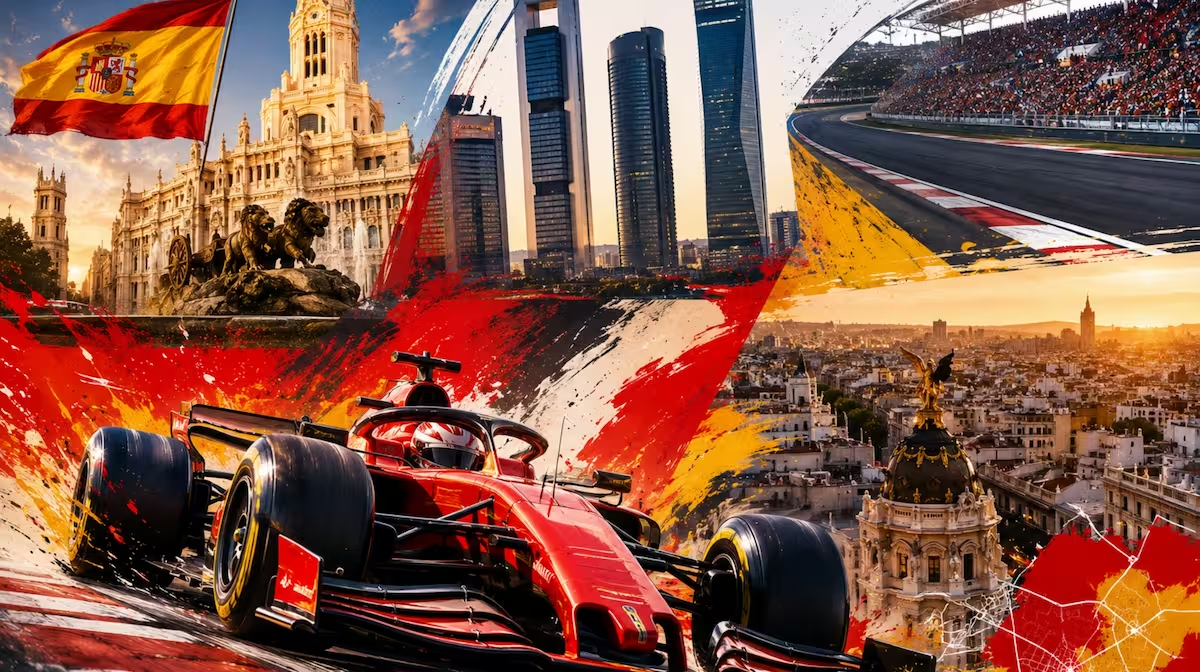
You have two sensible strategies. Staying near IFEMA, Valdebebas, or the airport corridor puts you minutes from the gates in business-district hotels — convenient, but quiet in the evenings and far from the Madrid you actually came to see. Staying in the centre — around Salamanca, Chueca, or Malasaña — means a straightforward Line 8 commute to the circuit and puts the city’s restaurants, terraces, and nightlife on your doorstep for the rest of the trip. For a first visit, we’d take the centre every time.
Either way, book accommodation as early as you can: a debut Grand Prix plus a September trade-fair calendar at IFEMA is exactly the combination that sends Madrid hotel prices climbing.
Beyond the Race: A Madrid Weekend in September
September is one of Madrid’s best months — the August heat breaks, the city comes back from holidays, and terrace season runs late into the evening. If you’re traveling with football fans as well as F1 fans, the Bernabéu stadium tour is an easy half-day, and families can stretch the trip with a day at Parque Warner south of the city. Browse more Madrid activities below.
The Short Version
Madrid’s Grand Prix is the debut event of the decade in European motorsport: a new banked circuit inside a capital city, a 45-year homecoming, and two home drivers on the grid. Pick your day, pick your section from the circuit map, buy sooner rather than later through a guaranteed resale marketplace, stay in the centre, and ride Line 8 to the gates. The race lasts two hours; Madrid in September deserves the rest of your weekend.
Madrid F1 2026: Your Questions Answered
When is the Madrid F1 Grand Prix?
The Formula 1 Spanish Grand Prix at the Madring runs 11–13 September 2026, with the race on Sunday 13 September. It’s Round 16 of the 2026 season.
Where is the Madring circuit?
Around the IFEMA exhibition centre and Valdebebas in northeast Madrid, minutes from Barajas airport. It’s reached directly by Metro Line 8 (Feria de Madrid station).
Is this the same as the Barcelona Grand Prix?
No. Spain hosts two races in 2026: Barcelona in June at the Circuit de Barcelona-Catalunya, and Madrid in September, which carries the official “Spanish Grand Prix” title under a contract running to 2035.
Are tickets still available for the Madrid Grand Prix?
Official allocations for popular grandstands sold quickly for the debut race. Resale marketplaces with buyer guarantees, such as Ticombo, are the main route for seats close to the event, with availability changing daily.
What is La Monumental?
The Madring’s signature corner: a steep, banked, flat-out curve lined by a huge grandstand — the most distinctive feature of the new circuit and the most talked-about seat in the venue.
Can I park at the circuit?
No. There is no public parking at the venue. Take Metro Line 8, suburban rail, bus, or taxi. The circuit is designed around public transport access.
Can I leave and re-enter during the day?
No. Re-entry is not permitted, so plan to stay inside for the full day. Tickets include Fan Zone access with food, entertainment, and family areas.
Is the Madrid Grand Prix good for families?
Yes, with planning. F2 and F3 support races keep the track busy all day, fan zones include family areas, and the metro makes access easy. Bring ear protection for children and sun protection for everyone — September afternoons in Madrid are still hot.