 Skip to content
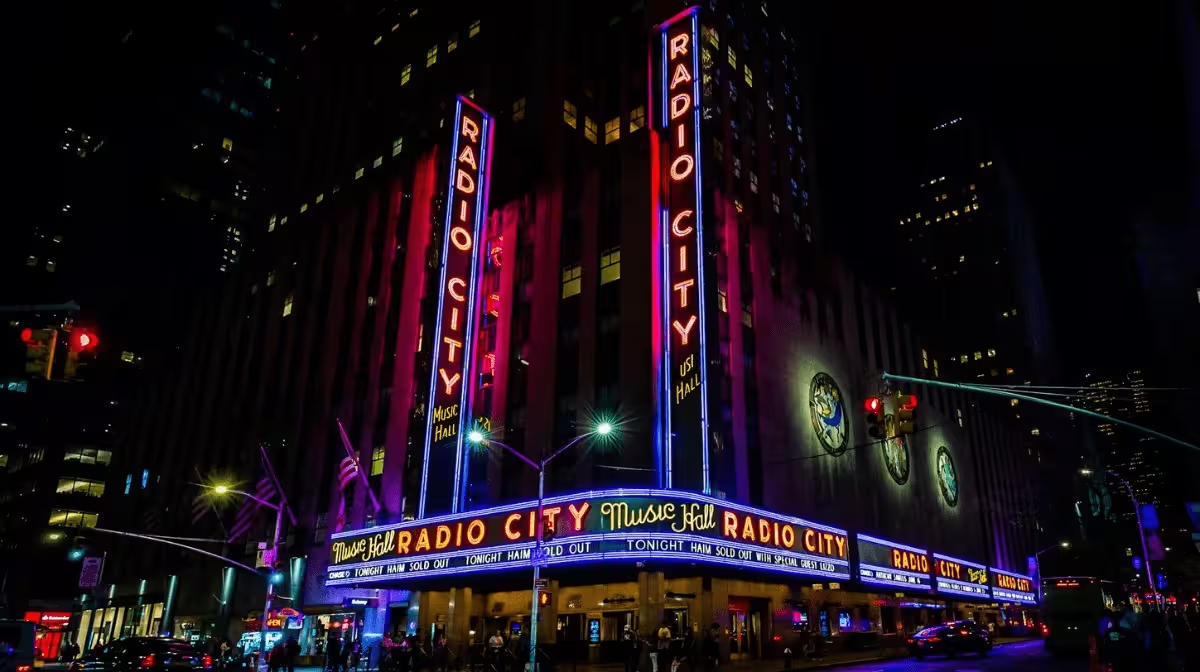
5 days is the sweet spot for New York. Long enough to move beyond the highlights into neighborhood character and cultural depth. Short enough to keep the pace brisk and exciting. You’ll see iconic landmarks, walk through distinct neighborhoods, experience world-class museums, and still have time to breathe.
5-Day NYC Itinerary: Overview & How This Works
This itinerary isn’t a rigid schedule. It’s a framework. You’ll follow a geographic logic that minimizes subway time and maximizes neighborhood immersion. Days 1–3 focus on Manhattan’s iconic core. Days 4–5 expand outward into neighborhoods where New Yorkers actually live.
The rhythm is deliberate: major landmarks on Days 1–2, cultural depth (museums) on Day 3, nature + uptown energy on Day 4, and slow wandering on Day 5. This prevents landmark fatigue while building your understanding of how NYC actually works.
Where you stay matters. Stay in Midtown or Flatiron for proximity to everything. Avoid Times Square itself (tourist trap pricing). Pick a side street in the Midtown grid or look at Flatiron/Madison Square Park area—central, quieter, better food nearby.
Day 1: Arrival & Times Square Energy
Morning/Afternoon: Arrive & Orient
Itinerary: Land, check into hotel, drop bags. Don’t nap—fight jet lag by staying active.
First stop: Times Square. Get it out of the way. Walk through the chaos at street level. It’s overwhelming and artificial and utterly NYC. Spend 30 minutes. Take photos. Feel the density of humanity and neon. Then leave immediately.
Head south to the Theater District. Walk through. Broadway theaters, marquees, the energy of live performance. This area is tourist-heavy but genuinely New York.
Late Afternoon: Walk to Central Park
From Times Square, walk south to Grand Central Terminal (33rd St). Step inside. The ceiling. The light. The marble. It’s architecture as urban theater. Grab coffee or a snack from one of the food vendors.
From Grand Central, walk east to the East Side, then north toward Rockefeller Center. Walk the plaza. In winter there’s ice skating. Year-round, it’s a pocket of calm wedged between tall buildings.
Then head to Central Park. Enter somewhere around 59th Street (the south side). Walk north along the eastern edge. Bethesda Terrace, the bow bridge, the Loeb Boathouse. You’re not trying to cover the whole park. You’re just getting a feel for it.
Evening: Find Your Neighborhood
Head back toward your hotel area. Pick a side street in Midtown or Flatiron. Walk slowly. Look at restaurants. Notice how different blocks have different energy. Find a place that feels right for dinner—not the tourist-facing place, but the neighborhood place two blocks over.
Eat. Walk back to your hotel. Sleep.
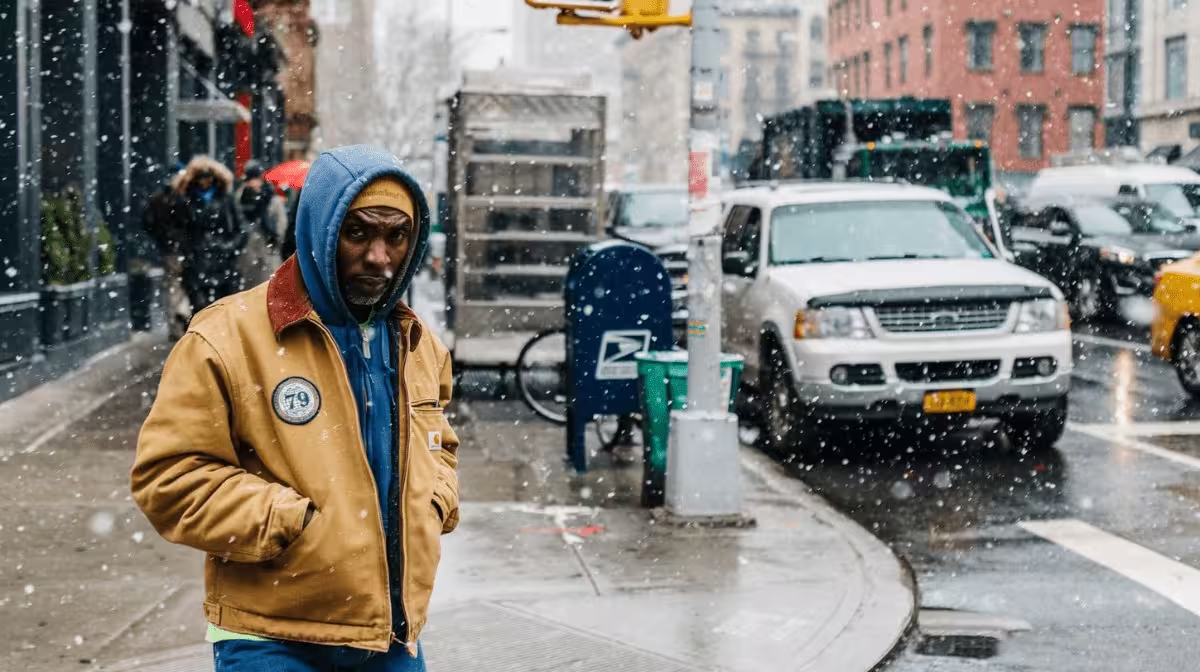
Stops: Times Square → Grand Central → Rockefeller Center → Central Park (south entrance) → Neighborhood dinner
Day 2: Brooklyn Exploration & Bridges
Morning: Walk the Brooklyn Bridge
Start early (7 or 8am). Before the crowds. From your hotel, take the subway to the World Trade Center station or walk south if you’re near enough.
Walk across the Brooklyn Bridge on foot. Do not rush this. You have the skyline behind you as you cross. You have the East River below. You have the cable architecture and the pedestrian walkway separated from car traffic. This walk is what New York feels like.
Takes about 30 minutes. Stop halfway. Take photos. Absorb it.
Mid-Morning: Explore DUMBO (Brooklyn)
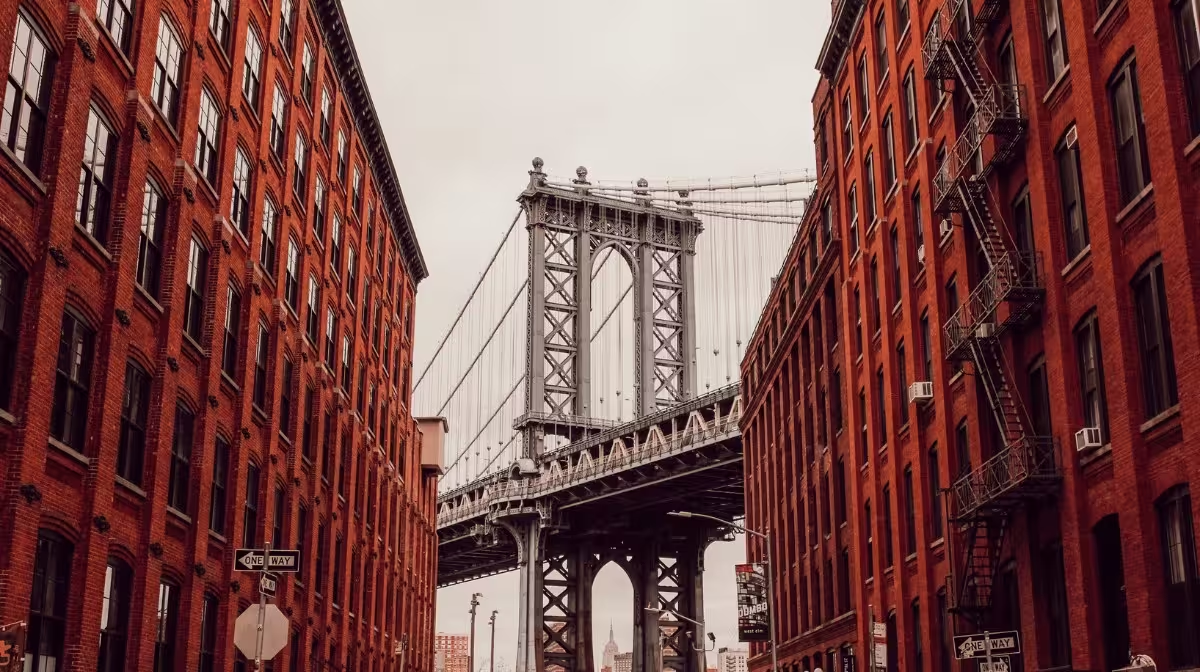
Exit the bridge into DUMBO (Down Under the Manhattan Bridge Overpass). Cobblestone streets. Industrial converted lofts. Art galleries. Coffee shops. Instagram-famous photo spots (the Manhattan Bridge framed between buildings).
Walk slowly. This neighborhood is gentrified and touristy now, but it’s also genuinely interesting. Victorian warehouses converted to apartments. Ground-level galleries and shops. It’s a window into Brooklyn’s transformation from industrial borough to creative hub.
Grab lunch here. Something casual. The neighborhood has good options.
Afternoon: Williamsburg or Park Slope Decision
Option A (if energy is high): Williamsburg — Subway from DUMBO. Walk around Bedford Ave and North 6th Street. Vintage shops, street art, the Williamsburg waterfront with views back to Manhattan. Explore the artist lofts and street culture.
Option B (if you need a break): Prospect Park — Head to Park Slope. Brooklyn’s version of Central Park, but smaller and more intimate. Walk around the park. Grab coffee on 5th Avenue. Breathe.
I recommend Option A if this is your first NYC trip. Williamsburg has more character and energy than Park Slope.
Evening: Return to Manhattan
Take the L train back to Manhattan (to 14th Street or Union Square depending on your hotel location). Walk around the Lower East Side or East Village. This neighborhood has dive bars, vintage shops, real New York energy. Find dinner here.
Stops: Brooklyn Bridge → DUMBO → Williamsburg (or Prospect Park) → Lower East Side/East Village dinner
Day 3: Museums & Culture Deep-Dive
Morning: Choose Your Museum
New York has world-class museums. You can’t do them all in one morning. Pick one and do it right instead of rushing through three.
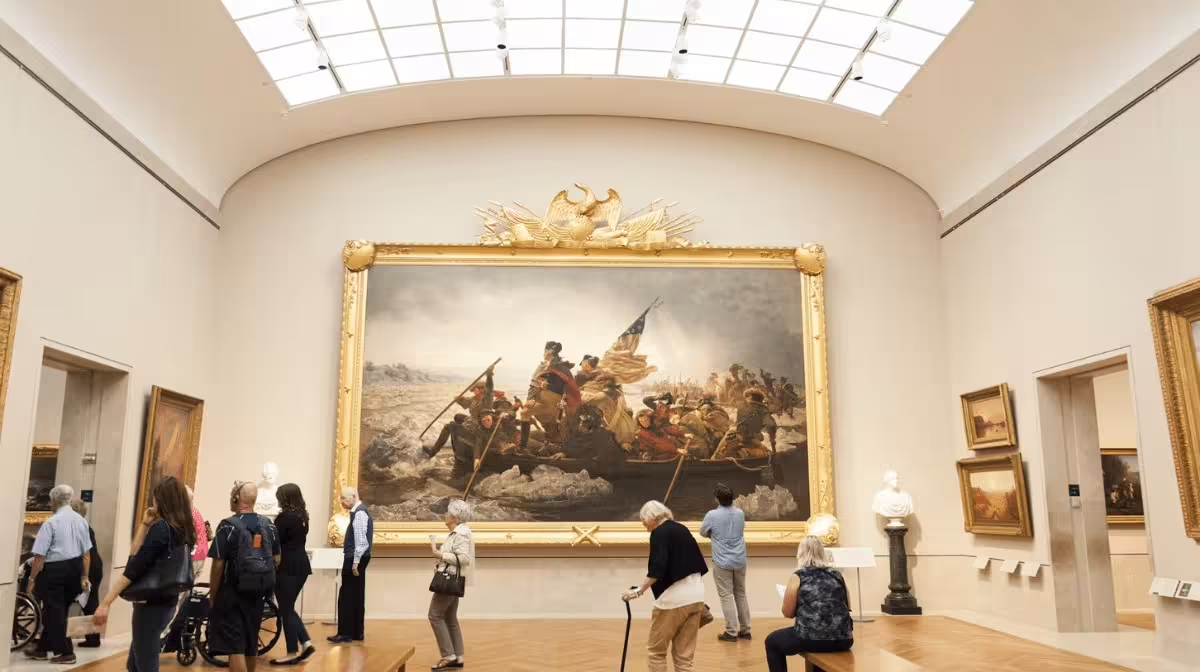
Option 1: The Metropolitan Museum of Art (Upper Manhattan, 81st St & 5th Ave). Pick a wing and explore deeply. The Egyptian Art section. The Medieval Art section. Don’t try to see the whole museum—it’s enormous. Spend 3 hours in the areas that interest you.
Option 2: Museum of Modern Art (MoMA) (Midtown, 53rd St). Smaller and more manageable than the Met. Picasso, Van Gogh, Matisse, Warhol. 2–3 hours gives you real depth.
Option 3: American Museum of Natural History (Upper West Side, 79th St). Dinosaurs, ocean life, planetarium. More casual museum experience. Good if you’re traveling with teenagers. Book admission tickets in advance.
Book tickets online in advance to skip lines.
Afternoon: Neighborhood Walk
After the museum, head to a neighborhood that connects geographically. If you did the Met, walk down 5th Avenue through the Upper East Side—tree-lined streets, boutiques, the energy of old-money Manhattan. Stop at a café.
If you did MoMA, walk west to Hell’s Kitchen (9th Ave area) or south to Soho—galleries, shops, urban texture.
If you did AMNH, explore the Upper West Side itself—Columbus Avenue, Amsterdam Avenue. Brownstones, bookstores, the energy of intellectual NYC.
Evening: Theater or Rooftop
Option A: Broadway Show — If you want a quintessential NYC experience, get a Broadway ticket for an evening show. Disney’s Aladdin is a crowd favorite, or browse other shows. Book in advance or get same-day discount tickets at the TKTS booth in Times Square. The showing of live theater is deeply New York.
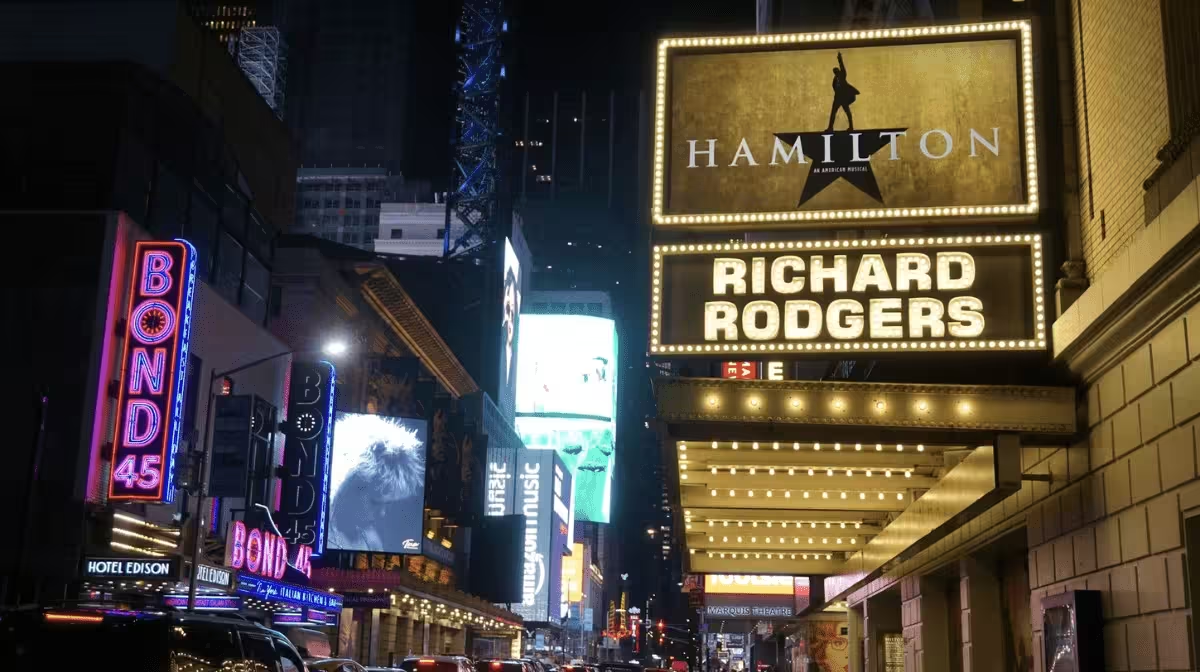
Option B: Rooftop Bar or View — Watch the sunset from a rooftop. Many Manhattan buildings have rooftop access. The Vessel (Hudson Yards) is free daytime access. 230 Fifth (Rooftop Bar) has Manhattan views and beer. This is a slower evening—less rushing, more soaking in the view.
Stops: Museum of choice → Neighborhood walk → Broadway show or rooftop evening
Day 4: Central Park & Upper Manhattan Depth
Morning: Central Park Full Exploration
Dedicate most of a day to Central Park. Don’t try to walk the whole thing. Pick a route and do it slowly.
Suggested route (2–3 hours): Enter at Columbus Circle (59th St). Walk north through the park. Bethesda Terrace. The Bow Bridge. The Lake. Sheep Meadow. Strawberry Fields. The Dakota building (outside the park, but adjacent—where John Lennon lived). Finish at the Great Lawn or Reservoir.
This isn’t a fitness walk. It’s a slow immersion in how New Yorkers use green space. Joggers, couples, dog walkers, musicians, families. The park is a cross-section of the city.
Grab lunch inside the park (there are cafés) or exit and find something nearby.
Afternoon: Upper West Side Neighborhood Dive
Spend the afternoon around the Upper West Side. Museum of Natural History area (if you didn’t visit for museums). Walk Columbus Avenue and Amsterdam Avenue. Brownstone buildings. Tree-lined streets. Independent bookstores (The Bookhouse, West Side Book Store). Coffee shops. This is real New York—not tourist-focused, just neighborhood living.
Wander. Pop into shops. Notice how different the Upper West Side is from Midtown or downtown. It’s residential. It’s intellectual. It’s where artists and writers and professors live.
Evening: Lincoln Center or Upscale Dining
Option A: Lincoln Center — If there’s a performance (opera, ballet, symphony), this is the place to experience it. Even if you don’t have tickets, walking the Lincoln Center plaza in the evening is beautiful.
Option B: Dinner in the Upper West Side — There are excellent restaurants here that aren’t tourist traps. Find something that appeals and sit slowly. The pace of the Upper West Side is more relaxed than Midtown.
Stops: Central Park exploration → Upper West Side neighborhood walk → Dinner
Day 5: Neighborhood Wandering & Farewells
Morning/Midday: Slow Neighborhood Exploration
By Day 5, you’ve hit the major landmarks. Today is about neighborhoods without agenda. Walk slowly. This is where real New York reveals itself.
Option A: Lower East Side & East Village — Tenement Museum, vintage shops, street art, dive bars, the energy of immigrant NYC. Walk Ludlow Street and Orchard Street. Stop at cafés. Soak in the bohemian vibe.
Option B: Soho & Nolita — Cast iron architecture, art galleries, fashion boutiques. More upscale than Lower East Side but still neighborhood character. Walk through residential streets—you’ll see how people live here.
Option C: Greenwich Village & West Village — Brownstones, tree-lined streets, Washington Square Park. The Village has an intellectual history (poets, artists, music). It feels different from the rest of Manhattan—quieter, more European, tree-covered.
Pick one. Walk it for 3–4 hours without a set agenda. Get lost intentionally. Find a café and sit. Watch people.
Afternoon: Preparation for Departure
Depending on your departure time, spend the afternoon visiting last-minute favorite spots or doing final shopping. Bagels (Russ & Daughters), pizza (any neighborhood spot), coffee, books at a local bookstore.
Or head to an observation deck you haven’t done yet. Empire State Building if you haven’t done it. One World Observatory. The view from the top of a building is how you close a trip to New York—the city spread below you, reminding you of its scale.
Evening: Departure
Head to airport. The memory of wandering, of stumbling into neighborhood cafés, of the scale and density and relentless energy of the city stays with you.
Stops: Neighborhood choice exploration → Favorite spots revisit → Airport
Where to Stay in NYC
Real advice: Stay within walking distance of a subway line. The subway is how you move around the city—frequent, reliable, cheap ($2.90 per ride). A 5-minute walk to a station beats a hotel that’s cheaper but requires 20 minutes to transit.
The Upper West Side is genuinely underrated for visitors. Less touristy, good food, tree-lined streets, close to Central Park and museums. You’ll pay less and experience more authentic NYC.
Recommended Hotels
Budget-Friendly: Pod Hotel Times Square — Basic but clean, central location, great value. Or explore other budget options via Stay22.
Mid-Range: The Jane Hotel — Quirky, historic, lower Manhattan location, good neighborhood. Or browse other mid-range options in Flatiron.
Upper West Side (Best neighborhood value): Browse Upper West Side hotels — Tree-lined streets, cultural vibe, less touristy than Midtown.
Practical Tips & Transportation
The Bottom Line
Five days in New York is enough to see iconic landmarks, explore neighborhoods, experience museums, and get a genuine feel for how the city operates. It’s not enough to be an expert. It’s perfect for understanding why people love New York and why they come back.
The rhythm of this itinerary builds: iconic landmarks (Days 1–2) → cultural depth (Day 3) → nature and residential NYC (Days 4–5). By the end, you’ve experienced the full spectrum of what makes New York distinctive.
The best part of New York isn’t Times Square or the Empire State Building. It’s walking a side street in the Village at dusk. It’s sitting in a café on the Upper West Side. It’s the moment you turn a corner and realize the city has an entirely different character one block over. That’s what this itinerary gives you time to discover.