 Skip to content
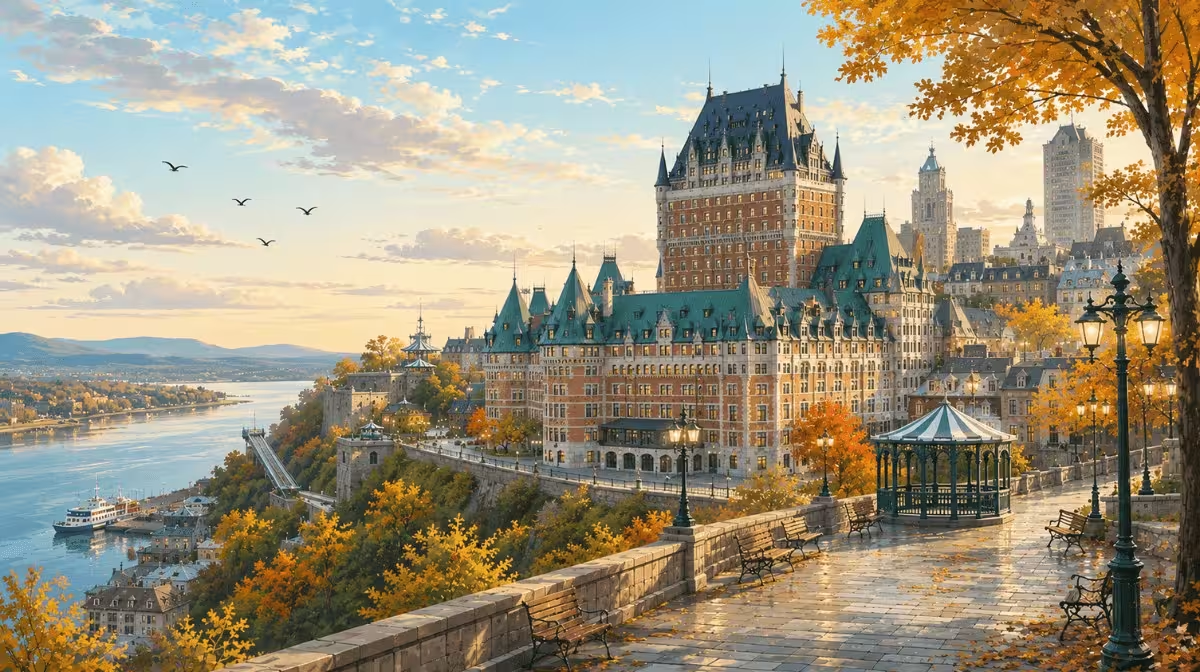
Finding the best Quebec City tours makes a real difference to how much you take from a visit here. Quebec City is unlike anywhere else on this continent — walking the cobblestone lanes of Vieux-Québec, the only remaining walled city in North America, feels less like Canada and more like a corner of old France that somehow survived intact. The Château Frontenac presides over it all from above the cliffs, and below in Petit-Champlain the stone facades and wooden terraces spill onto streets so atmospheric they feel almost theatrical. A good guide makes the difference between admiring the scenery and actually understanding it — the history embedded in these walls runs four centuries deep. These are the Quebec City tours worth booking, in order of how much they add to a visit.
Affiliate disclosure: This post contains affiliate links. We may earn a small commission if you book through our links, at no extra cost to you. We only recommend tours we would genuinely suggest.
Contents
All Tours at a Glance
| Tour | Duration | Type | Best For | Price From | Book |
|---|---|---|---|---|---|
| Old Quebec History Walk | 2 hours | Small group walking | First-timers, history | ~$30 USD | Viator |
| Hop-On Hop-Off Bus | Full day | Self-paced bus | Flexible explorers | ~$40 USD | GetYourGuide |
| Chateau Frontenac Tour | 1 hour | Indoor guided | Architecture & history | ~$25 USD | GetYourGuide |
| Old Quebec Food Tour | 3 hours | Small group food | Foodies, culture | ~$85 USD | Viator |
| Montmorency Falls Half-Day | 4 hours | Coach + walking | Nature, day trippers | ~$55 USD | GetYourGuide |
| St. Lawrence River Cruise | 2–3 hours | Boat cruise | Scenery, families | ~$50 USD | GetYourGuide |
| Private Walking Tour | 2–3 hours | Private guided | Couples, custom pace | ~$120 USD | Viator |
Old Quebec History Walk

Book this for Day 1, ideally the afternoon you arrive. Your guide meets you in period costume outside the Tourism Office and leads you through 400 years of history across Upper and Lower Town — Place Royale, which the French considered the birthplace of their civilization in North America; Notre-Dame de Québec Basilica; the fortification walls; and the Chateau Frontenac itself. The group is kept small, which means you get actual conversation rather than a commentary broadcast. Reviews consistently note that the costumed presentation makes the history feel lived-in rather than recited.
The tour finishes at Place Royale, which puts you perfectly positioned to continue exploring Petit-Champlain at your own pace — or to take the funicular up to Terrasse Dufferin and watch the light change over the St. Lawrence. Either way, the two hours you spend here will change how you see everything else in the city.
Hop-On Hop-Off Double Decker Bus
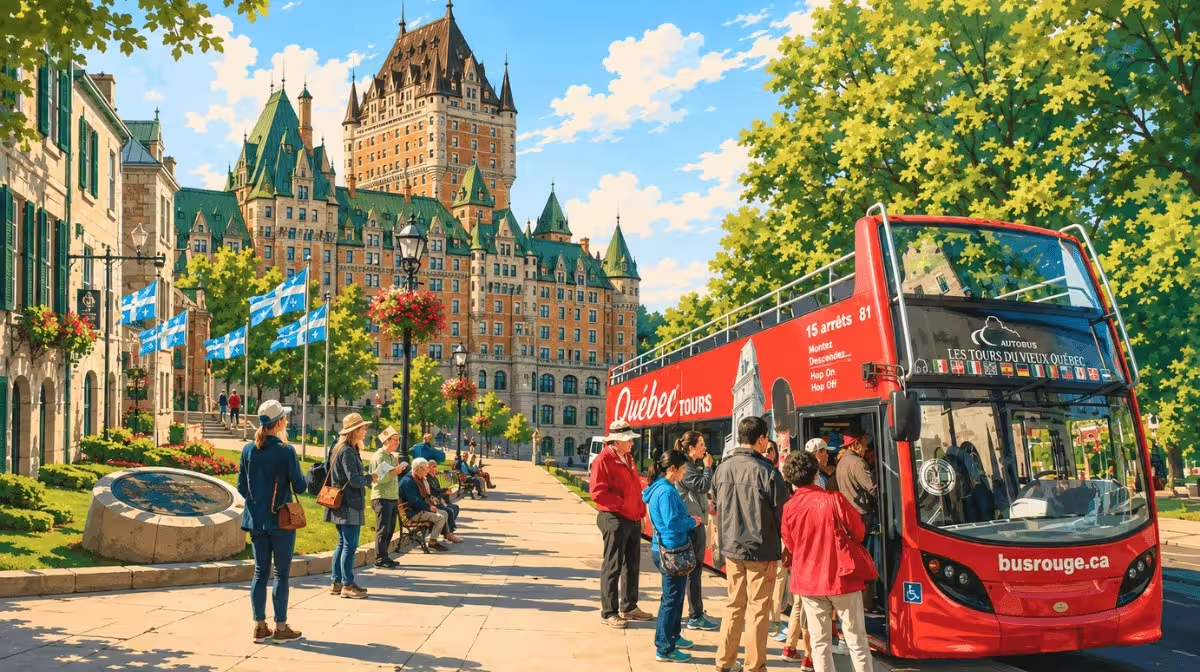
The hop-on hop-off bus is the most efficient way to understand Quebec City’s geography before committing to a walking plan. The Red City Loop covers Place d’Armes, Place Royale, Marché du Vieux-Port, the Plains of Abraham, Citadelle de Québec, and Avenue Cartier — the full sweep of the city in one pass. The open-top double decker gives you sightlines that a coach never can, and the ability to board and re-board all day at any stop means you set the pace entirely.
Where this tour earns its place is in helping you understand the relationship between Upper Town and Lower Town — the dramatic cliff that separates them, how the fortifications follow the escarpment, and why the Chateau Frontenac sits exactly where it does. That spatial sense is hard to get from a map and makes the rest of your time in the city considerably easier to navigate.
Chateau Frontenac Guided Tour
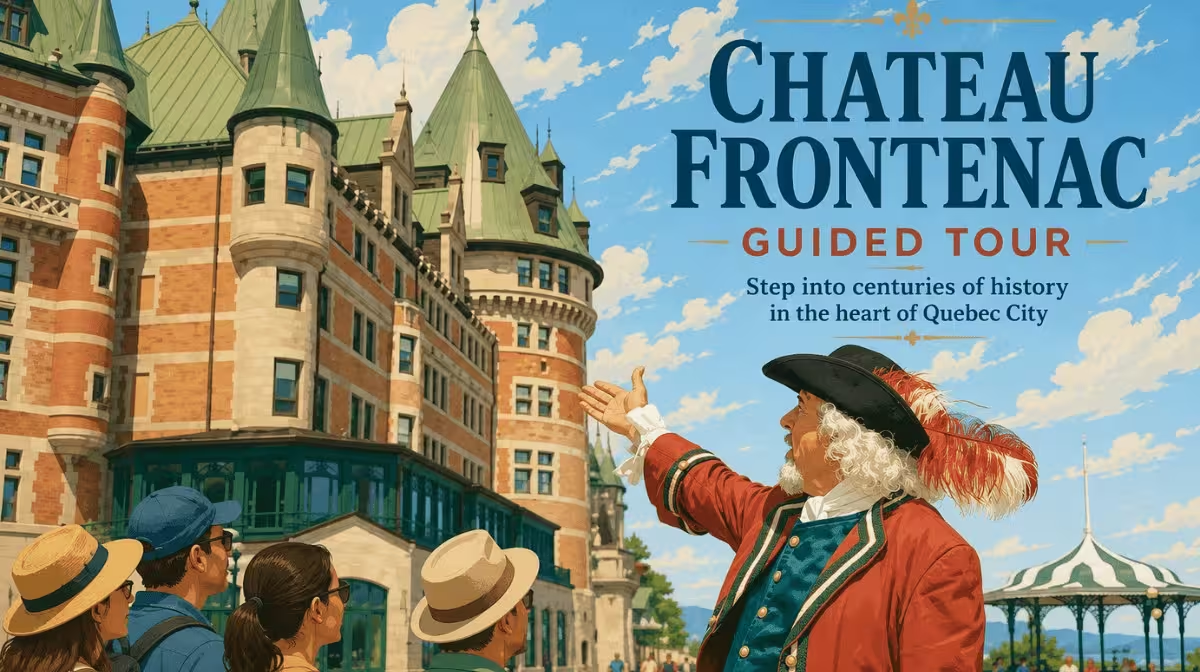
Most visitors photograph the Chateau Frontenac from Terrasse Dufferin and move on. The guided interior tour shows you the building from inside — which is, if anything, more impressive. A character guide in period costume walks you through the hotel’s history: the key figures who shaped it, the 1943 and 1944 Allied wartime conferences held within its walls, and the architectural decisions that made this railway hotel the defining structure of Quebec City’s skyline. You get access to areas not open to the general public.
The lobby, bars, and restaurants are freely accessible to non-guests during the day, so you can always walk in without booking. But the guided tour is a different experience — not longer, not more expensive than the walk-through, just considerably more layered.
Old Quebec Food Tour
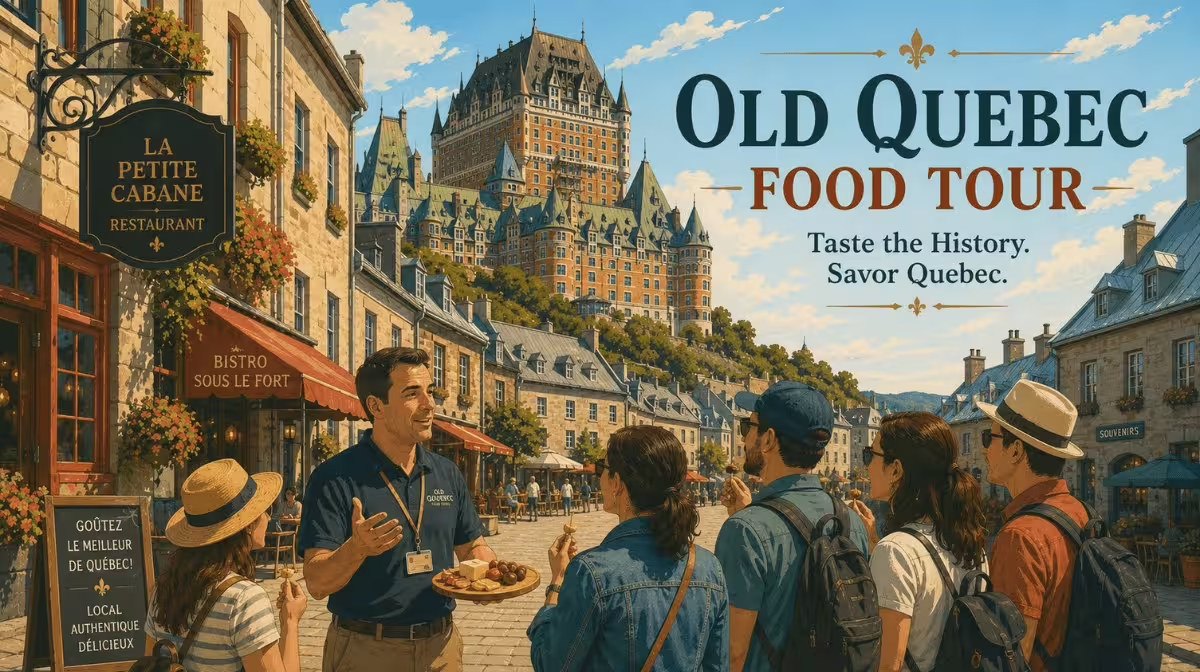
Quebec City has one of the most distinctive food identities in North America — where French technique meets Canadian tradition and produces something entirely its own. This food tour threads through Old Quebec stopping at local producers, bakeries, and traditional Québecois spots, with tastings of fresh pastries, a traditional dessert, and regional specialities. Poutine and tourtière get covered properly here, not as novelties but in the context of why they exist and what they represent in the local food culture.
The small group format means you eat at the pace of an actual meal rather than a rushed tasting circuit, and the guide covers the neighbourhood history alongside the food. This is best booked for Day 2 once you have your bearings in the city.
Montmorency Falls Half-Day Trip
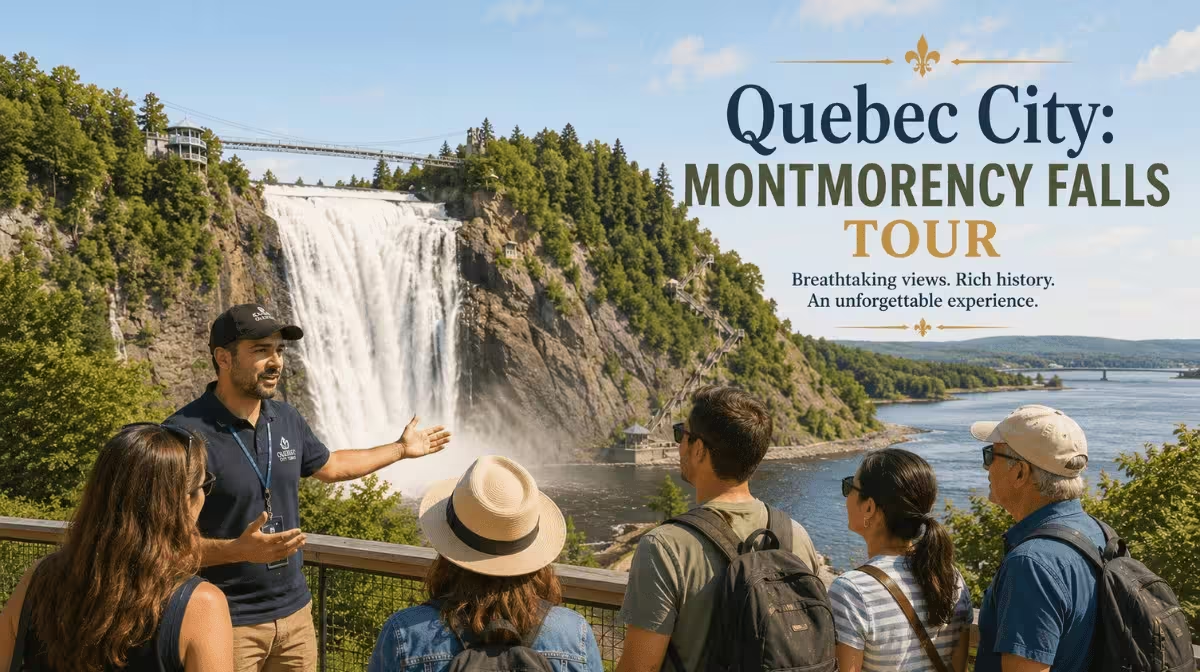
Montmorency Falls stands 30 metres taller than Niagara — a fact that surprises most visitors who hear it for the first time, and the falls themselves justify the trip on arrival. This half-day coach tour runs from Old Quebec to the falls with time to descend the 487-step panoramic staircase along the cliffside (with rest points built in), cross the suspension bridge above the cascade, or simply stand at the base and feel the spray. The tour continues to the Basilica of Sainte-Anne-de-Beaupré along the scenic Beaupré Coast.
In winter the mist freezes into ice formations, including the Sugarloaf — a cone of ice locals have been climbing for centuries. In summer the surrounding green is lush and the scale of the falls reads more clearly against the landscape. Morning and afternoon departures are available; morning is better for light if you are photographing.
St. Lawrence River Sightseeing Cruise
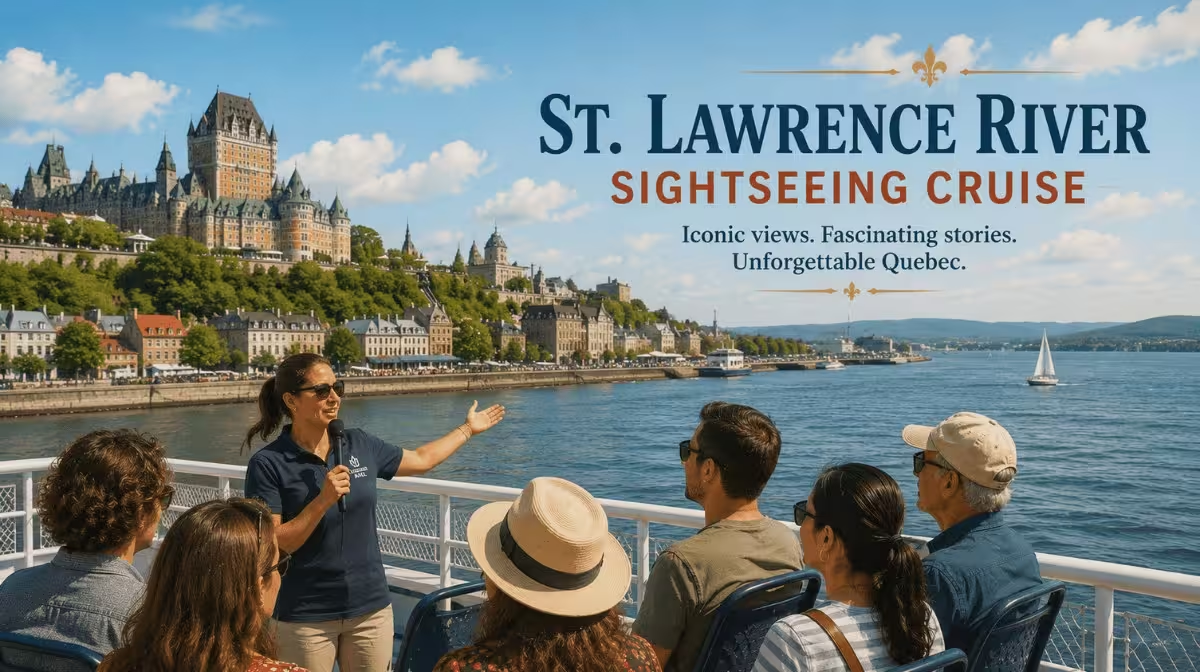
Seeing Quebec City from the St. Lawrence reverses the perspective you have had all trip. Instead of looking down from Terrasse Dufferin, you are looking up at the Chateau Frontenac from the river that has defined this city since Samuel de Champlain founded it in 1608. The dramatic cliff of Cap Diamant reads completely differently from the water, and the cruise passes Montmorency Falls and Ile d’Orléans with on-board commentary throughout.
This is a slower, more contemplative tour than the walking and bus options — best suited to an afternoon when you want to sit still for a while and let the city come to you. The photographs from the water are genuinely unlike anything you can take on land.
Private Guided Walking Tour
The private walking tour covers the same ground as the small-group history walk — the Fortifications, Notre-Dame-des-Victoires, the Chateau Frontenac, Terrasse Dufferin — but at a pace entirely your own, with your interests directing where you linger. The guide tailors the route to what you want to know. Particularly well suited to couples, families traveling with teenagers who have specific questions, or anyone coming back to Quebec City for a second visit who wants to go deeper than the standard circuit.
The premium over the small-group option is worth it if you value the undivided attention. For a first visit on a tight two-day schedule, the small-group history walk does the same job for less. For a return visit or a more deliberate pace, this is the better choice.
Before You Book
Frequently Asked Questions
What is the best tour to do in Quebec City?
For a first visit, the Old Quebec History Walk is the right starting point. It is two hours, small group, and gives you the historical and geographic context that makes the rest of your time in the city considerably more interesting. Pair it with the Chateau Frontenac interior tour on the same afternoon.
How many days do you need in Quebec City?
Two full days covers the highlights at a comfortable pace — one day for Old Quebec and the Chateau Frontenac, one day for the Montmorency Falls half-day with a river cruise in the afternoon. Three days lets you slow down, explore Quartier Petit-Champlain properly, and get out to the Plains of Abraham without feeling rushed.
Is Quebec City easy to explore without a tour?
Yes — Old Quebec is compact and well-signposted. But a guided walking tour on your first morning substantially improves the rest of your visit by giving you the context that makes the sites mean something beyond the visual. The city rewards understanding.
Do Quebec City tours operate in English?
All major guided tours operate in English. The tourism infrastructure is fully bilingual. Outside tour hours, French is the dominant language, and a few basic phrases go a long way in day-to-day interactions.
What is the best time of year to visit Quebec City?
Summer (June to August) is the most popular — warm weather, open terraces, and the full range of river cruises and outdoor tours. Winter is worth serious consideration for the Winter Carnival in late January, the ice formations at Montmorency Falls, and the atmosphere of a snow-covered Old Town, which is unlike almost anywhere else in North America. Spring and autumn are quieter and generally cheaper.
Is the Chateau Frontenac tour worth it?
Yes. The hotel’s public areas — lobby, bars, restaurants — are free to enter as a non-guest. But the guided tour gives you access to exclusive areas and the full story of the building, including its role in the 1943 and 1944 Allied wartime conferences. It is one of the more unusual hotel experiences in North America.
How do I get from Boston to Quebec City?
The standard route is I-89 North through Vermont, crossing the border at Derby Line into Canada, then Autoroute 55 North to Quebec City. The drive is approximately 5.5 hours without stops. It is a natural first stop on a road trip continuing south through Montreal.
Are Quebec City tours suitable for teenagers?
The hop-on hop-off bus and the Montmorency Falls half-day work well with older children and teenagers. The history walking tour is good for teenagers who engage with storytelling. The food tour is best suited to adults or older teenagers given the pace and the nature of the tastings.