 Skip to content
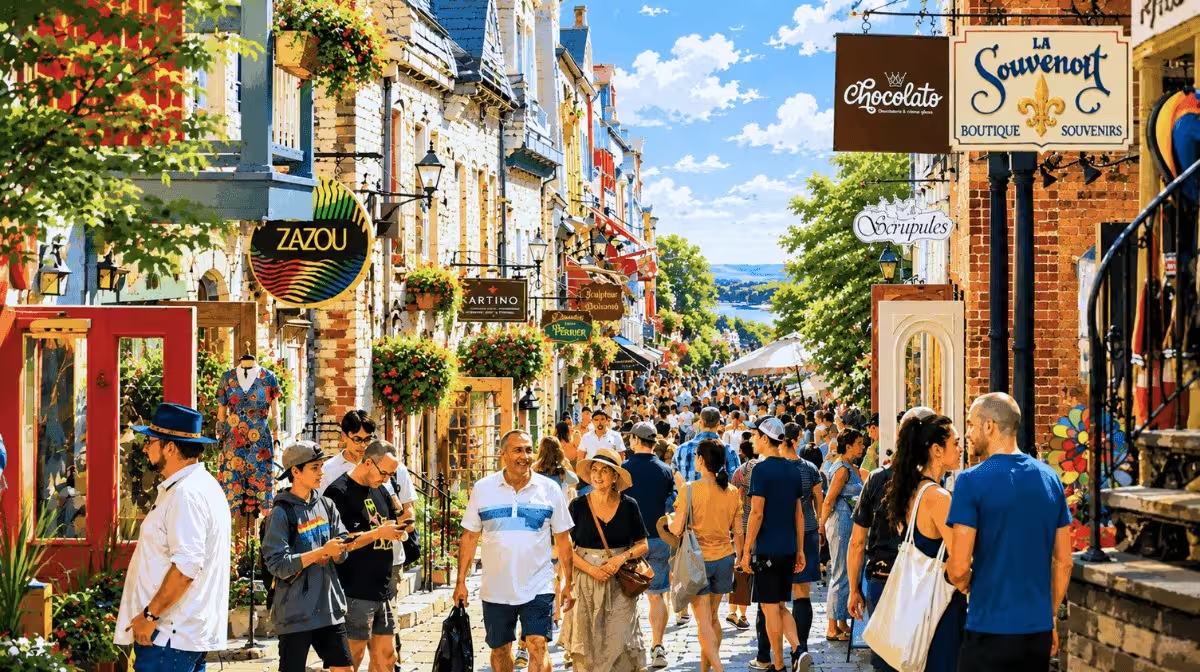
This Quebec City 2-day itinerary is built for exactly that window — two days is the right amount of time to understand the city, enough to move through it at a real pace, not enough to get complacent. The old city is compact but dense with history, and the rhythm of Upper Town and Lower Town, the cliff between them, the river below, all of it starts to make sense after 48 hours on foot. This is the itinerary that makes those two days count: what to do, when to do it, where to eat, and how to move between it all without wasting time doubling back. It works whether you’re arriving from Boston by road, flying in, or using Quebec City as the first stop on a longer Canada route.
Affiliate disclosure: This post contains affiliate links. We may earn a small commission if you book through our links, at no extra cost to you.
Contents
Before You Go
Two things to book before you arrive, ideally a week out: a guided walking tour of Old Quebec for Day 1 afternoon, and a Montmorency Falls half-day trip for Day 2 morning. Both fill up quickly in summer, and the walking tour in particular is better with a small group than a large one — the earlier you book, the more choice you have. For a full rundown of every tour worth booking in the city, our guide to the best Quebec City tours covers all seven options with affiliate links and honest recommendations. Everything else on this itinerary can be done without a reservation.
If you’re arriving by car from Boston or Montreal, aim to be parked and checked in by early afternoon on Day 1. Most hotels in Old Quebec are within walking distance of everything on this itinerary — driving inside the walled city is more trouble than it’s worth. Leave the car at the hotel for the duration.
Day OneMorning — Lower Town and Place Royale
Breakfast in Petit-Champlain
Start at the bottom. Take the funicular down from Upper Town — it costs a few dollars and saves the steep stairs — and begin the day in Quartier Petit-Champlain, the oldest commercial district in North America. The narrow stone streets are quiet this early and the light on the facades is at its best in the morning. Find a café on Rue du Petit-Champlain for coffee and a pastry before the tourist circuit gets going. This part of the city earns its reputation before the crowds arrive.
Place Royale and Notre-Dame-des-Victoires
Walk five minutes south along Rue Saint-Pierre to Place Royale — the stone square the French considered the birthplace of their civilization in North America. Samuel de Champlain founded the first permanent settlement here in 1608, and the square still looks much as it did in the 17th century: limestone facades, iron lanterns, the small basilica of Notre-Dame-des-Victoires at its centre. Step inside the church. It’s small, intensely ornate, and free to enter — one of the most beautifully preserved interiors in the city.
Old Port and the Waterfront
From Place Royale, walk toward the river and spend half an hour on the Old Port promenade. The St. Lawrence is genuinely vast from here — it reads more like a sea than a river — and the view back up to the cliff with the Chateau Frontenac above it is the defining image of the city. If the weather is good this is also where the river cruise departs, which is worth considering for a late afternoon return on Day 2. For now, take the view in and turn back toward the old city.
 Day One Continued
Afternoon — Old Quebec History Walk and Upper Town
Lunch in Lower Town
Come back up through Petit-Champlain for lunch — the streets are lined with restaurants and most have outdoor terraces in summer. Tourtière (the traditional meat pie), poutine made properly, and the local chowder are all worth ordering at least once. The restaurants on Rue du Petit-Champlain and Rue Saint-Paul are reliably good and less crowded at lunch than in the evening. Budget an hour and don’t rush this — you’ll be walking for the rest of the afternoon.
Guided Walking Tour of Old Quebec
This is the centrepiece of Day 1. Your guide meets the group outside the Tourism Office in Upper Town and spends two hours walking you through the fortification walls, Notre-Dame de Québec Basilica, the Chateau Frontenac, and the history that connects them — 400 years covered at a pace that makes it stick rather than blur. The costumed presentation sounds gimmicky until you’re standing inside the walls listening to someone explain why the city was built exactly here, and then it makes perfect sense. The tour finishes at Place Royale, completing the loop you started this morning.
Chateau Frontenac and the Fortification Walls
After the tour, walk the exterior of the Chateau Frontenac — even if you’re not staying there, the building rewards a slow circuit. The guided interior tour is worth doing on a separate visit if you have the appetite (book it for Day 2 morning if Montmorency doesn’t appeal), but the exterior and the hotel’s public spaces are freely accessible and impressive in themselves. From the front of the hotel, follow the fortification walls east along Rue des Remparts for the view over Lower Town and the St. Lawrence. The walls are the only remaining fortified city walls in North America north of Mexico — walk as much of them as the light allows.
Evening — Terrasse Dufferin and Dinner in the Old City
Sunset on Terrasse Dufferin
The wooden boardwalk of Terrasse Dufferin runs directly in front of the Chateau Frontenac along the cliff edge, looking out over the river and the mountains beyond. In summer it’s busy with people doing exactly what you’re doing — watching the light change over the St. Lawrence as the sun drops. There are kiosk bars along the terrace. Buy a drink and stay until the lights come on across the river. This is the best free hour in Quebec City.
Dinner in Old Quebec
The restaurants around Rue Saint-Louis and Rue Saint-Jean in Upper Town are the obvious dinner options — dense with choice and atmosphere in the evening. For a quieter meal, Rue Saint-Paul in Lower Town (accessible via the funicular) has excellent independent restaurants with fewer tourists. Quebec City takes its food seriously: the French influence is real, the local produce is good, and the wine lists lean appropriately European. Reserve ahead in summer if you have a specific restaurant in mind.
Day Two
Morning — Montmorency Falls
Early Start for Montmorency
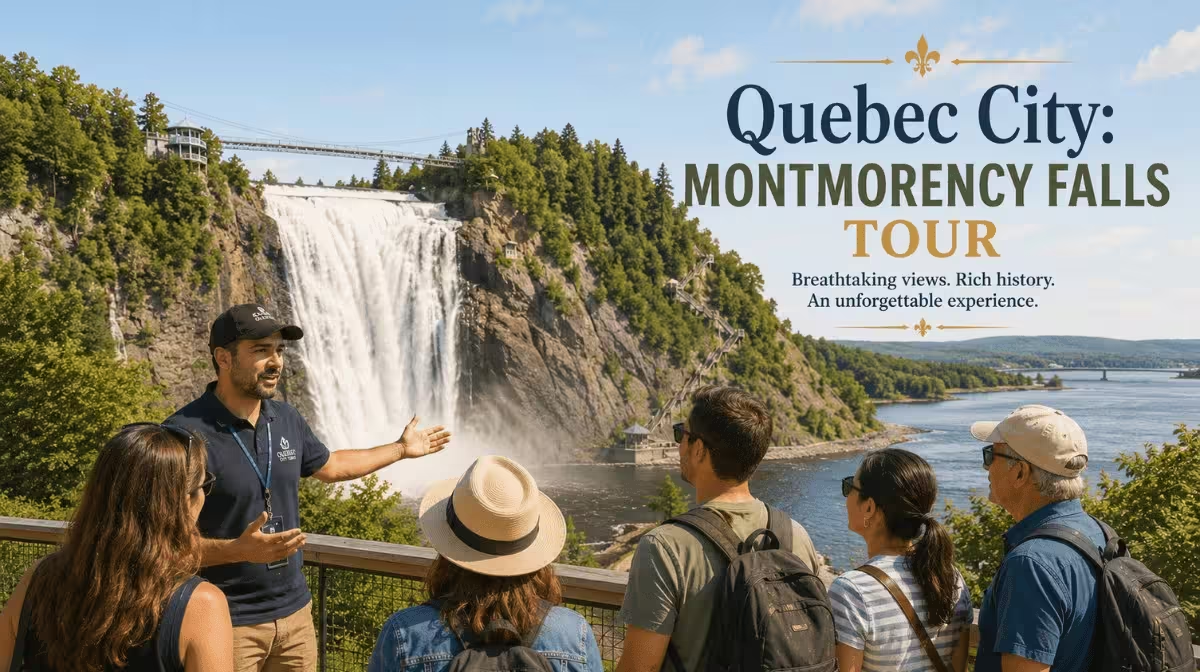
The Montmorency Falls half-day tour departs from Old Quebec and runs to the falls and the Basilica of Sainte-Anne-de-Beaupré along the Beaupré Coast. Get breakfast early and be at the meeting point with time to spare — these tours leave on schedule. The falls are 30 metres taller than Niagara, and the half-day format gets you there and back without needing a car, with enough time at the site to descend the panoramic staircase, cross the suspension bridge above the cascade, and stand at the base in the spray. Morning light at the falls is also considerably better than afternoon for photographs.
Afternoon — Plains of Abraham and the Citadelle
Lunch and Return to the City
Back in Quebec City by early afternoon, pick up lunch near the Citadelle end of Upper Town — the streets around the Grande Allée are lined with restaurants and terraces, livelier and more local in feel than the immediate tourist circuit around the Chateau. This is the end of Old Quebec closest to the Plains of Abraham, which makes the afternoon’s walk a natural continuation from wherever you sit down to eat.
Plains of Abraham
Walk west from the Citadelle into the Battlefields Park — the Plains of Abraham, where the battle that decided the future of North America was fought in 1759. The French and British engaged here for less than an hour; both commanding generals died; and the outcome effectively transferred Canada from French to British control. The site is now a large public park with extraordinary views over the St. Lawrence, and the Abraham Martin Discovery Pavilion at the park’s entrance tells the story properly for those who want the full context before walking the ground.
La Citadelle
On the way back through, the Citadelle is worth at least a walk around the exterior. It’s the largest British fortification built in North America, still an active military base, and the star-shaped ramparts give you a completely different elevated view of the city and the river than anything you’ve seen from the other end of the walls. Guided tours of the interior run throughout the afternoon and cover both the military history and the Governor General’s residence inside. Budget an hour if you go in; the exterior alone is worth twenty minutes.
Evening — Avenue Cartier and the St. Lawrence
Avenue Cartier
Walk north from the Citadelle to Avenue Cartier — a neighbourhood street that feels genuinely local rather than tourist-facing. Independent bookshops, wine bars, a covered market, small restaurants where the tables are full of people who live here. This is what Quebec City looks like away from the historic centre, and it’s worth an hour of wandering before dinner. The Marché du Vieux-Port is nearby if you want to pick up local cheese, cured meats, or maple products to take home.
Final Evening — River Cruise or Dinner
If the weather holds and you haven’t already done the river cruise, an evening departure gives you the city’s skyline lit up from the water — a different view entirely from anything you’ve seen on foot over the past two days. The cruise runs two to three hours from the Old Port. Alternatively, this is the evening to try somewhere you didn’t get to on Day 1 — the Rue Saint-Paul restaurant strip in Lower Town, or one of the better spots on Grande Allée if you want the animated terrace scene rather than a quieter table. Either way, you’ll have earned the meal.
Where to Stay
For this itinerary, staying inside or immediately adjacent to the walled city removes all transport friction — everything on Days 1 and 2 is walkable from Old Quebec. The map below pulls live availability and pricing across the city for your dates.
If budget is a priority, the neighbourhoods just outside the walls — Saint-Jean-Baptiste, Saint-Roch — are a short walk and considerably cheaper than the historic centre. Both are interesting areas in their own right. Saint-Roch in particular has good independent restaurants and a local creative scene that’s worth a detour on Day 2 evening if Avenue Cartier doesn’t hold you.
Practical Notes
Frequently Asked Questions
Is 2 days enough for Quebec City?
Two full days covers the essential Quebec City experience at a comfortable pace — Old Town, Montmorency Falls, the Plains of Abraham, the St. Lawrence, and enough time to eat well and walk slowly. A third day lets you slow down further or add the Chateau Frontenac interior tour and a deeper explore of the neighbourhoods outside the walls.
What is the best area to stay in Quebec City?
Inside or just outside the walled city of Old Quebec is the best base for this itinerary — everything is walkable and you avoid any transport logistics. The neighbourhoods of Saint-Jean-Baptiste and Saint-Roch just outside the walls are cheaper and worth considering if budget is a factor.
Do I need a car in Quebec City?
Not for this itinerary. Old Quebec is entirely walkable, the Montmorency Falls tour handles transport for that leg, and the river cruise departs from the Old Port. If you’re arriving by car, park at the hotel on arrival and leave it there for the duration.
How do I get from Montreal to Quebec City?
By road, the Autoroute 20 East runs directly from Montreal to Quebec City — approximately 2.5 hours without stops. The Via Rail train also runs the route in around three hours and drops you at Gare du Palais, a short walk from Old Quebec. If you’re building a longer Canada road trip, our Montreal travel guide covers everything worth doing in the city before or after your Quebec City days.
How do I get from Boston to Quebec City?
By road, take I-89 North through Vermont, cross the border at Derby Line, then follow Autoroute 55 North to Quebec City. The drive is approximately 5.5 hours. Quebec City makes a natural first stop on a road trip continuing south through Montreal and Toronto to New York.
What is the best time to visit Quebec City?
Summer (June to August) is warmest and liveliest, with the full range of outdoor tours and river cruises operating. Winter Carnival in late January is the most distinctive seasonal event — the city is transformed by snow and the festival atmosphere is unlike anything else in North America. Spring and autumn are quieter and less expensive.
Is Montmorency Falls worth visiting from Quebec City?
Yes — it’s one of the most impressive natural sights in eastern Canada and is often overlooked because it doesn’t have the global name recognition of Niagara. The falls are 30 metres taller than Niagara, the half-day tour format is efficient, and the panoramic staircase and suspension bridge make it a genuinely active visit rather than just a lookout stop.
What language is spoken in Quebec City?
French is the dominant language. Most people in tourism and hospitality speak English, but Quebec City is a French-speaking city and the culture reflects that fully. A few words of French are appreciated and open interactions considerably more warmly than going straight to English.