 Skip to content
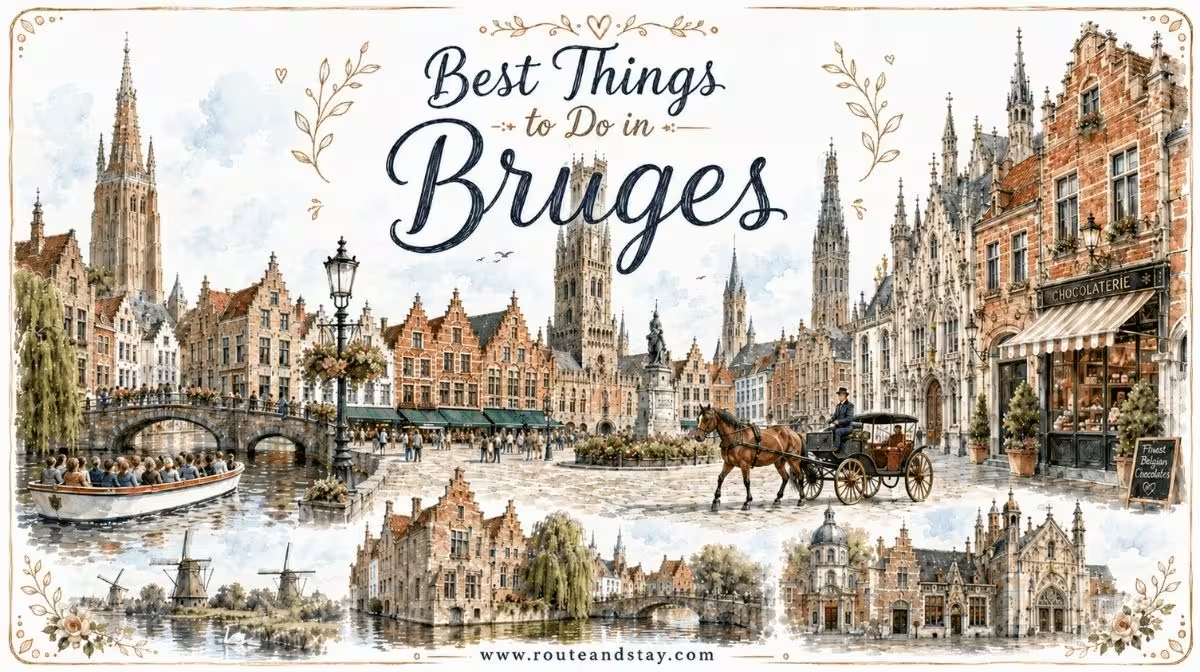
Bruges looks like it was built for a fairytale, and it mostly was left alone to become one. This is a city where the medieval core survived almost untouched—no wartime bombing, no modern redevelopment squeezing out the cobblestones—so what you’re walking through is the real thing: canals lined with gabled houses, a bell tower that’s watched over the market square since the 13th century, and a historic centre so compact you can cover the essentials in a single, unhurried day.
The best things to do in Bruges are almost all within a 15-minute walk of each other, which makes it one of the easiest cities in Europe to do well without a plan. This guide ranks the 12 experiences worth building your visit around, plus the tastings, brewery visits and day trips worth adding if you have more time. If you only want the one-line answer, skip to Our Top Pick.
▼ Table of Contents
The Best Things to Do in Bruges at a Glance
Bruges rewards slow wandering as much as it rewards a checklist. The headline sights—the Markt, the Belfry, the canals—are all within a few cobbled streets of each other, but the city’s real charm shows up in the quiet corners: swans gliding across the Lake of Love, nuns’ footsteps in the Beguinage courtyard, a windmill still grinding grain on the old ramparts. Below, we rank the 12 experiences worth prioritising.
Browse the ranked list, check live availability through the booking widgets, and skip to Our Top Pick if you just want the one-line answer.
The Top 12 Things to Do in Bruges, Ranked
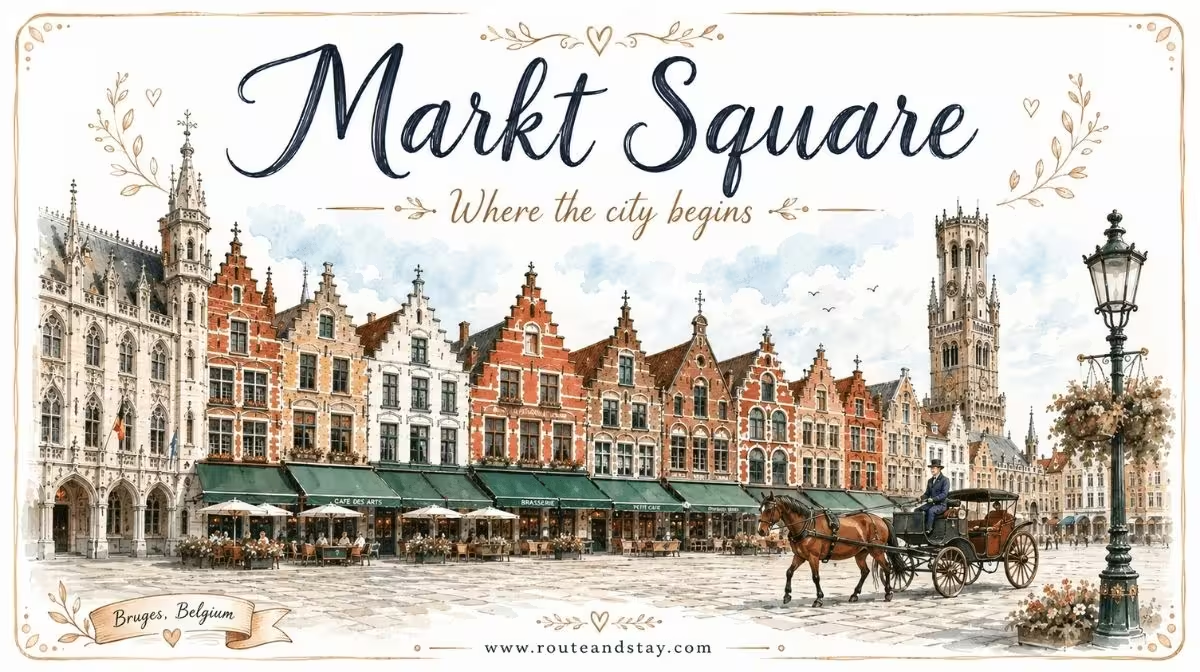
1Start in the Markt (Market Square)
The Markt is where every Bruges visit begins—a broad medieval square ringed by stepped-gable guild houses, now mostly cafés and restaurants, with the Belfry towering over the eastern side. It’s at its liveliest on Wednesday mornings, when a farmer’s market fills the square with local produce and cheese. Come once in daylight for the colour, and again at night when the façades are floodlit.
Best for: The obvious first stop and the heart of the historic centre. Duration: 30–45 minutes, longer with a coffee. Free.
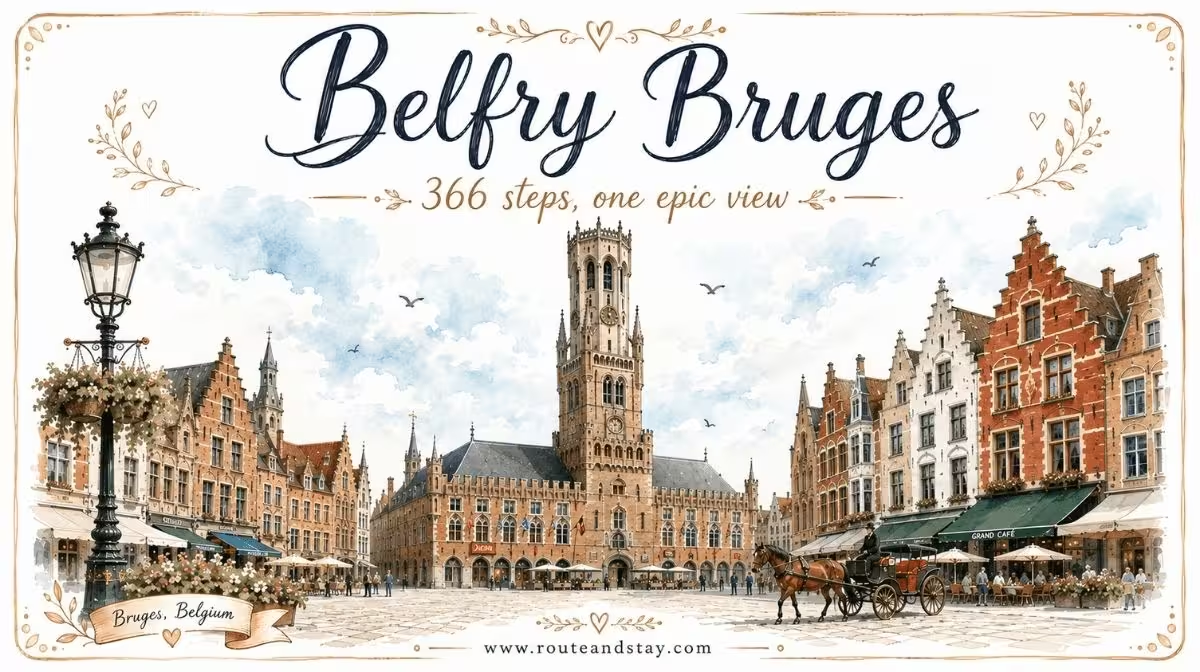
2Climb the Belfry of Bruges
Bruges’s most iconic landmark is this 83-metre bell tower on the Markt, built from the 13th century and topped with a 47-bell carillon. Climbing the 366 narrow steps (no elevator) rewards you with the best view in the city—and a treasury room part-way up where you can catch your breath and see the vault that once held the city’s charters and seals. It’s a genuine workout, but it’s the one thing almost everyone names as Bruges’s must-do climb.
Best for: The single best view over Bruges. Duration: 45–60 minutes. Around €15 adult, kids under 6 free; open daily 9:30am–6pm (last entry an hour before close), and closes in high wind. Go early on a weekday to beat the queues.
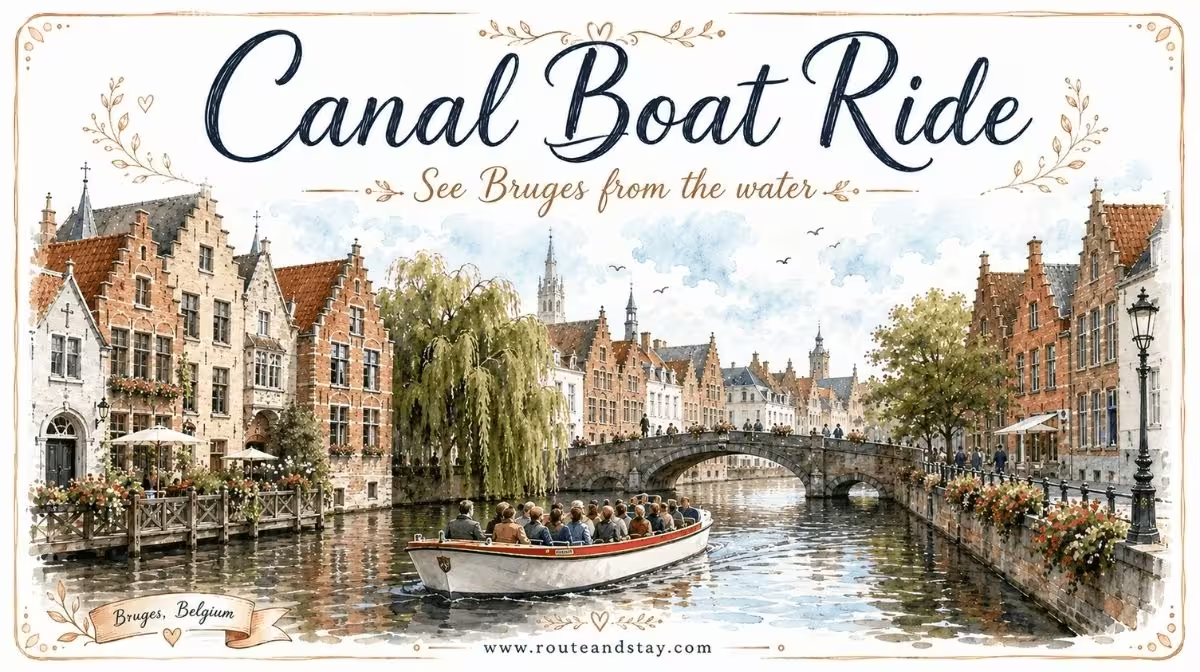
3Take a Canal Boat Ride
Seeing Bruges from the water is the other essential, and it’s genuinely a different city from this angle—low stone bridges, overhanging willows, and gabled houses that lean right over the canal. Boats leave from five landing stages around the centre (Rozenhoedkaai is the classic one) for a roughly 30-minute loop. Note that this one’s seasonal: boats mostly run March through mid-November, with reduced or no service in the depths of winter.
The most popular way to do it is combined with a walking tour and a chocolate tasting, so you get the history, the water, and the praline in one outing:
Best for: Seeing Bruges from a completely different angle. Duration: 30 minutes solo, half a day with the combo tour. Solo boat ticket around €15 adult/€9 child; cash is often expected at the dock.
4Photograph Rozenhoedkaai
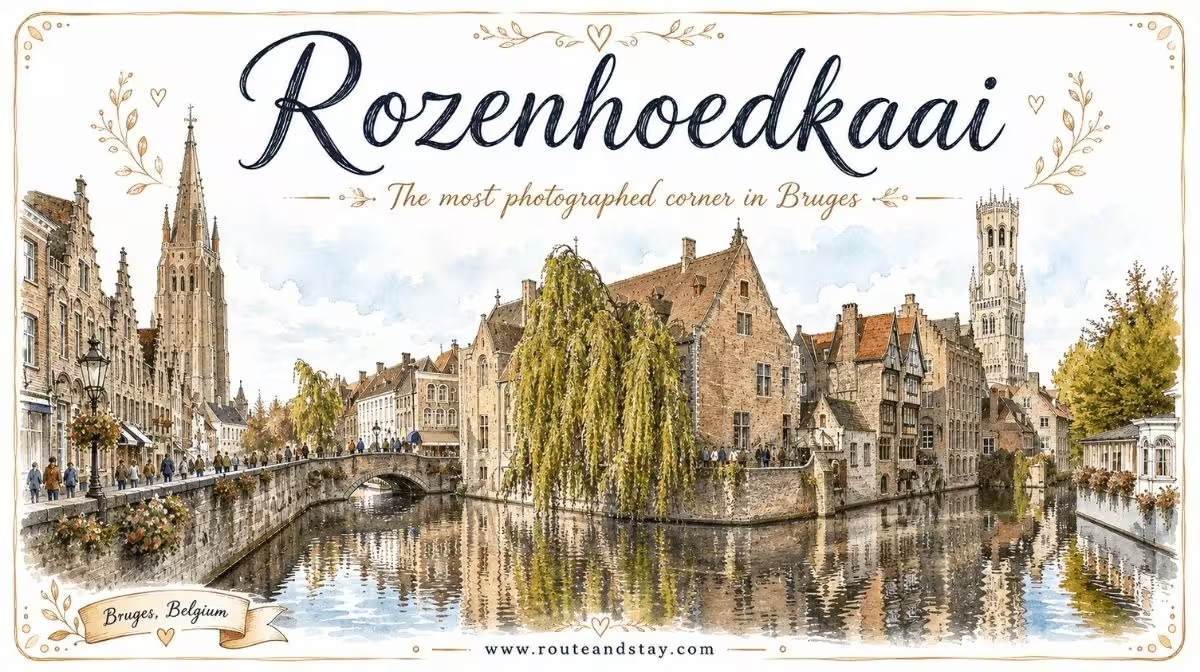
If you’ve seen one photo of Bruges, it was probably taken here. Rozenhoedkaai is the corner where two canals meet, framed by the Belfry in the background and a run of postcard-perfect gabled houses along the water—widely considered the single most photographed spot in the city. It’s also one of the five canal-boat landing stages, so it’s easy to fold into the boat ride above.
Best for: The classic Bruges photo. Duration: 15–20 minutes. Free. Best light is early morning or golden hour, before the tour groups arrive.
5Visit the Basilica of the Holy Blood
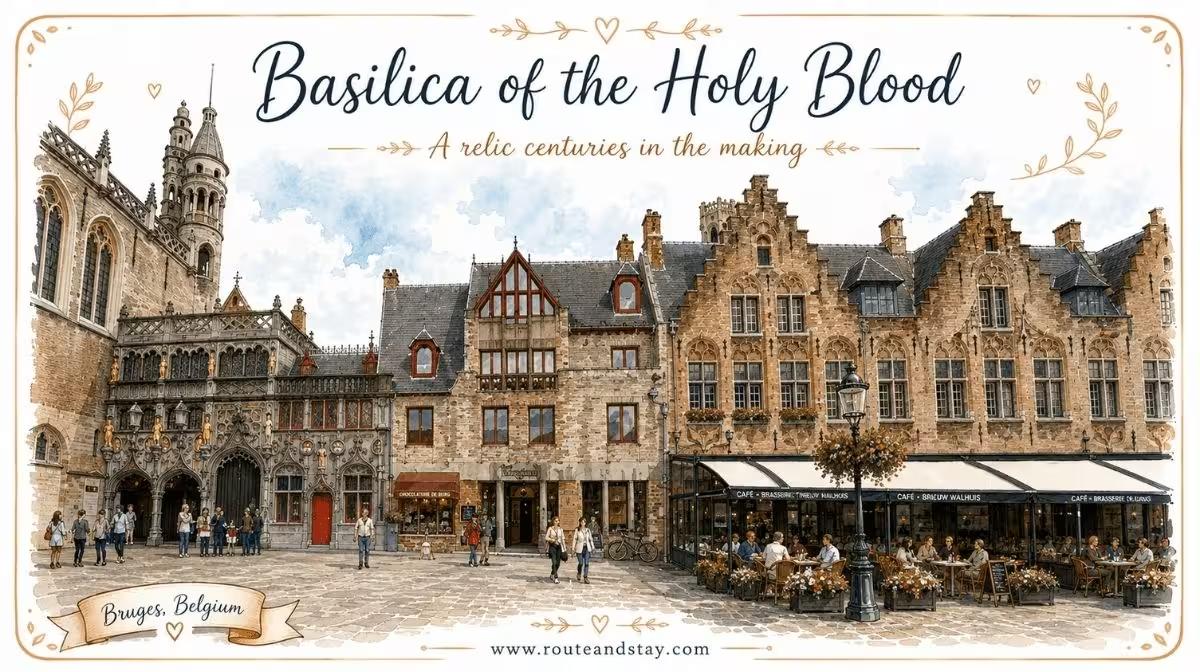
Tucked into the corner of Burg Square, this 12th-century basilica houses a vial said to contain a cloth stained with the blood of Christ, brought back from the Crusades. The building itself is a striking contrast in two parts: a plain, dim Romanesque lower chapel and an ornate Gothic upper chapel where the relic is kept. General entry is free, but the relic itself is only displayed during a narrow afternoon window, so time your visit if that’s the reason you’re going.
Best for: A genuinely moving stop, religious or not. Duration: 20–30 minutes. Free to enter (small fee for the treasury museum); relic viewable roughly 2–4pm—dress modestly and keep quiet, it’s an active place of worship.
6Stroll Around Minnewater Lake
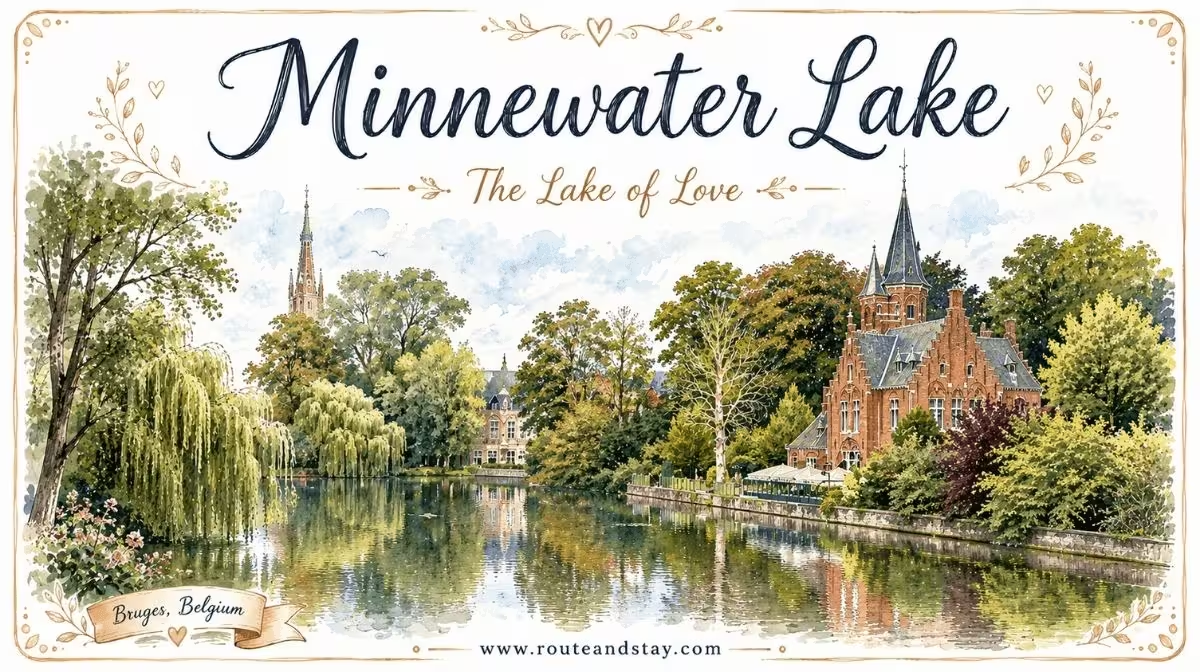
Known as the Lake of Love, Minnewater is where Bruges slows right down—a tree-lined lake south of the centre, usually dotted with swans (the city’s emblem), crossed by a small footbridge tied to a local legend of tragic lovers. It’s a favourite spot for an evening walk or a picnic, and it sits right next to the Beguinage, so the two pair naturally.
Best for: A quiet, romantic wind-down away from the crowds. Duration: 20–30 minutes. Free, open all hours.
7Wander the Beguinage (Begijnhof)
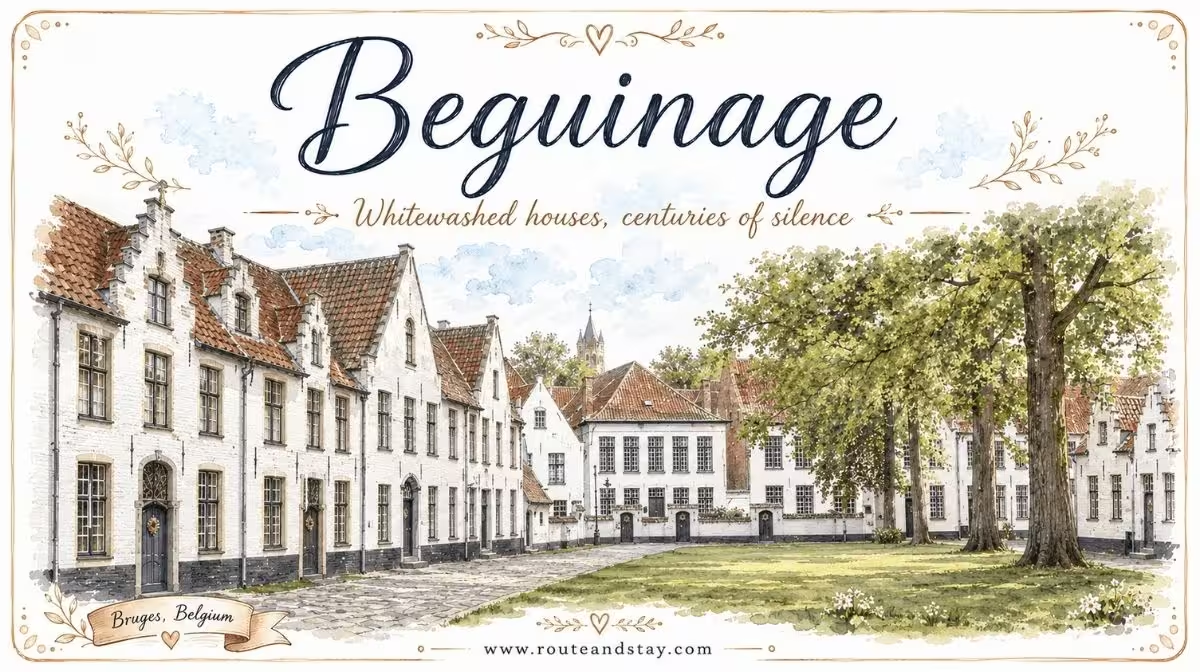
Step through the gate and the city noise disappears—the Beguinage is a walled courtyard of whitewashed 17th-century houses around a quiet garden, founded in 1245 for the beguines, independent laywomen who lived a pious, communal life without taking formal vows. The last beguine in the world died in 2013; today the complex is home to Benedictine nuns, who still hold daily services in the courtyard church. It’s a UNESCO World Heritage Site and one of the most peaceful spots in the city.
Best for: A peaceful contrast to the busier squares. Duration: 20–30 minutes. Courtyard and church exterior are free; the small house-museum charges a couple of euros. Gates close at dusk.
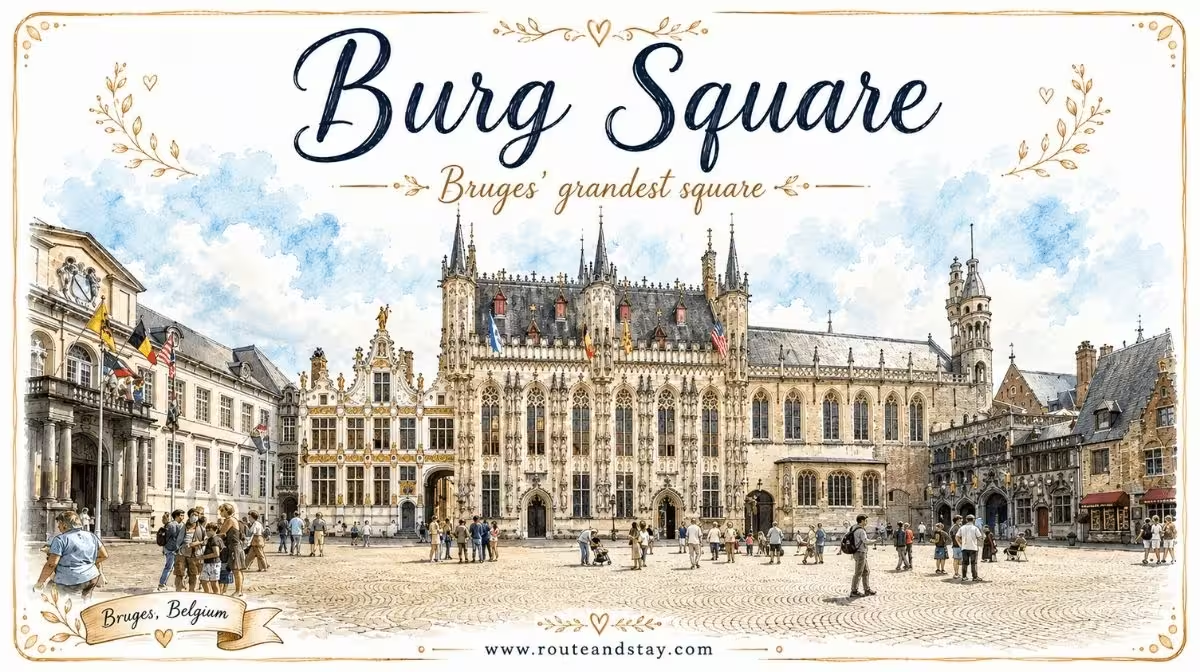
8Admire Burg Square
A short walk from the Markt, Burg Square packs an enormous amount of architecture into a small space—the Gothic City Hall, the Basilica of the Holy Blood, and several centuries of civic buildings side by side. It’s quieter than the Markt but arguably more visually striking, and it’s the departure point for the horse carriage rides on Wednesday mornings.
Best for: Architecture fans and a quieter photo op than the Markt. Duration: 15–20 minutes. Free.
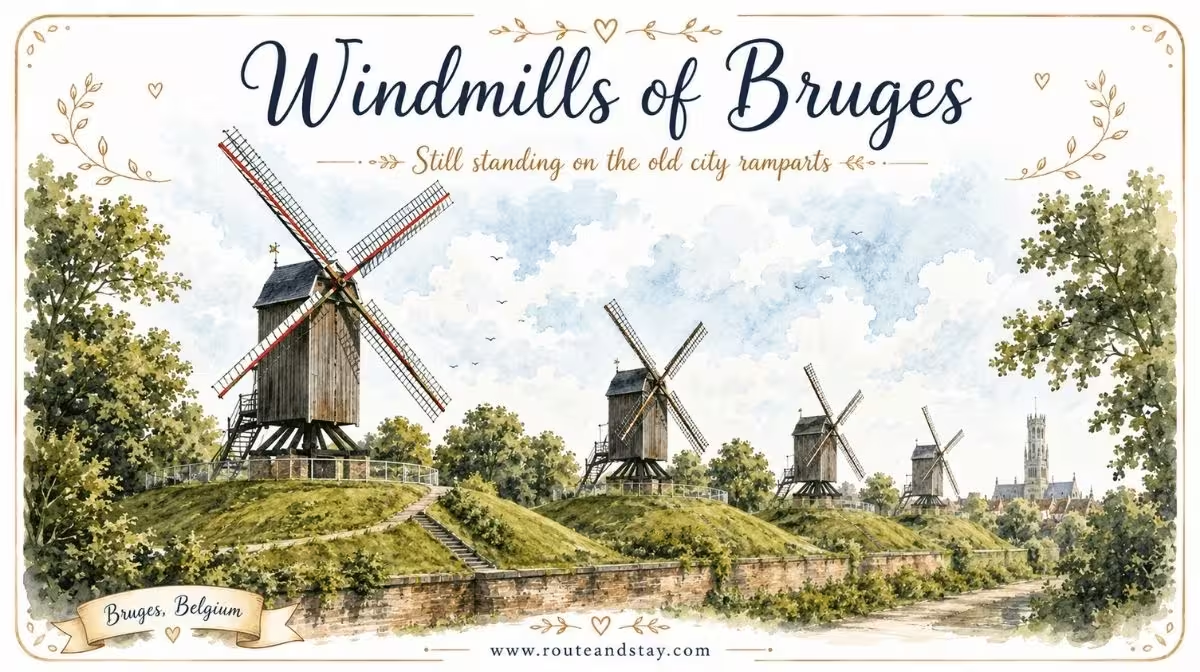
9Walk Out to the Windmills of Bruges
Four historic windmills line the Kruisvest ramparts on the northeastern edge of the centre, a leftover from the 16th century when as many as thirty ground grain and oil for the city. Only one, Sint-Janshuismolen (built 1770), is still fully operational and open to climb inside—the other three are decorative, relocated here in the 20th century to preserve the skyline. It’s a lovely, quieter walk if you want a break from the busier core.
Best for: A quiet ramparts walk and a look at working mill mechanics. Duration: 45–60 minutes round trip from the centre. Sint-Janshuismolen: small entry fee, open April–November (closed Mondays), reduced to one Sunday a month in winter.
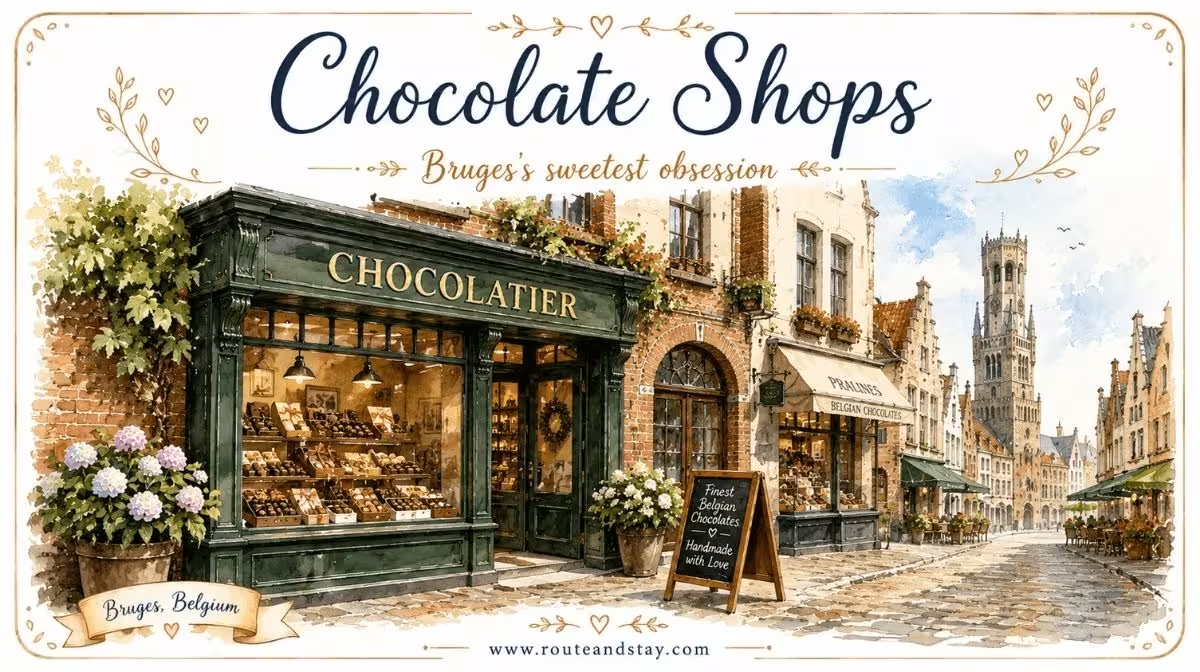
10Taste Your Way Through the Chocolate Shops
Belgium takes chocolate seriously, and Bruges’s old town is dense with chocolatiers, from generations-old family shops to newer artisan makers. If you’d rather learn the craft than just browse, this walking tour folds a proper chocolate tasting into a canal boat ride and guided walk through the centre:
Best for: Belgium’s sweetest obsession, literally. Duration: as long as your willpower holds out, or ~2 hours with the guided tasting. Free to browse; tastings and workshops vary by shop.
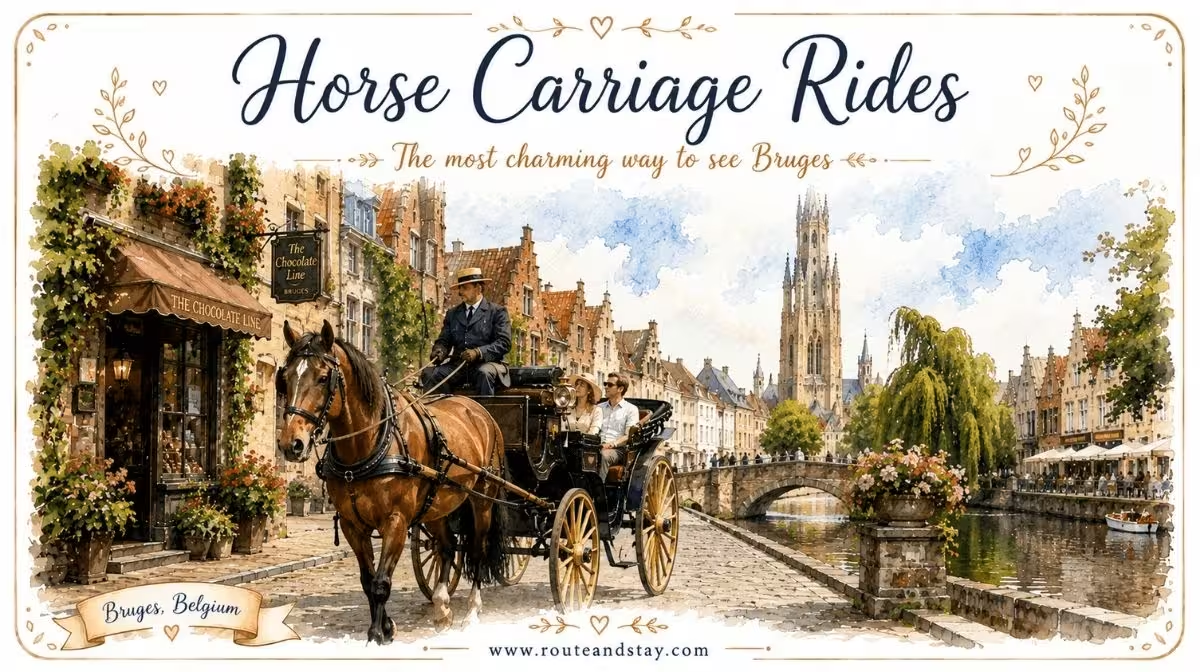
11Ride a Horse-Drawn Carriage
For a slower, more romantic loop through the centre, hop on one of the horse-drawn carriages that queue on the Markt (Burg Square on Wednesday mornings). The fixed route takes in the Markt, Church of Our Lady, the Beguinage gate and Burg Square over about 30 minutes, with a short rest stop for the horse near the Beguinage. It’s priced per carriage rather than per person, so it’s better value shared.
Best for: A relaxed, photogenic way to cover the highlights. Duration: about 30 minutes. Roughly €55–70 per carriage (seats up to 5), cash only, first-come first-served.
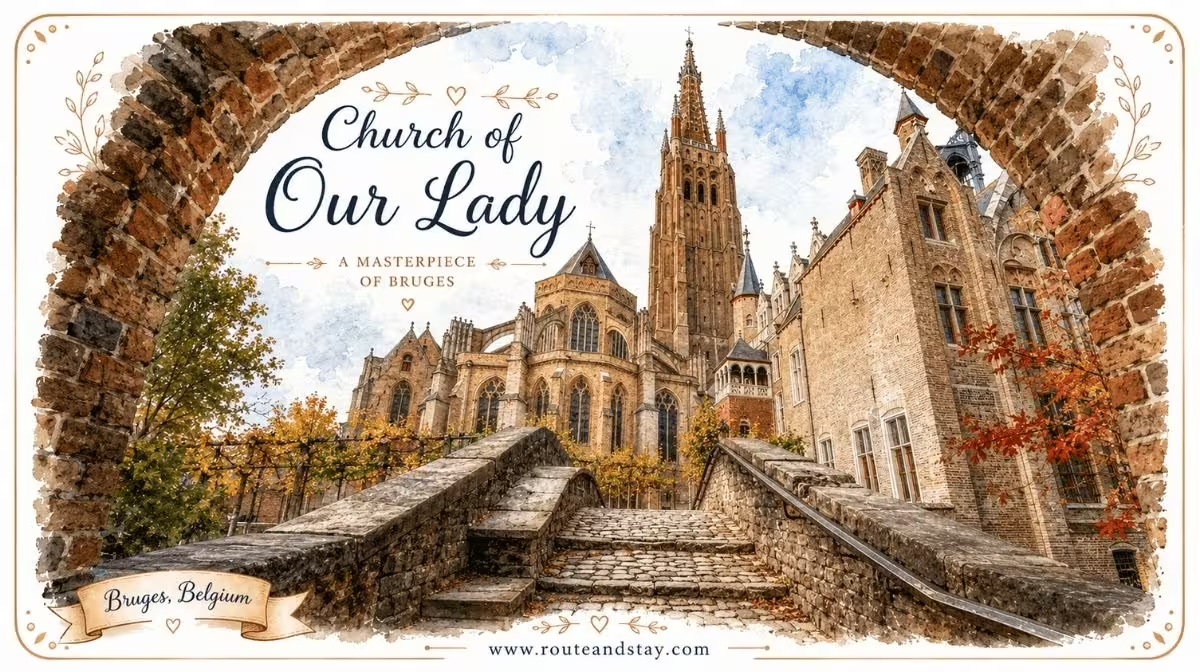
12See Michelangelo at the Church of Our Lady
Easy to walk past, easy to underestimate: the Church of Our Lady has one of the tallest brick towers in the world (115m) and, inside its museum section, Michelangelo’s marble Madonna and Child—the only sculpture he made that left Italy during his own lifetime. The main nave is free to enter; the museum section with the sculpture and the tombs of Charles the Bold and Mary of Burgundy requires a separate ticket.
Best for: Art lovers and anyone who wants one genuinely world-class artwork on their trip. Duration: 30–45 minutes. Church free; museum roughly €8–10.
Also Worth Doing
If you have more than a day, or you’re basing yourself in Bruges for a longer stay, these round things out nicely:
Tour the Bourgogne des Flandres Brewery — After nearly 60 years away, this brewery has returned to brew inside the city walls again. A visit takes you through the brewhouse and up into the malt-and-hops loft, finishing with a tasting.
Groeningemuseum — A compact but excellent collection of Flemish primitives, if you want one proper art museum on your trip beyond the Michelangelo.
Historium Bruges — An immersive, multimedia walk through the city’s medieval Golden Age, popular with families and a good rainy-day option.
Walk the City Ramparts — The free path that strings the four windmills together, running along the old fortifications with quiet canal views the whole way.
Day Trips from Bruges
Flanders Fields (WWI Battlefields)
An hour southwest of Bruges, the fields around Ypres were the site of some of the First World War’s bloodiest fighting. A guided minibus day trip typically covers the In Flanders Fields Museum, Tyne Cot Cemetery (the largest Commonwealth war cemetery in the world), and the Menin Gate, usually with lunch included—a sobering, well-run contrast to Bruges’s fairytale streets.
Best for: History travellers who want a full-day, well-organised excursion. Duration: full day.
Short on time but want to see more of Flanders? Ghent is about 25 minutes away by train and pairs well with Bruges for a two-city day, while Damme—a tiny fortified town on the old canal to the sea—makes an easy half-day by bike or boat.
Compare the Top Experiences
| Experience | Type | Time needed | Best for |
|---|---|---|---|
| Markt Square | Landmark | 30–45 min | Where the city begins |
| Belfry of Bruges | Landmark & views | 45–60 min | The best view in the city |
| Canal Boat Ride | Boat tour | 30 min–half day | Seeing Bruges from the water |
| Rozenhoedkaai | Viewpoint (free) | 15–20 min | The classic photo |
| Basilica of the Holy Blood | Religious landmark | 20–30 min | History and a moving relic |
| Minnewater Lake | Park (free) | 20–30 min | A quiet, romantic walk |
| Beguinage | UNESCO site | 20–30 min | Peace and quiet |
| Burg Square | Landmark (free) | 15–20 min | Architecture lovers |
| Windmills of Bruges | Heritage site | 45–60 min | A quieter ramparts walk |
| Chocolate Shops | Food experience | Open-ended | Belgium’s sweetest obsession |
| Horse Carriage Ride | Sightseeing | ~30 min | A relaxed, romantic loop |
| Church of Our Lady | Landmark & museum | 30–45 min | Seeing a genuine Michelangelo |
Our Top Pick
🏆 Take a Canal Boat Ride
If you only do one thing in Bruges, get on the water. Nothing else shows you the city from quite this angle—low bridges, overhanging willows, and gabled houses leaning right over the canal—and it’s the experience nearly every visitor names as the highlight of their trip. Pair it with a walking tour and chocolate tasting (see the combo options on card 3 above) and you’ve covered three of Bruges’s best experiences in one outing.
That said, the right pick depends on your day: climb the Belfry for the best view, visit the Church of Our Lady if art is the priority, and add the Flanders Fields day trip if you have a spare day for something more sobering. Because the centre is so compact, most visitors comfortably cover six or more of these in a single day.
Where to Stay in Bruges
Staying inside the historic centre—walking distance of the Markt—means everything on this list is reachable on foot, with the trade-off of higher prices and cobblestone-street parking headaches if you’re driving. Areas just outside the main ring canal offer a quieter, still-walkable alternative.
Use the interactive map below to explore hotels and apartments across Bruges and compare prices by area:
Getting There & Around
Bruges is an easy train ride from almost anywhere in Belgium: about an hour from Brussels, roughly 25 minutes from Ghent, and well connected to Brussels Airport too. Cruise passengers arriving at Zeebrugge are usually a short shuttle or taxi ride from the centre. Once you’re there, the historic core is compact and largely pedestrian- and bike-friendly—most visitors never need a car inside the ring canal.
Visiting Tips & Timing
When to Go
April–May and September–October offer the best balance of mild weather and manageable crowds. Summer is beautiful but busy, especially midday when day-trippers and cruise groups fill the Markt and the boat queues. Winter has its own magic—Christmas markets, quiet canals, occasional ice—but a few things run reduced hours: the canal boats mostly stop from December to February, and the windmill drops to just one open Sunday a month.
Booking
The combo walking/boat/chocolate tours and the Flanders Fields day trip are popular and worth booking ahead in peak season. The Belfry and horse carriages are first-come, first-served, so an early weekday visit beats the afternoon queues. Check the live availability widgets throughout this guide for current times and pricing.
What to Bring
- Comfortable shoes: The centre is entirely cobbled, and the Belfry climb is 366 steps.
- Some cash: Canal boats and horse carriages are often cash-only at the dock/rank.
- A light layer: It’s cooler on the open canal boats and carriages than it feels on foot.
- An appetite: Chocolate, waffles, and Belgian beer—pace yourself.
Frequently Asked Questions
Explore More of Belgium
Planning the rest of your trip? These guides cover more of the country:
Best Things to Do in Brussels — The Grand Place, Atomium, comic-strip murals, and chocolate and beer tastings in Belgium’s capital.
One Day in Brussels — A step-by-step itinerary for a single day in the city.
Belgium Travel Guide — The full hub for planning a trip across Belgium. (slug inferred from the site’s other hub pages — confirm before publishing)
By Ben Farr