 Skip to content
For roughly two weeks every spring, a hillside above Grenadier Pond in Toronto’s largest park turns entirely pink, and the city quietly reorganizes itself around it. The High Park Cherry Blossom Festival isn’t an official ticketed event — there’s no gate, no schedule, no entry fee — it’s a few thousand Japanese cherry trees blooming at once, and a tradition that goes back to a 1959 gift most visitors standing under the branches have never heard the story of. This is part of our full Toronto travel guide.
Jump to a section
Planning the High Park Cherry Blossom Festival
There’s really one question that matters: is the timing right? Everything else — where to stand, how to get there, which spot to pick if the hillside is packed — is secondary to catching the trees at or near peak bloom, so the history below is worth reading while you wait for the bloom tracker to say it’s time.
The Gift That Started It
The story begins in 1959, and it’s a more layered one than the postcard version suggests. Japanese Consul-General Kenzo Yoshida spearheaded a fundraising effort within Toronto’s Japanese Canadian community to build a Japanese garden in the city, and in April of that year, Japanese Ambassador Toru Hagiwara formally presented Toronto with 2,000 Somei-yoshino sakura trees. Robert Kadoguchi, who would go on to become the founding president of the Japanese Cultural Centre, coordinated the shipment, and a technical chief from Tokyo’s parks department travelled over to personally oversee the planting along Grenadier Pond’s hillside and eastern shoreline.
Worth knowing: the gift carried real historical weight. It was presented as a gesture of thanks for Toronto’s acceptance of Japanese Canadians relocated to the city following their internment during the Second World War — a period most visitors admiring the blossoms today have no reason to know about, but one worth sitting with for a moment before you take the photo.
How the Grove Grew
The 1959 planting wasn’t the only chapter. In 1984, Yoriki and Midori Iwasaki — a couple who had been declared enemy aliens, dispossessed of their property, and forcibly expelled from British Columbia during the war, and who rebuilt their lives in Toronto publishing a Japanese-English newspaper — donated a small grove near the Children’s Adventure Playground, now known as the Iwasaki Grove.
Between 2000 and 2006, Consul-General Satoshi Hara led what became known as the Sakura Project, navigating both Japan’s economic recession and Canadian quarantine restrictions by collecting cuttings from Ontario’s own Niagara Region and having University of Guelph horticulturalists graft them onto local rootstock. The community-funded initiative raised $83,000 and ultimately planted over 3,000 cherry trees across Toronto over twelve years, with High Park receiving 34 Yoshino and Kwanzan trees near the Maple Leaf garden in 2001 and 16 more Yoshino trees in 2006. In 2019, Consul-General Takako Ito and then-Mayor John Tory planted new trees together to mark the 60th anniversary of the original 1959 gift.
When to Go
Peak bloom typically lands somewhere between late April and early May, but the exact window shifts year to year depending on the spring weather, and it rarely lasts more than a week or two once it starts. The High Park Nature Centre runs a bloom tracker through the season, following the trees from buds through peak to petal-fall, and checking it before you go is genuinely more useful than picking a date off a calendar months in advance.
Where to Stand
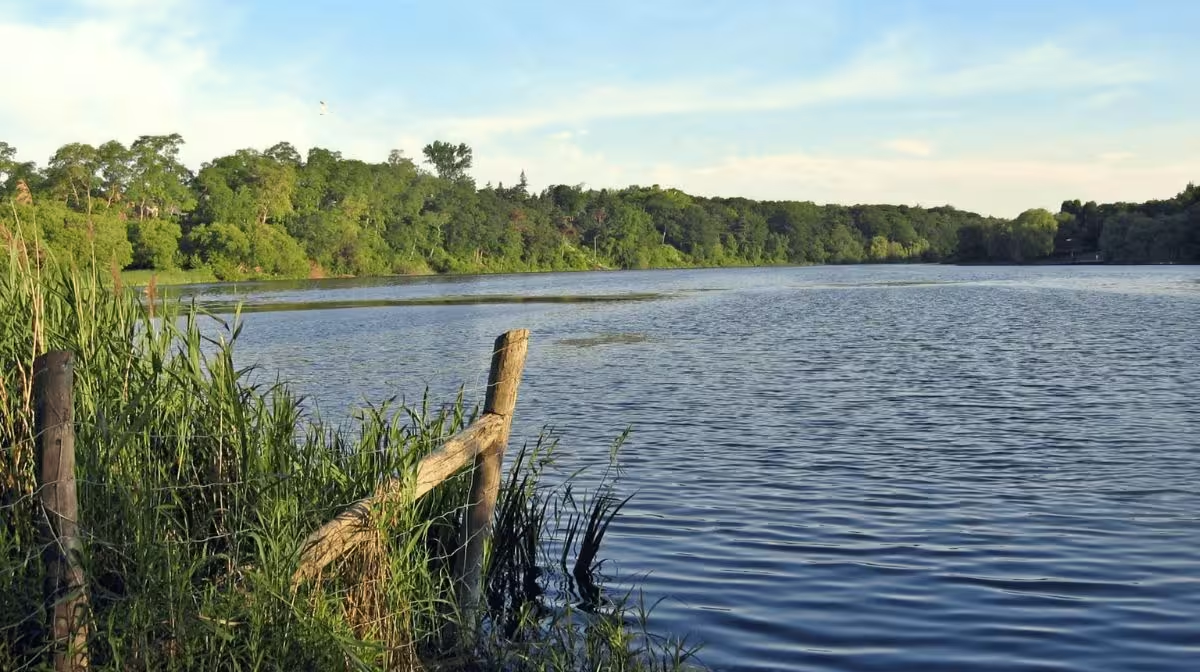
The main event is the hillside above Grenadier Pond, where the bulk of the original 1959 trees still stand — this is the view that ends up on every postcard and every Instagram feed, and it’s crowded for good reason. For something quieter, the Iwasaki Grove near the Children’s Adventure Playground carries its own history and noticeably fewer people, and the newer plantings near the Maple Leaf garden add a third, less-photographed option if the hillside is packed.
Getting There, Parking & Etiquette
During peak bloom, High Park closes to visitor vehicles entirely — there’s no parking access for the general public, and only Wheel-Trans and TTC buses are permitted into the park. Plan to arrive by transit or on foot; the park sits directly on the Bloor-Danforth subway line at High Park station. Portable accessible washrooms are added near the main viewing areas during the busiest days.
The trees themselves are old and, in places, fragile, and the city is explicit about what damages them: climbing the trees, pulling on branches, and plucking blossoms all harm them, so stay on the paths, keep off the trunks, and leave the branches where they are. It’s a small ask for something that took six decades and three separate generations of donors to build.
Other Cherry Blossom Spots in Toronto
High Park gets the attention, but it isn’t the only place in the city blooming — Centennial Park has 463 trees, Exhibition Place has 93, and Trinity Bellwoods, Woodbine Park, and the Toronto Islands all have smaller plantings worth knowing about if High Park’s hillside is too crowded for comfort. Birkdale Ravine’s 45 trees were a separate gift from Sagamihara, one of Toronto’s sister cities, entirely apart from the High Park story above.
| Location | What’s There |
|---|---|
| High Park (Grenadier Pond hillside) | The original 1959 planting — the busiest and most photographed spot |
| High Park (Iwasaki Grove) | 1984 donation near the Children’s Adventure Playground — quieter |
| Centennial Park | 463 trees, Etobicoke |
| Exhibition Place | 93 trees, near the lakeshore |
| Trinity Bellwoods | Smaller plantings, central and walkable from downtown |
Where to Stay
High Park sits west of downtown on the Bloor-Danforth subway line, so basing yourself anywhere near a station on that line keeps it an easy trip — see our Best Hotels in Toronto guide for a full neighbourhood breakdown, and our Best Toronto Tours guide for how a High Park visit fits alongside the city’s other essentials.
Frequently Asked Questions
When is the High Park Cherry Blossom Festival?
Typically late April to early May, though the exact dates shift each year with the weather. The High Park Nature Centre’s bloom tracker is the most reliable way to time a visit.
Is there an entry fee for the High Park Cherry Blossom Festival?
No — it’s a public park, not a ticketed festival, and there’s no cost to visit.
Can I drive to High Park during cherry blossom season?
No. The park closes to visitor vehicles during peak bloom; only Wheel-Trans and TTC buses are permitted in. Arrive via the subway (High Park station) or on foot.
Where did High Park’s cherry trees come from?
Japan gifted the original 2,000 trees to Toronto in 1959 as thanks for the city’s acceptance of Japanese Canadians relocated there after WWII internment, with further donations and plantings in 1984 and 2000-2006.
Where’s the best spot to see the blossoms?
The hillside above Grenadier Pond has the largest concentration of original trees and the classic view, but the Iwasaki Grove near the Children’s Adventure Playground is quieter if you want fewer crowds.
Route & Stay is reader-supported. Some of the links on this page are affiliate links, and we may earn a small commission if you book through them, at no extra cost to you. Bloom dates are weather-dependent and can shift year to year — always check a current bloom tracker before planning a visit.