 Skip to content

There is a specific kind of romantic delusion you fall into when planning your first trip to Paris. You picture yourself strolling through the grand galleries, light streaming softly through towering windows, locking eyes with the Mona Lisa in a moment of quiet artistic transcendence.
We know this because that was exactly our delusion.
My wife and I made every rookie mistake in the book. We showed up at 9am thinking we’d beaten the crowds. We had no route. We got lost in the corridors. We reached the Mona Lisa and found a wall of raised smartphones. By hour three we were museum zombies, legs aching, brains fried, queuing for an overpriced café lunch that we absolutely needed.
We survived it. You can avoid it. This is the honest account of our day at the Louvre Museum — what went wrong, what we found despite everything, and exactly what we’d do differently now, including the one ticket option we wish we’d booked instead.
This post contains affiliate links — if you book through them we may earn a small commission at no extra cost to you.
Table of Contents Show / Hide
- 01Essential Louvre info for 2026
- 02Our visit — what actually happened
- 03Compare all Louvre ticket options
- 04The standard timed-entry ticket
- 05The small group guided tour — what we’d book next time
- 06The night tour — the insider’s option
- 07Where to stay near the Louvre
- 08More things to do nearby
- 09What we’d do differently — the full strategy
- 10Louvre FAQ
Louvre Museum 2026 at a Glance
Book your Louvre ticket before you leave — timed slots sell out days in advance.
Our visit — what actually happened
We booked the 9am slot, convinced we were being clever. By 8:45am, standing in front of the Pyramid entrance, we understood our mistake. The square was already a sea of anxious tourists. The 9am, 9:30am, and 10am queues were bleeding into each other in the morning heat. By the time we cleared security, it was nearly 9:30am.
Inside, we grabbed a paper map and two audio guides and stepped confidently into the Denon Wing with no real route in mind. Within an hour, the scale of the place had caught up with us. Levels 0 and 1 were a contact sport — constant shoulder-bumping with tour groups, getting turned around in endless corridors, discovering that certain elevators only served certain floors.
We did find some genuinely breathtaking moments. Standing beneath the Winged Victory of Samothrace as she commanded the grand staircase took our breath away. The sheer scale of the Coronation of Napoleon stopped us mid-stride. But because we had no logical sequence, we spent half our time backtracking through rooms we’d already walked.
And then there was the Mona Lisa.
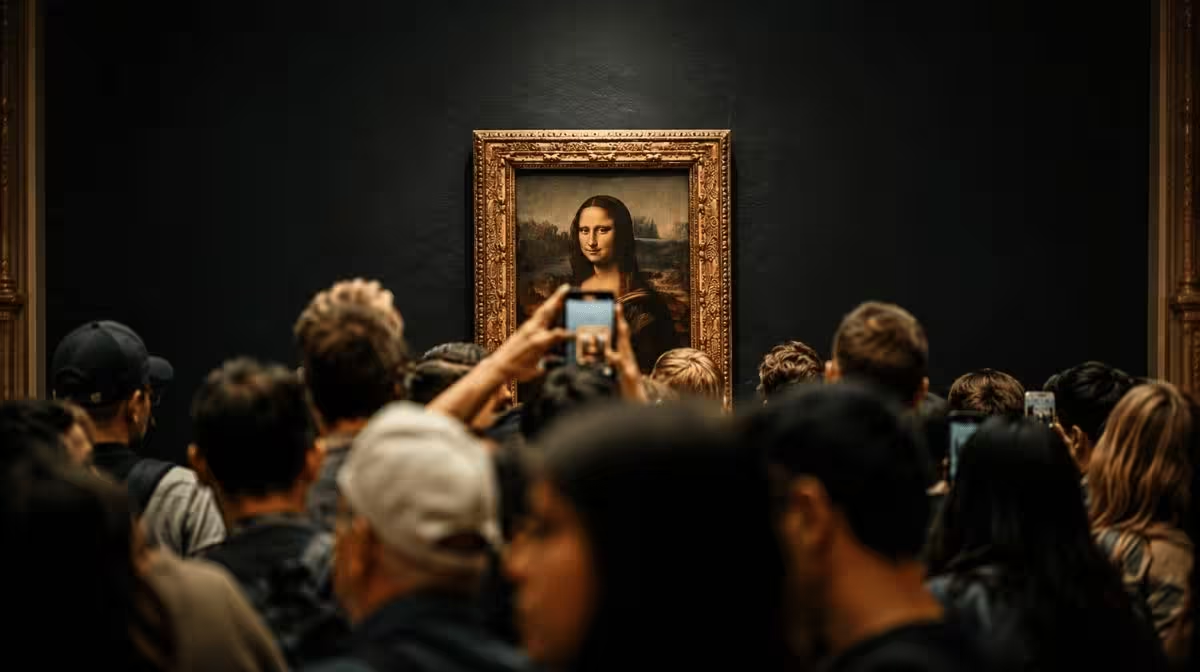
Room 711, Denon Wing. What we found: a surprisingly small painting pushed back behind protective barriers, a wall of raised smartphones, and a dense crowd shuffling around it like a slow carousel. We caught a glimpse of the famous smile over someone’s shoulder and were swept along. It took about forty-five seconds. We’d walked halfway across the museum for forty-five seconds.
By hour three, museum fatigue set in hard. We hadn’t stopped, hadn’t had water, and the beautiful gold frames had blurred into an exhausting montage. We found a café, paid too much for lunch, waited too long for it to arrive, and sat down for forty-five minutes that completely saved the rest of the day.
We ended in the Islamic Art section in the basement — beautifully quiet, almost nobody there — and walked out past the Pyramid in the late afternoon feeling thoroughly defeated by the logistics but still certain we’d been somewhere extraordinary.
Is it worth it? A thousand times yes. But it is a beast, and it will wear you down if you don’t go in with a plan.
Compare all Louvre ticket options
Three ways in, three very different experiences. Here’s how they stack up before the full breakdown of each.
The standard timed-entry ticket
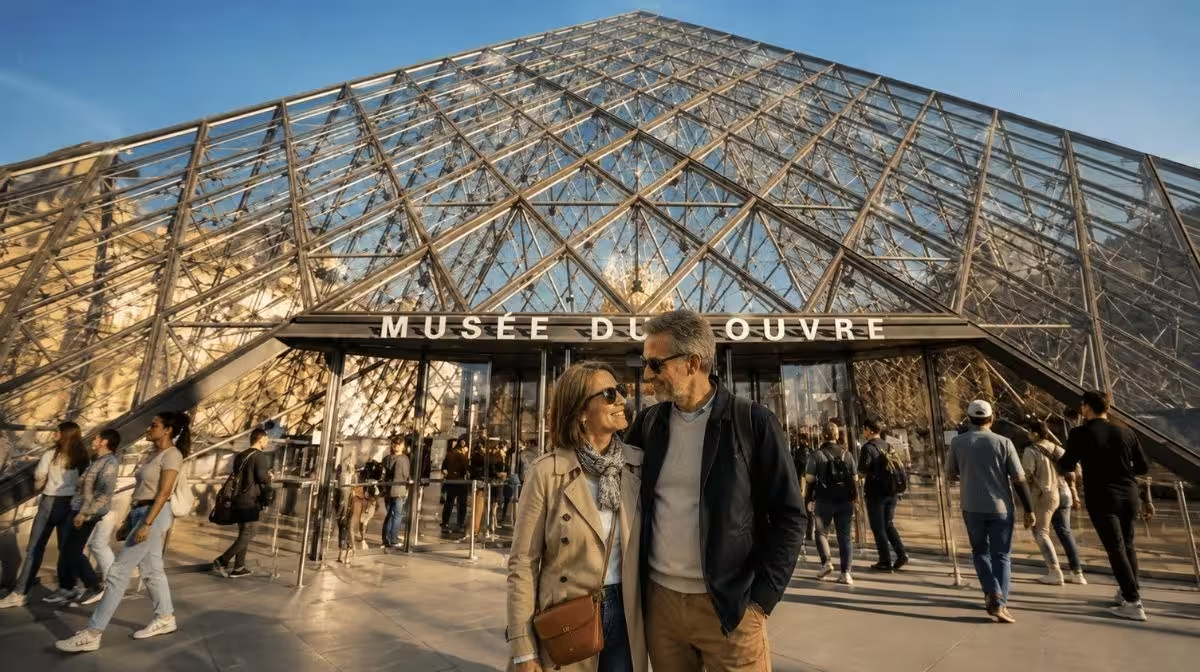
This is what we booked, and it’s the right starting point for most visitors. A timed-entry ticket guarantees your slot, lets you skip the day-of queue at the door, and gives you access to the entire permanent collection — all 35,000 works across three wings and eight departments.
What it doesn’t give you is any guidance once you’re inside. The Louvre is 15 acres of interconnected corridors and staircases. Without a plan, you will spend a significant portion of your visit being lost rather than looking at art.
The practical tips that would have saved our day:
Book the 5:30pm slot on a Wednesday or Friday — the museum stays open until 9:45pm on these nights. Daytime crowds clear after 3pm, tour buses are gone, and the long galleries take on a different quality in the evening light. This is the insider time slot that genuinely changes the experience.
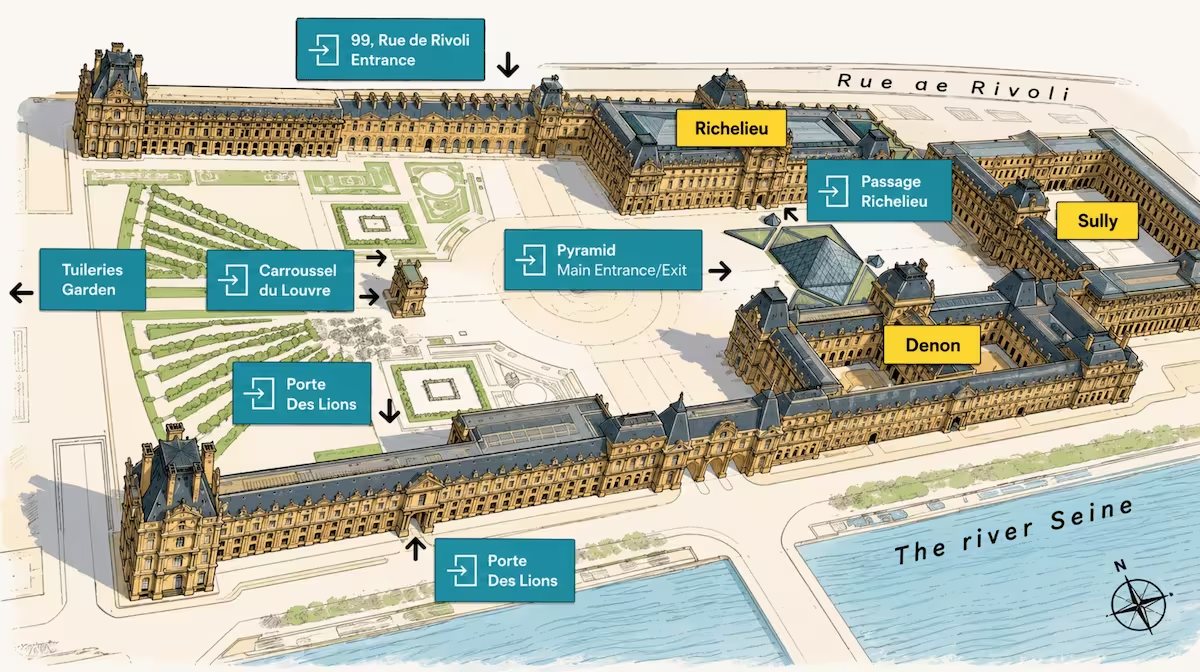
Enter via the Carrousel du Louvre (99 Rue de Rivoli), not the Pyramid. The Pyramid is the famous entrance — and therefore the crowded one. The Carrousel entrance is underground, sheltered from the weather, and the queues are consistently shorter.
Pick four or five works and plan a logical route between them. Don’t try to see everything. The Louvre rewards focus. Choose the Winged Victory, the Venus de Milo, the Coronation of Napoleon, the Vermeer rooms, and the Mona Lisa — and leave before the museum fatigue hits.
Louvre Museum — Standard Timed Entry Ticket
The most affordable way into the Louvre with a guaranteed time slot and access to the full permanent collection. What it doesn’t give you is navigation — the museum is 15 acres of corridors and you’ll need a plan. Book the 5:30pm slot on a Wednesday or Friday for the best experience, and enter via the Carrousel du Louvre rather than the Pyramid to avoid the bottleneck.
The small group guided tour — what we’d book next time

If I could go back and change one thing about our Louvre visit, this is it.
The Louvre’s problem is not the art — it’s the navigation. Without someone who knows the building, you spend a significant chunk of your time being lost, backtracking, and standing in corridors wondering which staircase goes where. We wasted at least an hour this way. An expert guide eliminates that entirely and replaces it with context that the audio guide — good as it is — simply can’t match.
A small group guided tour covers the headline works in a logical, efficient sequence: the Winged Victory, the Venus de Milo, the Vermeer rooms, the Coronation of Napoleon, the Mona Lisa — all without the backtracking and all with someone who can explain what you’re looking at in a way that makes the forty-five seconds in front of the Mona Lisa feel like something rather than nothing.
The small group format matters. These tours typically cap at eight to ten people, which means you’re not trailing a flag through corridors — you’re in a conversation. When the guide stops in front of the Coronation of Napoleon, you can ask why a painting about a coronation is so deliberately theatrical. You get an answer. That’s what the self-guided version doesn’t give you.
This is now the option I’d recommend to anyone visiting the Louvre for the first time, or anyone who felt defeated the first time around.
Skip-the-Line Small Group Guided Tour
The option I wish we’d booked. A small group of eight to ten people, an expert guide, and a logical route through the Louvre’s masterpieces without the navigational chaos of going it alone. Skip-the-line access included. The guide makes the difference between a list of artworks and an actual experience of them — particularly at the Mona Lisa, where context transforms forty-five seconds of chaos into something memorable.
The night tour — the Louvre without the crowd
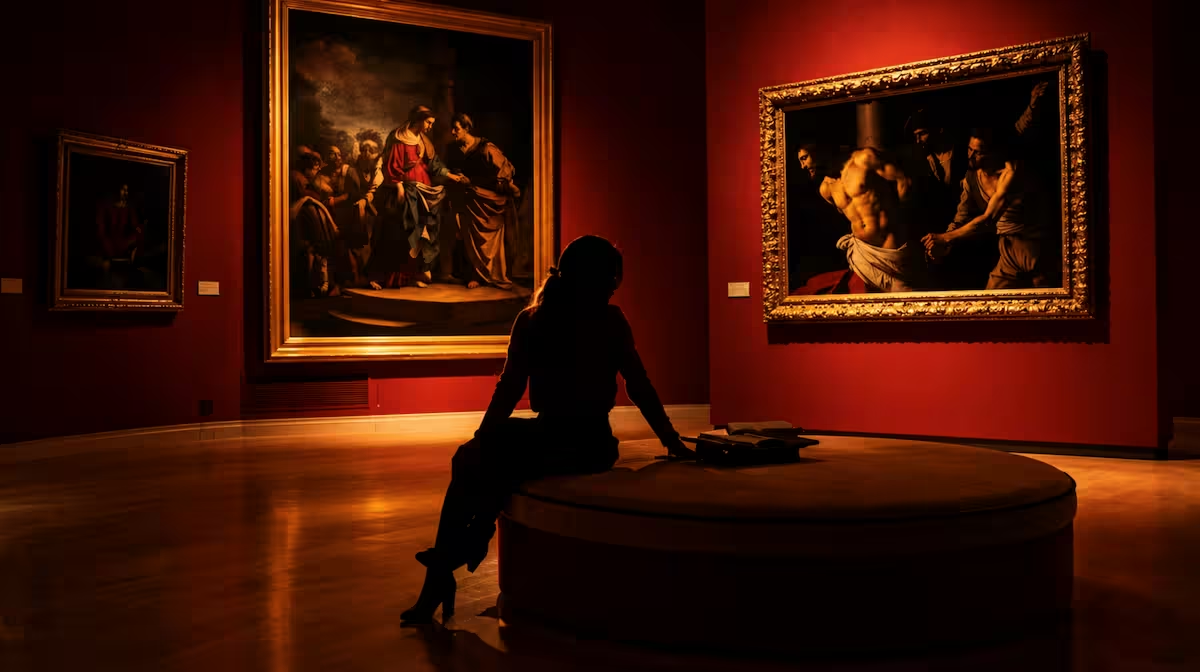
The Louvre stays open until 9:45pm on Wednesdays and Fridays. Most visitors don’t know this, don’t use it, and leave before 6pm. That means the galleries after 7pm are a fundamentally different experience — longer sightlines, less noise, the kind of quiet that lets you actually look.
The night tour pairs this timing with a guided visit through the museum’s highlights, taking advantage of the reduced crowds to linger in front of works that would be surrounded by bodies during peak hours. The Denon Wing at 8pm on a Friday evening is not the same building we walked through at 9am on a weekday morning.
This is the luxury option — and it earns the description. If you have a special occasion or simply want your first Louvre experience to be genuinely memorable rather than logistically challenging, the night tour is the right call.
Paris Night at the Louvre — Guided Tour
The Louvre on Wednesday or Friday evenings after the daytime crowds leave — with an expert guide, skip-the-line access, and galleries that feel closer to what you imagined before you arrived. The museum’s extended hours are one of Paris’s best-kept practical secrets. A small group tour that uses them is the most atmospheric version of this experience available.
Private Family Tour for Kids, with Reserved Entry
The Louvre can be a lot for kids — vast, crowded, and easy to get museum fatigue in fast. A private family tour keeps the pace kid-friendly, focuses on the stories behind a handful of famous works rather than an exhaustive walkthrough, and includes reserved entry so there’s no queueing with restless little ones.
A private, kid-paced route through the Louvre’s highlights.
Check Availability →Where to Stay Near the Louvre
Staying central makes an evening slot at the museum much easier to justify. Here’s a live map of places to stay nearby:
More Things to Do Near the Louvre
Already booked your Louvre ticket? A few more ways to round out the day:
What we’d do differently — the full battle plan
We survived our first Louvre visit so you can do better. Here is the exact strategy we’d use if we were going again:
Skip the morning entirely. Book the 5:30pm Friday slot. The logic is simple: everyone tries to go first thing, which means the morning is both the most crowded time to queue and the most crowded time to be inside. The museum extends its hours on Wednesdays and Fridays — use them.
Enter through the Carrousel du Louvre, not the Pyramid. The Pyramid entrance is iconic and therefore perpetually bottlenecked. The underground Carrousel entrance at 99 Rue de Rivoli is sheltered from weather and consistently faster. Save the Pyramid view for photographs — enter somewhere sensible.
Book the guided tour. Specifically the small group option. Three hours with someone who knows the building, knows the art, and knows how to explain both is worth more than six hours of navigating corridors with a paper map. The Louvre is one attraction where a guide earns their cost entirely.
Enforce a two-hour limit. The impulse is to try to see everything. The reality is that the Louvre cannot be seen in a day, and attempting it produces museum fatigue that wipes out the second half of your visit. Pick five works. See them well. Leave.
Bring water. The café inside is expensive, slow, and often crowded. A water bottle in your bag solves approximately twenty percent of the logistics problems of a long Louvre day.
Louvre Museum FAQ
Do I need to book Louvre tickets in advance?
Yes — absolutely. Timed entry tickets for the Louvre sell out days in advance, particularly during summer. Walk-up tickets on the day are unreliable and mean queuing at the box office in a crowd that has already formed before the museum opens. Book online, download the QR code, and use the Carrousel entrance.
What is the best time to visit the Louvre?
Late afternoon on a Wednesday or Friday. The museum stays open until 9:45pm on these nights, and crowds drop significantly after 3pm. If your schedule allows a 5:30pm entry, the galleries are a genuinely different experience from the morning rush.
How long do you need at the Louvre?
Two focused hours is enough to see the headline works properly. Three hours is comfortable. Anything beyond that requires stamina and a very good plan. The Louvre is 15 acres — attempting to see everything in a single day produces museum fatigue that defeats the purpose.
What is the best entrance to the Louvre?
The Carrousel du Louvre, at 99 Rue de Rivoli. It’s underground, sheltered, and the queues are consistently shorter than the Pyramid. The Porte des Lions entrance is another alternative. Avoid the Pyramid entrance during peak hours unless you specifically want the photograph — which is fair enough.
Is the Mona Lisa worth the effort?
Yes and no. The painting itself is smaller than most people expect, further back than you’d want, and surrounded by more people than is comfortable. The glimpse you get lasts about forty-five seconds. What makes it worthwhile is the context — knowing the history, the theft, why this particular portrait became what it became. Without that context, it’s a crowded room. With a guide, it’s one of the more memorable forty-five seconds in Paris.
What should I not miss at the Louvre?
From our visit and subsequent research: the Winged Victory of Samothrace (Denon Wing, top of the Daru staircase — genuinely breathtaking), the Venus de Milo (Sully Wing, ground floor), the Coronation of Napoleon (Denon Wing, Room 702 — enormous and theatrical in the best way), the Vermeer rooms (Richelieu Wing, quieter than the rest), and the Islamic Art section in the basement (almost nobody goes there and it is extraordinary).
Is the Louvre worth it?
A thousand times yes. It is one of the most significant concentrations of human creativity on the planet and the building itself is extraordinary. But it requires a plan, a realistic time limit, and ideally a guide who knows it well. Go with those things and it will exceed your expectations. Go without them and it will defeat you.
Also planning the Seine? Our Paris Seine cruise review covers all three options — including how the river cruise paired perfectly with our post-Louvre afternoon when our feet needed a rest.