 Skip to content
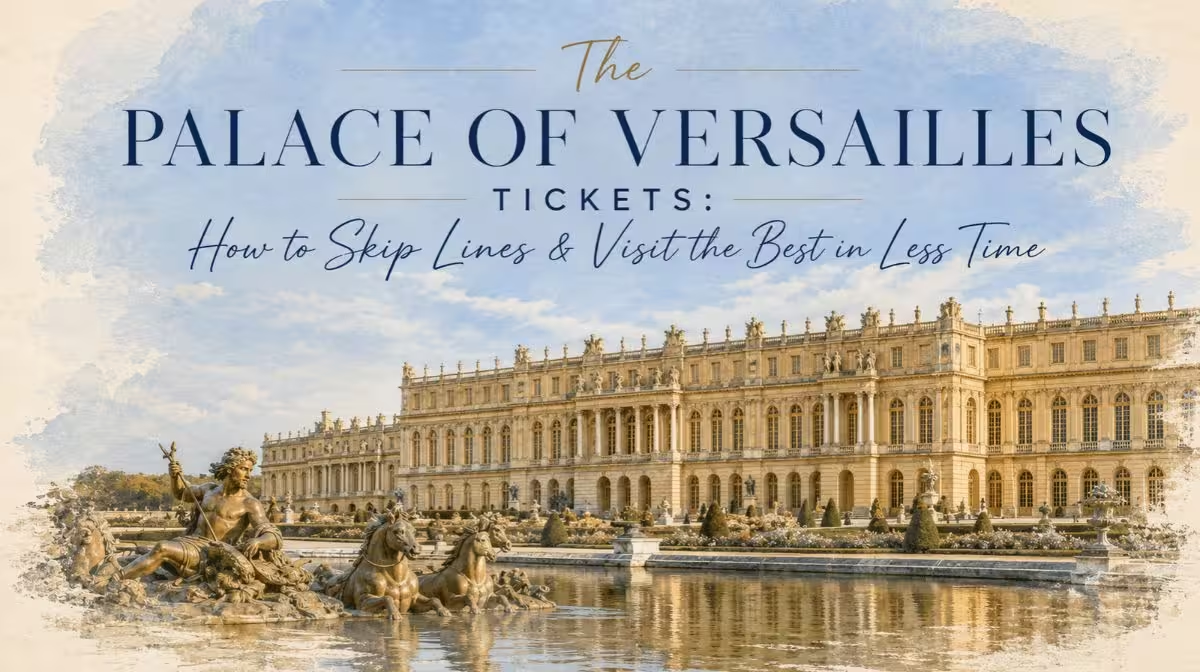
Versailles doesn’t reveal itself all at once. You arrive expecting a palace and instead find a small city — 2,300 rooms, 2,000 acres, a private village Marie Antoinette built to escape her own front door. Most visitors see perhaps a tenth of it before exhaustion sets in, and which tenth you see depends entirely on the Palace of Versailles ticket you bought weeks before you ever set foot in France.
This is a guide to buying the right one — and to the two-thirds of the estate that visitors doing the Hall of Mirrors and leaving never see at all.
Best Versailles Tours — Quick Picks
In a rush? Here are our three top-vetted picks for 2026.
At a Glance: Versailles 2026
State Apartments & Hall of Mirrors only
€25 low season (Nov–Mar)
Trianon Estate opens at noon
Gardens stay open
Guided tours: Entrance B
Château Rive Gauche, ~35 min
Free lockers, fill up fast
Timed slot still required
New for 2026: EEA residents of any age now get a €3 discount off standard prices (as of Jan 14, 2026), separate from the existing under-26 free-entry rule. And most first-time visitors only need the €21 Palace ticket, not the full Passport — the Passport only earns its price if you’re also doing Trianon and the gardens on Musical Fountain days.
How to Get to Versailles
There are three real ways in from central Paris, and which one wins depends entirely on where you’re staying. Confusing Versailles Château Rive Gauche with Versailles Chantiers is the single most common mistake — they’re different stations, on different lines, with very different walks at the other end.
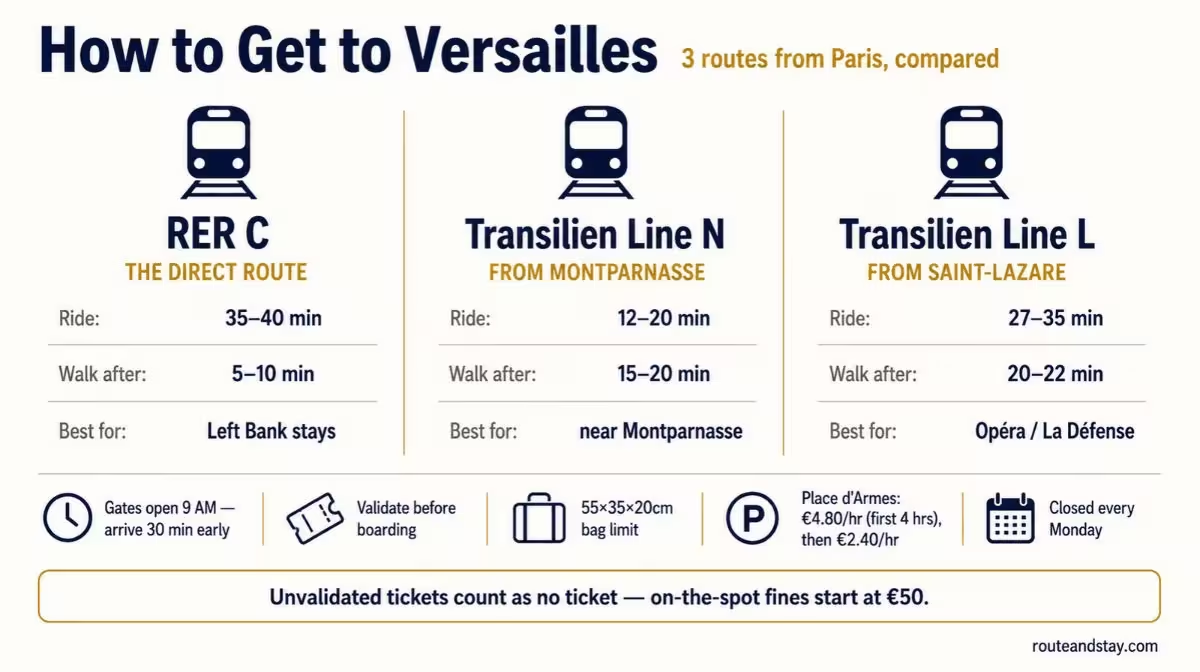
Validate your paper ticket at the yellow turnstile before boarding — an unvalidated ticket counts as no ticket at all to SNCF and RATP inspectors, who check this route regularly, and the on-the-spot fine starts at €50. Keep the stamped ticket on you; you’ll need it to exit the turnstiles at the other end.
Driving isn’t the efficient option here, but if you are: the Place d’Armes car park sits right in front of the Palace, at roughly €4.80/hour for the first four hours and €2.40/hour after that. If the RER C line is disrupted — it does happen, especially in summer, when engineering works hit the central trunk — SNCF runs a replacement bus straight to Versailles Château Rive Gauche; check the SNCF Transilien app before you set out. And if navigating any of this sounds like more logistics than you want to deal with, the Palace & Gardens Tour from Paris below includes round-trip bus transport, which sidesteps the whole question.
The Sun King’s Vision: From Hunting Lodge to Golden Empire
Before it was the seat of French power, Versailles was a modest brick-and-stone hunting lodge built for Louis XIII — the kind of place a king went to escape his own court, not build a new one. It was his son, Louis XIV, who looked at that marshy hunting ground and saw something else entirely: a way to pull the entire French government out of Paris and keep every rebellious noble under his roof, where he could watch them.
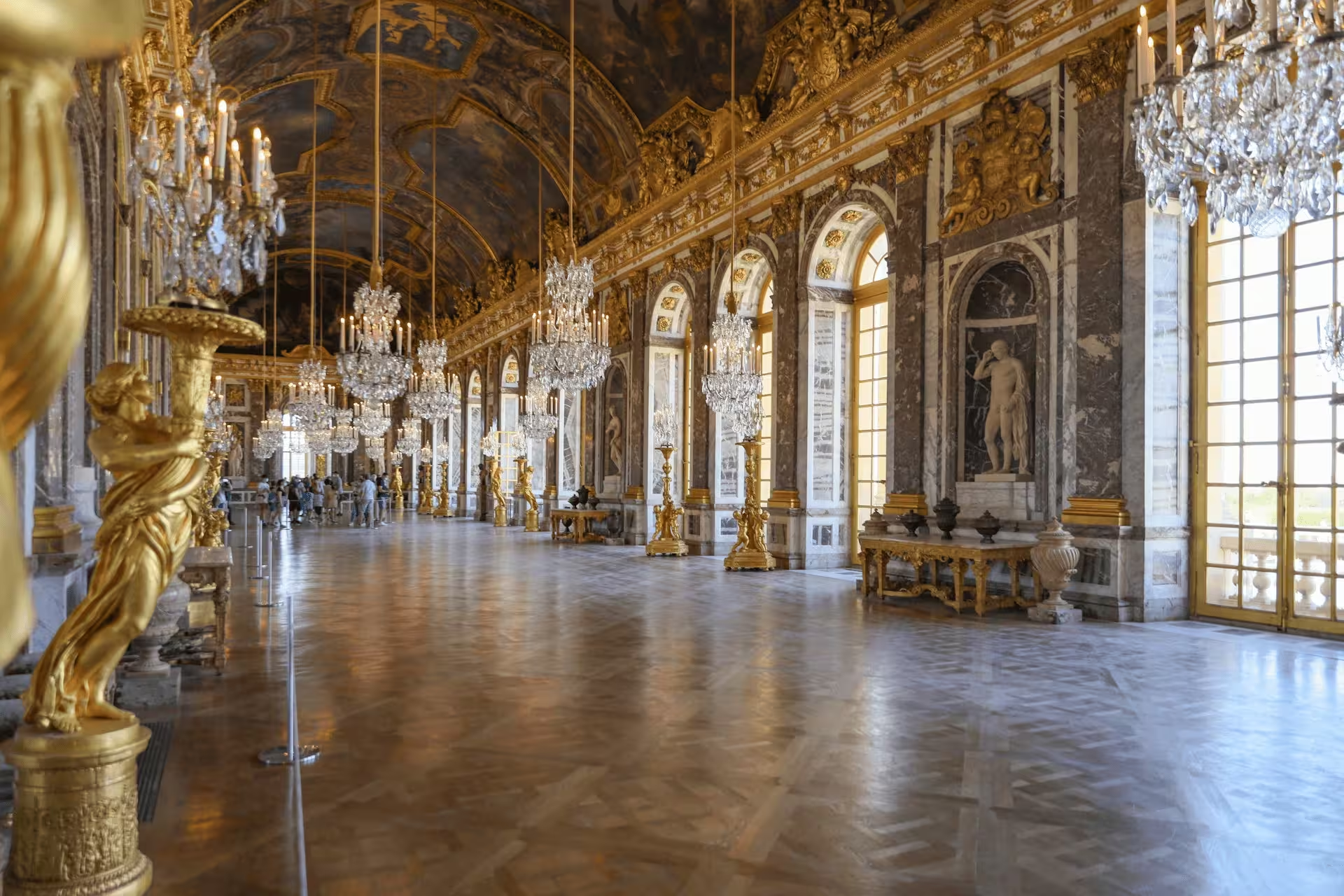
Walk through the Hall of Mirrors today and it’s easy to read it as pure vanity. It wasn’t, or not only. In the 17th century, mirrors were among the most expensive objects a court could own — Venice held a near-monopoly on the glass-making technique. Louis XIV’s ability to manufacture 357 of them on French soil, in a single room, was a economic and political statement aimed as much at foreign ambassadors as at his own nobility.
Genuinely current for 2026: after eighteen months of restoration, the Salon de Diane — one of the Grand Apartments’ state rooms — reopened to the public in June, its gilding and ceiling frescoes back to something close to their 17th-century state. It’s a smaller, quieter thing to look for than the Hall of Mirrors, and worth the ninety seconds it takes to actually notice it.
Versailles is marking the 250th anniversary of American independence this year with a new immersive exhibition, running through summer 2026 — a genuinely unusual crossover between French royal history and the country it later helped fund into existence. Worth checking current dates before you go, since it’s a limited-run addition to the standard visit.
The 3 Best Tour Options
Guided Tour with Reserved Entry
Best for understanding what you’re looking at, without getting lost in 700+ rooms
Versailles rewards context more than almost any palace we’ve toured — the difference between walking past the King’s State Apartments and actually understanding why they were arranged the way they were. This ticket buys a dedicated entrance, a working historian, and a route built to catch the details most visitors walk straight past, secret doors included.
- Dedicated entrance, no ticket-queue wait
- Expert narrative through the State Apartments and Hall of Mirrors
- Best pick for a first, focused visit
Palace & Gardens Tour from Paris
Best for skipping the RER C entirely
If the idea of navigating French commuter rail sounds like its own kind of vacation, this is the alternative: air-conditioned bus transport straight from central Paris to the palace gates, a self-guided audio tour once you’re inside, and full access to the gardens after. The whole point is spending your energy on the Sun King’s domain rather than a transit map.
- Round-trip transport from central Paris included
- Self-guided audio tour, move at your own pace
- Full garden access included
Full Day Bike Tour & Picnic
Best for travellers who’ve accepted Versailles is too big to walk
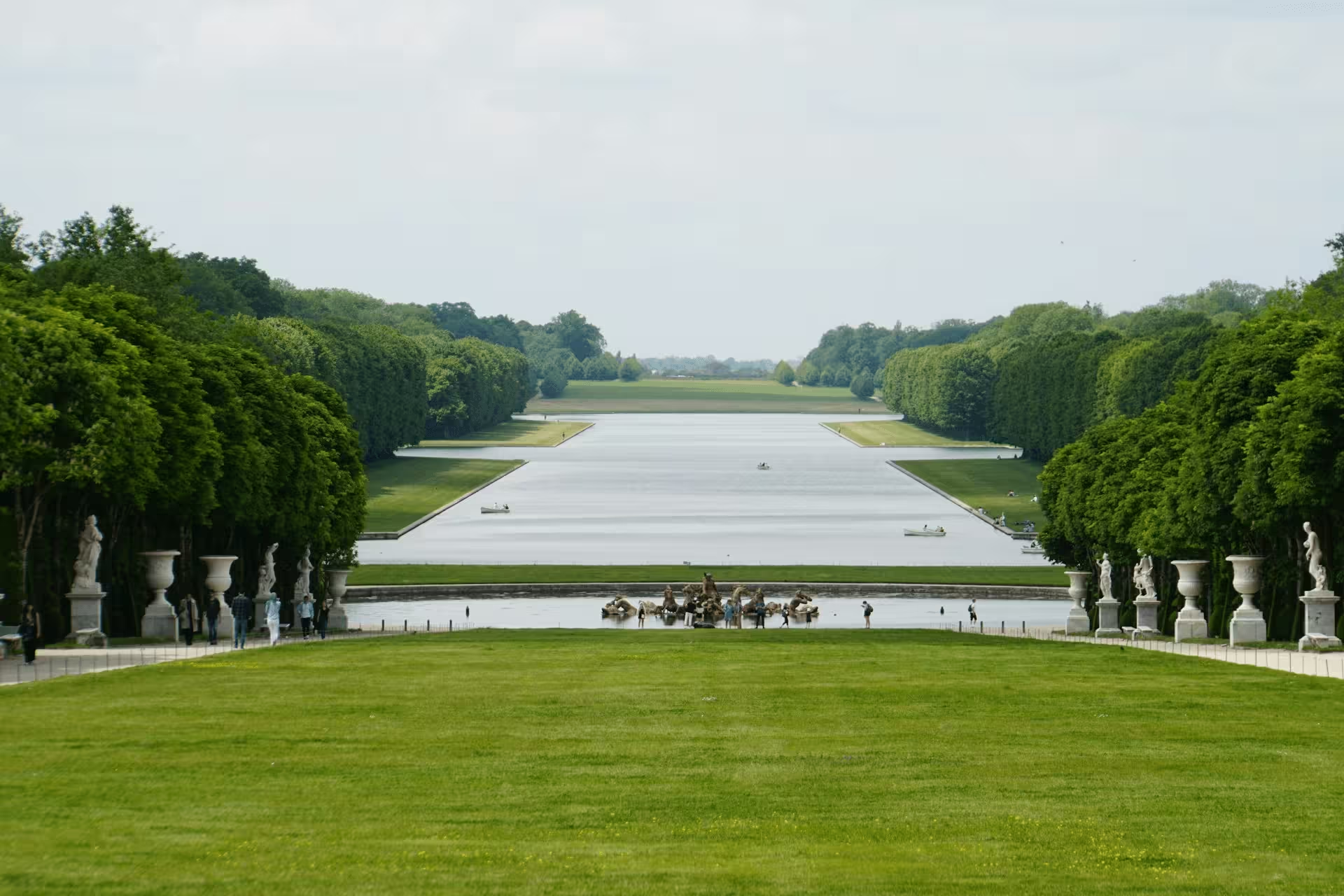
Two thousand acres is a genuinely unreasonable distance to cover on foot, which is exactly why this tour consistently rates as one of the best experiences in the region. You’ll cruise the royal park by bike, stop at the local market for picnic supplies, eat lunch by the Grand Canal, and still finish with skip-the-line entrance into the Palace to see the Hall of Mirrors before the day’s out.
- Covers far more ground than a walking visit ever could
- Picnic by the Grand Canal is genuinely one of the best hours on the property
- Still includes skip-the-line Palace entry
Every Saturday evening from June through September, the gardens host Night Fountain Shows — water and light displays set to baroque music, starting around 8:30 PM once the day-trippers have gone home. It’s not in most guides, and it’s one of the better ways to see the gardens without fighting a crowd.
Frequently Asked Questions
How much are Palace of Versailles tickets in 2026?
A Palace-only ticket is €21 full / €19 reduced, and covers the State Apartments, Hall of Mirrors, and Royal Chapel. The full Passport — Palace plus Trianon plus gardens — is €35 in high season (April–October) or €25 in low season (November–March). EU/EEA residents under 26 enter free but still need a timed-entry slot; other EEA residents get a €3 discount as of January 2026.
Can I bring a backpack or luggage?
Large bags — anything over 55×35×20cm — aren’t permitted inside the Palace. Free lockers are available in the North Ministers’ Wing, but they fill up fast, so travel light if you can.
When are the Musical Fountain Shows?
The main season runs April 1 through November 1. On these days, garden access requires a separate supplement unless you’re holding a Passport ticket. There are also weekly Musical Gardens shows (Tuesday–Friday, July–October) and Saturday-evening Night Fountain Shows from June through September.
Is the Palace closed on certain days?
Yes — the entire estate (Palace and Trianon) is closed every Monday. The gardens stay open.
Do I need to book a Palace-only ticket or the full Passport?
If you’re only doing the main Palace — the Hall of Mirrors, the State Apartments — the €21 Palace ticket covers it. The Passport only earns its higher price if you’re also visiting Trianon and the gardens, especially on a Musical Fountains day.
Versailles isn’t really a museum — it’s a working argument for what absolute power looked like when it had unlimited gold leaf and no committee to answer to. Book the right ticket, get there early, and give yourself permission to walk the twenty-five minutes to Trianon that most visitors never make. It’s the half of the estate people actually remember.
Heading back into the city after? Make sure you’ve got your Louvre Museum tickets sorted for the next day, or spend an afternoon with the Impressionists at the Musée d’Orsay. And for the evening, a Seine River cruise as the light drops over the Eiffel Tower is the right way to close out the day.