 Skip to content
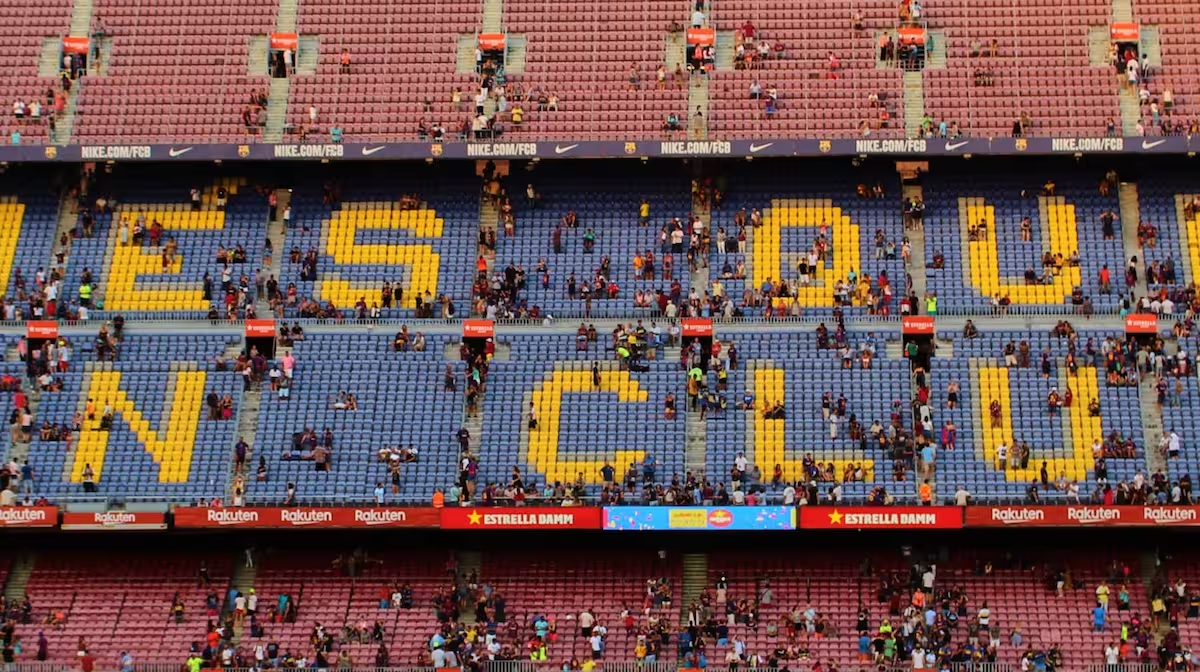
The first thing my son noticed wasn’t the pitch. It was the cranes. Three of them, towering over the open shell of what will eventually be the third tier, looming behind 60,000 people singing the Cant del Barça. Watching FC Barcelona at the Spotify Camp Nou in 2026 means watching football inside Europe’s biggest building site — and honestly, that’s part of the draw. You’re seeing something nobody will ever see again: a 1.5 billion euro cathedral, half-built, with a La Liga match happening in the middle of it.
This guide covers everything we learned planning a matchday as visitors: how tickets actually work during the phased reopening, what they cost, where to sit, and how to avoid the two or three mistakes that catch most travelers out.
In This Guide
- 01 Why 2026 Is a Strange, Brilliant Time to Go
- 02 Camp Nou Right Now: What’s Open, What Isn’t
- 03 Getting Tickets: The Official Route
- 04 The Resale Route: When It’s the Smarter Option
- 05 Where to Sit and What You’ll Pay
- 06 Matchday Logistics: Getting There and Getting In
- 07 Building a Barça Weekend Around the Match
- 08 No Match That Weekend? The Immersive Tour
Why 2026 Is a Strange, Brilliant Time to Go
Barça spent two and a half seasons in exile up on Montjuïc while the Camp Nou was gutted and rebuilt. They came home on 22 November 2025, beating Athletic Club 4-0 in front of a reduced crowd, and the stadium has been reopening in phases ever since. As of March 2026 the licensed capacity sits at 62,652 — roughly 40,000 fewer seats than the finished stadium will hold when the third tier and the new roof are completed, currently projected for late 2027.
For visitors, this cuts both ways. Fewer seats means tickets are genuinely scarcer than they were pre-renovation, especially for big fixtures. But it also means you’re attending matches in a version of the Camp Nou that will exist for only a couple of seasons — the half-open bowl, the exposed concrete, the skeleton of the upper tier against the sky. Our son still talks about the cranes more than the goals.
Camp Nou Right Now: What’s Open, What Isn’t
The short version of the phased reopening: the club returned in late 2025 at around 45,000 capacity (the main stand and south sections), and the Phase 1C licence granted in March 2026 opened additional first and second tier sections, lifting capacity to 62,652. The third tier, the full roof, and most of the VIP and hospitality areas remain under construction.
What this means in practice: not every seating zone you’ll see on old stadium maps is sellable, concourse services are still being completed in places, and the club occasionally adjusts which sections go on sale fixture by fixture. It also means the famous Camp Nou Experience tour — dressing rooms, players’ tunnel, pitchside — is suspended until the works finish. More on the replacement tour in section 08.
Getting Tickets: The Official Route
FC Barcelona sells general-sale tickets through fcbarcelona.com, typically released a few weeks before each fixture once season-ticket holders have confirmed or freed up their seats. For mid-table league opponents this route works fine if you’re organized: set a reminder, buy the moment sales open, and you’ll usually find something reasonable.
The catch is the reduced capacity. With 40,000 fewer seats than the old stadium, official allocations for marquee fixtures — Real Madrid, Atlético, Champions League knockouts — evaporate quickly, and what remains is often single seats scattered across the bowl. If you’re traveling as a family or group and want to sit together, the official route can be genuinely difficult for big matches. That’s where resale comes in.
The Resale Route: When It’s the Smarter Option
Resale marketplaces exist because season-ticket holders can’t attend every match, and their seats — often excellent ones in the central stands — end up listed for visitors like us. We use Ticombo for this: it’s a European marketplace where you can see the exact section and row before you buy, prices are shown upfront, and purchases are covered by a buyer guarantee, so if a ticket isn’t delivered or is invalid, you’re refunded.
When resale makes sense over the official sale:
- You need seats together. Resale listings are frequently pairs and blocks from season-ticket holders, which is exactly what families need and exactly what general sale runs out of first.
- The fixture is high-demand. For a Clásico or a Champions League night during the reduced-capacity era, resale is realistically the only route for most visitors.
- Your dates are fixed. If you’re in Barcelona one specific weekend, you can’t wait and hope on a general sale that may sell out in minutes.
Two pieces of practical advice from our own bookings: compare the resale price against the face-value range for that section so you know the markup you’re accepting, and buy earlier rather than later for big fixtures — resale prices for marquee matches at the reduced-capacity Camp Nou climb steadily as kickoff approaches.
Check FC Barcelona Ticket Availability on Ticombo
Where to Sit and What You’ll Pay
Seat selection matters more than usual right now, because parts of the bowl sit closer to active construction zones. A rough guide for the 2026 partial-capacity layout:
- Lateral (side) stands, first and second tier: the classic view and the best atmosphere during the phased reopening, since crowds are concentrated in the open sections. This is where we’d spend the money, especially with kids who want to see players up close.
- Gol (behind the goals): cheaper, louder, and where the most committed support sits. Fine for adults, livelier than some families want.
- Higher second-tier corners: the budget option. Views are still good — the new bowl is steeper than the old one — but you’ll be more aware of the construction perimeter.
On price: expect league matches against smaller clubs to start somewhere around 60-100 euros for upper sections through official channels, rising steeply for central lateral seats and for any high-profile opponent, where resale pricing for good seats commonly runs into several hundred euros. Always check the current listings rather than relying on a blog’s snapshot — including ours — because pricing during the phased reopening moves with each capacity change.
Matchday Logistics: Getting There and Getting In
The stadium sits in Les Corts, west of the center. Metro is the only sensible way in: Line 3 to Palau Reial or Les Corts, or Line 5 to Collblanc or Badal, all roughly a 10-minute walk from the perimeter. Trying to taxi or drive to a 60,000-person event through closed streets is a mistake you only make once. If you haven’t already, our Barcelona transport guide covers the metro system, the T-Casual ticket that makes matchday travel cheap, and how late the lines run.
Things that catch visitors out:
- Arrive early. During the phased reopening, entry gates are reconfigured around construction zones and security screening can be slow. Aim to be at your gate 60-90 minutes before kickoff — the pre-match atmosphere outside is part of the experience anyway.
- Tickets are mobile. Have your ticket downloaded and your phone charged; screenshots sometimes fail at the turnstile if the barcode refreshes.
- Bags are restricted. Small bags only, and expect them to be searched. Leave the daypack at the hotel.
- Eat before, not inside. Concourse services are still being completed in parts of the stadium. The bars and tapas spots along Travessera de les Corts do a far better pre-match meal anyway.
Building a Barça Weekend Around the Match
A match is two hours; Barcelona deserves the rest of the weekend. Most fixtures are confirmed for a specific kickoff time only a couple of weeks ahead (Spanish TV scheduling, a long story), so build a flexible weekend rather than a rigid one. Our 3-day Barcelona itinerary works well wrapped around a match, and if you’re choosing when in the season to come, the seasonal guide will help you avoid the August furnace.
Pair the football with the city’s other landmarks — the Sagrada Família is the other ticket you should book before you fly. For everything else worth your time, browse the activities below or see our must-see sights list.
No Match That Weekend? The Immersive Tour
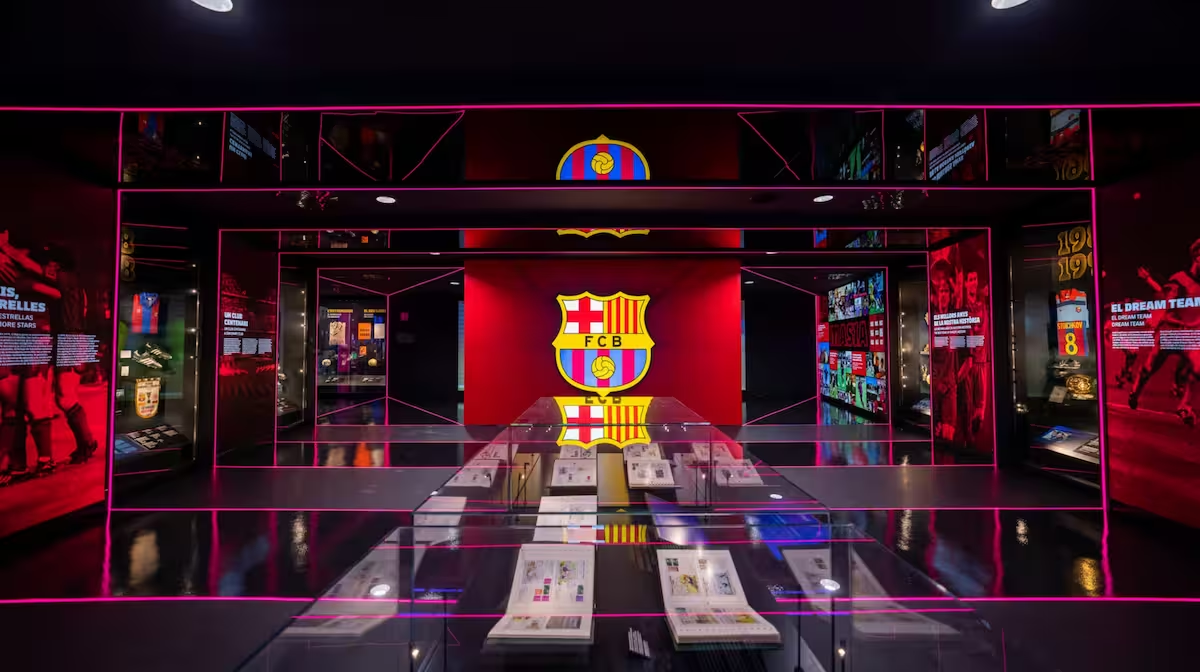
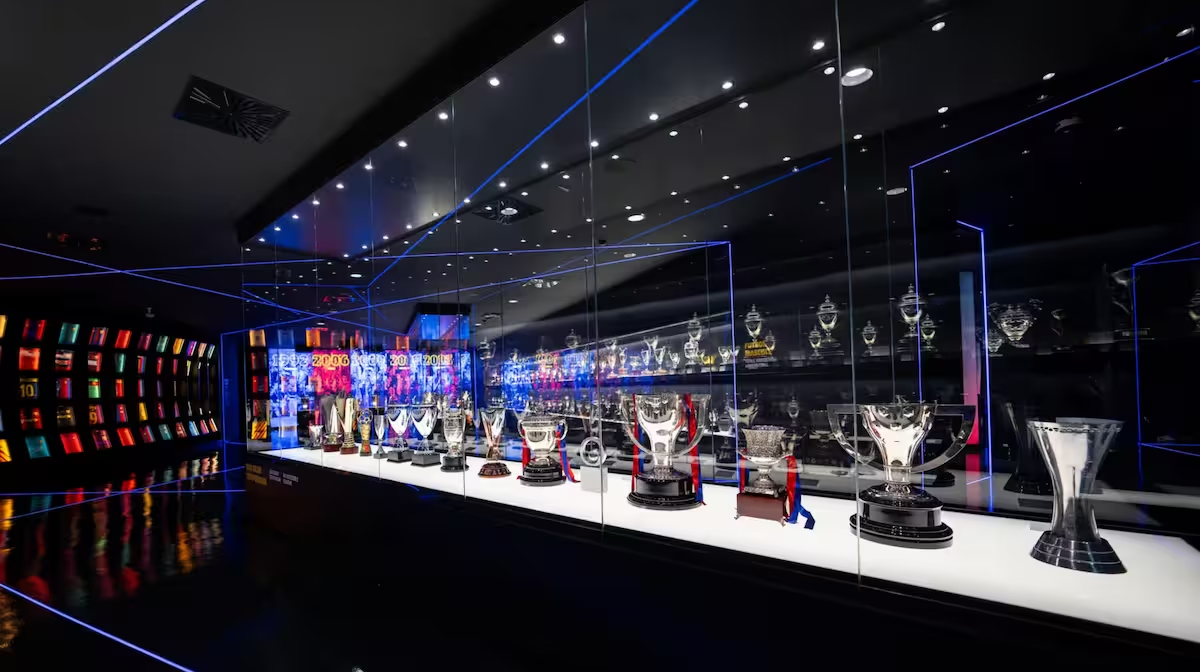
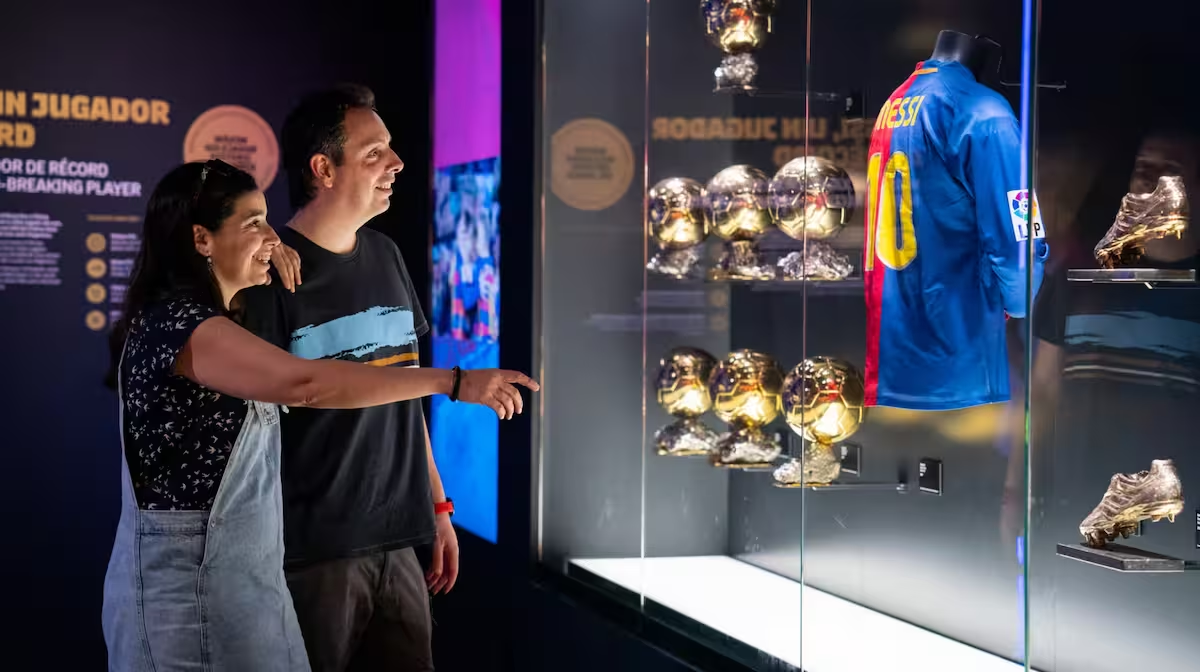
If your dates don’t line up with a home fixture, you can still get inside. The traditional Camp Nou Experience is suspended during the works, replaced by the Barça Immersive Tour: the FC Barcelona Museum with its trophy halls and Messi collection, a 360-degree matchday projection room, and a construction viewpoint overlooking the rebuild itself. It’s a different product from the old pitchside tour — more museum, less stadium — but the viewpoint over the works is genuinely impressive, and kids respond well to the immersive room. Tickets run around 28-31 euros and are best booked a day or two ahead in high season.
Book the Barça Immersive Tour on GetYourGuide
The Short Version
Seeing Barça at the Camp Nou in 2026 takes slightly more planning than it used to: capacity is reduced, big fixtures sell out fast, and kickoff times confirm late. But the trade is worth it — you’ll watch one of the world’s great clubs inside a stadium being reborn around it. Book tickets early (officially for smaller fixtures, via resale for the big ones), take the metro, arrive early, and give the rest of the weekend to the city. For everything beyond the football, start with our full Barcelona travel guide.
Camp Nou Tickets: Your Questions Answered
Can you watch FC Barcelona at the Camp Nou in 2026?
Yes. Barça returned to the Spotify Camp Nou in November 2025 and play home matches there during the ongoing renovation, with capacity expanding in phases.
What is Camp Nou’s capacity right now?
As of March 2026, the licensed capacity is 62,652. The finished stadium will hold around 105,000 when the third tier and roof are completed, projected for late 2027.
Is resale a safe way to buy FC Barcelona tickets?
Buying through an established marketplace with a buyer guarantee, such as Ticombo, protects you with a refund if tickets aren’t delivered or are invalid. Avoid private sales on social media, which carry real fraud risk.
How much do FC Barcelona tickets cost?
League matches against smaller opponents start around 60-100 euros in upper sections. Central seats and high-profile fixtures cost substantially more, with resale prices for marquee matches often reaching several hundred euros during the reduced-capacity period.
Where should visitors sit during the renovation?
First and second tier lateral (side) stands offer the best combination of view and atmosphere while the stadium is partially open. Seats behind the goals are cheaper and louder; upper corners are the budget choice.
How do I get to Camp Nou by metro?
Take Line 3 to Palau Reial or Les Corts, or Line 5 to Collblanc or Badal. All are about a 10-minute walk from the stadium. Avoid taxis and driving on matchdays.
Can I do a Camp Nou stadium tour in 2026?
The classic Camp Nou Experience is suspended during the renovation. The Barça Immersive Tour runs instead, including the FC Barcelona Museum, a 360-degree immersive room, and a construction viewpoint, from roughly 28-31 euros.
When will the Camp Nou renovation be finished?
Full completion, including the third tier and the new roof, is currently projected for late 2027, taking capacity to around 105,000 and making it Europe’s largest stadium again.