 Skip to content
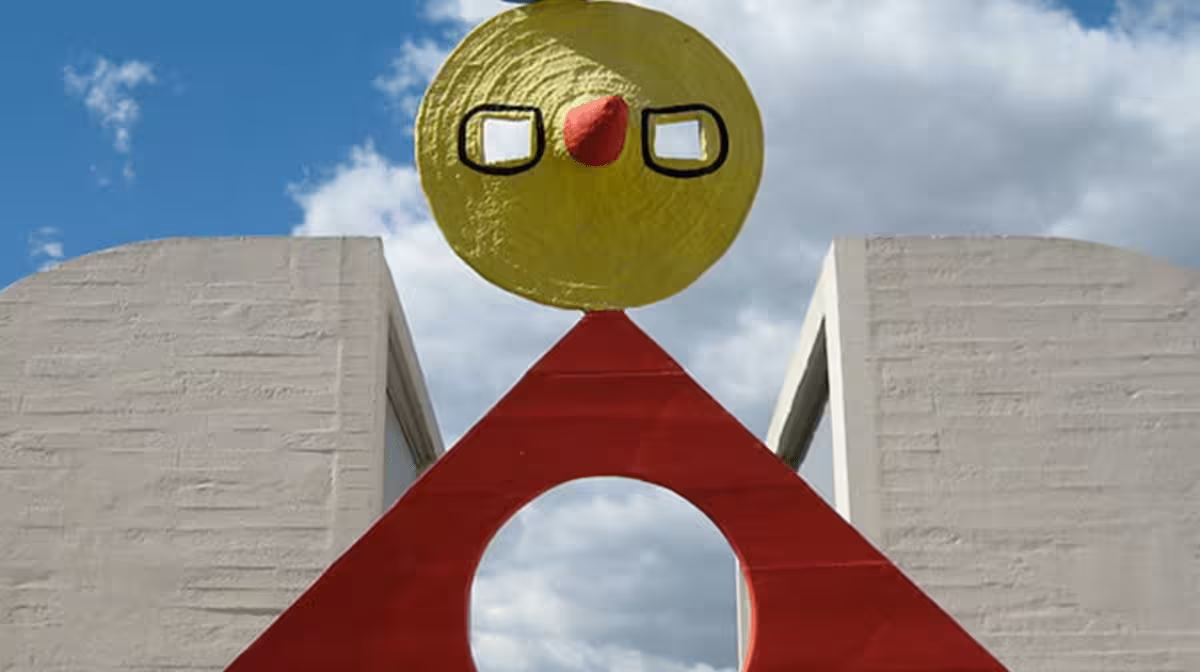
Most visitors to Barcelona walk through a museum or two — maybe the Picasso Museum, maybe Sagrada Familia. Montjuic Musuems are different. It’s a cluster of world-class art museums built on a forested hill 173 metres above the city, developed for the 1929 International Exposition and the 1992 Olympics. Two museums — Joan Miró Foundation and MNAC (Museu Nacional d’Art de Catalunya) — form the core. Together they show you the sweep of Catalan art from medieval frescoes to 20th-century abstraction. A third museum, the Archaeology Museum, adds the deeper historical layer. The question isn’t whether Montjuïc is worth visiting. It is. The question is what to see and how to spend your time strategically. This guide covers the major museums, practical logistics, ticket options, and three different visit strategies depending on how much time you have.
Fundació Joan Miró: Why It Matters
The Fundació Joan Miró houses nearly 15,000 pieces of Joan Miró’s work, including over 8,000 drawings, 217 paintings, 178 sculptures, and numerous textiles and ceramics. But the number of works isn’t what makes it significant. What matters is the coherence. Miró’s career spanned 75 years. You walk through and see him evolve — from representational early work to increasingly abstract, increasingly playful, increasingly free. Each room shows a shift. The building itself contributes. The Fundació Joan Miró was designed by a friend of Miró’s, and sits on a hill overlooking the city he kept returning to. The architecture is light, open, modern. Sun fills the rooms. It’s a setting that complements the work. You’re not in a dark institutional space. You’re in a building where light and art and architecture are integrated.
The museum is normally closed on Mondays, with exceptional openings on specific public holidays (6 April, 18 May, 25 May, 12 October, and 28 December 2026). Hours: April-October, Tuesday-Saturday 10:00 am-8:00 pm; Sunday 10:00 am-7:00 pm. November-March, Tuesday-Sunday 10:00 am-7:00 pm. Last admission is 30 minutes before closing. Adults tickets are €18 online or €17 when purchased in advance.
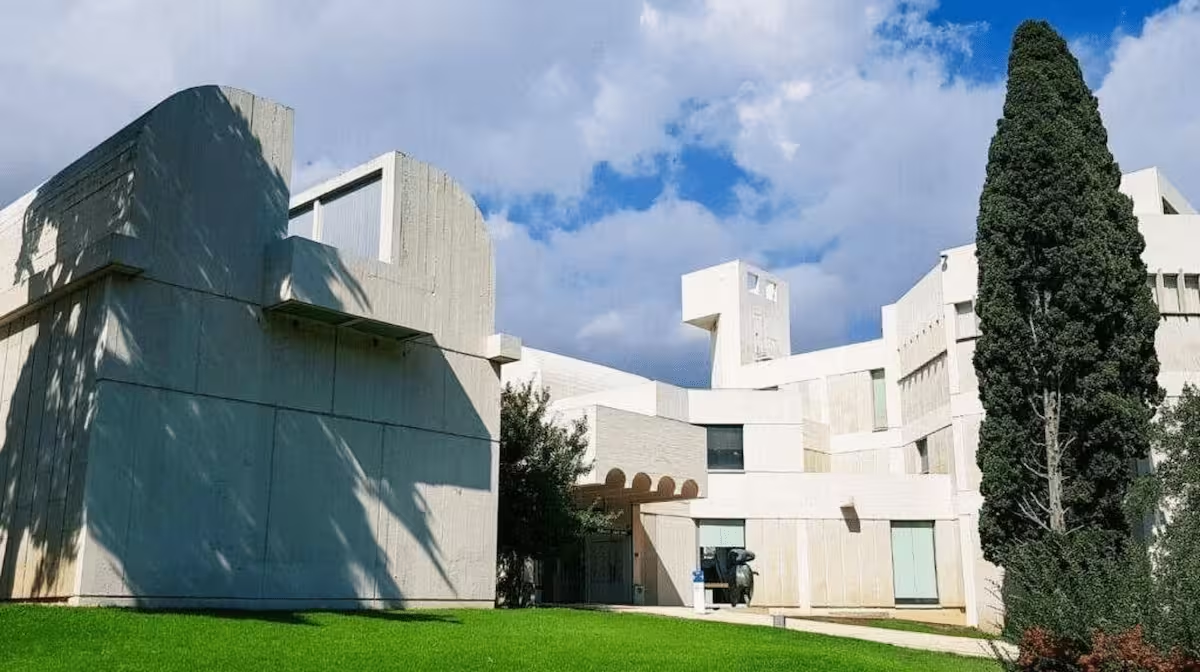
Most visitors spend 60-90 minutes in the permanent collection. With temporary exhibitions and time on the terraces, 2 hours is comfortable. The Bloomberg Connects app is free and covers major works, the building, and temporary exhibitions. Download it on Wi-Fi before arriving — Montjuïc signal is patchy. The museum also has a restaurant with a terrace in the central courtyard. Food is served on Miró-designed plates, and the restaurant terrace is one of the only decent lunch spots on Montjuïc.
MNAC: Medieval to Modern Catalan Art
MNAC (Museu Nacional d’Art de Catalunya) is housed in the Palau Nacional, built for the 1929 Barcelona International Exhibition — a monumental neo-Baroque palace with a soaring central dome and a Great Hall (Sala Oval) under painted ceilings that is worth walking through even if you skip the art.
The building itself is half the visit. The collections span centuries. Romanesque frescoes from rural Catalan churches (removed from their original sites and preserved here). Gothic art. Renaissance and Baroque work. Modern and contemporary pieces. The chronological sweep — moving from medieval religious art through centuries of Catalan artistic tradition to 20th-century innovation — is substantial.
The rooftop terrace is open to ticket holders and gives one of the best skyline views in Barcelona: the Eixample grid, Sagrada Família’s towers, and on clear days the Mediterranean beyond. At sunset, the terrace aligns with the Magic Fountain of Montjuïc (Font Màgica) directly below.
One ticket costs €14 and is valid two consecutive days — and on Saturday afternoons from 15:00 the whole museum is free. This free Saturday entry is significant if you have flexibility in your schedule. The museum draws crowds, but Saturday afternoon is manageable and gets you rooftop access without cost. Get MNAC admission tickets here.
The combination of the two museums in a single day gives a remarkable sweep of Catalan art from the 11th century to the 20th. The contrast between MNAC’s Romanesque grandeur and the Miró Foundation’s sun-filled modernism is one of the more rewarding museum pairings in Europe. A combined ticket is available, and the Articket BCN covers both museums.
Archaeology Museum: The Historical Layer
The Barcelona branch of the Museum of Archaeology of Catalonia, located in what was the Palace of Graphic Arts during the 1929 International Exposition, offers a journey through the main archaeological sites of Catalonia, as well as others from across the Iberian Peninsula and Mediterranean cultures. The permanent exhibition covers over 4,000 square metres and spans prehistory to the early medieval period.
This museum is less famous than Joan Miró or MNAC, but it provides essential context. If you’re interested in understanding how Catalan civilization developed — from prehistory through Roman occupation through medieval emergence — the Archaeology Museum shows the material evidence. Pottery, tools, coins, burial artifacts. It’s less visually dramatic than painted Miró abstractions or Gothic altarpieces, but it’s the foundation everything else is built on.
If you’re visiting Montjuïc for art and time is limited, the Archaeology Museum can be skipped. If you’re interested in Barcelona’s deeper history, it’s worth 45-60 minutes.
Tickets and Passes: What’s Worth the Money
This is where strategy matters. Several options:
| Option | Cost | Includes | Validity | Best for |
|---|---|---|---|---|
| Individual tickets | €18 (Miró) + €14 (MNAC) = €32 | Miró + MNAC | Single visit each | One-museum visitors; MNAC visitors using free Saturday entry |
| Combined Miró + MNAC ticket | €28.50 | Miró + MNAC | Valid 2 consecutive days | Visitors doing both museums in 1-2 days (€3.50 savings) |
| Articket BCN | €38 | Miró, MNAC, Picasso Museum, MACBA, CCCB, Fundació Antoni Tàpies | 12 months, skip-the-line access | Visitors planning 3+ Barcelona art museums; skip-the-line value |
| MNAC only (Saturday 3pm+) | Free | MNAC only | Saturday afternoons + first Sunday of month | Budget-conscious visitors with schedule flexibility |
Verdict: If you plan to visit three or more of the six museums included in the Articket BCN, it saves both money and queue time. At €18/museum individually, visiting four museums with the Articket saves €34. If you’re just doing Montjuïc (Miró + MNAC), the combined ticket saves you €3.50. If you’re flexible with Saturday afternoons, MNAC free entry makes a significant impact.
Three Visit Strategies: Half-Day to Full-Day
Strategy 1: Half-day (2-3 hours)
Visit Fundació Joan Miró only. Early afternoon works well (9:30-10:00 am start, 1.5-2 hours in museum, 30 minutes on terrace). Most visitors spend 60-90 minutes in the permanent collection. This gives you Miró without the time commitment of multiple museums. Cost: €18.
Strategy 2: Full morning (3.5-4 hours)
Miró + MNAC, sequential. The two museums are a 10-minute walk apart on Montjuïc. Start at Miró (9:30-10:00 am), spend 1.5-2 hours, walk to MNAC (10 minutes), spend 1.5-2 hours, take the rooftop terrace at the end for skyline views. You finish by mid-afternoon. Cost: €28.50 (combined ticket) or €32 (individual). This is the classic pairing that makes most sense if you want a serious art visit without committing to a full day.
Strategy 3: Full day (6-8 hours)
Miró + MNAC + Archaeology Museum + Montjuïc Castle + gardens + Magic Fountain at night. This is the “Montjuïc as a destination” approach. Museums in the morning (4-5 hours), lunch break, Castle in late afternoon (1-2 hours for views and exhibitions), walk through gardens, stay for the Magic Fountain’s choreographed water-and-light show at night (typically 9:30-10:00 pm depending on season). Requires pacing and willingness to move between attractions. Cost: Varies depending on passes, but €38 Articket covers the museums, Castle is additional.
Getting There and Timing
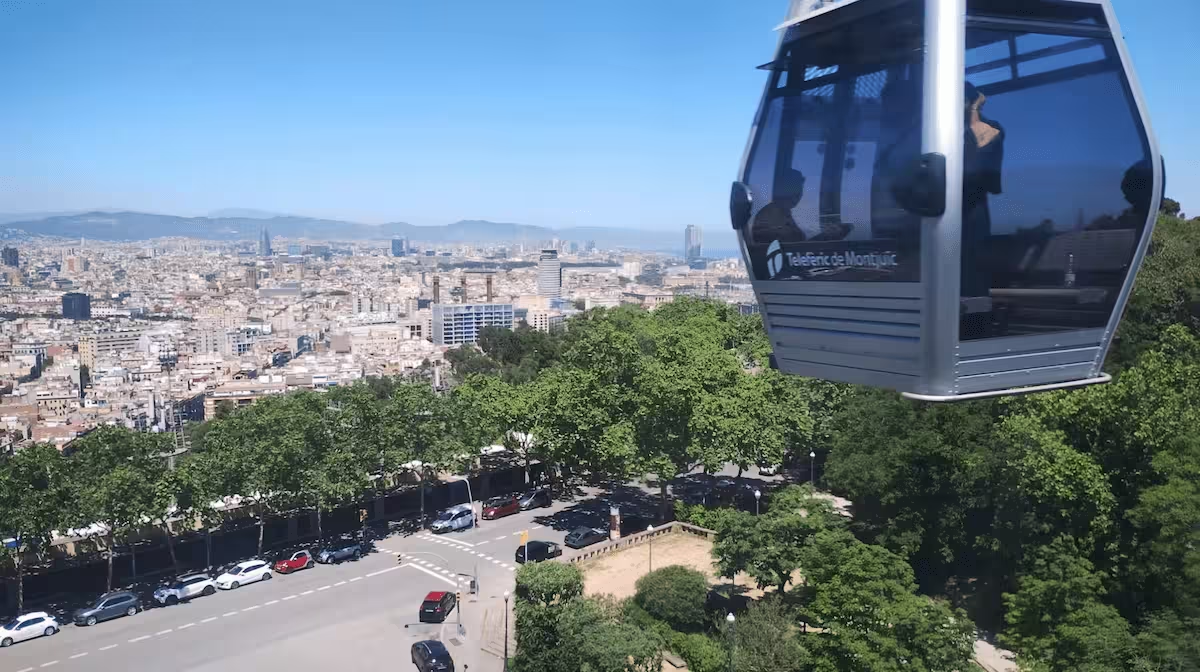
From Plaça d’Espanya, a pleasant 10-15 minute walk through Avinguda de la Reina Maria Cristina and the Montjuïc escalators will lead you to the museum. By bus: Several bus lines drop you off near the museum: Bus lines 13, 55, 150. By metro: L2 (purple line), L3 (green) to Paral·lel, from there with the funicular to the terminus. Or take L1 (red line), L3 (green) to Plaça Espanya, then walk or take bus 55 or 150.
The climb from Plaça d’Espanya to the palace gains roughly 60 metres of elevation across a long, deceptively gentle approach on a map. It’s not technically steep, but it’s sustained. Plan for the uphill walk and pace yourself, especially if visiting on a warm day.
Best times to visit: Early morning (9:30-10:30 am) or late afternoon (after 3:00 pm). Midday 11:00 am-3:00 pm draws the heaviest crowds, especially weekends. Weekday mornings are quietest.
Combined with other Barcelona attractions: Montjuïc works well as a half-day alongside another Barcelona destination. Morning Montjuïc, afternoon Gothic Quarter. Or reverse. Different Barcelona neighbourhoods offer distinct experiences — Montjuïc is the cultural/artistic hub.
Guided Tour Option
Want expert guidance through the museums?
The Fundació Joan Miró private tour with skip-the-line access gives you expert commentary through the museum’s most significant works and collection. View tour details
If you’re going self-guided, download the Bloomberg Connects app on Wi-Fi before arriving — Montjuïc signal is patchy. The app is free and covers major works, the building, and temporary exhibitions.
Questions Answered
- Is Montjuïc worth a full day?
- Depends on your interests. For art lovers, yes — the combination of Joan Miró Foundation and MNAC is substantial. For casual visitors, half a day is sufficient. A full day is worth it if you combine museums with Castle, gardens, and other Montjuïc attractions.
- Which museum should I prioritize?
- Joan Miró Foundation if you love modern/contemporary art and colorful, playful work. MNAC if you’re interested in Catalan art history spanning centuries. Both are worthwhile. The pair together is better than either alone.
- What’s the Articket BCN and is it worth it?
- A pass covering six Barcelona art museums for €38 with 12-month validity and skip-the-line access. Worth it if visiting three or more. Otherwise, buy individual or combined tickets.
- Can I visit Montjuïc museums for free?
- Yes. MNAC is free every Saturday from 3:00 pm and the first Sunday of each month. Fundació Joan Miró has occasional free hours but less frequently.
- How long should I spend at each museum?
- Fundació Joan Miró: 1.5-2 hours. MNAC: 2-3 hours (more if you linger on the rooftop terrace). Archaeology Museum: 45 minutes to 1.5 hours depending on interest.
- Is the walk between Miró and MNAC difficult?
- No. About 10 minutes on hillside paths. The climb from Plaça d’Espanya to MNAC is the steeper part.
- What’s the best route if I’m doing both Miró and MNAC?
- Start at Miró (early afternoon), spend 1.5-2 hours, walk to MNAC (10 minutes), spend 2-3 hours, visit the rooftop terrace for sunset views. Finish by late afternoon.
- Can I visit one museum and come back another day?
- Yes. The combined Miró + MNAC ticket is valid for 2 consecutive days. Individual tickets are valid for a single day.