 Skip to content
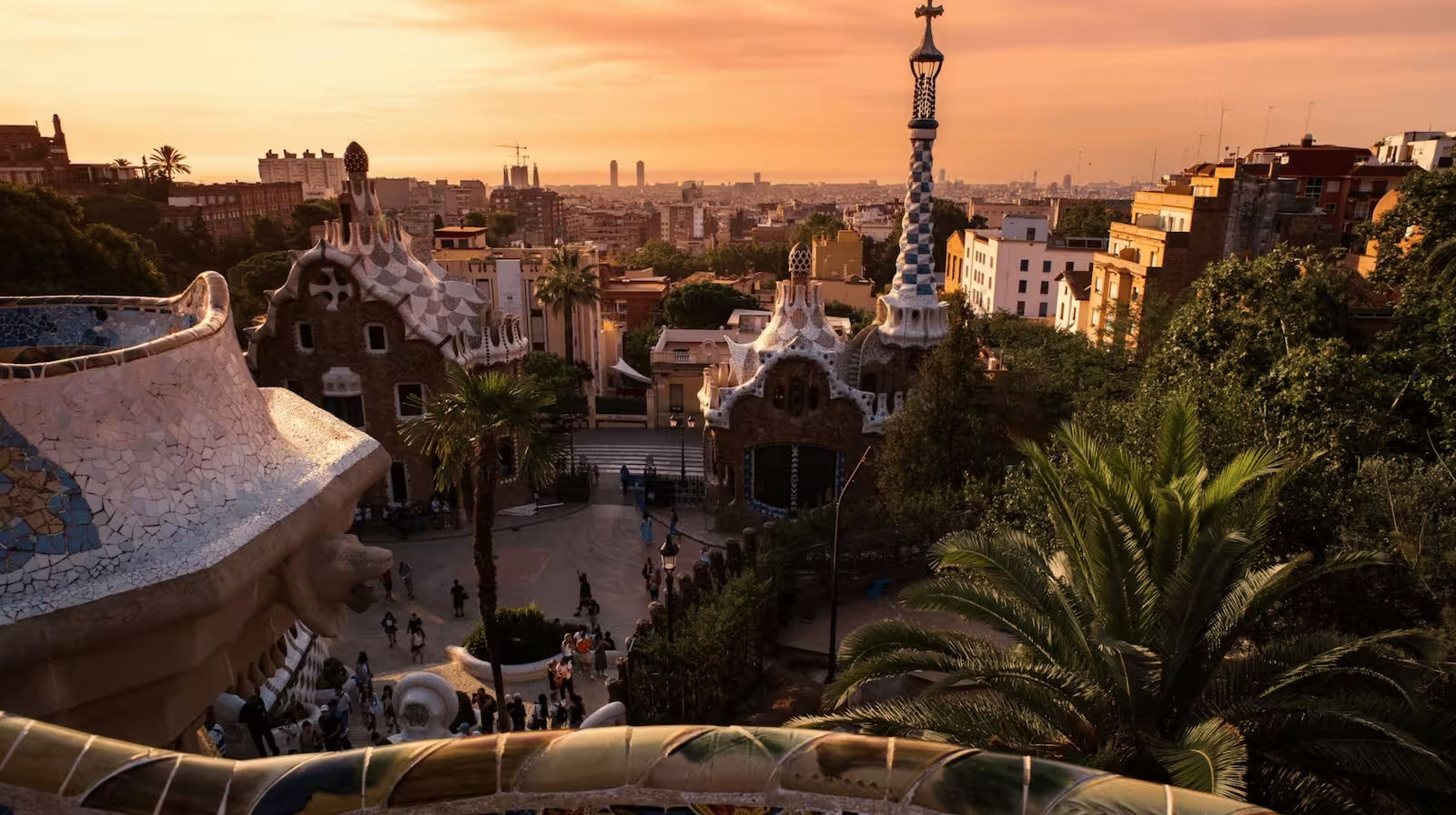
Everyone arrives at Park Guell with the same shot in mind: the dragon mosaic, the famous serpentine bench, the terrace overlooking the city. You see those photos everywhere. But before you book your Park Guell tickets, know this: the park is 17 hectares of winding landscape. The famous terrace is maybe one-tenth of it. Most visitors spend 30 minutes there, get their photos, and leave. I spent most of a morning wandering the parts the guidebooks don’t mention, and it became one of my favourite things we did in Barcelona — not because of the dragon, but because of the paths that led away from it. This guide covers the 2026 Park Guell tickets (prices jumped 80%), how to actually experience the park, and why the real magic happens where the tourists never go.
How Park Guell Came to Be
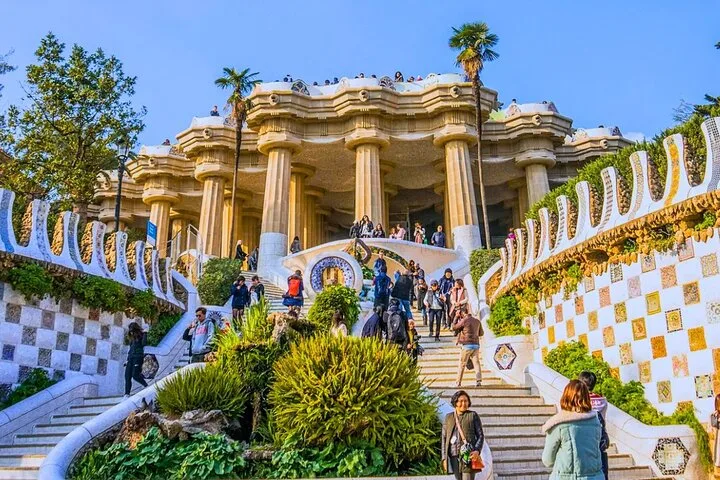
Park Guell exists because a real estate scheme failed. In the 1890s, an aristocrat named Eusebi Guell bought 17 hectares of hillside land north of Barcelona with a vision borrowed from English garden suburbs: a neighbourhood of elegant homes set in landscaped grounds, where the wealthy could escape the industrial city below. It was ambitious and expensive. In 1900, he hired a young architect named Antoni Gaudi to design it. Gaudi was 28 and already making a name for himself with unconventional work.
Instead of imposing a grand master plan on the landscape, Gaudi did something unusual: he studied the hill. He walked the slopes, understood the water flow, mapped the contours, and decided to let the land shape his design rather than the other way around. The paths followed natural flows. The terraces were cut into the slope. The stone viaducts and staircases became part of the landscape, not impositions on it. For 14 years, Gaudi oversaw every detail. He lived on-site toward the end, working in a small studio, perfecting curves and proportions. It was becoming an obsession.
But nobody wanted to live there. Of the 40 to 60 homes planned, only three were ever built. One was Guell’s own home. Another became Gaudi’s house. A third belonged to an architect friend. Two small gate houses became a museum and a shop. That was it. By 1923, the failed scheme was sold to the city, which converted it into a public park. The irony is perfect: what was meant to be exclusive became something better — a place everyone could enter and wander. In 1984, UNESCO declared it a World Heritage Site. So Gaudi’s vision of mixing nature and architecture survives precisely because the commercial dream never happened.
2026 Tickets and Pricing
Park Guell used to be free. Then, as Barcelona’s tourism exploded, the city started charging. For years the price was around 10 euros. In early 2026, it jumped to 18 euros for adults — an 80% increase in weeks. Children (7-12) are 13.50 euros; under 7 is free. A guided tour adds another 20-30 euros.
The jump is part of Barcelona’s sustainable tourism policy: limit visitors, fund upkeep, discourage casual tourism. It’s controversial locally, but the logic is clear. The Monumental Zone caps at 1,400 visitors per hour.
Here’s what matters: the 18-euro ticket gets you into the Monumental Zone — about 10 hectares where all of Gaudi’s architecture is. This is where the terrace, dragon, and columns are. But the park is 17 hectares. The other 7 hectares — forest, viaducts, hidden terraces, most of the walking — is completely free. Most visitors don’t know this. They assume once they’ve paid and done the monument, they’ve seen the park. They haven’t.
| Ticket | Adult | Children (7-12) | Under 7 |
|---|---|---|---|
| Monumental Zone | 18 EUR | 13.50 EUR | Free |
| Guided tour | 40-50 EUR | Varies | Varies |
How to Book
Tickets are timed entry only — you choose a 30-minute window. No on-site sales. Book several days ahead; peak times sell out 48-72 hours in advance. Once inside, you can stay as long as you like.
GetYourGuide offers skip-the-line tickets with free cancellation. Viator guided tours include a live expert. The official website has the lowest price but stricter cancellation.
The free park areas need no booking. The 7 hectares outside the Monumental Zone are open anytime during daylight. No tickets, no crowds, no reservations.
What to Expect
My timed slot was 10:00 on a summer weekday. The terrace was already busy — hundreds of people doing exactly what I did: looking for the dragon, finding the bench, taking photos. It’s all as striking as the pictures make it out to be. The terrace really does look over the whole city. The dragon really is that detailed. The columns really are that precise.
But everyone seemed to be doing the same loop. Ten minutes on the terrace, photo with the dragon, then leaving or drifting aimlessly. Almost nobody was exploring beyond that central circuit. So I just kept walking.
Beyond the Monument
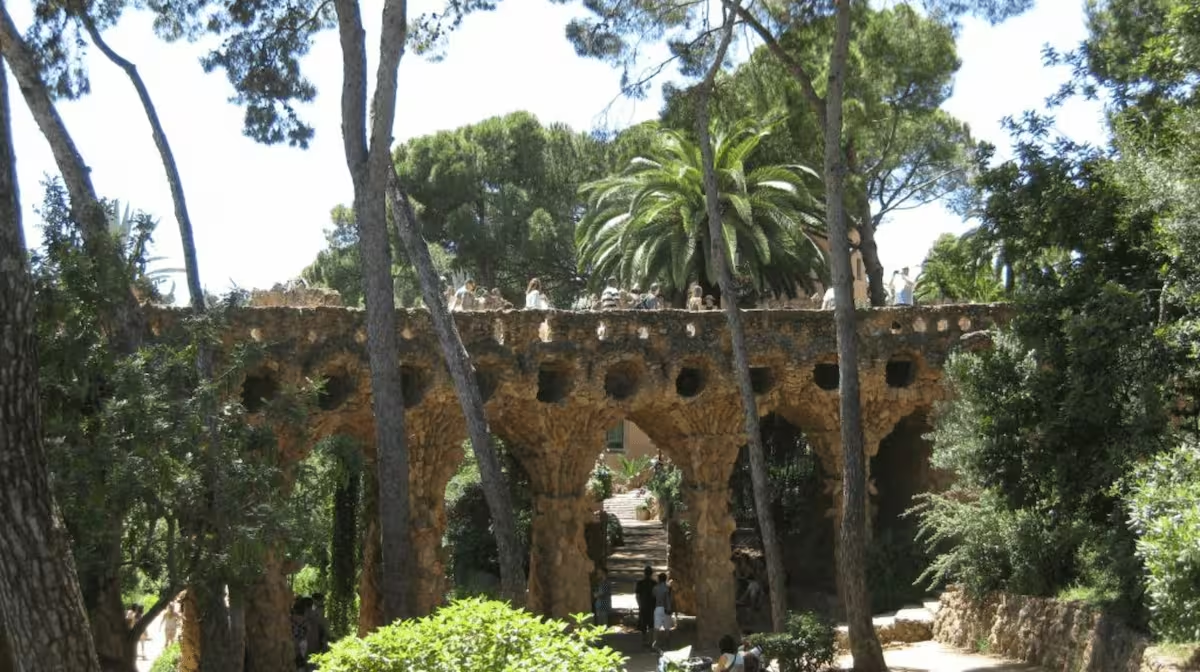
Once you step away from the monument area, the crowds thin immediately. The park opens into winding paths, shaded under pines, leading up the hill into quieter corners. There are viewpoints over Barcelona — better views than the famous terrace — where almost nobody stops. There are benches in shade where you can sit for 10 minutes without hearing another voice. There are stone viaducts and staircases that feel like secret passages.
The thing about Park Guell is that it’s genuinely a park, not just a monument. There are paths that lead somewhere, or nowhere in particular, just further up the hill or into trees. You keep saying, “Let’s see what’s around the next corner,” and then there’s another corner, and another. Some of the best views of Barcelona were from places where hardly anyone was stopping.
By the end of the morning my legs were feeling it — there’s quite a bit of uphill walking, and I wasn’t prepared for how much — but it never felt like a chore. It was exploring, not following a route.
If I went back, I’d spend less time in the monument area and more time walking the free park. That’s the part I remember most clearly.
Practical Tips
The uphill is real. Park Guell sits on a high hill. Even gentle paths slope upward. If you’re not used to hills or have mobility issues, this matters. Wear comfortable shoes.
Best time to visit: Weekday mornings (Tuesday-Thursday, 9:30-11:00) are quieter than weekends. Book an early slot. Summer hours are 9:30-19:30; winter closes at 17:30.
Time to spend: Most people rush through in 30 minutes. Two hours minimum if you want to see both the monument and surrounding forest. Three to four hours lets you explore properly without rushing.
Getting there: Bus 116 (Bus Guell) goes directly to the upper park entrance. Lines H6 and D40 also serve it. The metro is further away and you’ll climb more. Taxis can drop at the gates.
What to bring: Water (no vendors in free areas), sunscreen, hat. A light backpack is fine; large bags aren’t allowed in the Monumental Zone. Comfortable shoes, not flip-flops.
Park Guell fits into a morning or afternoon. It’s in the Gracia neighbourhood, which has its own character. See our 3-day Barcelona itinerary and complete sights guide. If staying in Gracia, the park is on your doorstep.
Questions
- How much are Park Guell tickets in 2026?
- 18 euros for adults, 13.50 euros for children (7-12), free under 7. This covers the Monumental Zone only. The surrounding 7 hectares of forest are free to explore anytime.
- Do I need to book in advance?
- Yes. Timed entry only with no on-site sales. Peak times sell out 48-72 hours ahead. Book online as soon as your dates are firm.
- What’s the difference between the Monumental Zone and the free park?
- The Monumental Zone (18 euros) contains Gaudi’s famous architecture. The free park (7 hectares) is forest paths, viaducts, and hidden viewpoints that most visitors never find.
- How much time should I spend?
- At least 2-3 hours if you want to do it justice. Most people rush through in 30 minutes. Four hours is better and less exhausting.
- Is it always crowded?
- The Monumental Zone gets busy 11:00-15:00, especially weekends. The free park is often nearly empty. Book an early weekday slot and spend time in the forest.
- Why did prices jump 80% in 2026?
- Barcelona’s sustainable tourism policy limits visitors and funds maintenance. The park sees fewer crowds now and the money goes to upkeep.
- Is there much uphill walking?
- Yes. Park Guell sits on a high hill and slopes upward throughout. Comfortable shoes are essential.
- Can I visit the free areas without paying?
- Yes. The 7 hectares outside the Monumental Zone are free anytime during daylight. Early morning is quietest.