 Skip to content
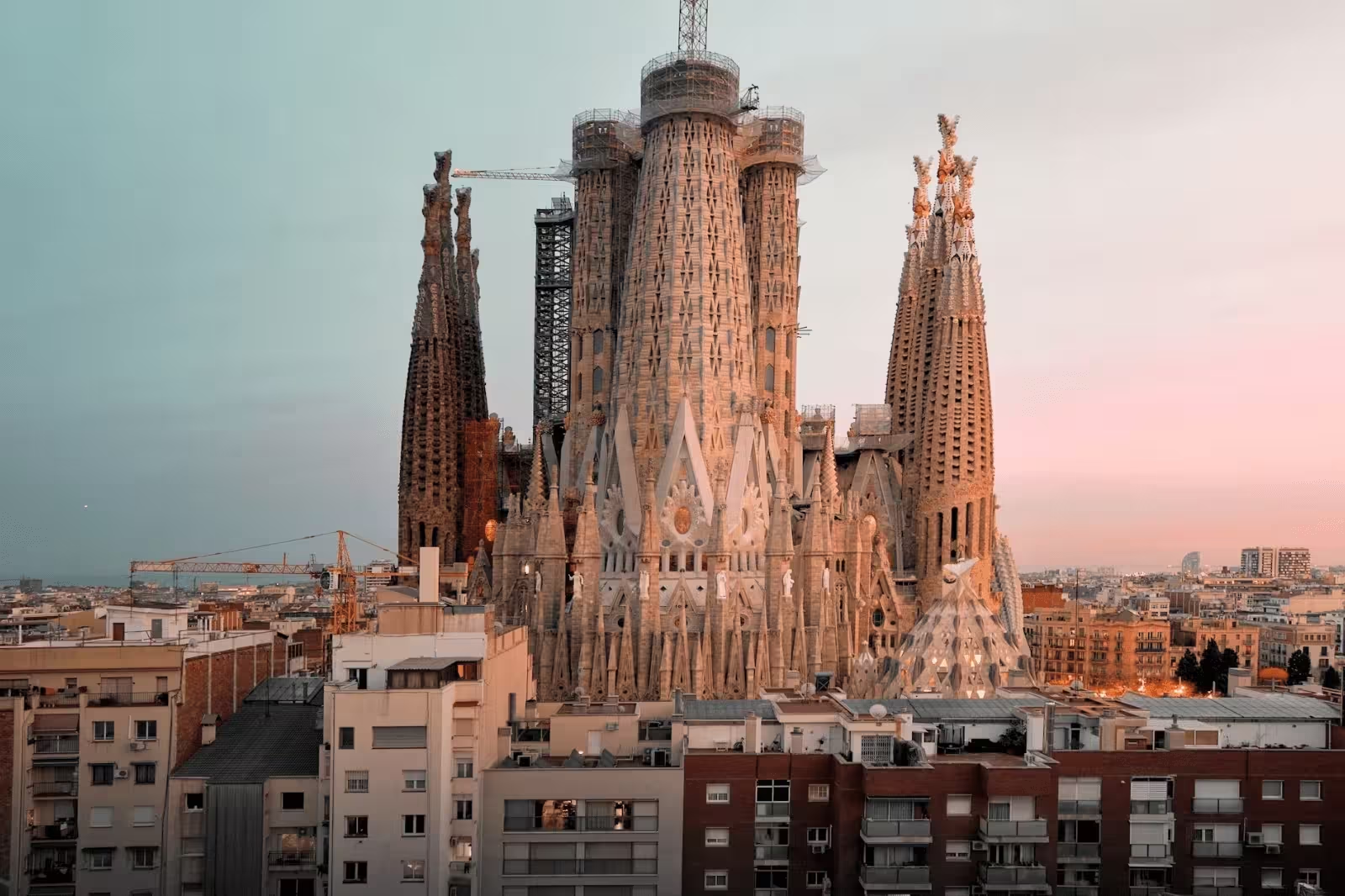
For years I assumed the Sagrada Familia was one of those landmarks that coasts on its own fame — famous mostly because it’s famous. I was wrong, and I’ll get to why. But first, the practical reason you’re probably here: in 2026, Sagrada Família tickets are harder to come by than they have ever been. This is the year Gaudí’s basilica finally topped out — the Tower of Jesus Christ is complete, crowning it the tallest church in the world — and the centenary of the architect’s death has sent demand soaring, with timed-entry slots selling out days ahead. So this guide does two jobs: it gets you a ticket without getting stung (every type, every current price, where to buy), and it tells you what actually waits for you inside — because that’s the part the photos don’t prepare you for.
Why 2026 Is a Landmark Year
If you only ever visit the Sagrada Família once, 2026 is the year to do it. After 144 years of construction, the basilica reached its final structural height: in February 2026 the last arm of the great cross was lifted into place atop the central Tower of Jesus Christ, bringing the building to 172.5 metres (566 feet) and crowning it the tallest church on Earth — overtaking Germany’s Ulm Minster, which had held the record since 1890.
There’s a deliberate poetry to that number. Gaudí designed the tower to stand just under the height of Montjuïc, Barcelona’s natural hill, because he believed no human creation should rise above the work of God. The result is a building that is monumental and humble at the same time.
The completion was timed to the centenary of Gaudí’s death. He was struck by a tram on 10 June 1926, and exactly one hundred years later — June 2026 — the finished tower was formally blessed in a solemn Mass, with a light spectacle turning the spire into a tribute to its architect. One caveat for visitors: “complete” refers to the external structure. Interior work on the new tower continues through 2027–2028, the Glory façade is still unresolved, and full finishing touches are expected to run for years yet. The scaffolding hasn’t entirely vanished — but the silhouette Gaudí imagined is, at last, whole.
A 144-Year Story
To understand why a single church took a century and a half to build, you have to start with the man who made it his life’s work — and didn’t choose it at first.
Construction began in 1882 under a different architect, with a fairly conventional Gothic revival design. Gaudí inherited the project a year later, aged just 31, and quietly tore up the plan. What he proposed instead had never been attempted: a basilica that took its rules from nature rather than from the rulebooks of European cathedrals. He spent the next 43 years on it, and the longer he worked, the more single-minded he became. In his final years he gave up other commissions entirely, moved into a workshop on-site, and lived almost like a monk among his models. People who knew him said the building had become his religion as much as his profession.
His method was as strange as his vision. Rather than calculate his famous curving arches on paper, Gaudí built them upside down. He hung chains and small weighted bags from the ceiling of his workshop and let gravity pull them into natural catenary curves; photographed and flipped, those hanging shapes became the load-bearing arches and columns of the basilica. The building you walk through is, in a sense, a gravity diagram turned right-side up — engineering disguised as a forest.
Then came the interruptions. When Gaudí was killed by a tram in June 1926, only a fraction of the church stood: the crypt, one transept, part of the apse, and a single bell tower. A decade later, during the Spanish Civil War, anarchists broke into the crypt and set fire to his workshop, destroying many of the original drawings and smashing the plaster models. Everything built since has had to be reconstructed and interpreted from the fragments that survived — which is part of why the project crawled, and why every generation of architects working on it has had to argue about what Gaudí “really meant.”
There was no shortcut on money, either. The Sagrada Família has been funded almost entirely by private donations and, later, ticket sales — never by the state or the broader Church. It was consecrated as a basilica by Pope Benedict XVI in 2010, and its Nativity façade and crypt are inscribed as a UNESCO World Heritage Site. For most of its life, though, it was simply Barcelona’s beautiful unfinished thing, wrapped in cranes.
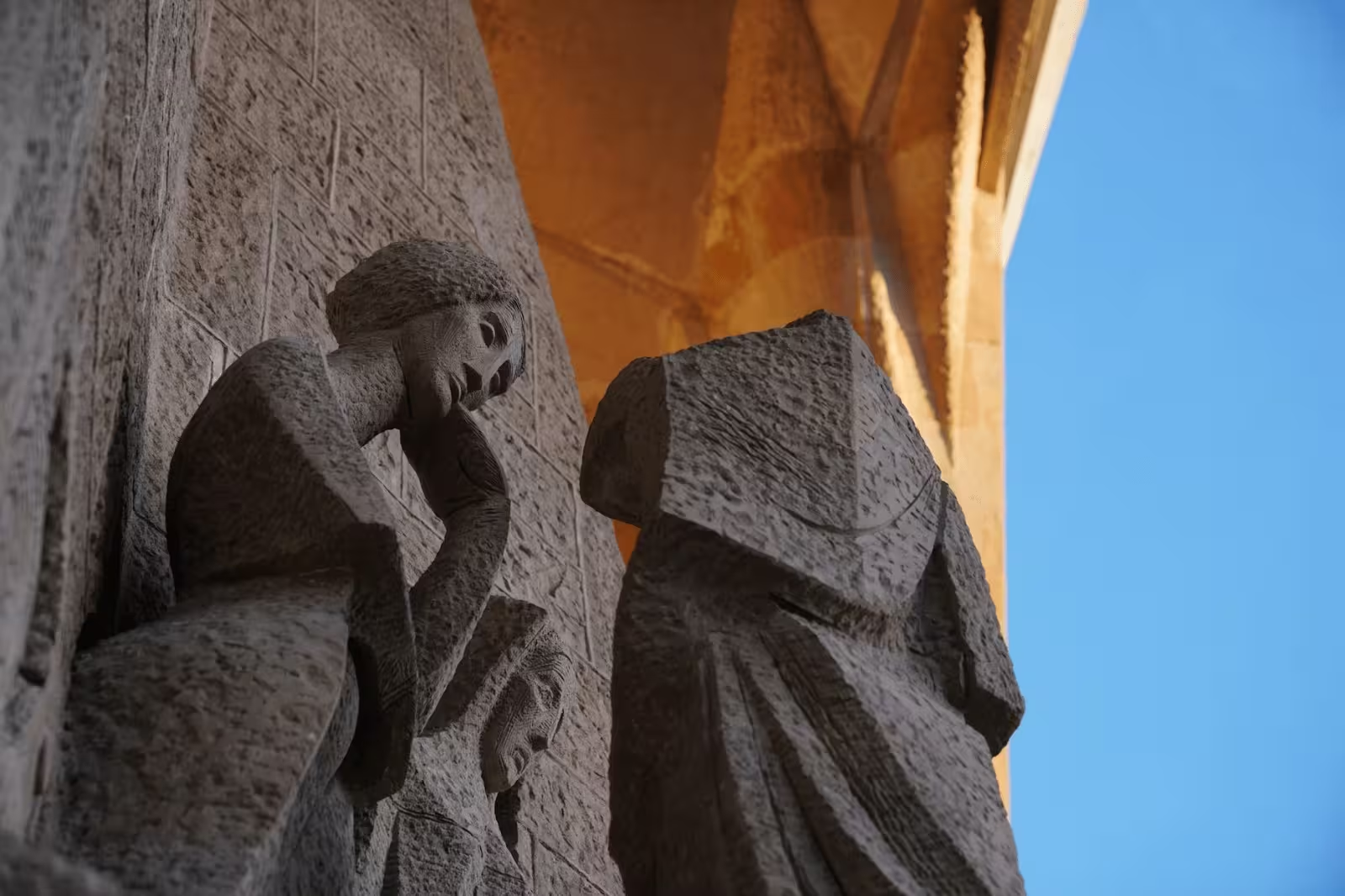
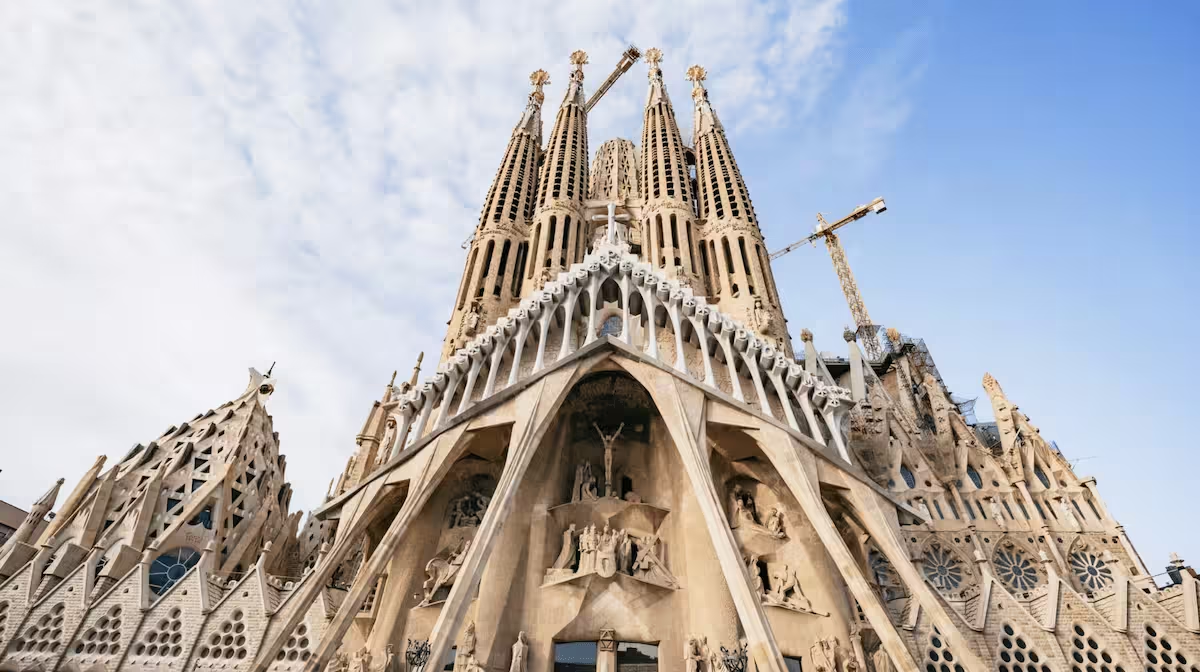
Gaudí planned 18 towers in all, each a character in a story: twelve for the apostles, four for the evangelists, one for the Virgin Mary, and the tallest — the one completed in 2026 — for Jesus Christ. He also gave the building three façades to narrate the life of Christ from different emotional registers: the joyful, almost overgrown Nativity façade he built himself; the stark, angular Passion façade added decades later in a deliberately harsher style; and the Glory façade, the grand main entrance, still unfinished today. Knowing that before you go changes everything. You stop seeing a famous building and start reading it.
Sagrada Família Tickets & 2026 Prices
The Sagrada Família uses timed-entry tickets only — you pick a date and a time slot, and an app-based audio guide is included with every ticket. Here are the official 2026 base prices direct from the basilica:
| Ticket type | Adult | Under 30 / Student | Senior (65+) | Under 11 |
|---|---|---|---|---|
| Basilica (with audio guide) | €26 | €24 | €21 | Free |
| Basilica + guided tour | €30 | €28 | €23 | Free |
| Basilica + tower access | €36 | ~€34 | — | Free* |
*Children enter free but towers have a minimum age (around 6) and are not suitable for very young children. Disabled visitors and one companion enter free.
For broader Barcelona cost planning, our Barcelona budget guide puts these ticket prices in context alongside food, transport, and accommodation.
Where to Buy & How to Skip the Line
You have two safe routes, and one to avoid entirely.
Option 1: The official website
Buying direct from sagradafamilia.org gets you face-value pricing with no booking fee and full choice of time slots. The trade-off is stricter, non-refundable conditions. It’s the best choice if your dates are locked in and you just want a basic timed entry.
Option 2: Trusted resellers (skip-the-line + flexibility)
Platforms like GetYourGuide and Viator add a small premium (typically 5–12%) but usually include free cancellation up to 24 hours ahead, more available slots, and easy mobile tickets — useful if your plans might shift. This is the route I took: a skip-the-line timed ticket booked online in advance, which meant walking past the queue straight to the entrance.
→ Sagrada Família skip-the-line ticket — timed entry with audio guide, free cancellation.
→ Skip-the-line guided tour — if you’d rather have a live expert bring the symbolism to life.
→ Gaudí combo tours — pair the Sagrada with Park Güell to save on separate tickets.
Best Time to Visit
Because entry is timed, “beating the crowds” is less about the queue and more about the light and the slot availability. A few things we’d plan around:
- Book early. In the centenary year, popular midday slots sell out several days — sometimes weeks — in advance. Reserve as soon as your dates are firm.
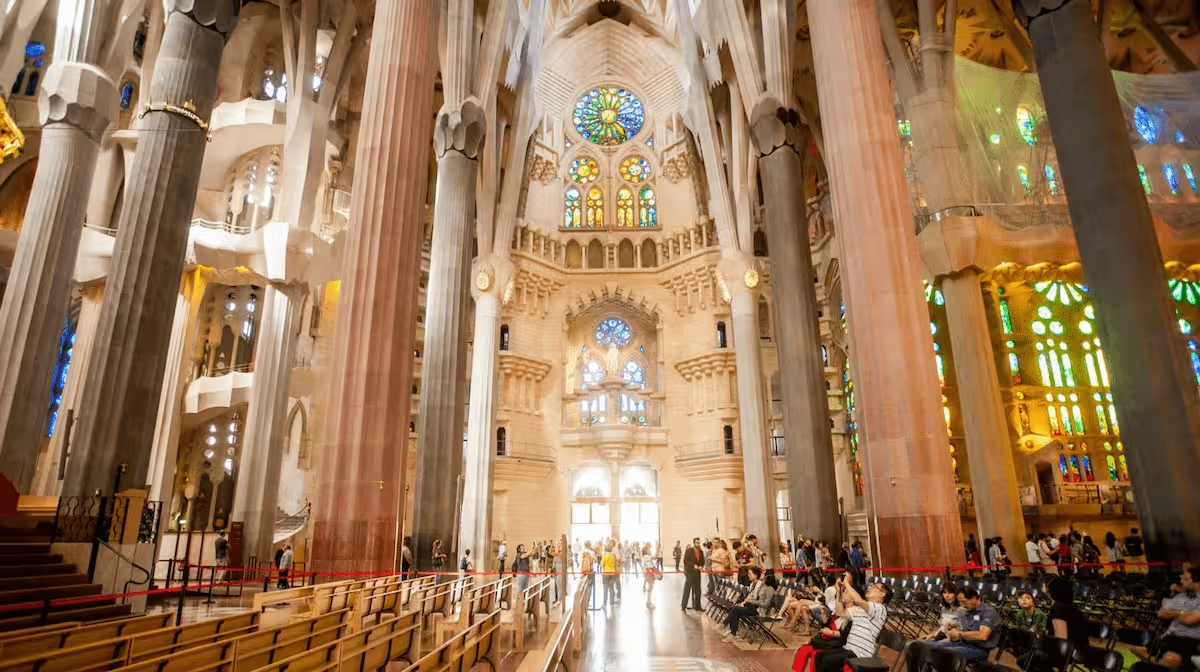
- Morning vs. afternoon light. The interior is the real spectacle, and it changes through the day. Morning sun pours through the cooler blues and greens of the Nativity (east) side; late-afternoon sun ignites the warm reds and oranges of the Passion (west) side. If the stained glass is your priority, pick a slot with sun, not the first or last hour of the day.
- Off-season is calmer. January and February bring smaller crowds (and cheaper hotels), though ticket prices hold steady year-round.
- Opening hours shift by season. In winter (roughly November–February) the basilica runs about 9:00–18:00, opening later on Sundays (from 10:30 for visits, after morning Mass). Spring and summer hours extend into the evening. Always confirm the exact hours for your date on the official site.
What It’s Actually Like Inside
So, back to being wrong about the place.
I’d seen photos of the Sagrada Família for years and had more or less filed it under “overhyped because it’s famous.” The outside is genuinely impressive — but it was the inside that caught me off guard.
The moment I walked in, I looked up and just stood there for a few seconds. The light coming through the stained glass was unreal. Not in a dramatic, life-changing way — just one of those moments where you stop thinking about taking photos and actually look around.
What struck me most was how different it felt from other churches and cathedrals I’ve visited. Instead of dark and heavy, it felt open and almost alive. The columns look like trees, and the ceiling branches out above you. It sounds strange until you’re standing there looking at it — and then it makes complete sense, because that’s exactly what Gaudí designed it to do.
It was crowded, which was annoying at times. But even with hundreds of people inside, there were moments when everything seemed to go quiet and you could just take it in. When I left, I remember thinking that, for once, the hype was justified. Barcelona has plenty of things worth seeing — but if I only had time to do one thing again, it would probably be this.
A couple of practical notes from that visit: the light is the whole experience, and it shifts through the day (more on timing below), so it’s worth caring which slot you book. And give yourself room — around 1.5 to 2 hours with the audio guide lets you take in both façades and actually stand still for a minute, instead of shuffling through.
Should You Climb a Tower?
Tower access is a separate, pricier ticket (€36) and worth understanding before you book. You choose one tower — either on the Nativity façade (views east toward the sea) or the Passion façade (views over the city centre). A lift takes you up; you walk back down a tight, winding staircase.
I did the interior only and didn’t feel I’d missed the essence of the place — the magic, for me, was at ground level, in the light and the columns. The towers are a great add-on if you love a high vantage point and you’re steady on narrow stairs, but they’re not the headline. A few honest caveats: there’s a minimum age (around 6), the descent isn’t suitable for anyone with mobility issues or a fear of enclosed heights, and tower slots are limited, so they sell out first. If you’re short on time or budget, spend it on the interior.
Getting There & Practical Tips
The basilica has its own metro stop — Sagrada Família, on lines L2 (purple) and L5 (blue) — and you surface right beside it. It’s also an easy stop on the hop-on hop-off bus. For the full lowdown on metro tickets, passes, and airport transfers, see our Barcelona transportation guide.
A few practical notes that save hassle at the door:
- Dress code: it’s an active place of worship. Shoulders and knees should be covered; no beachwear, and remove hats inside.
- Bags: large luggage and big backpacks aren’t allowed — travel light on visit day.
- Arrive a few minutes early for your slot to clear the security check, but not too early — you can’t enter before your time.
- Free entry on Sundays is limited to the 9:00 international Mass for worshippers only (no wandering or photography afterward); it’s not a sightseeing shortcut.
Planning the rest of your days? The Sagrada slots neatly into our 3-day Barcelona itinerary, and you’ll find it alongside every other major site in our must-see sights guide. Staying nearby in Eixample puts you within walking distance.
Frequently Asked Questions
- How much are Sagrada Família tickets in 2026?
- Official base prices: €26 for basilica entry (with audio guide), €30 with a guided tour, and €36 including tower access. Under-11s are free, with discounts for seniors, students, and under-30s. A temporary centenary surcharge of about €2–5 applies from June to December 2026.
- Do I need to book Sagrada Família tickets in advance?
- Yes — especially in 2026. Entry is timed and slots regularly sell out several days ahead during the centenary year. Book online before you travel; don’t rely on same-day availability.
- Is it worth paying for tower access?
- It’s a nice add-on for views, but the interior is the real highlight. If you’re short on time or budget, skip the tower and spend longer inside. Note the tower has a minimum age (around 6) and a narrow staircase down.
- What’s the best time of day to visit?
- Pick a slot with sun for the stained glass: morning light favours the blue-green Nativity side, late afternoon the red-orange Passion side. Avoid the very first and last hours if the glowing interior is your priority.
- Is the Sagrada Família finished now?
- The external structure is complete as of 2026, including the record-breaking Tower of Jesus Christ. But interior work on the tower runs through 2027–2028 and the Glory façade is still unfinished, so some scaffolding remains.
- How long should I spend there?
- Allow about 1.5 to 2 hours for the interior with the audio guide, plus extra time if you’re climbing a tower or exploring both façades closely.
- Can I get in for free?
- Children under 11 enter free, as do disabled visitors with a companion. The only free general entry is the Sunday 9:00 international Mass, which is for worshippers attending the service — not for sightseeing.
- How do I get to the Sagrada Família?
- Take the metro to the Sagrada Família stop on lines L2 or L5 — you exit right beside the basilica. It’s also a stop on the hop-on hop-off bus.
See It in Its Centenary Year
For 144 years the Sagrada Família was Barcelona’s beautiful work-in-progress. In 2026 it became something else: a finished silhouette against the sky, the tallest church in the world, completed exactly a century after the death of the man who dreamed it. Book your Sagrada Família tickets early, choose a slot when the sun is up, and give yourself time to stand under those branching columns and watch the light move. It’s worth every minute.