 Skip to content
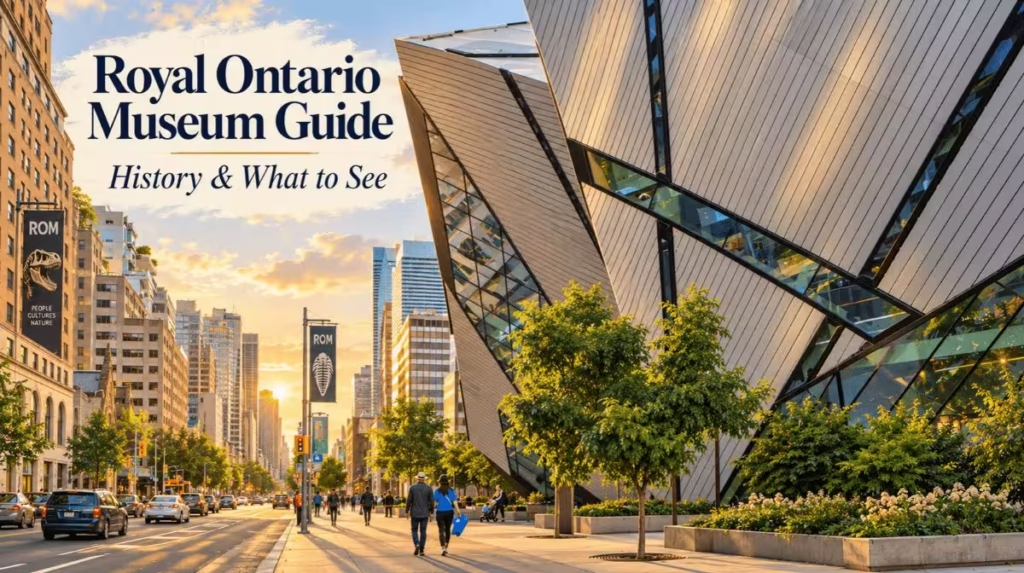
Walk up Bloor Street and the Royal Ontario Museum announces itself before you’re anywhere near the entrance — a jagged glass-and-metal crystal erupting sideways out of a century-old stone building, like two different museums were pushed together and neither one gave way. That collision is more or less the whole story of the ROM: a Edwardian-era institution built to catalogue the natural and cultural world, wearing a 21st-century architectural argument as its front door. This is part of our full Toronto travel guide: here’s how it got that way, and what’s actually worth seeing inside.
Jump to a section
Founding a Museum
The ROM exists because of two very different men who wanted the same thing. Sir Edmund Walker was a Toronto banker, civic activist, art collector, and amateur paleontologist who began pushing, as early as 1905, for Toronto to have a world-class museum as part of putting the city on the international map. Charles Trick Currelly was something else entirely — trained as a Methodist minister at the University of Toronto, he abandoned the pulpit for archaeology after a research trip to the British Museum led to a meeting with the Egyptologist Sir Flinders Petrie. Petrie offered him an assistantship on the spot in 1902; Currelly ended up living in Petrie’s own home, learning to pack artifacts, and working digs at Abydos with Petrie and at Deir el-Bahari with the archaeologist Édouard Naville. On one of those digs, he personally discovered the cenotaph and tomb of the Pharaoh Ahmose I.
Walker and Currelly’s paths crossed through a mutual connection, and in 1906 the University of Toronto formally appointed Currelly as its official collector for the museum that didn’t yet exist. His career from there reads, as one retrospective later put it, like a Canadian Indiana Jones story. In 1907, while excavating in Egypt and casting a temple wall he couldn’t afford to have painted, he was visited on site by a group of Torontonians — Sir Edmund Osler and Harry and Mrs. Warren — who funded the work on the spot and became lifelong museum patrons. Currelly kept collecting through the late 1910s and 1920s, and the objects he sent home from Egypt, Crete, and Asia Minor became the founding core of the ROM’s archaeology holdings.
Construction of the first wing, on Philosopher’s Walk, began in 1910 and finished in 1912 at a cost of $400,000, split between the University of Toronto and the Province of Ontario. That same year, the Royal Ontario Museum Act formally established the institution as five separate museums — Archaeology, Geology, Mineralogy, Paleontology, and Zoology — with a combined staff of just 20 people. The Governor General of Canada, the Duke of Connaught, officially opened the doors on March 19, 1914. Currelly became the first director of the Museum of Archaeology and held the post until 1946; he later published a memoir, I Brought the Ages Home, and the ROM eventually renamed one of its historic galleries in his honour.
The original building itself, designed by Toronto architects Frank Darling and John A. Pearson, blends Italianate and Neo-Romanesque styles, topped off with an elaborate, Byzantine-inspired rotunda that still greets visitors at the historic entrance.
Worth knowing: nearly every Egyptian mummy in the ROM’s collection today traces back to Currelly’s own early fieldwork and connections in Egypt — the founding acquisitions of a museum that, at the time, didn’t have a building to put them in yet.
The Crystal
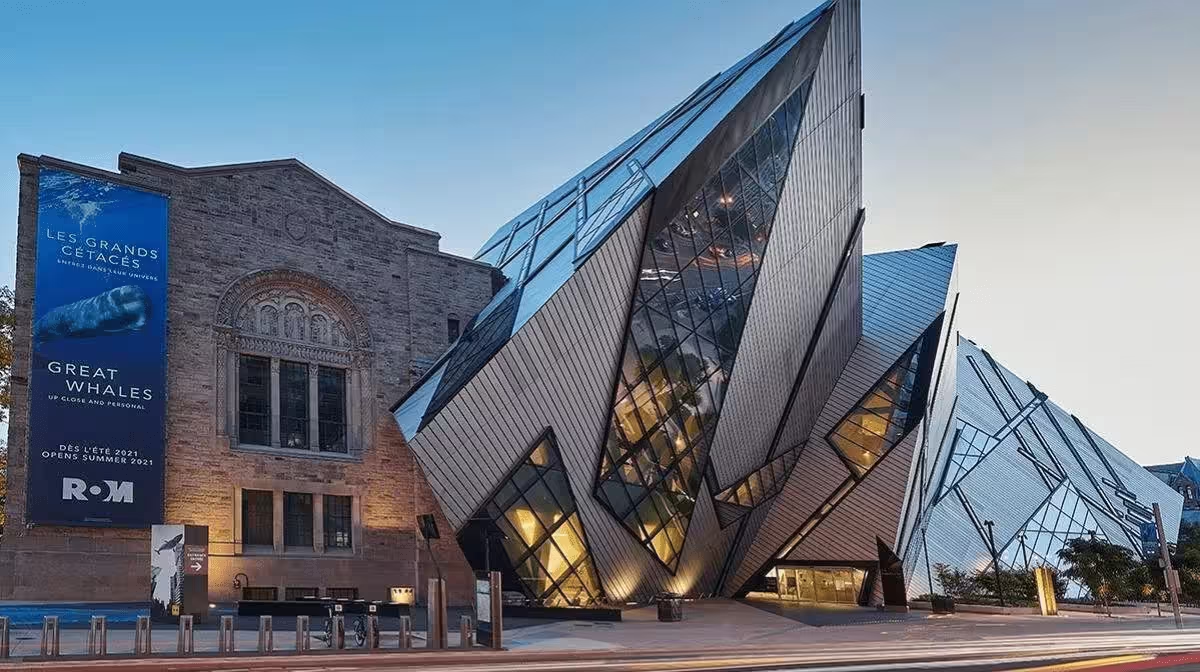
For most of the 20th century, the ROM looked like exactly what it was: a stately, slightly fortress-like Edwardian museum. That changed in 2007 with the addition of the Michael Lee-Chin Crystal, a Daniel Libeskind-designed extension named for the Jamaican-Canadian billionaire whose donation helped fund it. Libeskind said the design — five intersecting, crystalline prismatic volumes clad in glass and aluminum over a steel frame — was inspired by the ROM’s own gem and mineral collection. Inside, two of the crystals meet to form the Spirit House, an atrium void that rises from below ground level to the fourth floor, crossed by bridges at various heights and intended as a quiet space of reflection rather than another gallery.
Worth knowing: the Crystal was genuinely divisive when it opened — Toronto’s own newspapers ran both rave reviews and open mockery of the design — but it added 100,000 square feet of exhibition space and drove a 44% jump in visitor numbers in its first year alone.
The addition was part of a larger “Renaissance ROM” project, running from 2003 to 2010, that doubled the number of artifacts and specimens on public display and renovated ten galleries in the original historic building alongside the new construction.
What’s Inside
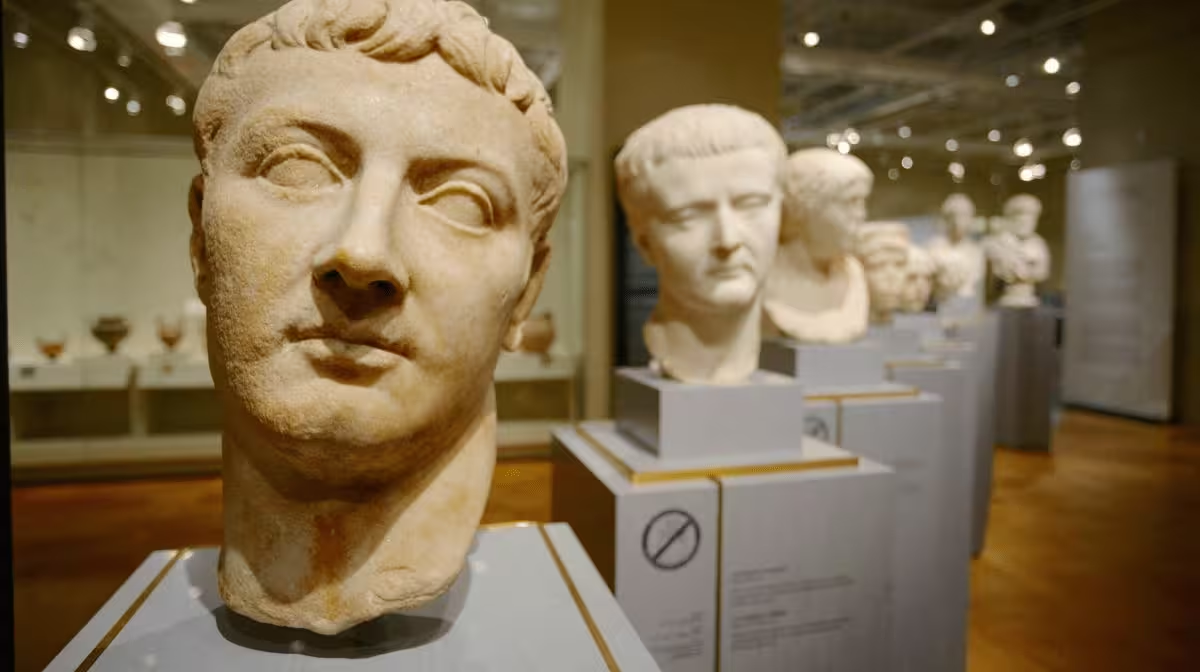
The ROM holds more than six million items across 40 galleries, spanning both natural history and world culture — genuinely broad enough that a single visit rarely covers all of it. A few highlights worth prioritizing:
Dinosaurs
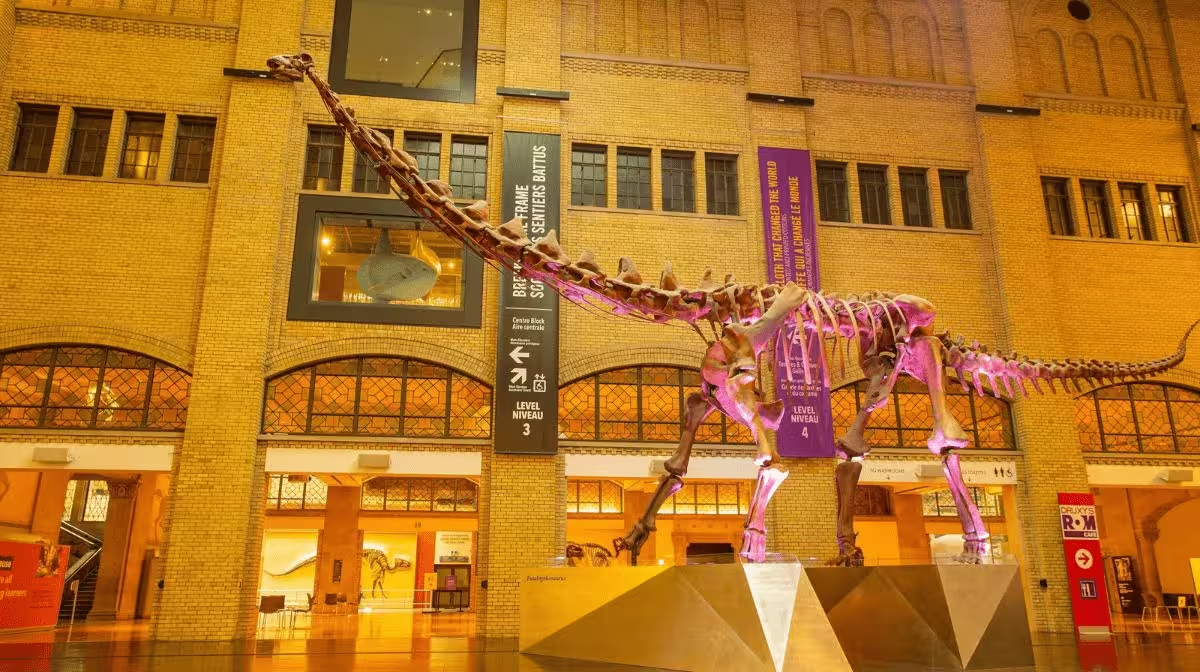
The ROM’s paleontology galleries include a mounted Barosaurus, the largest dinosaur skeleton on display in Canada.
Burgess Shale Fossils
The world’s largest collection from this famous fossil bed — more than 150,000 specimens, some over 500 million years old.
Egyptian Mummies
Eight mummies drawn directly from Currelly’s own early collecting, spanning the Predynastic to Roman periods — two, Nakht and Djedmaatesankh, are among the best-studied in the collection.
The Bat Cave
A recreated cave environment with real bat specimens, sound, and lighting — a longtime favourite with kids.
Chinese Architecture
The largest collection of Chinese architectural artifacts outside mainland China, including the Tomb of General Zu Dashou, a genuine Ming Dynasty tomb.
Budget three to five hours if you want to see the museum properly rather than rush it — it’s genuinely large enough to reward a slower pace. See our Best Toronto Tours guide for how it fits alongside the CN Tower and Casa Loma, or our Toronto Weekend Itinerary for exactly when to slot it in.
Tickets and Practical Info
The ROM is at 100 Queens Park, a short walk from St. George subway station, and is open daily except select holidays. General admission covers the permanent galleries; special exhibitions are sometimes ticketed separately.
Royal Ontario Museum Admission Ticket
Skip-the-line general admission to the ROM’s permanent galleries.
Check Availability on ViatorIf a bundled ticket suits your trip better, the Toronto CityPASS includes the ROM alongside three more of the city’s attractions:

Toronto CityPASS (Includes the ROM)
Bundle the Royal Ontario Museum with three more of Toronto’s top attractions — choose from Casa Loma, the CN Tower, City Cruises Toronto, and the Toronto Zoo — at a combined saving over paying separately.
Check Availability on ExpediaWhere to Stay
The ROM sits in the Bloor-Yorkville area, close to some of Toronto’s most upscale shopping and dining, and a short subway ride from downtown. Full neighbourhood breakdown in the Best Hotels in Toronto guide.
Frequently Asked Questions
How long should I budget for the ROM?
Three to five hours if you want to see it properly — it’s one of the largest museums in North America, and easy to underestimate.
Is the ROM good for kids?
Yes — the dinosaur galleries and the Bat Cave in particular tend to be highlights for younger visitors.
How did the ROM get its Egyptian mummy collection?
Almost entirely through founder Charles Currelly’s own early fieldwork in Egypt in the 1900s and 1910s, working alongside the Egyptologist Flinders Petrie before the museum even had a building.
What is the Michael Lee-Chin Crystal?
A 2007 Daniel Libeskind-designed extension to the ROM, named after its lead donor — a crystalline glass-and-metal structure that serves as the museum’s main entrance today.
Does the ROM include special exhibitions in general admission?
Not always — some special or touring exhibitions are ticketed separately, so check the official site before you go if there’s a specific exhibit you want to see.
Is the Toronto CityPASS worth it for the ROM?
If you’re also planning to visit at least two more of the included attractions — Casa Loma, the CN Tower, City Cruises Toronto, or the Toronto Zoo — the bundle works out cheaper than paying for each separately.
Route & Stay is reader-supported. Some of the links on this page are affiliate links, and we may earn a small commission if you book through them, at no extra cost to you. Ticket details and prices were accurate at the time of writing but can change — always confirm current availability before booking.