 Skip to content
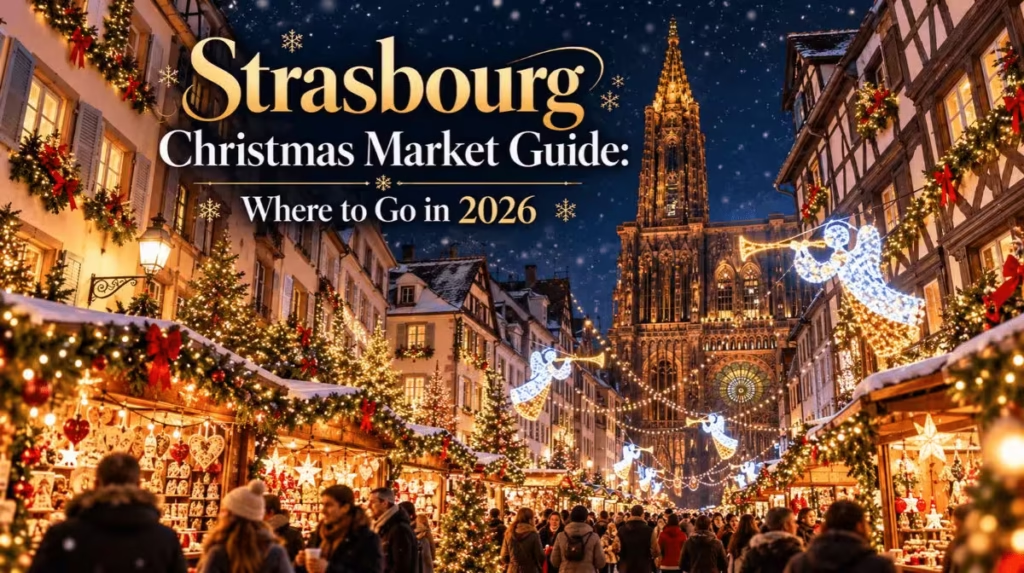
Strasbourg calls itself the “Capital of Christmas”, and it has the history to back it up: the Christkindelsmärik on Place Broglie dates to 1570, making it one of the oldest Christmas markets in Europe. Today the festival spreads across the whole of the Grande Île, with around 300 chalets in eight themed markets, a tree of roughly 30 metres in Place Kléber and half-timbered Alsatian streets that look made for the season. Here’s a practical guide to where to go, what to eat and drink, what it costs and how to avoid the worst of the crowds.
2026 dates are not official yet. At the time of writing the city hasn’t published its 2026 calendar. The window below (27 November – 24 December) follows the usual pattern of opening on the last Friday of November and closing on 24 December, and matches the dates quoted by several guides. Check the city’s official Christmas site before you book.
Jump to a section
At a Glance
| Category | Detail |
|---|---|
| Expected 2026 dates | 27 November – 24 December 2026 (not yet officially published) |
| Hours | Roughly 11:00 to 21:00 daily; they vary by site and day, and the markets close early on 24 December (around 18:00) |
| Size | Eight themed markets plus the OFF market, about 300 chalets in all |
| Best for first-timers | Place Kléber and Place Broglie, a short walk apart |
| Best for a postcard setting | Petite France |
| Best for local food and drink | Quai des Délices and the Alsatian producers at Square Louise Weiss |
| Best for crafts and design | Carré d’Or at Place du Temple Neuf |
| Entry | Free to enter; you pay only for food, drink and shopping |
| Getting around | The markets are all on the compact Grande Île, so you can walk between them |
Christkindelsmärik (Place Broglie)
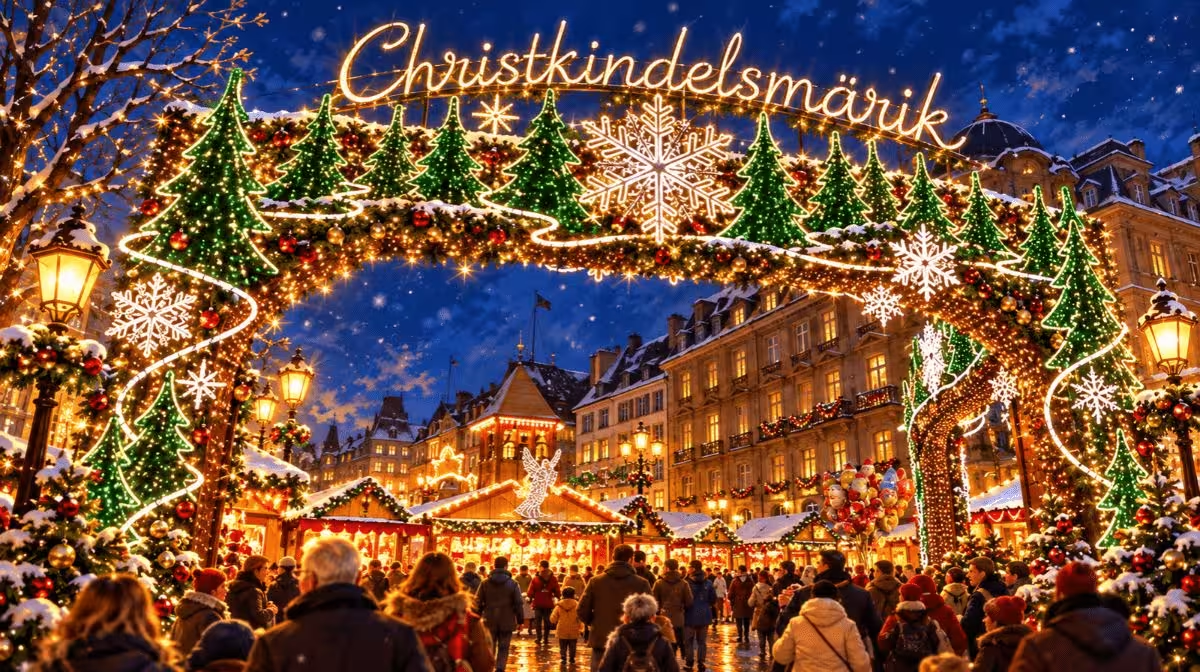
This is the original. The Christkindelsmärik has been held since 1570, and Place Broglie is its traditional home, with a dense line of chalets selling handmade ornaments, Alsatian wine and festive food. One guide counts 65 chalets here, so it feels busy and compact rather than sprawling, and the long row of food stalls makes it a good place for a warm snack.
It’s one of the most popular markets in the city, so it fills quickly at weekends and on evenings in the second half of December. A wander through in the late morning or on a weekday gives you the atmosphere without the shuffle.
Place Kléber & the Grand Sapin
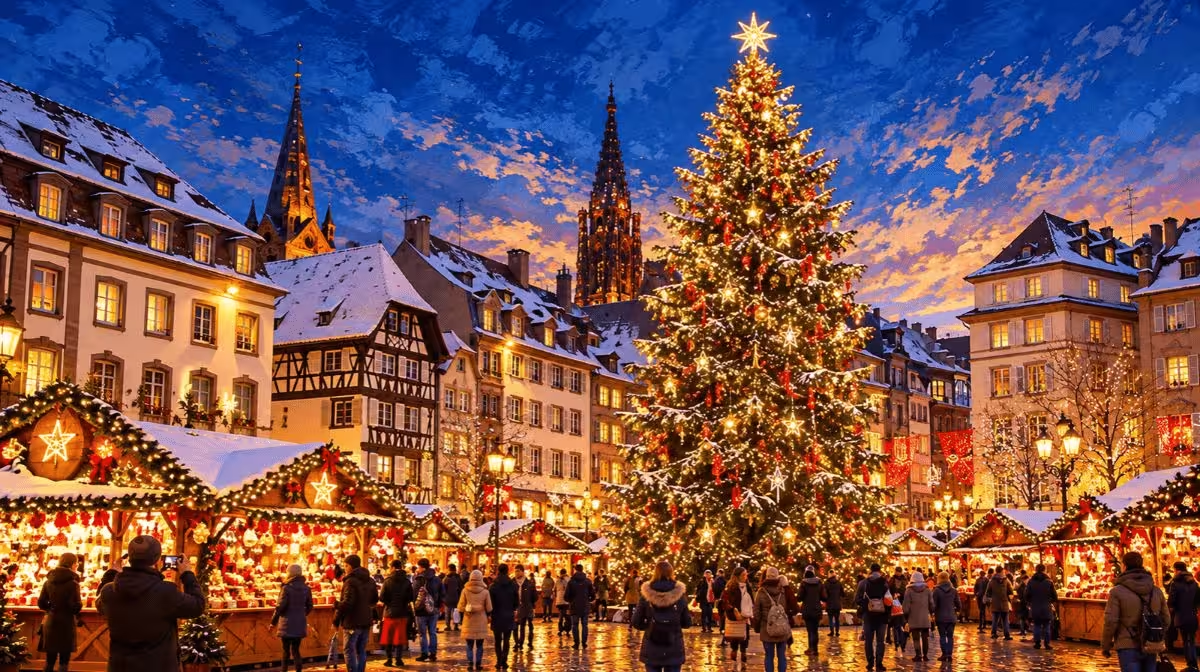
Place Kléber is the centrepiece. The Grand Sapin, the city’s giant Christmas tree, stands around 30 metres tall in the middle of the square and is decorated each year in a local, low-waste style. The city’s own site describes a daily light and music show on the hour from 16:00 to 21:00, followed by lights without music from 22:00 to midnight (these are last season’s times, so check them for 2026).
Next to the tree is the Village du Partage, where charities and associations run stalls. This is where most visitors gather in the evening, so go early or after the last show if you’d rather have room to take photos.
Strasbourg: Christmas Markets Walking Tour with Mulled Wine — a guided walk through the city’s markets with a glass of mulled wine, a good way to get your bearings on a first visit.
Around the Cathedral
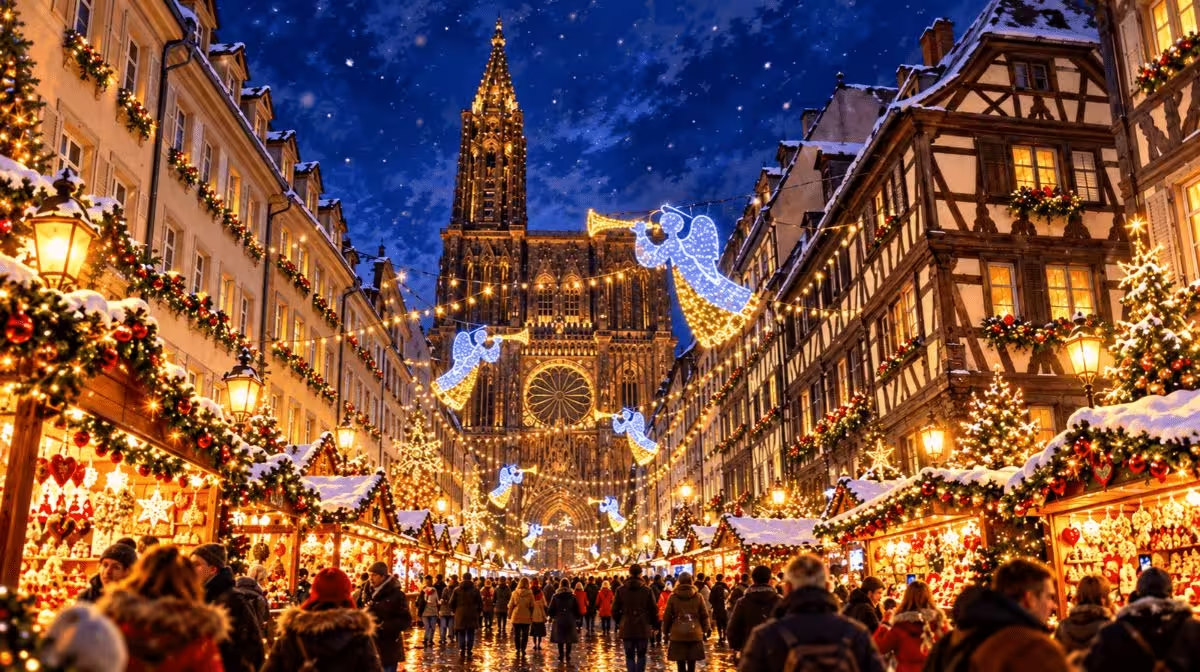
The chalets cluster around Notre-Dame Cathedral, the Gothic landmark that dominates the skyline, and the stalls here lean towards crafts, bredele (Alsatian Christmas biscuits) and mulled wine. The setting is the draw: the cathedral’s carved red sandstone front rising above the stalls is one of the best photographs in Strasbourg.
It is among the busiest parts of the festival, so it’s best visited on a weekday or earlier in the day.
Petite France
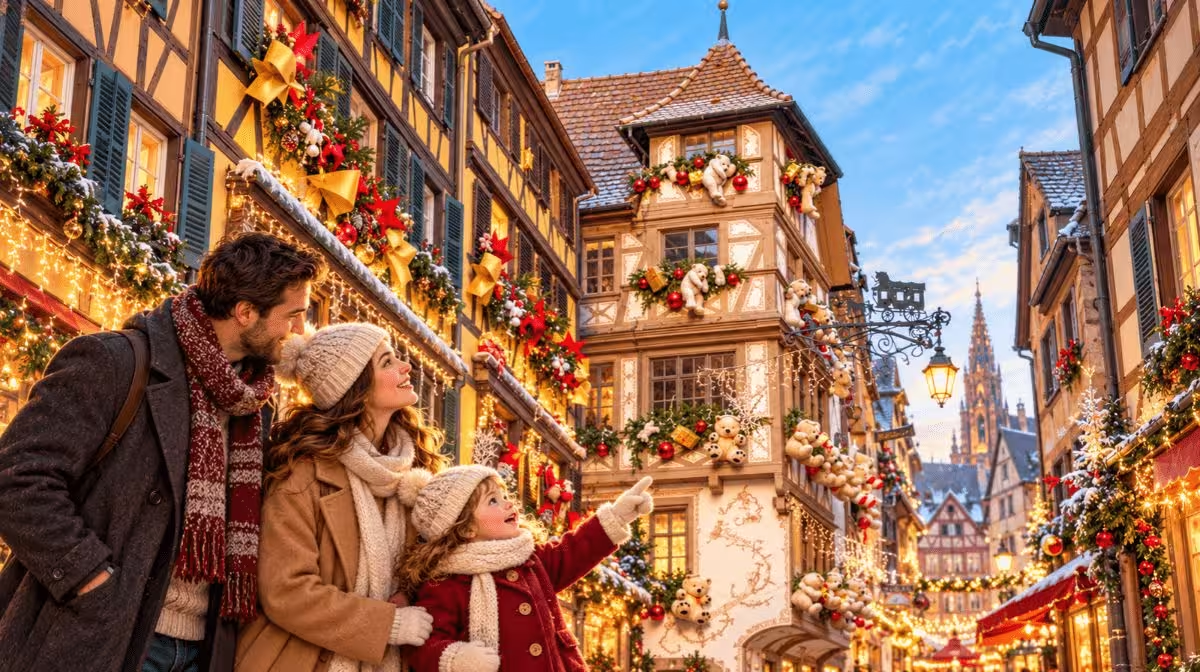
Petite France is the postcard version of Strasbourg: timber-framed houses beside the canals of the Ill. The Christmas stalls are smaller and spread over a few squares, including Place Benjamin-Zix and Place Saint-Thomas. At Square Louise Weiss you’ll find the Alsatian producers’ village, with jams, chocolate, bredele and wine sold by the people who make them.
The lanes are narrow and the market is more about the setting than the shopping, so it works best as a slow stroll rather than a place to browse for hours.
Guided Tour · Viator
Strasbourg Christmas Fun Tour
Prefer to see the markets with a guide? Check dates, prices and availability for this Christmas tour on Viator.
Carré d’Or
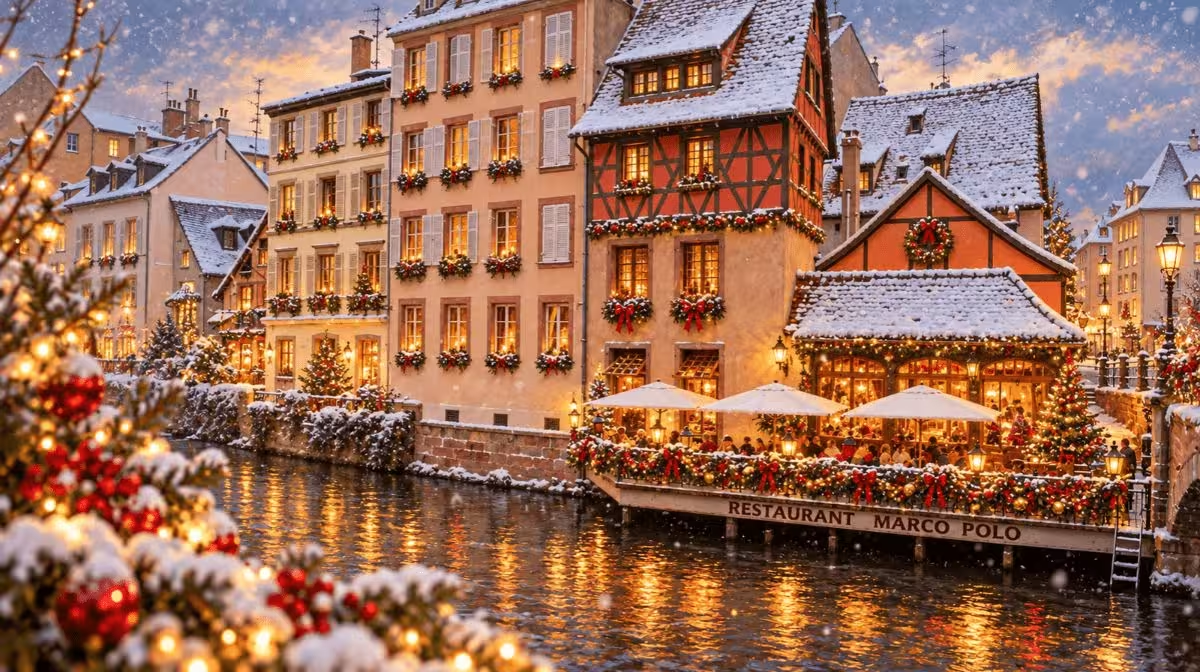
The Carré d’Or market sits on Place du Temple Neuf, near rue des Orfèvres, and is the more upmarket and intimate of the Strasbourg markets, with designer and craft stalls rather than souvenirs. If you’re shopping for gifts that aren’t tree decorations, this is the one to try.
Quai des Délices
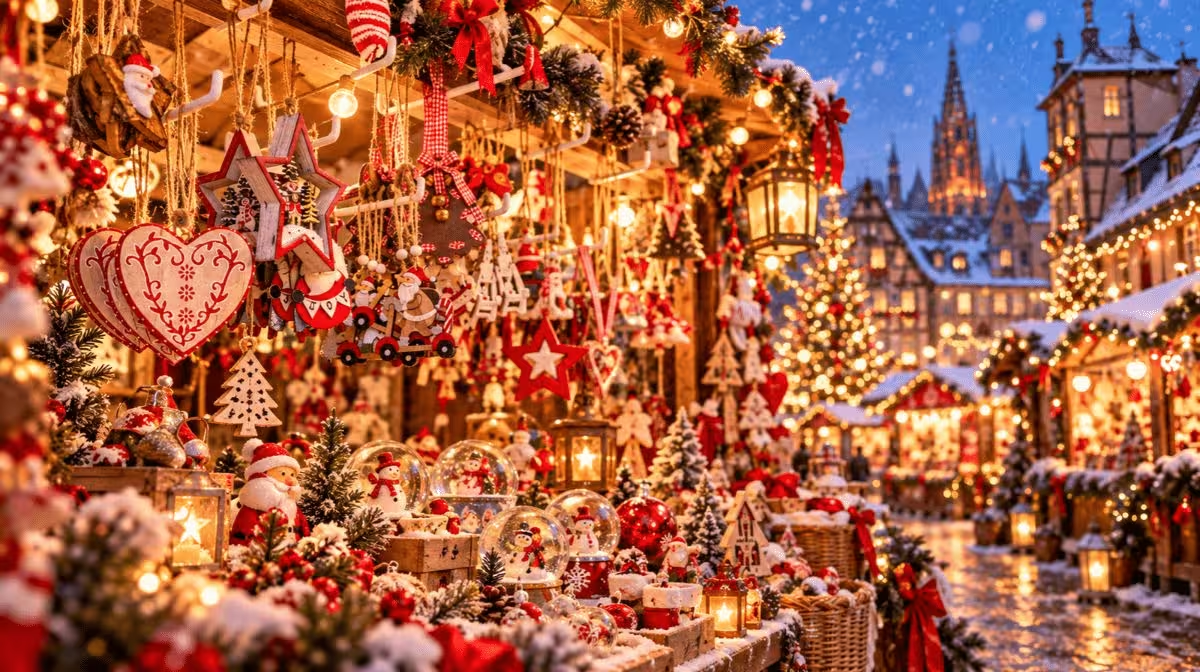
This is the gourmet market, set on the terrace by the Ill beside the Palais Rohan. It’s the one to head to for Alsatian producers and regional specialities, and the city’s guide notes a temporary bakery for bredele. It’s a good place for a food-focused stop away from the busiest squares.
The OFF Market
The OFF market is the alternative one. It focuses on second-hand, upcycled and locally produced goods, with concerts and workshops alongside the stalls. It opens in step with the main festival and also runs to 24 December, and it’s a good counterweight if the main squares feel too commercial.
What to Eat & Drink
Alsace has a food culture of its own, and the markets are a good place to try it. Approximate prices at the markets (guide figures; check the stall boards):
| Item | Approx. price |
|---|---|
| Vin chaud (mulled wine) | €4–7, most often around €5 |
| Saucisse blanche (white sausage) | About €9 |
| Tarte flambée | €10–11 |
| Choucroute or spätzle | Up to about €20 |
Vin chaud is served in a deposit mug, with a deposit of around €1 reported at the main markets, and you can return it for a refund or keep it as a souvenir. Look out for bredele, the small Alsatian Christmas biscuits sold at many stalls, and for tarte flambée, the thin Alsatian “pizza” topped with cream, onions and bacon.
Good to know: A market lunch for two is reported at around €20–30,.
Strasbourg: Traditional Food Walking Tour with Tastings — a guided food walk with tastings, if you’d like to try Alsatian dishes with a local guide rather than choosing from the stalls yourself.
Getting There & Planning Your Visit
Strasbourg is easy to reach by train: the TGV from Paris takes about 1 hour 50 minutes, and Colmar is around 30 minutes away if you want to add a second market town. The airport is a short rail ride from the centre. Once you’re in the city, the Grande Île is compact enough to cover on foot, and the tram links the outer car parks to the centre; one guide quotes a park-and-ride ticket of €4.20 a day including the tram (a 2025 figure, so check before you go).
Some practical tips:
- Beat the crowds. Go on a weekday, and visit the main squares in the late morning or after the evening rush. Weekend evenings in December are the busiest.
- Allow time for bag checks. One guide reports security checks at the bridges onto the Grande Île, so travel light and leave extra time if you’re carrying luggage.
- Dress for damp cold. December in Strasbourg is cold and often damp, so wear layers and shoes you can walk in on cobbles.
- Plan Christmas Eve early. The markets close early on 24 December and are generally closed on Christmas Day, so don’t leave your visit to the last two days.
Where to Stay
The Grande Île is the best base: you can walk to every market from your door and you avoid the trip back at night. Hotel rates in December can rise sharply, with one guide reporting prices that can double or triple compared with October, so book early. If the centre is full or too expensive, look at neighbourhoods a short tram ride out. The map below shows stays near the markets.
Strasbourg
Frequently Asked Questions
When does the Strasbourg Christmas market open in 2026?
The city hasn’t officially published its 2026 dates yet. Based on the usual pattern, expect the markets to open on Friday 27 November and run to 24 December 2026. Check the city’s official Christmas site before booking.
Is the Strasbourg Christmas market free to enter?
Yes. All of the markets are free to enter. You only pay for food, drink and anything you buy.
Which Strasbourg Christmas market is the best?
For a first visit, Place Kléber (for the Grand Sapin) and Place Broglie (for the historic Christkindelsmärik) are the two to see, and they are a short walk apart. Petite France is the prettiest setting, and Quai des Délices is best for local food.
When is the best time to visit to avoid crowds?
Weekdays are quieter than weekends, and late morning is calmer than the evening rush. Weekend evenings in December are the busiest, and the cathedral and Place Kléber areas fill first.
How much does mulled wine cost at the Strasbourg Christmas markets?
Mulled wine (vin chaud) is typically around €4–7 per cup, most often around €5, plus a deposit for the mug (around €1 at the main markets) that you get back when you return it.
Is Colmar worth adding to a Strasbourg trip?
Colmar is about 30 minutes from Strasbourg by train, so it works as a day trip if you have a spare day.
Route & Stay is reader-supported. Some of the links on this page are affiliate links, and we may earn a small commission if you book through them, at no extra cost to you. Dates and prices are as published at the time of writing — always check the official Strasbourg Christmas site before planning travel. This guide is part of our larger Christmas Market Dates in Europe series.