 Skip to content
In this guide
Basel is small enough to see the highlights in a day and rich enough to fill a long weekend. A red sandstone cathedral stands above the Rhine, the Town Hall is covered in painted frescoes, a fountain of scrap-metal machines performs on a theatre square, and two of Europe’s best art museums sit a short tram ride apart. This guide covers the nine things worth your time, with the practical details for each: opening hours, prices, how to get there and how long to allow.
Use it as a reference. Every stop has a quick facts table you can scan on your phone, followed by day plans for one or two days and a section on getting around with the BaselCard. Opening hours and prices change, so we flag where to double-check before you go.
Basel at a glance
| Best for | First-time visitors, art lovers, families, winter trips |
|---|---|
| Time needed | One full day for the Old Town, two to add the museums |
| Getting around | Mostly on foot in the Old Town, trams to Fondation Beyeler and beyond |
| Money saver | Overnight guests receive a BaselCard with free local transport and museum discounts |
| Currency | Swiss franc (CHF) |
| Best season | Spring and early autumn for walking, late November to 23 December for the Christmas markets |
Before you go
Getting to Basel and around
Basel sits where Switzerland, France and Germany meet, with three train stations (Basel SBB, Basel Badischer Bahnhof and Basel SNCF) and EuroAirport Basel-Mulhouse-Freiburg. Most of the Old Town is compact and walkable. Trams and buses cover the rest, and Fondation Beyeler, Spalentor and the Kunstmuseum are all on tram lines.
The BaselCard
Guests who pay the city tax at a Basel hotel, hostel or apartment receive a free BaselCard at check-in. It covers public transport in Basel and the surrounding zones for your whole stay, including the trip from the airport or station to your accommodation, plus a 25% discount on museums, the zoo and Theater Basel. It does not cover the Vitra Design Museum, which is outside the zone. Ask your host to issue it when you arrive.
Money and language
Switzerland uses the Swiss franc (CHF), even though Basel borders France and Germany. German is the local language and English is widely spoken in tourist areas.
The 9 best things to do in Basel
1. Basel Münster and the Pfalz terrace
Basel’s cathedral is the first thing you notice from the river and the best place to start. The red sandstone church began as a Romanesque building and was largely rebuilt in the Gothic style after the great earthquake of 1356, which is why the façade and towers mix both. The two towers are the Georgenturm (about 65 m) and the slightly lower Martinsturm. Inside, look for the cloisters and the tomb of the humanist Erasmus of Rotterdam, who spent his final years in Basel.
Behind the church, the Pfalz is a free terrace set high above the Rhine. It looks across to Kleinbasel and, on a clear day, to the Black Forest and the Vosges, and a staircase leads down to the Münster ferry landing. If you are fit and the weather is good, the tower climb is about 250 steps up a narrow spiral and rewards you with a view over the whole Old Town and the roofs of the cathedral itself.
| Where | Münsterplatz 9, Old Town |
|---|---|
| Cost | Church entry is free. Tower about CHF 6 (reduced rates, children under 14 free). |
| Hours | Open daily, hours change by season. Visits are limited during Saturday afternoon and Sunday morning services. Tower entry stops 30 minutes before closing. |
| Time needed | 45 minutes for the church and terrace, up to 2 hours with the tower and cloisters |
| Getting there | Tram to Barfüsserplatz, Marktplatz or Schifflände, then 5 to 10 minutes on foot |
| Best time | Morning, or golden hour for the terrace |
Local tip: The tower has no lift and the staircase is narrow, so if heights or stairs are a problem, the Pfalz gives you most of the view on level ground.
2. Marktplatz and the Rathaus
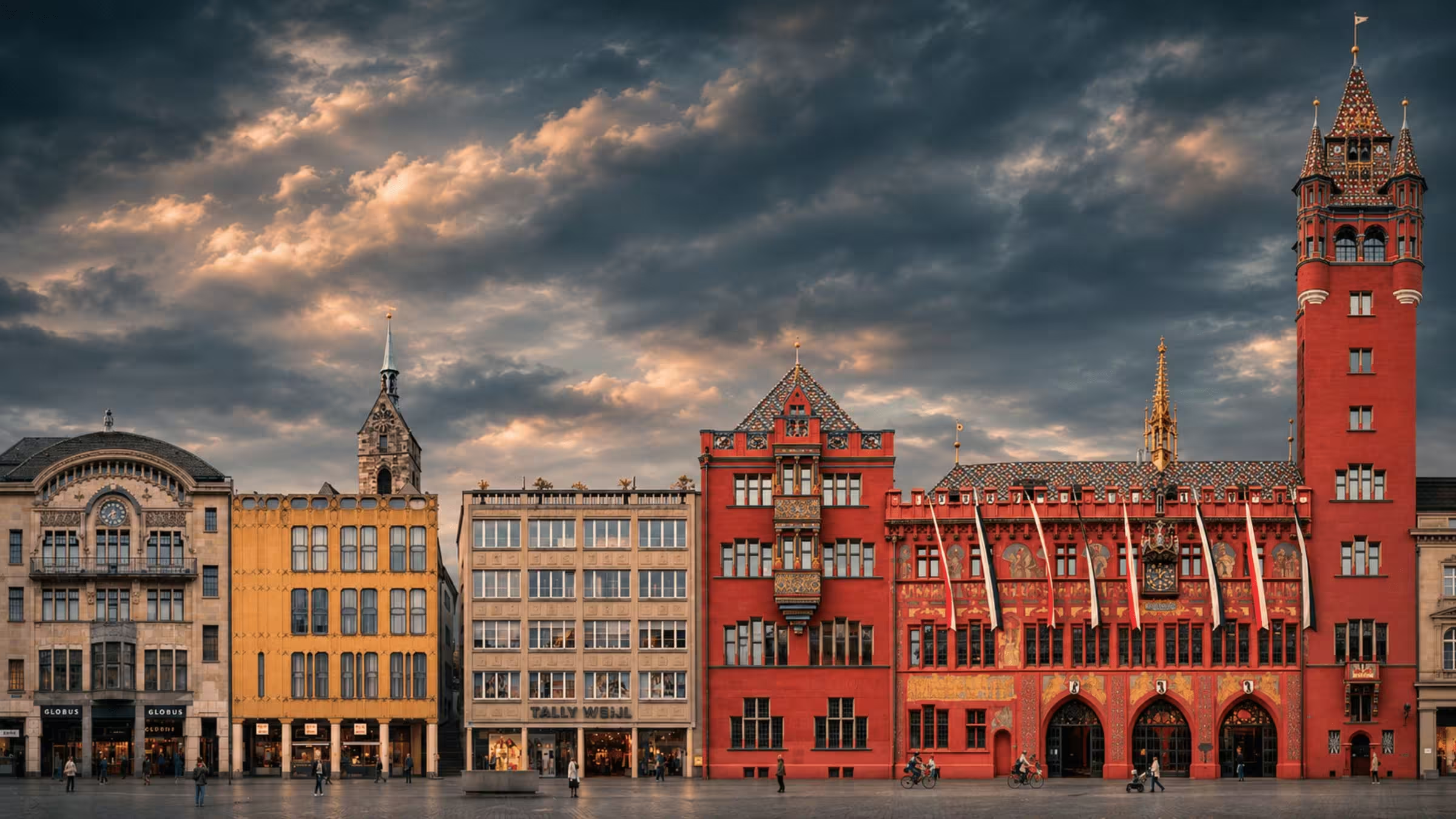
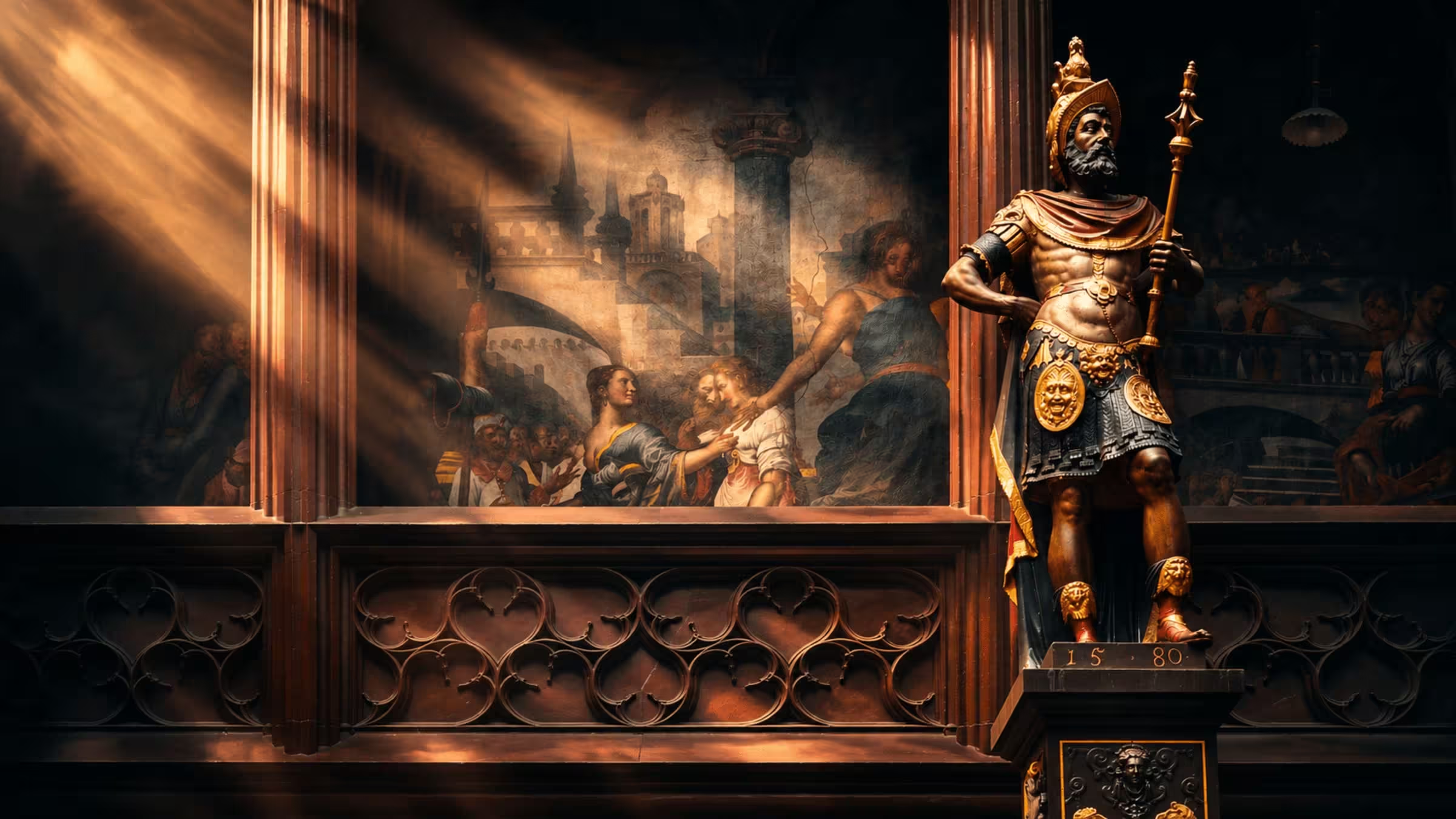
The deep red Town Hall on Marktplatz is the most photographed building in Basel and still the seat of the cantonal government. Construction started in 1504, shortly after Basel joined the Swiss Confederation in 1501, and the building was extended with two flanking towers around 1900. The façade and the arcaded courtyard are covered in painted frescoes, and a statue of the Roman commander Munatius Plancus stands in the courtyard. Many visitors take him for the founder of the city, but that is a legend.
The square in front of the building hosts the daily city market on working days, with more stalls on Saturday mornings. It is the easiest place in the Old Town to buy fruit, cheese, bread and flowers for a picnic by the Rhine. A street food market also runs on Monday mornings.
| Where | Marktplatz 9 |
|---|---|
| Cost | Free to walk into the courtyard. The council rooms are only open on guided tours. |
| Hours | Courtyard open on weekdays during office hours; the market runs mainly in the morning |
| Time needed | 20 to 40 minutes, about an hour with a tour |
| Getting there | Tram to Marktplatz, or a 5 to 10 minute walk from Barfüsserplatz or Schifflände |
Local tip: The market stands in a reduced area from 30 June 2026 because of construction at the Marktplatz tram stop, so expect fewer stalls than in older photos.
3. The Tinguely Fountain
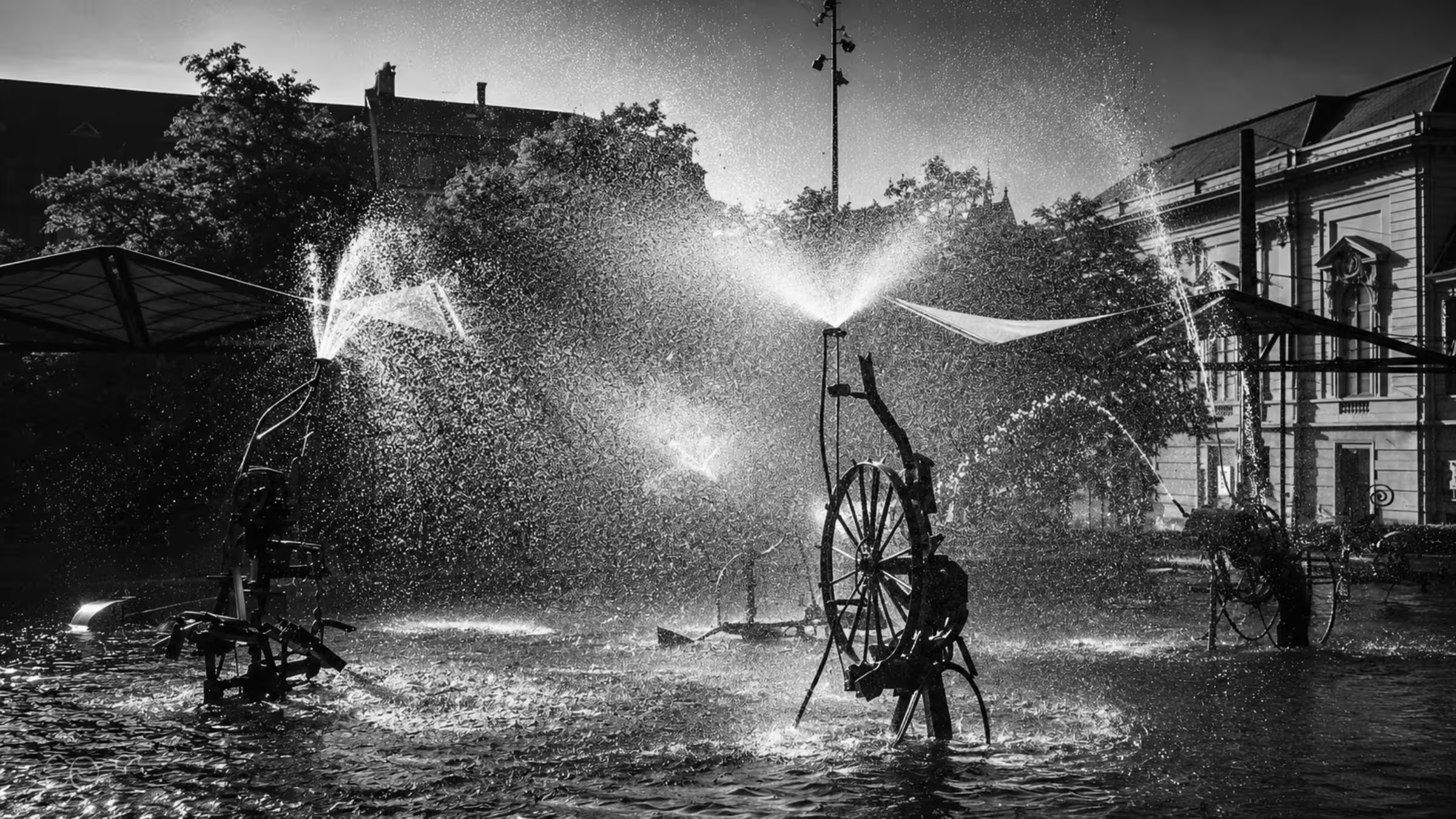
Jean Tinguely’s Fasnachtsbrunnen (Carnival Fountain) opened in 1977 on Theaterplatz, on the site where the stage of the old city theatre once stood. Its ten machine sculptures were assembled from parts of the demolished theatre and they spin, spit and squirt water at each other, like a cast of actors and dancers frozen in a pool. It looks different in every season, and in a hard frost the water freezes into ice shapes over the metal figures.
It takes ten minutes, costs nothing and sits next to the Kunstmuseum and Barfüsserplatz, so it fits between other stops. If you enjoy it, the Museum Tinguely by the Rhine in Kleinbasel shows the artist’s larger kinetic machines.
| Where | Theaterplatz, off Steinenberg |
|---|---|
| Cost | Free, open at all hours |
| Time needed | 10 to 15 minutes |
| Getting there | 5 minutes on foot from Barfüsserplatz |
4. Ride a Rhine ferry
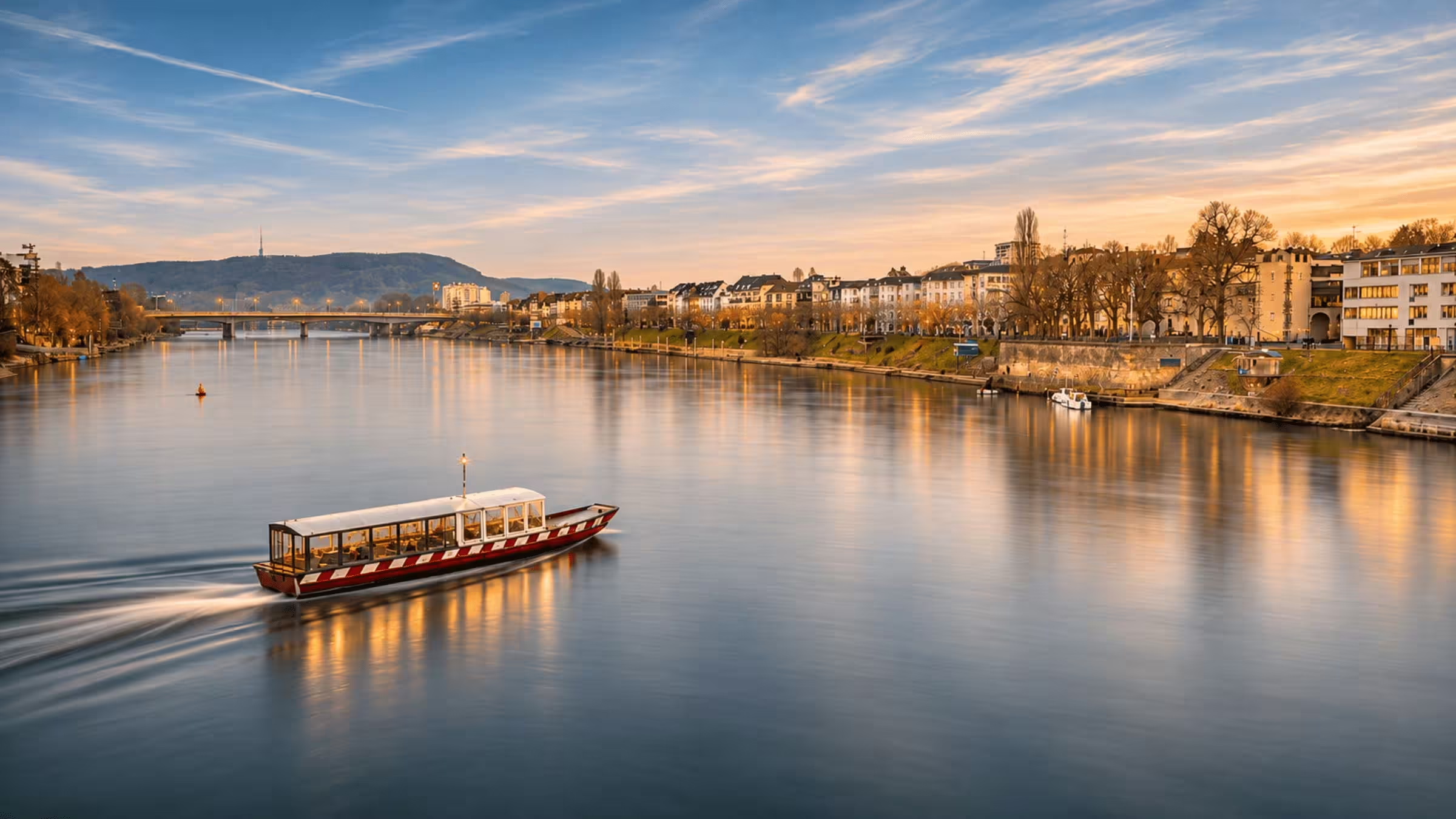
Basel has four small passenger ferries that cross the river using only the current. Each boat hangs from a cable stretched above the water and the ferryman angles the rudder so the flow pushes the boat across, with no engine at all. The four ferries are the Wilde Maa (St. Alban), the Leu (Münster), the Vogel Gryff (Klingental) and the Ueli (St. Johann). They have been part of the cityscape since the mid-19th century and cross in a few minutes.
The best ride for visitors is the Münster ferry between the Wettstein Bridge and the Mittlere Brücke, because you cross with the cathedral rising straight above the water. Ring the bell on the landing stage if the boat is on the other side. Pay the ferryman in cash. The St. Johann ferry is the most accessible, with space for manual wheelchairs and prams.
| Where | Münster ferry: landing below the Pfalz, Grossbasel side |
|---|---|
| Cost | A few francs per person each way, paid in cash on board |
| Hours | Longer in summer, shorter in winter; the Münster ferry normally runs daily. Ferries stop in high water and bad weather. |
| Time needed | 5 minutes per crossing, plus time to enjoy the riverbank |
| Getting there | Down the steps from the Pfalz, or along the Rhine promenade |
Local tip: You can hire a ferry privately for an evening, including a fondue on the Rhine, from about CHF 50 for a group of two to twelve through the Fähri-Verein.
Want longer on the water than a ferry crossing? A guided Rhine cruise is a relaxed way to see the Old Town skyline and the Münster from the river.
5. Wander the Old Town lanes
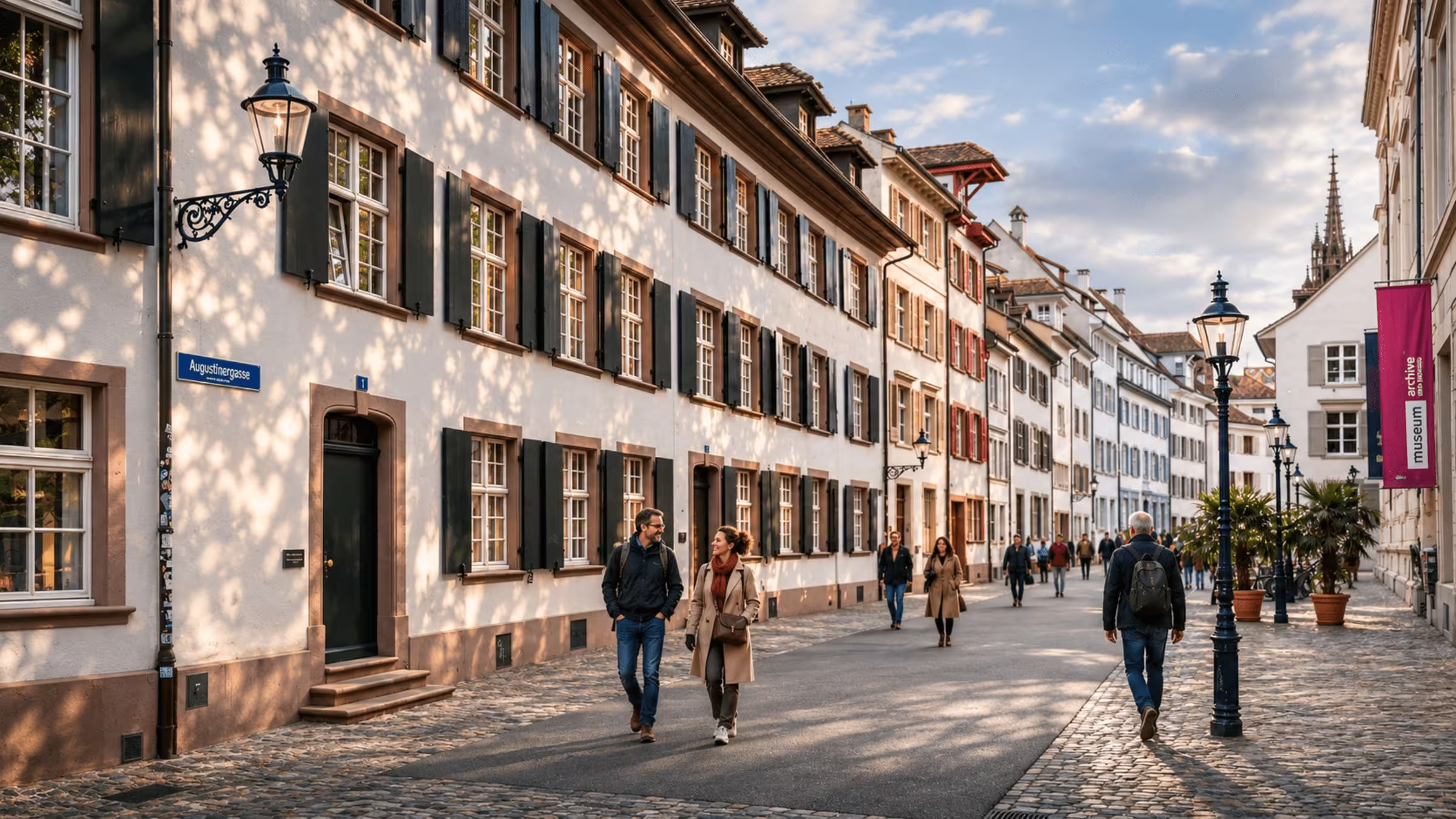
Between the Münster and the Marktplatz, the streets drop and climb in narrow lanes with small squares, courtyards and old fountains. Spalenberg and Gemsberg are two of the prettiest, lined with independent shops, bakeries and cafés, and the Fischmarkt fountain, dating from 1390, still stands in the middle of its square. Freie Strasse is the main shopping street that links Marktplatz with the area around Barfüsserplatz.
This is the part of Basel that rewards a slow pace. Pick a lane at random and follow it. If you prefer context, our Basel Old Town walking tour guide covers the route and the best tour options on the day.
| Where | Between Münsterplatz, Marktplatz and Spalentor |
|---|---|
| Cost | Free |
| Time needed | 1 to 2 hours |
| Best time | Late morning, before the lunch rush |
6. Spalentor
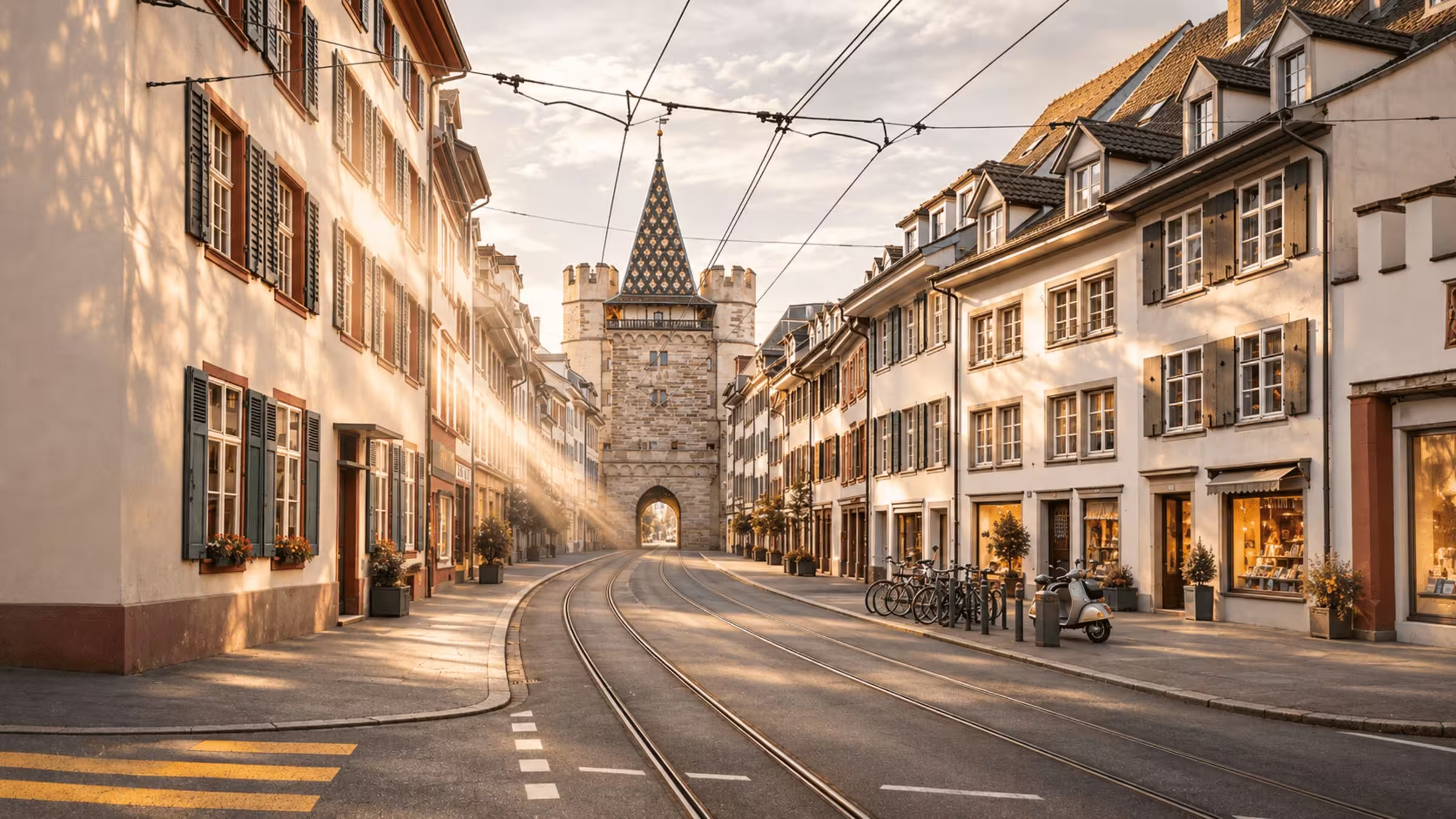
The Spalentor is the grandest of the three medieval city gates that survived the demolition of Basel’s walls in the 19th century, along with the St. Alban and St. Johann gates. It was completed around 1400 and guarded the main road to Alsace and France. A square main tower with a steep roof of coloured glazed tiles stands between two round towers, and a sculpture group of the Madonna and two prophets sits on the outer side. A forward gate was added during the Burgundian Wars of the 1470s.
From the gate, Spalenvorstadt and Spalenberg lead back into the Old Town through a quarter of cafés, bookshops and old houses. The university’s botanical garden is close by if you want a quiet break.
| Where | Spalenvorstadt, western edge of the Old Town |
|---|---|
| Cost | Free |
| Time needed | 15 to 30 minutes, longer if you walk back via Spalenberg |
| Getting there | Tram 3 to Spalentor, or 8 to 10 minutes uphill on foot from Marktplatz |
7. Kunstmuseum Basel
Basel’s Kunstmuseum traces its roots to the Amerbach Cabinet, a collection of art that the city and university bought in 1661, which is why it is described as the oldest public art collection in the world. It holds the largest collection of works by the Holbein family anywhere, along with Konrad Witz, Böcklin’s Isle of the Dead, and then van Gogh, Gauguin, Cézanne, Monet, Picasso, Braque and more recent American art. The collection runs to over 300,000 works across three buildings: the main building, the new building and the Gegenwart for art from 1960 onwards.
Plan two to three hours. The courtyard has sculptures by Rodin, Calder and Dan Flavin that you can see without a ticket, and a free audio guide introduces around 50 highlights.
| Where | St. Alban-Graben 16 |
|---|---|
| Hours | Tuesday to Sunday 10:00 to 18:00, Wednesday until 20:00, closed Monday |
| Cost | Collection about CHF 16 for adults, special exhibitions from about CHF 26. Free collection entry at set times such as Wednesday evening and the first Sunday of the month. |
| Time needed | 2 to 3 hours |
| Getting there | Tram 2 or 15 to Kunstmuseum, or a 5 minute walk from Barfüsserplatz |
| Discounts | BaselCard 25% off, Swiss Museum Pass free |
8. Fondation Beyeler
A short tram ride out in Riehen, the Fondation Beyeler is one of the best modern art museums in the region. Renzo Piano’s long, low building opened in 1997 and sits in a park with old trees and water lily ponds, with glass walls that let the gardens into the galleries. The permanent collection includes Monet, Cézanne, Picasso, Giacometti and Rothko, and the rotating exhibitions are the main draw.
The surrounding park is free and has sculptures by Calder and Ellsworth Kelly, so even a short visit is worthwhile if you do not want to go inside. Buy tickets online ahead of time in busy periods.
| Where | Baselstrasse 101, Riehen |
|---|---|
| Hours | Open daily, usually 10:00 to 18:00, with late openings on Wednesday and Friday |
| Cost | Adults CHF 25, with a Tuesday discount at the box office and free entry for visitors up to 25 |
| Time needed | 2 to 3 hours including the park |
| Getting there | Tram 6 from Basel Badischer Bahnhof (about 15 minutes), or tram 2 from Basel SBB to Badischer Bahnhof and change to tram 6. The S6 train to Riehen also works. |
Local tip: Check the current exhibition before you go, because the museum prices and opening hours are tied to the show on view.
9. Basel Christmas markets
If you visit in winter, the Christmas markets are the reason to come. In 2026 they run from 26 November to 23 December, daily from 11:00 to 20:30, with about 150 wooden stalls spread over Barfüsserplatz and Münsterplatz. Barfüsserplatz is the busier square, with the 13 m Christmas pyramid as the meeting point for mulled wine. Münsterplatz, in front of the cathedral, is quieter and prettier at night, with a decorated tree, a children’s Märchenwald and more artisan stalls. The Wienachtsdorf on Theaterplatz runs until 3 January, and the Adväntsgass on Rheingasse in Kleinbasel adds food stalls across the river.
On 23 December the markets close early: Barfüsserplatz at 20:00 and Münsterplatz at 18:00. For food, look for Chäsbängel (cheese-filled rolls) and flame-grilled salmon. Our full Basel Christmas Market guide has dates, food and planning tips.
| Where | Barfüsserplatz and Münsterplatz, with Theaterplatz and Rheingasse nearby |
|---|---|
| Dates 2026 | 26 November to 23 December (Wienachtsdorf to 3 January) |
| Cost | Free entry |
| Time needed | 2 to 3 hours in the evening |
More things to do in Basel
- Museum Tinguely: the artist’s kinetic machines, beside the Rhine in Kleinbasel. Closed Mondays.
- Basel Zoo: one of Switzerland’s best-known zoos, with a discount on the BaselCard.
- Papiermühle Basel: a working paper mill museum in the St. Alban quarter, good for printing and book fans.
- Vitra Design Museum: just over the border in Germany. The BaselCard transport does not cover this trip.
- Swim in the Rhine: in summer locals float downstream with a waterproof bag. The current is strong, so follow local safety advice and only enter at the marked exit points.
- Basel Fasnacht: the three-day carnival begins with the Morgenstraich at 4 a.m. on the Monday after Ash Wednesday, when the city lights go out and lantern parades start.
Basel day plans
One day in Basel
- Morning: Münster, the cloisters and the Pfalz terrace, then the Münster ferry across the Rhine.
- Midday: lunch from the market stalls at Marktplatz, then the Rathaus courtyard.
- Afternoon: wander Spalenberg to the Spalentor and back through the Old Town lanes, then the Tinguely Fountain.
- Evening: dinner on Barfüsserplatz or, in winter, the Christmas markets.
Two days in Basel
- Day 1: the Old Town highlights above.
- Day 2 morning: the Kunstmuseum, starting at opening time.
- Day 2 afternoon: tram 6 to the Fondation Beyeler and a walk in the park.
A rainy day
- Kunstmuseum and Museum Tinguely, then a long café stop near Barfüsserplatz.
- Fondation Beyeler is the best indoor choice if the weather is poor, since the park views come through the glass walls.
For more routes, see our Old Town walking tour and the Basel Travel Guide.
When to visit Basel
- Late November to 23 December: Christmas markets, short days and cold evenings.
- April to June: good walking weather and museum exhibitions at their peak. Art Basel takes over the city in June, so book hotels well ahead.
- July and August: warm weather, riverbank life and Rhine swimming.
- September and October: mild, quieter and good value.
- February or March: Fasnacht, if you want a local festival.
Tips for visiting Basel
- Wear comfortable shoes: the Old Town is cobbled and hilly.
- Many museums are closed on Mondays, so check opening days first.
- Carry some Swiss francs in cash for the ferries.
- Opening hours and prices change by season. Confirm them on official sites before you go.
- Eat early: Swiss restaurants often close their kitchens between lunch and dinner.
Prefer to compare on Viator?
If the dates or language you want are not available above, check Viator too. Listings differ by operator, so compare the start time, meeting point and cancellation terms before you book.
Compare on Viator
Basel Old Town Walking Tour
Want to compare more Basel tours? Browse the Old Town walk and other Basel experiences on Viator, each with its own dates, languages and reviews.
Check the tour on ViatorWhere to stay in Basel
The Old Town puts the Münster, Marktplatz and the ferries within a short walk, and an overnight stay also gets you the BaselCard. Use the map to compare hotels and prices for your dates, and read our full where to stay in Basel guide for neighbourhood picks.
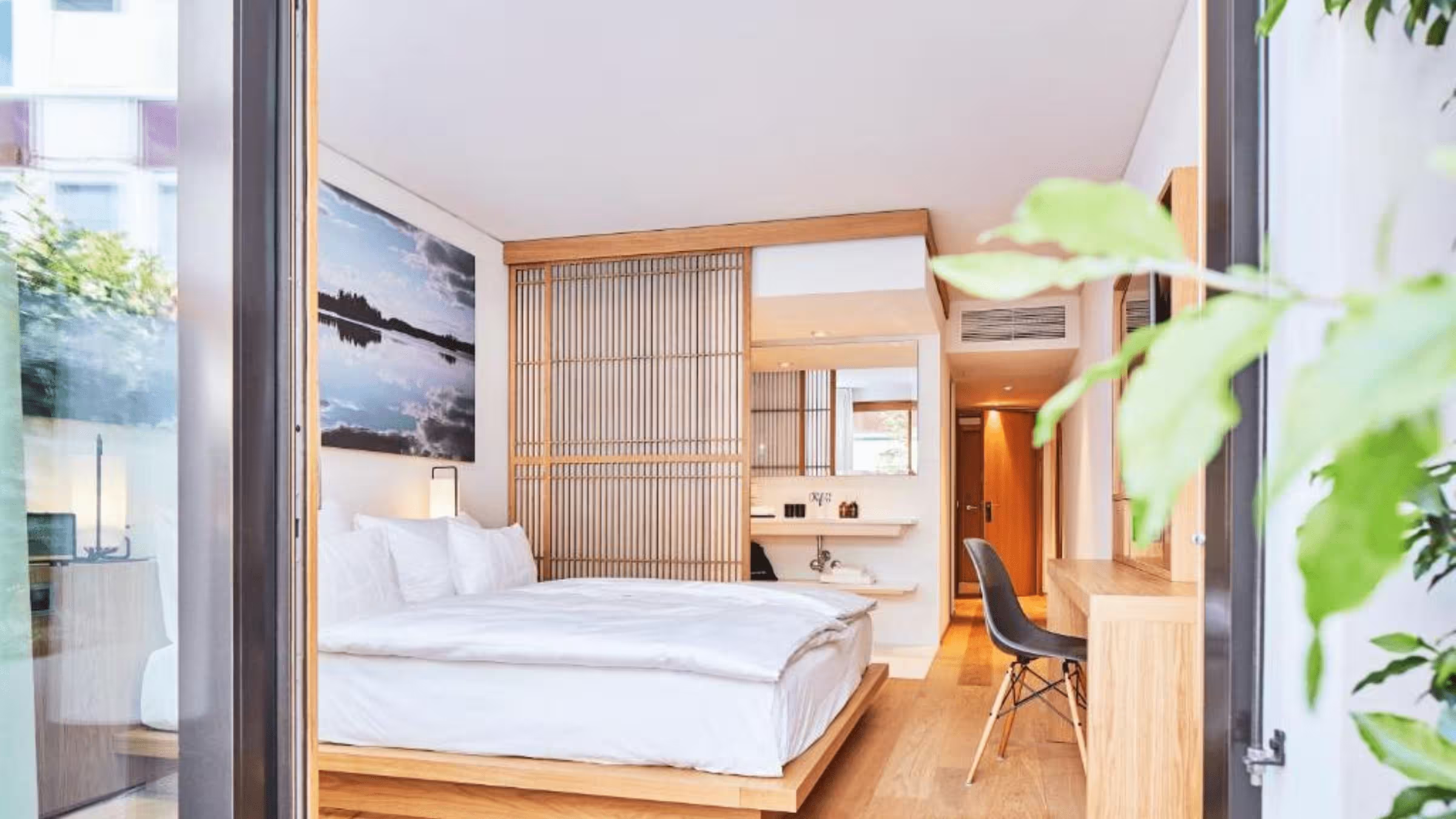
Suggested stay near the action
ART HOUSE Basel
A design-led hotel on Steinenvorstadt, between the Old Town and the station and a few minutes from Barfüsserplatz, the Tinguely Fountain and the Kunstmuseum. It has 33 rooms and suites, ties in with a local gallery and has a rooftop bar with city views. A good base if you want to walk to most of the stops in this guide.
Check availabilitySave Basel for later
Pin these to your Pinterest travel board so you can find the list when you plan your trip.
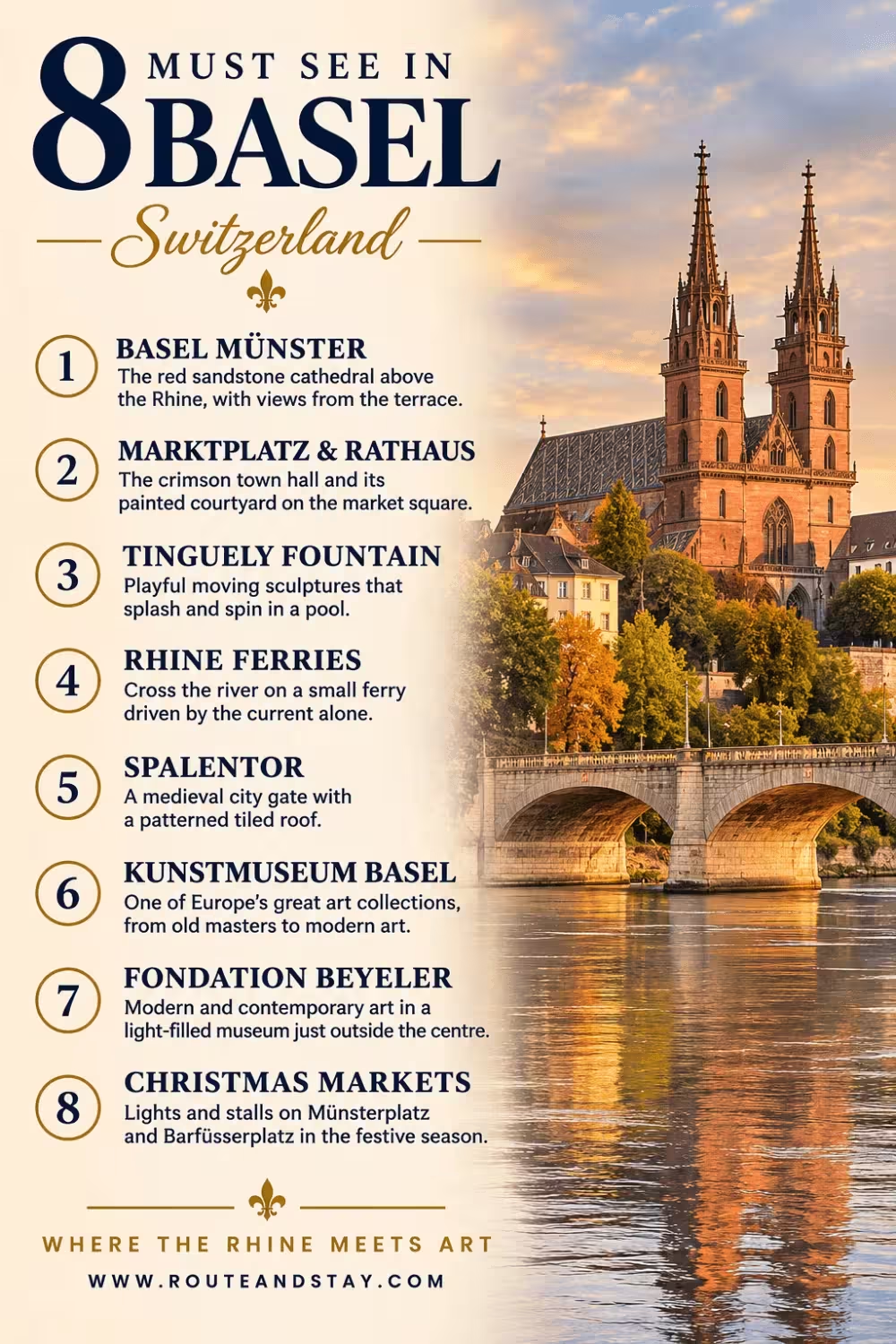

Things to do in Basel: FAQ
What are the best things to do in Basel?
The Münster and Pfalz terrace, the Rathaus and Marktplatz, the Tinguely Fountain, a Rhine ferry crossing, the Old Town lanes, the Spalentor, the Kunstmuseum, Fondation Beyeler and, in winter, the Christmas markets.
How many days do you need in Basel?
One day covers the Old Town highlights. Two days leaves time for the Kunstmuseum and Fondation Beyeler without rushing.
Is Basel worth visiting?
Yes. It is compact and walkable, has an exceptional concentration of museums for its size, and works well as a stop between Switzerland, France and Germany.
Is there a free pass for visitors?
Overnight guests receive a BaselCard at check-in, which includes public transport and a 25% discount on many museums. Confirm the current terms with your accommodation.
What is the best free thing to do in Basel?
The Pfalz terrace, the Rathaus courtyard, the Tinguely Fountain, the Spalentor and a walk through the Old Town lanes are all free.
When does the Basel Christmas market open in 2026?
The markets on Barfüsserplatz and Münsterplatz run from 26 November to 23 December 2026, daily from 11:00 to 20:30, with earlier closing on 23 December.
How do I get to Fondation Beyeler?
Take tram 6 from Basel Badischer Bahnhof to the Fondation Beyeler stop, about 15 minutes. From Basel SBB take tram 2 to Badischer Bahnhof and change.
Do the Basel ferries run in winter?
Yes, with shorter hours, but they stop in high water and bad weather. Check the timetable for the day you plan to cross.
Route & Stay may earn a commission if you book through some of the links on this page, at no extra cost to you. Details such as meeting points, languages, stops and cancellation terms can change, so check with the tour provider before you book.