 Skip to content
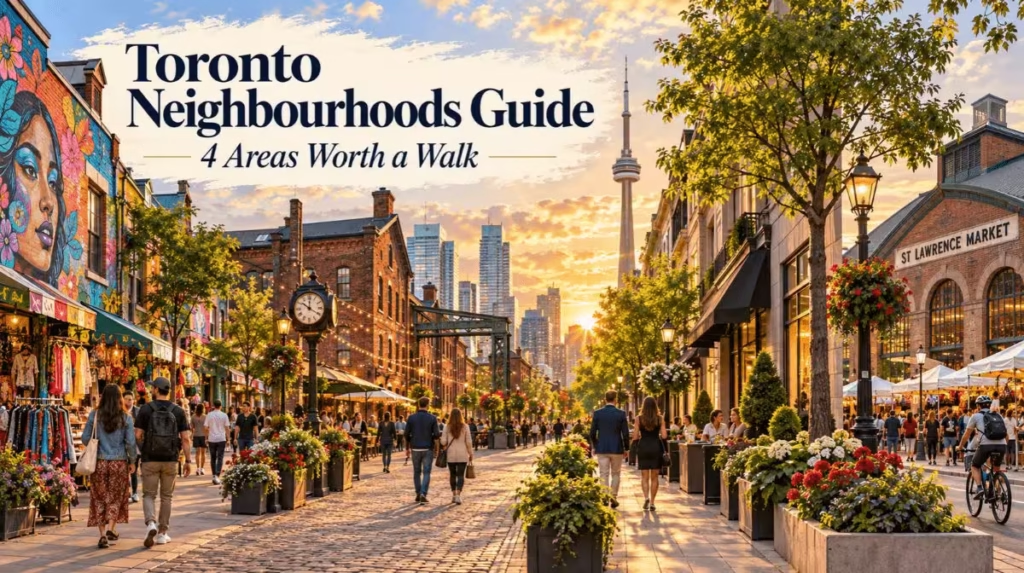
Toronto doesn’t really have a single centre in the way some cities do — it has a string of distinct neighbourhoods, each one shaped by a different wave of people who arrived, built something, and moved on, leaving the next group to reinvent the same streets. This Toronto neighbourhoods guide covers four of the best to wander, and the real story behind each one: a Victorian distillery turned arts district, a hippie music scene turned luxury shopping strip, and an immigrant market that’s never stopped changing hands. This is part of our full Toronto travel guide.
Your Toronto Neighbourhoods Guide
Distillery District
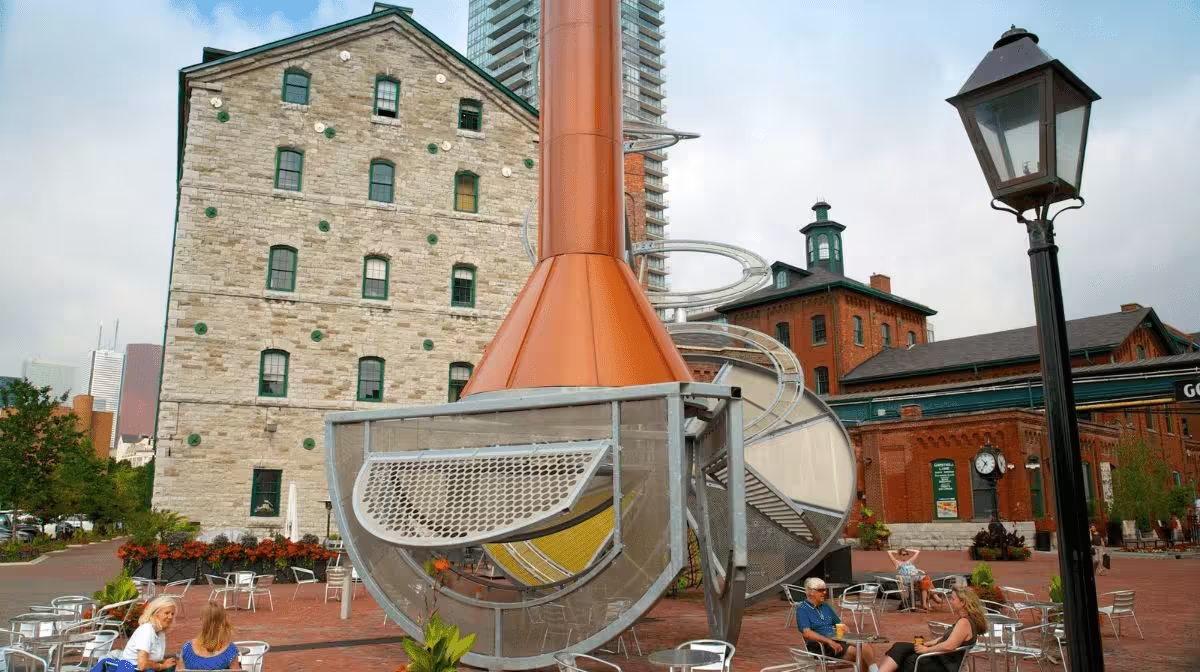
Physically, this is the most unusual neighbourhood on this list — 13 acres of more than 40 surviving Victorian-era industrial buildings, the largest and best-preserved collection of its kind in North America, all connected by cobblestone lanes that were built for freight wagons, not tourists. It was once the Gooderham & Worts distillery complex; today the entire district is car-free, and the same red-brick warehouses that once stored whisky now hold galleries, boutiques, and Mill Street Brewery, one of Toronto’s most decorated microbreweries, pouring flights in the same buildings the whisky used to come from.
It’s an easy 15-minute walk from Union Station, and because it’s pedestrian-only, it’s one of the few places downtown where you can wander without watching for traffic. See our Toronto Food Tours guide for what to actually eat here.
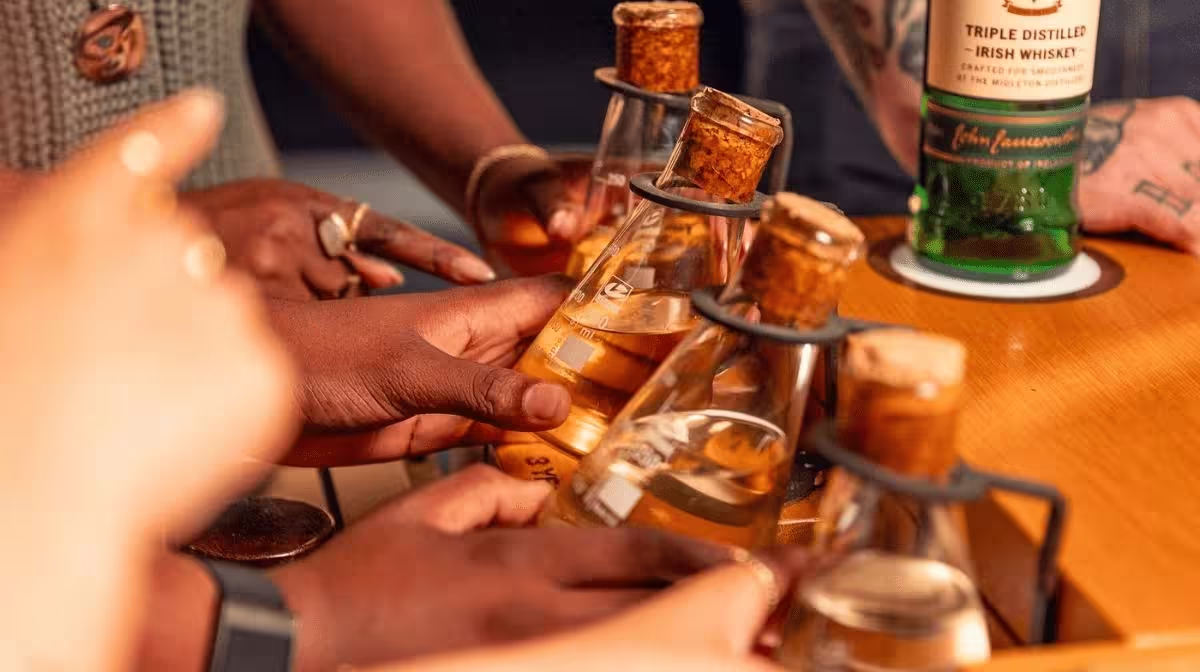
Distillery District Walking Tour
A guided walk through the cobblestone lanes and Victorian-era warehouses, with the stories behind the district’s transformation from distillery to arts hub.
Check Availability on Viator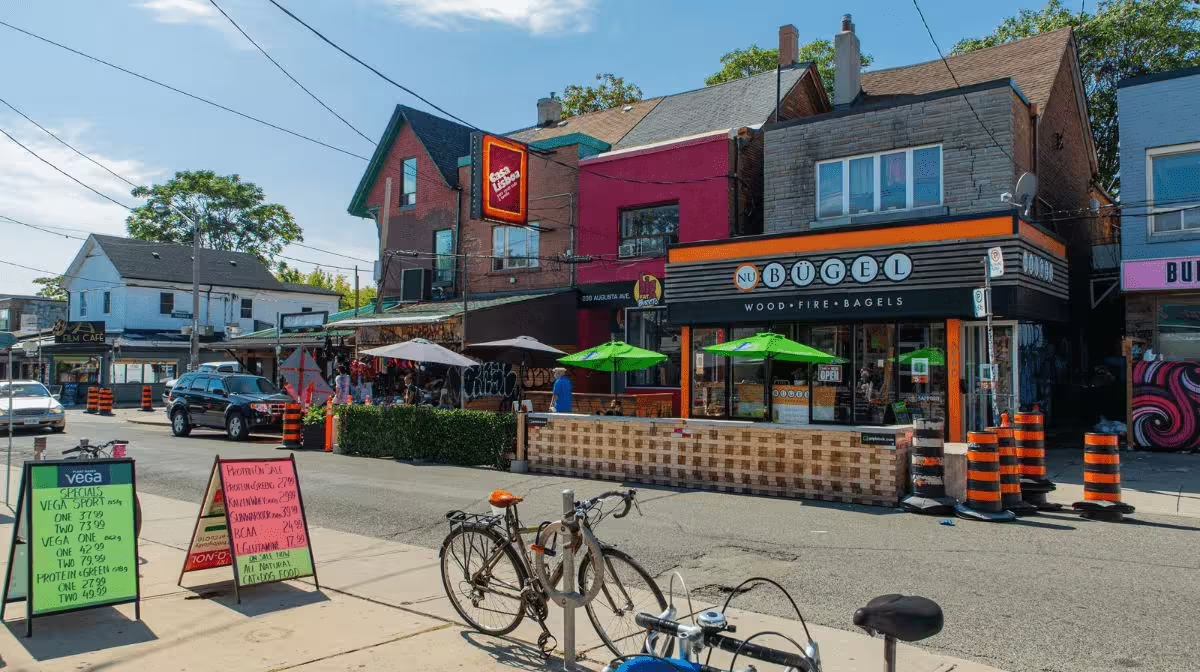
Kensington Market
Kensington has been rebuilt by a different immigrant community every generation since the early 1900s — Jewish pushcart vendors first, then Portuguese, Italian, Caribbean, and Chinese newcomers, then Latin American communities more recently — and it shows in the storefronts, which still shift character block by block. What ties it together today, beyond the food, is Pedestrian Sundays: since 2004, on the last Sunday of the month from May to October, the market’s streets close to cars entirely, and local musicians, artists, and vendors take over instead. It’s grassroots-organized, not city-run, and it’s become one of the longest-running car-free street festivals in the city.
Worth knowing: Kensington Market was designated a National Historic Site of Canada in 2006 — one of the rare cases where a still-changing, still-functioning commercial neighbourhood received the designation, rather than a preserved relic. For the market’s food side specifically, our Toronto Food Tours guide has the full breakdown.
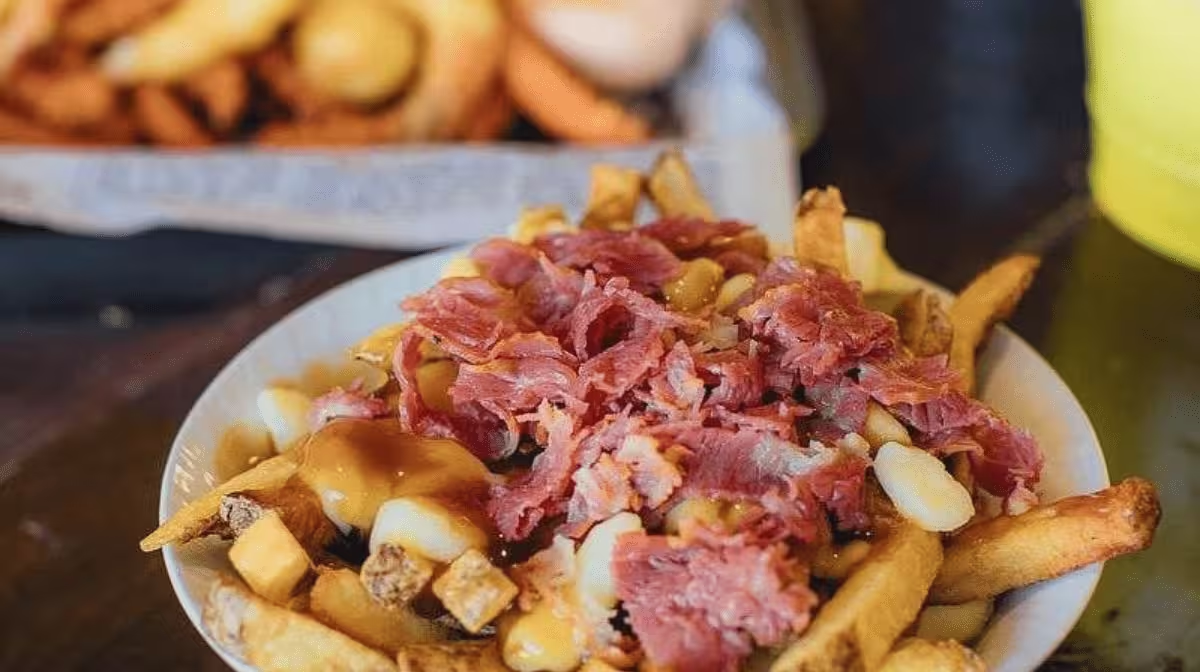
Toronto’s First Food Tour: Taste the World in Kensington Market
A guided food walk through Kensington’s constantly shifting mix of cuisines, one of the original food tours through the neighbourhood.
Check Availability on ViatorQueen West
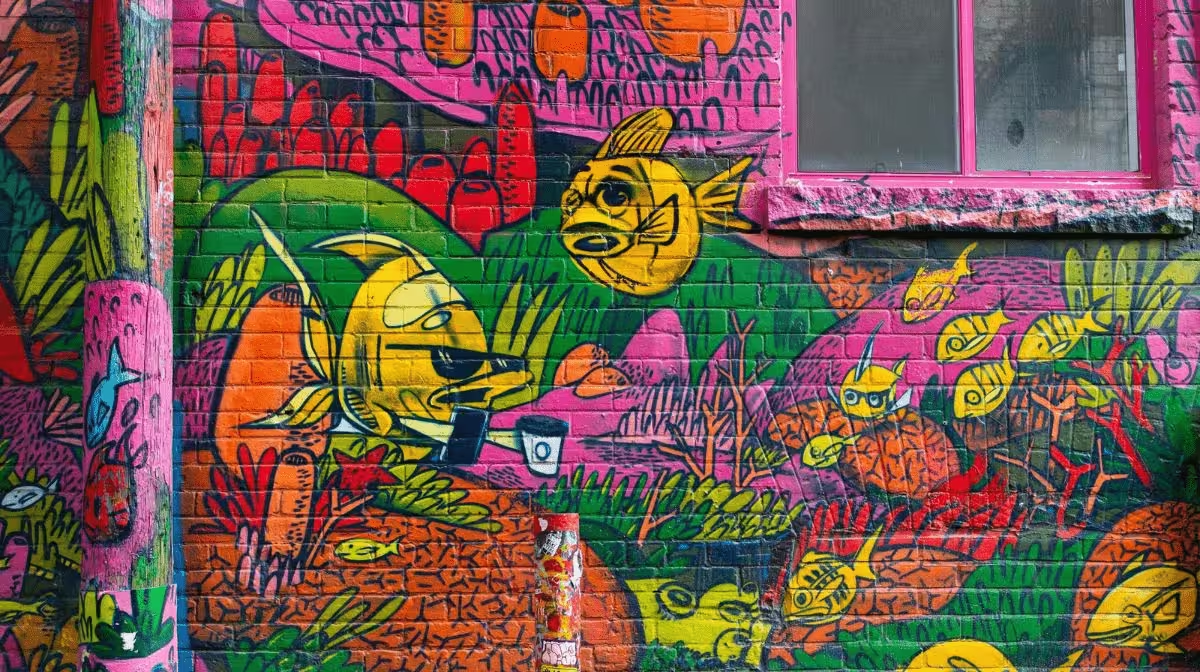
Queen West’s identity as an arts neighbourhood dates specifically to the early 1980s, when artists priced out of the original Queen and Spadina scene moved further west past Bathurst Street in search of cheaper rents. The area’s creative reputation deepened in the mid-2000s with the restoration of two historic hotels, the Gladstone and the Drake, which turned boutique accommodation into de facto galleries and live-music venues, and again in 2005 when the Museum of Contemporary Canadian Art moved in. By the 2010s, Vogue had named it the second-coolest neighbourhood in the world, behind only Shimokitazawa in Tokyo.
The neighbourhood’s best-known public art isn’t in a gallery at all: Graffiti Alley, officially Rush Lane, is a roughly 1,000-foot laneway of sanctioned street art and Toronto’s only officially designated space for it — genuinely one of the better free things to do in the city. If you’re around in September, the Queen West Art Crawl takes over nearby Trinity Bellwoods Park with a free, multidisciplinary outdoor exhibition.
Yorkville
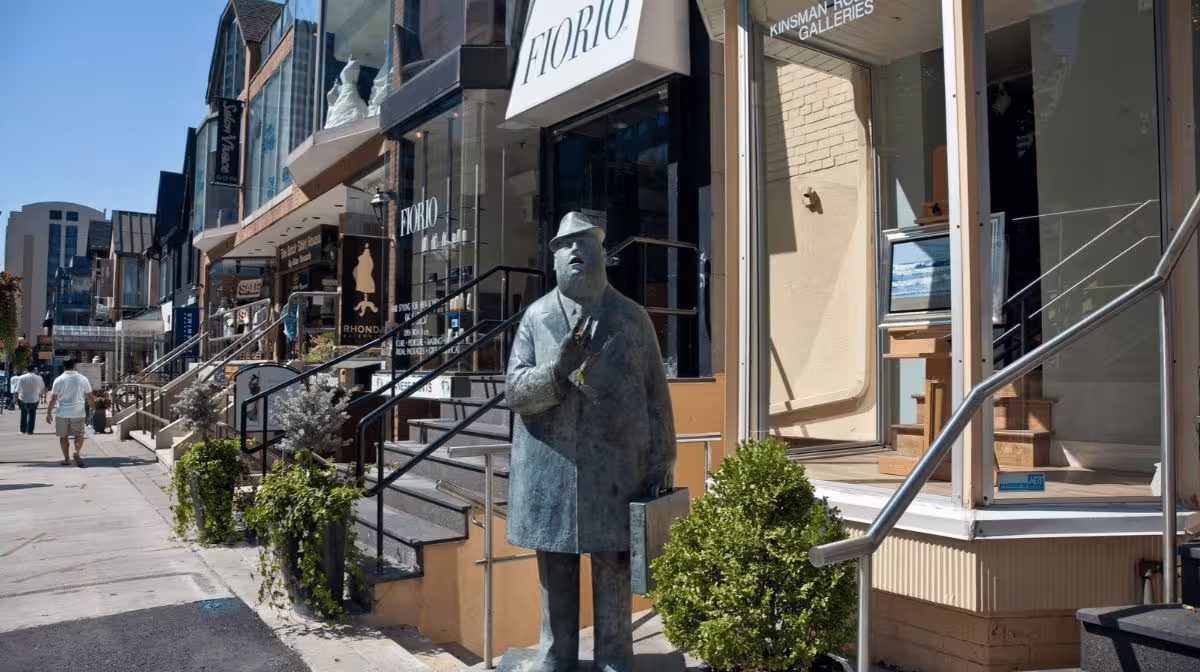
It’s hard to reconcile Yorkville’s current identity — the “Mink Mile,” home to some of the most expensive retail real estate in North America — with what it was in the 1960s: the epicentre of Canada’s hippie counterculture. Coffee houses like the Riverboat hosted a young Joni Mitchell, Neil Young, and Gordon Lightfoot before any of them were famous; John Lennon and Yoko Ono passed through during the Plastic Ono Band’s early days; and a local politician of the era famously called the neighbourhood “a festering sore in the middle of the city” and demanded it be cleared out.
It mostly was, eventually — not by decree, but by rising property values. As the counterculture scene faded through the early 1970s, redevelopment moved in, and the Victorian houses that once held cheap rooming houses and folk clubs became some of the priciest storefronts in the country. Walking Yorkville and Cumberland Streets today, it’s worth knowing you’re on the same blocks where Canadian folk music effectively started.
Where to Stay
Wherever this Toronto neighbourhoods guide takes you next, downtown keeps you within walking distance of the Distillery District and Kensington Market, and a short streetcar ride from Queen West and Yorkville. Full neighbourhood breakdown in the Best Hotels in Toronto guide.
Frequently Asked Questions
Which Toronto neighbourhood should I prioritize if I only have half a day?
The Distillery District if you want an easy, pedestrian-only wander close to downtown; Kensington Market if you want the most variety in the smallest area.
Is Kensington Market walkable from the Distillery District?
Not directly — they’re on opposite sides of downtown. Queen West and Kensington Market, however, are close enough to combine in one outing.
What is Pedestrian Sundays in Kensington Market?
A grassroots, car-free street festival held on the last Sunday of the month from May to October, running since 2004.
Is Yorkville worth visiting if I’m not shopping?
Yes — the shopping is only half the story. It’s worth a walk for the history alone, given its role as Canada’s folk-music birthplace in the 1960s.
Where is Graffiti Alley?
Officially Rush Lane, running parallel to Queen Street West — it’s Toronto’s only officially sanctioned space for street art.
Route & Stay is reader-supported. Some of the links on this page are affiliate links, and we may earn a small commission if you book through them, at no extra cost to you. Tour details and prices were accurate at the time of writing but can change — always confirm current availability before booking.