 Skip to content
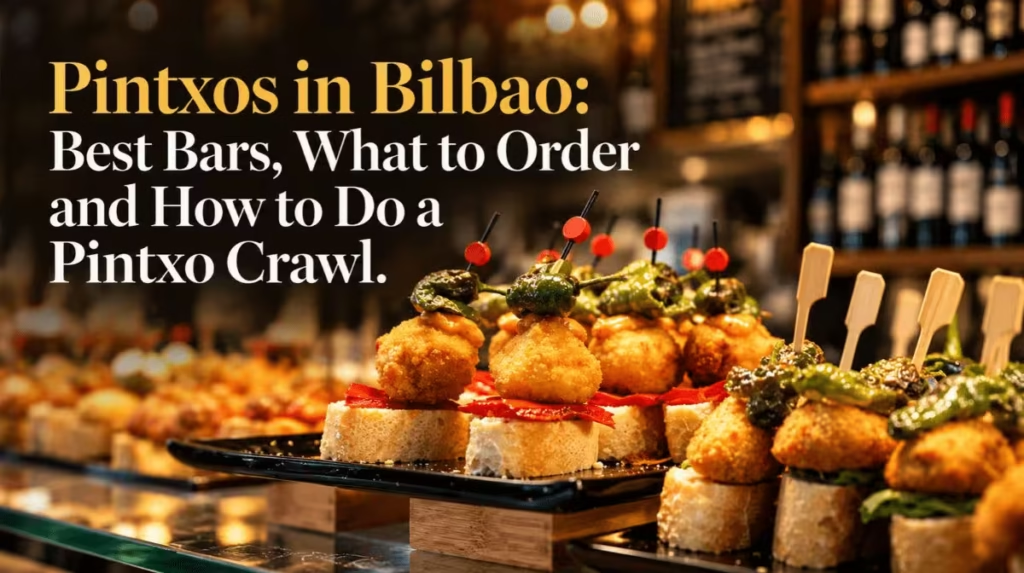
Pintxos in Bilbao are the best reason to eat out in the city: small, inventive bites served on the bar, usually with a glass of txakoli or a small beer, and eaten standing up before you move on to the next place. This guide covers how a pintxo crawl works, what to order, the best streets and bars to try, what it costs and where to stay. It sits alongside our Bilbao travel guide.
Short on time? Book your pintxo tour now
A guided food walk handles the ordering and the route. Check live availability and prices below.
In this guide
Pintxos in Bilbao at a glance
What are pintxos?
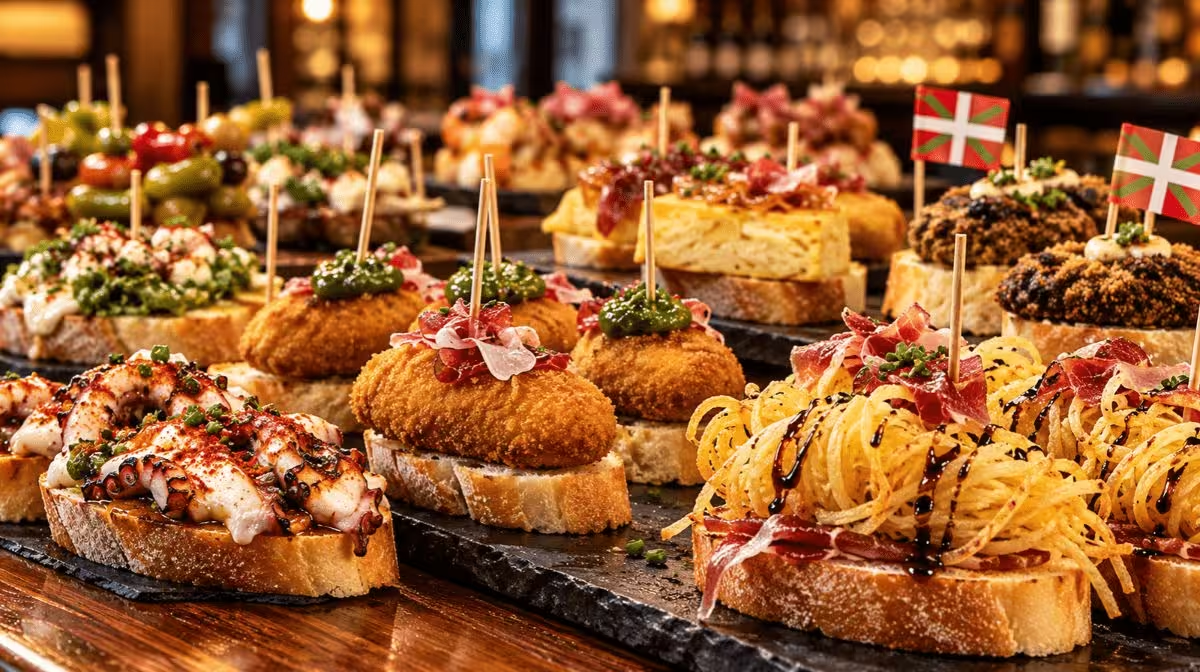
Pintxos (pinchos elsewhere in Spain) are small snacks served in bars across the Basque Country. The name comes from the verb pinchar, to pierce, since the toppings were traditionally held on a slice of bread with a cocktail stick. In Bilbao they sit along the bar counter, cold and ready to grab, or come hot from the kitchen when you ask.
The ritual around them matters as much as the food. Instead of settling at one table, locals go from bar to bar, having a pintxo and a small drink at each. The tradition is called txikiteo or poteo, and it happens most evenings, mainly on Thursdays and Fridays. It is the easiest way to see the city’s character, and it suits visitors who like to eat a lot of different things in small portions.
How to order and pay
- Look first. Cold pintxos are on the counter, so you can point. Hot ones are cooked to order, so check the chalkboard or ask what is hot (“¿Qué hay caliente?”).
- Keep moving. One or two pintxos and a drink per bar, then go on to the next.
- Order small drinks. A zurito is a small beer and a txikito a small glass of wine. Txakoli is the classic white.
- Pay at the end. In most traditional bars the bartender keeps a running tab and you settle up when you leave. Ask for the bill with “la cuenta, por favor”.
- Carry some cash. It is often quicker in busy bars, even if many accept cards.
- Counting sticks. Some bars work out the bill from the cocktail sticks left on your plate, so keep them there until you pay.
The classics to try
- Gilda: an olive, a salt-cured anchovy and a pickled guindilla pepper on a stick, the most iconic pintxo.
- Tortilla: a slice of Spanish potato omelette, often served runny in the middle (jugosa).
- Croquetas: creamy croquettes, usually jamón (ham) or bacalao (salt cod).
- Brocheta de gambas: a prawn skewer, sometimes flambéed at the bar.
- Solomillo con foie: beef tenderloin topped with seared foie gras.
- Kokotxas en salsa verde: hake cheeks in green sauce, a Basque favourite.
- Txakoli: the lightly sparkling Basque white, poured from a height.
Where to go: bars and streets
You can build a good crawl from a handful of streets. These bars are frequently recommended by local food guides, but menus and opening hours change, so treat them as starting points and follow the crowds.
Plaza Nueva, Casco Viejo
The arcaded square in the Old Town is the easiest place to begin. Gure Toki (Plaza Nueva 12) is known for modern pintxos such as seared foie with caramelised apple. Sorginzulo is a small, busy bar known for its croquetas, and Café Bar Bilbao is often recommended for its juicy tortilla. Víctor Montes, also on the square, is a historic favourite.
Calle Santa María and Calle Jardines
Just off the square, these streets pack in more bars. Irrintzi (Santa María) is known for its flambéed prawn skewer, and Gatz for its black pudding omelette. Berton and Sasibil on Jardines are known for grilled seafood.
Ensanche, the new town
Cross the river for a different feel. La Viña del Ensanche (Calle Diputación 10), open since 1927, is known for its solomillo con foie and good ham. It is closed on Sundays according to one local guide, so check before you go.
Mercado de la Ribera
The riverside market hall has pintxo bars upstairs with river views, a good stop for lunch or a quieter start to the day. The market itself is open Monday to Saturday mornings.
A simple pintxo crawl route
| Stop | Area | Order |
|---|---|---|
| 1 | Plaza Nueva | A Gilda and a txakoli to start |
| 2 | Plaza Nueva | Croquetas or a slice of tortilla |
| 3 | Calle Santa María | A hot pintxo, such as prawn skewer |
| 4 | Calle Jardines | Something from the sea, such as kokotxas |
| 5 | Ensanche | Solomillo con foie to finish |
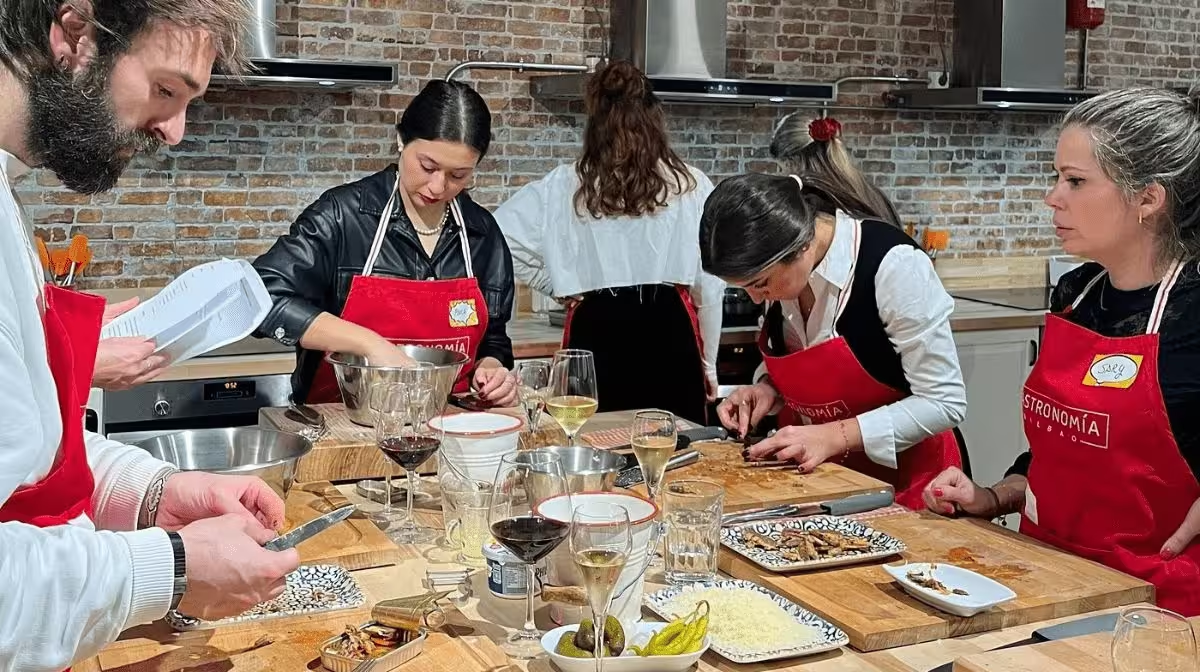
Learn to make pintxos yourself
Prefer cooking to crawling? Take a traditional Basque pintxos cooking class in Bilbao and learn how the bar-counter favourites are made. Check current availability and prices on Viator.
View class on ViatorWhen to go and what it costs
A pintxo crawl works best on a Thursday, Friday or Saturday evening, when the bars are lively. Lunchtime is also good, though bars are very busy around 1 to 2 pm and again from 8 to 9:30 pm, so arrive just before the peak. Most pintxos cost roughly €2 to €4, with premium ones a little higher, and a three-to-four-hour crawl typically comes to about €30 to €45 per person.
If you want local help, a guided food tour makes the ordering and route easy. See the booking box near the top of this page for live availability, or try the cooking class above if you would rather learn to make them.
Where to stay
Staying in or near Casco Viejo puts the best bars on your doorstep, while the Abando area of the new town is quieter and close to the metro. Book early for summer weekends and match days.
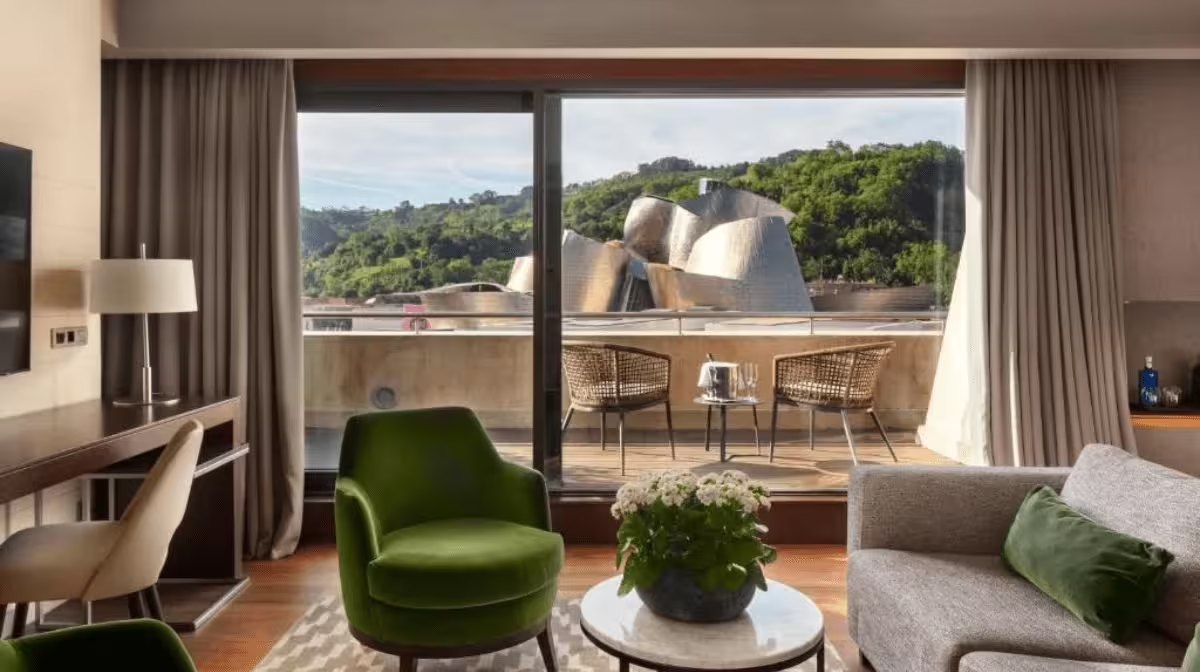
Alameda de Mazarredo 61, Bilbao. Location rated 9.8/10 by guests (3,384 reviews). Opposite the Guggenheim, with a rooftop breakfast terrace and a spa, and a short walk to the Old Town’s pintxo bars. Choose a Guggenheim-view room when you book.
Check AvailabilityMore to do: read our full Bilbao travel guide, or plan a coast day trip with our Gaztelugatxe from Bilbao guide.
FAQ
What are pintxos?
Pintxos are small Basque bar snacks, usually served on a slice of bread and often held together with a cocktail stick. The name comes from the Spanish verb pinchar, meaning to pierce. In Bilbao you eat them standing at the bar, one or two per stop, with a small drink.
How much do pintxos cost in Bilbao?
Most pintxos cost roughly €2 to €4 each, with premium ones a little higher. A relaxed three-to-four-hour crawl typically works out at about €30 to €45 per person including drinks, though it depends on how much you order.
What is the best area for pintxos in Bilbao?
Casco Viejo, the Old Town, is the easiest place to start, especially around Plaza Nueva and the streets Santa María and Jardines. The Ensanche (new town) around Calle Diputación and the bars upstairs at the Mercado de la Ribera are the other main options.
What should I order first?
Start with a Gilda (an olive, anchovy and pickled pepper on a stick), a slice of tortilla, a croqueta or two, and a glass of txakoli. Then ask what is hot, since the freshly made pintxos on the board are usually the best.
When is the best time to go on a pintxo crawl?
Early evening, from about 8 pm, on a Thursday, Friday or Saturday has the best atmosphere. Bars get very busy around 1 to 2 pm and 8 to 9:30 pm, so arrive slightly before the peak to find space at the counter.
Is it worth taking a pintxos tour in Bilbao?
A guided food tour is a good idea if it is your first visit. A local guide handles the ordering, explains what you are eating and takes you to bars you might otherwise walk past.
Disclosure: Route & Stay may earn a commission if you book through links on this page, at no extra cost to you. Bar menus, prices and opening hours change, so always confirm locally before you go.