 Skip to content

Strasbourg Travel Guide
Half-timbered canals, a Gothic cathedral, winstub cooking and a city that is half French, half German and entirely its own.
This Strasbourg travel guide covers a city on the Rhine that has changed hands between France and Germany so many times that it ended up with a culture all its own. The pink sandstone cathedral and the Petite France canals get the photographs, but the real appeal is the whole mix: an island old town listed by UNESCO, hearty Alsatian food, a wine route on the doorstep and the seat of the European Parliament.
This guide covers what’s worth your time, how to get around cheaply, the best day trips, and where to stay. Strasbourg works as a two-day city break all year, and it becomes one of Europe’s great destinations when the Christmas markets arrive.
In this guide


Strasbourg at a Glance
| Attraction | Time needed | Cost | Book ahead? |
|---|---|---|---|
| Strasbourg Cathedral | 1 to 2 hours | Free to enter; small fees for the clock and platform | No |
| Petite France | 2 hours | Free | No |
| Barrage Vauban terrace | 30 to 45 minutes | Free | No |
| Boat tour on the Ill | About 70 minutes | Paid, price set by operator | Recommended in peak season |
| Palais Rohan museums | 1 to 3 hours | Paid, per museum | No |
| European Parliament visit | 1 to 2 hours | Free, but registration needed | Yes |
| Colmar day trip | Full day | Train fare | No |
Best Things to Do in Strasbourg
Strasbourg Cathedral
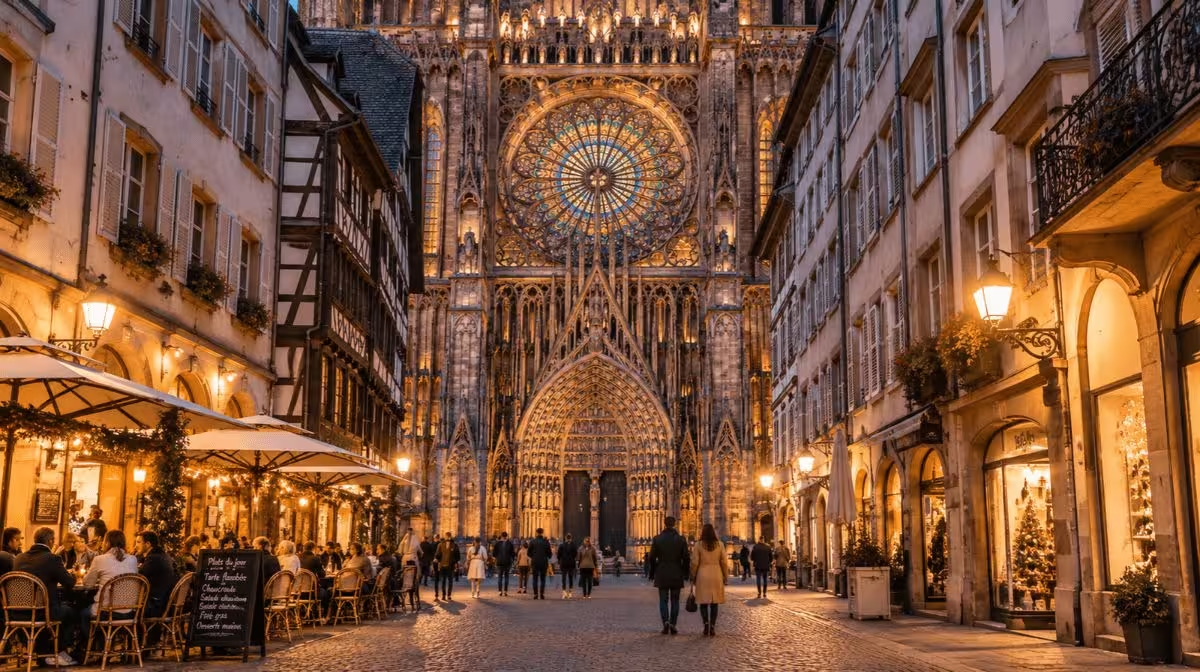
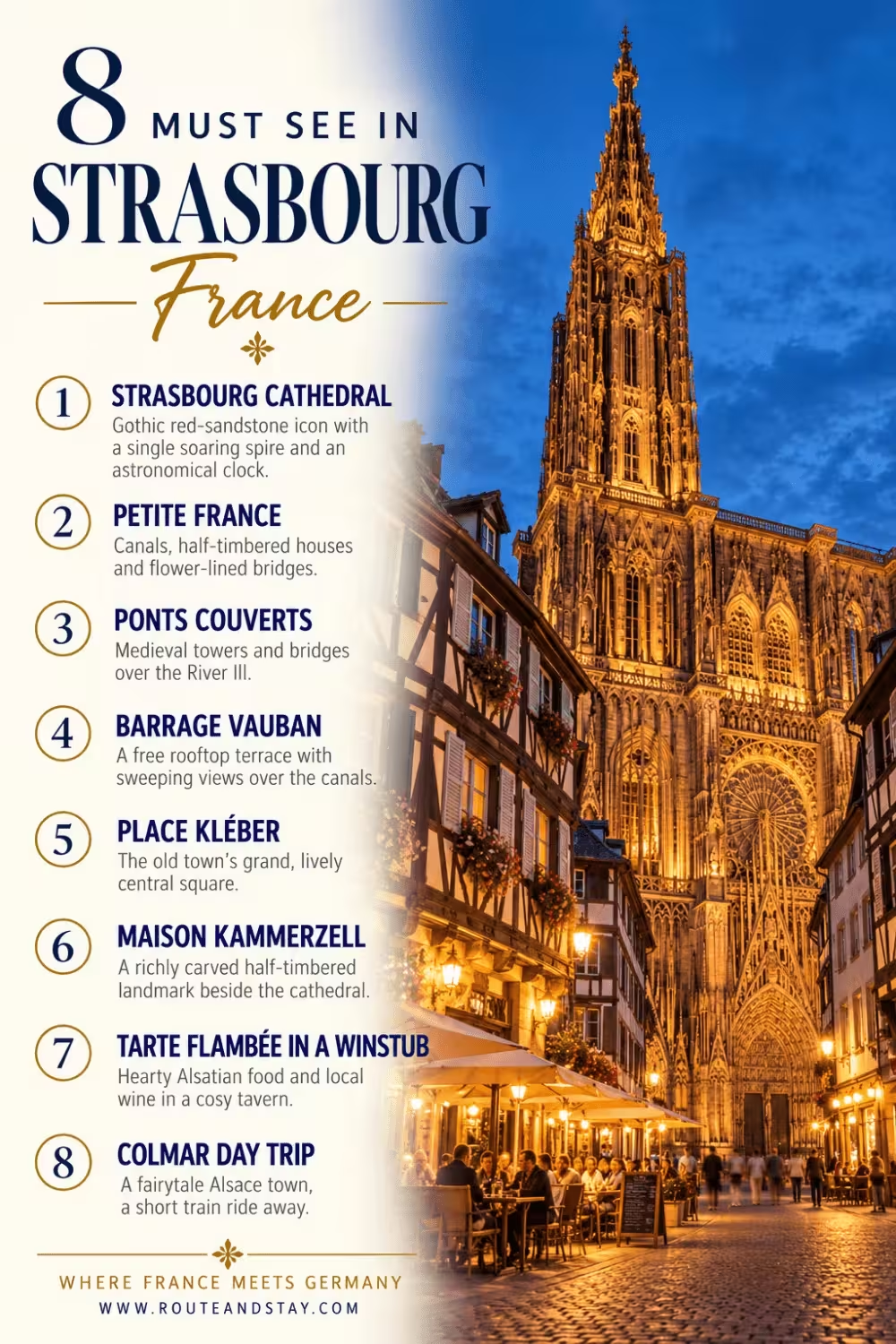
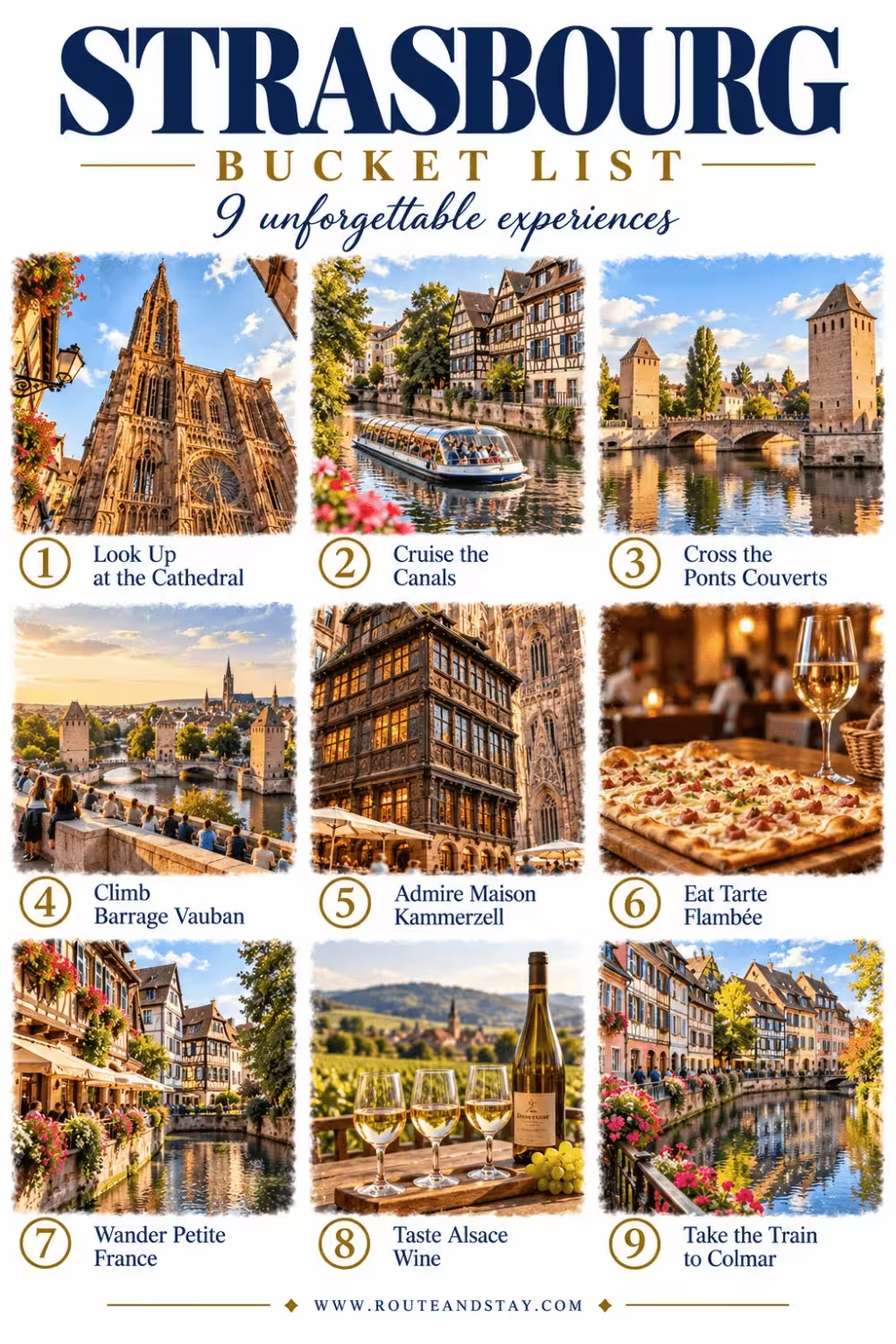
Notre-Dame de Strasbourg took more than four centuries to build, from the 11th century into the 15th, and its asymmetric single spire stands about 142 metres high. For a long stretch of history it was the tallest building in the world. The facade is a lace of pink Vosges sandstone that glows at sunset.
Inside, the main draw is the astronomical clock, a 19th-century mechanism by Jean-Baptiste Schwilgué that replaced earlier Renaissance clocks. Its parade of figures runs once a day around 12:30, and the crowds gather early. Entry to the cathedral is free; the clock show and the climb to the 66-metre platform (roughly 330 steps) carry a small fee.
Arrive by about 12:00 to see the clock show. Opening hours and ticket prices for the clock and platform change, so check the cathedral’s official site before you go. Tram: Langstross-Grand’Rue (A, D) or Broglie (B, C, F).
Petite France and the Covered Bridges
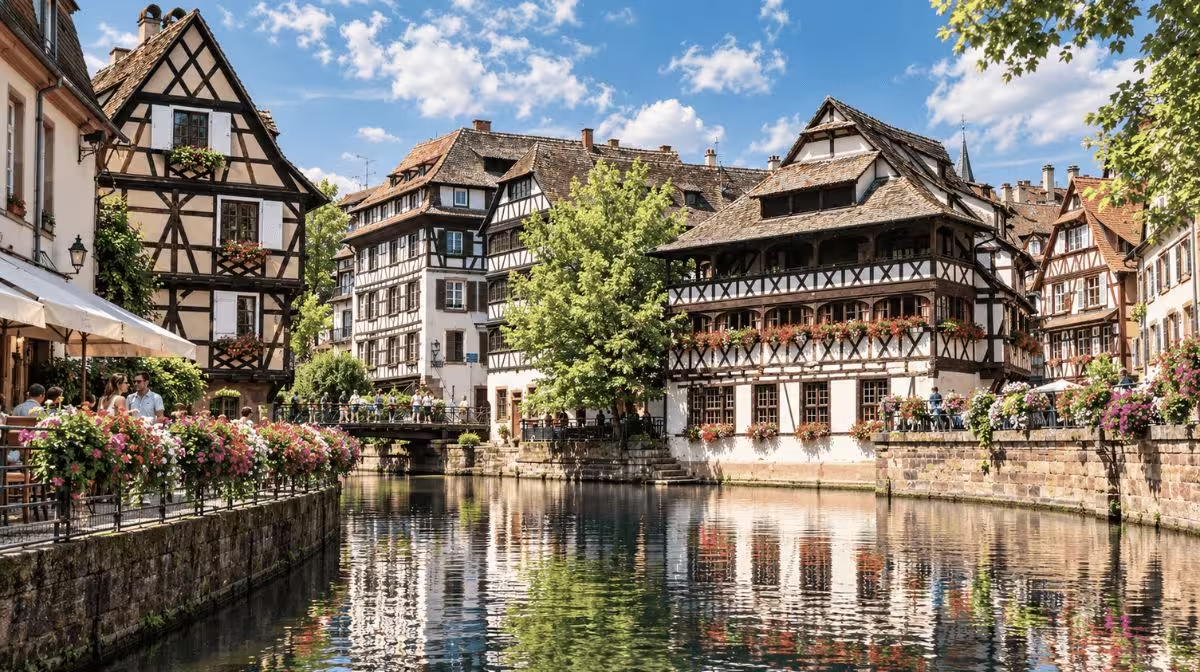
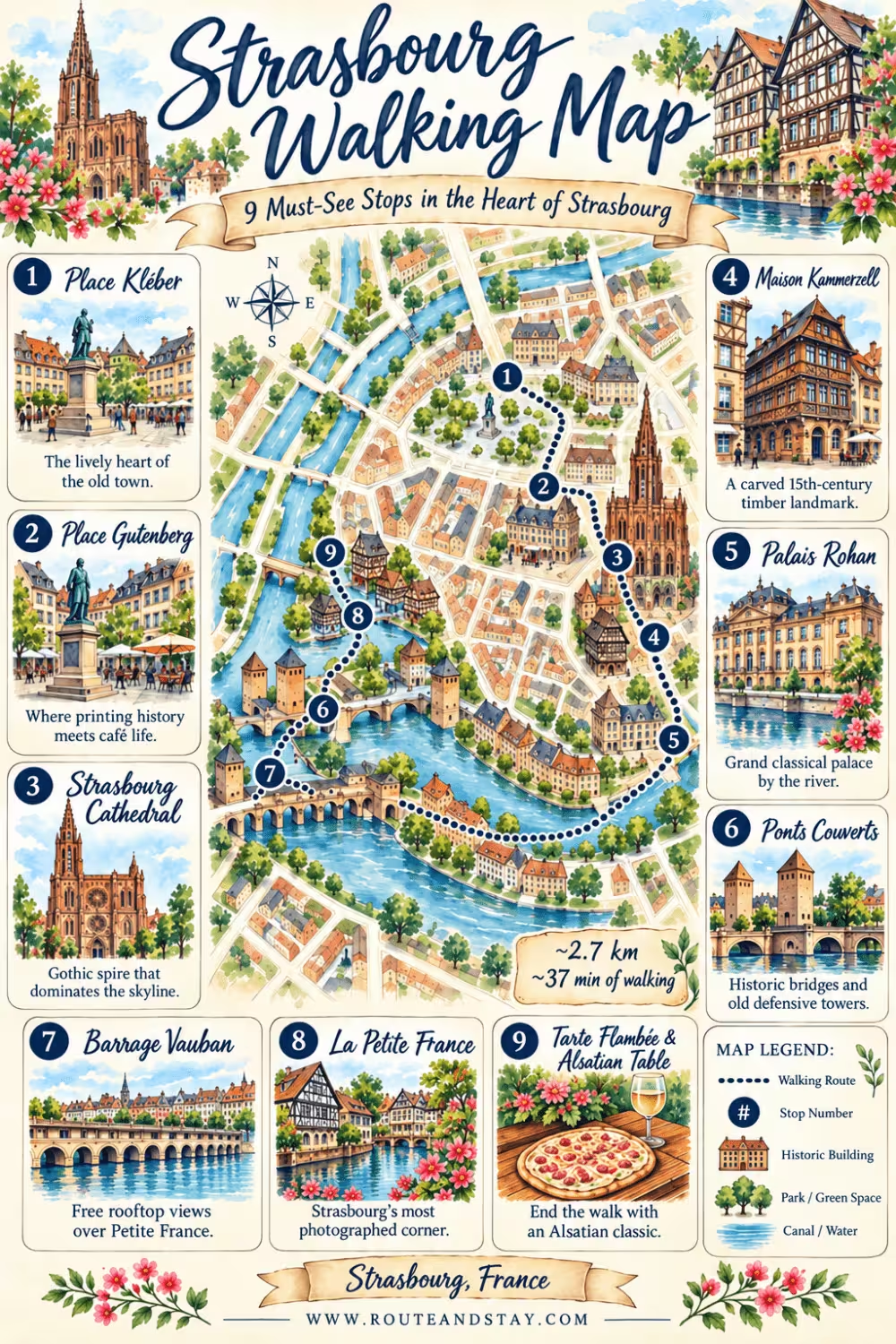
The old tanners’ quarter at the western end of the Grande Île is the postcard Strasbourg: leaning half-timbered houses with flower boxes, canals split by locks and the Ponts Couverts, three medieval bridges with defensive towers. The name “Petite France” comes from a hospital that once treated syphilis patients, nicknamed “the French disease”. Today it is the prettiest neighbourhood in the city.
Walk to the Barrage Vauban, a 17th-century weir designed by the military engineer Vauban to defend the city by flooding its southern approach. Its rooftop terrace is free and gives one of the best views over the bridges and the rooftops.
Free to explore. Come early morning or after sunset to avoid the tour groups. Terrace hours vary seasonally.
The Grande Île and its Squares
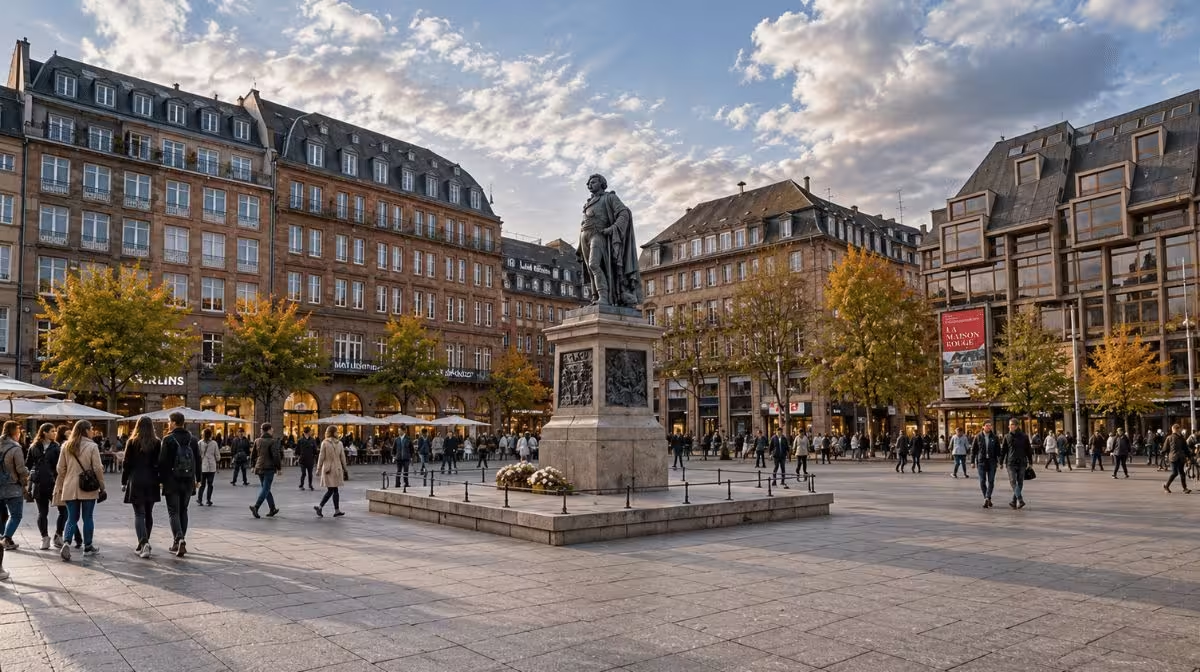
The whole old-town island, surrounded by the Ill river, was the first city centre in France to be listed by UNESCO in its entirety. Since 2017 the listing has extended to the Neustadt, the grand German-era district built after 1871, which gives Strasbourg two very different architectural personalities within a short walk.
Start at Place Kléber, the city’s largest square, then wander to Place Gutenberg and the tiny Place du Marché-aux-Cochons-de-Lait with its half-timbered houses and replica well. The Maison Kammerzell, a richly carved timber building next to the cathedral, is the most photographed facade on the island.
The island is compact and almost entirely walkable. Allow half a day to cross it slowly.
Boat Tour on the Ill
The standard Batorama tour leaves from near the Palais Rohan, takes about 70 minutes and loops past Petite France, the Neustadt and the European institutions, with audio commentary in many languages. It is the laziest way to see the whole city and a good wet-weather option, since some boats are covered and heated.
Palais Rohan Museums
An 18th-century episcopal palace beside the cathedral that houses three museums: archaeology, decorative arts and fine arts. The decorative arts rooms, with the old apartments of the prince-bishops, are the best part.
European Parliament
Strasbourg is one of the formal seats of the European Parliament. Free visits are available outside plenary weeks, but registration is required, so book through the official site. Boats from the city centre stop right beside the building.
The Neustadt
The imperial quarter is all broad avenues, a neo-Renaissance university and the grand Palais du Rhin. It looks nothing like the old island, which is exactly the point. Allow an hour for a stroll after the old town.
Krutenau
The student and bar district just east of the Grande Île is where locals go for a drink on the canal. It is quieter and cheaper than the cathedral quarter, with plenty of casual places to eat in the evening.
Book Guided Experiences in Strasbourg
Walking tours, cathedral visits and canal cruises, with free cancellation on many options. Availability is live.
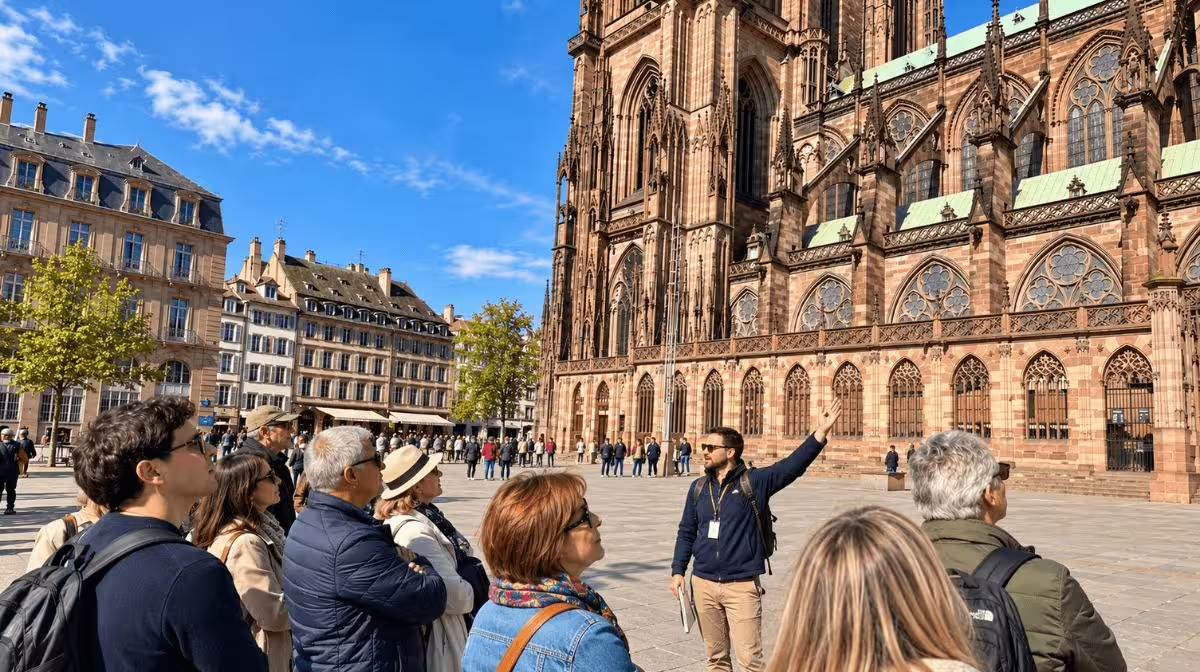
Strasbourg: Small Group Walking Tour Between History and Curiosities
A small-group walk through the old town with a local guide, covering the history and the odd stories behind the sights.
Check availability on Viator →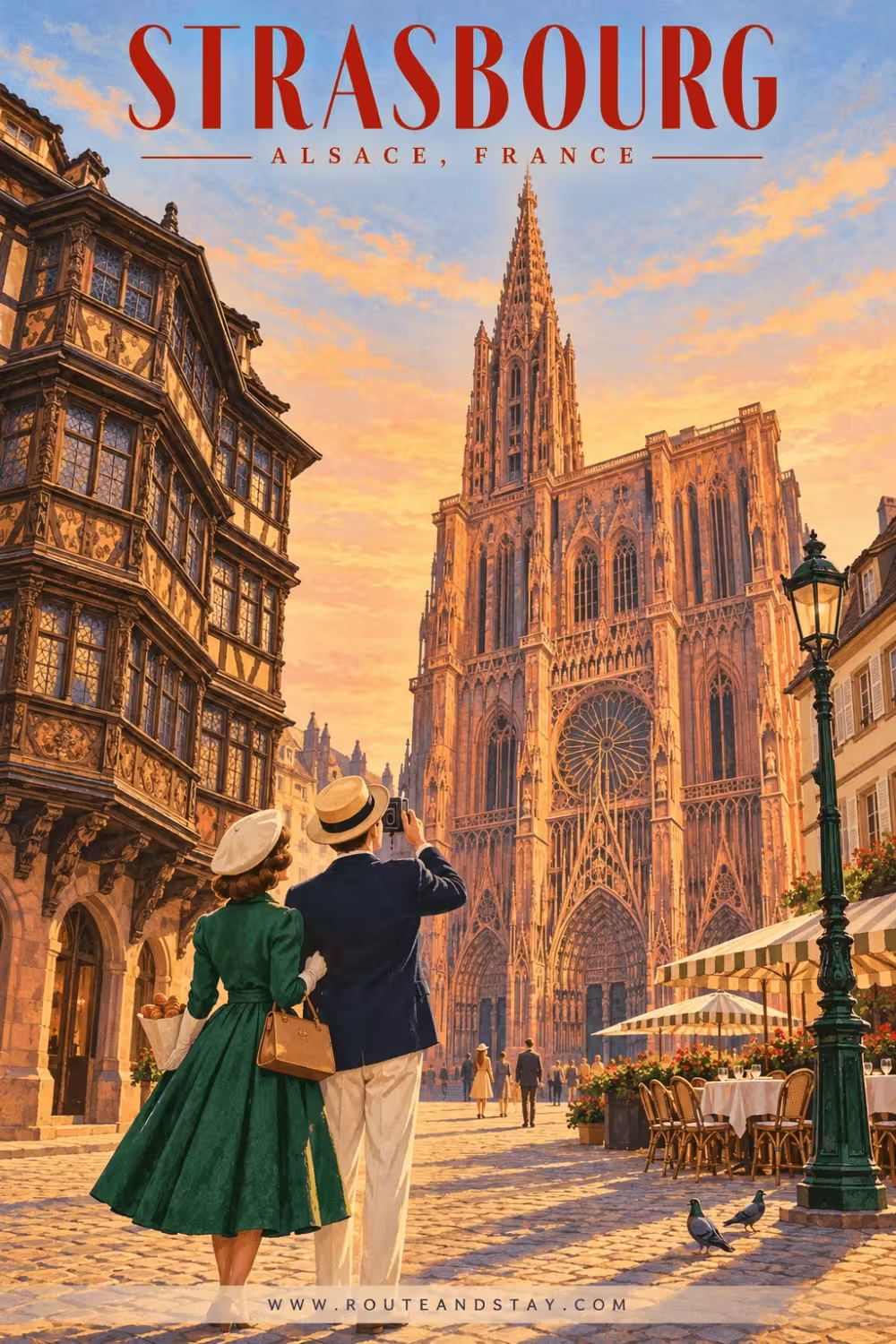
Eating and Drinking
Winstubs and Alsatian cooking
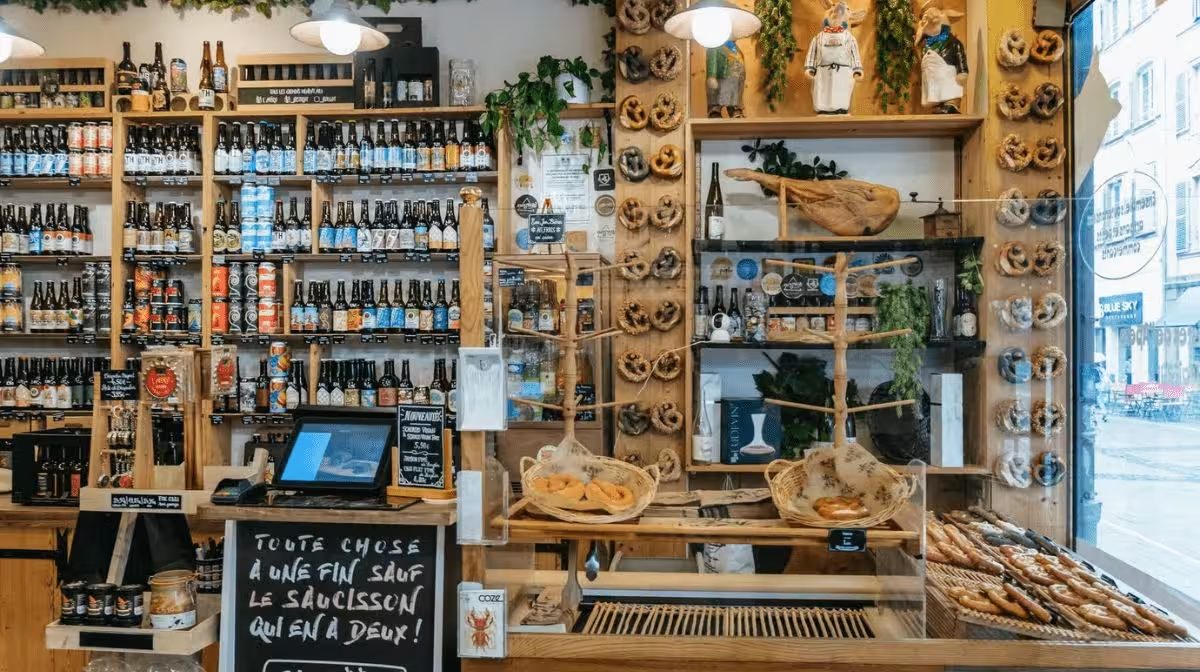
The traditional place to eat is a winstub, a cosy wood-panelled tavern that serves regional dishes alongside Alsace wine. The cooking sits halfway between France and Germany: choucroute garnie (sauerkraut with sausages and pork), baeckeoffe (a slow-cooked casserole of meats and potatoes marinated in white wine), and flammekueche, a wafer-thin tarte flambée with cream, onions and bacon.
For something sweet, look for kougelhopf, a ring-shaped brioche cake, and the spiced bredele biscuits that appear in winter. To drink, Alsace is white-wine country: dry Riesling, aromatic Gewurztraminer, Pinot Gris and the sparkling Crémant d’Alsace. Local beer is also a Strasbourg tradition.
Book winstubs a day ahead for dinner, especially on weekends and in December. Many close one or two days a week.
Join a Food or Wine Tour
A guided tasting walk is the easiest way to sample Alsatian specialities without guessing what to order.
Day Trips from Strasbourg
Colmar
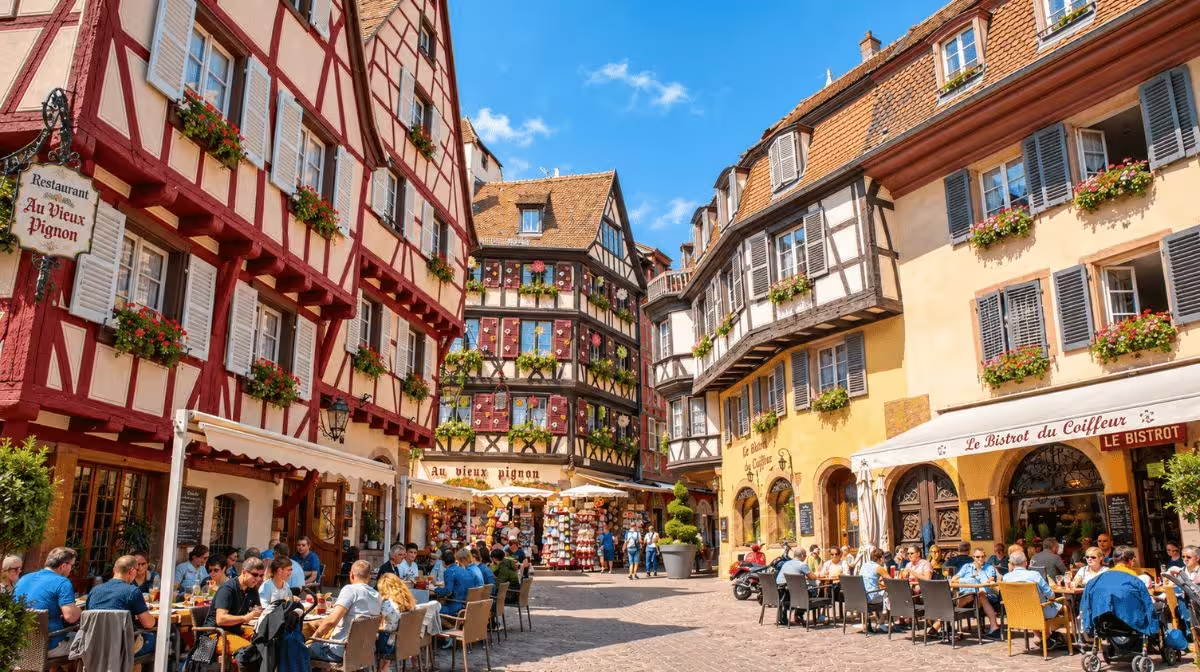
About 30 minutes by train, Colmar is Alsace’s other showpiece town. Its “Little Venice” quarter has canals lined with colourful half-timbered houses, and the Unterlinden Museum holds the famous Isenheim Altarpiece. Trains leave regularly, so a day trip needs no car and no tour, though it is easy to link with the wine villages by guided minivan.
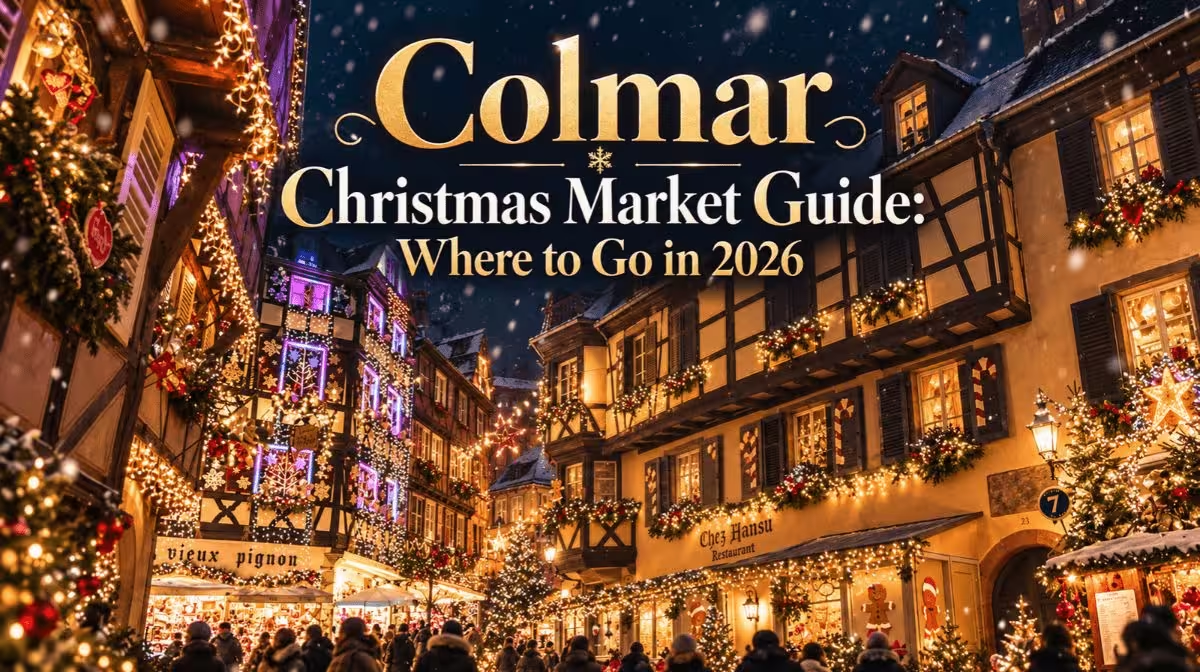
Colmar also runs its own Christmas market, which makes a good second stop on a winter trip. See our Colmar Christmas market guide.
The Alsace Wine Route
The wine route runs for roughly 170 km through vineyard villages at the foot of the Vosges. Riquewihr and Eguisheim are the best-known stops, both with cobbled lanes and cellars to taste in. Obernai is the easiest by train. A small-group tour means nobody has to drive after tastings.
Haut-Kœnigsbourg
A heavily restored medieval fortress perched high above the Rhine plain. Without a car, go by train to Sélestat and connect by shuttle bus where it runs, or take an organised day tour. Hours are reduced in winter, so check before travelling.
Kehl and Baden-Baden
Tram D crosses the Rhine to Kehl in Germany, a quick way to say you have been abroad for lunch. Baden-Baden, the spa town on the edge of the Black Forest, is reachable by train for a longer day out.
Day Trips and Tours from Strasbourg
Small-group trips to Colmar, the wine villages and Haut-Kœnigsbourg.
Strasbourg at Christmas
Strasbourg is a good city break in any month, but it has a seasonal claim few places can match: it calls itself the “Capital of Christmas”. The Christkindelsmärik, the historic market around the cathedral, is traced back to 1570, making it one of the oldest in Europe. Today the festival is spread across several squares of the Grande Île, with Place Kléber holding the giant tree and Place Broglie among the main market sites.
For 2026 the city lists the opening as 27 November, with the closing date not yet confirmed at the time of writing. Past editions have run to Christmas Eve. Hotels book out early, so reserve as soon as your dates are fixed.
Getting There and Around
From Strasbourg Airport
Strasbourg-Entzheim airport sits about 10 km from the centre. A shuttle train runs to the main station (Gare Centrale) in around nine minutes, several times an hour. You can buy a train ticket on the platform, or a combined train and tram ticket from the machine at the airport. Taxis are the alternative.
By train and road
Strasbourg is on the TGV network, with direct high-speed services from Paris, and good connections from Germany and Switzerland. Frankfurt and Basel-Mulhouse airports are both within reach by train. From the station it is roughly a 10-minute walk to the first Christmas chalets and the cathedral area.
If you drive, use the P+R (park and ride) car parks beside the tram lines. Parking at one covers a tram return for everyone in the car, and it is the sensible choice in December when central car parks close.
Around the city
The Grande Île is best done on foot. For the rest, the CTS network of trams and buses is extensive. You can buy single tickets or 24-hour passes, and the Europass also covers regional TER trains within the Strasbourg area. Check current fares on the CTS site before you travel.
When to Visit
Strasbourg has a continental climate: cold winters, warm to hot summers. Spring and early autumn are the sweet spot for walking, boat trips and day trips to the vineyards, and September to November is harvest time on the wine route. Summer brings long evenings and terraces along the canals. The big peak is the Christmas market season from late November to Christmas Eve, when the city is at its most magical and its most crowded.
One practical tip: when the European Parliament holds a plenary session, hotel prices in the centre jump. If your dates are flexible, check the Parliament’s calendar before you book.
Two-Day Itinerary
Old town and canals
Start at the cathedral early, climb the platform and aim to see the astronomical clock around midday. Lunch in a winstub, then walk through Place Gutenberg to Petite France and the Barrage Vauban terrace. Finish with a sunset boat tour or an evening flammekueche in Krutenau.
Colmar or the Neustadt
Take the 30-minute train to Colmar for the canals and the Unterlinden Museum, then return for dinner. If you prefer to stay put, explore the Neustadt and Palais Rohan in the morning and take the boat out to the European Parliament in the afternoon.
Where to Stay
For a first visit, stay on or beside the Grande Île: close to the cathedral for atmosphere and Christmas markets, or in Petite France for quiet canal views. The streets around Place Kléber are the most central, the area near the station is convenient for trains but less charming, and Krutenau is cheaper and livelier at night. Book early for December, Parliament plenary weeks and summer weekends.
Maison Rouge Strasbourg Hotel & Spa, Autograph Collection
A characterful hotel in the heart of the old town, a short walk from Place Kléber and the cathedral, with a spa on site. Convenient for the Christmas markets, which are all within easy walking distance.
Check availabilityStrasbourg FAQ
How many days do you need in Strasbourg?
Two days covers the cathedral, Petite France, the boat tour and a few winstub meals. Add a day for Colmar and the wine villages.
Is Strasbourg worth visiting outside Christmas?
Yes. The old town, canals and food are just as good in spring and autumn, with far smaller crowds and lower hotel prices than in December.
How do I get from Strasbourg Airport to the city?
Take the shuttle train to the main station, about nine minutes, with several departures an hour. You can buy a combined train and tram ticket at the airport. A taxi is the other option.
Is Strasbourg French or German?
French, but with a strong German heritage. The city passed between the two countries several times, and you will see it in the architecture, the Alsatian dialect, the food and the street names.
Can I visit the European Parliament?
Yes. Visits are free but need registration in advance, and availability depends on the Parliament’s calendar. Check the official European Parliament website for current options.
Is Strasbourg walkable?
Very. The Grande Île is compact and mostly pedestrian, and the trams cover everything else, including the Neustadt and the European quarter.
More of France
Heading to Paris as well? Our France hub links every French city guide in one place.
Open the France Guide