 Skip to content
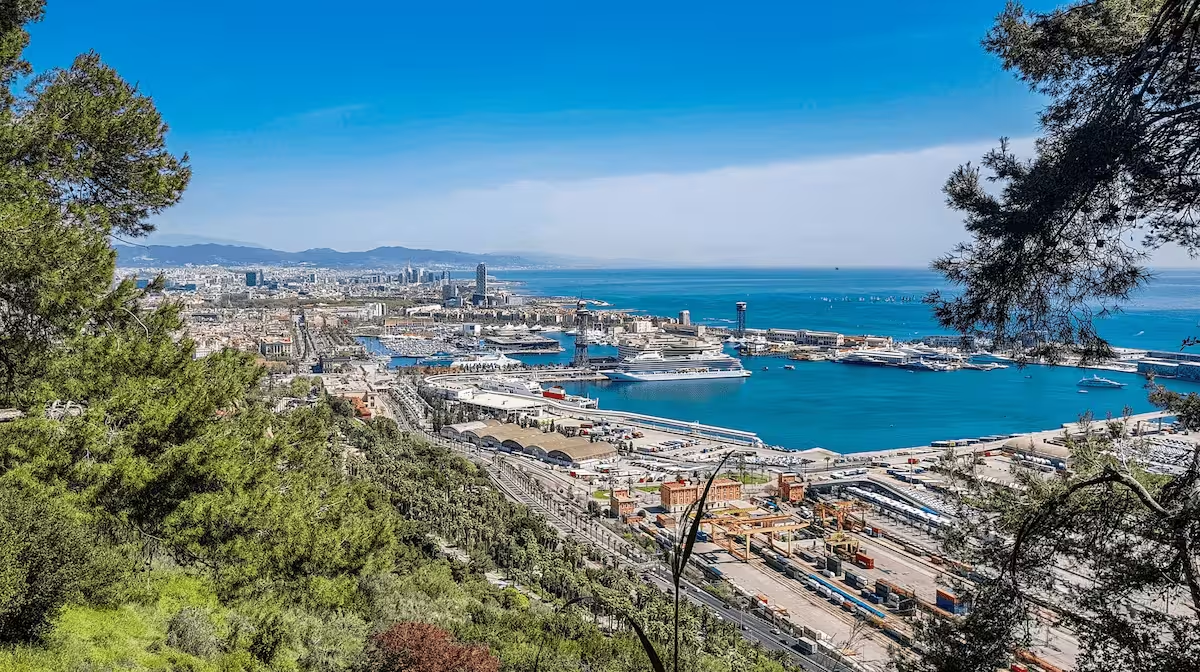
Taking a cruise from Barcelona is one of the smoothest ways to start a Mediterranean voyage — the city is the region’s largest turnaround (embarkation) port and one of the busiest cruise ports in the world. But a cruise from Barcelona rewards a little planning: the terminals have shifted, the transfer options each have trade-offs, and arriving a day early changes everything. This hub pulls together the logistics, links to our detailed port-day guides, and shares what we learned embarking here ourselves.
Barcelona as a Cruise Hub
Barcelona is a Mediterranean cruise capital, handling millions of cruise passengers a year. It plays two distinct roles, and which one applies to you changes how you should plan:
- Turnaround (embarkation/disembarkation) port: Your cruise starts and/or ends here. You’ll likely fly in, ideally stay a night or two, then board. This is the most common reason people take a cruise from Barcelona — and it’s the scenario we went through ourselves.
- Port-of-call: Your ship stops here for a single day mid-voyage, typically 8–10 hours. The goal is maximizing a short window in the city.
The logistics overlap, but the priorities differ. Embarking passengers care about hotels, luggage, and a stress-free path to the ship. Port-of-call passengers care about squeezing the most out of limited hours. We cover both below.
Cruise Terminals in 2026: What Changed
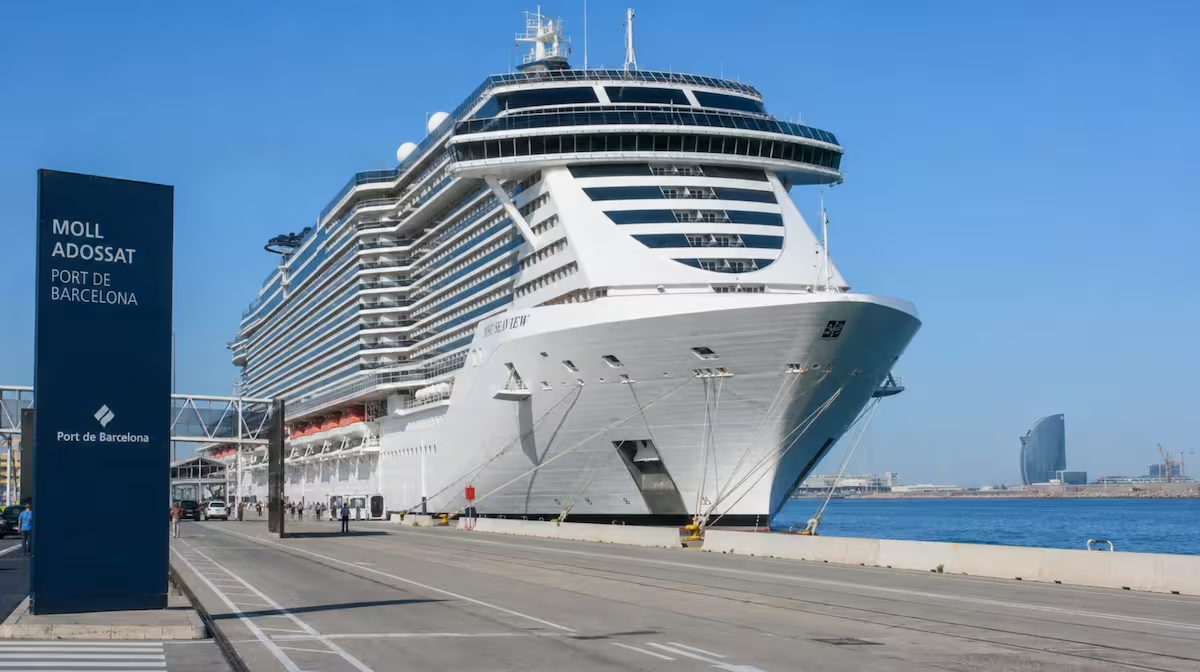
This is the single most important update for anyone planning a cruise from Barcelona this year. The port has consolidated:
What this means in practice: Adossat is the furthest point from the city center — roughly 2 km from the bottom of La Rambla. You will not be stepping off the ship into the old town. Plan a transfer. And because everyone is now funneled to the southern end of the port, shuttle queues run longer than in previous years — build in buffer time, especially for the return to your ship.
Your exact terminal (A through E) is assigned by your cruise line and printed in your final documents. Don’t guess — check your e-docs on embarkation day, or the official Port de Barcelona website.
Getting To & From the Port
There are three realistic ways between Adossat and the city, plus the airport connection. Here’s how they compare:
| Option | Cost (2026) | Time | Best for |
|---|---|---|---|
| Taxi | ~€22–25 to Las Ramblas | ~10 min | Luggage, groups, door-to-door ease |
| T3 Portbus (Blue Bus) | €3 one-way / €4.50 return (cash) | ~10–15 min + queue | Budget, solo/couples, light bags |
| Walking | Free | ~30 min | Not recommended from Adossat |
| Airport taxi (to Adossat) | ~€46 flat (official AMB fare) | ~25 min | Arriving by air with luggage |
Taxi
There’s a taxi rank directly outside each terminal, and on cruise days the port coordinates with local taxis so supply keeps up with demand. The ride to the foot of La Rambla is about 10 minutes and runs roughly €22–25. Barcelona taxis are legally required to accept cards. This is what we used on embarkation day — with suitcases, it was the obvious choice.
T3 Portbus (the “Blue Bus”)
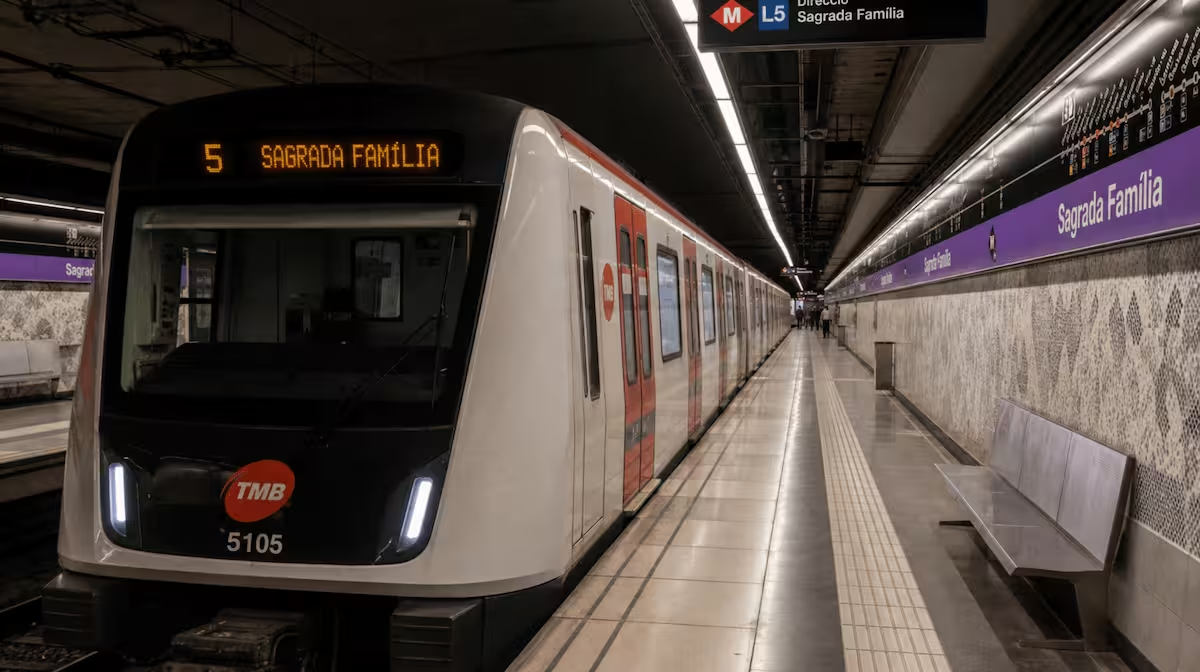
The official cruise shuttle — formerly called Portbús, often just “the Blue Bus” — runs between the Adossat terminals and Portal de la Pau, the square at the foot of La Rambla by the Columbus Monument. It’s €3 one-way or €4.50 return, cash only, roughly every 30 minutes, operating only while cruises are in port (about 8:00–20:30). From the drop-off, Drassanes metro (L3) is a short walk. Cheap and reliable, but factor in the longer 2026 queues.
Walking (don’t)
You can technically walk from Adossat, but it’s about 2 km along the Ronda del Litoral — a busy road with little shade, narrow footpaths over the bridge, and traffic fumes. With luggage it’s miserable; even without, the €3 shuttle is money well spent.
Airport to port
For Barcelona–El Prat (BCN) to Adossat, the simplest option with luggage is a taxi — the official 2026 AMB flat fare is around €46, all surcharges included, taking about 25 minutes. Public transport requires multiple changes (Aerobus to Plaça de Catalunya, metro to Drassanes, then the port shuttle), which is a lot with bags. A pre-booked private transfer is worth considering if you want a driver waiting with help for your luggage. For the full breakdown of every airport and city transport option, see our Barcelona transportation guide.
Embarkation Day, Step by Step
Here’s the sequence that worked for us embarking at Adossat, plus the tips we’d pass on:
- Stay in the city the night before. Flights get delayed; cruises don’t wait. Arriving a day (or two) early removes the single biggest risk to your trip and lets you actually see Barcelona. More on where to stay below.
- Check your terminal letter in your cruise e-docs that morning — A through E at Adossat. Your taxi or transfer needs it.
- Leave mid-to-late morning. Most lines begin boarding around late morning/midday. Going too early means long queues; too late and you’re rushed.
- Take a taxi with luggage. Give the driver your terminal letter. ~10 minutes from the center, ~€22–25.
- Drop luggage with the porters at the terminal — it’s delivered to your cabin. Keep documents, medications, and valuables in your hand luggage.
- Clear check-in and security with passport and boarding documents ready. Then you’re aboard.
If Barcelona Is a Port-of-Call

Stopping for a single day? Your window is usually 8–10 hours, minus transfer time at both ends, so realistically you’ve got around 6 hours in the city. The key is a focused plan — trying to “see Barcelona” in a day leads to a frustrating dash. Pick one area or two nearby sights and do them well.
Our detailed port-day guides
This hub is the overview — these posts go deep on the day itself:
→ Barcelona Cruise Port Guide — terminals, shore excursions, and how to run a smooth port day in 2026.
→ How to Spend 6 Hours in Barcelona From Your Cruise Ship — three flexible half-day routes depending on your group and pace.
→ Where to Eat Near the Barcelona Cruise Port — Catalan food worth seeking out near the terminals, and what to skip.
If you’d rather not navigate at all on a tight schedule, the hop-on hop-off bus is a popular port-day choice — it covers the major sights on a loop so you’re never far from a stop.
Shore Excursions: Ship vs. Independent

Two ways to book, with a real trade-off:
- Ship’s excursions: More expensive, but the ship guarantees it will wait if the tour runs late. Worth the premium for far-flung trips (e.g. Montserrat) where missing the ship is a real risk.
- Independent tours: Cheaper and often better quality, but you’re responsible for getting back on time. Fine for in-city sights with a comfortable buffer.
For independent booking, these are the port-friendly options we’d point cruise passengers to:
- Sagrada Família skip-the-line — the one unmissable sight; skip-the-line is essential on a tight schedule.
- Gothic Quarter walking tour — compact, central, and easy to fit into a half-day.
- Park Güell — Gaudí’s mosaic park; book a timed entry to avoid the queue.
- Montserrat — the mountain monastery; stunning, but a longer trip, so book carefully (or go with the ship) on a port day.
For the complete rundown of every major sight with hours and costs, see our Barcelona must-see sights guide.
Top-Rated Barcelona Excursions
A live look at the most popular bookable tours and tickets right now:
Where to Stay Pre & Post Cruise

If you’re embarking or disembarking, a night in the city is the smartest insurance you can buy. For the easiest path to the ship, stay somewhere central and walkable with a quick taxi link to Adossat — Eixample and the Gothic Quarter both work well, and the area around the foot of La Rambla puts you near the shuttle pickup.
For a full breakdown of accommodation types, neighborhoods, and current prices, see our where to stay in Barcelona guide and the neighborhoods guide.
Browse pre-cruise hotels
Frequently Asked Questions
- Which terminal will my cruise from Barcelona use?
- In 2026, almost all large ships use Moll Adossat (Terminals A–E). The city-center WTC terminals are now closed to large vessels. Your exact terminal letter is in your cruise documents — check on embarkation day.
- How far is the cruise port from the city center?
- Moll Adossat is about 2 km from the foot of La Rambla — roughly 10 minutes by taxi. It’s not walkable in any practical sense, especially with luggage.
- How do I get from the port to the city?
- Taxi (~€22–25, ~10 min) or the T3 Portbus shuttle (€3 one-way / €4.50 return, cash only) to Portal de la Pau at the foot of La Rambla. From there, Drassanes metro (L3) connects to the rest of the city.
- How much is a taxi from the airport to the cruise port?
- The official 2026 flat fare from Barcelona–El Prat to Moll Adossat is about €46 including surcharges, taking roughly 25 minutes. It’s the simplest option with luggage.
- Should I arrive the day before my cruise?
- Yes. Flight delays can make you miss the ship, which won’t wait. Arriving a day or two early removes that risk and lets you actually enjoy Barcelona before sailing.
- Are ship excursions or independent tours better?
- Ship excursions cost more but guarantee the ship waits if you’re late — worth it for far trips like Montserrat. Independent tours are cheaper and often better, but you manage your own timing, so leave a buffer.
- How much time do I get on a port-of-call day?
- Usually 8–10 hours docked, but after transfers you realistically have about 6 hours in the city. Plan a focused route rather than trying to see everything.
- Can I walk from the ship into Barcelona?
- From Adossat, no — it’s a ~2 km walk along a busy road with little shade and narrow footpaths. The €3 shuttle or a taxi is well worth it.
Your Cruise From Barcelona, Sorted
A cruise from Barcelona is genuinely easy once you know the moving parts: you’ll almost certainly be at Moll Adossat, a taxi or the €3 shuttle gets you to and from the city, and arriving a day early is the one decision that protects the whole trip. Whether you’re embarking, disembarking, or stopping for a day, use the linked guides above to go deeper on the part that applies to you — and enjoy the city before or after the sea.