 Skip to content

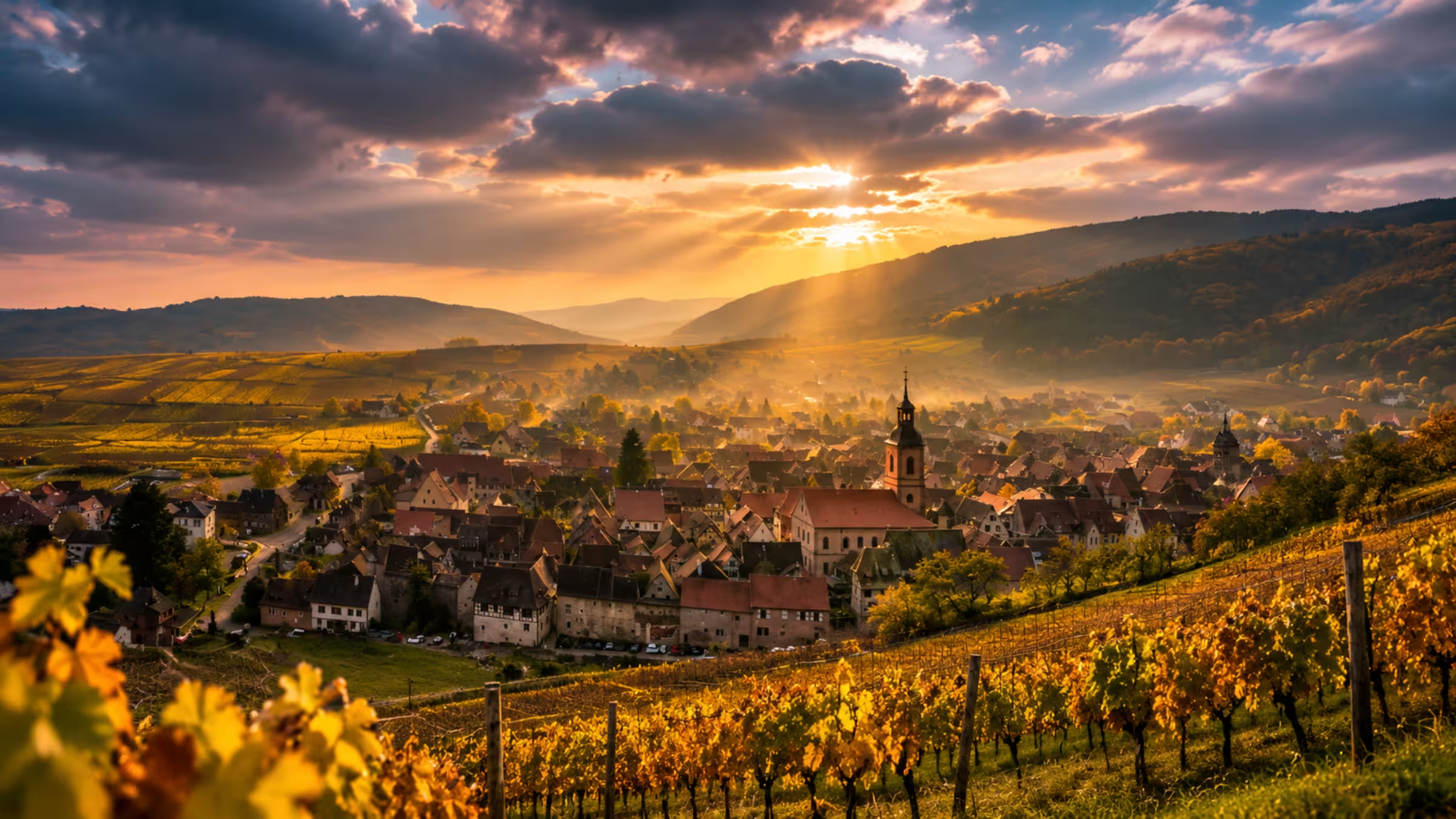
Strasbourg is one of the best bases in Europe for day trips: half-timbered Alsace villages, vineyard towns and a hilltop castle are all within about two hours, and Germany is across the river. This guide ranks the six best, with realistic journey times, what each is good for and which ones are worth doing on a tour rather than on your own.
In this guide
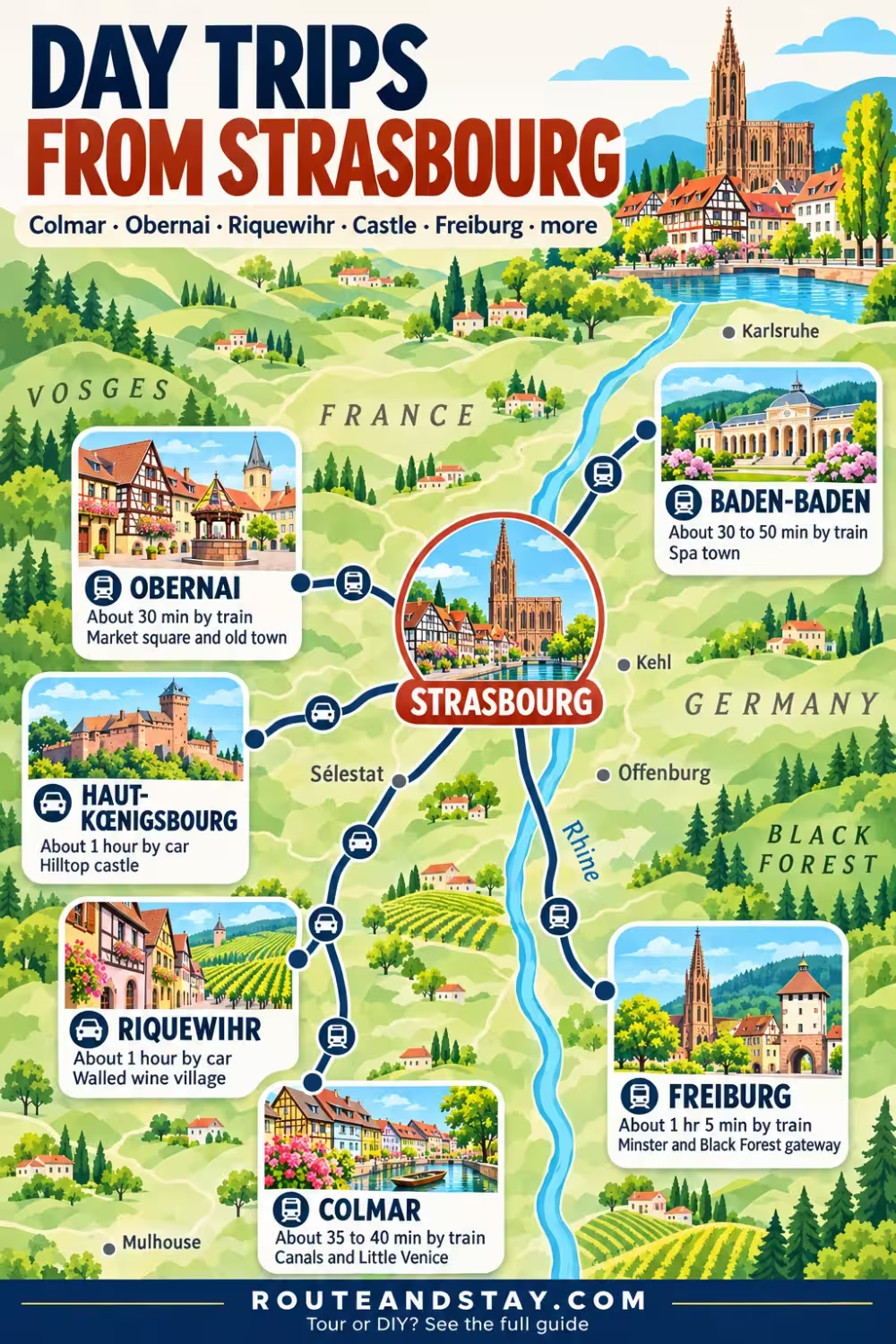
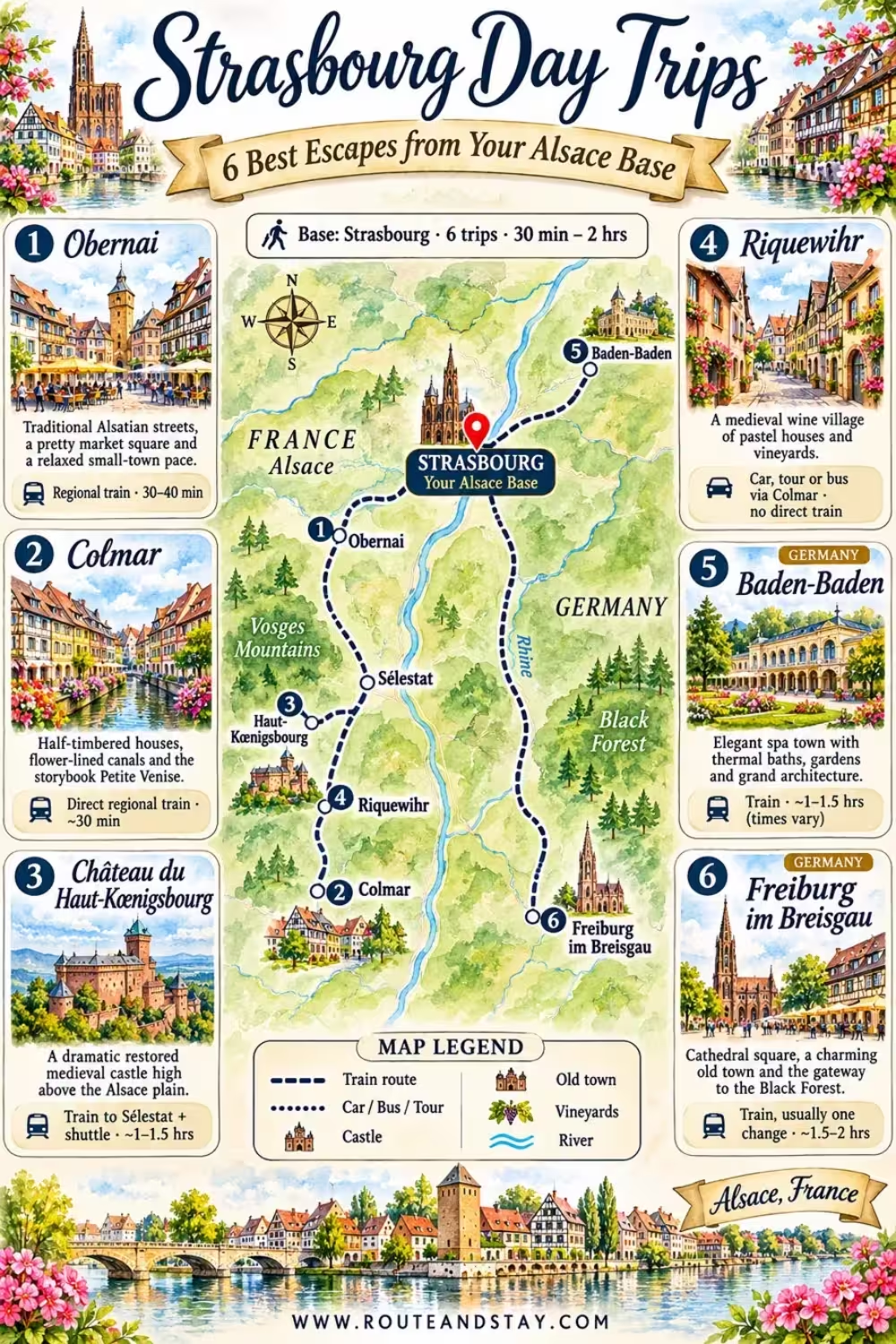
Day trips from Strasbourg at a glance
Compare the six trips
| Day trip | How to get there | Time from Strasbourg | Best for |
|---|---|---|---|
| 1. Obernai | Regional train | About 30 to 40 min | A quiet market-town day |
| 2. Colmar | Direct regional train | About 30 min | Canals and half-timbered houses |
| 3. Haut-Kœnigsbourg | Train to Sélestat, then shuttle or taxi, or a tour | About 1 to 1.5 hrs | A hilltop medieval castle |
| 4. Riquewihr | Car, tour or bus via Colmar | About 1 hr by car | A walled wine village |
| 5. Baden-Baden | Train, often with a change | About 1 to 1.5 hrs | Spa town in Germany |
| 6. Freiburg | Train, usually one change | About 1.5 to 2 hrs | Cathedral square and the Black Forest |
Journey times are approximate and vary by service, so check SNCF Connect or Deutsche Bahn before you go.
1. Obernai: the easiest escape

Obernai is the closest of the six, about 30 to 40 minutes by regional train, and it feels more like a lived-in market town than a postcard. It has a long history: it was a ducal seat in the 7th century, the birthplace of Saint Odile, who is now the patron saint of Alsace, and later a free imperial town within the Decapole, the league of ten Alsatian cities. Much of its walled centre and its lanes of half-timbered houses survive from that period.
What to see
- Place du Marché. The main square, lined with timber-framed houses and café terraces, and the heart of the town on market days.
- The Puits aux Six Seaux. A 16th-century Renaissance well with six buckets, in the middle of the square and the town’s best-known landmark.
- The Chapel Tower (Kapellturm). A medieval tower beside the square that once belonged to a chapel and now offers a view over the rooftops.
- The town hall. A Renaissance-style building from the early 16th century on the main square.
- The ramparts and old streets. Parts of the medieval town walls and towers remain, and a walk around the edge of the old town takes about 30 minutes.
- Mont Sainte-Odile. The hilltop convent a few kilometres west, founded by Saint Odile in the 7th century, is one of Alsace’s most visited pilgrimage sites. It is easiest to reach by car or taxi.
How long: half a day for the town, a full day if you add Mont Sainte-Odile or a wine tasting.
2. Colmar: canals and half-timbered houses

Colmar is the most popular day trip and the most photogenic. It grew as a market and wine town and became a free imperial city in the Middle Ages, which is why its centre holds so many well-preserved Gothic and Renaissance buildings. It later passed to France in the 17th century, and the sculptor Frédéric Auguste Bartholdi, who designed the Statue of Liberty, was born here in 1834.
What to see
- La Petite Venise. The canal quarter along the Lauch river, with flat-bottomed boats, flower-filled balconies and the old fishmongers’ and tanners’ houses.
- Maison Pfister. A richly decorated house from 1537, with a wooden gallery and painted façade, and one of the town’s best examples of Renaissance architecture.
- Maison des Têtes. A house from 1609 whose façade is covered in carved heads and grotesque faces, now a hotel and restaurant.
- Koïfhus (the old customs house). A late medieval building from the 15th century, once the centre of the town’s trade and tolls.
- Unterlinden Museum. A former convent that houses the Isenheim Altarpiece, a masterpiece of early 16th-century painting and the main reason many visitors come.
- Collegiate Church of Saint Martin. A large Gothic church in the old town, begun in the 13th century.
- Dominican Church. Home to Martin Schongauer’s painting The Virgin of the Rose Bush (1473).
- The covered market. A 19th-century market hall by the canal, good for local cheese, charcuterie and pastries.
How long: a full morning for the old town, longer if you visit the Unterlinden Museum. It gets busy at weekends and in December, so go early on a weekday if you can. If you are visiting for the markets, our Colmar Christmas Market Guide covers the route and dates.
Small group tour on Viator
Colmar, Medieval Village & Castle Small Group from Strasbourg
An 8-hour small group day trip with an English-speaking guide: a guided walk through Colmar, free time in Riquewihr and a guided visit of Haut-Kœnigsbourg castle. Groups are limited to eight, castle entry and minivan transport are included, and it departs at 9:00 from central Strasbourg.
Check availability on ViatorAffiliate link: we may earn a commission at no extra cost to you.
3. Haut-Kœnigsbourg castle

Haut-Kœnigsbourg stands on a rocky hill at about 750 metres, above the Alsace plain. A castle has been on the site since the 12th century, and it was held by the Hohenstaufen emperors and later by several noble families. It was largely destroyed by Swedish troops during the Thirty Years’ War in 1633 and left as a ruin for more than two centuries. In 1899 the town of Sélestat gave it to the German emperor Wilhelm II, and the architect Bodo Ebhardt rebuilt it between 1900 and 1908 in a romanticised late medieval style. It is also known to film fans as a location in Jean Renoir’s La Grande Illusion.
What to see
- The Great Keep. The tall central tower, which you can climb for long views over the vineyards towards the Rhine and the Black Forest.
- The Great Bastion. The massive artillery tower that guards the approach, one of the strongest parts of the defences.
- The living quarters. Restored rooms with painted walls, heavy wooden furniture and a collection of weapons and armour.
- The courtyard and ramparts. A walk along the walls gives the best views and the best photos.
Getting there: without a car, the usual route is a train to Sélestat followed by a shuttle bus or taxi, where the shuttle runs, so it is the hardest of the six to do independently. Opening hours are reduced in winter, so check before you travel, and wear comfortable shoes because there are many steps. A small group tour that includes castle entry is the simplest option.
How long: allow at least two hours at the castle, plus travel time.
Day trip on Viator
Day trip: Colmar, Haut-Kœnigsbourg, Riquewihr and Kaysersberg
A full-day trip that covers four Alsace highlights: a visit to Haut-Kœnigsbourg castle, free time in Riquewihr for lunch, a stop in Kaysersberg and an afternoon in Colmar. It runs about 10.5 hours from Strasbourg, in an air-conditioned vehicle, and includes the castle visit. Lunch is not included.
Check availability on ViatorAffiliate link: we may earn a commission at no extra cost to you.
4. Riquewihr: a walled wine village
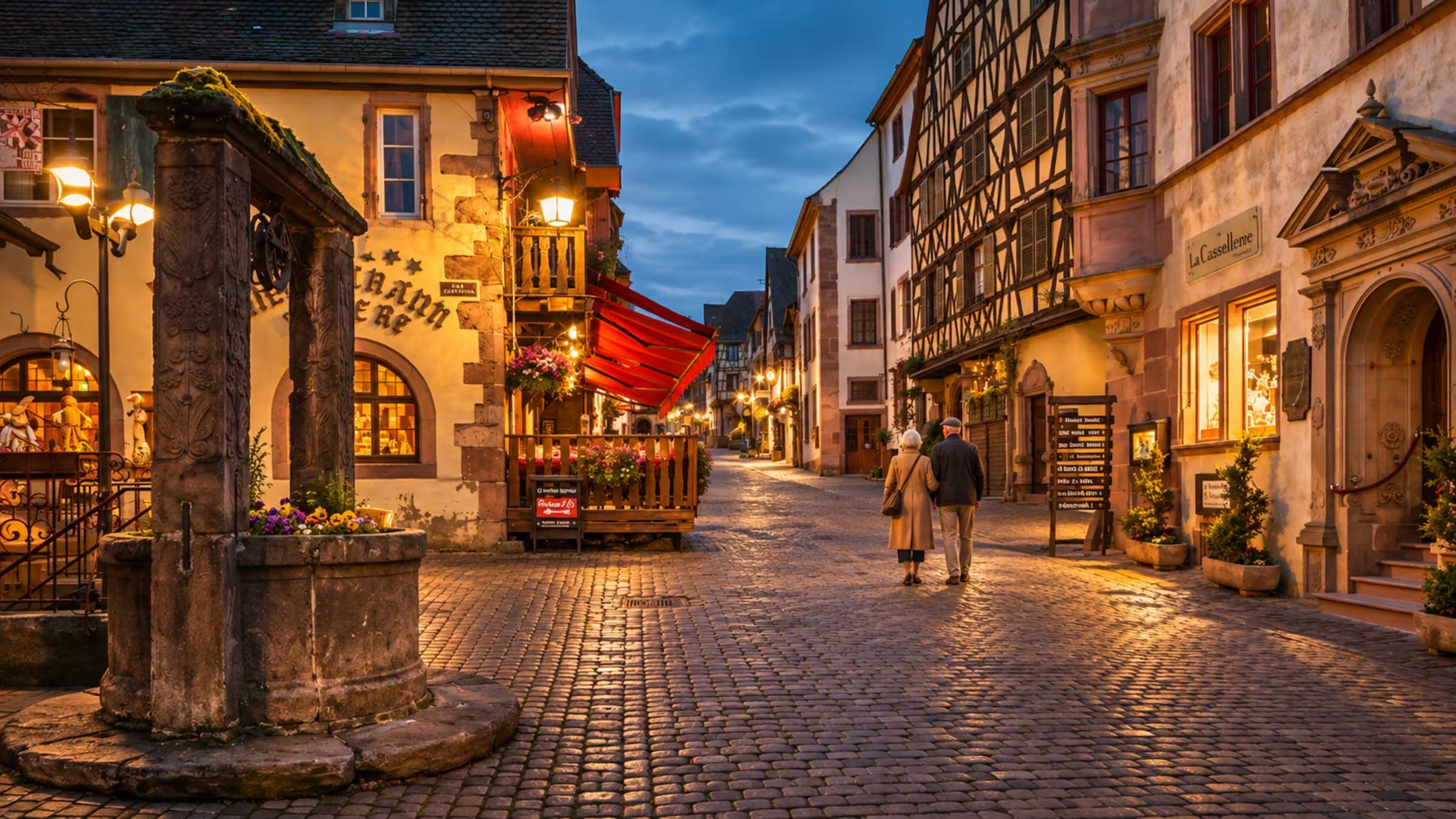
Riquewihr is a walled village of pastel houses, flower boxes and cobbled lanes set among vineyards on the Alsace Wine Route. For centuries it belonged to the dukes of Württemberg, and it was fortified in the late 13th century. It escaped major destruction in the wars that damaged much of the region, which is why so many 16th-century houses survive. It is a member of the Plus Beaux Villages de France, and it sits among well-known Riesling vineyards, including the Schoenenbourg grand cru.
What to see
- The main street. A long, gently sloping lane of timber-framed houses, courtyards and wine cellars, and the best way to see the village.
- The Dolder tower. A 13th-century gate tower at the top of the village that houses a small local history museum and offers a view over the rooftops.
- The Thieves’ Tower. A medieval tower once used as a prison, now a small museum.
- Wine cellars and tastings. Many producers open their cellars for tastings of Riesling, Gewürztraminer and Pinot Gris.
Getting there: there is no direct train, so most visitors arrive by car, by bus via Colmar or on a tour. If you are tasting wine, a tour means nobody has to drive.
How long: two to three hours to walk the village and stop for lunch or a tasting.
5. Baden-Baden: a spa town in Germany
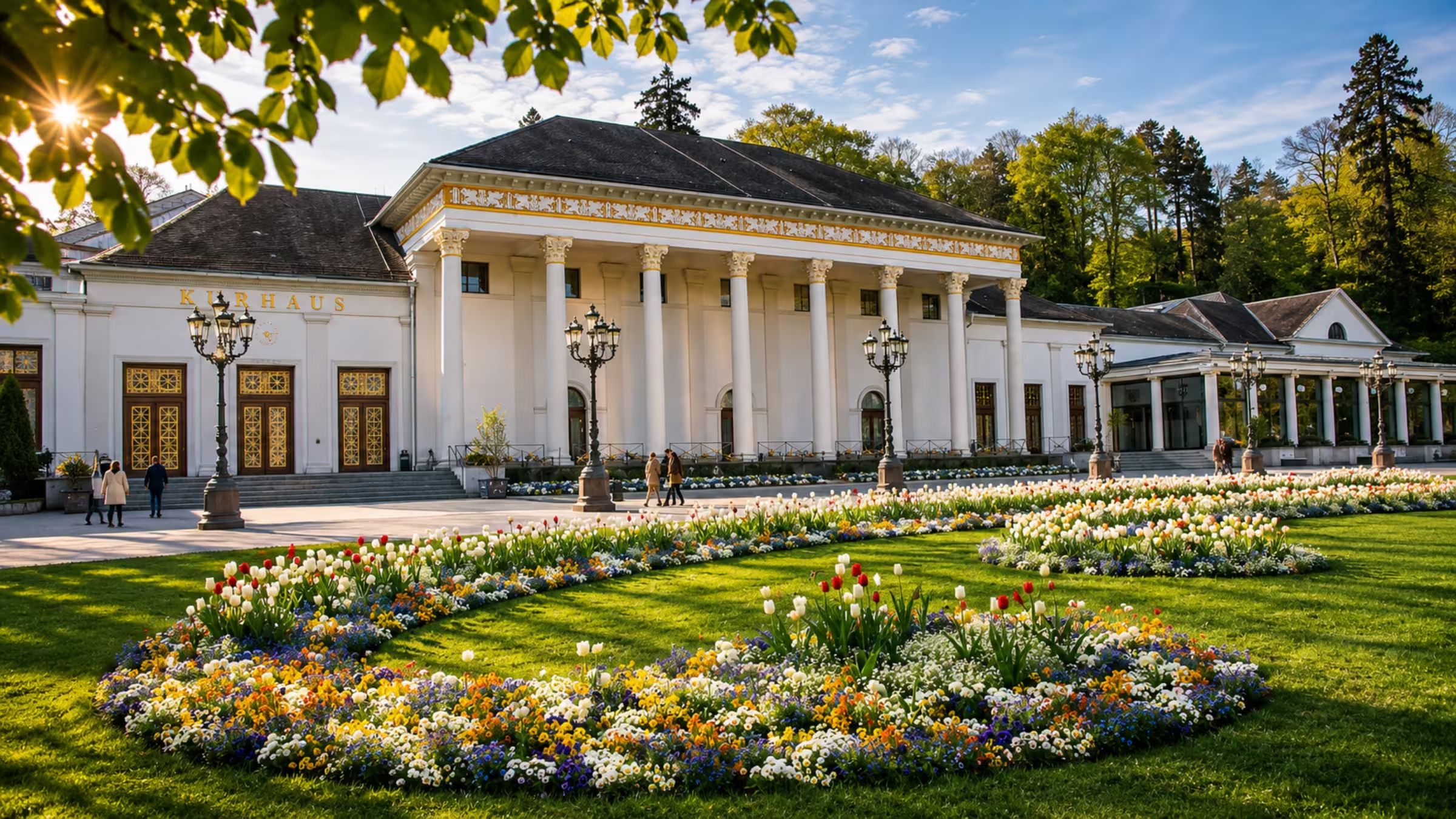
Baden-Baden sits on the edge of the Black Forest, about 1 to 1.5 hours from Strasbourg by train, often with a change. The Romans built baths here and called the settlement Aquae, and in the 19th century it became one of Europe’s grandest spa towns, drawing royalty, composers and writers, including Dostoevsky, who gambled here. Its historic spa architecture is now part of the UNESCO World Heritage listing of the Great Spa Towns of Europe.
What to see
- Friedrichsbad. A historic bathhouse from 1877 that uses a sequence of hot and cool rooms, known as a Roman-Irish bath. Check the current rules and book ahead, as some sessions have specific dress rules.
- Caracalla Spa. A modern thermal spa with indoor and outdoor pools, good if you want a more relaxed swim.
- The Kurhaus. The grand 19th-century spa building that houses the town’s casino, with a colonnaded promenade outside.
- Lichtentaler Allee. A long park beside the river Oos, lined with old trees, flower beds and sculptures, and ideal for an afternoon walk.
- The Festspielhaus. A large opera and concert hall, the biggest in Germany by seating capacity.
- The Trinkhalle. A pump room with a long arcade where you can taste the thermal water.
Carry photo ID, and book spa sessions in advance if you want to bathe. How long: a full day, longer if you spend time in the baths.
Day tour on Viator
Germany Day Trip with Baden-Baden & Black Forest from Strasbourg
An 8-hour guided day trip by minivan: a guided visit of Baden-Baden, free time at the Mummelsee in the Black Forest, and a photo stop in Sasbachwalden on the wine route. It departs at 9:00 from beside Strasbourg Cathedral, with an English-speaking guide.
Check availability on ViatorAffiliate link: we may earn a commission at no extra cost to you.
6. Freiburg: the gateway to the Black Forest

Freiburg is the longest trip of the six, about 1.5 to 2 hours by train, usually with one change, but it is a lively university city with a Gothic minster, a market square and a medieval old town. It was founded in 1120 by the Zähringen dukes and its university dates from 1457. The old town was heavily bombed in November 1944 and carefully rebuilt, and the minster survived the raid.
What to see
- Freiburg Minster. A Gothic cathedral built mainly between the 13th and 16th centuries, famous for its openwork stone spire. You can climb the tower for a view over the city.
- Münsterplatz and the market. The square around the minster hosts a daily market (except Sundays), with local sausages, fruit and flowers.
- The Historical Merchants’ Hall. A red 16th-century building on the square with a decorated façade and statues of Habsburg rulers.
- The Bächle. Small water channels that run through the old town streets, a local symbol.
- Martinstor and Schwabentor. Two surviving medieval city gates.
- Schlossberg. The wooded hill above the old town, reachable by a short cable car or on foot, with good views of the city and the Black Forest.
Carry photo ID. How long: a full day, and it makes a good contrast to the Alsace villages.
Private tour on Viator
Germany Freiburg & Black Forest Private Day Trip from Strasbourg
A private 9-hour day trip by air-conditioned minivan with hotel pickup and drop-off, a guided walking tour of Freiburg and its minster, free time for lunch, and a scenic drive through Black Forest villages. Check the cancellation terms on the booking page before you book.
Check availability on ViatorAffiliate link: we may earn a commission at no extra cost to you.
Book a small group tour
The simplest way to see Colmar, Riquewihr and Haut-Kœnigsbourg in a day, with a guide and minivan transport.
Small group tour on Viator
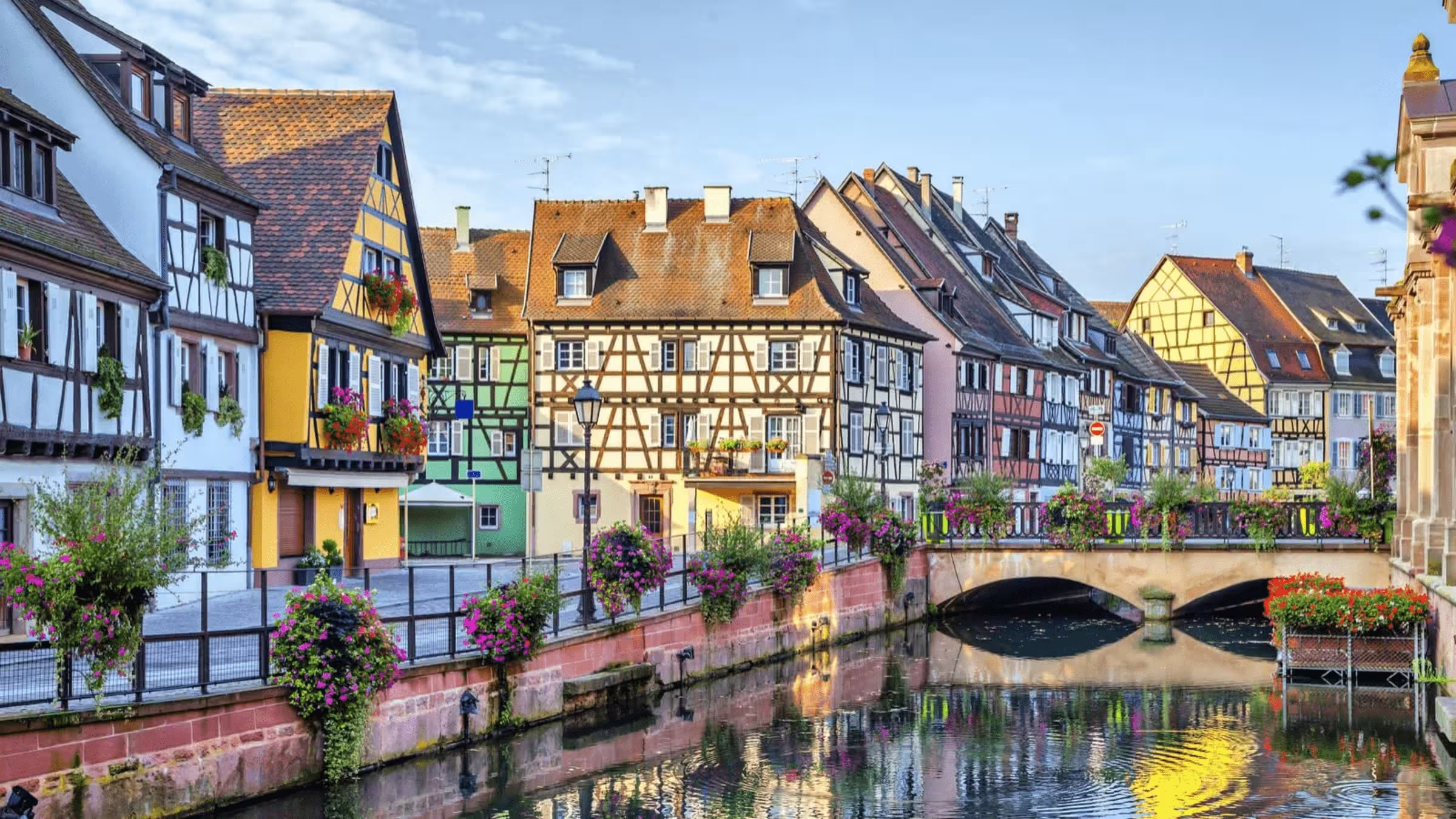
Colmar, Medieval Village & Castle Small Group from Strasbourg
A guided walk through Colmar, free time in Riquewihr and a guided visit of Haut-Kœnigsbourg, with castle entry and minivan transport included.
Check availability on ViatorOr check live availability on GetYourGuide:
Affiliate links: we may earn a commission at no extra cost to you.
For a full breakdown of that tour, see our Alsace day trip guide.

Where to stay in Strasbourg
For day trips, stay close to Strasbourg’s main station or on the Grande Île, so trains and tour meeting points are a short walk away.
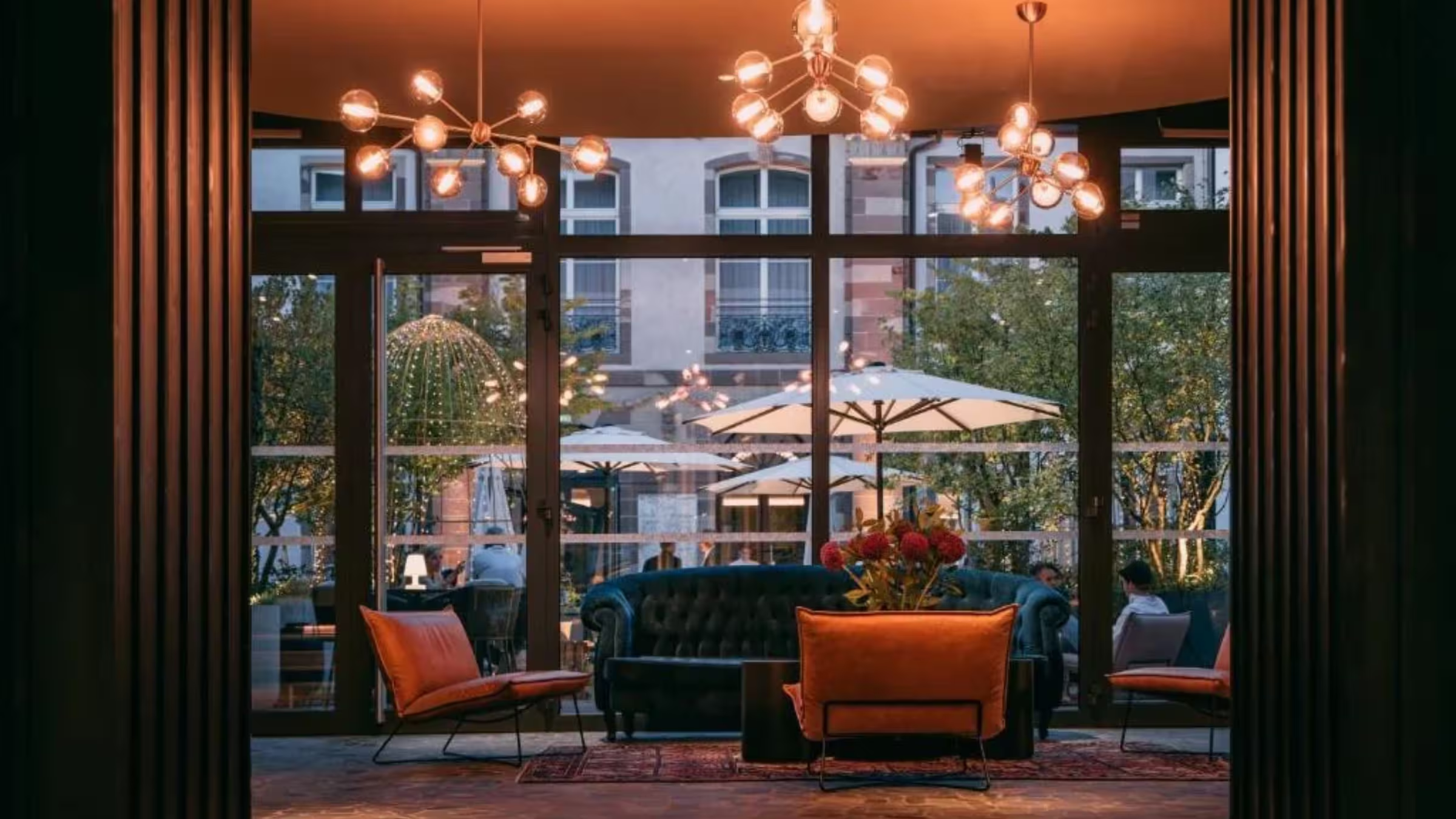
Suggested hotel
Hôtel LÉONOR the place to live By Stay Collection
A comfortable base in Strasbourg for an early start. Check current rates and availability below.
Check rates & availabilityFrequently asked questions
What is the best day trip from Strasbourg?
Colmar is the most popular choice: a direct regional train takes about 30 minutes and the old town and Little Venice canals are easy to walk. For a quieter day, Obernai is closer still, and a small group tour is the simplest way to combine Colmar, Riquewihr and Haut-Kœnigsbourg castle.
Which day trips from Strasbourg can I do by train?
Obernai, Colmar, Baden-Baden and Freiburg all have train connections. Riquewihr has no direct train, and Haut-Kœnigsbourg castle is reached by train to Sélestat followed by a shuttle or taxi where it runs. Check current timetables before you travel.
Can I visit Germany as a day trip from Strasbourg?
Yes. Baden-Baden and Freiburg are both reachable by train across the Rhine, and Kehl is a short tram ride. Carry photo ID, and expect journey times of about 1 to 2 hours depending on the connection.
How far is Colmar from Strasbourg?
Colmar is roughly 70 km south of Strasbourg. A direct regional train takes about 30 to 40 minutes, and the drive is a little under an hour.
Is a tour worth it, or should I go independently?
Go independently for Colmar, Obernai and the German cities, which are easy by train. Take a tour for Riquewihr and the castle, which are awkward without a car and are covered in a single day by a small group tour.
How many days do I need for day trips from Strasbourg?
Two or three day trips is a good number for a week-long stay. Pair one village day (Obernai or Colmar) with one bigger day (the wine villages and castle, or a German city) and keep a day for Strasbourg itself.
Plan the rest of your trip
Route & Stay contains affiliate links. If you book through them we may earn a commission at no extra cost to you. Prices, hours and rules can change, so confirm details on the official website before you travel.