 Skip to content

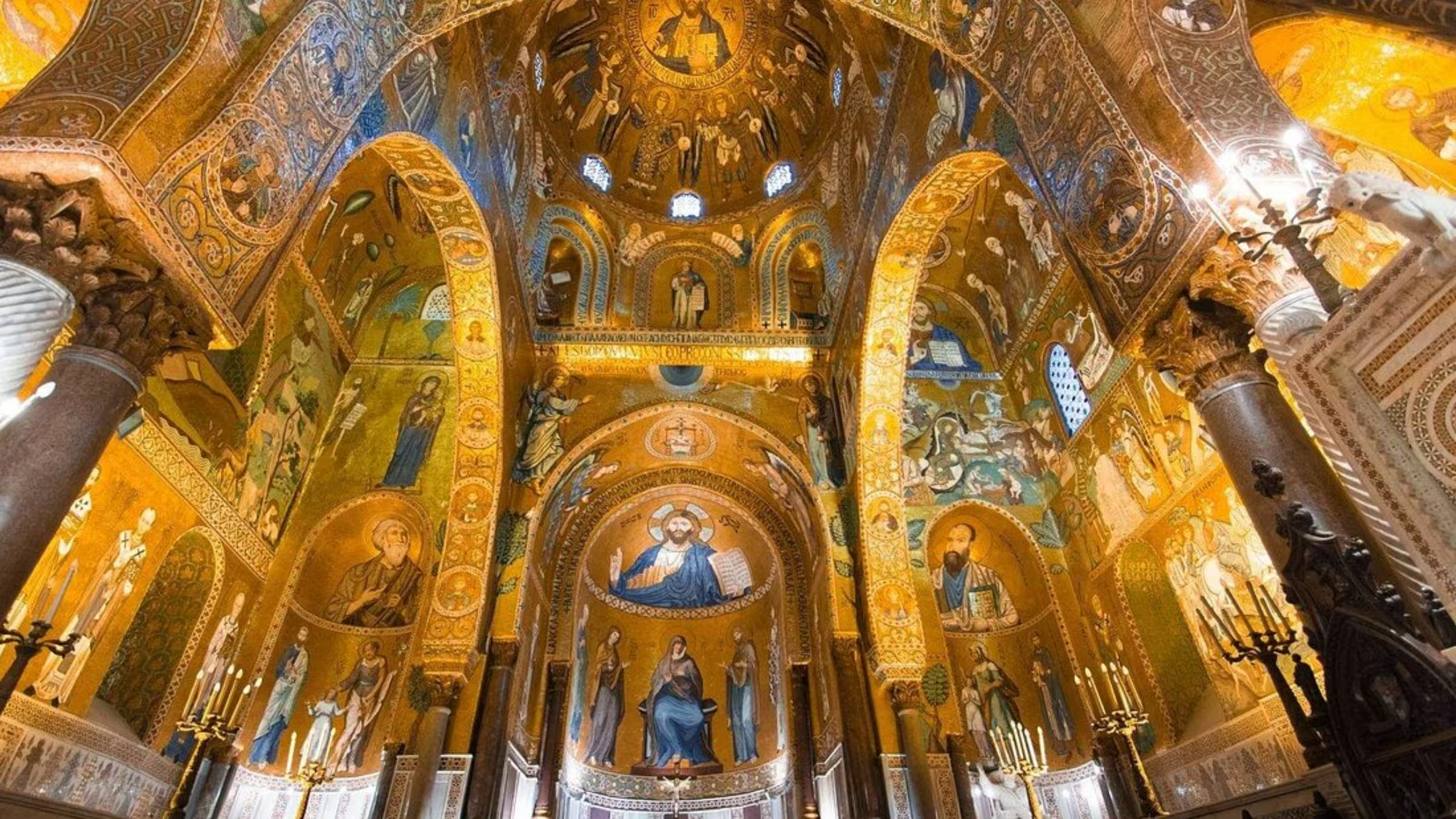
If you only have time for one indoor sight in Palermo, make it the Palatine Chapel. Hidden inside the Norman Palace, this small 12th-century royal chapel glitters with gold mosaics and a carved wooden ceiling, and it is one of the best examples of Sicily’s blend of Norman, Byzantine and Arab art. This guide covers the history, what to see, how to book and how to plan your visit.

In this guide
Norman Palace and Palatine Chapel at a glance
- Where: Piazza del Parlamento, at the western end of Palermo’s old town, a short walk from the Cathedral.
- Main highlight: the Palatine Chapel, with gold Byzantine-style mosaics and a carved wooden ceiling.
- Time needed: about one to two hours.
- World Heritage: part of Palermo’s Arab-Norman heritage, recognised by UNESCO.
- Best for: history, art and architecture lovers, and anyone on a short city or cruise visit.
A short history
The palace has roots that go back to the Arab period in Sicily, and it became the main residence of the Norman kings after the Normans took the island in the 11th century. Around 1130, King Roger II remodelled the palace and built the Palatine Chapel as the royal chapel. Later rulers added new rooms and decoration, and today part of the building houses the Sicilian Regional Assembly.
What to see
- The Palatine Chapel. Gold mosaics cover the walls and apse, including a large Christ Pantocrator. Look up to see the wooden muqarnas ceiling, an Islamic-style carved and painted feature that sits above Norman pointed arches.
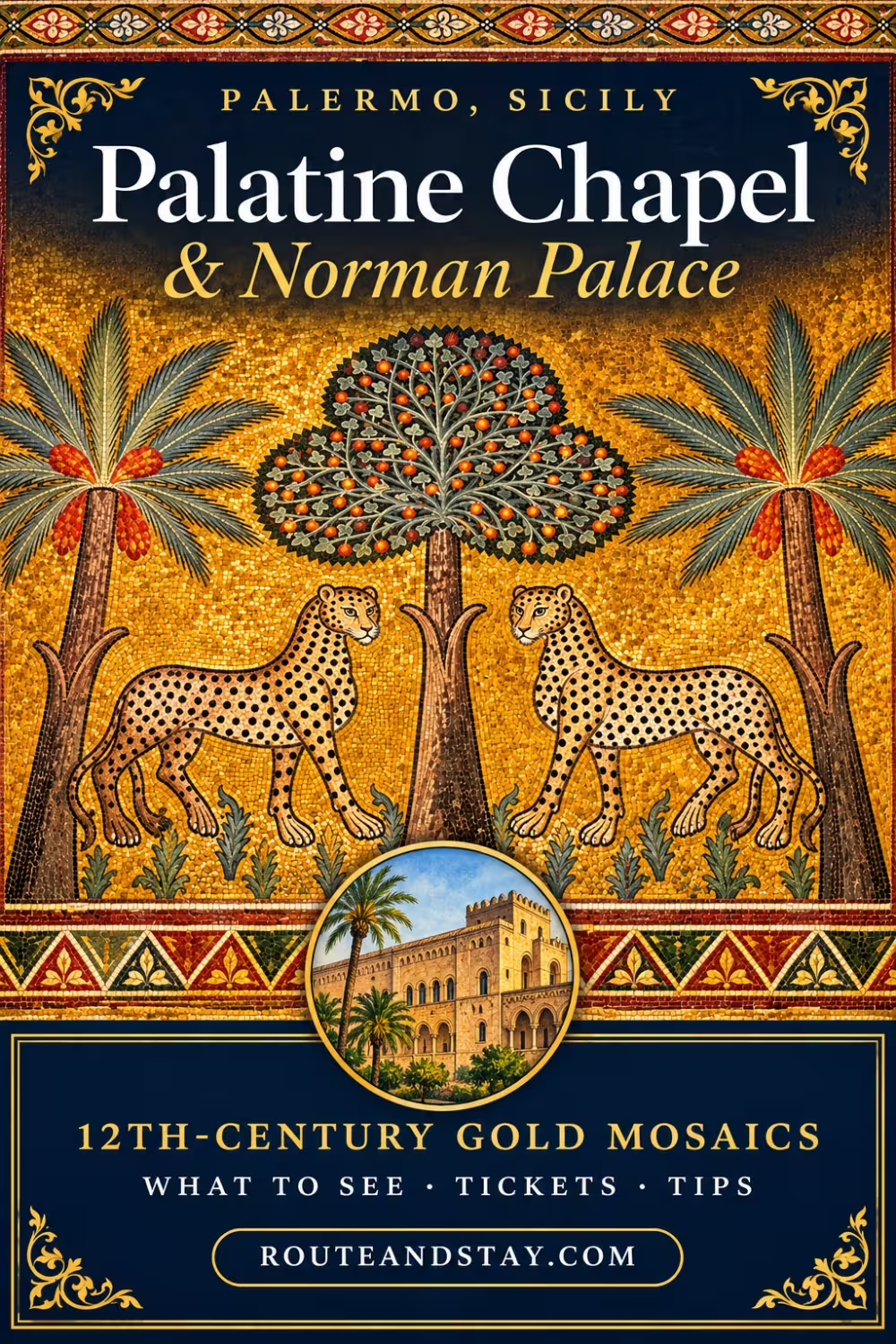
- Roger’s Room (Sala di Ruggero). Often described as one of the palace’s most striking rooms, with mosaics of a garden scene with animals. Access to the royal apartments is limited, so check what is open.
- Sala dei Venti and the Pisan Tower. Older Arab-Norman parts of the palace that show how the building grew.
- The royal apartments. Decorated rooms that are open only on certain days. Check the current schedule before you plan around them.

The 12th-century leopard mosaics in the Sala di Ruggero, Palazzo dei Normanni, Palermo, a masterpiece of Sicily’s Arab-Norman artistic heritage.
Tickets and tours
Queues can build up at busy times and signage inside is limited, so many visitors book ahead or join a guided visit. Check the live listings for what is included and the current times.
Palermo: Cappella Palatina and Palazzo dei Normanni Tour
Check dates and availability for your visit.
Affiliate link: we may earn a small commission at no extra cost to you.
Viator · Small group or private
Palermo: Norman Palace & Palatine Chapel
A small-group or private visit to the Norman Palace and the Palatine Chapel. Check the live listing for the format, duration and what is included.
Check on ViatorAffiliate link: we may earn a small commission at no extra cost to you.
Save this guide for later
Visiting tips
- Check opening times. Hours can change, and parts of the palace may close for events or when the regional assembly is in session.
- Go early to avoid the longest queues and the midday heat.
- Dress modestly. Cover shoulders and knees for the chapel.
- Allow time to look up. The ceiling and upper mosaics are easy to miss if you rush.
- Keep your ticket or booking confirmation handy, as entry is usually checked at more than one point.
Where to stay nearby
The Norman Palace sits in the western part of the historic centre, so a base near the Cathedral and Quattro Canti keeps most of the main sights within walking distance. Here is a boutique option from our full hotel guide.
Where to stay nearby · Boutique
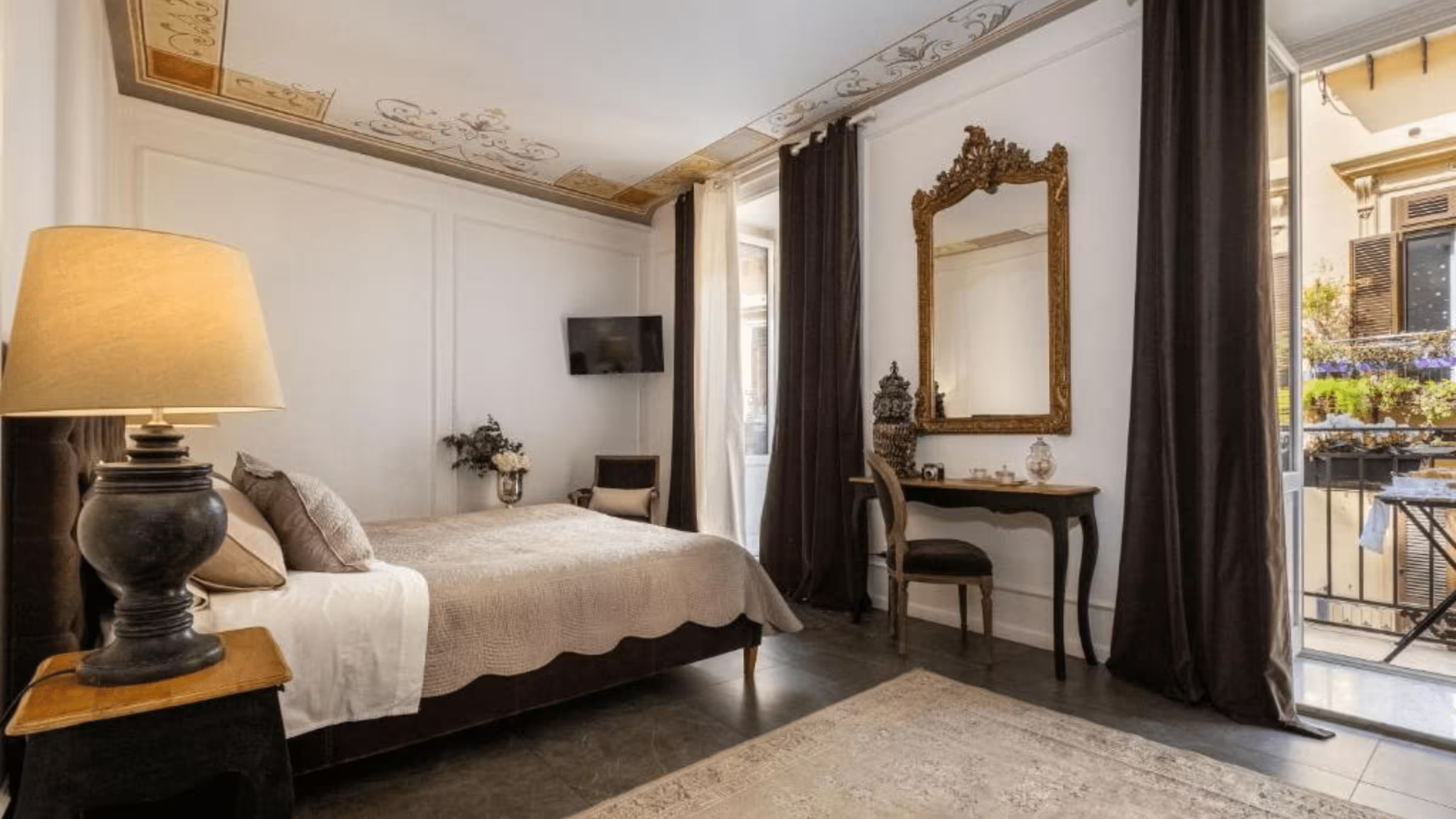
Palazzo Natoli Boutique Hotel
A boutique hotel in a historic building close to the Cathedral and Quattro Canti, a short walk from the Norman Palace area. A good base for sightseeing on foot. Check the live listing for rooms, rates and current guest reviews.
Check on Booking.comAffiliate link: we may earn a small commission at no extra cost to you.
Compare more areas and hotels in our Palermo accommodation guide.
Nearby sights
- Palermo Cathedral: an Arab-Norman landmark a short walk away along Corso Vittorio Emanuele.
- Quattro Canti: the baroque crossroads at the heart of the old town.
- Monreale: another Norman cathedral with more gold mosaics, outside the city.
- Street food: see our Palermo street food tour guide for what to eat after your visit.
FAQ
What is the Palatine Chapel?
The Palatine Chapel (Cappella Palatina) is the royal chapel inside the Norman Palace in Palermo. It was built in the 12th century under Roger II and is known for its gold mosaics and carved wooden ceiling.
Is the Norman Palace the same as the Palatine Chapel?
No. The chapel is inside the palace, which is also known as Palazzo dei Normanni or the Royal Palace. The palace has other rooms and sections, and parts of it are used by the Sicilian Regional Assembly.
How long do I need?
Allow about one to two hours for the chapel and the main visitor areas. Give yourself longer if you add the royal apartments or take a guided tour.
Should I book in advance?
Booking ahead is a good idea in busy months, because queues can be long. A guided tour also helps, as there is limited signage inside. Check the live listing for options.
Is there a dress code?
Visitors are usually expected to dress modestly, with shoulders and knees covered, as the chapel is a place of worship. Check the official guidance before you go.
Can I visit on a cruise day?
Yes, it is a practical stop for a port day because it is close to the Cathedral. Check opening times, as access can change when the palace hosts events or the regional assembly is in session. See our Palermo cruise port guide for a full plan.
This guide contains affiliate links. We may earn a small commission at no extra cost to you. Opening times, tickets and availability change, so check the live listing before you book.