 Skip to content
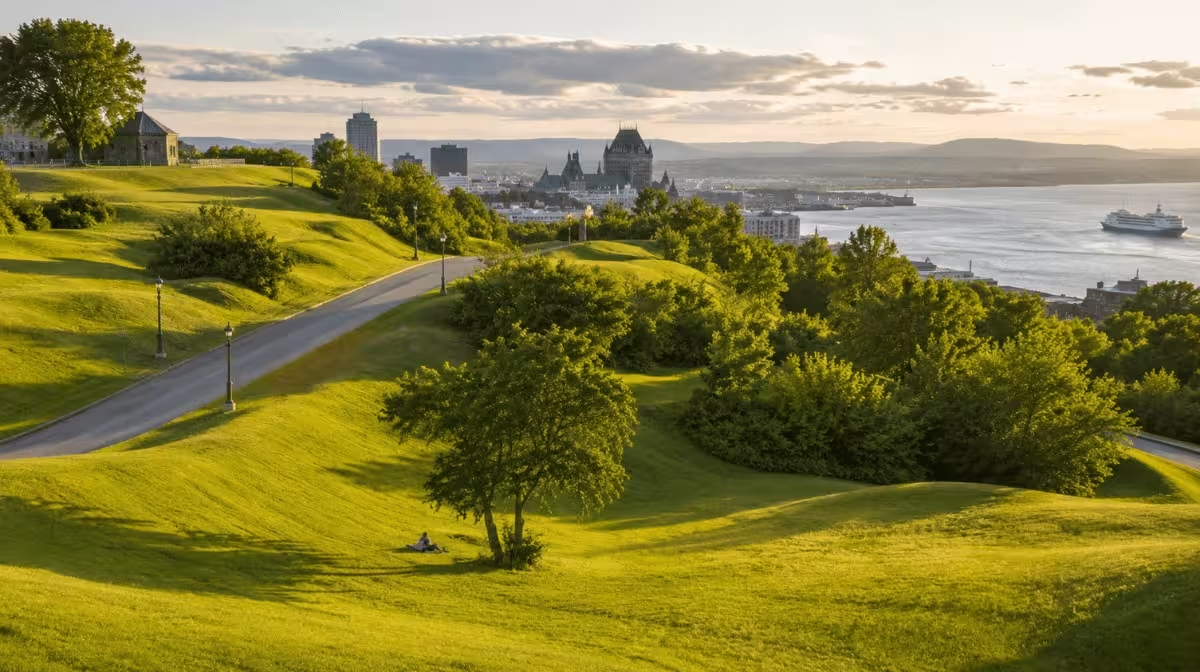
The Plains of Abraham is the battlefield that determined what Canada would become. In September 1759, French and British forces fought here for less than fifteen minutes — one of the shortest and most consequential military engagements in North American history. Both commanding generals died. The outcome transferred Quebec from French to British control and set in motion the events that shaped modern Canada. Today the site is a 103-hectare urban park with some of the best views in Quebec City, a world-class interpretation centre, and a summer festival programme that fills the lawns with people who live here. This guide covers the history, the visit, and why the Plains of Abraham deserve more than a passing walk-through.
Affiliate disclosure: This post contains affiliate links. We may earn a small commission if you book through our links, at no extra cost to you.
Contents
Plains of Abraham — Quick Facts
The Battle of the Plains of Abraham
By the summer of 1759, the Seven Years’ War had been running for three years and New France was losing. British forces under General James Wolfe had spent the summer besieging Quebec City — bombarding the lower town, raiding the surrounding countryside, and searching for a way through the cliffs that protected the city from the south. The French commander, the Marquis de Montcalm, held the high ground and felt, not unreasonably, that he could simply wait Wolfe out. Winter was coming. The St. Lawrence would freeze. The British fleet would have to leave.
What Montcalm did not account for was what happened on the night of 12 September. A small party of British soldiers discovered — or perhaps bribed their way to discover — an unguarded path up the cliffs west of the city. In the early hours of the 13th, Wolfe led approximately 4,500 men up that path in darkness and silence, reaching the plateau above by dawn. When Montcalm’s sentries finally gave the alarm, the British were already formed up in battle lines on the field that the city’s farmer, Abraham Martin, had given his name to.
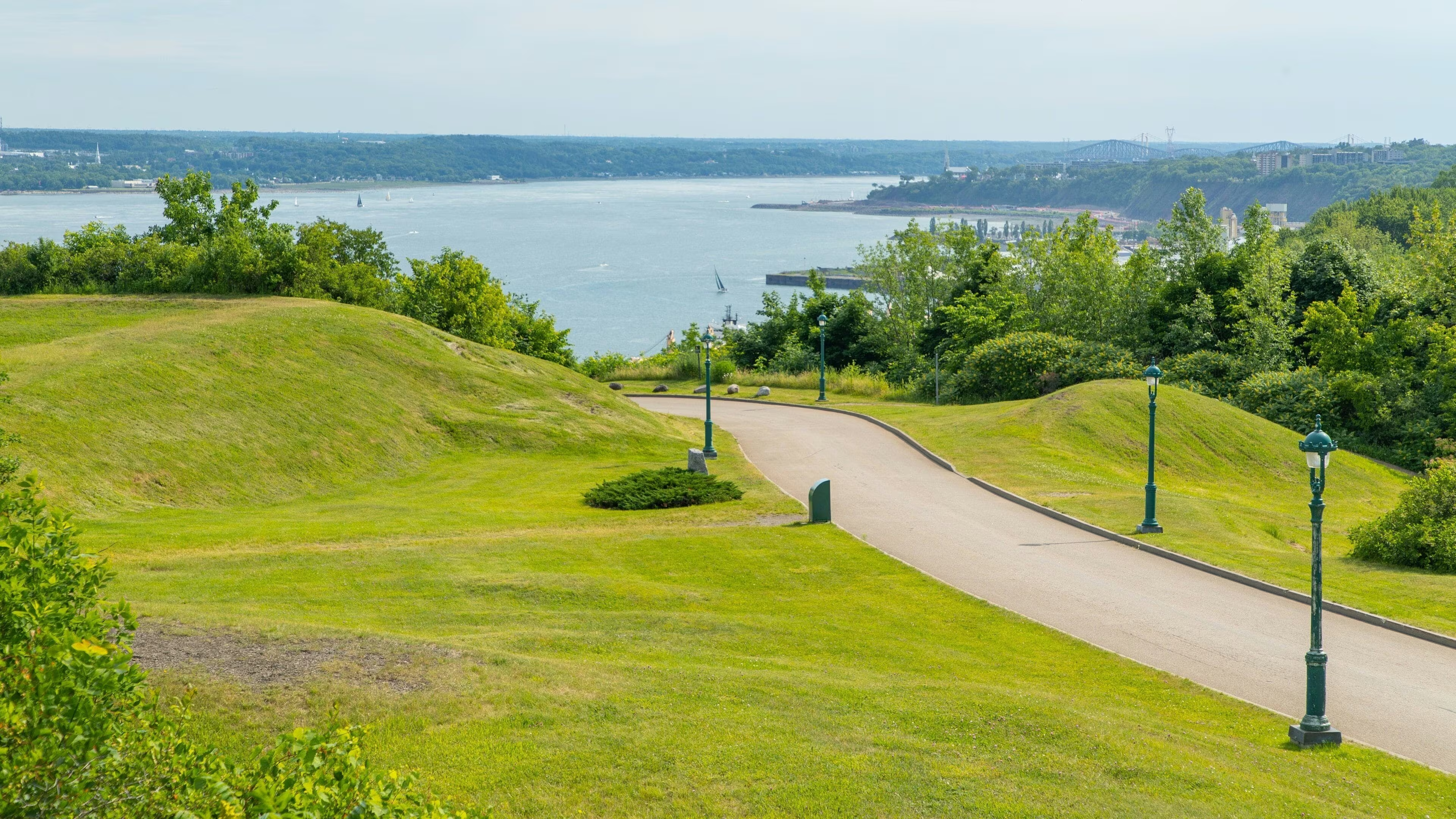
The cliff above the St. Lawrence that Wolfe’s army climbed in darkness — the view that the French generals assumed made the city impregnable.
The Fifteen Minutes That Changed a Continent
British forces reach the plateau
Wolfe’s army completes the climb and forms battle lines on the plateau west of the city walls. Montcalm is informed and makes the decision to engage rather than wait for reinforcements from elsewhere in the province.
French forces advance
Montcalm leads his troops out of the city gates and across the plateau toward the British lines — a decision that has been debated by military historians ever since. His force is a mix of regular French troops and colonial militia, less uniformly trained than the British regulars opposite them.
The engagement
The French advance toward the British lines, firing as they come. The British hold their fire until the French are within 40 metres, then deliver a volley that breaks the French formation. The battle is effectively over in under fifteen minutes. Both Wolfe and Montcalm are mortally wounded in the engagement.
Quebec City surrenders
Five days after the battle, Quebec City surrenders to British forces. The war in North America continues for another two years, but the fall of Quebec City effectively seals the outcome. New France is finished.
Wolfe and Montcalm
General James Wolfe
James Wolfe was 32 years old when he led the siege of Quebec City — young for a general, and by several accounts in poor health throughout the campaign. He was struck by musket fire three times during the battle, the last wound fatal. He died on the battlefield knowing the French were in retreat, having confirmed the victory he had spent the summer engineering. He was carried home to England as a national hero, commemorated in Benjamin West’s famous painting “The Death of General Wolfe” — one of the most reproduced images in British imperial history.
The Marquis de Montcalm
Louis-Joseph de Montcalm-Grozon, Marquis de Montcalm, was 47 and had been defending New France since 1756 with insufficient troops, insufficient supplies, and a governor — Pierre de Rigaud — whose strategic priorities frequently contradicted his own. He was wounded during the battle and died the following morning. His last recorded words, on being told his wound was fatal, were reportedly that he was content not to live to see the surrender of Quebec. He is buried in the Ursuline Chapel in the Upper Town of Quebec City — the only place where his remains could be safely interred after the battle, in a shell crater left by British bombardment.
What the Battle of the Plains of Abraham Decided
The immediate consequence was the transfer of Quebec — and eventually all of New France — from French to British control, formalised in the Treaty of Paris in 1763. But the longer consequences are more complex and more interesting than a simple change of flag. The British, needing to govern a French-speaking Catholic population that outnumbered the English colonists, passed the Quebec Act of 1774 — guaranteeing French civil law, the Catholic faith, and the French language in the province. Those protections became the foundation of the distinct Québecois culture that survives and flourishes today.
The battle also had consequences for the American Revolution. The removal of the French threat from Canada meant the British colonies to the south no longer needed British military protection — one of the factors that made independence thinkable. Without the Plains of Abraham, the political geography of North America might look entirely different.
Visiting the Plains of Abraham Today
The battlefield is now Battlefields Park — the largest urban park in Quebec City and one of the most beautifully situated in Canada. The 103-hectare site stretches west from the Citadelle along the cliff above the St. Lawrence, with views across the river to the south shore mountains that on a clear day extend to the Appalachians. Entry to the park is free and it is open year-round.
In summer the lawns fill with people picnicking, playing frisbee, running, and doing everything that a great urban park enables — which is exactly how it should be. The battle happened here, but the park belongs to the present as much as to the history. The Discovery Pavilion at the eastern end of the park (near the Citadelle) is where the history is formally addressed, and it is unusually good — honest about the complexity of what happened here and what it meant, including the perspectives that usually get omitted from triumphalist military history.
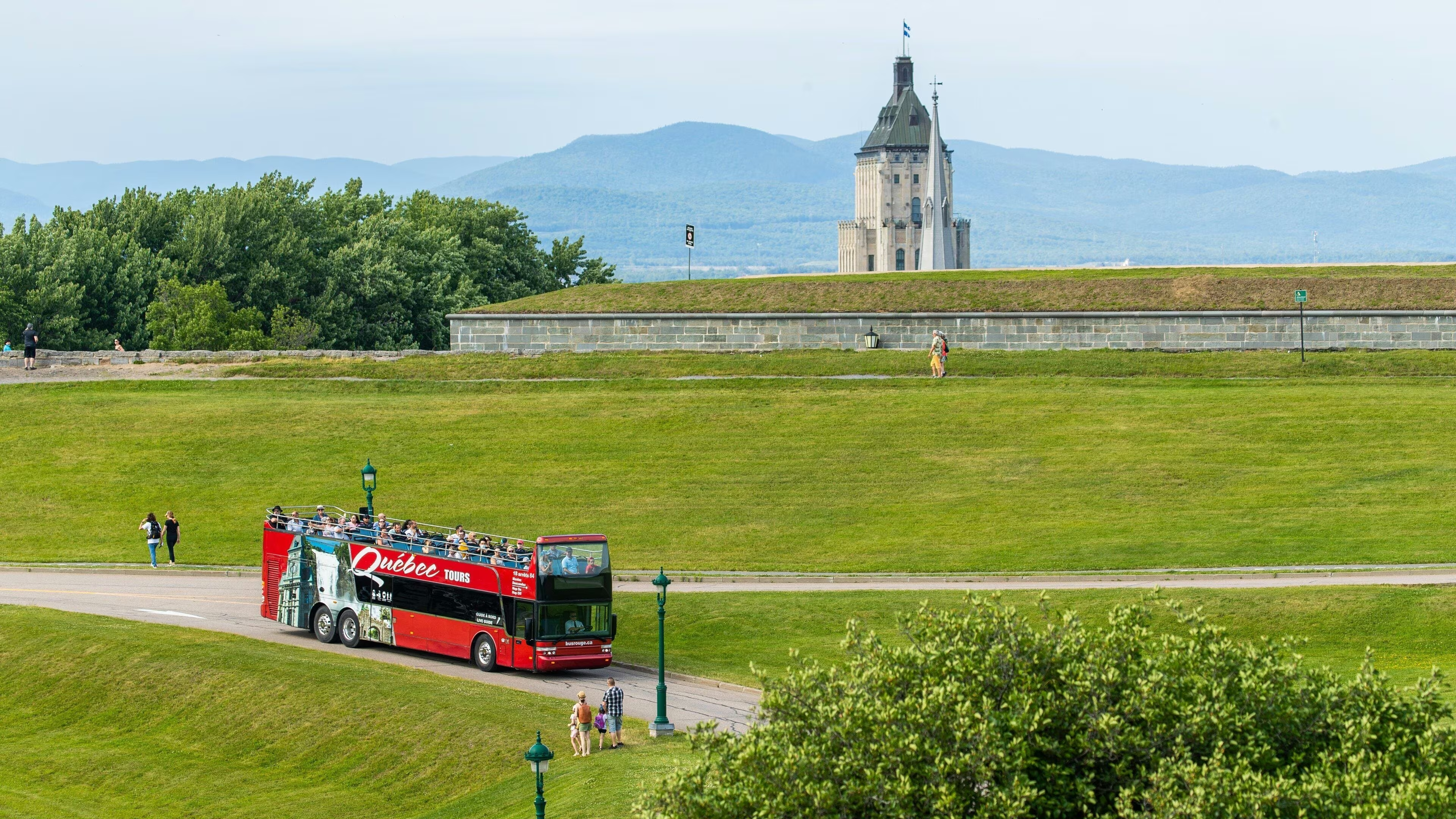
The hop-on hop-off bus passes through Battlefields Park — a practical way to cover the park and connect it to the rest of the city in a single day.
What to See in the Park
The two Martello towers that survive from the early 19th century British fortification of the site are the most visible historical structures in the park — squat, circular stone towers built to defend against an American attack that never came, and now among the most photographed landmarks on the plateau. Tower 1 is occasionally open for guided visits; Tower 4 near the Citadelle has a small interpretation space. The views from the cliff edge along the park’s southern perimeter are the best available anywhere in Quebec City — the full arc of the St. Lawrence, the Île d’Orléans in the distance, and the south shore mountains beyond.
The Joan of Arc Garden, near the western end of the park, is a formal French-style garden that feels slightly incongruous in the middle of a battleground but is beautifully maintained and worth a slow walk through in summer. The annual Plaines d’Abraham summer festival programme — concerts, outdoor cinema, and public events — makes the park a genuine gathering place for people who live in Quebec City in a way that few historic sites anywhere manage.
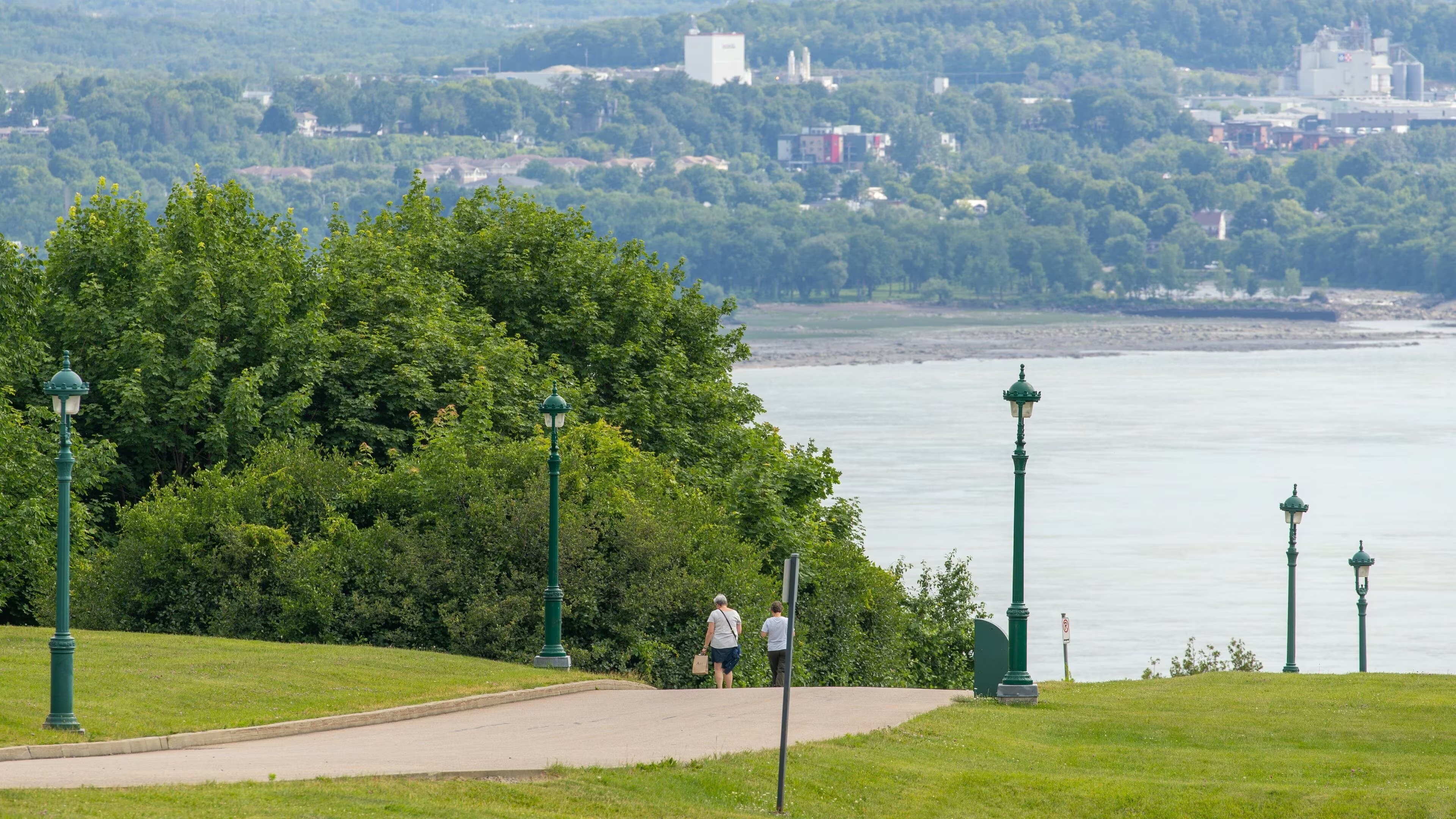
One of the walking trails through Battlefields Park — 103 hectares of open parkland above the St. Lawrence.
The Interpretation CentreThe Abraham Martin Discovery Pavilion
The Discovery Pavilion at the eastern entrance to the park is the starting point for anyone who wants to understand the battle and its consequences before walking the ground. The permanent exhibition covers the Seven Years’ War, the siege of Quebec City, the battle itself, and the political aftermath — with particular attention to the Indigenous peoples whose territory this was long before either France or Britain arrived, and whose role in the conflict is given more space here than in most accounts.
The pavilion also operates guided battlefield tours in summer — by foot and by electric bus — that cover the key positions, explain the tactical decisions made on both sides, and bring the geography of the battle to life in a way that is difficult to achieve from the interpretation panels alone. The guided tour is worth booking if you have a genuine interest in the history; the self-guided visit to the pavilion alone is worth an hour for context before you walk the park.
The Citadelle
The star-shaped fortress at the eastern end of the Plains of Abraham is technically a separate site — still an active Canadian Forces base — but it is physically connected to the park and worth visiting on the same day. The Citadelle is the largest British fortification in North America, begun in 1820 and never fired upon in anger. Guided tours of the interior cover the military history, the changing of the guard ceremony (daily in summer, one of the more impressive versions of that particular tradition), and the Governor General’s summer residence within the walls. The view from the southern bastions of the Citadelle, looking across the Plains of Abraham and over the St. Lawrence, is the most complete panorama available in Quebec City.
The walk from the Citadelle west along the southern edge of the park — following the cliff above the St. Lawrence — is one of the best 30-minute walks in the city. The path connects the Citadelle to the Governors’ Promenade, which continues east along the fortification walls to Terrasse Dufferin and the Château Frontenac. The complete loop — Citadelle, Plains of Abraham, Governors’ Promenade, Terrasse Dufferin — covers the full arc of Quebec City’s military geography in a single afternoon walk.
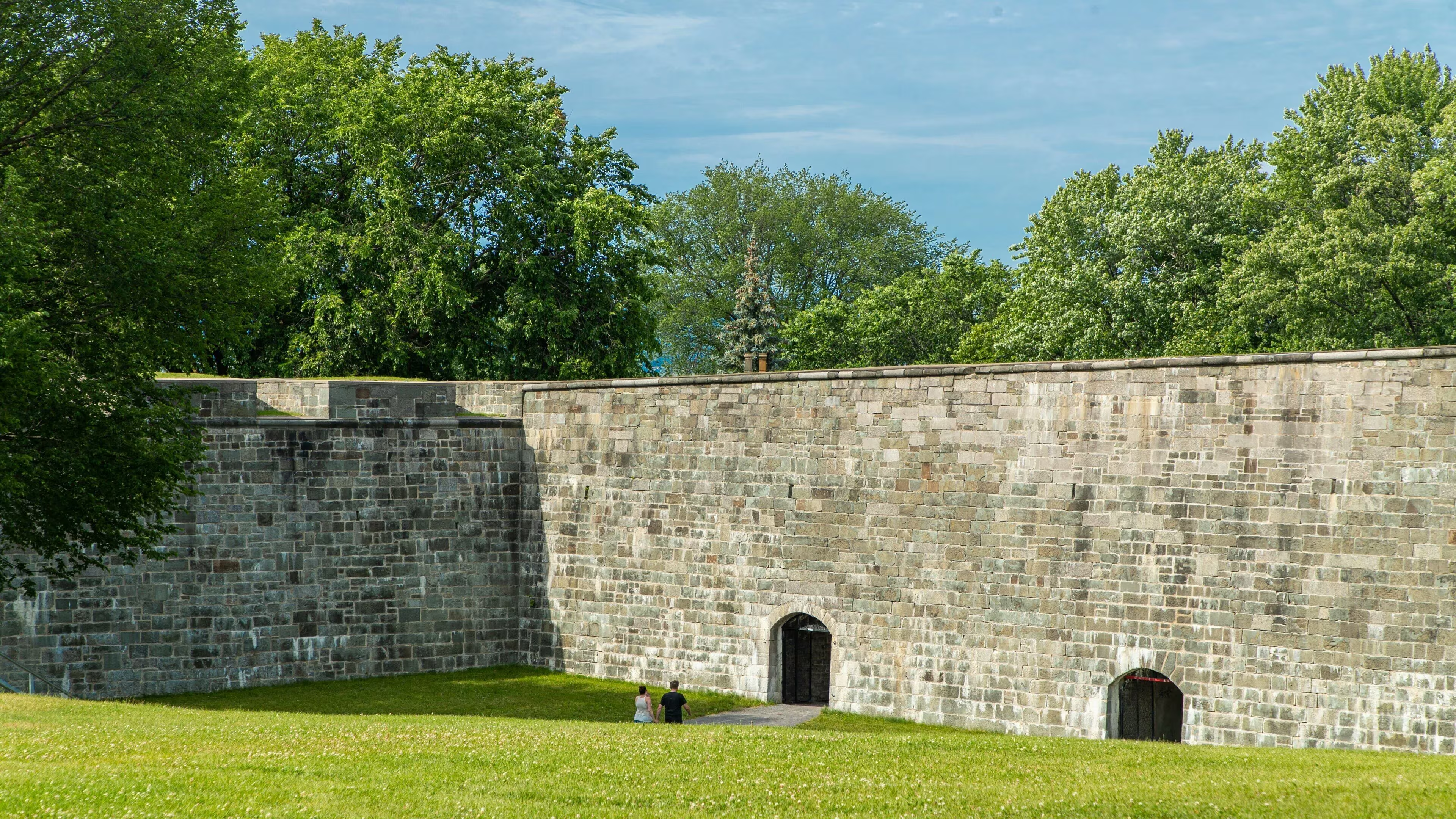
The stone fortifications adjacent to the Plains of Abraham — the walls that the British spent the summer of 1759 looking for a way through.
Getting ThereHow to Get to the Plains of Abraham
The Plains of Abraham are at the western end of Old Quebec’s plateau, accessible on foot from the historic centre in 15 to 20 minutes. From the Château Frontenac, follow Terrasse Dufferin to the Governors’ Promenade, continue past the Citadelle, and the park opens up to the west. Alternatively, walk along Grande Allée from the Saint-Louis Gate — the main boulevard runs alongside the park’s northern edge and brings you directly to the Discovery Pavilion entrance.
From Lower Town, the easiest route is to take the funicular to Upper Town and walk west from Place d’Armes. By car, parking is available along Avenue George VI on the park’s southern perimeter and along Grande Allée to the north. There is no dedicated car park for the battlefield — street parking is the practical option.
Before You Go
Where to Stay in Quebec City
The Plains of Abraham are a 15-minute walk from the heart of Old Quebec — staying inside the walls or in the Grande Allée neighbourhood puts you within easy reach of the park and every other site in the city. The map below shows live availability across Quebec City for your dates.
Some links here are affiliate links. We may earn a small commission if you book through them, at no extra cost to you.
What happened at the Plains of Abraham?
The Battle of the Plains of Abraham was fought on 13 September 1759 between British forces under General James Wolfe and French forces under the Marquis de Montcalm. The British had spent the summer besieging Quebec City and climbed an unguarded cliff path in the night to reach the plateau. The battle lasted under fifteen minutes, both generals were mortally wounded, and the outcome led to the fall of Quebec City and eventually the transfer of New France to British control.
Is the Plains of Abraham free to visit?
Yes — Battlefields Park is free to enter and open year-round. The Abraham Martin Discovery Pavilion charges admission for its permanent exhibition and guided tours. The Citadelle adjacent to the park charges separately for interior tours.
How long should you spend at the Plains of Abraham?
Allow a full afternoon — approximately three hours for the Discovery Pavilion, a walk across the battlefield to the cliff edge, and the return along the Governors’ Promenade to Terrasse Dufferin. Adding the Citadelle extends this to four hours.
Why is the battle of the Plains of Abraham important?
The battle decided that Canada would become an English-speaking country rather than a French one. The fall of Quebec City led to the end of New France and the transfer of what is now Canada to British control under the Treaty of Paris in 1763. The consequences shaped not only Canada but the American Revolution — the removal of the French threat from the north was one of the factors that made American independence thinkable.
Who were the generals at the Plains of Abraham?
The British were commanded by General James Wolfe, aged 32, who died on the battlefield shortly after the French broke. The French were commanded by the Marquis de Montcalm, aged 47, who was wounded in the battle and died the following morning. Both generals dying in the same engagement within hours of each other is one of the most unusual facts in military history.
How do I get to the Plains of Abraham from Old Quebec?
On foot, follow Terrasse Dufferin west past the Citadelle — approximately 15 to 20 minutes from the Château Frontenac. Alternatively, walk along Grande Allée from the Saint-Louis Gate, which runs alongside the park’s northern edge and leads directly to the Discovery Pavilion. The park is the western end of the same plateau that Old Quebec’s Upper Town occupies.
What is the Abraham Martin Discovery Pavilion?
The Discovery Pavilion is the interpretation centre for Battlefields Park, located at the eastern entrance near the Citadelle. It houses the permanent exhibition on the Seven Years’ War, the siege and battle of Quebec City, and the political consequences of the French defeat. Guided battlefield tours depart from here in summer. It is the starting point for anyone who wants to understand the history before walking the ground.
Can you visit the Plains of Abraham in winter?
Yes — the park is open year-round and is particularly beautiful in winter, with unobstructed views of the St. Lawrence and far fewer visitors than in summer. The Discovery Pavilion operates with reduced hours in winter; confirm before visiting. The Citadelle’s interior tours also run year-round with reduced frequency.